Most people assume you need years of training and a stack of certifications before you ever leave the ground in a helicopter. That assumption is not entirely wrong — for most aircraft, it is absolutely true.
But there is a fascinating loophole in the sky: a category of rotorcraft small enough and light enough to slip right under the FAA's licensing requirements. These are ultralight helicopters, and they are very much real, very much flyable, and available right now.
If you have ever dreamed of lifting off the earth without first spending thousands of dollars on flight school, the 7 helicopters that don't require a license might be exactly what you have been looking for.
Key Takeaways
Certain single-seat helicopters qualify under the FAA's 14 CFR Part 103 ultralight rules, meaning you can legally fly them in the United States without a pilot's license or medical certificate. To qualify, the aircraft must weigh no more than 254 pounds empty, carry no more than 5 gallons of fuel, and cruise no faster than 55 knots. Flying is restricted to daytime hours, rural or unpopulated areas, and uncontrolled airspace. While no license is required by law, all experts strongly recommend getting proper flight instruction before attempting solo flight.
| Key Takeaway | Detail |
| FAA Rule | 14 CFR Part 103 allows license-free ultralight flight |
| Weight Limit | 254 lbs empty (powered) |
| Fuel Limit | 5 gallons maximum |
| Speed Limit | Max 55 knots cruise |
| Single Seat Only | No passengers permitted |
| No License Required | But flight training is strongly recommended |
| Where You Can Fly | Daytime, unpopulated areas, uncontrolled airspace only |
Whether you are brand new to aviation or a seasoned enthusiast, Flying411 is a trusted resource for aircraft information, insights, and listings to help you make informed decisions in the sky.
What Is FAA Part 103 and Why Does It Matter?
The FAA's 14 CFR Part 103, commonly known simply as Part 103, is the federal regulation that defines what counts as an "ultralight vehicle" in the United States. It is the rule that makes license-free flight legally possible.
Under Part 103, a powered ultralight must meet all of the following criteria:
- Single seat only — no passengers, ever
- Empty weight of 254 lbs or less (powered) or 155 lbs unpowered
- Fuel capacity of 5 gallons or less
- Maximum cruise speed of 55 knots (about 63 mph)
- Top speed in level flight under 55 knots
- Used strictly for recreation or sport purposes
If an aircraft meets every one of these conditions, no pilot's certificate, no FAA medical, and no aircraft registration is required. The catch is that the operator must still follow a firm set of flight rules.
Good to Know: FAA Part 103 applies to the aircraft category, not the person flying it. Anyone of any age can legally operate a compliant ultralight. However, flying safely is a completely different matter, which is why training — even without a license requirement — is always the smart move.
Where You Can and Cannot Fly Under Part 103
Ultralight rules are generous in some ways and very strict in others. Here is what you need to know before you plan your first flight:
You CAN fly:
- During daylight hours only (between official sunrise and sunset)
- In Class G airspace (uncontrolled)
- Over uninhabited or sparsely populated areas
- On your own private property or rural land with permission
You CANNOT fly:
- Over any congested area, town, or city
- Near airports without prior authorization from Air Traffic Control (ATC)
- At night or in poor visibility
- While carrying any passengers
- For any commercial purpose
Heads Up: Violating Part 103 restrictions is not a minor issue. Flying a non-compliant aircraft or ignoring the operating rules can result in substantial fines and legal consequences. Always verify your aircraft's compliance and know your local airspace before you go up.
Why Training Still Matters Even Without a License
No license requirement does not mean no skill required. Helicopters are among the most technically demanding aircraft to fly. Hovering alone typically takes around 10 hours of practice to master, and mistakes at low altitude leave little margin for error.
The United States Ultralight Association (USUA) strongly advises all ultralight pilots to seek instruction from a certified ultralight flight instructor before flying solo. Most people need somewhere between 10 and 20 hours of supervised instruction to fly an ultralight helicopter safely.
Pro Tip: Even though no license is mandated, many Part 103 ultralight helicopter manufacturers offer — or even require — basic training as part of the purchase. Some manufacturers include a training discount in the kit price if you can demonstrate a solo hover endorsement. Take that offer seriously.
Some manufacturers go further, providing two-day training programs at their facilities that cover regulations, controls, and emergency procedures. This kind of structured training can make the difference between a fun, safe hobby and a preventable accident.
If you are serious about ultralight helicopters, consider getting a solo hover endorsement at a local helicopter flight school first. It is not mandatory, but it is one of the wisest investments you can make before climbing into one of the machines below.
The 7 Helicopters That Don't Require a License
Here is a look at the most notable ultralight and ultralight-category helicopters available to U.S. pilots — covering traditional piston-powered rotorcraft as well as the new wave of electric vertical takeoff and landing (eVTOL) aircraft that qualify under the same Part 103 rules.
1. Composite-FX Mosquito XEL
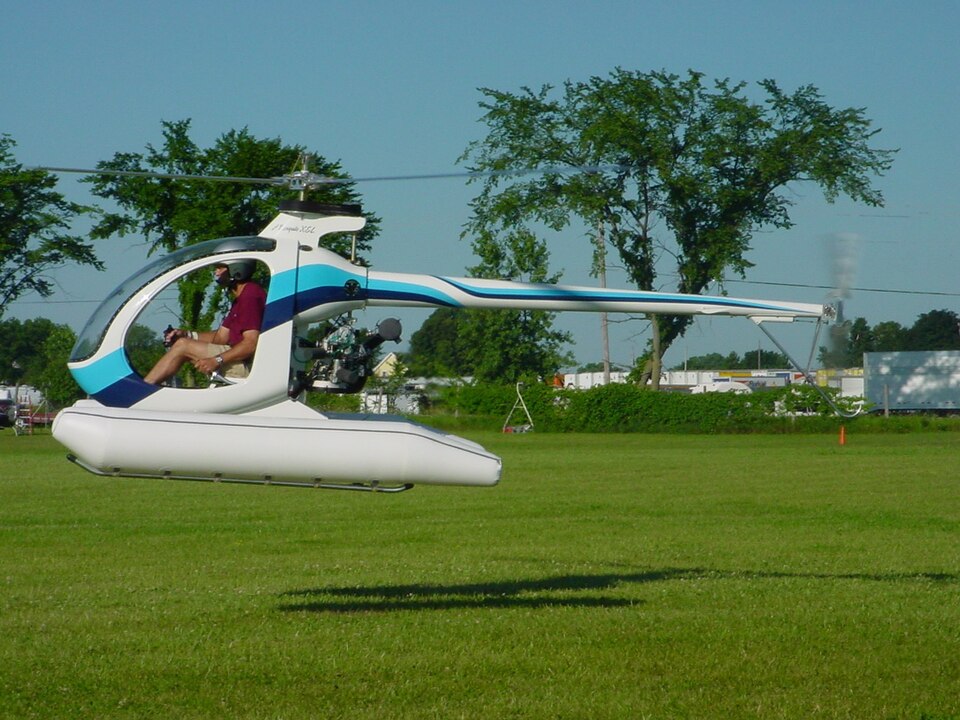
The Mosquito XEL is widely regarded as the most accessible and best-documented Part 103-compliant ultralight helicopter on the market. Built by Composite-FX in Trenton, Florida, it was designed from the start with Section 103 of the FAA's regulations specifically in mind.
What makes the XEL unique compared to its sister models is its floats. The aircraft is equipped with floats instead of skids, and under FAA regulation 103.1(e)(1), floats and emergency safety devices are excluded from the empty weight calculation. That means the XEL — which weighs around 312 pounds with its floats — legally qualifies as an ultralight because the floats themselves are not counted.
Key Specs:
- Engine: MZ202, 2-cylinder, 2-stroke, approximately 64 HP
- Fuel: 5-gallon tank
- Flight Time: Approximately 1 hour
- Kit Price: Starting around $58,000
- Factory-Finished Price: Starting around $77,000
- Configuration: Single seat, float-equipped
The XEL is available as a build kit or factory-finished. Many buyers choose the kit option, which allows them to build it in stages over time. Composite-FX also offers a factory-assist build program at its Florida facility, where buyers can assemble their aircraft in roughly two weeks with professional guidance.
Fun Fact: Composite-FX hosts an annual Mosquito Helicopter Rally at its FAA-registered airstrip. It is one of the few places in the country where you can see multiple ultralight helicopters fly in formation — all legally without a license.
The manufacturer strongly recommends getting a solo hover endorsement before flying, and the kit pricing actually reflects a training incentive. You will save money on the purchase if you can show proof of helicopter training.
2. Mirocopter SCH-2A
The Mirocopter SCH-2A is a Slovenian-designed coaxial helicopter that has attracted significant attention in the U.S. ultralight community. At an empty weight of just 249 pounds, it sits right within the Part 103 threshold — with only 5 pounds of weight to spare.
Its coaxial design means it has two rotors stacked on top of each other, spinning in opposite directions on the same vertical axis. This eliminates the need for a tail rotor entirely, which simplifies the mechanics and reduces the aircraft's overall footprint.
Key Specs:
- Engine: MZ202, 2-cylinder, 2-stroke, approximately 63 HP
- Top Speed: Around 62 mph
- Cruise Speed: Around 50 mph
- Fuel: 5-gallon tank
- Flight Time: Approximately 1 hour
- Empty Weight: 249 lbs
- Max Pilot Weight: Around 273 lbs
- Starting Price: Around $35,000–$45,000 depending on distributor
- Dimensions: 14.3 ft long, 4.9 ft wide, 8 ft tall
Its compact size means it can potentially fit in a standard garage with a tall enough opening. The SCH-2A is sold fully assembled and test-flown before shipping, which is a notable advantage over kit-built alternatives.
Good to Know: The Mirocopter SCH-2A is one of the most affordable production helicopters available anywhere in the world. Its price point has drawn comparisons to high-end motorcycles and side-by-side ATVs, making rotorcraft ownership more realistic for a broader range of aviation enthusiasts.
The SCH-2A has two U.S. distributors and has appeared at EAA AirVenture in Oshkosh. While real-world owner reviews are still limited due to its relatively recent U.S. arrival, interest has grown steadily.
3. Jetson ONE
The Jetson ONE is perhaps the most talked-about ultralight eVTOL in the world right now. Built by Jetson Aero, a Swedish company with production in Italy, it looks like something straight out of a science fiction film and flies with a surprising level of ease.
Classified under FAA Part 103, the Jetson ONE requires no pilot's license to operate in the United States. The company describes it as a flying sports car, and its fly-by-wire control system is said to make it possible for a complete beginner to learn the basics in under an hour.
Key Specs:
- Motors: Eight electric brushless motors, combined output around 88–102 kW
- Top Speed: Around 63 mph
- Flight Time: Approximately 15–20 minutes per charge
- Empty Weight: Around 190 lbs (86 kg)
- Frame: Aluminum and carbon-Kevlar composite
- Safety Features: LiDAR obstacle avoidance, auto-hover, ballistic parachute
- Price: Starting around $128,000
- Pilot Weight Limit: Around 210 lbs
The Jetson ONE uses a left controller for altitude and a right controller for direction — a layout designed for intuitive use by non-pilots. A ballistic parachute is standard, and the aircraft can continue flying safely even if one of its eight motors fails.
If you are curious about the history of rotorcraft innovation that led to vehicles like this, the story of how helicopters evolved over the decades is a fascinating read.
Why It Matters: The Jetson ONE sold out its first two years of production quickly, signaling genuine consumer demand for license-free personal flight. eVTOL technology is not a distant future concept — it is on people's driveways right now.
The aircraft is intended purely for recreational use and is restricted to uncontrolled airspace. Jetson provides buyers with a two-day training program at one of its experience centers, which is strongly recommended even though it is not legally required.
4. RYSE Recon
The RYSE Recon is a U.S.-built eVTOL from RYSE Aero Technologies, based in Cincinnati, Ohio. Like the Jetson ONE, it is classified under FAA Part 103, meaning no pilot's license is required.
What sets the Recon apart from some of its competitors is its amphibious capability. Its six landing pads double as floats, allowing it to take off and land on calm water. RYSE markets this feature to farmers, ranchers, outdoor recreation enthusiasts, and anyone living near a lake or waterway.
Key Specs:
- Motors: Six 40 kW electric motors
- Top Speed: Around 63 mph (self-governed)
- Flight Time: Approximately 25 minutes
- Max Altitude: Around 400 feet above ground
- Landing: Land and water capable
- Pilot Weight Limit: Under 255 lbs
- Price: Around $150,000
- Control System: Left-and-right stick, similar to heavy equipment controls
RYSE requires buyers to watch approximately one hour of training videos covering taxi, loiter, and full cruise modes before operating the aircraft. The company describes the experience as more intuitive than a traditional airplane and compares the controls to operating a backhoe.
Pro Tip: The Recon's water-landing capability makes it uniquely practical for rural property owners with ponds, lakes, or rivers nearby. If you own a large parcel of land and want a versatile short-hop vehicle, the Recon's amphibious feature is a genuine advantage over many competitors.
The Recon's six independent propulsion systems provide multiple layers of redundancy, and each battery pack is individually removable and rechargeable. The aircraft is designed to remain operable even if one propulsion system fails.
5. Pivotal Helix (formerly Opener BlackFly)
The Pivotal Helix is the production successor to the original Opener BlackFly — one of the earliest and most unusual personal eVTOL designs ever brought to market. The California-based company, formerly known as Opener Inc., rebranded as Pivotal and launched the Helix as its first scalable production vehicle.
The Helix has a distinctive winged design that allows its computer-controlled motors to tilt the aircraft's wing platforms, letting it operate both vertically and in forward flight. Unlike multi-rotor eVTOLs, this gives the Helix a somewhat different flight character.
Key Specs:
- Configuration: Fixed-wing eVTOL with tilting motor arrays
- Empty Weight: Around 348 lbs (classified under Part 103 when operated within ultralight limits)
- Flight Time: Approximately 20 minutes
- Landing: Keel-touch landing, water-capable
- Safety: Optional ballistic parachute, deployable at low altitude
- Training: Pivotal mandates FAA-approved ground school and flight training at its Palo Alto facility
- Starting Price: Around $190,000
The Helix is classified under FAA Part 103, which means no pilot's license is required. However, Pivotal takes an interesting stance — while they comply with ultralight rules, they still require all buyers to complete structured training at their facility before flying independently. This is a responsible approach that sets a useful standard for the industry.
Keep in Mind: The Pivotal Helix is one of the more expensive options in the ultralight category. Its enclosed cockpit design, water-landing capability, and built-in safety systems justify some of that premium — but it is a significant investment compared to something like the Mirocopter SCH-2A.
Unlike many competitors' open-frame designs, the Helix features an enclosed cockpit, which provides some weather protection and a more traditional aircraft feel. For someone looking for a more refined experience in a license-free aircraft, the Helix represents one of the more sophisticated choices available.
6. Jetson ONE's eVTOL Competitors: Lift Aircraft HEXA
The HEXA by Lift Aircraft is another notable entrant in the no-license eVTOL space that deserves a closer look. Lift Aircraft, based in Austin, Texas, has taken an interesting approach — rather than selling the HEXA directly to consumers, the company has built a network of experience centers where people can pay to fly the aircraft under supervision.
The HEXA is a 18-rotor electric aircraft designed specifically around simplicity and safety redundancy.
Key Specs:
- Rotors: 18 electric motors in a hexagonal arrangement
- Redundancy: Can continue flying safely with multiple motor failures
- Control: Joystick-based, highly automated
- Weight: Around 432 lbs (exceeds Part 103 for consumer ownership, but Lift operates it under its commercial model)
- Classification: Operated under FAA exemptions for its commercial experience model
- Flight Duration: Approximately 15 minutes per session
Fun Fact: Lift Aircraft markets the HEXA experience as something anyone can learn in minutes, with a trained safety pilot standing by on the ground during every flight. It is one of the most accessible ways to experience true autonomous-assisted helicopter-style flight without any prior training at all.
While the HEXA is not typically available for individual purchase and consumer-owned operation under Part 103, it is worth including here because Lift Aircraft's experience centers are expanding across the U.S. and represent a real, accessible path to license-free rotorcraft flight today.
7. Homebuilt and Kit Ultralight Rotorcraft (Gyroplane Category)
Beyond production models, there is a vibrant category of homebuilt and kit-assembled ultralight rotorcraft — including single-seat gyroplanes and autogyros — that can qualify under Part 103.
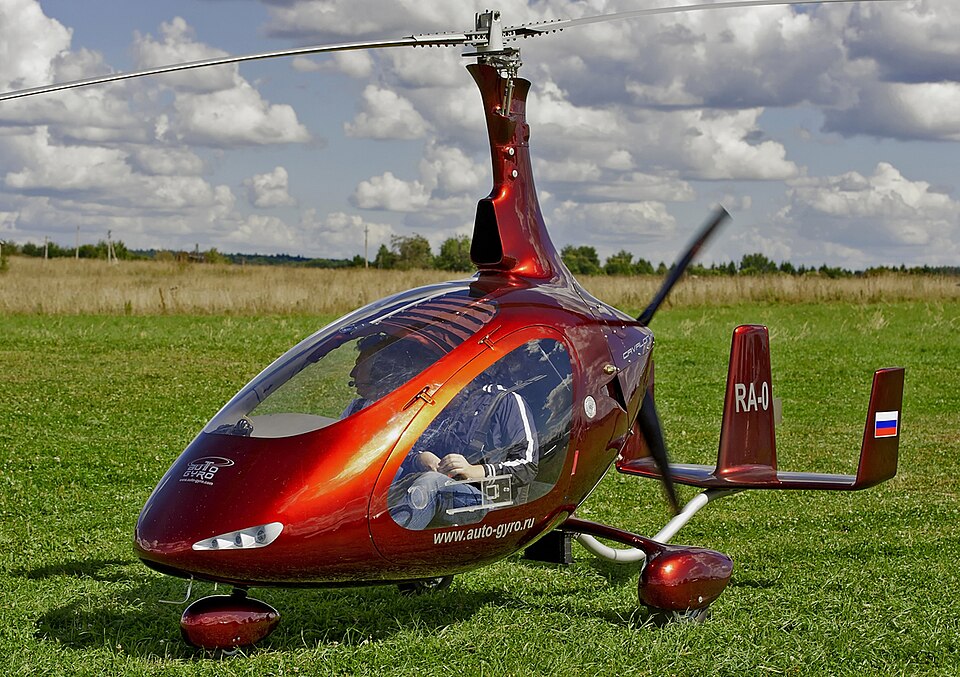
Gyroplanes are not helicopters in the traditional sense. The rotor on a gyroplane is unpowered and spins freely in the airflow, providing lift, while a separate propeller provides thrust. They are mechanically simpler than helicopters and, many pilots argue, easier to fly safely.
Some notable options in this category include:
- Bensen B-8M Gyrocopter — a classic homebuilt design with a long track record in the ultralight community, often built from plans or partial kits
- Dominator Ultralight Gyroplane — a modern single-seat gyroplane designed to meet Part 103 requirements
- Air Command Elite — a well-regarded kit gyroplane that has been in production for many years
General Part 103 Gyroplane Requirements:
| Parameter | Limit |
| Empty Weight | 254 lbs or less |
| Fuel Capacity | 5 gallons max |
| Top Speed | 55 knots max |
| Seats | 1 only |
| Use | Recreation and sport only |
Good to Know: Gyroplanes have a distinctive safety characteristic — the freely spinning rotor provides a natural autorotation effect even if the engine fails completely. This means they descend slowly and predictably in a power-out situation, which is a meaningful safety advantage in an aircraft category where redundancy is limited.
Building a kit aircraft is a significant undertaking that requires time, tools, and patience. But for aviation enthusiasts who enjoy the build process and want to stay within a tight budget, kit gyroplanes represent one of the most cost-effective paths to legal, license-free rotorcraft flight.
Ready to take your aviation passion further? Flying411 covers a wide range of aircraft topics — from the latest ultralight innovations to deep dives on performance and ownership — making it a go-to destination for aviation enthusiasts at every level.
How These 7 Ultralight Helicopters Compare
Here is a quick side-by-side look at the key specs for each option:
| Aircraft | Type | Empty Weight | Flight Time | Approx. Price | License Required? |
| Composite-FX Mosquito XEL | Piston helicopter | ~312 lbs (floats excluded) | ~1 hour | $58,000–$77,000 | No (Part 103) |
| Mirocopter SCH-2A | Coaxial piston helicopter | 249 lbs | ~1 hour | $35,000–$45,000 | No (Part 103) |
| Jetson ONE | eVTOL | ~190 lbs | ~15–20 min | ~$128,000 | No (Part 103) |
| RYSE Recon | eVTOL | Under 254 lbs | ~25 min | ~$150,000 | No (Part 103) |
| Pivotal Helix | Fixed-wing eVTOL | ~348 lbs | ~20 min | ~$190,000 | No (Part 103) |
| Lift Aircraft HEXA | Multi-rotor eVTOL | ~432 lbs | ~15 min | Experience center model | No (under exemptions) |
| Kit Gyroplanes | Gyroplane | Varies | Varies | $10,000–$30,000+ | No (Part 103) |
Prices and specifications are approximate and subject to change. Always confirm current details directly with manufacturers.
What to Think About Before You Buy
Owning an ultralight helicopter is not just about picking a machine you like the look of. There are several practical factors worth thinking through before you commit.
Storage and Transport
Ultralight helicopters are compact, but they are not pocket-sized. The Mirocopter SCH-2A, for example, is about 14 feet long and 8 feet tall. You will need a dedicated space — a garage, a small hangar, or a covered outdoor area — to store it safely. Some eVTOLs like the Jetson ONE have folding arms that reduce their width for SUV-style transport.
Maintenance
Even ultralight aircraft require regular mechanical attention. For piston-engine rotorcraft like the Mosquito XEL or Mirocopter SCH-2A, you will be dealing with standard helicopter maintenance tasks — rotor inspections, engine servicing, and occasional parts replacement. eVTOLs have fewer moving parts by design, but battery health and motor condition still need periodic checking.
Where to Fly
Living in or near a rural area is a significant advantage for ultralight helicopter ownership. Part 103 restricts you from flying over populated areas, which means suburban backyards and city parks are off-limits. Wide-open rural land, private farms, and uninhabited coastal or mountain areas are the sweet spot for ultralight operations.
Quick Tip: If you are unsure about the airspace in your area, the FAA's SkyVector tool and the B4UFLY app are both free resources that can help you identify where you are — and are not — permitted to fly under Part 103.
Cost of Ownership
The purchase price is just the beginning. Factor in:
- Fuel costs (for piston models)
- Battery replacement costs (for eVTOLs)
- Insurance (not legally required for Part 103 aircraft, but strongly advisable)
- Storage or hangar fees
- Training and instruction costs
- Regular maintenance and inspections
For those interested in the broader world of personal aviation and what ownership really entails, reading about the world's most remarkable helicopters and the fastest production helicopters can give you a strong sense of how ultralight aircraft fit into the broader rotorcraft landscape. You may also find it useful to explore top luxury helicopter options to understand what higher-end rotorcraft ownership looks like at the certified level.
How Ultralight Helicopters Fit Into the Broader World of Rotorcraft
Ultralight helicopters are a small but fascinating corner of the aviation world. They share the sky with everything from single-engine trainers to military-grade machines.
Understanding how the ultralight category fits into the larger picture can help you appreciate both the freedom and the limitations it offers. For example, many of the stealthiest helicopters in the world are military aircraft that represent the pinnacle of rotorcraft engineering — light-years removed from an ultralight in design complexity. Meanwhile, the strongest U.S. military helicopters demonstrate just how capable rotorcraft can become when engineering, funding, and purpose all align.
None of that engineering is required to have an extraordinary experience in an ultralight. But knowing where these machines sit in the broader world of aviation can give you a grounded perspective on what you are flying, and what it is capable of.
Fun Fact: The concept of a single-seat, license-free flying vehicle has been a goal for aviation enthusiasts since the earliest days of ultralight flight in the 1970s and 1980s. Part 103 itself was established in 1982, making it one of the longer-standing frameworks for accessible personal flight in the world.
If you are seriously considering stepping into the ultralight helicopter world, Flying411 can help guide your research — from understanding aircraft specs to finding the right aircraft for your flying goals. Visit Flying411 and start your aviation journey today.
Conclusion
The idea that you can legally lift off the ground in a helicopter without ever setting foot in flight school might sound too good to be true — but it is not. The FAA's Part 103 ultralight rules make it a genuine reality for thousands of aviation enthusiasts across the United States. From the fuel-sipping Mirocopter SCH-2A to the futuristic Jetson ONE, the 7 helicopters that don't require a license cover a wide range of styles, budgets, and flying experiences.
None of this means you should skip training. Quite the opposite. The fact that a license is not required is a legal detail, not an invitation to take chances. Getting proper instruction — even just enough hours to achieve a solo hover endorsement — is the single most important step you can take before climbing into any of these aircraft.
The world of ultralight rotorcraft is genuinely exciting, and it is becoming more accessible with every new eVTOL model that reaches the market.
If you want to stay on top of what is happening in personal aviation, Flying411 is your go-to resource for aircraft news, guides, and honest information — because the sky really is more reachable than most people think.
Frequently Asked Questions
Can you legally fly a helicopter without a pilot's license in the USA?
Yes. Under the FAA's 14 CFR Part 103 ultralight rules, you can legally operate a single-seat helicopter that meets specific weight, speed, and fuel requirements without holding a pilot's certificate or medical certificate. Operating rules still apply, including restrictions on airspace, time of day, and location.
Do I need any training at all to fly an ultralight helicopter?
No training is legally required under Part 103. However, aviation organizations, manufacturers, and experienced pilots universally recommend getting supervised instruction before flying solo. Helicopters are technically demanding, and learning to hover safely typically takes around 10 hours or more of practice.
What is the cheapest helicopter you can fly without a license?
As of current production models, the Mirocopter SCH-2A is among the most affordable options, with pricing in the range of $35,000 to $45,000 depending on the distributor. Kit-built gyroplanes can be even more affordable, with some kits starting well under $20,000, though they require significant build time.
How long can you fly an ultralight helicopter on a single tank?
It depends on the aircraft. Traditional piston-engine ultralight helicopters like the Mirocopter SCH-2A and the Mosquito XEL offer around one hour of flight time on a full 5-gallon tank. Electric eVTOLs like the Jetson ONE and RYSE Recon typically offer around 15 to 25 minutes of flight per charge.
Are ultralight helicopters safe?
Ultralight helicopters carry real risks, particularly for untrained operators. They are mechanically simpler than certified helicopters but offer little redundancy in most cases. Modern eVTOLs like the Jetson ONE and RYSE Recon have built-in safety systems including motor redundancy, auto-hover functions, and ballistic parachutes. Proper training and a thorough understanding of your specific aircraft's limitations are the most effective safety measures available.