Most people picture stealth technology on fighter jets or bombers. A sleek, angular plane slipping past radar screens is almost cinematic at this point. But stealth helicopters? That's a much stranger and more secretive corner of aviation history.
These are machines built to disappear. Not just from radar, but from ears, heat sensors, and even cameras. They don't scream through the sky like a fighter. They creep. And they have been doing it since at least the early 1970s. The story of the stealthiest helicopters in the world is part spy thriller, part engineering marvel, and entirely fascinating.
Key Takeaways
The stealthiest helicopters in the world use a combination of radar-absorbent materials, noise-dampening rotor designs, infrared suppression systems, and carefully shaped fuselages to avoid detection. From the CIA's secret "Quiet One" used during the Vietnam War to the classified Black Hawks that appeared in the 2011 Bin Laden raid, stealth helicopter technology has grown quietly in the shadows for decades. Some aircraft are fully purpose-built for low observability, while others are heavily modified versions of existing platforms.
| Helicopter | Country | Key Stealth Feature |
| Hughes 500P "Quiet One" | USA | Acoustic noise reduction |
| Boeing-Sikorsky RAH-66 Comanche | USA | Radar cross-section reduction, IR suppression |
| Stealth Black Hawk (Operation Neptune Spear) | USA | Radar-absorbent material, modified tail rotor |
| Changhe Z-10 | China | Rhombic fuselage, upward exhaust, RAM coating |
| HAL Prachand (LCH) | India | Canted panels, IR suppressor, digital camouflage |
| Eurocopter Tiger | Europe (France/Germany) | Multi-signature reduction design |
| Westland WG 47 (Concept) | UK | Faceted fuselage, internal weapons, IR routing |
Flying411 covers the world of aviation with the depth and curiosity it deserves. Whether you're a casual enthusiast or a seasoned aviator, you'll find something here worth reading.
Why Making a Helicopter Stealthy Is So Difficult
Before getting into the list, it helps to understand why stealth helicopters are so rare. Fixed-wing stealth aircraft have challenges, but helicopters have a whole extra set of problems stacked on top.
Think about what a helicopter is doing at any given moment. Its main rotor is spinning rapidly overhead, generating enormous noise. The tail rotor spins too, adding its own signature. The engines produce heat. The whole airframe vibrates. And unlike a jet cruising at altitude, helicopters typically fly low and slow, right in the middle of threat environments.
Why It Matters: Low-flying aircraft are harder to hide behind terrain or altitude. A stealth helicopter must reduce acoustic, radar, and infrared signatures all at once, while still functioning as a capable combat or recon platform.
One of the biggest noise culprits is something called blade vortex interaction. As each rotor blade spins, it creates small tornado-like vortices at its tip. The next blade then strikes those vortices, creating that distinctive "thwop-thwop" sound that can carry for miles. Solving that problem is one of the central engineering puzzles of stealth rotorcraft design.
A helicopter's radar cross-section (RCS) is also notoriously difficult to shrink. The spinning rotor blades reflect radar signals constantly and from unpredictable angles. The fuselage, cockpit glazing, weapons mounts, and tail assembly all add to the radar return. It is very difficult to make a helicopter stealthy after the design is already locked in. Doing it from scratch is complex enough.
Good to Know: "Stealth" doesn't mean invisible. The correct technical term is "low observable." These aircraft are designed to reduce their detectability across radar, infrared, acoustic, and electromagnetic spectrums — not eliminate it entirely.
To understand how helicopters generate lift and why that creates such noise, it helps to look at the basic physics of rotorcraft flight first.
The 7 Stealthiest Helicopters in the World
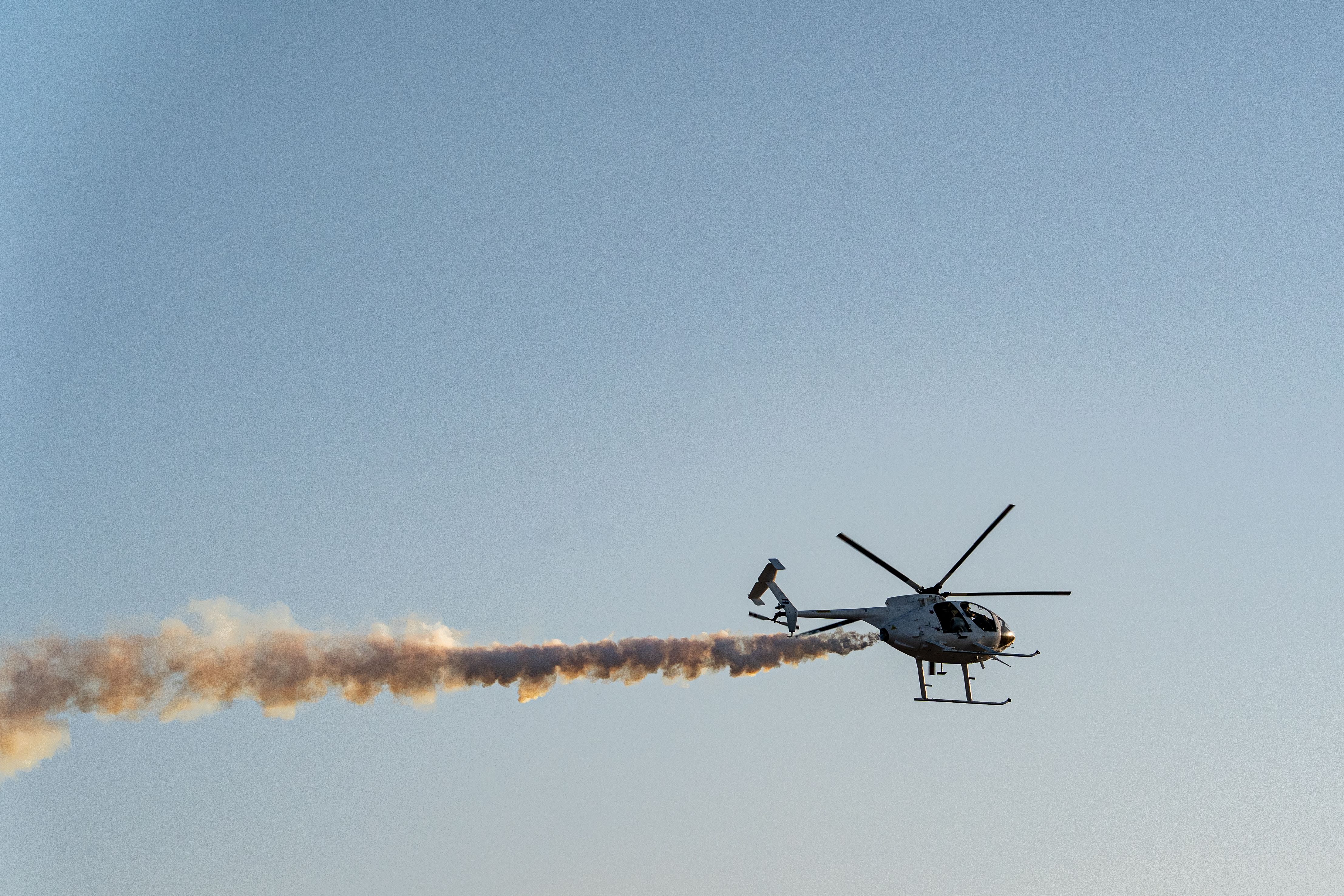
1. Hughes 500P "The Quiet One" — USA (1971)
This is where it all begins. The Hughes 500P, nicknamed "The Quiet One," is widely considered the world's first purpose-built stealth helicopter. It was created in secrecy for the CIA during the Vietnam War, and its mission was almost as remarkable as the machine itself.
The CIA needed a helicopter that could sneak into North Vietnam under cover of darkness, insert commandos, and deploy a phone-line wiretap without anyone hearing it coming. Hughes Tool Company's Aircraft Division was contracted to modify an OH-6A light helicopter into something far more covert.
Fun Fact: Engineers at Hughes first started working on noise reduction because a wealthy California suburb complained about police helicopters flying overhead. That civilian irritation ended up inspiring one of the Cold War's most secret aircraft.
The modifications were significant. A five-bladed main rotor replaced the original four-blade design. A new four-bladed tail rotor spun at reduced speed to cut noise. A large muffler was added, and the aircraft received a coat of black radar-absorbent paint. The result was a helicopter so quiet that CIA personnel standing on the landing pad couldn't tell which direction it was coming from until it was nearly overhead.
On the nights of December 5 and 6, 1972, the "Quiet One" flew deep into North Vietnam, nap-of-the-earth, in total darkness, and the mission reportedly succeeded. The wiretap fed intelligence for months. Some of its design innovations later appeared in production helicopters, including the scissor-style tail rotor found on the AH-64 Apache.
Key stealth features:
- Five-bladed main rotor to reduce blade vortex interaction noise
- Low-speed, four-bladed tail rotor
- Engine muffler system
- Radar-absorbent black paint coating
Pro Tip: The "P" in Hughes 500P stood for "Penetrator" — a nod to the aircraft's purpose of penetrating denied airspace without being heard or seen.
2. Boeing-Sikorsky RAH-66 Comanche — USA (1996–2004)
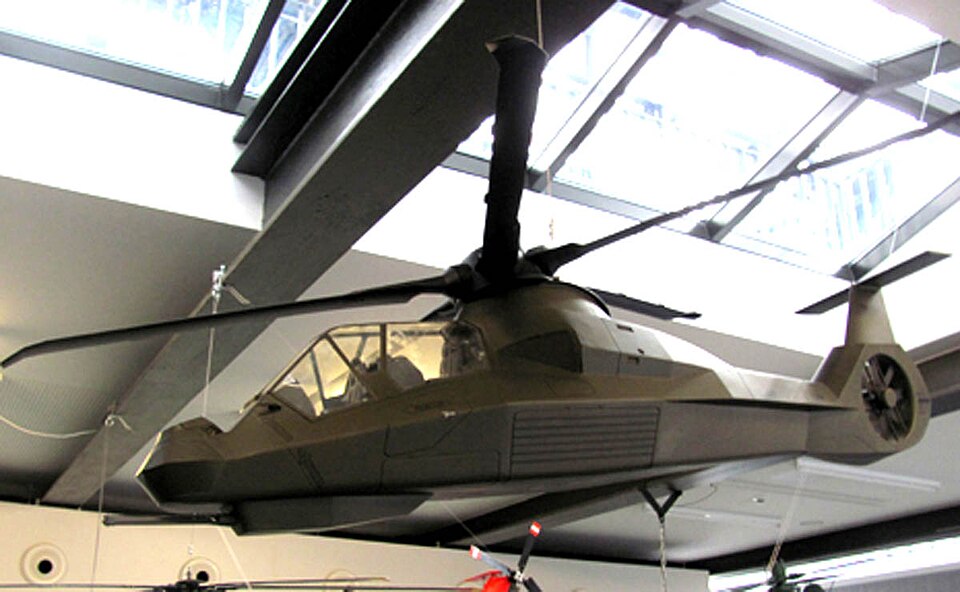
The RAH-66 Comanche is probably the most talked-about stealth helicopter that never actually entered service. It was a hugely ambitious program, jointly developed by Boeing and Sikorsky, that aimed to give the U.S. Army a true low-observable reconnaissance and attack helicopter.
The Comanche's exterior surfaces were faceted and coated with radar-absorbent material (RAM). Its weapons were stored internally in retractable bays, so no missiles or guns stuck out to create radar reflections when not in use. The tail section was fully shrouded, funneling engine exhaust through an infrared suppressor. Even the cockpit glazing was angled to minimize radar return.
Keep in Mind: The Comanche's radar cross-section was reported to be dramatically smaller than the AH-64 Apache it was designed to replace — with some estimates suggesting the difference was in the hundreds of times smaller, though exact figures remain classified.
Its rotor system was also designed with acoustics in mind. A five-blade composite main rotor and a pioneering canted tail rotor assembly helped quiet the aircraft significantly. Its infrared signature was reported to be reduced by a substantial margin compared to comparable helicopters of the era.
The program ran from roughly 1996 to 2004, consuming a significant portion of the U.S. Army's rotary-wing budget before being cancelled. Technical issues across software, weight targets, radar signature, and weapons system performance proved too difficult to resolve at an acceptable cost. Two prototypes were built and both are now on display at the U.S. Army Aviation Museum.
Despite the cancellation, the Comanche's development was not wasted. Its technology is widely believed to have directly influenced the classified stealth Black Hawks that appeared years later.
Key stealth features:
- Faceted, RAM-coated exterior surfaces
- Internal weapons bays with retractable pylons
- Shrouded tail rotor with infrared suppression
- Canted five-blade main rotor for acoustic reduction
If you want to go deeper on unusual military helicopter designs and the engineering behind them, Flying411's breakdown of weird military helicopters is a great next stop.
3. Stealth Black Hawk — USA (Revealed 2011)
No helicopter on this list captures the imagination quite like the mystery aircraft used in Operation Neptune Spear, the 2011 Navy SEAL raid on Osama bin Laden's compound in Abbottabad, Pakistan.
Two heavily modified Black Hawks flew the SEAL team roughly 90 minutes from Jalalabad, Afghanistan into Pakistan. One of them crashed in the compound during the mission. The crew was unharmed and the mission succeeded, but the helicopter's wreckage — specifically its unusual tail section — was photographed and broadcast worldwide.
Fun Fact: The tail section left behind at the compound had a distinctive angular, shrouded design that aviation observers immediately recognized as something far beyond standard military equipment. It took the media a day or two to realize what they were actually looking at.
The tail rotor assembly was clearly not standard. It featured noise-dampening fairings and an angular enclosure that reduced both acoustic and radar signatures. The fuselage was reportedly coated with radar-absorbent material, and the aircraft used a gray paint scheme rather than the typical black associated with special operations aircraft — suggesting the use of specific radar-absorbing coatings.
Details about this aircraft remain largely classified. What is known is that these helicopters were described by former U.S. President Barack Obama as "Black Hawk helicopters that had been modified for stealth." They are widely believed to be the operational descendants of Comanche-era research, finally put to use in the most famous special operations mission of the 21st century.
Key stealth features:
- Modified tail rotor assembly with shrouded fairings
- Radar-absorbent material coatings
- Noise-suppression modifications
- Carefully designed flight profile and approach routing
4. Changhe Z-10 — China (2003)
China's first purpose-built attack helicopter, the Changhe Z-10, incorporates a notable range of low-observability features that place it firmly among the world's stealthiest operational combat helicopters.
The Z-10's airframe is built around a slim, rhombic profile. Its top and bottom fuselage halves are canted inward, meeting at a distinctive ridge line that minimizes the frontal radar cross-section. Radar-absorbent material is applied to the fuselage surface. The aircraft also features a Hover Infrared Suppression System (HIRSS) that mixes cold air into the engine exhaust before it exits — and later production variants repositioned the engine nozzle to face upward, further reducing heat signature.
Good to Know: The Z-10 was co-developed with the Russian Kamov Design Bureau, the same firm behind some of Russia's most advanced attack helicopters. That collaboration brought significant expertise in low-observability fuselage design to the project.
The rotor system features swept blade tips designed to reduce both vibration and acoustic signature. The Z-10 also carries an electronic warfare pod with a stealth enclosure, adding a layer of active protection to its passive design features.
Key stealth features:
- Rhombic fuselage shape for reduced radar cross-section
- RAM coatings on fuselage
- Upward-facing engine exhaust for infrared reduction
- Swept-tip rotor blades for acoustic reduction
- Integrated electronic warfare system
5. HAL Prachand (LCH) — India
India's Hindustan Aeronautics Limited (HAL) Light Combat Helicopter, known as the HAL Prachand, is the country's first domestically designed and produced attack helicopter. It entered service with the Indian Air Force and Indian Army in recent years, and it incorporates a meaningful set of stealth design features.
The Prachand's exterior uses canted flat panels to minimize radar cross-section, a technique borrowed from fixed-wing stealth design. An infrared suppressor is fitted to the engine exhaust. The aircraft also reportedly features a digital camouflage system for visual concealment. Its dynamic systems — including a hingeless main rotor and a bearingless tail rotor — work with an anti-resonance isolation system that dampens vibration, reducing acoustic signature in the process.
Pro Tip: The Prachand was designed with high-altitude operations in mind, particularly along India's mountain borders. Its stealth features serve double duty — reducing detectability in high-threat mountain terrain where radar systems and shoulder-fired missiles are significant risks.
The Prachand is notable as a rare example of a front-line operational attack helicopter from a non-Western, non-Chinese power that has invested in measurable stealth features from the design stage rather than retrofitting them.
Key stealth features:
- Canted flat panel fuselage for reduced RCS
- Engine exhaust infrared suppressor
- Digital camouflage system
- Hingeless/bearingless rotor system for vibration reduction
6. Eurocopter Tiger — Europe (France/Germany)
The Eurocopter Tiger (now Airbus Helicopters Tiger) was designed from its earliest stages with a multi-signature reduction philosophy. Developed jointly by France and Germany, the Tiger was intended to minimize visual, radar, infrared, and acoustic signatures simultaneously — a comprehensive approach that was relatively unusual for its time.
The Tiger uses composite materials extensively, which inherently reduce radar return compared to metal construction. Its design incorporates measures to reduce engine heat signature, and its acoustic profile was a specific focus during development.
Fun Fact: The design of the British Westland WG 47 stealth helicopter concept — a top-secret program from the 1980s that was never built — reportedly influenced the NH90 transport helicopter through the application of stealth profiling to its fuselage. The Eurocopter Tiger benefited from similar thinking during its design phase.
The Tiger is in service with France, Germany, Australia, and Spain, making it one of the most widely operated helicopters with designed-in stealth characteristics. It is not a pure stealth platform in the way the Comanche was intended to be, but it represents a serious and operational approach to reducing battlefield detectability across multiple signature types.
Key stealth features:
- Composite construction for reduced RCS
- Multi-signature reduction: visual, radar, infrared, acoustic
- Purpose-designed airframe for low observability in combat roles
7. Westland WG 47 — UK (1980s Concept)
The Westland WG 47 never flew. It never entered production. And for years, almost no one outside a small group of British engineers knew it existed. But it deserves a place on this list because of the influence it had and the sophistication it represented for its era.
During the 1980s, British company Westland Helicopters undertook a classified research program to develop a stealth attack helicopter. The WG 47 was based on the Westland Lynx and incorporated a remarkable array of low-observability features for the time.
Its fuselage was faceted in the same way as the F-117 Nighthawk. Weapons were stored internally. It used twin canted tail rotors instead of a single exposed one. Engine exhaust, cooling, and environmental systems were all routed into a side-exiting infrared suppressor. Even the cockpit glazing was angled outward at a specific pitch to eliminate optical glint toward the horizon.
Keep in Mind: The WG 47 program concluded in 1987 without producing a flying prototype, but its research was not wasted. Its stealth profiling techniques reportedly found their way into the NHIndustries NH90 transport helicopter, a widely used platform across NATO allies.
The WG 47 shows that stealth helicopter research was happening in parallel across multiple nations during the Cold War, far from the public eye. It is one of the more unusual and lesser-known examples of experimental helicopter design that aviation history has to offer.
Key stealth features:
- Faceted fuselage for radar cross-section reduction
- Internal weapons bays
- Twin canted tail rotors
- Side-exiting IR suppressor for all exhaust systems
- Horizon-angle cockpit glazing to eliminate optical glint
How Stealth Technology Works on Helicopters
Understanding what makes a helicopter stealthy means looking at four distinct types of detection that military planners try to defeat.
Radar Signature Reduction
Radar works by sending out a pulse and waiting for it to bounce back. The bigger and flatter a surface, the stronger the return signal. Stealth aircraft use two main strategies against radar: shaping and materials.
Shaping means designing the airframe so that radar pulses bounce away at angles that don't return to the source. Faceted fuselages, canted panels, and curved surfaces all do this.
Radar-absorbent materials (RAM) are coatings and composites that absorb radar energy rather than reflecting it. Applied to the fuselage, they reduce the strength of any returning signal.
On helicopters, the spinning rotor blades remain one of the hardest problems to solve. They reflect radar constantly, and the motion creates a distinctive signature that radar systems can identify.
Infrared Suppression
Every engine produces heat. That heat rises as an infrared signature that heat-seeking missiles can track. Infrared suppression systems work by mixing cooler air with engine exhaust before it exits the aircraft, lowering the temperature of the exhaust plume. Repositioning exhaust nozzles — pointing them upward instead of backward, for example — also shields the heat from missile seekers approaching from below or the sides.
Heads Up: Even with IR suppression, a helicopter operating near threats is vulnerable to modern man-portable air-defense systems (MANPADS). Stealth features reduce risk, but they don't eliminate it. That's why stealth helicopters often combine low-observability design with electronic warfare systems and specific tactical routing.
Acoustic Reduction
Noise is perhaps the most unique stealth challenge for helicopters. Blade vortex interaction, tail rotor noise, transmission sounds, and engine turbine whine all add up to a helicopter signature that can be detected without any electronic equipment at all.
Engineers address this through multiple approaches. Increasing blade count allows each blade to spin more slowly, reducing the tip speed that generates the loudest vortex noise. Specially shaped blade tips — sometimes swept or curved — reduce how aggressively each blade strikes the previous blade's vortex. NOTAR (No Tail Rotor) systems eliminate tail rotor noise entirely by using an enclosed fan and directed airflow for anti-torque control.
| Noise Source | Common Solution |
| Blade vortex interaction | Increased blade count, swept blade tips |
| Tail rotor noise | Reduced-speed tail rotor, NOTAR systems, shrouded tail rotor |
| Engine turbine noise | Exhaust mufflers, engine enclosures |
| Transmission vibration | Anti-resonance isolation systems |
Visual and Electronic Signature
Visual stealth is the simplest concept: paint the aircraft to blend with the night sky or terrain. The "Quiet One" used flat black paint. The stealth Black Hawks reportedly used a specific gray tone.
Electronic signature management means controlling what signals the aircraft transmits. Radar and radio emissions from onboard systems can give away a helicopter's position just as easily as visible light can. Low-observable aircraft are often equipped with directional antennas, emission controls, and the ability to passively receive without broadcasting.
For a broader look at some of the most formidable rotorcraft ever built — including which helicopters are considered the most feared in combat — Flying411's deep look into the most feared helicopters is well worth a read.
The Future of Stealth Helicopters
Stealth helicopter development did not stop with the Comanche's cancellation or the revelations of 2011. Multiple nations have been pursuing next-generation low-observable rotorcraft, and the U.S. military has clearly maintained an active classified program.
Russia's Kamov Design Bureau has reportedly been developing a new stealth helicopter concept with coaxial rotors, reduced radar signature, and possible jet propulsion elements — though details remain sparse and much of the public information about specific designs like the "Ka-58" label appears to be speculative or based on concept models rather than confirmed hardware.
Fun Fact: Leaked images of a Kamov design concept with clear stealth features appeared online in 2018, reportedly shown at a closed meeting in front of Russian defense officials. The design featured an internal weapons bay and infrared heat suppression — concepts clearly influenced by the Comanche and the stealth Black Hawk programs.
In the United States, Sikorsky's S-97 Raider has been developed partly as a demonstration platform for high-speed coaxial rotor technology. While not a dedicated stealth platform, its design prioritizes low acoustic detection levels alongside speed — and it is widely seen as a stepping stone toward the next generation of military rotorcraft.
The broader pattern is clear: stealth is becoming an expected feature in new military helicopter designs, not an optional add-on. As air defense systems become more capable and shoulder-fired missile technology spreads, the pressure to reduce helicopter detectability in contested environments keeps growing.
Curious about what separates the safest helicopter designs from the rest? Flying411's guide to the safest helicopters ever made offers a different but equally compelling look at how engineering decisions shape what rotorcraft can survive.
Stealth vs. Conventional Helicopters: A Quick Comparison
| Feature | Conventional Helicopter | Stealth Helicopter |
| Radar Signature | High | Significantly reduced |
| Acoustic Signature | High | Reduced through blade and rotor design |
| Infrared Signature | High | Reduced through exhaust suppression |
| Weapons Storage | External pylons | Often internal bays |
| Design Complexity | Moderate | Very high |
| Cost | Lower | Substantially higher |
| Production Numbers | Mass production common | Very limited or classified |
Conclusion
Stealth helicopter technology sits at a fascinating intersection of engineering ambition, Cold War secrecy, and modern combat reality. From the CIA's whisper-quiet "Quiet One" threading through North Vietnam in 1972 to the classified Black Hawks that carried Navy SEALs into Abbottabad, the stealthiest helicopters in the world have shaped history from the shadows.
Only a small handful of nations have managed to build and operate genuinely low-observable rotorcraft, and most of what we know about the most advanced programs is still classified. But the technical principles are real, the operational impact has been proven, and the race to build quieter, harder-to-detect helicopters is far from over.
If you want to keep exploring the world of military and general aviation — from the physics of flight to the most unusual designs ever built — Flying411 is the destination that brings those stories to life with accuracy, depth, and genuine enthusiasm for everything that flies.
Frequently Asked Questions
What makes a helicopter "stealthy"?
A stealthy helicopter reduces its detectability across multiple signature types, including radar cross-section, infrared heat signature, acoustic noise, and visual or electromagnetic emissions. No single technology achieves this alone — it requires a combination of fuselage shaping, radar-absorbent materials, noise-dampening rotor designs, and exhaust suppression systems working together.
Are stealth helicopters actually invisible to radar?
No. The technically correct term is "low observable," not invisible. Stealth designs reduce the strength and clarity of radar returns, making the aircraft harder to detect and track — but a sufficiently powerful or specialized radar system may still be able to pick them up. The goal is to delay detection long enough to complete the mission.
Why was the RAH-66 Comanche program cancelled?
The Comanche program was cancelled in 2004 after spending a significant portion of the U.S. Army's rotary-wing budget. The program faced serious technical challenges across software integration, weight reduction, radar signature performance, and weapons system reliability. The Army ultimately decided to redirect funding toward upgrading existing helicopters and accelerating unmanned aerial vehicle development.
How did the 2011 Bin Laden raid reveal stealth helicopter technology?
When one of the modified Black Hawks crashed inside the compound, its unusual tail section remained largely intact and was photographed by media outlets worldwide. The tail's angular, shrouded design was unmistakably different from standard military equipment, and aviation experts quickly identified it as evidence of an operational stealth helicopter program that had never been publicly acknowledged.
What country has the most advanced stealth helicopter program today?
The United States is widely considered to have the most operationally proven stealth helicopter capability, based on evidence from the 2011 Bin Laden raid and the legacy of the Comanche program. China has made significant investments in low-observability features for its Z-10 attack helicopter. Russia has reportedly been developing new stealth concepts. However, much of the most advanced work across all nations remains classified.