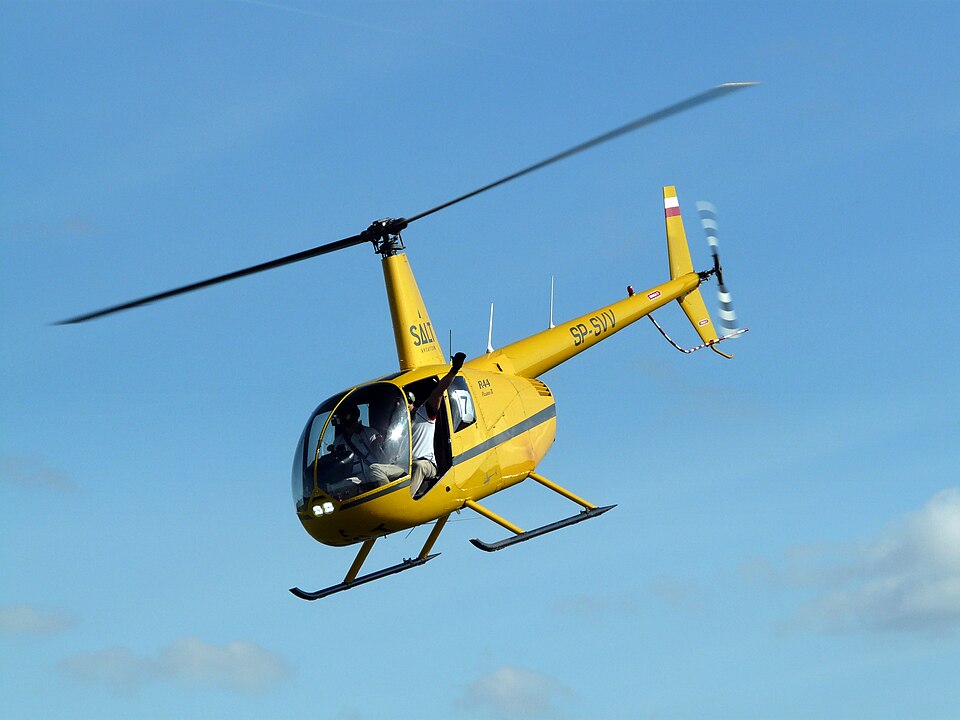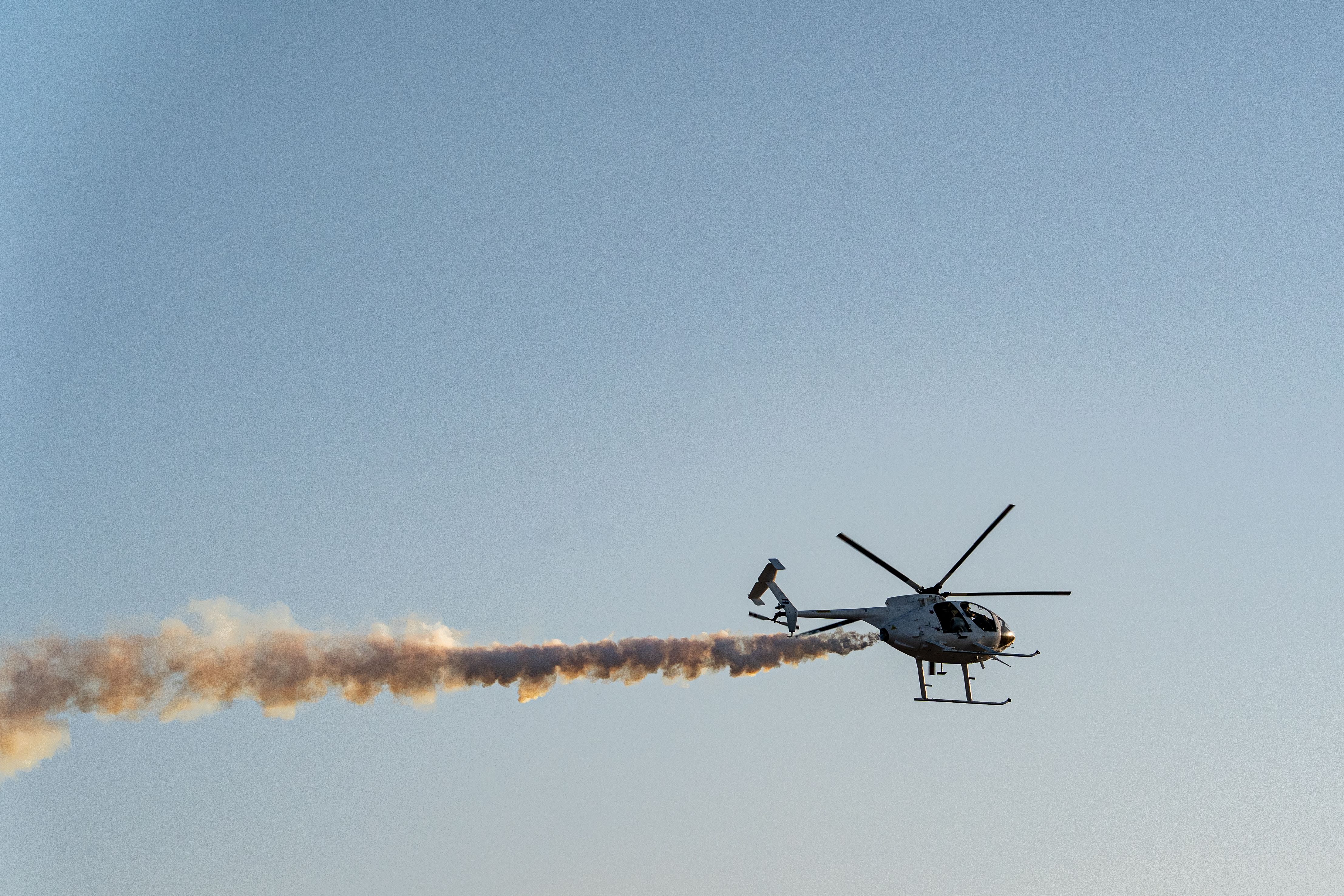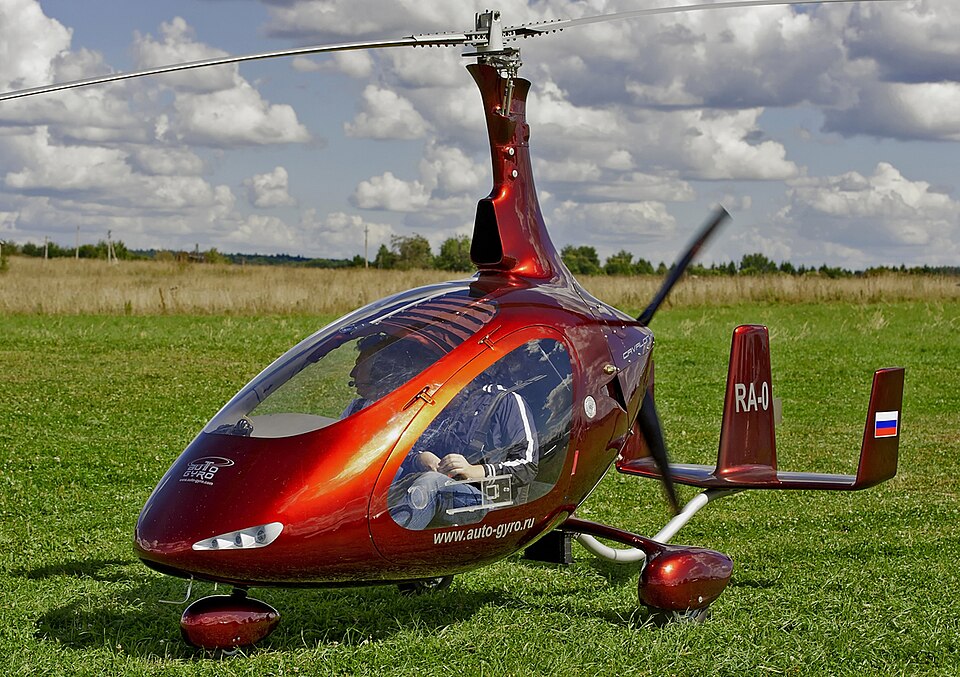
Most helicopters follow a familiar recipe: one big rotor on top, a smaller one on the tail, and a cockpit in the middle. It works. It has worked for decades. But not every engineer got that memo.
Throughout aviation history, some designers have pushed the idea of vertical flight to its absolute limit — and sometimes well past it. The result? Rotorcraft that look like they were sketched on a napkin after a very long night. Some were brilliant experiments that shaped modern aviation. Others were ambitious disasters. And a few were just… strange.
Whether you love aviation or are simply curious about the odd corners of engineering history, the weirdest helicopters ever built deserve a second look. These machines reveal how much creative thinking — and occasional chaos — went into getting humanity off the ground.
Key Takeaways
The weirdest helicopters ever built include machines with intermeshing rotors that almost touched, enormous blades assembled from World War II bomber parts, open-cockpit platforms where the pilot stood directly above spinning blades, and skeletal flying cranes with almost no fuselage at all. Each strange design was a serious attempt to solve a real problem in vertical flight, and several of them directly shaped the helicopters we use today.
| Helicopter | What Made It Weird | Era |
| De Bothezat "Flying Octopus" | Four rotors on outriggers, looked like a mechanical spider | 1920s |
| Hughes XH-17 "Flying Crane" | Enormous Frankenstein rotors built from WWII bomber parts | 1950s |
| De Lackner HZ-1 Aerocycle | Pilot stood directly above the rotor blades | 1950s |
| Kaman HH-43 Huskie | Intermeshing rotors that nearly touched | 1950s–1970s |
| Sikorsky CH-54 Tarhe (Skycrane) | Barely any fuselage — just a spine and a giant hook | 1960s–1990s |
| Flettner Fl 282 Kolibri | Twin rotors meshed like gears, looked like a flying dragonfly | 1940s |
| Sikorsky S-72 X-Wing | Rotors that locked in place and became airplane wings mid-flight | 1970s–1980s |
Flying411 is your go-to resource for helicopter knowledge, aviation guides, and everything rotorcraft-related — from beginner questions to deep dives into aviation history.
A Brief History of Weird: Why Helicopters Look So Different From Each Other
Before diving into the list, it helps to understand why helicopter design got so creative in the first place.
Vertical flight is genuinely hard. Helicopters fight physics in ways that fixed-wing aircraft simply do not. Every spinning rotor creates torque that wants to spin the whole aircraft in the opposite direction. Managing lift, yaw, and stability in all three axes simultaneously requires clever engineering.
So when designers were trying to solve these problems — especially in the early days of rotorcraft — they came up with some truly unorthodox solutions. Some ideas worked. Some did not. And a handful were so bizarre that they earned a permanent place in aviation history.
Fun Fact: Drawings of helicopter-like devices are said to date as far back as the late 1400s. The Chinese are even credited with creating a simple flying toy based on rotating blades as far back as 400 BCE.
The history of military helicopter types and names is filled with machines that never made it past the prototype stage — and some of them are the most fascinating aircraft ever conceived.
The 7 Weirdest Helicopters Ever Built
These seven helicopters span nearly a century of aviation experimentation — from the earliest days of rotorcraft to Cold War-era military programs. Some flew well. Some barely got off the ground. All of them looked like nothing else in the sky.
1. De Bothezat "Flying Octopus" (1922)
This was one of the first serious attempts to build a working helicopter for the U.S. military, and it looked nothing like what came after it.
In 1921, Russian-born engineer George de Bothezat began work on a rotary-wing aircraft at McCook Field in Ohio. Instead of a single central rotor, his design used four six-bladed rotors mounted on steel outriggers extending from a central frame — plus two horizontal propellers for steering, and two small airscrews near the gearbox to regulate the engine.
The result looked, as pilots of the time described it, like a giant mechanical octopus. The 3,700-pound machine made its first significant flight on December 18, 1922, rising six feet off the ground and staying aloft for just under two minutes.
It was unstable, difficult to control, and reportedly uncomfortable to fly. The U.S. Army eventually canceled the project. But the "Flying Octopus" holds the distinction of being the first rotorcraft ever built for the American military.
Good to Know: The de Bothezat helicopter was designed before standardized rotor concepts existed. De Bothezat was essentially inventing the rules as he went — which explains a lot about the result.
Why it matters: It proved that multi-rotor designs could achieve vertical lift, a concept that would resurface decades later in modern drones and multi-rotor aircraft.
2. Hughes XH-17 "Flying Crane" (1952)
If the de Bothezat was strange because of its layout, the Hughes XH-17 was strange because of its sheer scale — and the bizarre way it was put together.
The XH-17 was designed to test a tip-jet-powered rotor system for heavy cargo lifting. To cut costs, Hughes engineers assembled the airframe using parts from various World War II aircraft. The cockpit came from a CG-15 glider. The landing gear came from a B-25 bomber. The massive fuel tank came from a B-29 Superfortress.
But the most jaw-dropping feature was the rotor. With a diameter of around 130 feet, the XH-17 had what was said to be the largest rotor system ever put on a helicopter at the time. The tips of those blades were equipped with small jet engines fed by bleed air from two engines in the fuselage, giving the rotors their spin.
The nickname "Flying Gas Tank" was earned honestly — the aircraft burned fuel at a staggering rate. It could theoretically lift enormous loads, but its range was so short it was never practical.
Pro Tip: The tip-jet concept used on the XH-17 was actually a clever way to spin a massive rotor without needing a conventional transmission. The trade-off was fuel consumption that made the aircraft almost useless for real-world operations.
Why it matters: The XH-17 pushed the boundaries of rotor engineering and helped researchers understand the limits of tip-jet propulsion systems.
3. De Lackner HZ-1 Aerocycle (1954–1956)
This one might be the most unsettling entry on the list. The HZ-1 Aerocycle was an "airborne jeep" concept developed for the U.S. Army — a compact one-person helicopter that a soldier could theoretically fly after less than half an hour of training.
The pilot did not sit inside a cockpit. The pilot stood on a small platform directly above two counter-rotating rotor blades. That is not a typo. The soldier was positioned just above the spinning blades, controlling the craft by shifting body weight.
The Army envisioned an airborne cavalry unit using these machines for low-level reconnaissance. Initial tests showed some promise, but the project quickly ran into a serious issue: crashes. The machine was difficult to control and offered almost no protection for the operator. The idea that enemy soldiers would have a clear shot at a standing pilot hovering at low altitude added another layer of problems.
The Aerocycle project was scrapped, and the concept never made it to service.
Heads Up: Safety standards in the 1950s were very different from what we have today, but even by the standards of the era, standing directly above spinning rotor blades in a combat zone raised a few eyebrows.
Why it matters: The Aerocycle was an early attempt at a personal vertical-lift vehicle — a concept that engineers still explore today in a much safer form.
4. Kaman HH-43 Huskie (1950s–1970s)
The Kaman HH-43 Huskie looks, at first glance, like a relatively normal helicopter. Then you notice the rotors.
Instead of one main rotor and a tail rotor, the Huskie used two rotors placed right next to each other — so close that they shared overlapping airspace. This "intermeshing rotor" design, known as a synchropter, meant the blades rotated in opposite directions and were precisely timed to pass each other without colliding.
Every time you watch one fly, it looks like the blades should shred each other. They never do. The precise mechanical phasing keeps them apart by a margin that looks terrifyingly small from the outside.
This design eliminated the need for a tail rotor entirely, giving the Huskie excellent hover stability and very efficient lift for its size. It served as a search-and-rescue and firefighting helicopter for the U.S. Air Force for many years.
Fun Fact: The intermeshing rotor design used on the Huskie traces its roots to the German Flettner Fl 282 Kolibri from World War II — another entry on this list. Kaman's founder, Charles Kaman, was deeply inspired by the Flettner design.
Why it matters: The synchropter design proved that two rotors could share the same airspace safely, and the concept lives on in modern heavy-lift helicopters like the Kaman K-MAX, which can lift cargo heavier than its own empty weight.
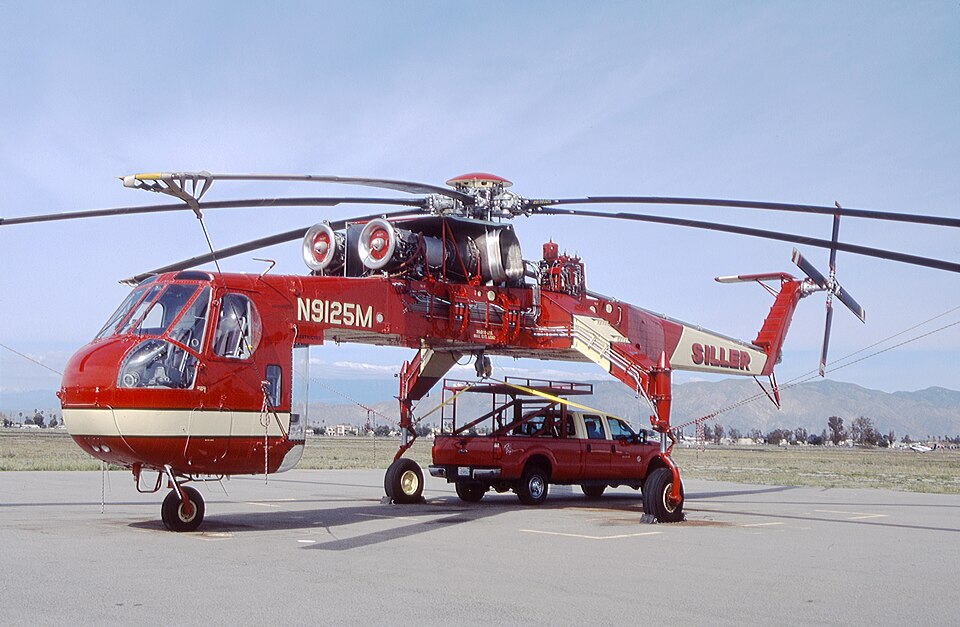
5. Sikorsky CH-54 Tarhe "Skycrane" (1964–1995)
Most helicopters have a fuselage. The CH-54 Tarhe barely bothered with one.
Designed as a heavy-lift helicopter for the U.S. Army, the Tarhe consisted of a cockpit, a large rotor system, and a long central spine — with very little else in between. The open-frame design was entirely intentional. Without a conventional fuselage in the way, the Tarhe could straddle enormous loads and lift them directly off the ground.
The aircraft could carry artillery pieces, bulldozers, mobile command posts, field hospitals, and even other helicopters. A crew member sat in a rear-facing cockpit position specifically to watch the load during pickup and delivery. In Vietnam, the Tarhe is said to have recovered hundreds of downed aircraft, saving enormous amounts of money in equipment that would otherwise have been abandoned.
It also once lifted 90 combat-equipped troops in a single flight using a specially designed "people pod" — reportedly the largest number of people ever lifted by a single helicopter at the time.
Why It Matters: The Tarhe showed that a helicopter did not need to look like a helicopter to be genuinely useful. Its skeletal design was a deliberate engineering choice that made it more capable, not less.
The civilian version, the Sikorsky S-64 Skycrane, is still in service today through Helicopter Express, fighting wildfires and performing heavy construction work around the world.
If you want to know more about the easiest helicopters to pilot and fly, Flying411 has you covered with clear, practical guides for every level of pilot.
6. Flettner Fl 282 Kolibri (1940s)
The Flettner Fl 282 Kolibri — "hummingbird" in German — was a World War II-era reconnaissance helicopter that looked more like a mechanical dragonfly than a military aircraft.
Developed in Germany during the early 1940s, the Kolibri used a synchropter design: two small rotors mounted on separate masts, angled slightly outward and timed to mesh with each other as they spun. The open cockpit and lightweight frame gave it an insect-like appearance that stood out even among the unusual aircraft of the era.
The Kolibri was actually remarkably capable for its size. It was stable, maneuverable, and could operate from ship decks — a significant achievement at the time. Germany used it for naval observation missions in the Mediterranean and Baltic seas.
Only a small number were ever produced before the war ended. Most were destroyed or captured, and very few survive today.
Good to Know: The Flettner Fl 282 is considered one of the earliest successful synchropter helicopters. Its design directly influenced Charles Kaman, who went on to build the HH-43 Huskie described earlier in this article.
Why it matters: The Kolibri demonstrated that intermeshing rotors could produce a stable, practical helicopter — a concept that took decades to fully catch on but eventually proved its worth.
7. Sikorsky S-72 X-Wing (1970s–1980s)
The last entry on this list is perhaps the most ambitious — a helicopter designed to transform into something else entirely while in flight.
The Sikorsky S-72 Rotor Systems Research Aircraft began life as a testbed for mixed helicopter and airplane design concepts. In the 1980s, with government funding, it was modified for the X-Wing program. The idea was remarkable: a helicopter with four thick rotor blades that could take off vertically like a helicopter, then, once airborne, lock the rotor in place so the blades acted like fixed airplane wings — providing lift while jet engines provided forward thrust.
The rotors used a complex compressed-air system that blew air over the blade surfaces to generate lift in helicopter mode, rather than relying on conventional blade pitch changes.
It looked genuinely like something from a science fiction film. The concept promised the vertical takeoff of a helicopter with the speed and efficiency of a jet.
The project never reached a completed flight test. The government invested a very large sum before the program was eventually canceled, and the X-Wing never flew with its rotor system fully installed. But it remains one of the most conceptually daring rotorcraft ever attempted.
Pro Tip: The X-Wing program was not just science fiction dreaming — it addressed real limitations of traditional helicopters, including why helicopters are so hard to fly at high speeds. Conventional rotors become inefficient above certain speeds, and the X-Wing was designed to solve exactly that problem.
Why it matters: The S-72 X-Wing pushed thinking about compound rotorcraft — aircraft that combine helicopter and fixed-wing properties — and those ideas continue to influence modern advanced air mobility designs.
What These Strange Machines Have in Common
Looking at all seven helicopters together, a clear pattern emerges. None of them were built for the sake of being strange. Each one was a genuine attempt to solve a specific problem in vertical flight.
Here is a quick comparison of the core problems each machine was trying to tackle:
| Helicopter | Problem Being Solved |
| De Bothezat "Flying Octopus" | How to achieve stable vertical lift with no established design rules |
| Hughes XH-17 | How to lift extremely heavy loads without a conventional transmission |
| De Lackner HZ-1 Aerocycle | How to give individual soldiers personal vertical lift on a tight budget |
| Kaman HH-43 Huskie | How to eliminate tail rotor drag and improve hover efficiency |
| Sikorsky CH-54 Tarhe | How to carry enormous external loads without a fuselage getting in the way |
| Flettner Fl 282 Kolibri | How to build a stable naval reconnaissance helicopter with minimal footprint |
| Sikorsky S-72 X-Wing | How to combine helicopter vertical lift with high-speed fixed-wing efficiency |
Some of these solutions worked brilliantly. Others were retired quietly. But each one advanced our understanding of what helicopters can do — and occasionally what they absolutely should not attempt.
Understanding what conditions a helicopter cannot fly in also helps explain why so many of these experimental designs were eventually shelved — performance under real-world conditions exposed limitations that test environments did not always reveal.
Keep in Mind: Many of the most important advances in helicopter technology came directly from experimental programs that appeared to fail. The X-Wing never flew fully configured, but its research contributed to modern tilt-rotor and compound helicopter designs.
Could You Fly One of These?
The short answer is: probably not, and possibly you should be relieved about that.
Several of these helicopters required exceptional skill or were abandoned specifically because they were too difficult or dangerous for regular pilots. The Aerocycle expected soldiers to master it in under half an hour. The X-Wing required an entirely new understanding of rotor control systems.
Modern helicopters, even unusual ones, go through extensive certification processes before anyone sits in the seat. If you are curious about the best helicopters to learn to fly, the good news is that today's training aircraft are far safer, more predictable, and more forgiving than anything on this list.
Quick Tip: If you are thinking about learning to fly helicopters, starting with a well-established training aircraft from a certified school is always the right move. Leave the intermeshing rotors and standing-above-the-blades experiments to aviation history.
Ready to explore the world of helicopters for yourself? Flying411 offers in-depth guides, comparisons, and resources to help you understand every aspect of rotorcraft aviation — from quirky history to practical pilot advice.
Conclusion
The weirdest helicopters ever built are more than just curiosities. They are proof that vertical flight pushed engineers into genuinely uncharted territory, and that solving hard problems sometimes produces results that look completely unhinged from the outside.
From the four-armed Flying Octopus of 1922 to the shape-shifting X-Wing of the 1980s, every strange machine on this list contributed something to the way helicopters are designed and flown today. Aviation history is full of ideas that seemed bizarre at the time but turned out to be exactly the kind of thinking the field needed.
If you want to keep exploring the world of rotorcraft — from the strange to the practical — Flying411 is the place to start. The weird stuff is just the beginning.
FAQs
What is the weirdest helicopter ever built?
Several helicopters compete for this title, but the de Bothezat "Flying Octopus" from 1922 is often cited as one of the strangest, with four large rotors on outriggers and an appearance that one pilot compared to a giant mechanical spider. The De Lackner HZ-1 Aerocycle, which required the pilot to stand directly above the rotor blades, is arguably even more alarming in concept.
Did any of these weird helicopters actually fly successfully?
Yes, several of them flew and performed well. The Kaman HH-43 Huskie served the U.S. Air Force reliably for years, and the Sikorsky CH-54 Tarhe proved highly effective during the Vietnam War. Strange-looking does not always mean unsuccessful.
Are there any weird helicopters still in service today?
The civilian version of the Sikorsky CH-54 Tarhe, known as the S-64 Skycrane or Erickson Aircrane, is still in active service performing firefighting and heavy construction work. The Kaman K-MAX, which uses the same intermeshing rotor concept as the Huskie, is also still in production and used for cargo lifting.
Why did so many experimental helicopters fail?
Most experimental helicopters failed for practical reasons rather than engineering flaws. Issues like excessive fuel consumption, difficult controls, high maintenance costs, or safety concerns during testing meant that even clever designs could not make it to full production. Real-world conditions often exposed limitations that theoretical designs did not anticipate.
How is a synchropter different from a regular helicopter?
A synchropter uses two rotors that intermesh in the same airspace, spinning in opposite directions and timed precisely to avoid collision. This eliminates the need for a tail rotor and can improve lifting efficiency. A regular helicopter uses one main rotor and a smaller tail rotor to counteract torque.