When people think about military power, they often picture fighter jets screaming across the sky. But helicopters? They do the heavy lifting — literally and figuratively. From dropping special forces behind enemy lines at night to hauling heavy cargo up a mountain, military helicopters are some of the most versatile machines ever built.
The U.S. military fields a wide and impressive fleet of rotary-wing aircraft. Each one has a specific job, a specific name, and a very specific reason for being there. Understanding military helicopter types and names gives you a real window into how modern armed forces operate — and why no two helicopters on the flight line look quite the same.
This guide breaks down the major categories, introduces the most well-known aircraft in each, and explains what makes every one of them worth knowing about.
Key Takeaways
Military helicopter types and names cover a broad spectrum of roles: attack, transport, utility, maritime, reconnaissance, and search and rescue. The U.S. military uses dozens of helicopter models across all five branches, each designed for a specific mission. Famous names like the Black Hawk, Apache, and Chinook handle everything from troop transport to precision strikes. Understanding these aircraft helps explain how the military moves people, delivers firepower, and saves lives from the sky.
| Helicopter | Type | Branch | Primary Role |
| AH-64 Apache | Attack | Army | Precision strikes, armed reconnaissance |
| UH-60 Black Hawk | Utility/Transport | Army, Air Force | Troop transport, medevac |
| CH-47 Chinook | Cargo/Transport | Army | Heavy-lift logistics |
| CH-53E Super Stallion | Heavy-Lift Transport | Marine Corps | Cargo, international operations |
| AH-1Z Viper | Attack | Marine Corps | Ground attack, escort |
| MH-6 Little Bird | Special Operations | Army | Covert insertions |
| SH-60 Seahawk | Maritime | Navy | Anti-submarine, search and rescue |
| OH-58 Kiowa Warrior | Reconnaissance | Army | Armed scout, battlefield observation |
| UH-1Y Venom | Utility | Marine Corps | Assault support, command |
| UH-72 Lakota | Light Utility | Army | Training, medevac, recon |
If you want to keep building your knowledge of rotary-wing aircraft, Flying411 is a great resource for aviation enthusiasts and professionals alike.
A Brief History of Military Helicopters
Helicopters did not arrive on the battlefield overnight. They were introduced to the U.S. military during World War II, where they were used mainly for reconnaissance and rescuing downed pilots. The machines were simple and slow, but they could do something no fixed-wing plane could: hover.
By the time of the Korean War, military helicopters had earned a reputation for medical evacuations — a role that saved countless lives. Then came Vietnam. That conflict transformed how armies thought about helicopters entirely.
From Rescue to Combat
In Vietnam, helicopters became the backbone of troop movement. The iconic UH-1 Iroquois — better known as "the Huey" — carried soldiers into the jungle and brought wounded men back out. It flew through gunfire, treetops, and monsoons. The Huey became a symbol of that era like no other aircraft.
At the same time, armed helicopters started appearing in force. Military planners realized that a helicopter with weapons mounted on it could provide air support faster than any fixed-wing aircraft waiting on a distant runway.
Fun Fact: The UH-1 Iroquois is said to be one of the most produced military helicopters in history, with many thousands manufactured across multiple countries.
From Vietnam onward, the U.S. military continued developing more specialized helicopters — faster, tougher, stealthier, and smarter. Today, the fleet includes machines purpose-built for almost any scenario imaginable.
The 8 Main Military Helicopter Types and Names
There are eight recognized categories of military helicopters. Each category serves a completely different purpose, and most have several aircraft models within them. Here is a detailed look at each type.
Attack Helicopters
Attack helicopters — sometimes called helicopter gunships — are built for one primary purpose: destroying enemy targets. They carry machine guns, rockets, missiles, and cannons. They are fast, agile, and designed to fly into contested airspace and come back out.
The AH-64 Apache is the most famous attack helicopter in the U.S. military. Operated by the Army, it features a 30mm chain gun under the nose, Hellfire anti-tank missiles, and Hydra rocket pods. It can fly in day, night, and adverse weather thanks to its sophisticated sensor suite. The Apache has seen action in conflicts across the Middle East and remains one of the most feared rotary-wing platforms in the world.
The AH-1Z Viper serves the Marine Corps. It is the latest evolution of the original Cobra attack helicopter design and features twin engines for better reliability and power. Its advanced targeting systems make it effective across a wide range of combat situations, from close air support to anti-armor missions.
Pro Tip: Attack helicopters often fly in pairs — one aircraft in front drawing attention while the other sets up for a strike. This tactic, known as "hunter-killer," is a staple of Apache operations.
Transport and Cargo Helicopters
Transport helicopters move people and supplies. Some carry troops into battle. Others haul ammunition, vehicles, food, and medical equipment to locations that ground vehicles simply cannot reach.
The CH-47 Chinook is the workhorse of Army heavy-lift transport. Its distinctive twin-rotor design — one rotor in front, one in back — gives it incredible lifting power. It can carry troops, artillery pieces, and even other helicopters slung beneath it. The Chinook has been in service since the 1960s and continues to receive upgrades that keep it relevant in the modern fleet.
The CH-53E Super Stallion, operated by the Marine Corps, is considered the largest and heaviest military transport helicopter in the U.S. fleet. It features a seven-bladed main rotor and can carry external cargo weighing tens of thousands of pounds. You have probably seen it on the news during international relief operations or diplomatic visits — it is the helicopter that tends to appear whenever something big needs to move.
Good to Know: The CH-47 Chinook uses a tandem-rotor design, meaning its two rotors spin in opposite directions. This cancels out the torque that would otherwise spin the aircraft — which is why it does not need a tail rotor.
Utility Helicopters
Utility helicopters sit in a middle ground between transport and combat. They can carry troops, support medevac missions, ferry commanders, and even mount weapons when needed. Think of them as the pickup trucks of the military air fleet — rugged, adaptable, and always busy.
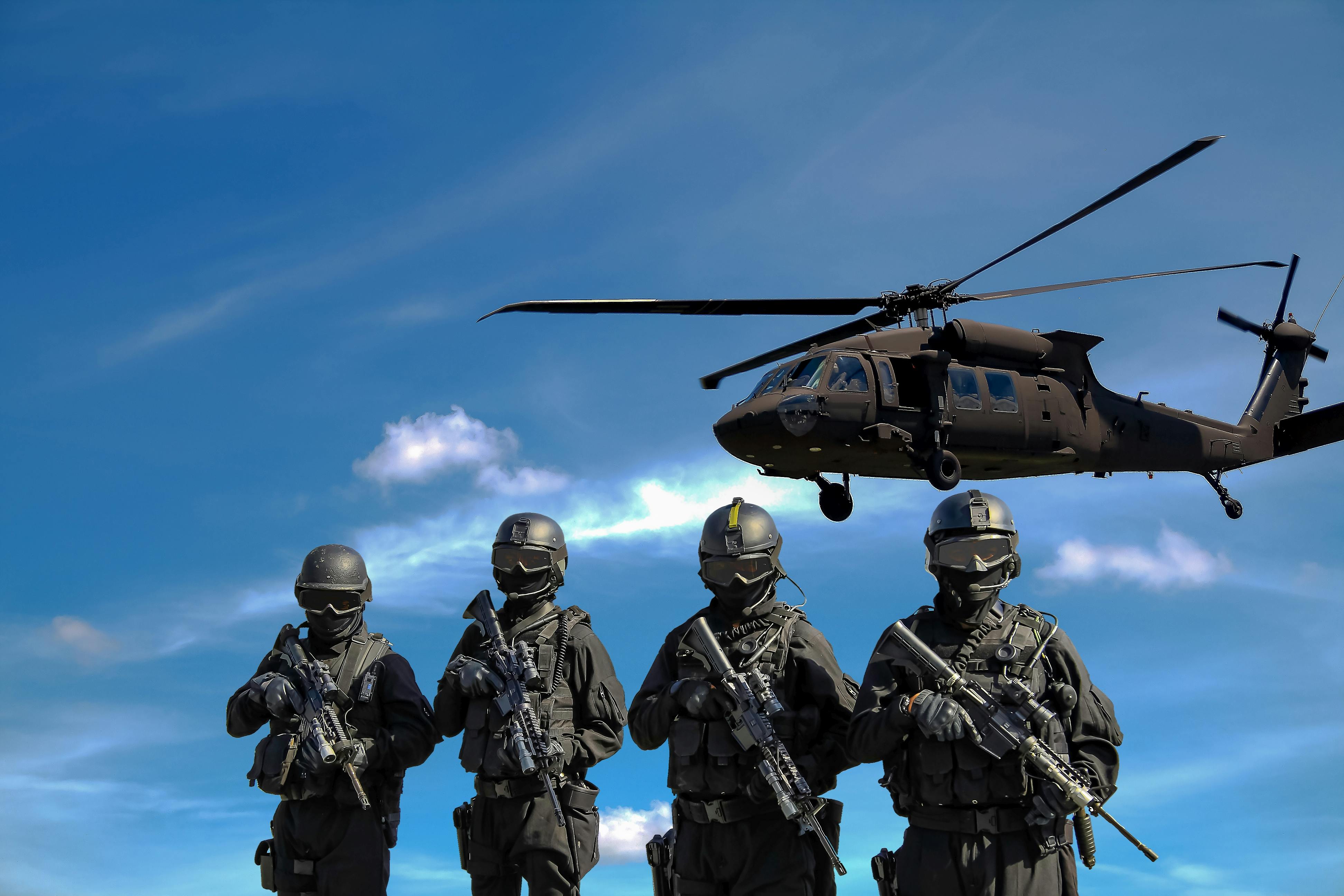
The UH-60 Black Hawk is the most iconic utility helicopter in the world. Operated across the Army, Air Force, and National Guard, it has been a central fixture in nearly every U.S. military operation since the early 1980s. It carries up to 11 fully equipped soldiers, can lift thousands of pounds of external cargo, and has been modified into dozens of specialized variants. The Black Hawk was designed to replace the aging Huey, and it has more than delivered on that promise.
The UH-1Y Venom serves the Marine Corps in a similar role. It carries troops, provides command and control support, and can fly day or night in varied weather conditions. Its upgraded design provides better range and payload capacity compared to earlier Huey variants.
Why It Matters: The Black Hawk is used by nearly every branch of the U.S. military in one form or another, making it the single most widely used helicopter in the American armed forces. Understanding it means understanding the backbone of U.S. military air mobility.
Special Operations Helicopters
Some helicopters are purpose-built for missions that never make the front page. These aircraft are smaller, quieter, and extremely precise. They deposit small teams of elite soldiers onto rooftops, into courtyards, or into the middle of nowhere — and then disappear before anyone knows they were there.
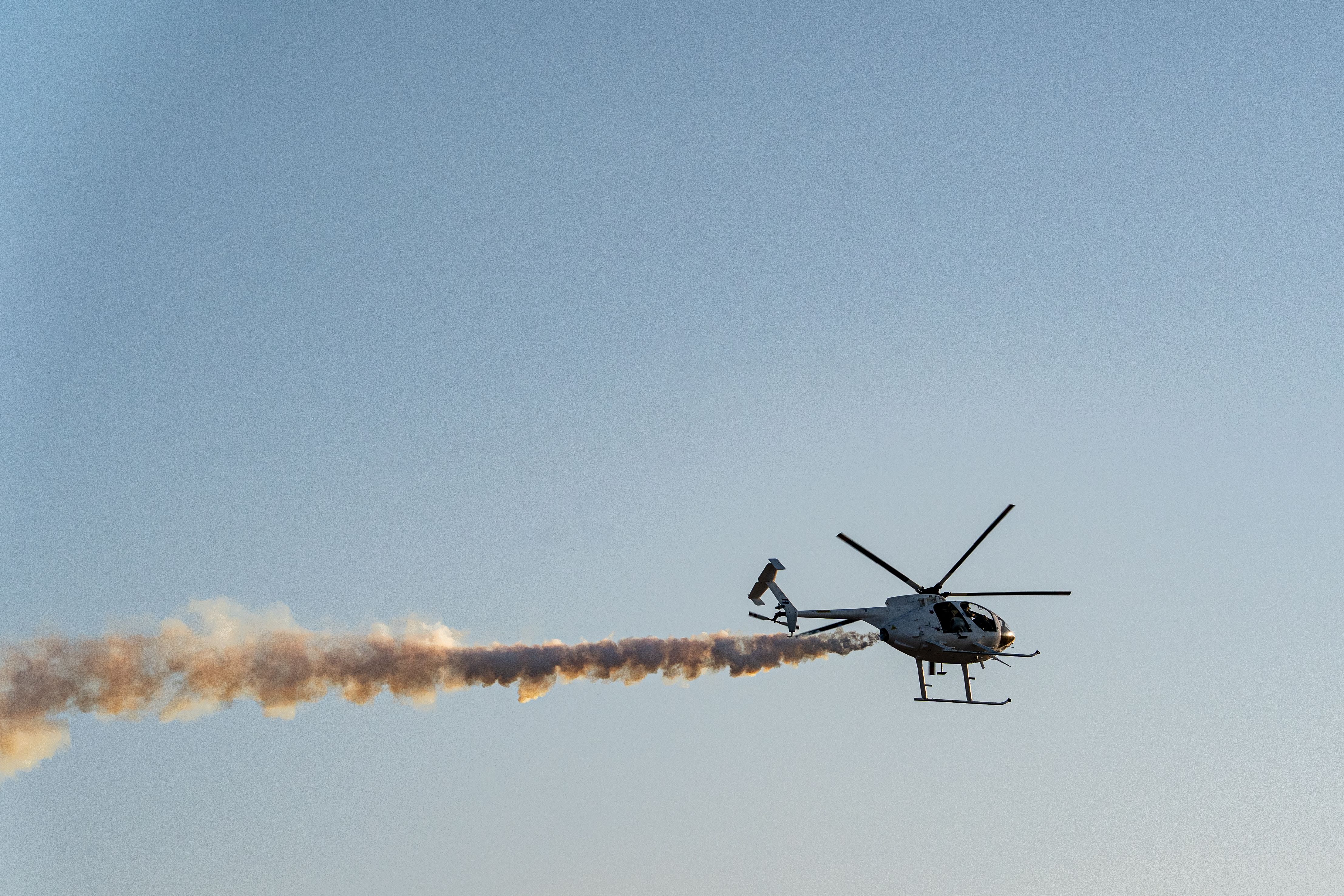
The MH-6 Little Bird is perhaps the most famous of these. Flown by the Army's 160th Special Operations Aviation Regiment — known as the "Night Stalkers" — the Little Bird can land in tight spaces that larger helicopters simply cannot reach. It famously appeared in the film and book "Black Hawk Down," depositing Delta Force soldiers in narrow Mogadishu streets.
The MH-60 Black Hawk is the special operations variant of the standard Black Hawk. It carries extra fuel tanks, advanced avionics, and communications gear built for long-range, low-visibility missions. A heavily modified version of this aircraft is widely believed to have been used during the 2011 operation that located Osama bin Laden.
Heads Up: Special operations helicopters often look similar to standard variants on the outside but carry completely different equipment inside. Spotting the differences requires a trained eye — or a very good photograph.
Maritime Helicopters
Maritime helicopters are built for operations at sea. They launch from the decks of destroyers, carriers, and frigates, and they perform missions that land-based helicopters simply cannot — including hunting submarines, rescuing sailors, and conducting anti-ship operations.
The SH-60 Seahawk is the Navy's primary ship-based helicopter. It carries sonar systems, torpedoes, and anti-ship missiles. It also plays a vital role in search and rescue at sea, capable of hoisting survivors from rough ocean water. The Seahawk is a maritime variant of the same Black Hawk family used on land by the Army.
The MH-53E Sea Dragon is a Navy helicopter designed for a very specific mission: minesweeping. It tows minesweeping equipment through harbors and shipping lanes to keep them clear of explosive threats. It is one of the largest helicopters in the Navy's fleet.
Fun Fact: Maritime helicopters must be specially reinforced to withstand the salt air, sea spray, and rolling ship decks that would quickly corrode or damage a standard land-based helicopter.
Reconnaissance Helicopters
Before you can fight, you need to know what is out there. Reconnaissance helicopters gather that information. They carry cameras, sensors, and communication systems that feed real-time intelligence back to ground commanders.
The OH-58 Kiowa Warrior has long served the Army as an armed scout. It features a mast-mounted sight — a sensor pod sitting above the main rotor blades — that allows it to peek over hilltops and treelines without exposing the aircraft. It can observe enemy positions and, when needed, fire its own weapons or direct the fires of Apache helicopters nearby.
Keep in Mind: Many reconnaissance helicopters are small and low-profile by design. They rely on staying out of sight rather than surviving direct hits, which is the opposite philosophy from attack helicopters.
Search and Rescue Helicopters
Search and rescue (SAR) helicopters are among the most emotionally resonant aircraft in any military fleet. They go where others cannot, often in terrible weather, to bring people home.
The HH-60 Pave Hawk is the Air Force's primary combat search and rescue helicopter. It carries advanced navigation and communications systems, aerial refueling capability, and defensive countermeasures. Its crews train extensively to recover downed pilots from deep inside enemy territory under fire.
The MH-60 Jayhawk serves the Coast Guard in a similar SAR role over open water, though it is a civilian Coast Guard asset rather than a military one in the traditional sense.
If you want a broader look at all civilian and commercial helicopter types alongside their military cousins, the guide to helicopter types and names from Flying411 is a solid place to start.
Training Helicopters
Every military pilot has to start somewhere. Training helicopters are designed to be forgiving, simple to fly, and reliable enough that student pilots can make mistakes without catastrophic consequences.
The UH-72 Lakota fills this role for the Army. Introduced in the mid-2000s, the Lakota is a light utility helicopter used for initial flight training at Fort Novosel (formerly Fort Rucker), the Army's primary helicopter training installation. It is also used for medical evacuation and reconnaissance missions in non-combat settings.
The TH-57 Sea Ranger, based on the Bell 206 JetRanger, has served the Navy and Marine Corps as a primary helicopter trainer for decades.
Whether you are a student pilot, an aviation fan, or just someone who looks up every time a helicopter flies over, Flying411 covers the topics that matter most in the world of rotary-wing and fixed-wing aviation.
How U.S. Military Helicopters Are Named
You may have noticed that most U.S. military helicopters carry two identifiers: a designation code and a proper name. The code tells you the function and variant. The name — well, that is where things get interesting.
The Designation System
The letter-and-number system used by the U.S. military follows a consistent logic:
- AH = Attack Helicopter
- UH = Utility Helicopter
- CH = Cargo Helicopter
- OH = Observation Helicopter
- MH = Multi-mission Helicopter (often special ops)
- SH = Search Helicopter (maritime)
- HH = Rescue Helicopter
The number after the letters identifies the specific aircraft design. Variants add letters at the end — so an AH-64A is an early Apache, while the AH-64E is the most current production version.
The Naming Tradition
The Army has a long tradition of naming its helicopters after Native American peoples and nations. The Apache, Chinook, Kiowa, Iroquois (Huey), Lakota, Comanche, and Black Hawk all follow this tradition. It is a practice that dates back decades and reflects a deliberate cultural tribute, though it has also generated ongoing conversation about representation and respect.
The Marine Corps and Navy tend to use more descriptive or animal-inspired names — Viper, Stallion, Seahawk, Sea Dragon.
Good to Know: The name "Huey" did not come from the Army — it was a nickname that stuck after the aircraft's original designation, HU-1, was spoken aloud. Soldiers simply started calling it the Huey, and the name never went away.
Comparing Key Military Helicopters Side by Side
Here is a quick comparison of some of the most important helicopters across categories to show just how different these aircraft really are.
| Helicopter | Role | Max Speed (approx.) | Key Weapon/Feature |
| AH-64 Apache | Attack | ~180 mph | 30mm chain gun, Hellfire missiles |
| UH-60 Black Hawk | Utility | ~180 mph | Troops, cargo, medevac |
| CH-47 Chinook | Heavy cargo | ~196 mph | Tandem rotors, 26,000 lb payload |
| AH-1Z Viper | Attack | ~255 mph | 20mm Gatling, Hellfire, Sidewinder |
| SH-60 Seahawk | Maritime | ~180 mph | Torpedoes, sonar, rescue hoist |
| MH-6 Little Bird | Special ops | ~175 mph | Compact, precision insertion |
| OH-58 Kiowa | Recon | ~147 mph | Mast-mounted sensor, Hellfire |
| UH-72 Lakota | Training | ~167 mph | Dual controls, multi-mission |
What Makes Military Helicopters Different from Civilian Ones
Military and civilian helicopters share the same basic physics, but the similarities mostly stop there. If you have ever wondered why a military helicopter looks so different from a news or medevac bird, here are the key reasons.
Armor and survivability. Military helicopters are built to take hits and keep flying. Many use ballistic-tolerant rotor blades, armored crew seats, and redundant hydraulic systems. Some can even auto-rotate to a safe landing if both engines fail — a skill that civilian pilots also train for, as you can read about in Flying411's look at the hardest things to do in a helicopter.
Weapons systems. Military aircraft carry integrated weapons — not just added-on guns. Targeting systems, fire control computers, and weapon management software are all baked into the design from the start.
Electronic warfare. Radar jammers, missile warning systems, and chaff dispensers protect military helicopters from guided weapons. Civilian aircraft carry none of this.
Range and endurance. Many military helicopters are designed for extended missions, sometimes with aerial refueling capability. Civilian helicopters are typically optimized for shorter hops. If long-range flight in any helicopter is of interest to you, Flying411 also covers the best helicopters for long distances.
Pro Tip: Military helicopters go through vastly more maintenance than civilian aircraft. Understanding what can go wrong with any rotorcraft is key — Flying411's breakdown of common helicopter problems is a useful read for anyone serious about rotary-wing aviation.
Which Branch Flies Which Helicopter?
Each branch of the U.S. military operates helicopters, but they do not all fly the same ones. Here is a quick breakdown.
Army — The largest helicopter fleet. Operates the Apache, Black Hawk, Chinook, Little Bird, Kiowa, and Lakota.
Navy — Focuses on maritime missions. Operates the Seahawk, Sea Dragon, and various training aircraft.
Marine Corps — Blends attack and transport. Operates the Viper, Super Stallion, Venom, and Osprey tilt-rotor.
Air Force — Focuses on special operations and rescue. Operates the Pave Hawk, and coordinated use of other platforms with Army units.
Coast Guard — Search and rescue at sea. Operates the Jayhawk and Dolphin.
Keep in Mind: When flying in or around military aircraft — whether as a passenger, observer, or student — there are specific rules about what you can and cannot bring. Flying411 covers items that are prohibited on a helicopter in full detail.
The Future of Military Helicopters
The U.S. military is actively developing the next generation of rotary-wing aircraft. Speed has always been a limitation of traditional helicopters — the rotor blades create aerodynamic challenges that cap how fast most helicopters can fly.
New designs like compound helicopters and tilt-rotor aircraft are changing that. The V-22 Osprey, already in service with the Marine Corps and Air Force, takes off like a helicopter but tilts its rotors forward to fly like a turboprop plane. Future programs aim to push rotary-wing aircraft even further in speed, range, and stealth.
There are also ongoing discussions about unmanned and optionally-piloted helicopters for resupply and reconnaissance missions — reducing risk to human crews while expanding what rotary-wing aviation can do on the battlefield.
Why It Matters: The transition to next-generation rotorcraft will likely reshape military aviation over the coming decades in ways as significant as the shift from the Huey to the Black Hawk was in the 1980s.
For anyone stepping into a helicopter for the first time — military or civilian — knowing the basics of how these aircraft operate makes every flight safer and more meaningful. Flying411 also offers practical guidance on what not to do in a helicopter that applies whether you are boarding a Black Hawk or a Bell 206.
Ready to take your rotorcraft knowledge even further? Flying411 has everything you need — from aviation fundamentals to in-depth guides on specific aircraft. It is the kind of resource that makes every flight, on the ground or in the air, a little smarter.
Frequently Asked Questions
What is the most famous U.S. military helicopter?
The UH-60 Black Hawk is widely considered the most iconic U.S. military helicopter, having served in virtually every major conflict since its introduction in the early 1980s. The AH-64 Apache is also highly recognized as the Army's primary attack helicopter.
What does AH stand for in military helicopter names?
AH stands for "Attack Helicopter." Other common prefixes include UH for utility, CH for cargo, MH for multi-mission, and OH for observation. These designations help quickly identify a helicopter's primary role.
Which U.S. military branch has the most helicopters?
The U.S. Army operates the largest helicopter fleet of any branch, with thousands of rotorcraft including the Black Hawk, Apache, and Chinook in active service. Together, the Army alone fields more Apache or Black Hawk helicopters than many entire national air forces.
Are military helicopters named after Native American tribes?
The Army has a longstanding tradition of naming its helicopters after Native American nations and peoples, including the Apache, Chinook, Iroquois, Kiowa, and Lakota. This naming convention dates back several decades and is a deliberate part of the Army's aircraft naming culture.
How fast can a military helicopter fly?
Top speeds vary widely by type and mission. Most utility and transport helicopters cruise at roughly 150 to 180 mph. Some attack helicopters like the AH-1Z Viper can reach speeds approaching 250 mph. Newer compound rotorcraft in development are designed to push those numbers significantly higher.
What is the difference between a Black Hawk and a Seahawk?
Both aircraft are part of the same Sikorsky H-60 family, but they are built for different environments. The Black Hawk is an Army utility helicopter optimized for land operations, while the SH-60 Seahawk is a Navy maritime variant reinforced for shipboard use, equipped with sonar, torpedoes, and a rescue hoist for open-water operations.
Can military helicopters refuel in the air?
Yes, several military helicopters are equipped for aerial refueling. The HH-60 Pave Hawk and MH-60 variants used by special operations forces can extend their range significantly using a forward-mounted refueling probe, allowing them to conduct long-range missions deep into hostile territory.