Helicopters are one of the most versatile aircraft ever built. They can hover in place, land in a tiny clearing, fly straight up, and spin around on a dime. No other flying machine can do all of that at once. That is exactly why they show up everywhere, from hospital rooftops to oil rigs in the Gulf of Mexico to Hollywood action films.
But not all helicopters are the same. Walk up to a military base and you will see a hulking troop carrier that looks nothing like the small bubble-canopy craft used for sightseeing tours over the Grand Canyon. The differences go deeper than just size. Each class of helicopter is built with a specific job in mind, and the design follows the mission. Understanding helicopter types and names helps you appreciate just how much engineering thought goes into every rotor and blade.
This guide covers the main rotor configurations, the major use categories, and some of the most well-known helicopter names you are likely to encounter.
Key Takeaways
There are two main ways to classify helicopters: by rotor design and by intended use. The most common rotor design is the single main rotor, which powers most civilian and military helicopters flying today. By use, helicopters fall into categories such as military, utility, medical, law enforcement, firefighting, and civilian transport. Popular helicopter names include the Black Hawk, Apache, Chinook, Robinson R44, and Airbus H125. Each type is engineered for specific tasks, and knowing the difference helps you make sense of what you see in the sky.
| Category | Common Examples | Primary Use |
| Single-rotor | Robinson R44, Bell 206 | General use, tours, training |
| Tandem-rotor | CH-47 Chinook | Heavy cargo, military transport |
| Coaxial | Kamov Ka-52 | Military, filming, compact ops |
| Compound | Sikorsky X2 | High-speed, long-range military |
| Tiltrotor | Bell Boeing V-22 Osprey | Military, fast versatile transport |
| Attack helicopter | AH-64 Apache, AH-1Z Viper | Combat, ground strike |
| Utility helicopter | UH-60 Black Hawk, Bell 429 | Multi-role, rescue, transport |
| Medical helicopter | EC145, AgustaWestland AW109 | Air ambulance, EMS |
| Firefighting helicopter | Sikorsky S-64 Skycrane | Wildfire suppression |
| Civilian/tour helicopter | Airbus H125, Robinson R66 | Scenic tours, private use |
Flying411 is a great resource for anyone looking to learn more about rotorcraft, aviation safety, and what to expect before stepping into any aircraft.
A Brief History of the Helicopter
The idea of vertical flight is ancient, but making it work took centuries of failed experiments. In the early 1900s, Russian-American engineer Igor Sikorsky picked up where others had left off. He is widely regarded as the father of the modern helicopter. His VS-300, which first flew successfully in 1939 in Connecticut, established the single main rotor and tail rotor design that most helicopters still use today.
By World War II, Sikorsky's R-4 had become the first helicopter to enter mass production and was used for military rescue missions. After the war, the helicopter industry expanded rapidly into civilian, medical, law enforcement, and commercial sectors.
Fun Fact: The word "helicopter" was coined in 1861 by French inventor Gustave de Ponton d'Amecourt, though his steam-powered model never actually lifted off the ground.
How Helicopters Are Classified
Before jumping into specific models and names, it helps to understand the two main ways helicopters are grouped. The first is by rotor configuration, meaning how the spinning blades are arranged. The second is by the role the helicopter is designed to perform.
Most people think of a helicopter as one thing, but the engineering differences between types are significant. A tandem-rotor helicopter looks and performs very differently from a tiltrotor aircraft, even if both technically qualify as rotorcraft.
Good to Know: Some helicopters fall into multiple categories at once. A utility helicopter can also serve as a medical transport or a law enforcement platform depending on how it is equipped.
Helicopter Types by Rotor Configuration
Single-Rotor Helicopters
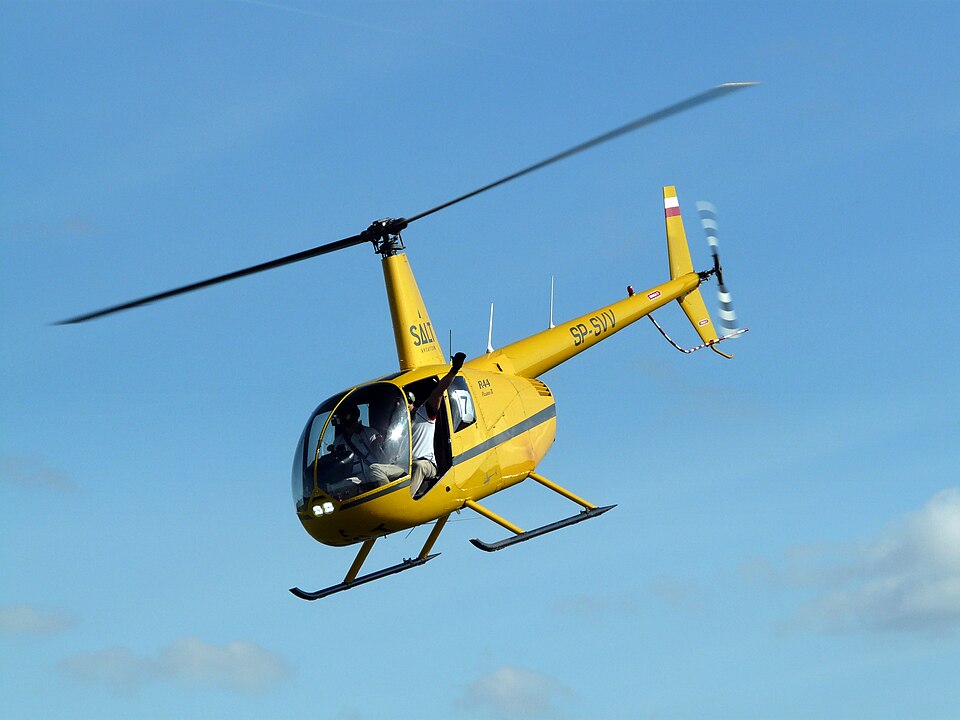
Single-rotor helicopters are by far the most common type in the sky. They have one large main rotor above the cockpit that provides lift and forward motion, paired with a smaller tail rotor that controls direction and prevents the body from spinning in the opposite direction from the blades.
This design is reliable, maneuverable, and well-suited for everything from sightseeing tours to search and rescue missions. The Robinson R44, Bell 206, and Airbus H125 are all well-known single-rotor models.
Pro Tip: When you picture a "typical" helicopter, you are almost certainly imagining a single-rotor design. It is the standard for good reason -- it is efficient, proven, and easy to maintain.
Tandem-Rotor Helicopters
Tandem-rotor helicopters have two large horizontal rotors, one at the front and one at the rear. They spin in opposite directions, which cancels out the torque that would otherwise cause the aircraft to spin. This design allows for a much larger and heavier fuselage without the weight penalty of a tail rotor.
The Boeing CH-47 Chinook is the most famous example. It is a workhorse of military aviation and is used around the world to transport troops, vehicles, and heavy equipment. Its distinctive twin-rotor silhouette is hard to miss.
Coaxial Helicopters
Coaxial helicopters mount two rotors on the same axis, one directly above the other, spinning in opposite directions. This design eliminates the need for a tail rotor entirely, making the helicopter more compact and reducing noise in some configurations.
They are highly maneuverable and appear in both military and civilian contexts. The Kamov Ka-52 Alligator is a well-known Russian military coaxial helicopter. In the civilian world, coaxial designs have been used for unmanned systems and aerial photography platforms.
Compound Helicopters
Compound helicopters combine a traditional rotor system with an additional propulsion method, such as a rear-mounted pusher propeller or a jet engine. Some also add small fixed wings to generate extra lift in forward flight, reducing the load on the main rotor.
This design allows for significantly higher speeds and longer range than a standard helicopter. The Sikorsky X2 is a notable experimental compound helicopter. These aircraft are often developed for military applications where speed and endurance matter most.
Why It Matters: Compound helicopters represent the future of high-performance rotorcraft. They bridge the gap between traditional helicopters and fixed-wing aircraft in terms of speed.
Tiltrotor Aircraft
Tiltrotor aircraft blur the line between helicopter and airplane. They take off and land like a helicopter using vertically positioned rotors, then tilt those rotors forward to fly like a turboprop plane during cruise flight.
The Bell Boeing V-22 Osprey is the most prominent example. It is used extensively by the U.S. military for fast troop transport and special operations missions. Civilian tiltrotor concepts are also in development, with potential applications in urban air mobility.
Helicopter Types and Names by Use
This is where most people get introduced to specific helicopter names. The same aircraft model can appear in several categories depending on how it is equipped and operated.
Attack Helicopters
Attack helicopters, sometimes called helicopter gunships, are purpose-built for combat. They are fast, heavily armed, and equipped with advanced targeting systems. Their primary job is to strike enemy ground forces, armor, and fortified positions.
AH-64 Apache -- This is arguably the most well-known attack helicopter in the world. The Apache is used by the U.S. Army and several allied nations. It can carry Hellfire missiles, rockets, and a 30mm automatic cannon. Introduced in the 1980s, it has seen service across multiple conflicts.
AH-1Z Viper -- The Viper is the current front-line attack helicopter for the U.S. Marine Corps, replacing the older AH-1W Super Cobra. It carries a similar weapons loadout to the Apache and features a two-engine design for improved reliability.
AH-1W Super Cobra -- The Super Cobra was the predecessor to the Viper and is notable as the first U.S. attack helicopter cleared to carry both air-to-air missiles and anti-radiation missiles. It shaped much of the doctrine for attack helicopter operations.
Fun Fact: Many U.S. Army helicopters are named after Native American tribes and leaders. The Apache, Chinook, Black Hawk, Comanche, and Iroquois (the original name for the UH-1 Huey) all follow this tradition, which began with Army Regulation 70-28 and has continued informally ever since.
Utility Helicopters
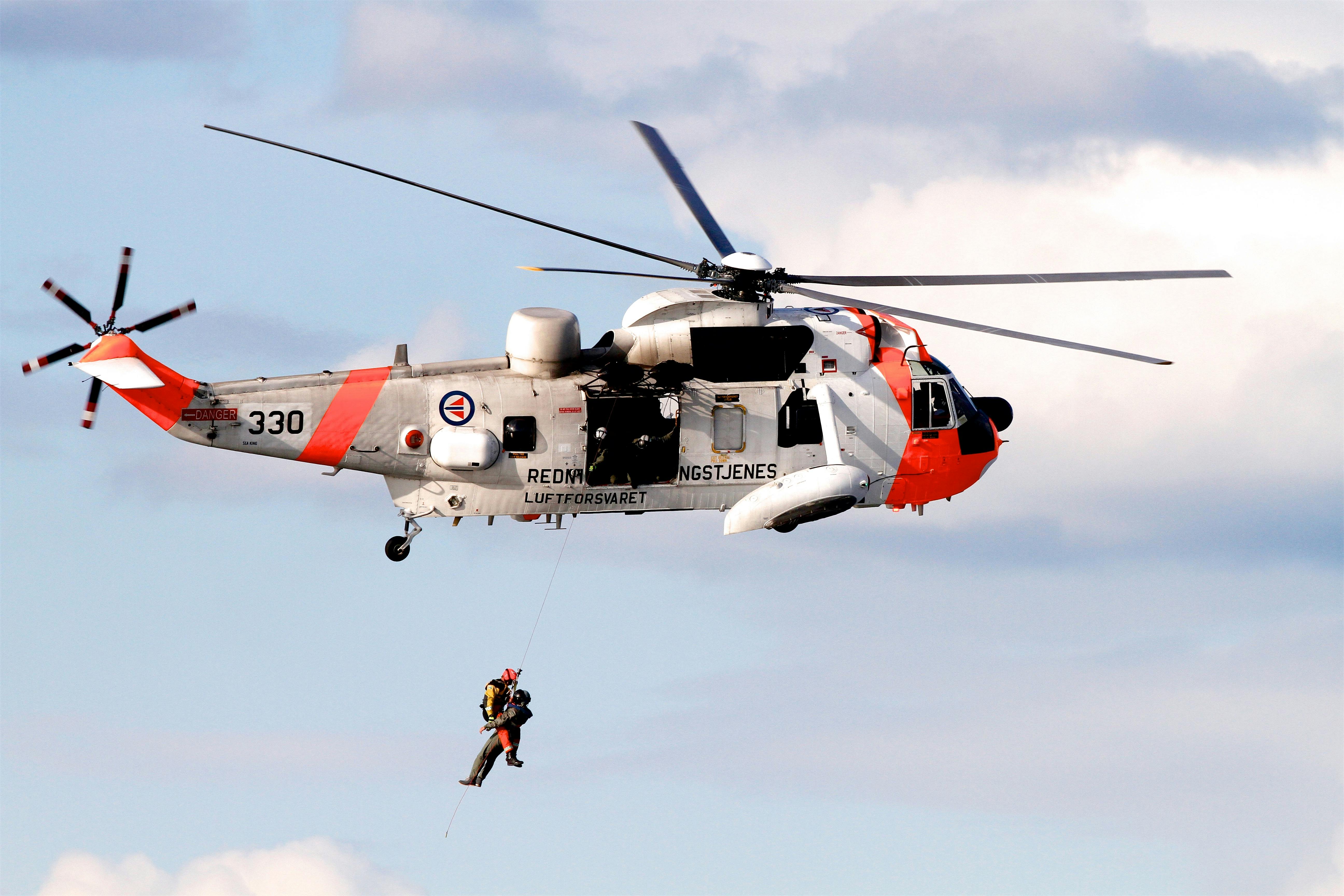
Utility helicopters are the all-purpose workhorses of rotorcraft aviation. They can be configured for troop transport, search and rescue, cargo hauling, medevac missions, or general transport depending on what equipment is installed.
UH-60 Black Hawk -- The Black Hawk is the backbone of U.S. Army aviation. It has been in service since the late 1970s and is used for everything from assault transport to MEDEVAC to disaster relief. The Black Hawk has also been adapted into the Navy's SH-60 Seahawk and several other variants.
Bell UH-1 Huey -- The Huey is one of the most iconic helicopters ever built. It became a symbol of the Vietnam War era and introduced the concept of airmobile warfare. Over 16,000 were built across multiple variants, making it one of the most produced helicopters in history.
Bell 429 -- On the civilian utility side, the Bell 429 is a twin-engine helicopter used for EMS, law enforcement, and offshore transport. It seats up to seven passengers and offers a respectable range for a mid-size machine.
If you are new to rotorcraft and want to know what the experience is actually like before you fly, the Flying411 guide on what to know before flying in a helicopter is an excellent starting point.
Military Transport Helicopters
Transport helicopters focus on moving people and cargo rather than engaging in combat directly. They tend to be large, with high payload capacity and long range.
CH-47 Chinook -- The Chinook is one of the largest and most capable military transport helicopters in the world. It can carry dozens of soldiers or thousands of pounds of cargo on external slings. It is operated by the U.S. Army and many allied militaries.
Sikorsky CH-53 Super Stallion -- The Super Stallion is the heavy-lift champion of the U.S. Marine Corps. It can transport heavy equipment and external cargo loads that would challenge most other rotorcraft. Its seven-blade main rotor is one of the largest on any operational helicopter.
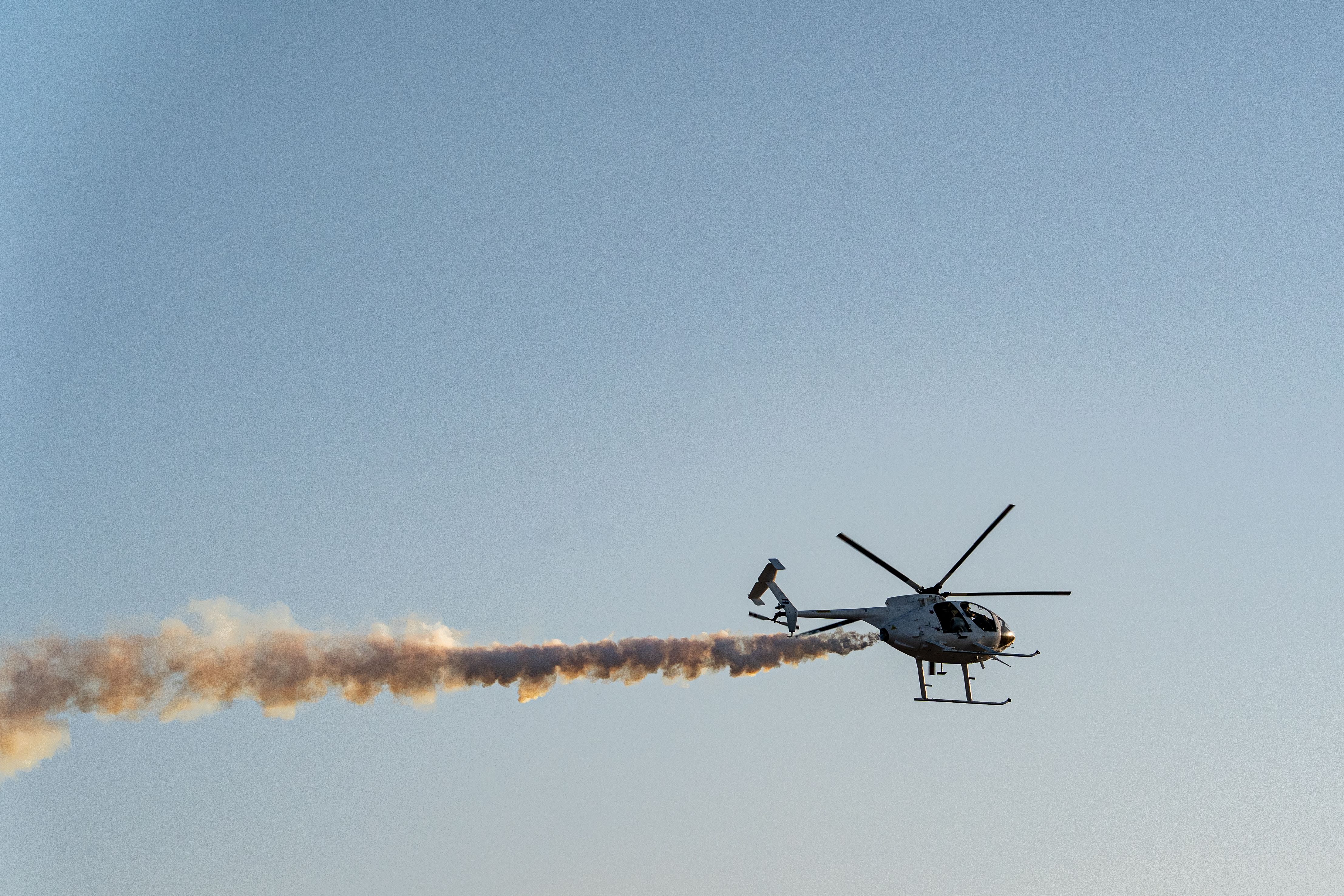
MH-6 Little Bird -- The Little Bird sits at the opposite end of the size scale. It is a small, agile helicopter used primarily by U.S. Army special operations forces for inserting and extracting personnel in tight environments. It became widely known through coverage of special operations missions.
Heads Up: Military helicopters often have different variants for different missions. The same base airframe, like the Black Hawk, may appear under multiple designations (UH-60, HH-60, SH-60) depending on which branch uses it and what it is equipped to do.
Medical Helicopters
Air ambulances and medical helicopters save lives every day. They allow hospitals to receive critically injured patients from remote locations or major accident scenes far faster than any ground vehicle could manage.
Airbus H145 -- The H145 (also known by its earlier designation EC145) is widely used for hospital-based air ambulance operations across the United States and Europe. It has a spacious cabin, twin engines, and can operate in difficult weather conditions.
AgustaWestland AW109 -- The AW109 is used by EMS services in several countries and is known for its speed and reliability. Its twin-engine configuration adds an extra margin of safety for medical transport over populated and remote areas alike.
Robinson R44 -- While not purpose-built for medical use, the R44 is sometimes used by smaller EMS operators in areas where a compact, economical helicopter gets the job done. It is a piston-engine helicopter more common in training and civilian use.
Helicopter safety matters in every setting, including medical transport. Understanding common helicopter problems can help passengers and families feel more informed about how these aircraft are maintained and operated.
Keep in Mind: Medical helicopters operate under strict maintenance standards and are flown by highly experienced crews. They are among the safest helicopters in operation, though no aircraft is completely without risk.
Firefighting Helicopters
Wildfires across the western United States and other regions have made firefighting helicopters an essential part of emergency response. These aircraft can drop water or fire retardant with precision that ground crews simply cannot match from below.
Sikorsky S-64 Skycrane -- The Skycrane is a heavy-lift helicopter designed specifically for tasks that require maximum payload over range considerations. In firefighting configurations, it carries a massive belly tank that can be filled at nearby water sources and dropped on active fire lines. It has no passenger cabin, freeing up all its capacity for external loads.
Bell 205A-1++ -- This is a civilian variant of the military Huey family, adapted for medium-scale firefighting and other utility roles. It can carry both crew and an external water bucket, making it useful for a range of fire response scenarios.
Kaman K-MAX -- The K-MAX is an intermeshing-rotor helicopter developed specifically for heavy-lift operations. It is sometimes used in firefighting because its intermeshing design gives it strong lift efficiency in the vertical axis.
Flying411 covers the most common causes of helicopter crashes, which is worth reading for anyone who wants to understand how operational conditions, including firefighting, affect flight risk.
Law Enforcement Helicopters
Police and law enforcement agencies across the United States operate dedicated helicopter units. These aircraft are equipped with powerful spotlights, thermal imaging cameras, and communication systems that allow ground teams to track suspects and coordinate operations over large areas.
Bell 206 JetRanger -- The JetRanger has been a staple of law enforcement aviation for decades. It is relatively economical to operate and easy to maintain, making it accessible to departments with limited budgets.
Airbus H125 -- The H125 is a single-engine light helicopter that has gained popularity in law enforcement because of its high-altitude performance and spacious cabin for surveillance equipment.
MD 500 series -- The MD 500 family is a line of compact, nimble helicopters that grew out of military designs. They are used by law enforcement in urban environments where smaller platforms are preferred.
Quick Tip: Law enforcement helicopters are sometimes called "Air One" or given similar unit designations by their departments. If you hear a police scanner reference a helicopter call sign, it usually refers to an aircraft like these.
Offshore and Oil and Gas Helicopters
Connecting oil platforms in the Gulf of Mexico and other offshore drilling sites to the mainland requires reliable helicopter transport. These flights happen in challenging sea conditions and must meet strict safety standards set by the FAA and industry groups.
Sikorsky S-92 -- The S-92 is a large twin-engine helicopter widely used in offshore transport. Its spacious cabin, long range, and twin-engine safety margins make it the preferred choice for transporting workers to and from platforms.
AgustaWestland AW139 -- The AW139 is another popular offshore transport platform. It is used globally for oil and gas operations, search and rescue, and VIP transport. Its all-weather capability makes it well-suited for the demanding conditions of offshore aviation.
Airbus H175 -- The H175 is a newer addition to the offshore market, offering improved passenger comfort and digital avionics. It is designed for flights of several hundred miles, which covers many offshore operation ranges.
Civilian Tour and Private Helicopters
Not every helicopter carries soldiers or saves lives. A large segment of the rotorcraft market is dedicated to tourism, personal transport, and training. These are the aircraft most civilians are likely to encounter.
Robinson R44 -- The R44 is one of the best-selling civilian helicopters of all time. It is a four-seat, piston-powered helicopter used heavily for flight training, personal ownership, and light tour operations. Its relatively low acquisition and operating costs make it accessible to private owners.
Robinson R66 -- The R66 is the turbine-powered sibling of the R44, offering improved altitude performance and a bit more power. It is popular with owners who operate in mountainous terrain.
Airbus H125 (formerly AS350 AStar) -- The H125 is arguably the most versatile light turbine helicopter in production. Tour operators use it at destinations like the Grand Canyon and Hawaii because of its large windows, smooth ride, and ability to operate at high altitudes.
Bell 407 -- The Bell 407 is a four-to-six seat turbine helicopter widely used for tours, corporate transport, and utility work. Its single Allison 250 turboshaft engine delivers solid performance in a compact package.
Before your first helicopter flight, it is smart to review what not to do in a helicopter and get familiar with items that are prohibited on a helicopter to make sure your experience goes smoothly.
Good to Know: If you are ever involved in a helicopter emergency, knowing basic survival principles can matter. Flying411's article on how to survive a helicopter crash covers what experts recommend.
Comparing the Most Common Helicopter Types at a Glance
| Helicopter Name | Type | Engine | Typical Use |
| AH-64 Apache | Attack | Twin turboshaft | Military ground strike |
| UH-60 Black Hawk | Utility | Twin turboshaft | Military transport, MEDEVAC |
| CH-47 Chinook | Tandem-rotor transport | Twin turboshaft | Heavy cargo, troop transport |
| Bell Boeing V-22 Osprey | Tiltrotor | Twin turboprop/rotor | Fast military transport |
| Robinson R44 | Single-rotor civilian | Piston | Training, touring, private |
| Airbus H125 | Single-rotor civilian | Single turboshaft | Tours, utility, law enforcement |
| Sikorsky S-64 Skycrane | Heavy-lift utility | Twin turboshaft | Firefighting, construction lifts |
| Sikorsky S-92 | Offshore transport | Twin turboshaft | Oil and gas, SAR |
| AgustaWestland AW139 | Multi-role | Twin turboshaft | Offshore, VIP, SAR |
| Bell 206 JetRanger | Light utility | Single turboshaft | Law enforcement, tours, training |
What Makes Helicopter Names So Memorable
One of the more interesting quirks of helicopter culture is how much people love the names. Airplanes often get numbers. Helicopters often get personalities.
The U.S. Army has a long tradition of naming its helicopters after Native American tribes and leaders. The Apache, Chinook, Black Hawk, Comanche, and Iroquois are all part of this tradition. The practice began as official Army policy and, even after the formal regulation was retired, the custom has continued. The Bureau of Indian Affairs has been involved in approving names for newer aircraft to ensure they are used respectfully.
On the civilian side, manufacturers tend to use alphanumeric model codes (H125, R44, S-92) rather than evocative names. This makes them easier to distinguish in maintenance logs and regulatory filings but a bit less poetic than their military counterparts.
Fun Fact: Military helicopter pilots sometimes give their individual aircraft informal nicknames, much like fighter pilots do. These are usually painted small on the fuselage and range from sentimental to genuinely funny.
Turbine vs. Piston: What Powers a Helicopter
The engine type makes a big difference in how a helicopter performs, how much it costs to operate, and what conditions it can handle.
Piston engines are found in smaller, lighter helicopters like the Robinson R22 and R44. They are less expensive to buy and maintain but produce less power and struggle at high altitudes and in hot weather. Piston helicopters are common in training and recreational flying.
Turboshaft engines (a type of turbine engine) power most commercial and military helicopters. They produce much more power relative to their weight, handle high altitudes and extreme temperatures better, and are generally more reliable over long operational lives. The trade-off is significantly higher cost, both to buy and to maintain.
Most of the helicopter names you will see in professional contexts -- the Black Hawk, Apache, S-92, H125 -- are turbine-powered aircraft.
Flying411 is your go-to source for straight-talking aviation information for passengers, enthusiasts, and aspiring pilots alike -- from safety tips to deep dives on aircraft types.
Conclusion
From the muscular CH-47 Chinook hauling cargo in mountain passes to the nimble Robinson R44 circling above a scenic canyon, helicopter types and names reflect a remarkable diversity of engineering purpose. Each design is a response to a specific mission -- and the names attached to those machines carry real history, tradition, and meaning.
Whether you are researching your first helicopter tour, curious about military aviation, or simply trying to put a name to that machine hovering over the highway, this guide gives you a solid foundation. The next time a helicopter passes overhead, you might just know exactly what you are looking at.
For more aviation guides, safety tips, and honest information for curious flyers, visit Flying411 and start exploring.
FAQs
What are the main types of helicopters?
Helicopters are broadly grouped by rotor design (single-rotor, tandem-rotor, coaxial, compound, tiltrotor) and by use category (military, utility, medical, firefighting, law enforcement, civilian). Most aircraft fall into more than one of these groups depending on how they are equipped.
What is the most common civilian helicopter?
The Robinson R44 is widely considered one of the most popular civilian helicopters in the world based on total units produced and active fleet size. It is used heavily for flight training and private ownership.
Why are Army helicopters named after Native American tribes?
The tradition began as official Army policy and has continued informally ever since. Names like Apache, Chinook, and Black Hawk were chosen to honor Native American history and culture. The Bureau of Indian Affairs has been involved in approving names for newer platforms.
What is the difference between a utility helicopter and an attack helicopter?
An attack helicopter is purpose-built for combat, with weapons systems and targeting technology as its primary features. A utility helicopter is designed for versatility -- it can be configured for transport, rescue, medevac, or other missions depending on what equipment is installed.
What is a tiltrotor and how is it different from a helicopter?
A tiltrotor takes off and lands like a helicopter using vertical rotors, then tilts those rotors forward during cruise flight to fly more like a turboprop airplane. This gives it significantly faster cruise speeds and longer range than a conventional helicopter. The V-22 Osprey is the most widely known operational tiltrotor.