Pick up any stick from a wooded trail, spin it between your palms, and watch the feathers at the top spiral upward. That simple trick dates back to ancient China and captures the basic idea behind the helicopter. Simple in concept. Brutally demanding in practice.
Most people assume flying a helicopter is like driving a car in the sky. You point it where you want to go, give it some gas, and that is that. The reality is completely different. A helicopter is one of the most mechanically and cognitively demanding machines a person can operate.
Every second in the air requires active input. Every adjustment you make ripples into two or three other things you have to correct. And hovering in place — which looks effortless from the ground — is widely considered one of the hardest skills in all of aviation.
So why are helicopters so hard to fly? The short answer is: everything is connected, nothing is automatic, and the machine does not want to stay still on its own. The longer answer is a fascinating story about physics, coordination, and the human brain trying to manage four things at once.
Key Takeaways
Helicopters are hard to fly because they are inherently unstable aircraft that require constant, coordinated input from both hands and both feet at all times. Unlike a fixed-wing airplane, a helicopter will not hold its position or attitude on its own — the pilot must actively manage every movement. The controls are deeply linked to each other, meaning a change to one almost always requires corrections to the others. Add in the physical forces of torque, gyroscopic precession, and retreating blade stall, and you have a machine that demands a high level of skill, focus, and physical coordination from the first lesson to the last.
| Factor | Why It Matters |
| Inherent instability | A helicopter will drift and yaw without constant pilot input |
| Three interconnected controls | Every adjustment affects all the others |
| Hovering difficulty | Requires constant micro-corrections using all four limbs |
| Torque reaction | Main rotor spin tries to spin the fuselage in the opposite direction |
| Gyroscopic precession | Control response occurs 90 degrees away from where input is applied |
| Autorotation training | Engine-off emergency landings require fast, precise technique |
| High cognitive load | Pilots manage navigation, power, and control simultaneously |
| Longer training required | Most students need 60 to 80 hours before solo readiness |
If you are thinking about learning to fly a helicopter, Flying411 is a great starting point for trusted aviation information, tips, and resources.
How a Helicopter Actually Flies
Before getting into why helicopters are hard to fly, it helps to understand how they fly in the first place. A fixed-wing airplane generates lift because air moves over its wings. Wings are shaped so that air flows faster over the top than the bottom, which creates a pressure difference that pushes the plane upward. The plane only needs to keep moving forward for this to work.
A helicopter does not have fixed wings. Instead, it uses spinning rotor blades — blades that are themselves shaped like wings — to create lift. As the rotor spins, it pulls air downward and pushes the helicopter upward. The faster the blades spin, and the greater their pitch angle (the angle at which they bite into the air), the more lift they produce.
This means a helicopter can generate lift while standing completely still. No runway needed. That is the whole point. But that flexibility comes at a steep cost in complexity.
Fun Fact: The word "helicopter" comes from two Greek words — "helix" (spiral) and "pteron" (wing). Ancient Chinese toys using feathers and spinning sticks are said to have captured this same principle around 400 BC, long before any aircraft existed.
The Three Controls — and Why They All Fight Each Other
Here is where things get interesting. A helicopter has three primary flight controls, and a pilot must use all of them at the same time, with all four limbs. Right hand, left hand, left foot, right foot — all active, all the time.
The Cyclic (Right Hand)
The cyclic stick sits between the pilot's knees and works something like a joystick. Push it forward and the helicopter moves forward. Push it left and the helicopter tilts and moves left. Simple enough in theory.
What makes it tricky is how the rotor actually responds. Because the rotor system acts somewhat like a gyroscope, the blade response happens roughly 90 degrees away from where the input was applied. This is caused by a phenomenon called gyroscopic precession, and it means pilots must learn to think ahead of their own control inputs. The helicopter does not respond exactly where you push — it responds downstream in the rotation cycle. That takes time to internalize.
The Collective (Left Hand)
The collective is a lever on the pilot's left side, similar in feel to a parking brake. Pull it up and all the rotor blades increase their pitch angle at the same time — "collectively." More pitch means more bite, more lift, and the helicopter climbs. Push it down and the helicopter descends.
The worst part that always makes the beginner pilot sweat is that when you adjust one control, it affects the other two. The collective is a perfect example of this. Raise the collective to climb, and two other things happen immediately. First, the increased blade pitch creates more drag on the rotor, which slows the RPM and requires more engine power. Second, the extra torque from the main rotor causes the helicopter to try to yaw — spin sideways — which means the pilot must push a foot pedal to correct.
So "climb" is never just "pull the lever." It is "pull the lever, add throttle, push the pedal, re-center the cyclic." All at once.
The Anti-Torque Pedals (Both Feet)
Single rotor helicopters require a separate rotor to overcome the effect of torque reaction — the tendency for the helicopter to turn in the opposite direction to that of the main rotor. That separate rotor is the tail rotor, and the pilot controls it with foot pedals.
When the rotor blades of the helicopter spin, they create an opposing force that attempts to spin the helicopter in the opposite direction. Without the tail rotor constantly pushing back against that force, the helicopter's fuselage would just spin like a top in the opposite direction of the main blades. The pedals adjust how much thrust the tail rotor produces, which keeps the nose pointed where the pilot wants it.
In a hover, the pedals maintain heading. In forward flight, they keep the aircraft "in trim" — meaning the nose is aligned with the direction of travel rather than crabbing sideways.
Pro Tip: Fixed-wing pilots transitioning to helicopters often struggle with the pedals most of all. Airplane rudder pedals feel firm and deliberate. Helicopter anti-torque pedals are extremely sensitive. What feels like a light tap can produce a fast, dramatic yaw response.
Why Hovering Is the Hardest Skill in Aviation
Ask any helicopter pilot what took the longest to master and most will say the same thing: hovering.
From the ground, a helicopter sitting stationary in the air looks like the easiest thing in the world. The aircraft is just... sitting there. What is so hard about that?
Because helicopters are generally dynamically unstable, deviations from a given attitude are not corrected without pilot input. Frequent control inputs and corrections must be made by the pilot to keep the helicopter at a desired location and altitude.
In practice, this means the pilot is making dozens of tiny corrections every minute — nudging the cyclic to stop drift, adjusting the collective to hold altitude, tweaking the pedals to maintain heading. And because all three controls affect each other, one small correction tends to create two new things that need correcting.
You have to overcome your urge to commit pilot-induced oscillation, which basically means constantly freaking out and over-controlling the vehicle to make the whole thing wobble. You actually have to be super calm to fly a helicopter — slow, delicate movements keep the whole thing stable.
New students almost always over-correct. They see the helicopter start to drift slightly, panic, push the cyclic too hard, overcorrect to the other side, then overcorrect again. The helicopter starts rocking back and forth in wider and wider oscillations until the instructor takes the controls. Learning to make small, smooth inputs — and then wait for the helicopter to respond — is a mental rewiring that takes hours of practice.
The Rubik's Cube Comparison
Every time you change something on a Rubik's cube, multiple inputs are changing all over the thing. It's a whole system. That's the way helicopters work — you have to come up with the most efficient and effective solution instantly to arrive at that perfect solution right off the bat.
That analogy from an experienced helicopter pilot captures it perfectly. Each control input is not a single action — it sets off a chain reaction across the whole aircraft. The pilot's job is to stay ahead of the chain.
Good to Know: Most helicopter flight instructors say students typically need around 10 hours of flight time before they can hold a basic hover with reasonable confidence. Some students reach that point faster, others take longer — the learning curve varies widely from person to person.
The Physics That Make Helicopters Uniquely Difficult
Beyond the controls themselves, a handful of aerodynamic forces make helicopter flight especially demanding. These are forces that do not apply to fixed-wing aircraft in the same way — or at all.
Torque Reaction
As mentioned above, the main rotor spinning in one direction tries to spin the fuselage in the opposite direction. Every time the pilot changes the collective pitch — climbing, descending, accelerating — the torque level changes. That means the amount of pedal input needed changes constantly. There is no set-and-forget position for the pedals. The pilot adjusts them continuously.
Gyroscopic Precession
Rotor blades spinning at high speed behave like a gyroscope. Any rotor system has a delay between the point in rotation where the controls introduce a change in pitch and the point where the desired change in the rotor blade's flight occurs. This difference is caused by phase lag. The practical result is that the helicopter's response to a control input happens roughly 90 degrees further around in the rotor's rotation from where the blade pitch was changed. Pilots have to learn to apply inputs that account for this delay — essentially aiming "ahead" of where they want the effect to appear.
Dissymmetry of Lift
When a helicopter flies forward, the blades on one side of the rotor disk are advancing into the oncoming airflow (moving faster through the air) while the blades on the other side are retreating (moving slower through the air). Faster blades generate more lift. Slower blades generate less. This creates an imbalance — more lift on one side than the other — which would roll the helicopter over if left uncorrected.
The right side of the main rotor decreases the angle of attack in order to maintain equal lift across the rotor disc, while on the left side, the retreating blade increases its angle of attack to compensate for the lower blade tip speed. The rotor system manages this automatically, but the forces involved create vibration, instability, and eventually a hard speed limit called retreating blade stall — the point at which the retreating blade can no longer produce enough lift no matter how steeply it is pitched.
Vortex Ring State
One of the most dangerous situations in helicopter flight, vortex ring state occurs when a helicopter descends too steeply and too slowly into its own rotor downwash. The rotor starts recirculating air it has already pushed downward, which dramatically reduces lift. In some cases, the only way to stop this is to move forward — even maximum collective pitch will not be adequate to halt the fall. Recognizing and escaping vortex ring state requires training, awareness, and quick decisive action.
Why It Matters: Vortex ring state is sometimes called "settling with power" because the helicopter keeps sinking even with full power applied. It is one of the reasons that helicopter pilots must study emergency procedures far more deeply than most fixed-wing pilots.
Autorotation — Landing Without an Engine
If a helicopter's engine fails in flight, the pilot cannot simply glide to a runway the way a fixed-wing pilot can. A helicopter has no fixed wings to glide with. Instead, the pilot must perform a maneuver called autorotation.
In the event of engine failure, helicopters don't have the same glide capability as airplanes. Pilots must perform autorotations, a complex maneuver where the rotor blades continue to spin due to aerodynamic forces, allowing for a controlled descent and landing.
In autorotation, the pilot immediately lowers the collective to reduce blade pitch. This allows air flowing upward through the descending rotor to keep the blades spinning — storing energy like a giant flywheel. As the helicopter approaches the ground, the pilot pulls the collective back up sharply, using the stored rotational energy to cushion the landing in a brief flare of lift.
The entire maneuver requires precise timing. The collective must go down fast enough to maintain rotor RPM during descent, but not so fast that the helicopter drops out of control. The final flare must happen at exactly the right altitude. A few seconds off in either direction can mean a hard, damaging landing.
Check out this deeper look at the hardest things to do in a helicopter for a full breakdown of why autorotation is considered one of the most demanding skills in all of rotorcraft flight.
Heads Up: Student helicopter pilots in the United States are required by the FAA to practice autorotations as part of their training. These are typically practiced at safe altitudes with an instructor, but the skill must be demonstrated during the final checkride examination.
How Helicopter Controls Compare to Fixed-Wing Controls
It helps to put helicopter flying in context. Most people have at least a vague sense of how an airplane works. Here is how the two compare side by side.
| Feature | Fixed-Wing Airplane | Helicopter |
| Source of lift | Fixed wings + forward speed | Spinning rotor blades |
| Hovering | Not possible | Core skill required |
| Stability | Mostly stable — will self-correct | Inherently unstable — requires constant input |
| Number of primary controls | 3 (yoke/stick, rudder, throttle) | 3 + throttle management (cyclic, collective, pedals) |
| Control interaction | Relatively independent | Deeply coupled — one affects all others |
| Engine failure response | Glide to a landing | Autorotation required |
| Training hours (FAA minimum) | 40 hours | 40 hours (most need 60–80) |
| Cognitive load during hover | Low — does not apply | Very high |
The FAA sets the minimum flight time for a private pilot helicopter certificate at 40 hours, identical to the fixed-wing requirement. But in practice, most students actually need somewhere between 60 and 80 hours to become truly proficient and safe. The gap between the legal minimum and real-world readiness is wider for helicopters than for almost any other aircraft category.
For anyone curious about which helicopters are best suited for new pilots, Flying411 has a detailed guide on the best helicopters to learn to fly that breaks down the most beginner-friendly options available.
8 Reasons Why Helicopters Are So Hard to Fly
Now that the groundwork is laid, here is a clear breakdown of the specific reasons helicopter flight is so demanding.
1. All Four Limbs Are Active at All Times
Flying an airplane mostly involves two hands and occasional foot inputs. Flying a helicopter requires both hands and both feet continuously. The right hand manages the cyclic, the left hand manages the collective, and both feet manage the anti-torque pedals. Letting go of any of these — even briefly — can cause the helicopter to drift, yaw, climb, or descend uncontrollably. It is a bit like rubbing your head and patting your stomach at the same time while hopping up and down on one leg.
2. Every Control Has Secondary Effects
The problem is that all these controls have secondary effects, and so several other things start to happen as soon as you move any one of them. Push the cyclic forward to speed up? The helicopter also starts to descend. Raise the collective to climb? The nose pitches up and the helicopter starts to yaw. Lower the collective to descend? The nose may drop and speed may increase. Nothing is isolated. Everything causes something else.
3. The Helicopter Is Inherently Unstable
A properly trimmed fixed-wing airplane will largely fly itself in calm air. Leave the controls alone and it tends to hold its attitude. A helicopter will not. It drifts. It rotates. It climbs or descends. Without continuous pilot input, a helicopter will eventually depart controlled flight. Every moment in the air is an act of constant management.
4. Hovering Requires Mastery of All Three Controls Simultaneously
The cyclic is used to eliminate drift in the horizontal plane; the collective is used to maintain desired altitude; and the tail rotor pedals are used to control nose direction or heading. It is the interaction of these controls that can make learning to hover difficult, since often an adjustment in any one control requires adjustment of the other two. A stable hover is the foundation skill of helicopter flight — and it is the one that takes the most hours to master.
5. Torque Changes With Every Maneuver
Because the anti-torque correction needed varies with the power being produced, there is no fixed pedal position the pilot can learn and hold. Every climb, descent, acceleration, and deceleration changes the torque load, which changes how much tail rotor thrust is needed. The pilot must read these changes and respond in real time.
6. Gyroscopic Precession Creates Unintuitive Responses
The rotor disk behaves like a spinning gyroscope. When the pilot applies a control input, the helicopter does not respond at the point where the input was made. It responds approximately 90 degrees further along in the rotation. This means the pilot has to think ahead of the machine — an unintuitive skill that takes dedicated practice to develop.
7. Emergency Procedures Are More Complex
Autorotation, vortex ring state recovery, and tail rotor failures are all emergencies that require fast, precise technique specific to rotorcraft. There is far less margin for hesitation compared to most fixed-wing emergency situations. Helicopter pilots must train these scenarios until the responses are close to automatic.
8. The Learning Curve Is Steep and Humbling
Most students take 50 to 80 flying hours in order to gain more experience and hone their skills. They must go through a number of additional requirements, such as learning hovering maneuvers, takeoffs, landings, and performance maneuvers, which can be tough to learn in a short amount of time. It is common for students to feel like they are making no progress for several lessons in a row before something suddenly "clicks." The helicopter is not an aircraft that rewards impatience.
Is It Harder to Fly a Helicopter Than an Airplane?
This is one of the most common questions people ask. The general consensus among pilots who have flown both is that helicopters are more difficult to learn — particularly in the early stages — but that the gap narrows with experience.
Fixed-wing training has a gentler entry point. Airplanes are stable by design, and students can generally manage basic straight-and-level flight within their first few lessons. Helicopter students often spend their first several lessons just learning to hover without drifting off the runway, fighting the urge to overcorrect.
That said, advanced fixed-wing flying — instrument flight, high-performance aircraft, aerobatics — has its own demanding learning curves. The difficulty is not so much about which aircraft type is "harder" overall, but about which challenges appear first and how long they take to work through.
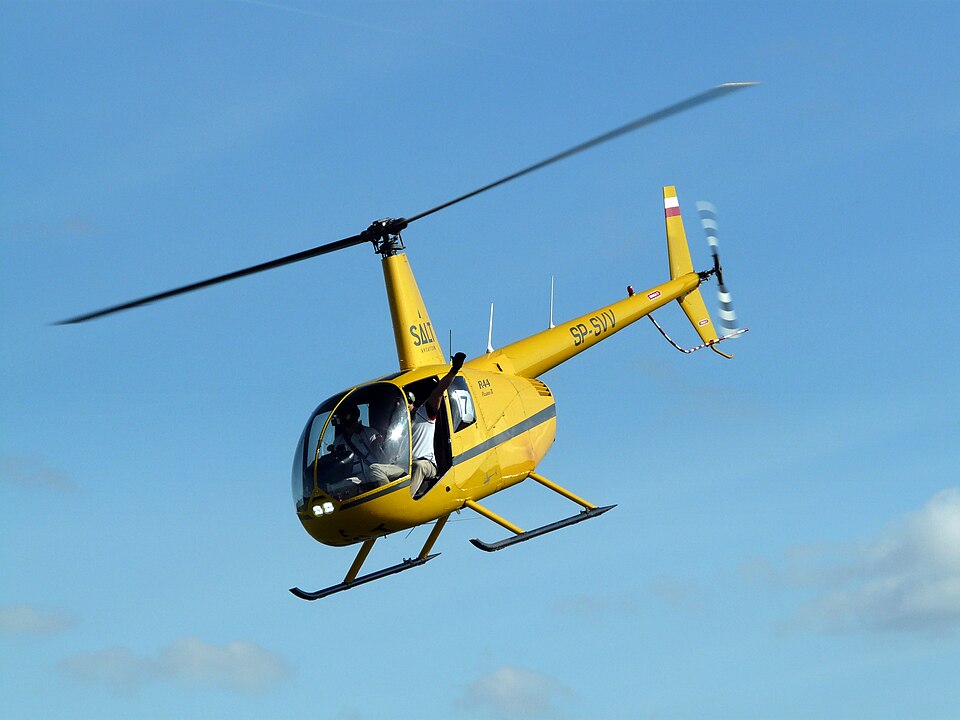
Different helicopter types also vary in difficulty. Smaller, lighter helicopters like training models tend to be more responsive and less forgiving of mistakes, while larger helicopters often have more stability aids built in. Curious about the range of options out there? This breakdown of helicopter types and names covers the main categories from light trainers to heavy transport aircraft.
Keep in Mind: Many experienced fixed-wing pilots find the transition to helicopters surprisingly humbling. Skills like spatial awareness, power management, and radio work transfer over — but the physical coordination required for rotorcraft is a genuinely new skill set that must be built from scratch.
What About Long-Distance Helicopter Flight?
One of the reasons helicopter pilots invest so much time mastering these skills is the extraordinary capability the aircraft provides. Helicopters can access places no fixed-wing aircraft can reach — mountain ridges, offshore platforms, rooftops, remote fields, and accident sites with no landing zone.
That said, longer flights add layers of complexity including fuel planning, weather management, fatigue, and navigation. For those interested in the range side of things, Flying411 has guides on the best helicopters for long distances and civilian helicopters with the longest range — useful reads for pilots thinking beyond the training circuit.
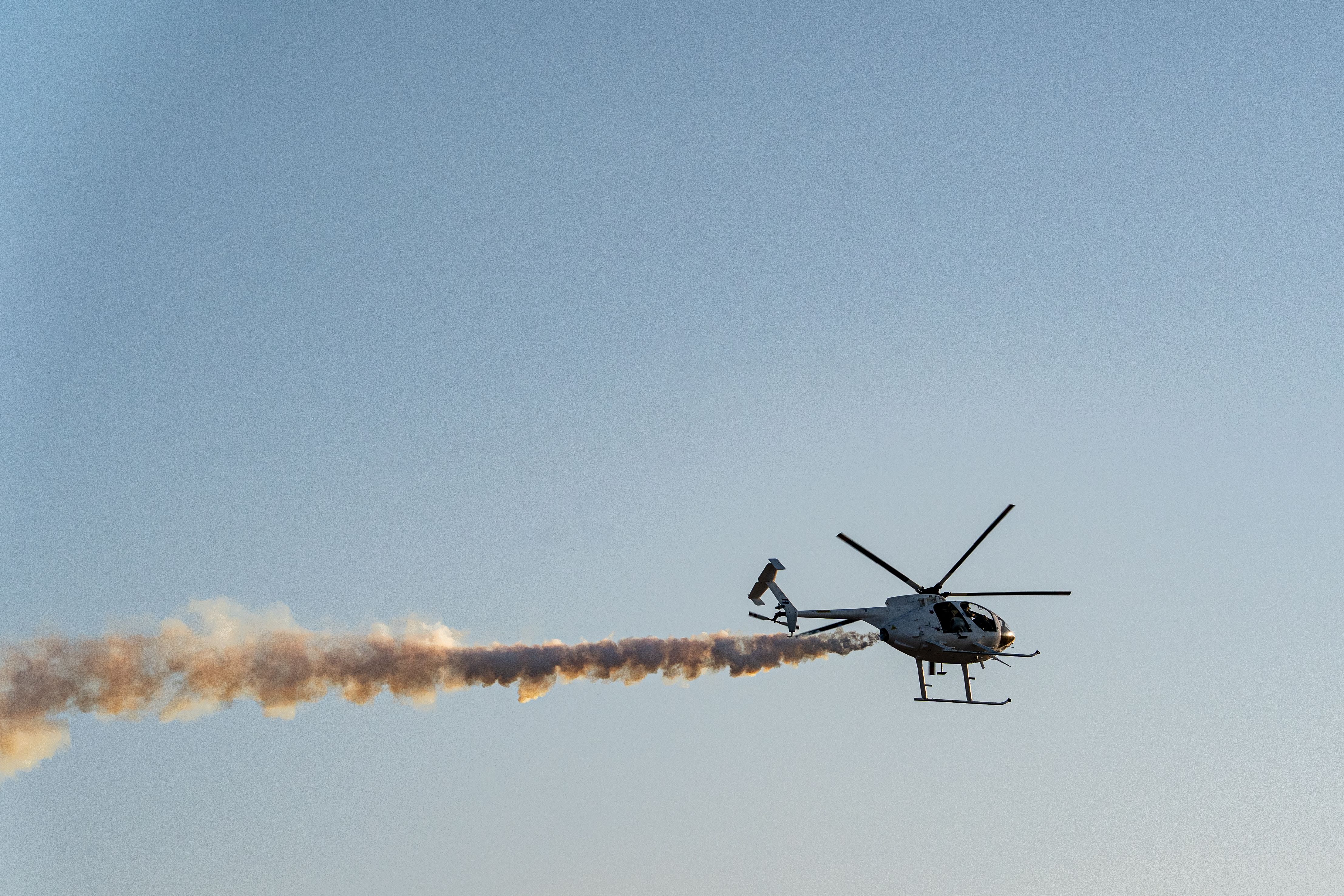
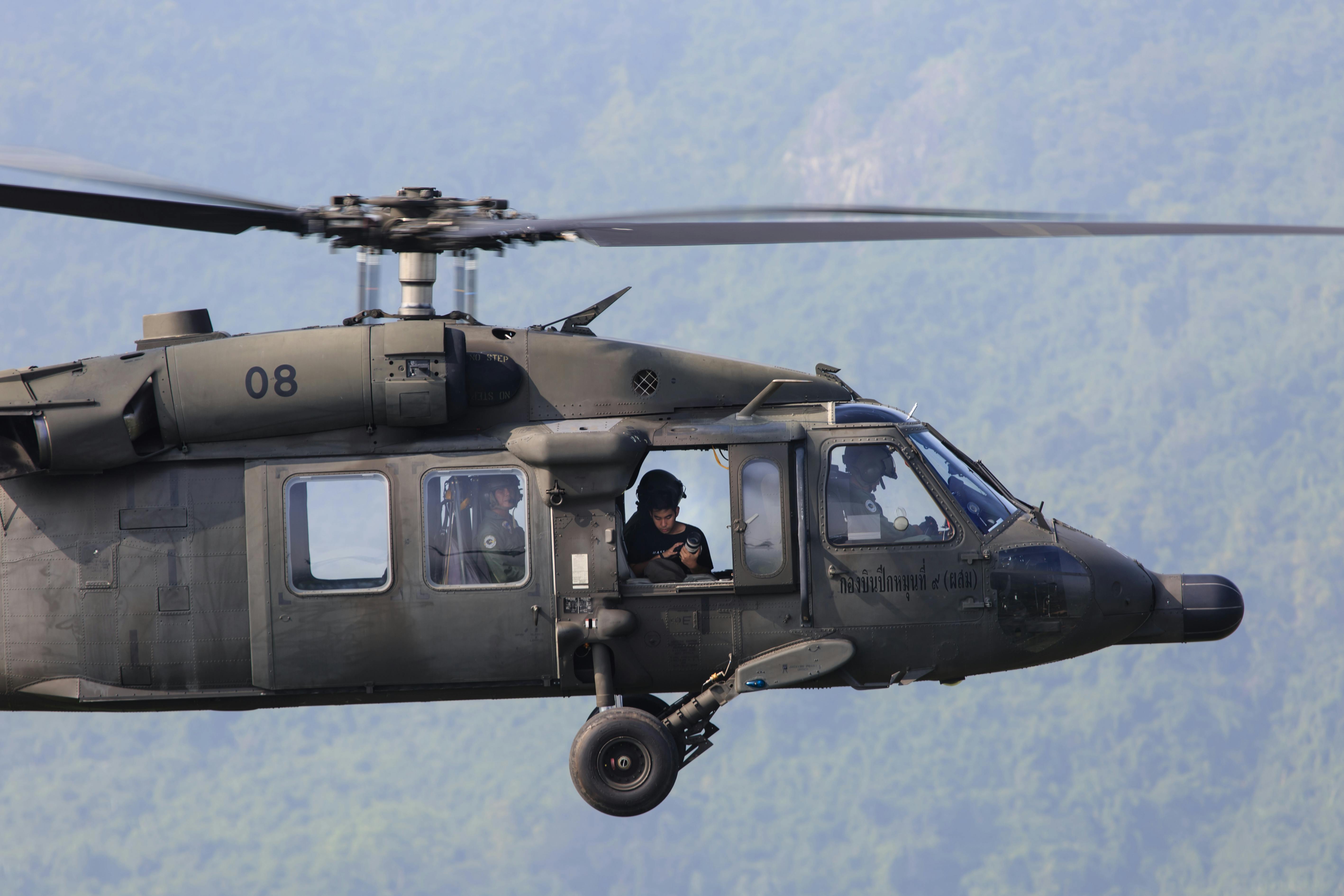
Military helicopter operations take all of this even further, layering in tactical requirements, night vision flying, and operations in hostile environments. For a look at the specialized machines involved, see this overview of military helicopter types and names.
Quick Tip: Even highly experienced helicopter pilots say long cross-country flights are a different mental challenge than local flying. Managing fatigue, tracking fuel reserves, and dealing with changing weather across a long route requires a level of planning and discipline that goes well beyond hovering practice.
How Long Does It Actually Take to Learn?
The FAA requires a minimum of 40 hours of flight time for a private pilot helicopter certificate under Part 61 rules. This includes at least 20 hours of dual instruction with a Certified Flight Instructor (CFI) and 10 hours of solo flight time.
In practice, most students log significantly more before they are ready for their checkride. The regulatory minimum is 40 hours, but most people complete their training within 60 to 70 hours. Some students need even more, depending on how frequently they fly and how quickly the motor skills and coordination develop.
Here is what training typically covers:
- Ground school: Aerodynamics, weather, FAA regulations, emergency procedures, navigation
- Basic maneuvers: Hovering, straight-and-level flight, turns, climbs, descents
- Advanced maneuvers: Autorotations, slope landings, confined area operations, performance maneuvers
- Cross-country flights: Navigation, fuel planning, communication with air traffic control
- Night flying: At least 3 hours required, including a night cross-country flight
- Solo flight: At least 10 hours flying as pilot-in-command with no instructor on board
The checkride itself consists of an oral exam followed by a practical flight test with an FAA Designated Pilot Examiner. Both phases must be passed to earn the certificate.
Ready to start exploring your training options? Flying411 is a trusted resource for aviation learners at every stage — from first questions to advanced ratings.
Conclusion
Helicopters are hard to fly because they are machines that demand everything from a pilot — both hands, both feet, and full mental attention — all at once, continuously. The controls are interconnected in ways that are not intuitive. The physics are complex and unforgiving. And the aircraft itself will not cooperate unless the pilot is actively working to keep it in line.
That difficulty is not a flaw. It is the price of an aircraft that can hover in a hospital courtyard, land on a mountain ledge, rescue someone from a flood, or operate in spaces no airplane could dream of entering. Understanding why are helicopters so hard to fly is the first step toward appreciating just how skilled the people who master them truly are.
If you are thinking about becoming a helicopter pilot — or just want to understand the world of rotorcraft more deeply — Flying411 is the place to start.
Frequently Asked Questions
Why do helicopters need a tail rotor?
The main rotor spinning in one direction creates torque that would cause the helicopter's body to spin in the opposite direction. The tail rotor counters this torque by pushing sideways against it, keeping the nose pointed where the pilot wants it.
Can a helicopter fly if the tail rotor fails?
A tail rotor failure is one of the most serious emergencies in helicopter flight. Depending on the speed, altitude, and configuration of the aircraft, some helicopters can be landed safely in a forward-speed autorotation — but the maneuver is extremely demanding and requires immediate, precise action. Not all tail rotor failures are survivable.
Is it possible to teach yourself to fly a helicopter?
No. Helicopter flight training requires instruction from an FAA-Certified Flight Instructor rated for rotorcraft. The learning curve is steep enough that solo attempts without proper training would be extremely dangerous. Ground-based simulators can supplement learning, but cannot replace hands-on dual instruction.
Why do helicopters vibrate so much?
Vibration in a helicopter comes from the rotor blades passing through their own wake, mechanical imbalances in the rotor system, and aerodynamic forces that vary continuously as each blade advances and retreats. Some vibration is normal and expected. Unusual or excessive vibration is taken seriously as a sign of possible mechanical issues.
Are some helicopters easier to fly than others?
Yes. Lighter, smaller helicopters used for training are generally more sensitive and responsive — which makes them excellent for building skill but less forgiving of mistakes. Larger helicopters, especially those with stability augmentation systems and modern autopilots, reduce pilot workload significantly. Military and commercial helicopters often have advanced fly-by-wire systems that smooth out many of the control coupling effects that make manual flying so demanding.