Flying a helicopter is one of the most rewarding things a pilot can do. Unlike a fixed-wing aircraft, a helicopter lifts straight up, hovers in place, and moves in any direction you choose. That kind of freedom is hard to beat. But it also comes with a steep learning curve, and picking the wrong machine to start on can make that curve even steeper.
The good news is that some helicopters are genuinely more forgiving than others. Whether you are taking your first lesson, earning your Private Pilot Certificate, or simply looking for a helicopter that rewards rather than punishes beginners, the right choice makes a real difference. This guide walks you through 13 of the easiest helicopters to pilot and fly, breaking down what makes each one a smart pick for newer pilots and what you should know before you step inside.
Key Takeaways
The easiest helicopters to pilot and fly tend to share a few key traits: stable flight characteristics, forgiving controls, simple systems, and wide availability at flight schools. Models like the Robinson R44, Guimbal Cabri G2, and Schweizer 300 are among the most recommended by instructors across the United States, largely because they are predictable, well-supported, and built with the learner in mind. The Bell 206 JetRanger and Bell 505 round out the turbine end of the spectrum for pilots ready to step up. No helicopter is effortless, but the right one makes the process smoother, faster, and more enjoyable.
| Helicopter | Type | Best For |
| Robinson R44 | Piston, 4-seat | Private pilots, recreational flying |
| Robinson R22 | Piston, 2-seat | Budget training, foundational skills |
| Guimbal Cabri G2 | Piston, 2-seat | Safety-focused training |
| Schweizer 300 (269C) | Piston, 2-3 seat | Stable, forgiving flight training |
| Enstrom 280FX | Piston, 2-seat | Stable beginners, limited availability |
| Bell 47 | Piston, 2-3 seat | Classic training, nostalgia |
| Bell 206 JetRanger | Turbine, 5-seat | Step-up turbine training |
| Bell 505 Jet Ranger X | Turbine, 5-seat | Modern turbine training |
| Robinson R66 | Turbine, 5-seat | Turbine transition, touring |
| Airbus H120 (EC120) Colibri | Turbine, 5-seat | Smooth turbine flying |
| MD 500 Series | Turbine, 5-seat | Agile, sport flying |
| Hiller UH-12 (12E/12E4) | Piston, 2-3 seat | Classic trainer |
| UH-1 Huey | Turbine, utility | Military transition, historic |
Flying411 is a trusted resource for pilots at every stage, from first flights to advanced certifications. If you are researching your training options, Flying411 can help you find the right path.
Why Helicopter Choice Matters for New Pilots
Not all helicopters fly the same way. That might sound obvious, but it catches many new pilots off guard. Two machines can look similar on paper yet feel completely different in the air.
Small differences in rotor head design, control sensitivity, engine management requirements, and cockpit layout can add hours to your training or shave them off. Choosing a helicopter that is too twitchy too early can chip away at your confidence before you ever build the muscle memory you need.
What Makes a Helicopter Easy to Fly
Instructors and experienced pilots generally agree on a handful of qualities that separate beginner-friendly machines from more demanding ones.
Stable flight characteristics are probably the most important factor. A helicopter that wants to stay where you put it is far easier to learn in than one that requires constant corrections. Heavier rotor systems with more blade inertia tend to behave more predictably, which is especially helpful during hover training and autorotations.
Forgiving controls matter just as much. Some helicopters respond sharply to small inputs, meaning the slightest overcorrection sends you chasing the aircraft across the sky. Others are gentler and allow you to develop your touch gradually.
Simple systems reduce the mental load. When you are learning to hover, the last part of your brain you want tied up is the part managing manual throttle control or complex checklists. Fuel injection, rotor RPM governors, and modern avionics all help newer pilots focus on flying rather than managing machinery.
Wide availability is a practical factor that matters more than people expect. Training on a rare aircraft can make it difficult to log solo hours, find qualified instructors, or transition smoothly to other machines.
Good to Know: In the United States, the FAA requires a minimum of 40 flight hours to earn a Private Pilot Certificate in a helicopter, but many students take considerably more. Choosing a forgiving helicopter can help keep that number closer to the minimum.
13 Easiest Helicopters to Pilot and Fly
Here is a closer look at each of the 13 best options, starting with the models most commonly found at American flight schools and working toward more specialized or advanced choices.
1. Robinson R44
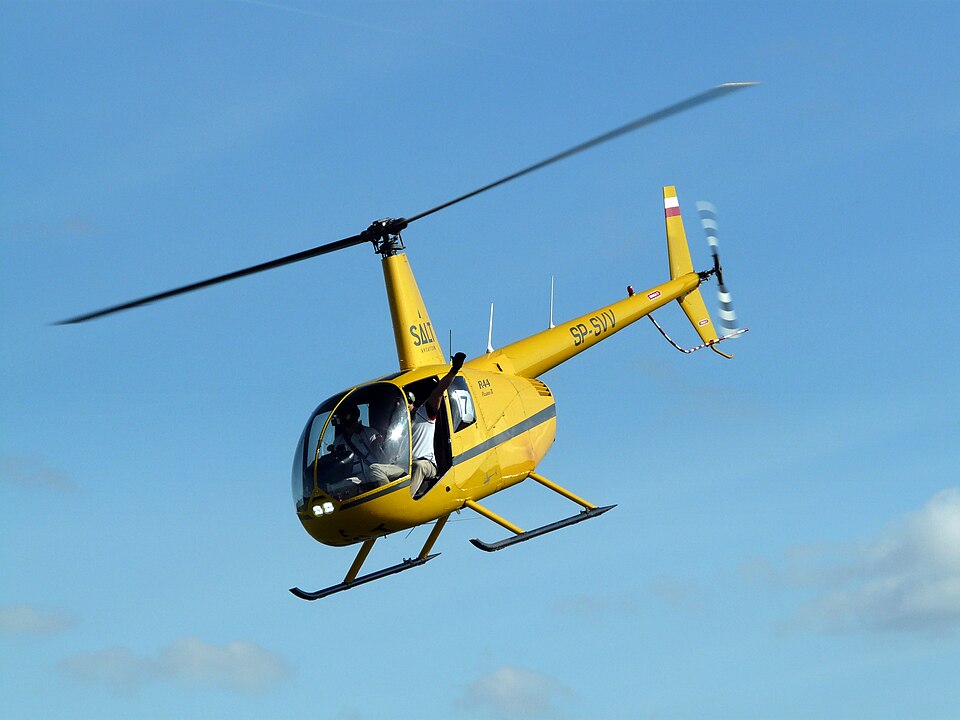
The Robinson R44 is arguably the most recommended helicopter for new private pilots in the United States. It seats four people, flies smoothly, and offers handling characteristics that are forgiving without being boring.
The R44 is heavier than its smaller sibling the R22, which works in its favor. That extra weight dampens the twitchiness that catches beginners off guard in lighter machines. Autorotations are easier to manage, hovering feels more stable, and the spacious cabin is comfortable for a wider range of pilot sizes.
The Raven II version uses a fuel-injected engine, which eliminates carburetor icing concerns and simplifies the start procedure. A rotor RPM governor takes one more variable off your plate.
Key strengths:
- Stable, predictable handling
- Fuel-injected engine on newer variants
- 4-seat cabin suitable for most body types
- Widely available at US flight schools
- Easy transition path from R22 if you trained on one
Pro Tip: Many students train their foundational hours on the R22 and then convert to the R44 for a 5-hour type course. This approach can save money while giving you excellent preparation for the larger machine.
If you want to explore helicopter types and names in more depth before committing to a training path, it helps to know how different rotor configurations affect handling.
2. Robinson R22
The R22 has trained more helicopter pilots in the United States than perhaps any other aircraft. It is small, lightweight, and very affordable to rent, which keeps training costs lower than most alternatives.
That said, the R22 is not the gentlest machine to learn in. It is famously responsive, or as some instructors politely put it, twitchy. Inputs translate quickly, autorotations have a narrow margin for error due to its low-inertia rotor, and the cabin is tight for larger pilots.
Yet this responsiveness is also the R22's biggest teaching tool. Pilots who master an R22 tend to find other helicopters feel easier by comparison. There is a well-worn saying in helicopter circles: "If you can fly an R22, you can fly anything."
Key strengths:
- Very low training costs
- Widespread availability across the US
- Builds strong foundational control inputs
- Great stepping stone to larger aircraft
Heads Up: The FAA has a special rule (SFAR 73) for R22 instruction, requiring instructors to have at least 50 hours in the type and 200 total helicopter hours. This is worth confirming with any school you consider.
3. Guimbal Cabri G2
The Guimbal Cabri G2 is a relatively recent addition to the training world, but it has earned a strong following for good reason. It was designed from the ground up as a training helicopter, which is something you can feel the moment you lift off.
The Cabri has a three-bladed, fully articulated rotor head. More blade inertia means smoother, more forgiving responses, and autorotations are noticeably easier to manage than in the R22. A Fenestron enclosed tail rotor reduces noise and improves safety on the ground.
The cockpit is modern and well-laid-out, and the fuel-injected engine needs no carburetor heat. It is arguably the most crashworthy light helicopter available for training, with a robust airframe design built around occupant protection.
The main trade-off is cost. Training in a Cabri runs roughly twice the hourly rate of the R22, which adds up across a full certificate program.
Key strengths:
- Designed specifically for training
- Forgiving, stable flight characteristics
- Safer autorotation margins than R22
- Modern cockpit and fuel-injected engine
Fun Fact: The Cabri G2 was designed by Bruno Guimbal, a former Eurocopter engineer, who set out to address specific shortcomings he observed in existing training helicopters.
Flying411 covers a wide range of training resources and helicopter comparisons to help you make smarter decisions before you commit to a school or aircraft type.
4. Schweizer 300 (269C / 300CBi)
The Schweizer 300 series has been a staple of helicopter flight training since the 1960s. Originally the Hughes 269, it passed through several owners before landing with Schweizer Aircraft, and it has built a reputation over decades for being stable, honest, and easy to fly.
The 300CBi version uses a fuel-injected engine, though it lacks a rotor RPM governor. Pilots must manage throttle manually, which requires more attention but also teaches a skill that transfers well to older helicopter types.
The cabin is roomier than the R22, making it more comfortable for pilots who find the Robinson's cockpit too cramped. Flight characteristics are described by many instructors as stable and predictable, with a heavier feel that many beginners find reassuring.
Key strengths:
- Long proven track record in training
- Stable, forgiving handling
- Larger cabin than the R22
- Good stepping stone to a wide variety of helicopter types
Keep in Mind: The Schweizer 300 does not have a rotor RPM governor, so you will need to stay active on the throttle. This is a teaching challenge but also a valuable skill to develop.
5. Enstrom 280FX
The Enstrom 280FX does not show up in every training fleet, but when you do find one, it is worth noting. Instructors consistently describe it as one of the most stable and forgiving light helicopters available.
It uses a fully articulated rotor, meaning the blades move independently and absorb inputs more smoothly. The large rotor blades carry significant inertia, which makes autorotations more forgiving and hover work easier to manage. The fuel-injected engine starts cleanly and does not need carburetor heat.
Like the Schweizer, the Enstrom lacks a rotor RPM governor, so throttle management is required. This is the primary skill it adds to the learner's workload.
The 280FX's main limitation is availability. Not many flight schools operate Enstroms, which can make finding instruction or solo-hire time a challenge.
Key strengths:
- Very stable, forgiving flight characteristics
- High-inertia rotor for comfortable autorotations
- Fuel-injected engine
- Excellent safety record
6. Bell 47
The Bell 47 is a piece of aviation history. Its iconic bubble cockpit and exposed tail boom made it famous as the helicopter from the television series "MASH," and it has been in service in various forms since the late 1940s.
For training purposes, the Bell 47 is considered by many experienced pilots to be one of the finest teachers ever built. Its controls require good RPM management, which builds awareness that stays with a pilot forever. The open cockpit design gives an unobstructed view that makes spatial orientation much easier to develop.
Parts availability is a consideration with vintage aircraft, and maintenance can be more demanding than with modern designs. But for a pilot who can access a well-maintained Bell 47, the experience is genuinely different from anything else on this list.
Key strengths:
- Excellent foundational control training
- Superb visibility from the bubble cockpit
- Legendary, proven airframe design
- Great for pilots who enjoy hands-on flying
Fun Fact: The Bell 47 is said to be one of the first helicopters certified for civilian use in the United States, with its certification reportedly dating back to 1946. Its design has long been considered a milestone in rotary-wing aviation history.
You can learn more about types of helicopters and their names to understand where historic trainers like the Bell 47 fit within the broader helicopter landscape.
7. Bell 206 JetRanger
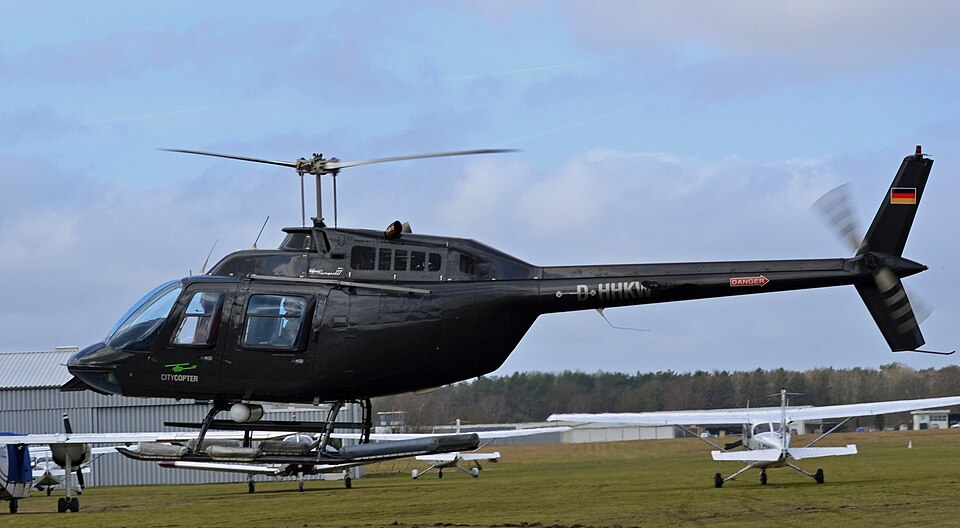
Once a pilot is ready to move beyond piston-powered trainers, the Bell 206 JetRanger is often the first turbine helicopter they encounter. It has been in production in various forms since the 1960s, and there are thousands of examples still flying around the world today.
The JetRanger is known for smooth, predictable handling. Its automatic throttle control (a turbine engine feature that governs RPM without pilot input) removes one of the most mentally demanding tasks from piston helicopter flying. You focus on the cyclic, the collective, and the pedals, and the engine largely takes care of itself.
It is a five-seat helicopter, making it practical for touring and passenger flights once training is complete. The transition from an R22 or R44 to the JetRanger is considered by most instructors to be a manageable step.
Key strengths:
- Smooth turbine power with automatic RPM control
- Widely available and well-supported
- Practical five-seat layout
- Long production history means parts are plentiful
8. Bell 505 Jet Ranger X
The Bell 505 is the modern successor to the iconic Bell 206, and it brings the JetRanger lineage into the 21st century. It was designed with a specific goal in mind: to be the safest and most pilot-friendly aircraft in its class.
The 505 features a Garmin G1000H glass cockpit, dual-channel FADEC engine management, and a rotor system inherited from the proven Bell 206L-4. The FADEC system handles engine management automatically, which significantly reduces pilot workload during training and everyday flying.
Bell has worked deliberately on the 505's handling characteristics, refining its stability during hover and the transition to forward flight. The result is a helicopter that feels confident and composed without demanding excessive skill to manage.
Key strengths:
- FADEC engine management reduces pilot workload
- Glass cockpit with Garmin G1000H
- Excellent stability in hover and cruise
- Used as a military training helicopter in multiple countries
Why It Matters: The Bell 505 has been adopted as a primary training helicopter by military aviation programs in several countries, which is a meaningful endorsement of its teachable, manageable flight characteristics.
9. Robinson R66
The Robinson R66 is the turbine-powered member of the Robinson family, and it bridges the gap between piston trainer and turbine workhorse. Powered by a Rolls-Royce RR300 engine, it seats five and offers a cruise speed of around 110 knots.
Pilots transitioning from the R44 will find the R66 familiar in layout and control feel. Robinson deliberately kept the cockpit design similar to make type transitions straightforward. The turbine engine simplifies power management, and the five-seat cabin makes the R66 genuinely useful for touring and travel.
Key strengths:
- Familiar Robinson cockpit layout for R22/R44 pilots
- Turbine power with simplified engine management
- Five-seat cabin, practical for touring
- Strong availability in the US market
For pilots thinking about long-distance travel, it is worth reading about the best helicopters for long distances to see how the R66 compares against other options.
10. Airbus H120 (EC120 Colibri)
The Airbus H120, sold for many years as the Eurocopter EC120 Colibri, is a smooth and quiet five-seat turbine helicopter with a reputation for comfortable, low-vibration flight.
The Colibri uses a Fenestron enclosed tail rotor, similar to the Cabri G2, which contributes to its quiet operation and ground safety. Its handling is described by pilots as composed and predictable, and the cabin is well-designed for passengers and pilot alike.
One practical note: the H120's main rotor spins in the opposite direction compared to Robinson and Bell helicopters. This means pedal inputs in certain emergency situations are reversed from what pilots trained on those types would expect, which is worth factoring into any transition plan.
Key strengths:
- Very smooth, low-vibration flight
- Quiet operation with Fenestron tail rotor
- Comfortable five-seat cabin
- Good fit for pilots moving into the Airbus family of larger helicopters
11. MD 500 Series
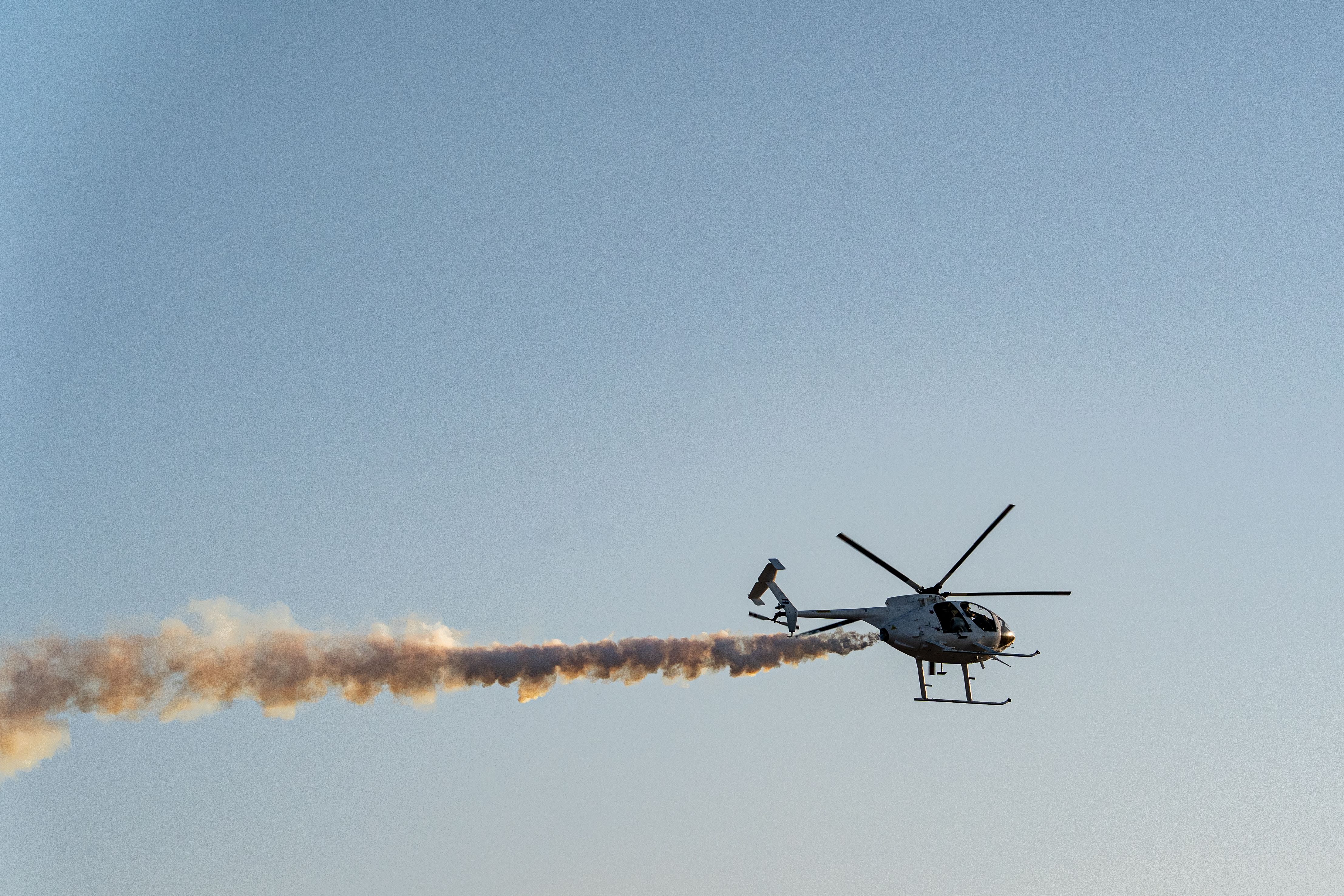
The MD 500 is a compact, nimble turbine helicopter with a long history in both civilian and military service. It uses the NOTAR (No Tail Rotor) system on some variants, replacing the traditional tail rotor with a directed air circulation system for yaw control. This makes it quieter and removes one of the more mechanically vulnerable parts of a conventional helicopter.
The MD 500 is not the most common training helicopter in the United States, but it is used in law enforcement, tours, and agricultural operations across the country. Pilots who train on it tend to describe the flight feel as lively and responsive, closer to sporty than sedate.
Key strengths:
- NOTAR variants offer improved safety and reduced noise
- Compact, maneuverable airframe
- Turbine power with straightforward engine management
- Popular for specialty operations and tours
Quick Tip: If you are considering the MD 500, look into the specific variant you will be flying. NOTAR models and conventional tail-rotor models have meaningfully different handling characteristics.
For those curious about how civilian helicopters compare on range and endurance, see this overview of civilian helicopters with the longest range.
12. Hiller UH-12 (12E / 12E4)
The Hiller UH-12 is one of the classic piston helicopters that shaped American rotary-wing aviation in the postwar era. It has been used for everything from agricultural spraying to military training, and experienced pilots often cite it as one of the best handling vintage helicopters available.
The Hiller's design philosophy emphasized stability and pilot feedback, and that shows in the aircraft's behavior. It is not as widely available as Robinson or Schweizer products, but schools and operators that maintain UH-12s tend to have devoted followings among their students.
Key strengths:
- Stable, well-balanced flight characteristics
- Solid historical track record
- Good foundational trainer for pilots interested in classic aircraft
- Transferable skills to a wide range of helicopter types
13. UH-1 Huey
The Bell UH-1 Iroquois, almost universally known as the Huey, occupies a unique place on this list. It is a full-size utility turbine helicopter, not a light trainer, but it has a long reputation among military pilots as one of the more approachable machines for new rotary-wing students.
In military training programs, the Huey has often been used as an introductory platform because its control inputs are relatively direct and its systems are comparatively simple compared to more sophisticated combat platforms. The lack of advanced autopilot systems means you feel the aircraft responding to your hands, which builds genuine skill and situational awareness.
For civilian pilots, the UH-1 is less common as a trainer, but it is flown by some operators and museums. For anyone with a deep interest in military aviation history, it also serves as a gateway to understanding the aircraft that defined an era.
Key strengths:
- Direct, honest control inputs build strong pilot awareness
- Long history as a military training platform
- Large, stable airframe
- Iconic status in helicopter history
Good to Know: Military helicopter training is a separate path from civilian certification and involves its own selection pipeline, branch-specific programs, and type progressions. If military aviation is your goal, research that path specifically rather than applying civilian training assumptions to it.
You can read more about military helicopter types and names to get a clearer picture of where the Huey fits in military rotary-wing history.
How to Choose the Right Helicopter for Your Training
Picking from a list of 13 options can still feel overwhelming, especially if you are brand new to the world of helicopters. Here is a straightforward way to narrow it down.
Consider Your Budget First
Training costs vary significantly depending on the helicopter type. Piston trainers like the R22 and Schweizer 300 are generally the least expensive, with hourly rental rates typically lower than turbine types. If cost is your primary constraint, start with whatever piston trainer your nearest school offers and build hours efficiently.
Match the Aircraft to Your Goals
If you want a Private Pilot Certificate for recreational flying, a Robinson R44 or Guimbal Cabri G2 is an excellent choice. If you have commercial ambitions and want to work toward turbine time, it makes sense to transition to the Bell 206, Bell 505, or Robinson R66 as soon as your budget allows.
Pro Tip: Before choosing a flight school, ask what types of helicopters they operate and whether you can complete your full certificate program on a single type. Switching aircraft mid-training adds cost and time.
Think About the School, Not Just the Aircraft
The quality of instruction matters as much as the machine. A great instructor in a modest training helicopter will outperform a poor instructor in an expensive one every single time. Look for schools with strong safety records, experienced instructors, and at least two of your chosen aircraft type available to avoid scheduling delays.
For pilots specifically focused on finding the best helicopters to learn to fly, there is a more detailed breakdown of training-specific factors worth reviewing before you sign up.
What Makes Helicopters Harder to Fly Than Airplanes
It is worth briefly addressing why helicopters have a reputation for being difficult in the first place. Understanding the challenge helps explain why the machines on this list stand out.
A fixed-wing airplane has inherent aerodynamic stability. Let go of the controls in most light planes and the aircraft will generally stay on course. A helicopter, by contrast, has no such tendency. Every axis of movement is connected, meaning a change in one control affects the others. Move the cyclic forward, and you also need to adjust the collective and the pedals to maintain coordinated flight.
The hover is where most students feel this most acutely. Holding a precise hover requires constant, simultaneous corrections in all three axes. Early in training, this feels like trying to balance on a ball while juggling. With practice, it becomes instinctive, but the process takes time and mental effort.
The helicopters on this list reduce this workload through better stability, more forgiving control response, and simpler systems. None of them make flying easy. They make learning possible.
Fun Fact: It is often said among helicopter pilots that you do not fly a helicopter so much as you constantly prevent it from crashing. This is an exaggeration, but it captures something real about the active, ongoing nature of helicopter control.
If you are curious about the specific skills that challenge helicopter pilots most, this article on the hardest things to do in a helicopter covers the biggest hurdles in detail.
Quick Comparison: Piston vs. Turbine Trainers
| Feature | Piston Trainers (R22, R44, Cabri, Schweizer) | Turbine Trainers (Bell 206, Bell 505, R66) |
| Hourly cost | Lower | Higher |
| Engine management | Manual throttle or governor | Automatic (turbine self-governs) |
| Typical use | Private pilot training | Commercial step-up, touring |
| Availability | Wide | More limited |
| Complexity | Lower | Moderate to higher |
| Career applicability | Foundation skills | Turbine time for employment |
If you are ready to take the next step, Flying411 offers resources, guides, and expert content to help you move from curious beginner to confident helicopter pilot.
Conclusion
The easiest helicopters to pilot and fly are not necessarily the most impressive-looking machines on the ramp, but they are the ones that give new pilots the best chance to build real skills efficiently and safely. From the workhorse Robinson R44 to the historic Bell 47 and the modern Bell 505, there is a right choice for every budget, body type, and long-term goal.
The key is to match the aircraft to your training needs rather than picking based on appearance or ambition alone. Get in the right machine with the right instructor, and the learning curve becomes a path instead of a wall.
Ready to find your first helicopter or map out your training journey? Flying411 has the guidance, comparisons, and expert resources to help you take off with confidence.
Frequently Asked Questions
What is the single easiest helicopter to fly for a complete beginner?
Most flight instructors point to the Robinson R44 or the Guimbal Cabri G2 as the most approachable options for new students in the United States. Both are stable, predictable, and designed to give learners a strong foundation without overwhelming them early in training.
Is the Robinson R22 good for beginners even though it is described as twitchy?
The R22 is widely used for training because it is affordable and available, not because it is the gentlest machine to learn in. Many pilots do succeed in learning on it, but students who struggle with its responsiveness often do much better switching to the R44 or Schweizer 300.
How long does it typically take to learn to fly a helicopter?
The FAA requires a minimum of 40 flight hours for a Private Pilot Certificate in a helicopter, but many students take between 50 and 70 hours before they are ready to pass a checkride. The pace depends heavily on the aircraft type, the quality of instruction, and how frequently the student can fly.
Can I fly a helicopter with no prior aviation experience?
Yes. A helicopter Private Pilot Certificate does not require any prior fixed-wing experience. Many students come to helicopter training with no aviation background at all. That said, some basic flight theory knowledge before your first lesson can help you absorb information faster and make better use of your early hours.
What is the difference between a piston helicopter and a turbine helicopter for a beginner?
Piston helicopters use a reciprocating engine similar to a car, which typically requires manual throttle management and carburetor heat procedures on some models. Turbine helicopters use a jet-type engine that governs itself automatically, which reduces pilot workload but costs significantly more per hour to operate. Most beginners start on piston trainers and transition to turbine aircraft once they have a certificate.