Helicopters get a bad reputation in popular culture. Movies, news stories, and dramatic headlines make them seem terrifying. But the truth is, modern helicopter design has come a very long way. Engineers, regulators, and manufacturers have spent decades studying crashes, learning from every incident, and building the results directly into new aircraft.
Today, some helicopters are so carefully engineered that they can handle engine failures, severe weather, and unexpected system issues while keeping everyone on board safe. The FAA, EASA, and other regulatory bodies hold rotorcraft to incredibly strict standards before a single paying passenger can climb aboard.
So what actually makes the safest helicopter ever made? It comes down to a combination of twin engines, redundant systems, crashworthy structures, advanced avionics, and a strong operational track record. The helicopters on this list represent the gold standard of rotary-wing safety, and each one has earned its place here through engineering, real-world performance, or both.
Key Takeaways
The safest helicopters ever made share a common set of traits: twin turbine engines, redundant flight systems, FAA or EASA Part 29 certification, and crashworthy airframes. Models like the Sikorsky S-92, Leonardo AW139, and Airbus H145 are widely recognized for their outstanding safety records across offshore, medical, and search-and-rescue operations. The safest choice for any mission depends on the role, environment, and level of redundancy required.
| Helicopter | Category | Key Safety Feature |
| Sikorsky S-92 | Heavy transport | FAA-certified "safest in the world" per Part 29 |
| Leonardo AW139 | Medium twin | Crashworthy seats, 4-axis AFCS, dual engines |
| Leonardo AW189 | Super-medium | 50-min run-dry gearbox, full EASA/FAA Part 29 |
| Sikorsky S-76 | Medium twin | Dual redundancy on all critical systems |
| Bell 429 | Light twin | First helicopter with MSG-3 maintenance certification |
| Airbus H145 | Light twin | Five-blade rotor, advanced autopilot |
| Airbus H160 | Medium twin | Blue Edge rotor blades, EASA/FAA certified |
| Bell 206 JetRanger | Light single | Outstanding NTSB safety record for single-engine type |
| Robinson R66 | Light single turbine | Improved crashworthiness over piston models |
| Enstrom 480B | Light single turbine | Belt-driven fail-safe transmission |
| MD Helicopters MD 902 Explorer | Light twin | NOTAR anti-torque system, no tail rotor risk |
At Flying411, we believe that understanding the aircraft is just as important as knowing how to fly it. Whether you are a student pilot, an enthusiast, or a working professional, Flying411 is your go-to resource for honest, accurate aviation knowledge.
What Makes a Helicopter Safe in the First Place?
Before jumping into the list, it helps to understand what safety actually means in rotorcraft design. It is not just about how the helicopter handles in perfect conditions. Real safety is about what happens when things go wrong.
The Role of Certification Standards
The FAA uses a certification standard called FAR Part 29 for transport-category rotorcraft. This is the highest and most demanding certification level for helicopters. It covers everything from structural strength and engine redundancy to crashworthiness and emergency procedures.
Helicopters certified under Part 29 must be able to continue flying safely after a single engine failure. They must also meet strict requirements for how the airframe behaves in a crash, how quickly pilots can access emergency systems, and how the aircraft performs in a wide range of weather and altitude conditions.
Good to Know: Not all helicopters are certified under Part 29. Lighter aircraft may fall under FAR Part 27, which has less stringent requirements. For the highest level of passenger protection, Part 29 transport-category helicopters are generally considered the benchmark.
Twin Engines vs. Single Engines
One of the biggest factors in helicopter safety is whether it has one engine or two. A twin-engine helicopter can continue flying even if one engine fails completely. This is critical in overwater, mountainous, or urban operations where there may be no safe place to land quickly.
Single-engine helicopters rely on a maneuver called autorotation to land safely after an engine failure. Autorotation is effective when done correctly, but it requires altitude, space, and a skilled pilot. In tight, low-altitude environments, a twin-engine design provides a much larger margin of safety.
Crashworthiness and Structural Design
Modern safety-focused helicopters are built with crashworthy airframes. This means the structure is designed to absorb energy in a crash and protect the occupants inside. Crash-resistant fuel systems, energy-absorbing seats, and reinforced cabins all contribute to survivability when an accident cannot be avoided.
Pro Tip: When evaluating any helicopter for purchase or charter, ask specifically about its crashworthiness certification. Crashworthy seating and fuel systems can make a significant difference in survivability during low-speed or hard-landing accidents.
Why Helicopter Safety Has Improved So Dramatically
Helicopter safety has gone through a remarkable transformation over the past few decades. According to data published by the US Helicopter Safety Team (USHST), 2024 saw the lowest number of fatal helicopter accidents in the United States in roughly 25 years. The fatal accident rate dropped to around 0.44 per 100,000 flight hours, which was more than 20 percent lower than the previous five-year average.
This improvement did not happen by accident. It came from a combination of better aircraft technology, more rigorous training, widespread adoption of flight data monitoring, and a cultural shift toward safety management systems at the operator level.
Stability Augmentation Systems
One major technology change has been the addition of stability augmentation systems (SAS) and autopilots on even lighter helicopter models. These systems help the helicopter maintain a stable flight attitude, reduce pilot workload, and prevent the kind of inadvertent upsets that can lead to a loss of control.
Fun Fact: Loss of control in flight is consistently cited as one of the leading causes of fatal helicopter accidents. Stability augmentation systems are specifically designed to address this risk by helping pilots maintain control in challenging conditions.
Flight Data Monitoring
Flight data monitoring (FDM) programs have also become more common. These systems record what the aircraft actually did during a flight, giving operators the ability to identify risky habits or techniques before they cause an accident. Many airlines have used FDM for years; the helicopter industry has been catching up quickly.
If you have ever wondered why helicopters are so hard to fly, part of the answer lies in how many things a pilot has to manage at once. Technology that reduces that workload also reduces the chance of mistakes.
11 Safest Helicopters Ever Made
These 11 helicopters represent the best the industry has ever produced in terms of design, certification, operational track record, and safety technology. They range from heavy offshore transports to light training aircraft, but all share a commitment to keeping occupants safe.
1. Sikorsky S-92
The Sikorsky S-92 is one of the most commonly cited candidates for the title of safest helicopter in the world. The FAA certification process for the S-92 under FAR Part 29 was described by the certification board as producing the "safest helicopter in the world" at the time of its approval. That is high praise from a regulatory body not known for throwing around superlatives.
The S-92 was designed with flaw tolerance, bird-strike resistance, and engine burst containment built directly into the structure. It is widely used for offshore oil and gas transport, search and rescue, and even as a head-of-state transport. The US Marine Corps selected a variant, the VH-92, to serve as Marine One, the presidential helicopter.
Why It Matters: The S-92's selection as Marine One is perhaps the strongest real-world endorsement of its safety credentials. When a manufacturer is tasked with protecting the life of the US President, the bar for reliability and redundancy is essentially unlimited.
Key safety features:
- Dual General Electric CT7-8A turboshaft engines
- FAR Part 29 transport-category certification
- Bird-strike and engine-burst containment
- Flaw-tolerant airframe design
- Used in offshore, SAR, and presidential transport roles
2. Leonardo AW139
The Leonardo AW139 is one of the best-selling intermediate-class helicopters in the world, and its safety record helps explain why. It has been ordered by law enforcement agencies, military operators, offshore energy companies, and search-and-rescue organizations across dozens of countries.
The AW139 features a 4-axis digital Automatic Flight Control System (AFCS) and a fully integrated Honeywell Primus Epic avionics suite. Its cockpit was specifically designed to reduce pilot workload and improve situational awareness, two factors that directly affect safety outcomes. The AW139 also meets the most current FAR/EASA Part 29 crashworthiness requirements.
By 2019, Leonardo had delivered over 1,000 AW139s, a milestone that reflects both the aircraft's commercial success and the confidence operators place in its safety record.
Keep in Mind: The AW139 is part of Leonardo's AWFamily, which includes the AW169 and AW189. All three share common cockpit layouts, safety philosophies, and design features, which helps reduce crew errors when pilots transition between models.
Key safety features:
- Twin Pratt & Whitney PT6C-67C turboshaft engines
- 4-axis AFCS with full autopilot capability
- Crashworthy seats and airframe structure
- NVG-compatible glass cockpit
- Part 29 certified for offshore and SAR operations
3. Leonardo AW189
The AW189 takes the AW139's safety philosophy and scales it up for longer-range, higher-demand operations. It was designed from the beginning with offshore and search-and-rescue operators in mind, and its specification list reflects that.
One standout feature is the main gearbox's ability to run for up to 50 minutes without oil pressure. This exceeds standard certification requirements and was, at the time of its introduction, a capability unique to the AW189. This means that even in a catastrophic oil-loss scenario, the aircraft can continue flying long enough to reach a safe landing area.
Fun Fact: The AW189's main gearbox 50-minute run-dry capability is designed to give crews enough time to fly offshore platforms back to the coast or find a safe landing zone even after a total loss of gearbox lubrication.
Key safety features:
- 50-minute run-dry main gearbox
- Full EASA and FAA Part 29 certification
- Helicopter terrain avoidance warning system (HTAWS)
- Traffic collision avoidance system II (TCAS II)
- Crashworthy seats for all occupants
4. Sikorsky S-76
The Sikorsky S-76 has been in production and active service since the late 1970s, and it has accumulated a long and generally strong safety record across a wide range of roles. Originally designed for the offshore oil industry with design DNA borrowed from the military UH-60 Black Hawk, the S-76 was built to be rugged, reliable, and redundant.
The S-76 features dual-redundancy on all critical lift elements, which means that a failure of a single system component does not automatically lead to a loss of control. It is frequently flown by two pilots, which further reduces the risk of pilot error. The S-76 has been used by corporate operators, air ambulance services, offshore energy companies, and VIP charter operators for decades.
Good to Know: The S-76B and later variants drew on lessons learned from earlier models and incorporated improvements to avionics, engine control systems, and airframe design. The long production history of the S-76 also means there is a deep base of trained mechanics, spare parts, and operational knowledge supporting the type.
Key safety features:
- Dual turboshaft engines with redundant systems
- Design heritage from the military UH-60 Black Hawk
- Typically operated with two qualified pilots
- Health and Usage Monitoring System (HUMS) on later variants
- Long operational track record in high-demand roles
5. Bell 429
The Bell 429 holds a notable distinction in aviation history: it was the first helicopter in the world to be certified using the Maintenance Steering Group-3 (MSG-3) methodology. MSG-3 is a reliability-centered maintenance program that optimizes maintenance schedules based on data rather than fixed intervals, which helps identify potential issues before they affect airworthiness.
The 429 is a light twin-engine helicopter that was designed with single-pilot instrument flight rules (IFR) capability. This makes it suitable for a wide range of challenging operations, including night medical flights, law enforcement missions, and offshore support. Its wide-track landing gear, large cabin doors, and crashworthy interior also contribute to occupant safety.
Understanding the physics of how a helicopter flies gives you a deeper appreciation for why features like dual engines and redundant hydraulics matter so much for safety at low altitudes.
Key safety features:
- First MSG-3 certified helicopter globally
- Single-pilot IFR certified
- Twin engines with full Category A performance
- Crashworthy seats and energy-absorbing structure
- Wide cabin doors for rapid egress
6. Airbus H145
The Airbus H145 is a light twin-engine helicopter that has become one of the most widely used platforms for air medical services and search-and-rescue operations in Europe and North America. Its safety reputation is built on a combination of advanced avionics, a powerful autopilot, and a five-blade main rotor that provides a smoother, more controllable flight than earlier four-blade designs.
The five-blade bearingless main rotor, introduced in the H145's latest configuration, reduces vibration, lowers noise, and improves overall handling quality. Reduced vibration means less fatigue for pilots and medical crews on long missions, and better handling quality makes the aircraft easier to control in demanding conditions.
The Airbus H145 has also been widely praised for its ability to operate in hot, high-altitude environments, which are some of the most demanding conditions any helicopter can face.
Pro Tip: The H145's widespread use in air medical services is partly due to its spacious cabin, which can accommodate a full medical crew and stretcher. But the safety avionics and redundant systems are equally important when lives are on the line.
Key safety features:
- Five-blade bearingless main rotor (latest variant)
- Dual Safran Arriel 2E turboshaft engines
- Helionix digital avionics suite with 4-axis autopilot
- HTAWS terrain avoidance system
- Widely used in EMS, SAR, and law enforcement roles
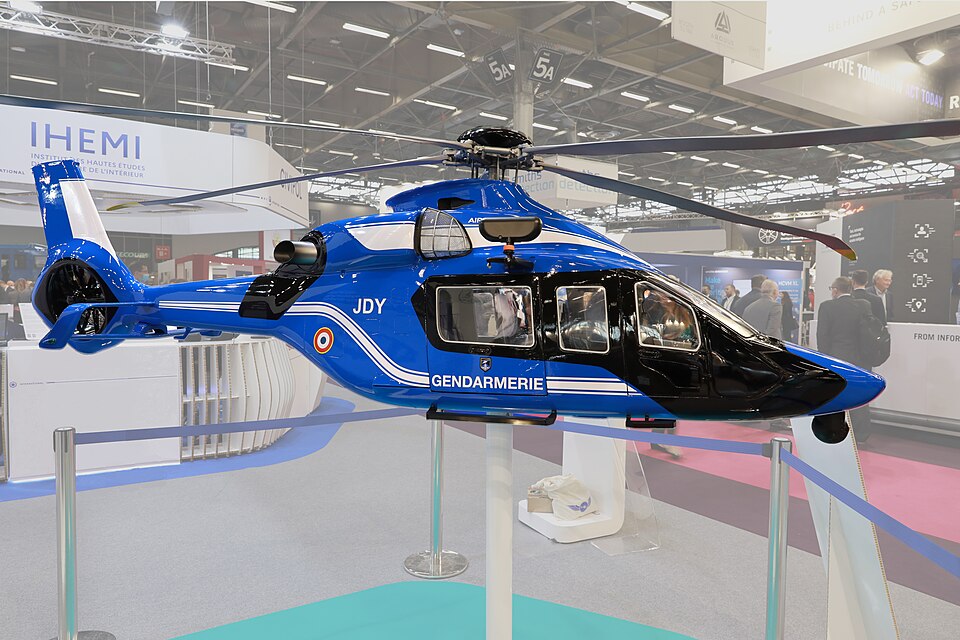
7. Airbus H160
The Airbus H160 is one of the newest helicopters on this list, and it represents a significant step forward in rotorcraft safety technology. Its most distinctive feature is the Blue Edge main rotor, a swept-tip blade design that Airbus developed to reduce noise and improve aerodynamic efficiency. Quieter blades also tend to mean smoother, more predictable flight characteristics.
The H160 was certified by both EASA and the FAA and is being marketed as one of the safest and most technologically advanced medium-class helicopters available. Airbus has described it as having a 20 percent larger cabin volume per passenger compared to the previous generation of medium twin helicopters.
Fun Fact: The H160's Blue Edge rotor blades were years in development and are said to reduce blade-vortex interaction noise by a significant margin compared to conventional rotor designs. This technology was originally developed for larger, heavier aircraft before being adapted for the H160.
Key safety features:
- Blue Edge swept-tip rotor blades for smoother flight
- Dual Safran Arrano turboshaft engines
- Full glass cockpit with 4-axis autopilot
- EASA and FAA certified
- Composite airframe with high crash energy absorption
8. Bell 206 JetRanger
The Bell 206 JetRanger family is one of the most famous helicopter lines in history. It is a single-engine turbine helicopter, which means it lacks the engine redundancy of the twin-engine aircraft on this list. But within the category of single-engine turbines, the 206 series has long been regarded as having one of the strongest safety records of any helicopter ever produced.
According to industry sources citing NTSB data, the 206 series has accumulated tens of millions of flight hours over its operational life, and its accident rate per flight hour has historically been among the lowest for any single-engine type. The JetRanger is simple, reliable, well-understood by mechanics worldwide, and forgiving in autorotation, which is the emergency procedure used when an engine fails.
If you are interested in learning to fly, some of the easiest helicopters to pilot share some of the same design traits that make the JetRanger so predictable: straightforward controls, responsive handling, and a well-documented flight envelope.
Keep in Mind: The JetRanger's safety record is partly a product of its simplicity. Fewer systems mean fewer potential failure points, and the aircraft's long production history means there is excellent parts availability and a large pool of trained mechanics.
Key safety features:
- Allison (now Rolls-Royce) 250-series turboshaft engine
- Exceptional autorotation characteristics
- Simple, well-understood mechanical systems
- Decades of operational history and global support network
- Strong NTSB safety record per flight hour
9. Robinson R66
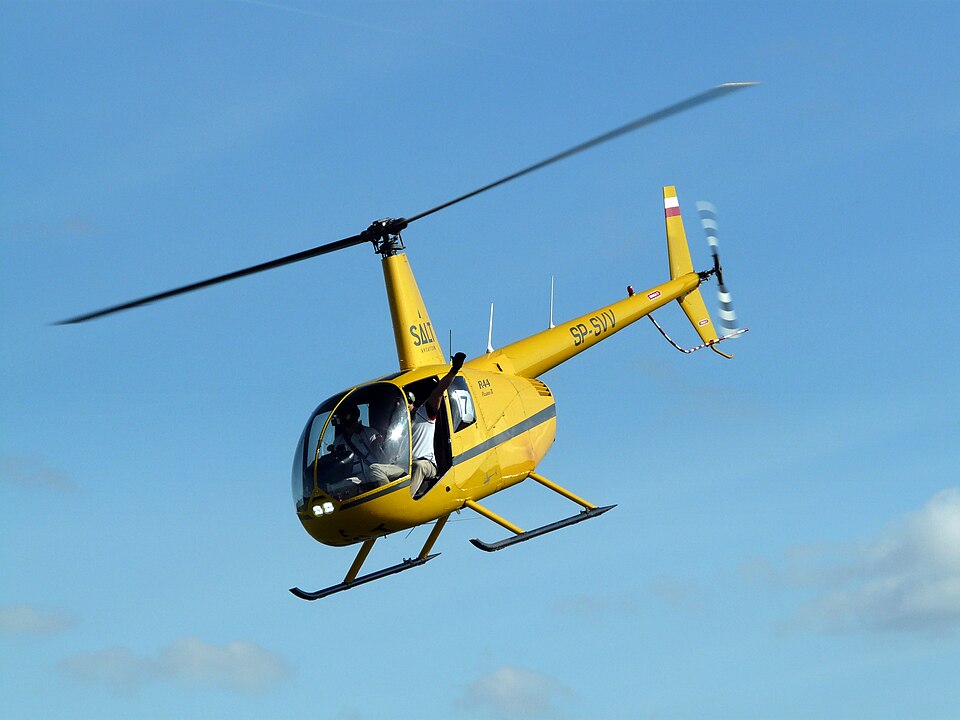
The Robinson R66 is the turbine-powered evolution of Robinson's highly popular R44 piston helicopter. While the R44 introduced millions of people to private helicopter ownership, the R66 took a significant step forward in safety with its Rolls-Royce RR300 turbine engine, improved crashworthiness features, and more refined systems design.
Turbine engines are generally more reliable than piston engines, and the R66's turbine power plant reduces the risk of the kind of mechanical failures that can catch pilots off guard at low altitude. The R66 also has better performance margins than the R44, which gives pilots more options in emergency situations.
Heads Up: Robinson helicopters are popular for flight training and private ownership, but like all single-engine aircraft, they rely on autorotation for emergency landings. Regular practice of autorotation procedures is essential for any R66 pilot.
Key safety features:
- Rolls-Royce RR300 turbine engine
- Improved crashworthiness over piston Robinson models
- Better single-engine performance margins than earlier models
- Widely used in training, tours, and private ownership
- Strong support and parts network from Robinson
10. Enstrom 480B
The Enstrom 480B is a light single-engine turbine helicopter that is less well-known than the Bell or Sikorsky brands, but it has built a strong reputation for safety and reliability, particularly in the training and law enforcement markets. Enstrom's most notable safety feature is its belt-driven fail-safe transmission, which has been used on Enstrom helicopters for decades and is found on over 1,500 aircraft.
This transmission design is unusual in the helicopter world and provides an additional layer of protection against certain types of gearbox-related failures. Enstrom manufactures and machines most of its own parts in-house at its facility in Menominee, Michigan, which gives the company tight quality control over every component.
Good to Know: Enstrom's decision to manufacture most of its components in-house is unusual in the aviation industry, where most manufacturers rely heavily on outside suppliers. This approach gives Enstrom direct oversight of quality at every step of the production process.
Key safety features:
- Belt-driven fail-safe transmission
- In-house parts manufacturing for quality control
- FAA-certified for law enforcement and training roles
- Proven track record in demanding operational environments
- Simple, maintainable design
11. MD Helicopters MD 902 Explorer
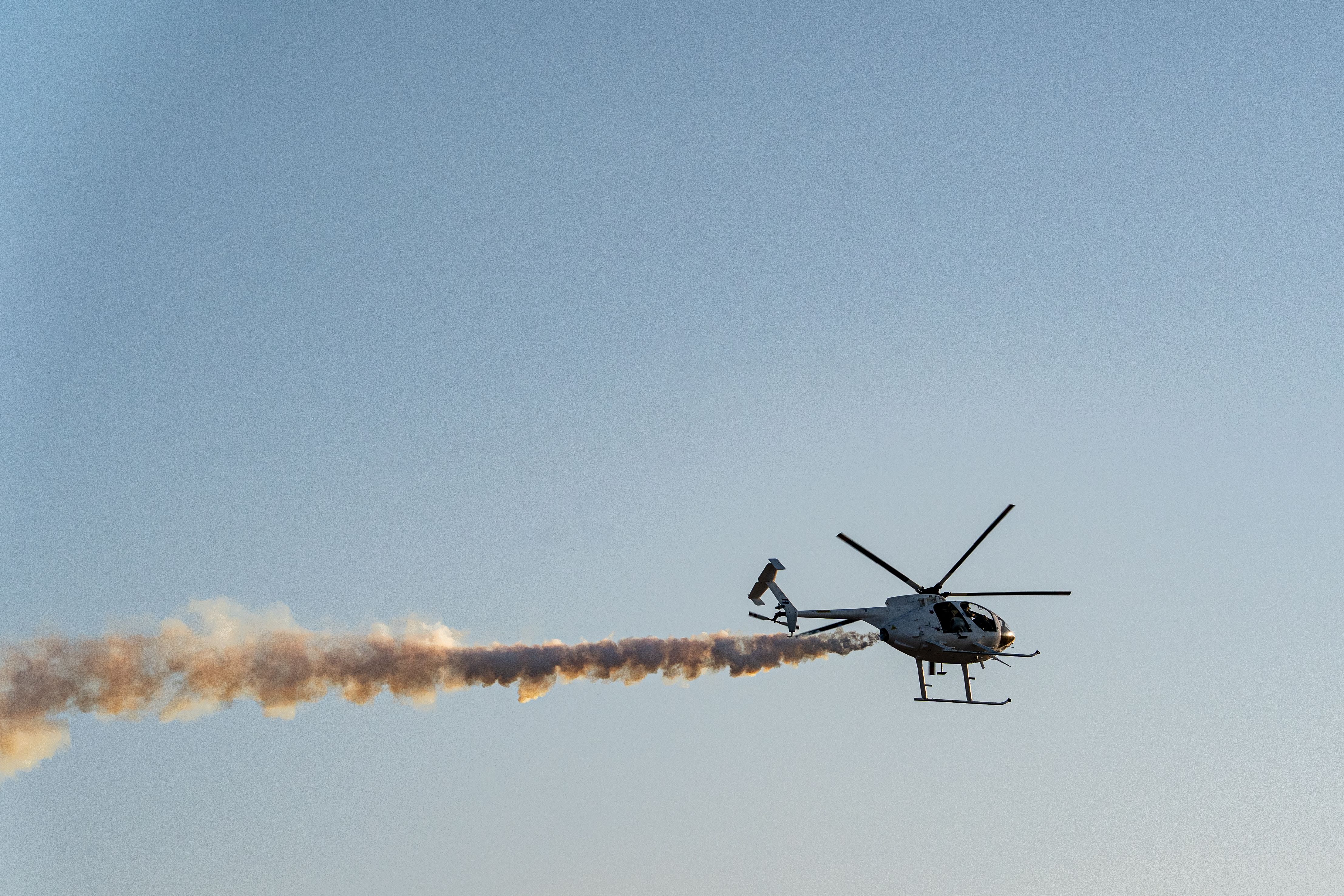
The MD Helicopters MD 902 Explorer stands apart from every other helicopter on this list because of one remarkable feature: it has no tail rotor. Instead, the MD 902 uses the NOTAR (No Tail Rotor) anti-torque system, which uses a jet of pressurized air directed through slots in the tailboom to counteract the main rotor torque.
This matters for safety because tail rotors are involved in a meaningful number of helicopter accidents. Tail rotor strikes against the ground, obstacles, or people on the ground are a known hazard in helicopter operations. The NOTAR system eliminates this risk entirely, making ground operations significantly safer. The MD 902 is widely used by law enforcement agencies and air medical operators in the United States.
Why It Matters: Tail rotor accidents are a well-documented category of helicopter incident. The NOTAR system on the MD 902 does not just reduce noise, it fundamentally removes one of the most dangerous mechanical components from the aircraft. That is a genuine safety innovation with real operational benefits.
Key safety features:
- NOTAR anti-torque system with no tail rotor
- Significantly reduced risk of tail rotor strike accidents
- Twin Pratt & Whitney Canada PW207E engines
- Part 29 transport-category certification
- Widely used in law enforcement and EMS roles
Ready to deepen your knowledge of helicopter aviation? Flying411 has a growing library of articles covering everything from aircraft mechanics to flying conditions, written for pilots and enthusiasts at every level.
How to Compare Helicopter Safety for Your Specific Needs
Not every mission calls for the same helicopter, and the safest aircraft for one role may not be the best choice for another. Understanding how to match helicopter capabilities to mission requirements is an important part of making smart aviation decisions.
Offshore and Overwater Operations
For flights over open water, twin-engine certification and the ability to meet Category A performance requirements are essential. Category A performance means the helicopter can climb safely and continue flying even if one engine fails immediately after takeoff. The Sikorsky S-92, Leonardo AW189, and AW139 are among the preferred choices for this type of work.
Understanding what conditions a helicopter cannot fly in is just as important as knowing what it can handle. Weather, wind, icing, and visibility all affect helicopter safety in ways that go beyond the aircraft itself.
Air Medical and Search-and-Rescue Operations
EMS and SAR missions often require flying at night, in poor weather, and in remote areas with no nearby alternate landing sites. The Airbus H145 and Bell 429 are popular for these roles because of their robust autopilot systems, IFR certification, and large cabins that can accommodate medical equipment.
Quick Tip: If you are evaluating a helicopter for air medical use, look for HTAWS (Helicopter Terrain Awareness and Warning System) as a standard fit. CFIT (Controlled Flight Into Terrain) is a leading cause of fatal helicopter accidents, and HTAWS provides a direct warning when the aircraft is at risk.
Private and Corporate Use
For private owners and corporate operators, the combination of twin-engine reliability, a comfortable cabin, and manageable operating costs usually points toward aircraft like the Sikorsky S-76, Leonardo AW139, or Bell 429. These aircraft can be operated with one or two pilots depending on the mission and regulatory requirements.
Flight Training
For students learning to fly, simpler aircraft with good autorotation characteristics and well-established training programs are generally the safest choice. The Bell 206, Robinson R66, and Enstrom 480B are all commonly used in professional training environments for good reason.
Safety Features Worth Knowing About
When reading helicopter specifications, certain features show up repeatedly on the safest models. Here is a quick guide to what they mean and why they matter.
| Feature | What It Does | Why It Matters |
| AFCS / Autopilot | Maintains stable flight attitude automatically | Reduces pilot workload and LOC-I risk |
| HTAWS | Warns of terrain proximity | Reduces CFIT accidents |
| TCAS II | Detects nearby air traffic | Reduces mid-air collision risk |
| HUMS | Monitors component health in real time | Catches mechanical issues before failure |
| Crashworthy seats | Absorbs crash energy | Improves survivability in hard landings |
| Crash-resistant fuel system | Prevents post-crash fire | Major factor in post-accident survivability |
| Run-dry gearbox | Continues operating without oil for a set time | Allows safe landing after gearbox oil loss |
| NOTAR system | Replaces tail rotor with air pressure | Eliminates tail rotor strike hazard |
Are Military Helicopters Safer Than Civilian Ones?
This is a common question, and the answer is nuanced. Military helicopters are built to withstand harsh conditions, but they are also flown in combat, which introduces risks that civilian aircraft never face. When comparing the underlying technology, many of the safety innovations in modern civilian helicopters have direct roots in military design.
The Sikorsky S-76, for example, borrowed heavily from the military UH-60 Black Hawk. The Leonardo AW139M is a military version of the same AW139 that flies offshore oil workers and EMS patients every day. The line between military and civilian helicopter safety technology has always been blurry.
If you are curious about some of the more unconventional designs that have come out of military and experimental programs, weird military helicopters offer a fascinating look at what happens when engineers push the boundaries of what a rotorcraft can do. And for an even broader look at unusual rotary-wing aircraft, the world's weirdest helicopters covers some of the most creative and sometimes impractical designs ever to leave the drawing board.
Fun Fact: The Robinson R44, a popular civilian training helicopter, is said to have introduced more people to helicopter ownership than almost any other model in history. While not the most technologically advanced aircraft, its accessibility helped grow a generation of pilots who went on to fly far more complex machines.
Conclusion
The title of safest helicopter ever made is not held by a single aircraft. It depends on the mission, the environment, and the standards being applied. But across all categories, the helicopters on this list share a commitment to redundancy, crashworthiness, advanced avionics, and rigorous certification that sets them apart from the rest.
The Sikorsky S-92 is hard to beat for heavy transport and offshore operations. The Leonardo AW139 and AW189 have raised the bar for intermediate-class safety. The Bell 429 and Airbus H145 lead the field in light-twin reliability. And for single-engine operations, the Bell 206 JetRanger, Robinson R66, and MD 902 Explorer each offer compelling safety cases in their own right.
The good news is that helicopter safety overall has never been better, and it continues to improve year after year.
If you want to keep learning about the fascinating world of rotorcraft, Flying411 is packed with articles written for curious aviation minds at every level. Come for the knowledge, and stay for the love of flight.
FAQs
What is the safest helicopter in the world?
No single helicopter holds an undisputed claim to the title, but the Sikorsky S-92 is frequently cited as one of the safest, having earned praise from the FAA during its Part 29 certification process. The Leonardo AW139 and AW189 are also widely regarded as top-tier options for demanding, high-risk operations.
Are twin-engine helicopters always safer than single-engine ones?
In most high-risk environments, yes. Twin-engine helicopters can continue flying after a single engine failure, which is a major advantage in overwater, mountainous, or urban operations. However, a well-maintained single-engine helicopter flown by a skilled pilot in appropriate conditions can also have an excellent safety record.
What does FAR Part 29 mean for helicopter safety?
FAR Part 29 is the FAA's highest certification standard for transport-category rotorcraft. It requires helicopters to meet stringent requirements for structural strength, engine redundancy, crashworthiness, and emergency systems. Helicopters certified under Part 29 are generally considered the safest category of rotary-wing aircraft.
What is autorotation and why does it matter for safety?
Autorotation is a flight maneuver that allows a helicopter to land safely after a complete engine failure. The rotor continues spinning due to airflow rather than engine power, giving the pilot control over the descent and landing. It is a critical safety skill and a key reason why single-engine helicopters can still be operated safely when flown by well-trained pilots.
How does the NOTAR system improve helicopter safety?
The NOTAR (No Tail Rotor) system replaces the conventional tail rotor with a pressurized air jet that provides anti-torque control. Because there is no mechanical tail rotor, the risk of tail rotor strikes against obstacles, ground personnel, or structures is eliminated. This makes the MD Helicopters MD 902 Explorer considerably safer in tight ground environments compared to conventional designs.