Most people assume helicopters are far more dangerous than cars. After all, you're up in the air with spinning blades, no road beneath you, and sometimes no second engine to fall back on. But the truth is a lot more nuanced than that assumption suggests.
The helicopter death rate vs car comparison turns out to be one of the trickiest questions in transportation safety. The two modes of travel are measured completely differently, making a direct, apples-to-apples comparison genuinely difficult. Still, the data we do have paints a fascinating picture — one that may surprise you.
Here is what the numbers say, what they mean, and what factors actually drive helicopter risk up or down.
Key Takeaways
When comparing the helicopter death rate vs car, helicopters do carry a higher risk per flight hour than driving, but they cover far more distance in that same hour. The fatal accident rate for U.S. civil helicopters has been declining steadily, reaching a 25-year low in 2024. Cars and trucks kill tens of thousands of people in the U.S. every year, while helicopter fatalities remain in the dozens annually. Context matters enormously — the type of helicopter operation, pilot experience, and mission all shape the risk level significantly.
| Factor | Helicopters | Cars |
| Primary safety metric used | Fatal accidents per 100,000 flight hours | Fatalities per 100 million vehicle miles |
| Recent U.S. fatal accident rate | Around 0.56 per 100,000 flight hours (2024) | Approximately 1.35 per 100 million miles driven |
| Annual U.S. fatalities (approx.) | Dozens | Tens of thousands |
| Leading cause of fatal incidents | Pilot error (loss of control, weather decisions) | Human error (speeding, distraction, impairment) |
| Crash rate vs. airplanes | About 35% higher than fixed-wing general aviation | N/A |
| 2024 safety trend | Lowest fatal accident count in 25 years | Fatality rate has remained elevated since 2020 |
Flying411 covers the full world of aviation, from rotor-wing safety data to aircraft comparisons, in a way that is easy to understand whether you are a curious newcomer or a seasoned pilot.
Why Comparing Helicopter and Car Safety Is So Hard
Before diving into the numbers, it helps to understand why this comparison is so tricky in the first place.
The National Highway Traffic Safety Administration (NHTSA) tracks car deaths using fatalities per 100 million vehicle miles traveled. That makes sense for road vehicles, since the key variable is distance covered.
The National Transportation Safety Board (NTSB) and the Federal Aviation Administration (FAA), on the other hand, track helicopter accidents using fatal accidents per 100,000 flight hours. That is because aviation safety experts consider time aloft to be the most meaningful measure of exposure for aircraft.
The problem is that these two metrics do not convert neatly into each other. A helicopter cruising at speed covers far more ground in an hour than a car stuck in traffic, but it also operates in a completely different environment with different risks. Aviation safety researchers have noted that no single conversion factor satisfactorily bridges the two measurement systems.
Good to Know: Some researchers have estimated that helicopters cruise at roughly 100 to 150 miles per hour on average, meaning an hour of helicopter flight covers roughly 2 to 3 times the distance of an average highway drive. This makes the per-hour comparison somewhat misleading on its own.
The Best Estimates We Have
Despite the measurement gap, analysts have made some useful estimates. Using interstate highway data as a baseline, some calculations suggest that driving on a highway produces a fatality rate of roughly 0.054 deaths per 100,000 hours of travel. When compared to older helicopter fatality rate figures of around 1.44 per 100,000 hours, that suggested helicopters were many times more dangerous per hour spent traveling.
But that comparison has important caveats. Helicopter operations span a huge range of risk levels. A sightseeing tour over the Grand Canyon, a medical evacuation flight in mountainous terrain, and a corporate charter flight with an experienced crew all carry very different levels of risk. Lumping them all together produces an average that may not reflect what any individual flight actually involves.
What the Most Recent U.S. Helicopter Safety Data Shows
The good news is that helicopter safety in the United States has improved considerably over the past decade. According to data presented by the U.S. Helicopter Safety Team (USHST), 2024 marked the lowest number of fatal helicopter accidents and the lowest fatal accident rate in at least 25 years.
The fatal accident rate for U.S. civil helicopters has been declining steadily since 2020, when it stood at around 0.79 per 100,000 flight hours. The five-year average fatal accident rate for the period from 2020 through 2024 came in at approximately 0.65 per 100,000 flight hours, with more recent annual figures trending even lower. The USHST has set an ambitious goal of reaching 0.55 per 100,000 flight hours — a target that recent data suggests is within reach.
Fun Fact: In 2020, the U.S. helicopter community went a record 107 consecutive days without a fatal accident — a milestone that had never been achieved before in recorded U.S. helicopter safety history.
The overall accident rate, counting both fatal and non-fatal events, also dropped to around 2.99 per 100,000 flight hours in 2024 — the lowest in at least 25 years and only the third time the rate had dipped below 3.5 in that period.
How Cars Compare in the Same Period
On the car side, the picture is less encouraging. According to NHTSA data, the U.S. car and truck fatality rate has remained elevated, sitting at roughly 1.35 per 100 million vehicle miles in recent years. That translates to tens of thousands of deaths annually on American roads — a scale that dwarfs helicopter fatalities in raw numbers.
In 2023 alone, passenger car and truck accidents accounted for hundreds of thousands of serious injuries and tens of thousands of deaths on U.S. highways. By contrast, total U.S. helicopter fatalities in recent years have numbered in the dozens annually.
Helicopter vs Car: 8 Key Risk Factors That Shift the Comparison
The raw statistics only tell part of the story. The helicopter death rate vs car comparison shifts significantly depending on the specific factors involved in each flight or trip. Here are the key variables that matter most.
1. Type of Helicopter Operation
Not all helicopter flights carry the same risk. Personal and private flights — the equivalent of recreational driving — account for a disproportionate share of helicopter accidents. According to NTSB data, personal flights represent a large majority of general aviation accidents and fatalities. Air ambulance and utility operations have different risk profiles, partly because they often operate in demanding environments, and partly because the pilots tend to be more experienced.
By contrast, corporate helicopter charters with professional crews operating under strict safety management systems carry significantly lower risk than recreational operations.
Pro Tip: If you are booking a helicopter tour or charter, ask about the operator's safety management system and the pilot's total flight hours. These two factors alone can meaningfully shift your risk level.
2. Pilot Experience and Training
Pilot error is, by a wide margin, the leading cause of helicopter accidents. Depending on the data source and time period examined, pilot error accounts for somewhere between 60 and 70 percent of helicopter crashes. The most common errors include flying into weather conditions beyond the pilot's capability (known as VFR into IMC, or visual flight rules into instrument meteorological conditions), loss of control during maneuvering, and poor go/no-go decision-making.
The quality and depth of pilot training matters enormously. Helicopters demand more hands-on flying skill than most fixed-wing aircraft, and the consequences of mistakes at low altitude — where helicopters spend much of their time — leave little margin for error.
3. Weather Conditions
Adverse weather is one of the biggest risk multipliers in helicopter operations. Fog, rain, strong winds, and low visibility conditions can cause spatial disorientation, rotor icing, and loss of control. Helicopters typically fly at lower altitudes than fixed-wing aircraft, which means they are often operating closer to obstacles like power lines, towers, and terrain features that become invisible in poor visibility.
According to NTSB data, poor weather decisions — specifically the choice to continue flying into deteriorating conditions — are among the most common factors in fatal helicopter crashes.
Heads Up: Weather does not discriminate based on pilot certification level. Research suggests that a large share of weather-related aviation accidents involve pilots who hold commercial or ATP certificates, meaning experience alone does not protect against bad weather decisions.
4. Altitude and Terrain
Helicopters operate close to the ground by design. This is one of their greatest advantages — the ability to land nearly anywhere, hover, and operate in confined spaces. But it also means they are constantly in proximity to obstacles that fixed-wing aircraft at cruising altitude never encounter: power lines, buildings, trees, and rapidly changing terrain.
Wire strikes are a leading cause of helicopter accidents, particularly for agricultural, utility, and emergency medical service operations. Flying over the varied and often unforgiving terrain of the American West, for instance, presents risks very different from a flat-country commute.
For those curious about how different helicopter designs handle these challenges, understanding rotor system configurations and landing gear design choices like wheels vs. skids can help illustrate why certain aircraft are better suited to specific operating environments.
5. Mechanical Reliability and Maintenance
While pilot error dominates the statistics, mechanical failure is the risk that helicopter crews tend to fear most — because when it happens, the consequences can be severe. A failure in the rotor system, main gearbox, or tail rotor can be catastrophic in ways that most fixed-wing aircraft failures are not.
Modern Health and Usage Monitoring Systems (HUMS) are changing this picture. These sensor-based systems detect subtle changes in vibration patterns that can indicate a developing component failure, often well before the problem becomes dangerous. The aviation industry's move toward predictive maintenance — using data and algorithms to anticipate failures rather than simply reacting to them — has been one of the significant drivers of improving safety records.
6. Mission Environment
Some helicopter missions are inherently more demanding than others. Firefighting helicopters, for example, operate in smoke-filled environments with rapidly changing air conditions. For a closer look at how these aircraft are used, firefighting helicopter types represent one of the more demanding operating profiles in the industry.
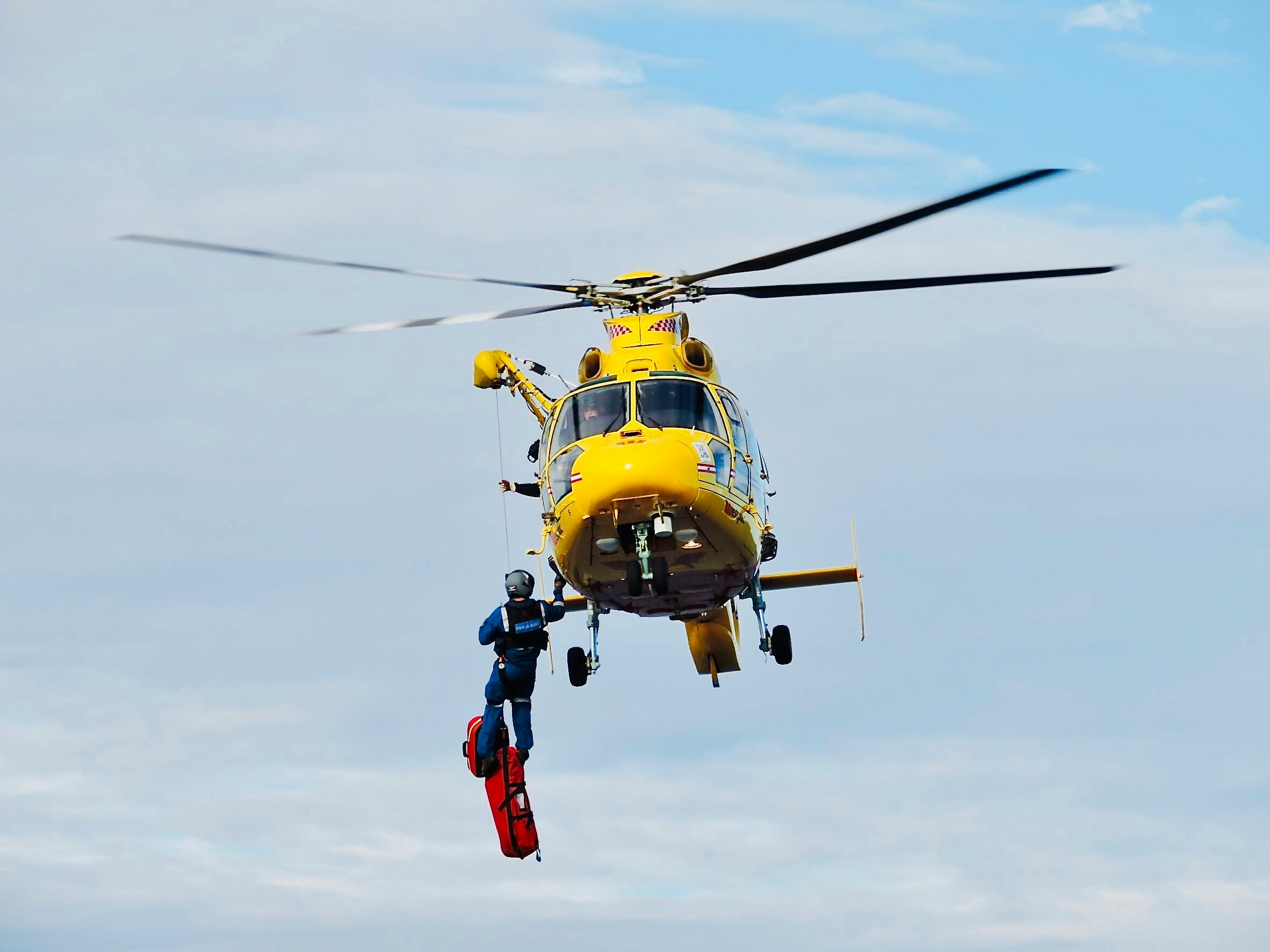
Air ambulance operations involve flying at night, in adverse weather, and under time pressure to reach patients. Search-and-rescue missions often require hovering near obstacles in deteriorating conditions. These missions elevate risk compared to routine point-to-point flights in good weather.
Why It Matters: When overall helicopter safety statistics include these high-risk specialized operations, the average rate looks worse than what a typical charter passenger would actually experience. The mission type shapes the risk, not just the aircraft type.
Flying411 covers a wide range of helicopter topics — from synchropter configurations to the best turboshaft engine helicopters — so you can make informed decisions about aviation whether you are flying or just curious.
7. The Role of Technology in Closing the Gap
Modern helicopters are significantly safer than their predecessors, and technology is a big reason why. Stability augmentation systems help pilots maintain control in challenging conditions. Helicopter Terrain Awareness and Warning Systems (HTAWS) alert crews to proximity hazards before they become accidents. Flight data monitoring programs allow operators to review flight performance data and identify risky behaviors before they lead to accidents.
Autopilot systems, once found only on large commercial helicopters, are increasingly available on lighter models. Improved avionics give pilots better real-time weather data. Simulation technology allows pilots to practice emergency procedures — including engine failures — in a safe, controlled environment that would be too dangerous to replicate in an actual aircraft.
8. Car Fatality Drivers: The Comparison Context
To put helicopter risk in fair context, it helps to examine what drives car fatalities. Speeding, impaired driving, and distracted driving — particularly phone use — account for a large portion of road deaths. Unlike aviation, where strict medical certification and recurrent training requirements apply to pilots, anyone with a valid license can get behind the wheel.
The sheer volume of car travel also means that even small per-mile death rates translate into enormous absolute numbers. Tens of thousands of Americans die in car crashes every year. The helicopter industry, flying millions of hours annually across the entire United States, typically sees fatalities numbering in the dozens.
Keep in Mind: The raw number comparison strongly favors helicopter safety. But when you normalize for exposure — hours traveled or miles covered — the picture is more complicated and depends heavily on the type of helicopter operation being examined.
Which Helicopter Operations Are Safest?
Not all helicopter flying is equally risky. Here is a general sense of how different sectors compare, from lower to higher risk profiles:
- Corporate and business aviation: Generally lower risk, with professional crews, strict maintenance programs, and structured safety management systems.
- Airline-operated helicopter services: Highly regulated, with commercial standards applied to training and operations.
- Helicopter air ambulance (HAA): Higher risk due to night operations, weather pressures, and time-critical missions, though the sector has made significant safety strides.
- Sightseeing and air tours: Variable risk depending on the operator and terrain. High-traffic areas like the Grand Canyon present unique challenges.
- Personal and private flights: The highest-risk category in terms of accident share, largely driven by variable pilot experience and less structured oversight.
- Agricultural and utility operations: Elevated risk from low-altitude flying and proximity to obstacles like power lines.
- Search, rescue, and firefighting: High-demand environments that require the most experienced crews.
Some of the most specialized aircraft used across these sectors, including helicopters capable of unusual flight profiles, represent the leading edge of what rotorcraft engineering can achieve.
How the Industry Is Making Helicopters Safer
The improvements in helicopter safety over the past decade did not happen by accident. They reflect deliberate, coordinated efforts by the FAA, the USHST, Vertical Aviation International (VAI), and operators across the industry.
Key safety initiatives include:
- Flight data monitoring programs that give operators visibility into how their aircraft are being flown
- Stability augmentation systems now standard on many light helicopter models
- Virtual and augmented reality training that reduces the cost of simulation while improving its effectiveness
- Peer pilot programs that connect pilots with mental health and wellness resources
- Strict go/no-go decision frameworks that remove pressure to fly in marginal conditions
- HTAWS systems that warn pilots of terrain and obstacle proximity
The USHST's current goal is to reduce the five-year average fatal accident rate to 0.55 per 100,000 flight hours — a target that recent data suggests is achievable. From a 2020 rate of around 0.79 down to figures well below that in 2024, the trend is clearly moving in the right direction.
Quick Tip: If you are a helicopter pilot or operator, the USHST offers free safety resources, webinars, and airmanship bulletins at ushst.org. These materials are developed by subject matter experts specifically to address the most common causes of fatal accidents.
Conclusion
The helicopter death rate vs car comparison does not yield a simple answer — and that is actually the point. Helicopters carry a higher accident rate per flight hour than driving when measured head-to-head. But they cover far more distance in that same hour, their absolute fatality numbers are a fraction of road deaths, and the safest helicopter operations rival or beat the car in any reasonable risk calculation.
What matters most is the specific context: the type of operation, pilot experience, weather conditions, maintenance quality, and the technology on board. A well-operated corporate charter is a very different proposition from a recreational flight by a low-hour pilot in marginal weather.
The good news is that the helicopter industry is moving consistently in the right direction, with 2024 marking a 25-year safety milestone.
If you want to go deeper on the aviation topics that inform these decisions — aircraft types, rotor systems, engine technology, and more — Flying411 is the place to explore them all.
Frequently Asked Questions
Are helicopters more dangerous than cars overall?
Per flight hour, helicopters have historically had a higher fatal accident rate than cars. However, helicopters cover much more distance per hour, and in absolute terms, helicopter fatalities each year number in the dozens compared to tens of thousands of road deaths. The comparison depends heavily on what metric you use and what type of helicopter operation is being examined.
What is the most common cause of helicopter accidents?
Pilot error is the leading cause, accounting for roughly 60 to 70 percent of helicopter crashes depending on the data set. The most frequent specific errors involve flying into weather conditions beyond the pilot's capability, loss of control during maneuvering, and poor decisions about whether to continue a flight in deteriorating conditions.
How safe are helicopter tours and sightseeing flights?
Helicopter tour safety varies significantly by operator, terrain, and weather conditions. High-traffic areas like the Grand Canyon have historically seen elevated accident rates due to crowded airspace and challenging terrain. Passengers should look for operators with formal safety management systems, experienced pilots, and good maintenance records.
Do experienced pilots make helicopter travel significantly safer?
Yes. Pilot experience and recurrent training are among the strongest predictors of safe helicopter operations. Professional crews operating under structured safety programs consistently produce better safety outcomes than recreational or low-hour pilots. However, even experienced pilots can make poor weather decisions, which remain a leading cause of fatal accidents across all experience levels.
What is the USHST and why does it matter?
The U.S. Helicopter Safety Team is a joint government-industry initiative that tracks U.S. civil helicopter accident data and develops free safety resources for pilots and operators. Its annual data reports are among the most comprehensive sources of helicopter safety statistics available in the United States, and its safety enhancements have contributed to meaningful reductions in the fatal accident rate over the past decade.