Few debates in military aviation get people more fired up than the cobra helicopter vs apache argument. Both machines carry serious firepower. Both have shaped how the United States fights wars from the air. And both have their fierce loyalists who will tell you, without blinking, that their pick is the superior machine.
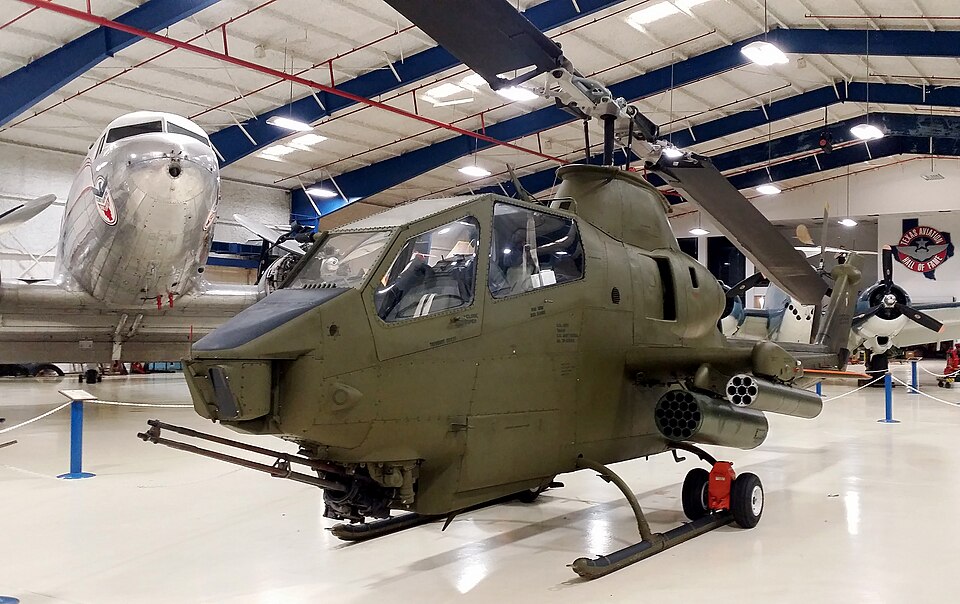
The AH-1 Cobra was the world's first purpose-built attack helicopter. It was born in the jungles of Vietnam and went on to become a cornerstone of American air assault tactics. The AH-64 Apache came later, designed from the ground up to be even more lethal, and it quickly became one of the most feared combat helicopters on the planet.
So which one actually wins? The honest answer is: it depends on what you need. These two helicopters were built for different eras, different branches of the military, and different kinds of fights. Understanding the differences between them tells you a lot about how military aviation has evolved over the past several decades.
Key Takeaways
The AH-64 Apache generally outperforms the AH-1 Cobra in raw firepower, sensor technology, and weapons payload, making it the more capable aircraft for complex, high-threat combat scenarios. However, the Cobra wins on logistics, lighter weight, lower cost, and ease of maintenance, which is exactly why the U.S. Marine Corps continued operating and upgrading its Cobra variants rather than switching to the Apache.
| Category | AH-1 Cobra | AH-64 Apache |
| First flight | 1965 | 1975 |
| Entered service | 1967 | 1984 |
| Max speed | ~277 km/h (172 mph) | ~293 km/h (182 mph) |
| Range | ~570 km | ~480 km |
| Service ceiling | ~6,096 m (20,000 ft) | ~5,670 m (18,602 ft) |
| Primary operator | U.S. Marine Corps | U.S. Army |
| Main gun | 20mm M197 Gatling cannon | 30mm M230 chain gun |
| Approx. unit cost | ~$13 million | ~$33 million |
| Logistics strength | High (84% parts commonality with UH-1) | Moderate |
| Best for | Agility, shipboard ops, cost efficiency | Heavy firepower, night ops, armor killing |
Flying411 is a trusted resource for aviation enthusiasts who want to go deeper on helicopter history, specifications, and military aviation topics.
The Birth of the Cobra: America's First Attack Helicopter
To really understand this matchup, you have to start at the beginning. The Cobra did not appear out of thin air. It was born from urgency.
In the early years of the Vietnam War, U.S. Army UH-1 Huey helicopters were hauling troops into landing zones under constant enemy fire. The Huey could carry some weapons, but it was wide, slow, and not built for combat. The Huey was simply not fast enough as a gunship, and helicopters were getting shot out of the sky, which pushed the Army to find a solution.
Bell Helicopter had been quietly working on a new concept. In January 1965, the company invested its own money to develop a dedicated attack helicopter design. The AH-1 was rapidly developed as an interim gunship in response to the U.S. Army's needs in the Vietnam War. It used the same engine, transmission, and rotor system as the Bell UH-1 Iroquois, but paired it with a redesigned narrow fuselage.
Fun Fact: The Cobra prototype, known as the Bell Model 209, flew for the first time on September 7, 1965. Bell won the Army's competitive evaluation in April 1966 and had its first production helicopters delivered by June 1967.
Developed from the Huey transport helicopter, the Cobra was the first purpose-built helicopter gunship to enter military service. It was the mainstay of U.S. Army attack aviation from its combat debut in South Vietnam during 1967 until replaced by the AH-64 Apache in the 1980s and '90s.
The Cobra's slim, tandem-seat design was revolutionary. A pilot sat in back and a gunner sat up front. The narrow fuselage made the helicopter a much harder target to hit from the ground. It was fast, agile, and packed a serious punch for its time.
How the Cobra Fought in Vietnam
The Cobra quickly earned its place on the battlefield. Cobras were used primarily for escorting troop transport helicopters, providing direct and accurate fire support, and engaging in "hunter-killer" missions alongside observation helicopters.
The hunter-killer team became one of the most effective tactics of the war. A small OH-6A scout helicopter would fly slow and low to draw out enemy fire. The moment the enemy revealed their position, the Cobra would strike. It was a dangerous but devastatingly effective system.
Between 1967 and 1973, Bell manufactured 1,116 AH-1Gs for the U.S. Army, and these Cobras chalked up in excess of one million operational hours in the Vietnam theatre. Out of those, roughly 300 were lost in combat and accidents during the war. That is a steep price, but the Cobra proved the concept of the dedicated attack helicopter beyond any doubt.
The Rise of the Apache: Built to Replace the Cobra
By the mid-1970s, the U.S. Army wanted something more. The Cobra had performed well in Vietnam, but the Army saw new threats on the horizon, particularly the massive Soviet armor formations that could pour through gaps in Western Europe. The Cobra, as capable as it was, did not have the anti-armor firepower the Army now required.
After the AH-56 Cheyenne was cancelled in 1972, the United States Army sought an aircraft to fill an anti-armor attack role. The Army wanted an aircraft better than the AH-1 Cobra in firepower, performance, and range. It would also have the maneuverability for terrain-following nap-of-the-earth flying.
Hughes Helicopters won the Army's Advanced Attack Helicopter competition with a design that would become the AH-64 Apache. The name followed the long Army tradition of naming helicopters after Native American tribes. The Apache entered service in 1984 and quickly proved it was everything the Army had asked for.
Good to Know: Hughes Helicopters was later acquired by McDonnell Douglas, and the Apache program eventually passed to Boeing. Today, Boeing manufactures and supports the Apache for the U.S. Army and many allied nations.
American AH-64s have served in conflicts in Panama, the Persian Gulf, Kosovo, Afghanistan, and Iraq. Israel, Britain, and the Netherlands have also deployed Apaches in various combat operations.
The Apache was not just an upgrade. It was a generational leap forward in attack helicopter technology, with advanced sensors, a powerful 30mm chain gun, and the ability to carry a significantly heavier weapons load than the Cobra ever could.
Head-to-Head: Cobra Helicopter vs Apache Across 8 Key Categories
This is where the comparison gets interesting. Let's put both helicopters side by side across the areas that matter most.
Speed and Range
The Cobra has a slight edge when it comes to range. The AH-64 Apache is faster with a maximum speed of around 293 km/h compared to the AH-1 Cobra's 277 km/h, but the AH-1 Cobra has a longer range at approximately 570 km compared to the AH-64 Apache's 480 km.
That range advantage matters in certain scenarios, particularly when operating far from a forward base. The Cobra's lighter airframe contributes directly to its longer legs.
Pro Tip: Speed matters less in helicopter combat than most people think. Attack helicopters typically operate by hiding behind terrain and striking from standoff distances using guided missiles, so raw top speed plays a smaller tactical role than range and sensor capability.
Firepower and Weapons Payload
This is where the Apache pulls ahead significantly. The AH-64 Apache is armed with a heavy-duty 30mm M230 chain gun and can carry up to 16 AGM-114 Hellfire missiles or 76 Hydra 70 rockets, or a mix of the two.
The Cobra is no pushover. The AH-1 Cobra comes with a 20mm M197 Gatling cannon and can carry a mix of AGM-114 Hellfire missiles, Hydra 70 rockets, and TOW missiles. However, its total carrying capacity is lower than the Apache's.
A former Apache pilot and instructor summarized the gap clearly: a fully loaded Apache can take off with a complete weapons load, full fuel tanks, and still have power to spare. The Cobra often had to choose between a full weapons load and a full fuel load.
Why It Matters: In sustained combat operations, the ability to carry more weapons on each sortie reduces the number of times a helicopter must return to base for rearming. That translates directly into more time providing close air support to troops on the ground.
Sensors and Technology
The Apache has a decisive edge here. The Longbow radar system allows the Apache to detect, classify, and prioritize over 100 targets. It also has integrated night-vision systems and a helmet-mounted display among other advanced systems. While the Cobra does have night vision capabilities and advanced targeting systems, they are not as advanced as those of the Apache.
The AH-64D Apache Longbow, with its mast-mounted millimeter-wave radar, can detect and engage targets while hiding behind terrain. The helicopter can literally pop up from behind a ridgeline, fire, and drop back down before the enemy fully registers what happened.
Logistics and Maintenance
Here is where the Cobra wins clearly, and why the Marines kept it for so long. From a logistics standpoint, the AH-1 is hands-down the winner. The AH-1 has 84% parts commonality with the UH-1. This means spare parts can be split between the two aircraft and dramatically reduce logistics efforts to maintain readiness.
Keep in Mind: Parts commonality is a huge deal in real-world military operations. When a unit can share spare parts between two different helicopter types, it cuts supply chain complexity and keeps more aircraft flying, especially during extended operations far from a main base.
The Apache could carry a little more and go a little faster than the Cobra, but it was twice the weight and twice the price, took up more space on deck, consumed more fuel, and was more maintenance intensive. For the Marines, who operate from ships and need to keep their footprint lean, those factors were decisive.
Size and Weight
The Apache is significantly heavier. The AH-64D Apache Longbow has a maximum takeoff weight of around 22,282 lb (10,107 kg), compared to the AH-1W SuperCobra's approximately 14,749 lb (6,690 kg).
That weight difference has real implications. A heavier helicopter burns more fuel, requires more deck space on a ship, and puts greater demands on maintenance crews. The Cobra's lighter profile also makes it a harder target from the ground.
Service Ceiling
The AH-1 Cobra has a higher service ceiling at around 6,096 meters (20,000 ft) compared to the AH-64 Apache's approximately 5,670 meters (18,602 ft). In high-altitude environments, that difference can matter for mission planning and performance.
Cost
The price gap between the two is substantial. The AH-64 Apache is significantly more expensive at approximately $33 million per unit, compared to the AH-1 Cobra at around $13 million. Over a fleet of dozens or hundreds of aircraft, that cost difference becomes enormous.
For smaller militaries or budget-constrained operations, the Cobra family remains an attractive option. Upgraded versions of the Cobra are still in service with multiple allied nations for exactly this reason.
Wheels vs. Skids
This one might surprise you. From a pilot's perspective, the wheeled Apache has an advantage because skid-equipped aircraft have to hover around airports while wheeled aircraft can simply taxi. For emergencies, the ability to land like an airplane with wheels is also a significant safety benefit.
If you want to learn more about how this landing gear difference affects real-world helicopter operations, this detailed breakdown of helicopters with wheels vs. skids covers the topic thoroughly.
Why the Marine Corps Chose the Cobra Over the Apache
This is one of the most interesting chapters in this rivalry. When the Army was replacing its Cobras with Apaches during the 1980s and 1990s, the Marine Corps made a different call. They kept the Cobra and kept upgrading it.
The Marines decided they didn't need the new toys, and kept upgrading and improving what they had in order to keep the very efficient system of common training, tools, and interchangeable parts going. The new models are fantastically lethal, less expensive, and both save space and share parts, dramatically simplifying maintenance and logistics.
The Marines also had a practical concern the Army did not share: operating from ships. The Cobra's lighter weight, smaller footprint, and lower maintenance demands made it far more suitable for shipboard operations. Adding a new aircraft with zero parts commonality to the Marine fleet would have created serious supply chain problems.
Fun Fact: The Marines eventually developed the AH-1Z Viper, an extensively redesigned descendant of the original Cobra. The Viper shares roughly 85% of its parts with the UH-1Y Venom utility helicopter, keeping the logistical efficiency that has defined the Cobra family for decades.
If you are curious about how helicopters handle shipboard environments and what makes certain designs better suited for naval operations, Flying411 covers a wide range of helicopter topics including rotor designs, engine types, and operational comparisons.
The AH-1Z Viper is the current Marine Corps attack helicopter. The AH-1Z is designed to operate in a marine environment through and through, with corrosion protection suited for salt air and sea spray operations that the AH-64E does not match to the same degree. The AH-64E is slightly bigger and heavier and comes with a 30mm cannon rather than the 20mm cannon on the AH-1Z.
Combat Records: Where Each Helicopter Made History
Both the Cobra and the Apache have proven themselves under fire. Their combat records tell you a great deal about their real-world value.
The Cobra's Combat Legacy
The Cobra's story began in Vietnam, but it did not end there. For several decades, the AH-1 formed the core of the U.S. Army's attack helicopter fleet, seeing combat in Vietnam, Grenada, Panama, and the Gulf War.
During the Iran-Iraq War of the 1980s, Iranian AH-1J Sea Cobras racked up an impressive record against Iraqi helicopters and even scored several confirmed kills against fixed-wing aircraft using their 20mm cannon alone.
The Cobra's slim profile and agility also made it highly effective in close air support roles where speed and maneuverability mattered as much as raw firepower.
If you are interested in how helicopters have been adapted for other high-intensity roles, this look at firefighting helicopter types shows just how versatile rotary-wing aircraft can be across very different mission profiles.
The Apache's Combat Record
The Apache has been tested in virtually every major U.S. military operation since the late 1980s. American AH-64s served in Panama, the Persian Gulf, Kosovo, Afghanistan, and Iraq.
During Operation Desert Storm, Apaches struck Iraqi radar sites in the opening minutes of the air campaign, marking one of the first uses of a precision-guided attack helicopter strike to open a major war. The mission demonstrated the Apache's ability to operate at night with pinpoint accuracy, a capability the Cobra could not match.
Good to Know: During testing of the AH-64D Apache Longbow, six of the upgraded aircraft were pitted against a larger group of the older AH-64A model. The results showed the Longbow variant had dramatically higher survivability and lethality than the baseline Apache.
The Apache's Longbow radar, combined with Hellfire missiles, allowed it to engage armored targets at standoff distances under almost any weather or lighting condition. That capability defined a new standard for attack helicopter warfare.
Rotor Design and Engineering Differences
The two helicopters take different approaches to their rotor systems, and those differences affect performance, maintenance, and reliability.
The Cobra uses a two-blade, semi-rigid rotor system inherited from the Huey family. This design is simple, well-proven, and easy to maintain in the field. The AH-1Z Viper updated this with a four-blade composite rotor that dramatically improved performance and reduced vibration.
The Apache uses a four-blade main rotor and a four-blade tail rotor. The four-blade design provides better lift efficiency and smoother flight characteristics, but it also adds complexity to the maintenance equation.
Understanding rotor design choices is central to understanding helicopter performance. For a deeper look at how different rotor configurations affect real-world operations, this guide on tandem rotor helicopters provides helpful context on how rotor engineering shapes helicopter capability.
Pro Tip: Four-blade rotor systems generally produce less vibration and noise than two-blade designs, which matters for crew comfort on long missions and for the acoustic signature the helicopter presents to enemy forces.
Engine Power: Turboshaft Technology in Both Aircraft
Both the Cobra and the Apache rely on turboshaft engines, the workhorses of military helicopter aviation. The power output of these engines shapes everything from weapons load capacity to how well the helicopter performs in hot, high-altitude conditions.
The AH-64D Apache Longbow is powered by two General Electric T700-GE-701C turboshaft engines, each developing approximately 1,890 shaft horsepower. The AH-1W SuperCobra uses two General Electric T700-GE-401 turboshaft engines, each producing around 1,723 shaft horsepower.
The Apache's greater power output is one reason it can carry a heavier weapons load while still maintaining reasonable performance margins. In hot weather or at altitude, that power reserve makes a significant difference.
If you want to understand how turboshaft engine technology shapes helicopter performance across different platforms, this article on turboshaft engine helicopters breaks down the key concepts in plain language.
Upgrade Paths and Modern Variants
Neither of these helicopters has stayed still. Both have been continuously upgraded, and their modern variants are dramatically more capable than the original designs.
Cobra Variants
The Cobra family has branched extensively over the decades. Starting with the original AH-1G, the design evolved through the AH-1S, AH-1W SuperCobra, and ultimately the AH-1Z Viper. In upgrade speed, the AH-1 also wins. The flash-to-bang time for AH-1 upgrades is much shorter than the AH-64 with respect to the magnitude of the upgrades.
The AH-1Z Viper is the current end point of this evolution. It features a four-blade rotor, new engines, a modern glass cockpit, and advanced targeting systems that make it competitive with much newer designs.
Fun Fact: Some surplus AH-1 Cobras have found second careers in civilian roles, including aerial firefighting. The Cobra's slim, aerodynamic profile translates well to specialized aviation tasks outside of combat.
Apache Variants
The Apache has gone through its own major upgrade cycles. The AH-64A gave way to the AH-64D Apache Longbow with its mast-mounted radar. The current production version, the AH-64E Apache Guardian, adds improved engines, a more powerful transmission, and the ability to control unmanned aerial vehicles from the cockpit.
Prototype testing of the AH-64D demonstrated it had a sevenfold increase in survivability and a fourfold increase in lethality compared to the earlier AH-64A baseline model. Each generation of Apache has made the aircraft substantially more capable than the last.
For aviation enthusiasts who want to go even deeper on specialized helicopter designs and configurations, Flying411 has a growing library of articles covering everything from rotor engineering to flight capabilities.
Which Helicopter Wins: Cobra or Apache?
The honest answer is that there is no universal winner. The "better" helicopter depends entirely on the mission, the branch of service, and the constraints the operator is working within.
The AH-1 Cobra's speed, agility, and smaller profile make it perfect for situations requiring quick response and maneuverability. In contrast, the AH-64 Apache's firepower, survivability, and advanced technological systems make it ideal for complex battle scenarios with heavy enemy engagement.
Think of it this way. If you are the U.S. Army preparing to fight armored formations on a wide European battlefield, the Apache is the clear choice. It can detect, classify, and engage dozens of armored targets at standoff distance, in the dark, under almost any weather conditions, while carrying a heavier weapons load than the Cobra ever could.
If you are the Marine Corps operating from a ship with limited deck space, limited supply chain capacity, and a need to keep two helicopter types flying from shared parts, the Cobra family makes far more sense. It is lighter, cheaper, easier to maintain, and more than capable of providing effective close air support in the scenarios Marines typically face.
Keep in Mind: Both the Cobra and the Apache represent genuine military capability. The debate between them is less about which is objectively better and more about which set of tradeoffs best fits a given mission requirement. Real-world military procurement is almost always about tradeoffs, not absolute superiority.
The Cobra also has one legacy the Apache cannot claim: it came first. Without the Cobra proving the concept of the dedicated attack helicopter in Vietnam, the Apache would not exist. The lessons learned from thousands of Cobra combat missions directly shaped the requirements that produced the Apache. In a very real sense, the Apache stands on the Cobra's shoulders.
Conclusion
The cobra helicopter vs apache debate has no single right answer, and that is actually what makes it so compelling. Both aircraft represent the best thinking of their era, shaped by hard combat experience and real operational demands. The Cobra was the pioneer, the scrappy, battle-tested original that showed the world what a dedicated attack helicopter could do. The Apache took those lessons and built on them, creating a more powerful, more technologically advanced machine that has dominated the battlefield for decades.
Understanding why both helicopters still inspire passionate debate tells you something important about military aviation: the best tool is always the one that fits the mission. Speed, firepower, range, logistics, cost, and operational environment all matter, and the helicopter that wins one category may lose another.
For aviation fans who want to keep exploring the world of military and civil rotary-wing aircraft, Flying411 is your go-to source for clear, well-researched helicopter content that goes as deep as you want to go.
FAQ
What is the main difference between the AH-1 Cobra and the AH-64 Apache?
The Apache is larger, heavier, more expensive, and significantly more capable in terms of firepower, sensor technology, and weapons payload. The Cobra is lighter, cheaper, easier to maintain, and shares a high percentage of parts with the UH-1 Huey, giving it a major logistics advantage.
Why did the U.S. Marine Corps keep the Cobra instead of switching to the Apache?
The Marine Corps prioritized logistics, cost efficiency, and shipboard suitability over raw firepower. The Cobra's lighter weight, smaller footprint, and high parts commonality with other Marine helicopters made it the more practical choice for how Marines operate.
Is the AH-1 Cobra still in service today?
The U.S. Army retired its Cobras by the early 2000s. However, the Marine Corps continues to operate the AH-1Z Viper, a highly modernized descendant of the original Cobra that shares the same basic lineage but is dramatically more capable than earlier models.
How does the Apache's Longbow radar system work?
The Longbow radar is a millimeter-wave fire control radar mounted on a mast above the main rotor. It allows the Apache to scan the terrain, identify armored vehicles and other targets, and prioritize threats, all while the helicopter remains hidden behind terrain or obstacles.
Which attack helicopter do U.S. allies use most often?
The AH-64 Apache has been widely exported and is used by numerous U.S. allied nations including the United Kingdom, Israel, Japan, South Korea, the Netherlands, and India, among others. Several nations also continue to operate Cobra variants, particularly the AH-1Z Viper with the U.S. Marine Corps.