Two aircraft. Both can fly. Both can hover. But when you put a drone vs helicopter side by side, the differences are bigger than you might expect. One fits in a backpack. The other seats several passengers and burns fuel by the gallon. One costs a few hundred dollars. The other can run into the millions.
So which one actually comes out ahead? That depends entirely on what you need it to do. Drones have taken the world by storm in recent years, showing up in newsrooms, construction sites, and wedding videos. Helicopters, on the other hand, have been ruling the skies for decades and aren't going anywhere. Each has a role where it truly shines — and a role where it falls flat. This guide breaks down every major factor so you can see exactly how these two aircraft stack up.
Key Takeaways
Drones are lighter, cheaper, and easier to operate than helicopters, making them a strong choice for short-range tasks like aerial photography, inspections, and recreational flying. Helicopters, however, carry more weight, fly farther, handle tougher weather, and can transport people — advantages that make them irreplaceable for long-range missions, search and rescue, and commercial aviation.
| Factor | Drone | Helicopter |
| Average cost | Hundreds to tens of thousands of dollars | Hundreds of thousands to millions |
| Typical flight time | 10 to 50 minutes | 2 to 4+ hours |
| Speed | Up to around 80 mph (consumer models) | 100 to 180+ mph |
| Payload capacity | Very limited | Hundreds to thousands of pounds |
| Pilot required | Remote operator (no onboard pilot) | Licensed pilot onboard |
| Best use cases | Photography, inspections, recreation | Transport, rescue, long-range missions |
| FAA registration | Required for most models | Required |
| Weather performance | Limited in wind and rain | Performs well in varied conditions |
If you're passionate about aviation and want to go deeper on how different aircraft compare, Flying411 is a great resource to bookmark. The site covers a wide range of aircraft topics in plain, easy-to-understand language.
How Drones and Helicopters Actually Work
Before comparing performance, it helps to understand what makes each aircraft tick.
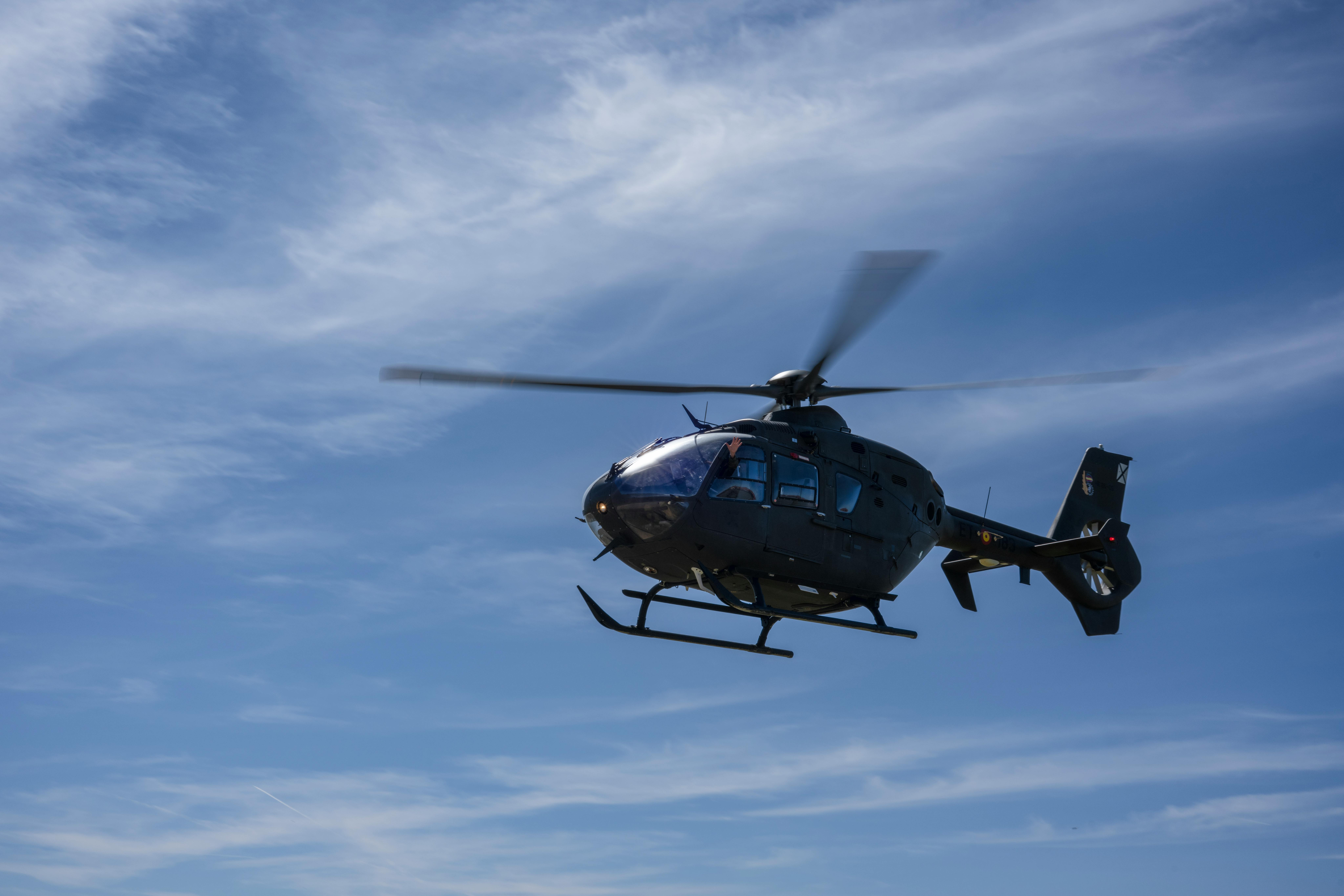
A helicopter generates lift using a large main rotor mounted on top of the fuselage. A smaller tail rotor counteracts the torque produced by the main rotor, keeping the aircraft pointed in the right direction. Pilots control pitch, roll, and yaw through a combination of the cyclic stick, collective lever, and foot pedals. This mechanical complexity is part of what makes helicopters so capable — and so demanding to fly.
Drones — most commonly quadcopters — use four rotors arranged in a symmetrical layout. Instead of relying on mechanical pitch control like a helicopter, a drone adjusts its speed by spinning individual rotors faster or slower. Onboard flight controllers and gyroscopes handle the stabilization automatically, which is a big part of why drones are so much easier to learn.
Good to Know: The term "drone" technically covers a wide range of unmanned aircraft, from tiny toy models to large military surveillance platforms. For this comparison, we're focusing on the consumer and commercial drones most people encounter, including popular quadcopters and professional UAVs used for photography and inspections.
A Brief History of Each Aircraft
Helicopters have been around since the early to mid 20th century. Igor Sikorsky is widely credited with developing one of the first practical single-rotor helicopters, with test flights said to have taken place in the early 1940s. Since then, helicopters have become a cornerstone of military operations, emergency services, and commercial aviation.
Drones have a younger history in the civilian world. Military unmanned aircraft have existed for many decades, but consumer and commercial drones only became widely accessible in the 2010s. The FAA's rule changes in 2016 opened the door for news organizations, filmmakers, and businesses to legally fly drones for commercial purposes, which helped spark a major boom in the industry.
Fun Fact: According to many aviation observers, the early days of consumer drones were compared to the dawn of personal computers — a technology that started as a hobby and quickly transformed entire industries.
Drone vs Helicopter: 9 Key Differences Compared
Here is a deep look at how drones and helicopters differ across the factors that matter most.
1. Cost
This is where the gap is enormous. A consumer drone can cost anywhere from a couple hundred dollars to a few thousand. Professional-grade commercial drones used for mapping or inspections can run higher, but still sit well below what a helicopter costs.
Helicopters, by contrast, are a major investment. A new light utility helicopter can cost several hundred thousand dollars. Larger, more capable models run into the millions. News helicopters, for example, have been estimated to cost between three and four million dollars when outfitted with cameras and equipment.
Operating costs follow the same pattern. A drone's per-hour costs are minimal — mainly battery replacement and minor maintenance. A helicopter's hourly operating costs include fuel, a licensed pilot, routine maintenance, and insurance, which can add up to hundreds or thousands of dollars per hour.
Why It Matters: For businesses evaluating aerial options, the cost difference between drones and helicopters is rarely small. Drone use for utility inspections, for instance, can dramatically reduce costs compared to helicopter-based inspection programs.
2. Flight Time
Consumer drones typically fly for around 10 to 30 minutes on a single charge. High-end professional models with extended batteries can push that to around 40 to 50 minutes in ideal conditions. Once the battery dies, you need to land and swap it out or recharge.
Helicopters run on fuel rather than batteries, which gives them a much longer operational window. Most helicopters can stay airborne for two to four hours per fuel load, and some longer-range models can fly considerably farther with additional fuel capacity.
For short jobs — filming a real estate listing, inspecting a rooftop, or covering a local event — a drone's flight time is usually plenty. For extended missions covering large areas or requiring hours of continuous flight, a helicopter is the practical choice.
3. Speed
Most consumer drones cruise at speeds up to around 40 to 50 mph, with some racing drones and performance models reaching higher speeds. The average speed across consumer models is often cited at around 80 mph for top-end performance, though typical cruising is slower.
Helicopters are faster across the board. Most civilian helicopters cruise in the range of 100 to 150 mph, and some high-performance models go even faster. For covering ground quickly, helicopters hold a clear advantage.
4. Payload Capacity
Drones are light and generally carry very little beyond a camera or small sensor package. Some industrial drones are designed to carry heavier payloads for delivery or spraying applications, but even these are limited compared to helicopters.
Helicopters can carry substantial loads. A utility helicopter might carry several passengers plus gear. Large military and heavy-lift helicopters have payload capacities measured in thousands of pounds. This makes helicopters the only realistic option when you need to move people, equipment, or cargo by air.
Pro Tip: If you're using aerial platforms for professional photography, a drone's small footprint and precise hovering ability often produces results that rival or outperform helicopter-mounted camera rigs for close-range shots. But for long-range sweeping cinematography or chasing fast-moving subjects, a helicopter's speed and endurance are hard to beat.
5. Ease of Use
This is one of the biggest separators between the two. Flying a drone, particularly a modern consumer quadcopter, is accessible to almost anyone with a bit of practice. Automatic stabilization, GPS hold, return-to-home functions, and simple controllers make it possible for beginners to get airborne safely within minutes.
Flying a helicopter requires extensive training, a private pilot's license with a rotorcraft rating, and many hours of logged flight time. It is a highly skilled discipline that takes years to master properly.
Keep in Mind: Even though drones are far easier to fly than helicopters, they still require FAA registration for most models and, for commercial use, a Part 107 remote pilot certificate. Always check current regulations before flying.
6. Weather Performance
Drones are sensitive to wind and precipitation. Most consumer drones can handle light winds — often up to around 20 to 25 mph — but stronger gusts create real problems. Rain can damage electronics unless the drone is specifically designed to be waterproof.
Helicopters are built to operate in a much wider range of conditions. They can fly in wind, light rain, fog, and other weather situations where drones would be grounded. This reliability makes helicopters the go-to option for emergency response, where waiting for perfect weather simply isn't possible.
7. Safety
Drones are unmanned, which eliminates risk to the operator in dangerous environments. This is a real advantage for applications like inspecting high-voltage power lines, flying near disaster zones, or covering areas where a crewed aircraft would put lives at risk.
Helicopters carry people on board, which means every flight involves a level of risk to the crew. However, modern helicopters are highly engineered for safety and have an impressive safety record when operated by trained professionals. For a broader look at how helicopter safety statistics compare to other forms of transportation, covering subjects like helicopter safety and risk, there are some interesting comparisons worth reading about.
Heads Up: Drones carry their own safety risks too. A drone failure over a populated area can cause property damage or injury. Always fly within regulations and avoid flying over crowds or restricted areas.
8. Regulations
Both drones and helicopters are regulated by the FAA in the United States. Drone regulations have evolved significantly in recent years. Commercial drone operators need a Part 107 remote pilot certificate. Recreational flyers must pass a basic safety test and register their drone if it weighs more than 0.55 pounds.
Helicopters require a full private pilot certificate with a rotorcraft-helicopter rating, an instrument rating for IFR flight, and regular medical evaluations. The regulatory burden for helicopter operation is substantially higher, which reflects the greater complexity and responsibility involved.
9. Use Cases
This is where the comparison becomes most practical. Each aircraft has clear strengths for specific applications.
Drones excel at:
- Aerial photography and videography for real estate, film, and events
- Infrastructure and utility inspections
- Agriculture monitoring and crop spraying
- Search and rescue support (deploying sensors or supplies)
- News coverage of natural disasters and traffic
- Recreational and hobby flying
- Mapping and surveying
Helicopters excel at:
- Passenger transport
- Medical evacuation and emergency response
- Military and law enforcement operations
- Long-range aerial surveying and filming
- Firefighting operations
- Offshore operations (oil rigs, maritime)
- Delivering personnel and equipment to remote locations
If you enjoy exploring how different rotorcraft match up, Flying411 covers detailed comparisons across a range of helicopter types and aviation topics that any aviation enthusiast would find useful.
Drone vs Helicopter for Aerial Photography
Aerial photography and videography is one of the most common reasons people compare drones and helicopters, so it deserves a closer look.
What Drones Do Better for Film and Photo
Drones brought aerial photography to a much wider audience by slashing costs and removing the need for a licensed pilot. A skilled drone operator can get smooth, cinematic footage at low altitudes, weave through structures, hover inches from a subject, and capture angles that would be impossible or dangerous in a helicopter.
Modern consumer drones come equipped with stabilized 4K cameras, intelligent flight modes, and obstacle avoidance systems. For real estate tours, wedding films, nature documentaries, and social media content, a drone is almost always the right tool.
Where Helicopters Still Win on Camera
For large-scale cinematic productions, helicopter-mounted camera systems are still preferred. A helicopter can chase a sports car down a highway, track a boat across open water, or sweep across a mountain range — all at speed and for extended periods. The payload capacity of a helicopter also means it can carry larger, more sophisticated camera rigs than any consumer drone.
Fun Fact: Before drones became commercially available, news organizations relied heavily on helicopters for aerial footage. According to some industry estimates, the number of active news helicopters in the U.S. declined noticeably as drone adoption grew after the FAA's 2016 rule changes opened the door for commercial drone use.
Military Drones vs Military Helicopters
The drone vs helicopter comparison takes on a different character in military applications. Military drones (also called UAVs or UASs) range from small reconnaissance platforms to large armed aircraft capable of extended missions. Military helicopters, meanwhile, serve roles that unmanned aircraft still cannot fully replace — including troop transport, close air support, and combat search and rescue.
For a closer look at how specific military helicopters compare to each other in terms of performance and mission capability, articles covering comparisons like the Apache vs. Black Hawk or the Cobra vs. Apache offer detailed breakdowns of how specialized these aircraft really are.
Good to Know: Military drone programs have advanced rapidly, but military helicopters remain essential for missions that require a human in the cockpit — particularly in unpredictable combat environments where adaptability and judgment matter most.
Comparing Helicopter Types: How Variants Stack Up
Not all helicopters are the same, and the comparison between drones and helicopters becomes more nuanced when you factor in the wide variety of rotorcraft available. Light utility helicopters, transport helicopters, naval variants, and hybrid designs each have different strengths.
For example, the differences between naval variants like the Seahawk vs. the Black Hawk illustrate how helicopter design adapts to specific missions. Similarly, hybrid rotor designs like the gyrocopter vs. a conventional helicopter offer a glimpse into the diverse world of rotary-wing aviation.
There are also broader comparisons to consider, such as how a helicopter stacks up against a jet aircraft in terms of speed, range, and mission type. These comparisons put the drone-versus-helicopter question into a larger aviation context.
The Future: Will Drones Replace Helicopters?
This is a question that gets asked a lot, and the honest answer is: not entirely, and probably not anytime soon for most crewed helicopter roles.
Drone technology is advancing quickly. Battery endurance is improving. Hydrogen fuel cell drones are extending flight times. 5G connectivity is enabling more reliable long-range control. Some companies are even testing "man-unmanned hybrid" concepts where helicopters carry and deploy drones for extended missions.
But helicopters carry people. They respond to emergencies in real time with human crews who can make on-the-spot decisions. They fly through weather that would ground most drones. They carry payloads that no current commercial drone can match.
The more likely outcome is that drones and helicopters will continue to serve different roles, often working alongside each other. Drones will handle more of the repetitive, short-range tasks — inspections, monitoring, low-risk deliveries — while helicopters remain essential for complex, high-stakes missions.
Why It Matters: Understanding where each aircraft fits is valuable for businesses, government agencies, and aviation enthusiasts alike. Choosing the wrong tool for the job wastes money and time. Choosing the right one can be transformative.
Thinking about how aircraft comparisons affect the aviation market? Flying411 publishes in-depth articles and guides on a wide range of aviation topics — a great place to build your knowledge base before making any aviation-related decisions.
Drone vs Helicopter: Head-to-Head Comparison Table
| Category | Drone | Helicopter |
| Purchase cost | Low to moderate | High to very high |
| Hourly operating cost | Very low | High |
| Flight time per charge/fuel | 10 to 50 minutes | 2 to 4+ hours |
| Top speed (typical) | Up to ~80 mph | 100 to 180+ mph |
| Range | Limited (miles) | Extensive (hundreds of miles) |
| Payload capacity | Very low | High |
| Ease of operation | Beginner friendly | Requires professional licensing |
| Weather tolerance | Limited | Strong |
| Safety (operator) | High (unmanned) | Trained pilot required |
| Noise | Relatively quiet | Louder |
| Passenger transport | No | Yes |
| Regulatory burden | Moderate | High |
| Best for | Short-range, low-cost aerial tasks | Long-range, high-stakes missions |
Conclusion
The drone vs helicopter debate doesn't really have a single winner — it has a right tool for the right job. Drones have made aerial work more accessible, more affordable, and safer for a huge range of tasks. Helicopters remain irreplaceable when range, payload, weather tolerance, or human presence is required.
If your work involves short-range photography, inspections, or monitoring, a drone is almost certainly your best bet. If you're moving people, responding to emergencies, or covering ground across vast distances, a helicopter is in a different league entirely.
The best approach is knowing the strengths of each and using them accordingly.
For more in-depth comparisons across all kinds of aircraft — from military rotorcraft to civilian models — Flying411 is a reliable place to keep learning and stay sharp on what matters in aviation.
Frequently Asked Questions
Is a drone considered a helicopter?
No, a drone is not a helicopter. A drone is an unmanned aerial vehicle controlled remotely or autonomously. While both use rotors to generate lift, helicopters are crewed aircraft with a fundamentally different design, operating system, and regulatory status.
Can a drone fly as high as a helicopter?
Some high-end drones are technically capable of reaching significant altitudes, but in the United States, the FAA generally limits recreational and commercial drone flights to 400 feet above ground level. Helicopters can fly at much greater altitudes and are not subject to the same ceiling restrictions in most airspace.
Are drones cheaper to operate than helicopters?
Yes, significantly. Drones have very low operating costs — mainly battery replacements and minor maintenance. Helicopters require fuel, a licensed pilot, regular maintenance, and insurance, which can make the hourly operating cost hundreds of times higher than a drone.
Can drones do search and rescue like helicopters?
Drones are increasingly used to support search and rescue operations, often equipped with thermal cameras and speakers. However, they cannot replace helicopters for full rescue operations that require physically transporting injured or stranded individuals.
Do you need a license to fly a drone commercially in the United States?
Yes. Commercial drone operators in the United States are required to pass the FAA Part 107 knowledge test and obtain a remote pilot certificate. Recreational flyers have a simpler set of requirements but still must register their drone and follow safety guidelines.
How loud are drones compared to helicopters?
Drones are considerably quieter than helicopters. A standard consumer quadcopter produces a buzzing sound that is noticeable but not overwhelming. Helicopters generate significantly more noise due to their large rotors and engines, which is one reason drones are preferred in noise-sensitive environments.
What is the main disadvantage of drones over helicopters?
The main disadvantages of drones compared to helicopters are their short flight time, limited range, low payload capacity, and sensitivity to weather. For any task requiring extended flight, the transport of people or heavy cargo, or operation in adverse weather conditions, helicopters have a clear advantage.