Just visualize a battlefield where a hulking 70-ton machine rolls across the ground at full speed, and a nimble flying machine swoops in from above with laser-guided missiles ready to fire. That is the helicopter vs tank matchup -- one of the most debated questions in modern military history. For decades, generals, engineers, and armchair strategists have argued about which platform holds the upper hand. The answer is not as simple as you might think.
Both machines were built for dominance in their own environment. The tank owns the ground. The helicopter commands the sky. But when they meet, things get complicated fast. The history of this matchup stretches back over half a century, packed with real tests, real battles, and some genuinely surprising outcomes.
Understanding how helicopters and tanks compare -- in speed, firepower, armor, and battlefield role -- gives you a much richer picture of how modern warfare actually works.
Key Takeaways
Attack helicopters hold a strong advantage over tanks in most direct engagements, especially when tanks are on the move and exposed in open terrain. However, tanks are far from helpless -- they can use terrain, air defense support, and electronic systems to shift the odds. The helicopter vs tank debate does not have a single winner; the outcome depends heavily on terrain, tactics, air defense cover, and crew skill.
| Factor | Attack Helicopter | Main Battle Tank |
| Speed | Up to ~180 mph in flight | Up to ~45 mph on road |
| Engagement Range | Up to several miles with guided missiles | Roughly 2--3 miles with main gun |
| Armor Protection | Light to moderate (designed for agility) | Heavy composite and reactive armor |
| Anti-Tank Capability | Very high (primary mission) | Limited anti-air capability |
| Vulnerability | Small arms, SAMs, radar systems | Other tanks, ATGMs, aircraft |
| Terrain Dependency | Low (flies over obstacles) | High (limited by ground conditions) |
| Crew Size | Typically 2 | Typically 3--4 |
| Cost Range | Tens of millions of dollars | Tens of millions of dollars |
Flying411 covers a wide range of aviation topics -- from military rotorcraft to general aviation -- so aviation enthusiasts can always find something worth reading.
A Brief History of Helicopters Fighting Tanks
The helicopter vs tank rivalry did not start with high-tech missiles. It grew out of necessity during the Cold War, when NATO planners realized they could face massive Soviet armored columns pushing across Western Europe. At the time, the standard doctrine said the best defense against a tank was another tank. Then helicopters entered the picture.
In 1966 and 1967, the British Army ran a series of exercises called Exercise Hell Tank on Salisbury Plain. The results were eye-opening. When tanks were on the move, the helicopter was devastatingly effective at killing them -- one participant calculated the outcome at 45-to-0 in favor of the helicopters. That single statistic shook the military world.
The Ansbach Tests: Helicopters vs. Tanks at Scale
A few years later, the Americans, Germans, and Canadians took the question even further. The Joint Attack Helicopter Instrumented Evaluation -- often called the Ansbach Tests -- was carried out near Ansbach, Germany, between March and May 1972. Blue Force was equipped primarily with TOW-firing AH-1 Cobras supported by OH-58 Kiowa scout helicopters, while Red Force combined German Leopard tanks and US Vulcan air defense vehicles. Blue Force lost 10 helicopters while destroying 167 tanks.
Those results reignited one of the most intense debates in military history. For advocates of airmobility, the attack helicopter seemed to represent the final resolution of the tank-antitank debate. Not everyone agreed, and the argument has continued ever since.
Fun Fact: The Ansbach Tests were carried out on the same kinds of terrain where NATO expected to face Soviet armored formations during a potential Cold War conflict in Central Europe.
Vietnam and the First Real-World Tests
Before the big formal exercises, helicopters had already proven their worth against armor in combat. Armed UH-1 Huey helicopters firing TOW missiles during the Easter Offensive of 1972 demonstrated results similar to Hell Tank -- tanks destroyed with minimal helicopter losses. Those results pushed the U.S. Army to accelerate the development of a dedicated attack helicopter.
What Makes a Tank So Formidable?
Before diving into the matchup, it helps to understand what makes a modern main battle tank such a hard target. Tanks like the American M1 Abrams are not just big metal boxes. They are sophisticated weapons platforms built for survivability and firepower.
A modern main battle tank typically features composite armor that can absorb enormous punishment. Many modern tanks also carry active protection systems -- essentially small interceptors that can destroy incoming missiles before they hit. Their main guns can reach out to roughly 2 to 3 miles with high accuracy, and their targeting systems allow them to fire on the move.
Good to Know: Some modern tanks are fitted with active hard-kill protection systems that physically intercept incoming anti-tank missiles. This technology is narrowing the gap between helicopters and tanks in certain scenarios.
Tanks are also masters of concealment. Helicopters were much less useful against tanks in defensive positions with their engines turned off, making them very difficult to spot from the air. A well-positioned, engine-off tank can be nearly invisible to a helicopter searching for targets.
The Tank's Biggest Weakness
For all their armor and firepower, tanks move in two dimensions. They are limited by roads, rivers, forests, and hills. A helicopter moves much faster than a tank, and in three dimensions. That means the effective range of anti-air weapons from the tank is shorter than the maximum kinematic range of the helicopter's missiles. In other words, a helicopter can often strike before the tank can shoot back.
What Makes an Attack Helicopter So Dangerous to Tanks?
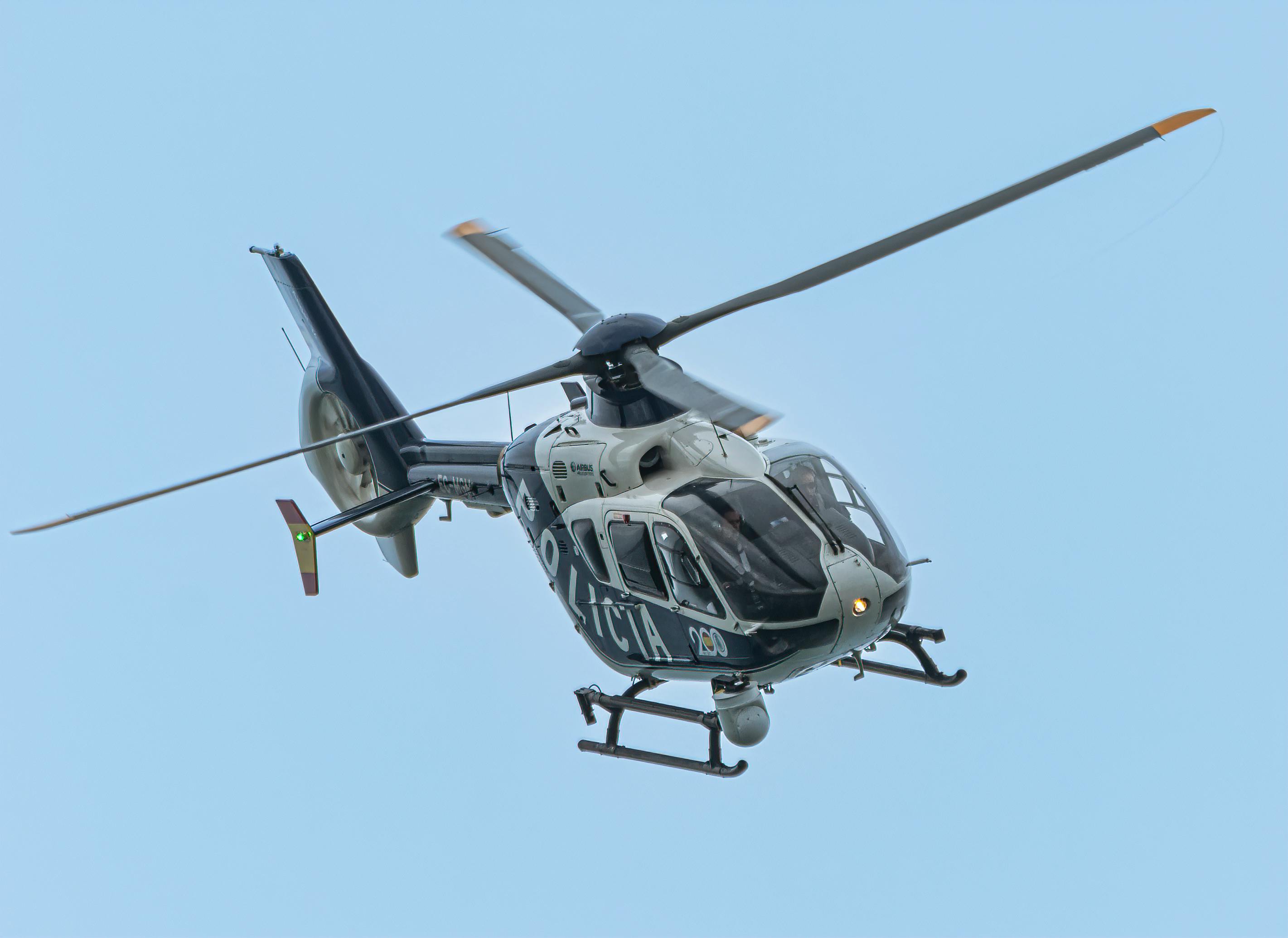
The modern attack helicopter was essentially invented to kill tanks. A modern attack helicopter has two primary roles: first, to provide direct and accurate close air support for ground troops; and second, the anti-tank role, to destroy grouped enemy armored vehicles.
The AH-64 Apache is the most well-known example. The Apache's chief function is to take out heavily armored ground targets, such as tanks and bunkers. Its primary weapon, the Hellfire missile, is a miniature aircraft complete with its own guidance computer, steering control, and propulsion system, with a warhead powerful enough to burn through heavy tank armor.
Why It Matters: Attack helicopters were specifically designed with tank destruction as their primary mission. Every system on board -- from sensors to missiles -- was engineered to find and kill armored vehicles.
Speed, Range, and the Third Dimension
Speed is one of the helicopter's biggest advantages in this matchup. While a main battle tank might reach around 45 miles per hour on a good road, an attack helicopter can cruise well above 150 miles per hour and cover the battlefield in minutes. The Apache has a combat radius of roughly 300 miles and can operate at altitudes up to 21,000 feet.
The ability to fly also means the helicopter simply bypasses most of the obstacles that slow a tank down. Rivers, minefields, destroyed bridges -- none of these matter to an aircraft. This freedom of movement lets helicopter crews choose the angle and timing of their attack.
Sensors and Night Fighting
Modern attack helicopters carry targeting systems that give them a significant edge even in darkness and bad weather. With a radar that can detect enemy tanks at night under the cover of trees or behind concealment of terrain, coupled with radar-guided Hellfire missiles, the Apache can work closely in support of ground forces while also penetrating deep behind enemy lines.
Pro Tip: When researching attack helicopters, pay attention to the sensor suite, not just the weapons load. The ability to find targets first -- especially at night or in poor weather -- is often the deciding factor in helicopter vs tank engagements.
If you want to dive deeper into attack helicopter comparisons, Flying411 has an in-depth look at the Apache helicopter vs fighter jet debate that is worth your time.
Helicopter vs Tank: 8 Key Factors Compared
This is where the rubber meets the road -- or, more accurately, where the rotor meets the sky. Here is a detailed look at how attack helicopters and tanks compare across the factors that matter most in a real engagement.
1. Firepower and Engagement Range
The helicopter has a clear edge here. Helicopter missiles often allow engagement from outside the retaliation distance of the tank. A weapon like the AGM-114 Hellfire can strike targets from well beyond the range of most tank guns. The Apache can carry up to 16 Hellfire missiles on four wing-mounted pylons -- fire-and-forget weapons that became famous during the Gulf War, where AH-64 helicopters played a pivotal role in decimating Iraqi armored columns.
Tanks are no slouch in the firepower department, but their guns are optimized for ground-to-ground combat. Hitting a fast-moving aerial target is a very different challenge.
2. Armor and Survivability
This one goes firmly to the tank. Tanks have always had much better armor compared to any helicopters. They can also be equipped with active hard-kill protection systems that can destroy missiles physically.
Attack helicopters carry some armor -- the Apache's cockpit and key systems have protection designed to withstand certain calibers -- but they are nowhere near as heavily protected as a main battle tank. In 2003, it became clear that the AH-64 was actually highly susceptible to rifle fire, despite being considered by some army aviators as flying tanks. That vulnerability changed how the Army deployed Apaches going forward.
3. Mobility and Terrain Independence
Helicopters win this category decisively. A tank is chained to the terrain beneath it. A helicopter ignores it entirely. Forests, mountains, rivers, urban rubble -- none of these slow down a rotorcraft. This freedom of movement is a core reason helicopters are so effective against armor.
4. Target Detection and Stealth
Tanks need to protect their optics from even small arms fire, so the aperture size of those optics is limited. Helicopters can fly higher to avoid small arms fire, so they generally have bigger optics that offer better detection range. Some helicopters also have big radars that allow them to find targets at a much faster rate and in all weather.
That said, a stationary tank with its engine off is very hard for a helicopter to spot. Concealment is one of the tank's best defenses against aerial attack.
5. Vulnerability to Air Defenses
This is the helicopter's Achilles' heel. An attack helicopter operating without air defense suppression is at serious risk from surface-to-air missiles (SAMs), radar-guided weapons, and even concentrated small arms fire. Shooting down helicopters is a lot easier than most militaries are willing to admit -- even small and slim ones, or heavily armored ones like the Apache.
A tank column with dedicated air defense vehicles -- like radar-guided anti-aircraft guns -- dramatically shifts the odds away from the helicopter.
6. Cost
Both platforms are expensive, but the comparison is interesting. In combat, an attack helicopter is projected to destroy targets worth around 17 times its own production cost before being destroyed. That is a remarkable return on investment when the targets are main battle tanks. Modern Apaches and comparable tanks are both in the range of tens of millions of dollars each, making losses of either platform strategically significant.
7. Crew Requirements and Training
An attack helicopter typically carries a crew of two -- a pilot and a gunner. A main battle tank usually operates with a crew of three to four. Training for either platform is intensive and expensive. Attack helicopter pilots go through rigorous flight training on top of weapons system qualification. Tank crews must master gunnery, tactics, and vehicle maintenance.
You can learn more about what helicopter pilot training involves in this overview of helicopter license vs pilot license requirements.
8. Teamwork and Combined Arms
Neither platform performs at its best alone. The U.S. Army never executes an armored maneuver combat training exercise with its M1 Abrams tanks at the National Training Center without the direct support of Apache attack helicopters. The two platforms complement each other: the tank handles close-in fighting and provides cover, while the helicopter reaches out and destroys threats the tank cannot engage.
Keep in Mind: The helicopter vs tank debate is somewhat artificial in modern military thinking. Both platforms are designed to work together, not replace each other. The real question is how to combine them effectively.
Real Combat: What History Tells Us
Military exercises are one thing. Combat is another. History offers some telling examples of how the helicopter vs tank matchup has played out in real warfare.
Operation Desert Storm
The Gulf War of 1991 was the Apache's coming-out party. Flying night missions deep into enemy territory, AH-64 Apaches destroyed early warning radar sites and helped spearhead the air assault into Iraq. Over 500 Iraqi tanks, armored vehicles, and artillery pieces were eliminated by Apache crews, cementing its reputation as a lethal combat helicopter.
The Iraqi military largely lacked effective air defenses by that point, which gave Apache crews relatively free rein. The results were decisive.
Fun Fact: The very first shots of Operation Desert Storm are said to have been fired by AH-64 Apache helicopters attacking Iraqi radar installations, clearing the way for coalition aircraft.
Operation Iraqi Freedom (2003)
The 2003 invasion offered a more sobering lesson. On March 24, 2003, 31 Apaches were damaged in an unsuccessful attack on an Iraqi Republican Guard armored brigade near Karbala. Iraqi tank crews had set up a "flak trap" among terrain and effectively employed their guns. One Apache was shot down and its crew captured.
This incident showed that determined, well-positioned ground forces -- even without advanced air defense systems -- could make life very difficult for attack helicopters.
The Iran-Iraq War
The Iraqi Army suffered heavy tank losses to AH-1 Cobras using TOW missiles early in the Iran-Iraq War. However, Iraqi crews noticed that the helicopters had to stop in a stationary hover before launching, and once that tactic went into use, it was Iranian Cobras, not Iraqi tanks, that were destroyed. The Iranians then stopped attacking armored vehicles with helicopters for the rest of the war.
The lesson here is clear: once the element of surprise is gone and tank crews adapt, the helicopter's advantage can shrink quickly.
How Tanks Defend Against Helicopters
Tanks are not sitting ducks. Over the decades, armies have developed a range of countermeasures to protect armor from aerial attack.
- Smoke screens: Tanks can rapidly deploy smoke grenades to block the helicopter's targeting systems and laser guidance.
- Engine shutdown and concealment: A tank with its engine off and tucked into a tree line is dramatically harder to spot from the air.
- Air defense pairing: Combining tanks with dedicated anti-aircraft vehicles -- radar-guided guns or SAM systems -- forces helicopters to stay at greater distances or avoid the area entirely.
- Terrain use: Hills, ridges, and urban terrain limit the helicopter's angles of attack and reduce engagement windows.
- Machine gun fire: The M1 Abrams is equipped with two roof-mounted machine guns, one 7.62 mm and one 12.7 mm. If the helicopter is low or slow enough to be tracked, it can be fired on and damaged by these guns.
Heads Up: Modern armies rarely send tanks into contested airspace without some form of air defense support. Isolated tanks operating without air cover are significantly more vulnerable to helicopter attack.
For a fascinating look at how different rotorcraft stack up against each other, the comparison of drone vs helicopter capabilities offers a fresh angle on modern aerial combat.
The Role of Modern Technology in Shifting the Balance
Technology keeps changing the calculus of the helicopter vs tank debate. Both platforms have evolved enormously since the 1970s, and that evolution is ongoing.
Active Protection Systems for Tanks
Systems like the Israeli Trophy APS and Russia's Arena can intercept incoming anti-tank missiles before they reach the vehicle. If these systems become widespread and reliable, they could significantly reduce the helicopter's ability to destroy tanks with standoff missiles.
Longer-Range Helicopter Missiles
At the same time, missile technology is advancing for helicopters too. Weapons with greater range, fire-and-forget guidance, and lower radar signatures keep pushing the engagement envelope outward -- making it even harder for tanks to retaliate.
Drones Changing the Equation
Unmanned aerial systems have added a new layer of complexity. The AH-64E Apache Guardian variant can now control drones, allowing it to find and designate targets without exposing itself to enemy fire. Meanwhile, tank-hunting drones are becoming a serious threat in their own right, as demonstrated in recent conflicts.
For a broader perspective on how unmanned aircraft are reshaping aerial combat, this overview of eVTOL vs helicopter technology looks at where rotorcraft are headed next.
Comparing Attack Helicopter Variants
Not all attack helicopters are equal in the helicopter vs tank role. The Viper helicopter vs Apache comparison shows how different design philosophies lead to different strengths in anti-armor missions.
It is also worth understanding the differences within the helicopter category itself -- something the chopper vs helicopter breakdown explains in accessible terms.
So, Who Actually Wins?
The honest answer is: it depends. If you put an attack helicopter against a moving tank column in open terrain with no air defense support, the helicopter wins -- and wins badly, as historical exercises have shown. If you put that same helicopter up against a well-coordinated force with radar-guided air defense systems and properly concealed tanks, the helicopter is in serious trouble.
The helicopter vs tank debate has never produced a clean winner because the two platforms do not actually fight in isolation. Real battles involve combined arms -- infantry, artillery, air defense, electronic warfare, and logistics all working together. Tanks that operate with air defense support are much harder to kill. Helicopters that operate with suppression of enemy air defenses are much more lethal.
What history does tell us clearly is that unprotected tanks moving in the open are extremely vulnerable to attack helicopters. And equally, unprotected helicopters operating over well-defended ground forces are extremely vulnerable to air defense systems. The winner is whichever force does a better job of combined arms coordination.
Conclusion
The helicopter vs tank matchup is one of the most fascinating debates in modern military history, and it has no simple answer. Tanks bring incredible armor, firepower, and the ability to hold and control ground. Attack helicopters bring speed, reach, and precision that tanks simply cannot match. Real-world conflicts -- from Desert Storm to the streets of Karbala -- show that both platforms can dominate and both can be defeated, depending on the conditions.
What makes this debate so enduring is that it reflects a deeper truth about warfare: no single platform wins on its own. The future belongs to forces that combine these machines intelligently, using each where it excels. Whether you are fascinated by military aviation, rotorcraft technology, or the tactics that shape modern conflict, there is always more to learn.
For more great content on helicopters, aircraft comparisons, and aviation in general, Flying411 is the place to start.
FAQs
Can a tank actually shoot down a helicopter?
Yes, under certain conditions. A tank can fire on and damage a helicopter if it is low or slow enough to be tracked, and crews are trained to attempt this in emergencies. However, it is not considered a reliable primary method of engaging helicopters, and most tankers are advised to avoid the engagement if possible.
What is the best attack helicopter for fighting tanks?
The AH-64 Apache is widely regarded as one of the most capable anti-tank attack helicopters in service. Its combination of Hellfire missiles, Longbow radar, and advanced sensors makes it purpose-built for destroying armored vehicles. Other capable platforms include the Russian Mi-28 and the AH-1Z Viper.
Do tanks have any missiles that can hit helicopters?
Some modern tanks have been fitted or tested with gun-launched missiles that can engage aerial targets at extended ranges. However, this capability is not standard on most main battle tanks, and dedicated air defense vehicles remain the primary means of protecting armor from helicopter attack.
How do modern air defense systems change the helicopter vs tank balance?
Significantly. Systems like the ZSU-23-4, Tunguska, and modern radar-guided SAM platforms create a threat envelope that forces helicopters to stay at greater range or avoid the area entirely. When tanks operate under the umbrella of capable air defense, the helicopter's advantage shrinks considerably.
Has any tank ever defeated an attack helicopter in a direct engagement?
Yes, in isolated instances. The 2003 Karbala incident, where Iraqi forces using coordinated ground fire damaged or downed several Apaches, is a well-documented example. During the Iran-Iraq War, Iranian helicopter losses to alert tank crews and ground forces also demonstrated that ground forces can defeat airborne attackers under the right conditions.