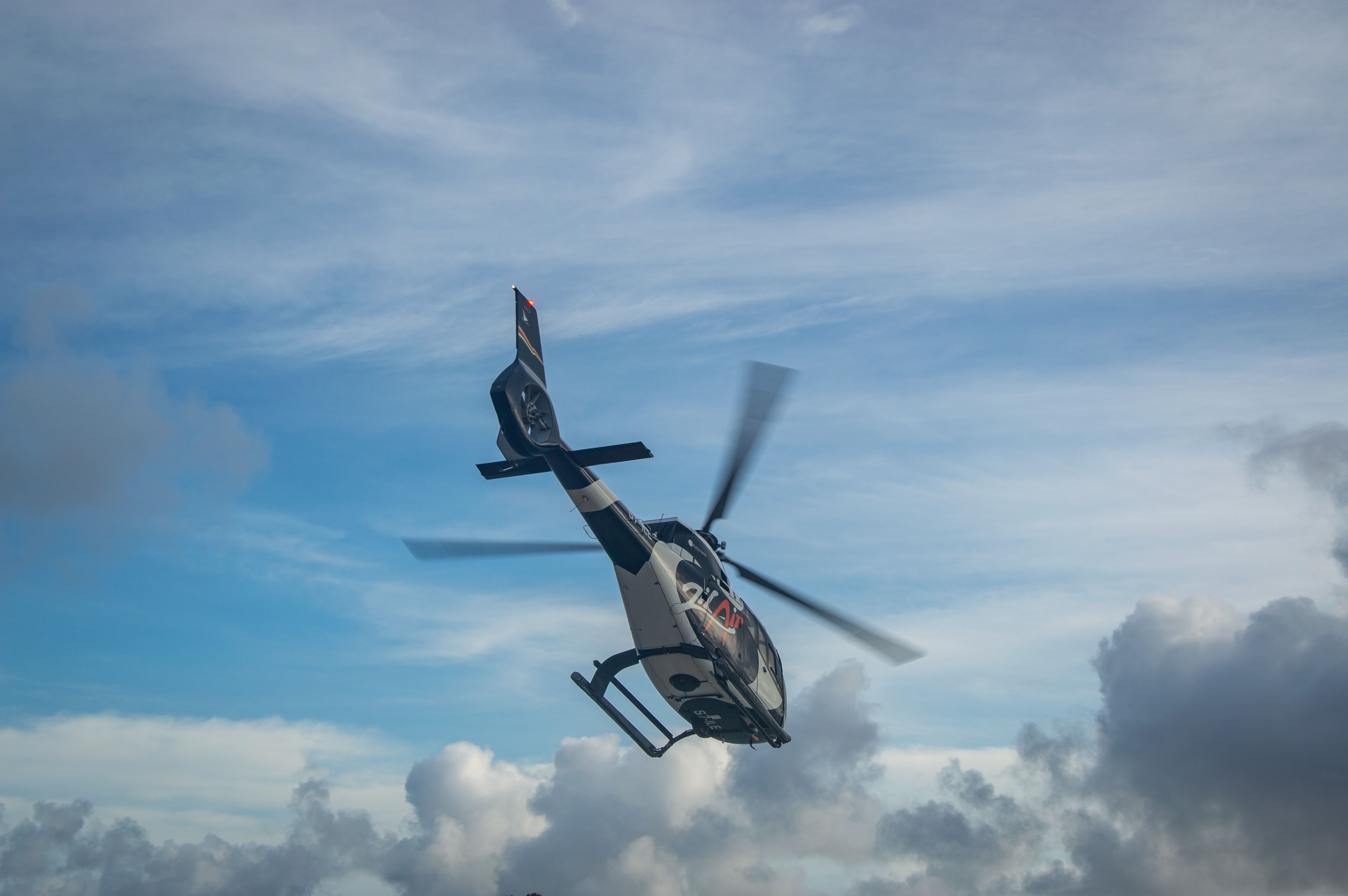
A helicopter can lift straight up, hover in one spot, and land almost anywhere. That freedom is amazing. But it comes with a trade-off most people never think about until they plan a trip. So how far can a helicopter travel before it runs out of fuel and has to come down?
The short answer is: not as far as you might guess. The longer answer depends on the machine, the load, and the weather. A tiny training helicopter and a massive offshore transport play by very different rules. One pilot landed on a Florida beach after crossing the entire United States without stopping once.
That single beach landing tells you almost everything about why range is such a slippery number.
Key Takeaways
Most helicopters can travel about 250 to 400 miles on a single tank of fuel, staying in the air for roughly 2.5 to 5 hours before they need to refuel. Larger, long-range models can fly farther, with some covering 500 miles or more in one stretch. The exact distance depends on the helicopter's fuel capacity, its weight and payload, the engine type, and the weather it flies through.
| Question | Quick Answer |
| Typical range on one tank | About 250–400 miles |
| Typical flight time | Roughly 2.5–5 hours |
| Light piston helicopter range | Around 200–350 miles |
| Large twin-turbine range | Around 450–600+ miles |
| Biggest factors | Fuel capacity, weight, engine type, weather |
| Record unrefueled flight | About 2,213 miles, set in 1966 |
Flying411 is an aviation marketplace and resource where pilots, buyers, and enthusiasts can compare aircraft, browse listings, and learn how the machines they love actually perform.
What "Range" Really Means for a Helicopter
Before we look at numbers, it helps to know what range actually measures. Helicopter range is the maximum distance a helicopter can fly on a single tank of fuel without stopping to refuel. It is a planning number, not a promise.
Pilots almost never fly to the very edge of that number. Rules require a fuel reserve, so a real trip leaves a safety cushion in the tank. That means the usable range on a normal flight is a bit shorter than the maximum range on paper.
Range also gets mixed up with two other ideas, so it is worth keeping them separate:
- Range is about distance. How many miles can you cover?
- Endurance is about time. How many hours can you stay aloft?
- Service ceiling is about height. How high can you climb?
A helicopter built for long ferry flights cares about range. A news or police helicopter circling a scene cares more about endurance. They are not the same goal, and a machine that is great at one may be only average at the other.
Good to Know: A helicopter is usually most fuel efficient in steady forward flight, not while hovering. Hovering in place burns fuel quickly because the rotor has to do all the lifting work with no help from forward motion.
How Far Can a Helicopter Travel on One Tank
Here is the number most people are after. On a single tank of fuel, the typical helicopter travels somewhere between 250 and 400 miles. That usually works out to about 2.5 to 5 hours of flying before it needs more fuel.
That range covers a lot of ground in everyday terms. It is enough to hop between cities, reach an offshore oil platform, or run a long sightseeing tour. It is not enough to cross an ocean or fly coast to coast in one go, at least not without special setups.
Why such a wide spread between 250 and 400 miles? Because no two flights are the same. A light helicopter flying solo on a calm day sits near the top. The same helicopter loaded with passengers and bags, fighting a headwind, sits near the bottom. The machine did not change. The conditions did.
It also helps to think in time, not just miles. Many single-rotor helicopters cover roughly 40 to 50 miles every 15 minutes of cruise. Stretch that over a few hours and you can see how the miles add up, and how quickly the fuel gauge starts dropping. Pilots plan around both numbers at once, because running low on either fuel or daylight ends a trip the same way.
Fun Fact: The all-time record for the longest nonstop, unrefueled helicopter flight is about 2,213 miles, set back in 1966 by a test pilot who flew from California to Florida in a small light helicopter packed with extra fuel tanks. That record has stood for decades.
Helicopter Range by Type
Not all helicopters are built for the same job, and range follows the mission. A trainer, a corporate transport, and a heavy-lift workhorse each carry different amounts of fuel and burn it at different rates. Here is how the major categories generally stack up.
Light piston helicopters
These are the small two- and four-seat machines used for training, photography, and short personal trips. The Robinson R44 is a well-known example. Light piston helicopters typically travel around 200 to 350 miles on a tank. They are affordable and simple, but their small tanks keep trips short.
Light and medium turbine helicopters
Turbine engines are more powerful and tend to fly farther than piston engines of the same size. Models like the Bell 206 JetRanger fall here. These helicopters often cover roughly 300 to 450 miles, making them popular for charter, corporate hops, and air medical work.
Large twin-turbine helicopters
These are the big, twin-engine transports built for demanding missions far from base. The Sikorsky S-92, used for offshore oil and gas flights and VIP transport, is a standout. Large twin-turbine machines can fly around 450 to 600 miles or more, which is why they handle long over-water routes.
Military and heavy-lift helicopters
Military helicopters vary enormously because their range depends on the mission and the gear they carry. Some are short-range scouts, while others are long-haul transports. With auxiliary fuel tanks, certain military models can stretch well beyond the civilian norm, and some can refuel in midair to go even farther.
Here is a simple side-by-side view:
| Helicopter Type | Typical Range | Common Uses |
| Light piston | ~200–350 miles | Training, photography, personal travel |
| Light/medium turbine | ~300–450 miles | Charter, corporate, air medical |
| Large twin-turbine | ~450–600+ miles | Offshore transport, VIP, search and rescue |
| Military/heavy-lift | Highly variable | Troop transport, cargo, special missions |
If you are weighing one airframe against another, comparisons like the Apache against the Comanche show how design choices shape what a helicopter is really built to do.
Why It Matters: Range is one of the first numbers a buyer should check, because it decides which trips are even possible. A helicopter that cannot reach your destination without two fuel stops changes the cost and time of every flight you plan.
What Affects How Far a Helicopter Can Travel
Range is not a fixed number stamped on the side of the helicopter. It shifts with each flight. Several factors push it up or pull it down, and understanding them helps explain why two flights in the same machine can look so different.
Here are the main things that change helicopter travel distance:
- Fuel capacity. This is the most obvious one. A bigger tank, or an added auxiliary tank, means more miles. Many helicopters can be fitted with extra fuel tanks for longer missions.
- Weight and payload. Passengers, cargo, and gear all add weight. A heavier helicopter needs more power to stay airborne, which burns fuel faster and cuts the range. Fly light and you fly farther.
- Engine type. Turbine engines generally fly farther than piston engines. They produce more power for their weight, which helps with both speed and distance.
- Speed. Every helicopter has a sweet-spot cruising speed where it sips the least fuel per mile. Flying much faster or much slower than that burns more fuel and shortens the range.
- Weather. Wind is a huge factor. A strong headwind forces the engine to work harder and eats into your range. A tailwind does the opposite and can stretch your distance noticeably.
- Altitude. The air gets thinner as you climb. Flying at the right altitude can improve fuel efficiency, while flying too low or too high can work against you.
- Reserve requirements. Pilots must keep a legal fuel reserve. That reserve is range you carry but do not use, which lowers the usable distance on any trip.
Think of it like a road trip in a car. The size of your gas tank sets the limit, but how heavy your load is, how fast you drive, and whether you are going uphill into the wind all decide how far that tank really takes you.
Pro Tip: If you want maximum range from any helicopter, fly light, fly at the recommended cruise speed, and plan your route to take advantage of tailwinds where you can. Small choices add up to real miles.
Looking at a specific aircraft? Flying411's marketplace lists new and used helicopters with the specs that matter, so you can match a model's real range to the trips you actually fly.
Helicopter Range Compared to Other Aircraft
A natural question follows all of this: why do helicopters fly shorter distances than airplanes of similar size? The answer comes down to how each one creates lift.
An airplane gets lift from its fixed wings as it moves forward. Once it is up to speed, the wings do the heavy lifting almost for free. A helicopter, by contrast, makes lift with spinning rotor blades that must keep turning the entire flight. That takes constant power and constant fuel.
On top of that, some of a helicopter's engine power goes to the tail rotor just to keep the aircraft from spinning. Helicopters also carry smaller fuel tanks than many planes their size. Put it all together and you get a machine that burns more fuel per mile and runs out sooner.
So planes win on raw distance and speed. But that is only half the story. A plane needs a runway. A helicopter can take off from a rooftop, hover over a target, and set down on a remote ridge. The helicopter trades range for access, and for many jobs that access is the whole point.
If you want a deeper look at that trade-off, the differences between a helicopter and a quadcopter show how rotor design shapes both range and capability. The contrast even holds up in playful matchups like a helicopter versus an ornithopter, where the way lift is made changes everything.
Keep in Mind: A helicopter and an airplane are not really competitors. They are tools for different jobs. The right choice depends on what the flight needs to do, not on which one flies farther on paper.
How Pilots Stretch a Helicopter's Range
Range is not entirely fixed, and skilled operators have ways to push it further. Some of these are built into the machine, and some come down to how it is flown.
Common ways to extend how far a helicopter can fly include:
- Auxiliary fuel tanks. Extra tanks add fuel, which adds miles. This is how record flights and long ferry trips happen.
- Reducing weight. Stripping out unneeded gear and flying with fewer passengers leaves more weight budget for fuel.
- Aerial refueling. Many military helicopters can take on fuel in midair from a tanker, which effectively removes the range limit for a mission.
- Smart route planning. Choosing altitudes and headings that use favorable winds can add free miles to a trip.
- Flying the efficiency curve. Holding the best cruise speed and altitude squeezes the most distance from every gallon.
The 1966 record flight is the perfect example of stacking these tricks. The pilot flew a small, light helicopter, stripped down and loaded with extra fuel tanks, and rode it across the country in one shot. It was not a normal flight. It proved that the real limit on range is usually the fuel tank, not the machine.
Newer technology is changing the picture too. Designs like eVTOL aircraft against traditional helicopters are exploring electric and hybrid power, which could reshape how far vertical-lift aircraft can travel in the years ahead.
Heads Up: Auxiliary tanks and stripped-down setups boost range, but they cut into payload and cabin space. You are essentially trading passengers and cargo for fuel. There is no free lunch when it comes to weight.
Ready to find a helicopter that fits your range needs and budget? Browse Flying411's aircraft listings and connect with sellers and aviation pros in one place.
Common Helicopter Models and Their Range
Real numbers help make all of this concrete. Below are a few well-known models and the kind of range each is generally known for. Treat these as approximate, since the exact figure shifts with version, load, and conditions.
| Model | Class | Approximate Range |
| Robinson R44 | Light piston | Around 300 miles |
| Bell 206 JetRanger | Light turbine | Around 300–430 miles |
| Sikorsky S-92 | Large twin-turbine | Around 500+ miles |
The Robinson R44 is a four-seat favorite for training and personal flying, prized for low cost and simple upkeep. The Bell 206 is a versatile turbine machine used across charter and utility work. The Sikorsky S-92 is a heavy hitter built for offshore transport and VIP duty, which is why it carries enough fuel for long over-water legs.
Military and utility comparisons add even more context. Matchups like the Chinook against the Black Hawk and the Huey versus the Black Hawk show how mission and size drive both fuel load and reach. If you are curious about the heavy attack side, the Viper against the Apache is another useful look.
Quick Tip: When comparing models, look at range alongside cruising speed and useful load. A helicopter with great range but a tiny cabin may not suit a family trip, while a roomy one with shorter legs might still be perfect for short hops.
Why Range Matters When Buying or Flying a Helicopter
For anyone thinking about ownership, range is more than a spec sheet number. It quietly shapes the whole experience of owning and operating the aircraft.
A helicopter's range decides which trips are practical without fuel stops. It affects operating cost, since extra stops mean extra time and fuel handling. It even influences resale value, because buyers shop for the missions they want to fly.
If most of your flying is short and local, a light piston helicopter with modest range may be all you ever need. If you plan longer cross-country trips or over-water routes, a turbine machine with a bigger tank earns its keep. Matching the range to your real missions is the smart move.
There is a cost angle too. A helicopter that can reach your destination in one hop saves the time, fuel handling, and landing fees that come with every stop. Over a year of regular flying, those saved stops can add up to real money. Range, in that sense, is not just about distance. It is about how efficiently you can run the aircraft on the trips you actually take.
It also pays to understand the broader category before you buy. Knowing the basics, like the difference between a chopper and a helicopter in everyday language, or even a lighthearted helicopter versus a tank comparison, helps you talk shop with sellers and pros with confidence.
And if you are still early in your journey, learning how to become a helicopter pilot and how to fly a helicopter will give you a feel for how range plays into real flight planning. Curious about the vertical side of the question too? Here is how high a helicopter can fly.
Conclusion
So how far can a helicopter travel? For most machines, the answer lands between 250 and 400 miles on a single tank, with larger turbine helicopters reaching well past that and a stripped-down record-setter once crossing an entire country. The real distance always depends on the same handful of things: fuel capacity, weight, engine type, speed, and weather.
Helicopters were never built to win the distance race. They were built to go places nothing else can reach, to hover where others cannot, and to land where there is no runway in sight. Range is simply the price of admission for that freedom, and once you understand the factors behind it, you can plan smarter and choose the right machine with confidence.
Whether you are buying your first helicopter or just love learning how these machines work, Flying411 puts listings, comparisons, and aviation experts in one easy place, so your next flight starts with the right aircraft under you.
FAQs
How long can a helicopter stay in the air?
Most helicopters can stay airborne for roughly 2.5 to 5 hours on a single tank, depending on fuel capacity, payload, and conditions. Hovering in place burns fuel faster, so endurance is usually shorter when the helicopter is not moving forward.
Can a helicopter fly across the ocean?
Standard helicopters are not built for transoceanic flights, but certain large models with auxiliary fuel tanks can cross seas with planned refueling stops. Long over-water routes, like offshore oil platform runs, are flown regularly by heavy twin-turbine helicopters.
Why do helicopters have shorter range than airplanes?
Helicopters make lift with constantly spinning rotors, which takes steady power and fuel, while airplanes get lift more efficiently from fixed wings in forward flight. Helicopters also carry smaller fuel tanks and use power for the tail rotor, so they burn more fuel per mile.
How fast does a helicopter travel?
Most helicopters cruise somewhere around 130 to 175 miles per hour, though this varies widely by model. Larger turbine helicopters tend to cruise faster than small piston machines.
Can helicopters refuel in the air?
Yes, many military helicopters can refuel in midair from a tanker aircraft, which lets them fly far beyond their normal range on a single mission. Civilian helicopters generally do not have this capability and must land to refuel.