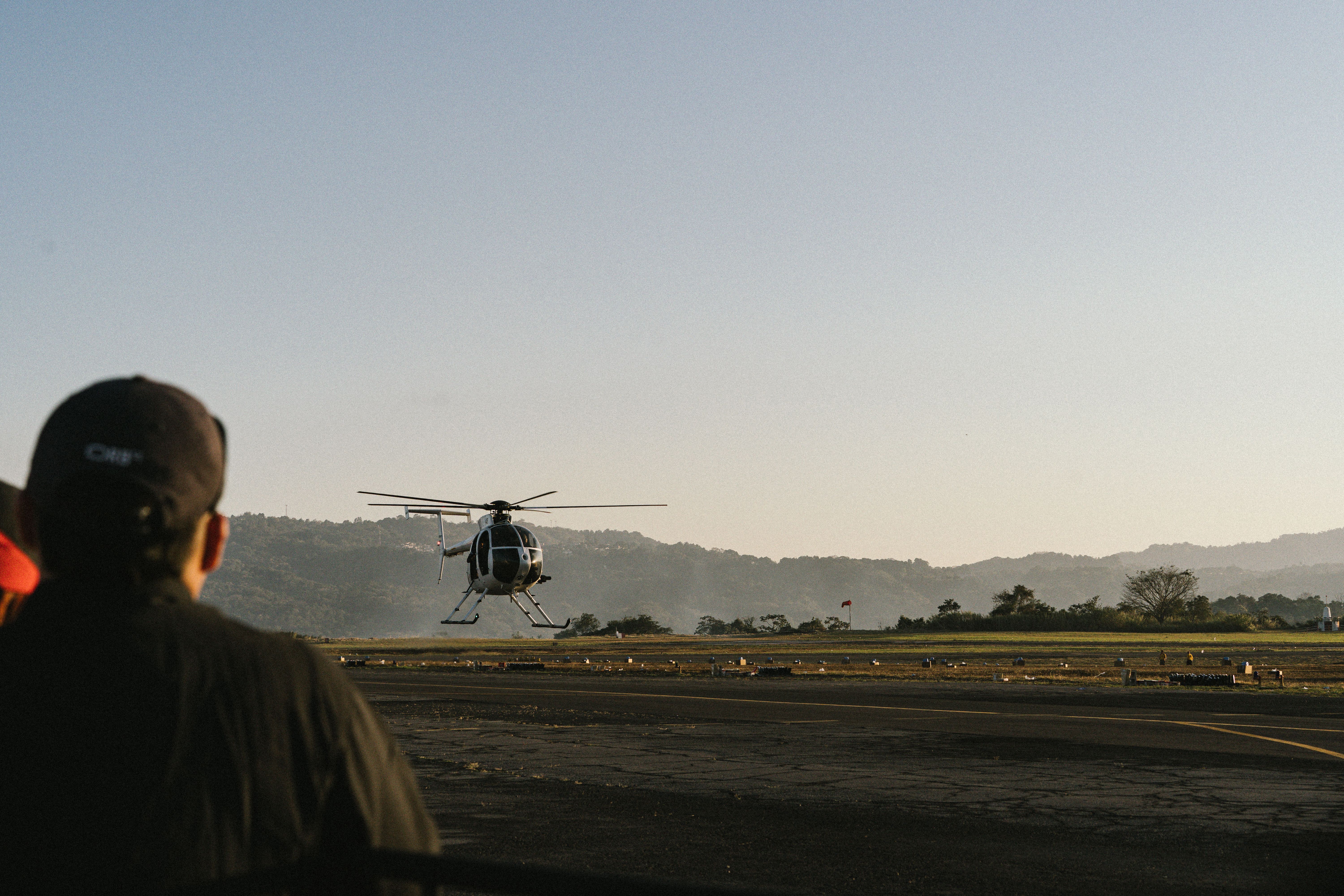
Watching a helicopter rise straight off the ground and hang in the air can look like pure magic. There is no runway. There is no rolling start. There is just a machine that floats in place and then darts off in any direction it pleases.
If you have ever wondered how to fly a helicopter, the short version is that it takes four controls, two hands, two feet, and a lot of patient practice. The full version is far more interesting than that.
Helicopters can lift straight up, hold still in midair, and even fly backward. Very few machines on Earth can do all three. That freedom comes at a price, and the price is paid in coordination.
Flying one is a little like rubbing your belly and patting your head at the same time, except the floor happens to be a thousand feet down.
Key Takeaways
Flying a helicopter means using four controls at the same time to balance lift, direction, and power. You raise and lower the aircraft with the collective, tilt and steer it with the cyclic, point the nose with two foot pedals, and manage engine power with the throttle. Doing all of this together is the real challenge, and it takes training, a license, and many hours of practice with an instructor by your side.
| Topic | Key Point |
| Main controls | Cyclic, collective, anti-torque pedals, and throttle |
| Going up and down | The collective changes lift for all rotor blades at once |
| Steering | The cyclic tilts the rotor to move forward, back, and sideways |
| Pointing the nose | Foot pedals control the tail rotor and yaw |
| Hardest skill | Hovering in one spot takes the most practice |
| Getting licensed | You need training, a medical certificate, and a checkride |
| Safety net | Autorotation lets a pilot land safely if the engine quits |
Flying411 is an aviation marketplace and community where pilots, owners, and curious beginners can find aircraft, parts, and trusted professionals all in one place.
How a Helicopter Gets Off the Ground
A helicopter flies for the same basic reason an airplane does. Air moving over a wing creates lift. The clever twist is that a helicopter does not have fixed wings. Instead, it has long, thin blades that spin in a circle above the cabin. Each blade works like a skinny wing. When they spin fast enough, they pull the whole machine up into the air. This is the simple heart of how helicopters fly.
Because the blades make their own moving air, a helicopter does not need to race down a runway. It can lift straight up, hold still, and back out of a tight spot. That ability is what makes helicopters so useful for rescue work, news traffic reports, and reaching places a plane could never touch.
There is even a helpful bonus near the ground. When a helicopter hovers low, the rotor pushes air down against the ground, and that air forms a soft cushion. Pilots call this ground effect, and it makes hovering close to the surface a bit easier than hovering up high.
The Main Rotor and Lift
The big spinning blades on top are called the main rotor. The angle of those blades, known as pitch, decides how much lift they make. A flatter blade grabs less air and makes less lift. A steeper blade grabs more air and makes more lift. By changing that angle, a pilot tells the helicopter to climb, hover, or sink.
Here is the quick idea:
- Steeper blade angle and good rotor speed mean more lift.
- Flatter blade angle means less lift and a gentle descent.
- The pilot fine-tunes this many times every minute.
Torque and the Tail Rotor
Here is where helicopters get tricky. When the main rotor spins one way, the body of the helicopter wants to spin the other way. This twisting force is called torque. Without a fix, the cabin would simply spin in circles while the blades turned above it.
The fix is the small rotor on the tail. It pushes sideways to cancel out that spin and keep the nose pointed where the pilot wants. It also lets the pilot turn the nose left or right on purpose.
Why It Matters: The tail rotor is doing constant work just to keep the helicopter pointed straight. If it ever fails in flight, controlling the aircraft becomes very hard. That is exactly why pilots train for that rare event again and again.
The Four Main Controls of a Helicopter
Now for the part that makes helicopter flying famous for being hard. There are four helicopter controls, and a pilot often uses all of them at once. Each hand and each foot has a job. Move one control, and the others usually need a small change too.
Here is a quick map before we break each one down:
| Control | Where it is | What it does |
| Cyclic | Stick between the knees | Tilts the rotor to move forward, back, and sideways |
| Collective | Lever by the left hand | Raises and lowers the helicopter |
| Anti-torque pedals | Two foot pedals | Point the nose left or right |
| Throttle | Twist grip on the collective | Controls engine and rotor speed |
The Cyclic
The cyclic is the stick that sits between the pilot's knees. It moves in every direction: forward, back, left, and right. When you push the cyclic, the spinning rotor disc tilts the same way, and the helicopter leans and slides in that direction.
Push forward and the nose lowers a touch and you move ahead. Pull back and you slow down or ease into reverse. Think of the cyclic as your steering wheel for direction. The catch is that it is far more sensitive than a car wheel, so a light touch goes a long way.
The Collective
The collective is a lever by the pilot's left side. It looks a bit like a parking brake. Pull it up and all the rotor blades change their angle together, or "collectively," making more lift. The helicopter rises. Lower it and the helicopter sinks.
Because raising the collective also asks more from the engine, this one control quietly affects almost everything else. More lift means more power, which means more torque, which means the pedals need a nudge too. One pull, three reactions.
The Anti-Torque Pedals
The two pedals at the pilot's feet control the tail rotor. Press one pedal and the nose swings left. Press the other and the nose swings right. Pilots call this motion yaw. The pedals also balance out the torque we talked about earlier, so the helicopter holds steady instead of spinning in place.
The Throttle
The throttle controls engine power and rotor speed. On many helicopters it is a twist grip on the end of the collective, much like a motorcycle throttle. The good news is that many modern helicopters use a governor that manages the throttle for you, so the engine holds the right speed on its own.
Good to Know: On helicopters with a governor, the pilot can focus more on the cyclic, collective, and pedals while the system keeps rotor speed steady. On older or simpler machines, the pilot manages the throttle by hand, which adds one more job to juggle.
How to Fly a Helicopter Step by Step
So what does it actually look like from start to finish? Every flight is a little different, but most follow the same basic flow. Here is a simple step by step look at how to fly a helicopter from the ground up.
- Run the pre-flight check. Before anything spins, the pilot walks around the helicopter and checks the blades, fuel, fluids, and controls. Safety starts on the ground.
- Start the engine and spin up the rotor. The pilot starts the engine and lets the main rotor build up to its proper speed. The gauges get watched closely during this step.
- Pick up into a hover. With the rotor at speed, the pilot gently raises the collective. The helicopter grows light on its skids and then floats a few feet off the ground.
- Hold a steady hover. This is the hard part. The pilot makes tiny, constant inputs on all four controls to stay in one spot. We will come back to why this is so tough.
- Move into forward flight. A gentle forward push on the cyclic gets the helicopter moving ahead. As speed builds, the rotor works more efficiently and the ride smooths out.
- Climb, cruise, and turn. Now the helicopter flies a bit more like an airplane. The pilot banks with the cyclic to turn and uses the collective to climb or descend, with the pedals keeping things balanced.
- Set up the approach. Coming back down, the pilot slows the helicopter and lines up with the landing spot, easing off speed and altitude together.
- Land and shut down. The pilot brings the helicopter into a low hover, settles it gently onto the ground, lowers the collective fully, and then shuts the engine down by the book.
Pro Tip: New pilots often try to make big, fast control movements. The secret is the opposite. Smooth, tiny inputs work far better than large corrections, especially close to the ground.
Why Hovering Is the Hardest Part
Ask any helicopter pilot about the toughest skill to learn, and most will say the same thing. It is the hover. Hovering a helicopter means holding it still in the air, in one spot, at a steady height. It sounds simple. It is anything but.
The problem is that all four controls affect each other. Raise the collective for more lift, and the nose tries to swing from the extra torque, so you need pedal. The added power can also tip the rotor disc a little, so you need cyclic. Every fix creates a small new problem to fix.
New students often wobble all over the place at first. Many describe it as trying to balance on a beach ball while juggling. With practice, the brain learns to make these small corrections without thinking, and the wild swings settle into a calm, steady float.
Keep in Mind: Most students need many hours before a clean hover starts to feel natural. Struggling with it at first is normal and expected, not a sign that you are doing something wrong.
A few habits that make hovering easier over time:
- Looking far ahead instead of staring straight down at the ground.
- Relaxing your grip so your inputs stay gentle.
- Trusting small corrections rather than chasing every little wobble.
What to Expect on Your First Lesson
Your first time at the controls usually starts slow, and that is a good thing. A typical first lesson begins with the instructor flying while you rest your hand lightly on the controls to feel what they do. Then you take one control at a time.
Many instructors hand you the pedals first, since they are a bit easier to feel. Next comes the collective, then the cyclic. Trying to fly all four at once on day one is a recipe for frustration, so building up slowly is the smart way to go.
Do not be surprised if the helicopter feels jumpy and alive. It is. It responds to the smallest pressure. By the end of a first lesson, most students can hold a wobbly hover for a few seconds with help, and that small win feels enormous.
How Flying a Helicopter Differs from a Plane
People often ask how helicopter flying compares to flying a fixed-wing plane. The skills overlap in some ways, but the feel is very different. Here is a quick side by side look.
| Feature | Helicopter | Airplane |
| Takeoff | Straight up, no runway needed | Needs a runway and rolling start |
| Hovering | Can hold still in the air | Cannot hover |
| Stability | Needs constant pilot input | More stable on its own |
| Main control for lift | Collective | Throttle and elevator together |
| Best at | Tight spaces and vertical work | Long, fast trips |
The short version is that a plane mostly wants to keep flying straight, while a helicopter needs a pilot's steady attention all the time. That makes helicopters harder to learn at first, but it also makes them able to do things a plane never could.
What It Takes to Become a Helicopter Pilot
Flying a helicopter for real is not something you can teach yourself in a weekend. It takes proper training, a license, and time in the air with a certified instructor. Here is what that path usually looks like in the United States.
Helicopter Pilot License Requirements
To fly on your own, you need a helicopter pilot license, which in formal terms is a private pilot certificate with a helicopter rating. Earning it involves a few key steps. You complete ground school, log flight hours with an instructor, pass a written knowledge test, and then pass a final practical exam called a checkride.
Most people start their helicopter flight training at a flight school or with an independent instructor. Along the way you also need a medical certificate from an approved doctor, which confirms you are fit to fly.
Common requirements include:
- A minimum number of logged flight hours, often around 40 under one common path, though many students need more.
- A mix of dual training with an instructor and supervised solo flying.
- A written knowledge test covering weather, rules, and aircraft systems.
- An oral exam and a flight test with an examiner.
Heads Up: You generally need to be at least 16 years old to fly solo and at least 17 to earn a private helicopter certificate. A valid medical certificate is required before you can solo, so it is smart to handle that step early.
How Long It Takes to Learn
There is no single answer here, because it depends on how often you fly. Someone training full time may finish in a few months. Someone flying once a week may take a year or more. Flying often helps the skills stick, so steady, regular lessons tend to pay off faster than rare, scattered ones.
What Training Costs
Helicopter training is widely known to be costly, often running into the tens of thousands of dollars by the time you finish. The exact amount depends on your location, the helicopter you train in, and how many hours you need. It helps to plan your budget before you start so there are no surprises partway through.
If you are ready to begin helicopter flight training, Flying411 can help you connect with certified flight schools, instructors, and aviation professionals in your area.
Common Helicopters Used for Training
Most new pilots learn in small, light helicopters that are simple to handle and easy on the wallet compared to larger machines. A few names come up again and again at flight schools.
- Robinson R22. A small two-seat helicopter and one of the most common trainers in the world.
- Robinson R44. A four-seat step up from the R22, often used for advanced training and light work.
- Schweizer / Sikorsky 300. A sturdy trainer known for its steady, forgiving feel.
- Guimbal Cabri G2. A newer two-seat trainer with modern safety features.
Fun Fact: The Robinson R22 is so light that it is widely known for being twitchy and quick to respond. Many pilots say that if you can hover an R22 well, you can hover almost anything.
Staying Safe: Autorotation and Emergencies
A common worry among new students is simple. What happens if the engine quits? The reassuring answer is a clever move called autorotation. If the engine stops, the pilot lowers the collective and lets the air flowing up through the falling helicopter keep the rotor spinning on its own.
That spinning rotor still makes lift. Near the ground, the pilot uses the stored energy in those blades to cushion the touchdown. It takes skill and quick thinking, but it means an engine failure does not turn a helicopter into a falling rock. Pilots practice this move many times during training so it becomes second nature.
Quick Tip: During training, ask your instructor to walk you through autorotation early. Understanding it builds confidence and takes a lot of the fear out of engine trouble.
Other emergencies pilots train for include tail rotor problems, low rotor speed, and bad weather. The pattern is always the same. Train for it, stay calm, and follow the steps in order.
How Helicopters Compare to Other Aircraft
Part of learning to fly is understanding what makes a helicopter special next to everything else in the sky. The little trainer you learn in is a world away from the military machines and futuristic designs you may have seen.
For starters, the word "helicopter" gets used loosely. If you have ever wondered about the chopper nickname and where it comes from, the slang and the machine are the same thing, just with different names.
Military helicopters take the basic design to another level. Heavy lifters like the Chinook and Black Hawk are built to move troops and cargo, while the classic Huey and Black Hawk story shows how transport helicopters changed over the decades. On the attack side, gunships such as the Viper and Apache and the well-known Apache and Comanche tale show how far armed designs have pushed speed, armor, and firepower. Some comparisons get truly wild, like pitting a helicopter against a tank to weigh air power versus heavy ground armor.
The skies are also filling up with fresh ideas. Battery powered eVTOL air taxis promise quiet, electric vertical flight, and people often ask how a full-size helicopter stacks up against a small camera drone or quadcopter. There are even throwback designs like the flapping-wing ornithopter that try to fly the way birds do. Each one borrows from or breaks the helicopter formula in its own way.
Ready to get closer to the action? Browse helicopter listings, parts, and aviation services on Flying411 and take your next step toward life in the air.
Your First Steps Toward Flying a Helicopter
Learning how to fly a helicopter is a real challenge, but it is also one of the most rewarding skills in all of aviation. Once you understand the four controls and respect how they work together, the magic starts to make sense. The floating, the spinning blades, the steady hover. It all comes down to balance, patience, and a lot of practice with the right instructor.
If the idea of lifting straight off the ground and hovering in place excites you, that feeling is worth chasing. Start small, stay safe, and let the skills build one lesson at a time.
Ready to turn that daydream into a flight plan? Start at Flying411 and find the aircraft, training, and people who can help you get off the ground.
Frequently Asked Questions
Is flying a helicopter harder than flying an airplane?
Many pilots find helicopters harder to learn at first because of the constant control inputs and the difficulty of hovering. Airplanes are often more stable on their own, while a helicopter needs steady attention from the pilot at all times.
How long can a helicopter stay in the air?
A typical light helicopter can fly for a few hours on a full tank before it needs fuel, though the exact time depends on the model, weight, and flight conditions.
Can you teach yourself to fly a helicopter?
No. Safe helicopter flying requires hands-on training with a certified instructor, plus a license and a medical certificate, so self-teaching is neither legal nor safe.
Why do some helicopters have two big rotors instead of a tail rotor?
Helicopters with two large rotors spin them in opposite directions, which cancels out torque without needing a tail rotor. This design helps them lift very heavy loads.
Do helicopters have an autopilot system?
Many larger and more modern helicopters do have autopilot features that can hold altitude, heading, or even a hover. Smaller training helicopters usually do not.