Almost everyone who dreams of flying asks the same thing at some point. What is harder to learn, helicopter or plane? It feels like it should have a simple answer, but the honest reply has a few twists.
Both machines lift off the ground. Both take real training. Yet the way you control each one is so different that they almost feel like separate skills.
A plane wants to keep flying once it is in the air. A helicopter wants to do the opposite the second it leaves the ground.
That single difference shapes everything about how you learn each aircraft, and it is the reason most pilots have a strong opinion the moment you bring it up.
Key Takeaways
Helicopters are generally harder to learn to fly than planes, mostly because of hovering and the need to manage three controls at the same time. A plane is naturally stable and will fly straight on its own when trimmed, while a helicopter needs constant input from both hands and both feet. Many students reach their first solo faster in a plane, even though both aircraft require a similar number of flight hours to earn a private certificate.
| Question | Plane | Helicopter |
| Naturally stable? | Yes, flies straight when trimmed | No, needs constant correction |
| Hardest early skill | Smooth landings | Hovering in one spot |
| Number of main controls | Two main controls plus rudder | Three controls used at once |
| Minimum flight hours (private) | About 40 hours | About 40 hours |
| Typical real hours to finish | Often 50 to 70+ | Often 60 to 70+ |
| Engine failure backup | Glides to a landing | Autorotation, less margin |
| Easier for total beginners? | Usually yes | Usually no, at least at first |
Flying411 is where a lot of aviation-curious folks start poking around, browsing real aircraft listings and reading plain-English guides before they ever set foot in a cockpit.
The Short Answer Most Pilots Agree On
If you ask a room full of pilots which aircraft is harder to learn, most will point to the helicopter. The reason is almost always the same word: hovering. Holding a helicopter perfectly still a few feet off the ground is one of the trickiest things in all of aviation.
That said, it helps to be fair here. Helicopters are not impossible. Flight instructors often say that anyone with enough coordination to drive a car can eventually learn to fly one. It simply takes longer to feel natural, and the early lessons can be humbling.
Planes have their own hard parts too. The difference is timing. With a plane, the tough skills show up later. With a helicopter, the tough skill shows up on day one. For a deeper side-by-side, this breakdown of which one is easier to fly lines up the two aircraft point by point.
Good to Know: A "harder to learn" aircraft is not the same as a "more dangerous" one. Difficulty is about the skill curve during training, not about safety once you are properly qualified.
How Flying a Plane Actually Works
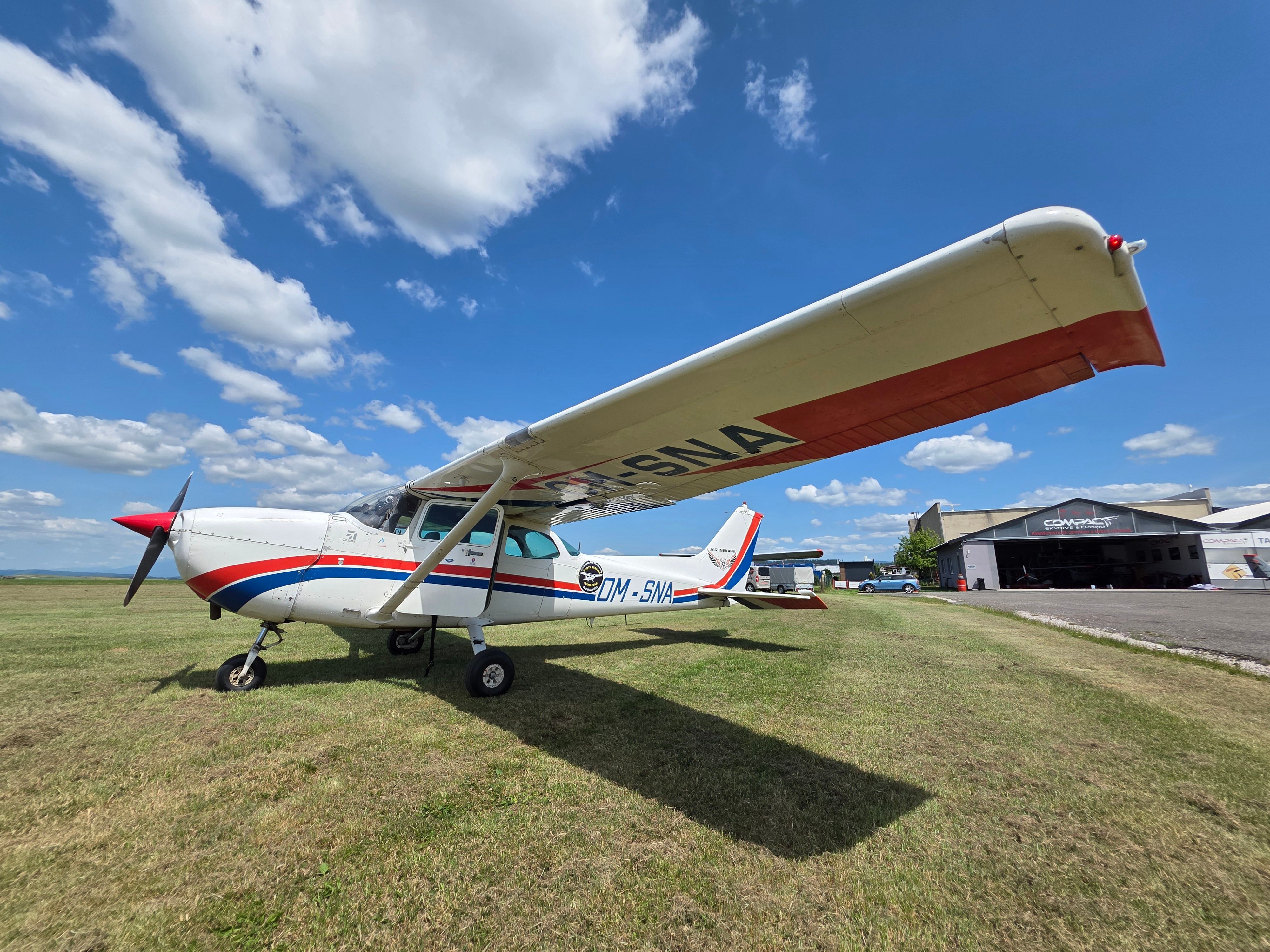
A plane is what pilots call a fixed-wing aircraft. The wings do not move. They stay bolted to the body, and lift comes from forward speed. As long as the plane keeps moving fast enough, air flows over the wings and pushes the aircraft up.
This forward-motion design has a big upside for learners. It makes the plane stable. The aircraft is built to want to fly level and straight, which gives a new student a little breathing room.
The Controls That Keep It Simple
A plane uses a small set of controls that mostly do one job each:
- Yoke or stick: Tilts the nose up and down, and rolls the wings left and right.
- Rudder pedals: Swing the nose left or right (this is called yaw).
- Throttle: Adds or reduces engine power for speed.
The key thing is that these controls feel separate. You can think about one at a time when you are starting out. Push to go down, pull to come up, turn the yoke to bank. The brain can keep up.
Why Planes Want to Stay in the Air
Here is the part that makes planes friendlier for beginners. A well-trimmed plane has positive stability. Trim is a setting that takes pressure off the controls so the aircraft holds its attitude. Once it is trimmed, you can take your hands off the controls for a moment, and the plane will keep flying along on its own.
That forgiveness matters. If you get distracted or make a small mistake, the plane usually tries to correct itself. It buys you time to think, which is exactly what a nervous student needs.
Why It Matters: Stability is the single biggest reason planes feel easier early on. A machine that corrects its own small errors lets your brain focus on learning instead of just surviving the next three seconds.
The harder parts of flying a plane come later. Landing smoothly in a crosswind takes practice. Navigating long cross-country trips, talking to air traffic control, and earning an instrument rating all add real complexity. But none of that hits you on your very first lesson.
How Flying a Helicopter Actually Works
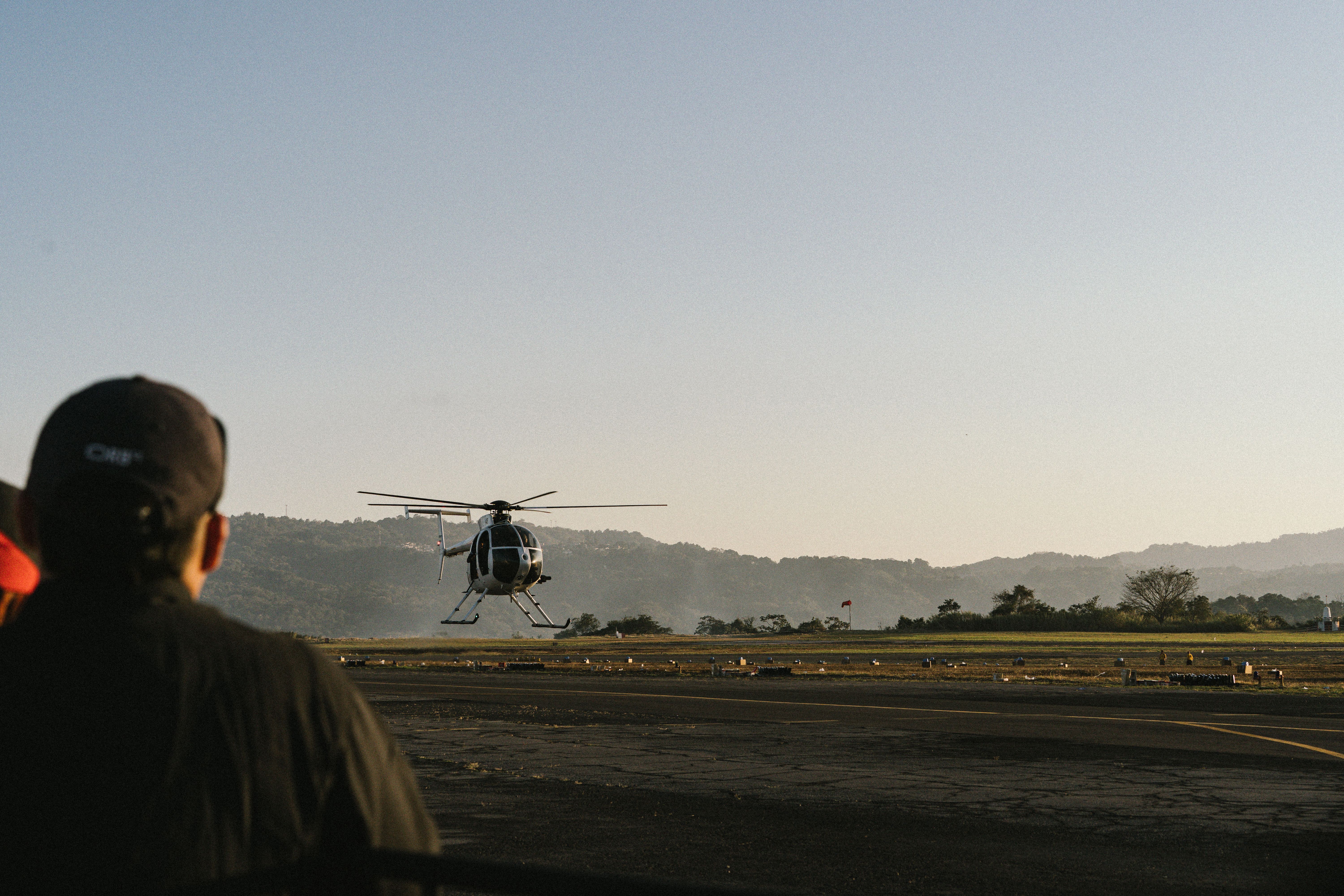
A helicopter is a rotary-wing aircraft. Instead of fixed wings, it has spinning blades up top that act like wings going in a circle. Those blades create lift without the helicopter needing to move forward, which is how it can rise straight up and hang in the air.
That ability is amazing. It is also the source of nearly every difficulty. A machine that can sit still in the sky has to be balanced by the pilot at all times, because nothing about it is naturally stable.
Three Controls, Two Hands, Two Feet
Helicopter controls are where things get demanding. There are three of them, and you use all three at the same time. Getting comfortable with controlling a helicopter is mostly about learning to blend these inputs into one smooth motion:
- Cyclic (right hand): The stick between your knees. Tilt it and the helicopter moves that direction, forward, back, or to either side.
- Collective (left hand): A lever by your side. Pull it up to climb, push it down to descend. The throttle usually sits on the end of it.
- Anti-torque pedals (both feet): These control the tail rotor and point the nose left or right. They also cancel out the spinning force from the main blades.
Now here is the catch. None of these helicopter controls work alone. Pull up on the collective to climb, and the nose tries to swing, so you correct with the pedals. That changes the balance, so you nudge the cyclic. Every input creates a reaction that needs another input. It is a constant conversation between your hands and feet.
Fun Fact: Learning to hover is often described as patting your head, rubbing your belly, and balancing on a beach ball, all at once. It sounds like a joke until you try it, and then it stops being funny.
The Hover: Where Most Beginners Struggle
Hovering is the great filter of helicopter training. The goal sounds easy. Keep the aircraft still, a few feet above one spot on the ground. In practice, the helicopter drifts, dips, and spins while your brain scrambles to catch up.
Most students wobble all over the place for hours before it clicks. Then, almost overnight, something settles in the brain and the helicopter starts to behave. Instructors will tell you that nearly everyone gets there with practice. The trouble is the practice can feel discouraging while you are in the middle of it.
Compare that to a plane. In a plane, your first takeoff is fairly gentle and the cruise is calm. In a helicopter, the very first thing you try, lifting into a hover, is the hardest thing in the whole syllabus. That order of difficulty is a big reason people call helicopters tougher to learn.
7 Reasons a Helicopter Is Harder to Learn Than a Plane
When people ask what is harder to learn between a helicopter or plane, the answer usually comes down to a handful of clear reasons. Here are the seven that come up most often.
1. Helicopters Are Naturally Unstable
A plane wants to fly. A helicopter wants to tip over. Left alone, a basic helicopter will not hold itself steady. The pilot has to provide the stability that the design does not. That means there is no real moment to relax in early training.
2. Hovering Demands Constant Tiny Corrections
Hovering has no autopilot in your head to lean on. You make dozens of small adjustments every few seconds. It is the kind of skill you cannot rush, and it humbles almost everyone at first.
3. You Manage Three Controls at Once
A plane lets you focus on one control at a time when you start. A helicopter never gives you that gift. Both hands and both feet stay busy from the first lesson, which overloads a lot of new students.
4. Every Input Triggers a Reaction
In a helicopter, you cannot move one control without affecting the others. Climb a little and the nose swings. Turn and the lift changes. Learning to predict these chain reactions is a slow build.
5. There Is Less Margin for Error
Helicopters respond fast, and they do not forgive a sloppy input the way a stable plane often will. Small mistakes grow quickly, so the timing of your corrections has to sharpen early.
Heads Up: "Less margin for error" describes the training feel, not a safety warning. A trained helicopter pilot operates well within safe limits. The point is that beginners get faster feedback on their mistakes, which makes lessons more intense.
6. Emergency Procedures Are More Demanding
If a plane loses its engine, it glides. You have time and a long runway of air to work with. If a helicopter loses its engine, the pilot performs an autorotation, using the spinning blades to cushion the landing. It works well when done right, but it leaves less room and time, so it takes real skill to learn.
7. There Is No "Set It and Forget It"
A trimmed plane will fly straight while you check a map. A helicopter will not. The moment you stop flying it, it stops flying nicely. That nonstop attention is mentally tiring for new students and is a core reason learning to fly a helicopter takes longer to feel comfortable.
Flying411 also connects new pilots with vetted flight schools and instructors, so when you are ready to book that first lesson, you are not just guessing from a search engine.
Where Planes Actually Get Harder
It would be unfair to make planes sound like a walk in the park. They get tricky too, just in different ways and usually later in the journey.
- Crosswind landings: Touching down smoothly when the wind is shoving you sideways takes real finesse. Oddly enough, a helicopter can sometimes handle gusty conditions more gently because it can creep into position at a near hover.
- Speed and distance: Planes cover ground fast. That means decisions come at you quicker on long trips, and planning becomes a bigger part of the job.
- Airspace and radio work: Higher and faster flying often means more time talking to air traffic control and juggling busy airspace.
- Instrument flying: Earning an instrument rating, so you can fly in clouds using only your gauges, is a serious mental challenge in any aircraft.
So the honest picture is this. A plane is easier to start and gets harder as you climb the ladder. A helicopter is harder to start and then levels out once hovering finally clicks. The famous comparison of the chopper nickname and what people really mean by it shows how much casual language hides about these machines.
Training Time and Licensing for Each
A lot of people assume the harder aircraft must need way more required hours. That is not quite how the rules work. Let's look at the actual licensing picture for a private certificate in the United States.
Plane: Private Pilot Requirements
Under the standard Part 61 path, the Federal Aviation Administration sets a minimum of about 40 flight hours for an airplane single-engine private certificate. Most students log more than the floor, often landing somewhere in the 50 to 70 hour range before they pass their checkride. A faster, more structured Part 141 school can lower the minimum slightly.
Your flight training also includes ground school. That covers weather, navigation, regulations, and how the aircraft works. The flying and the studying happen side by side.
Helicopter: Private Pilot Requirements
Here is the surprise. A helicopter private certificate also carries a minimum of about 40 flight hours under Part 61, the same floor as the plane. The legal minimum is similar. The real-world number tends to run higher, with many students needing roughly 60 to 70 hours to feel ready, largely because of the time spent wrestling with the hover.
If you already hold a pilot certificate in another category, adding a helicopter rating can take fewer minimum hours. The steps for getting a helicopter license and the full path to becoming a helicopter pilot lay out exactly what each stage involves.
Pro Tip: Do not judge difficulty by the legal minimum hours alone. Both aircraft list similar floors, but the helicopter usually eats more real hours before things feel smooth. Budget your time and money for the higher end, not the minimum.
A quick helicopter vs plane snapshot on training time:
| Stage | Plane | Helicopter |
| Legal minimum (Part 61) | About 40 hours | About 40 hours |
| Typical real total | Often 50 to 70+ | Often 60 to 70+ |
| Hardest skill to log | Consistent landings | A stable hover |
| First solo timing | Often earlier | Often later |
What It Costs to Learn Each One
Money is part of the difficulty story, even if it is not about skill. Helicopter training is generally more expensive per hour than airplane training. Helicopters cost more to buy, fuel, and maintain, and those costs flow into the rental rate you pay during lessons.
Because helicopter students also tend to need more hours to reach proficiency, the total bill can climb in two ways at once. Higher hourly cost, plus more hours. Planes are usually the cheaper road into the sky for a first license.
That financial gap is one reason many people start in planes and add a helicopter rating later, if at all. It is also why folks research the bigger picture before committing, including the question of owning one is worth it and what buying a helicopter really means for the wallet.
Quick Tip: Ask any flight school for a realistic total estimate, not just the hourly rate. Factor in ground school, exam fees, books, and a cushion of extra hours. The sticker price and the finish-line price are rarely the same.
Which Should You Learn First?
So what is the right choice for you? It depends on your goals, your budget, and what kind of flying excites you.
Pick a plane first if you want:
- A gentler, cheaper start to flying.
- Long trips and covering real distance.
- A path that is widely available at most local airports.
Pick a helicopter first if you want:
- The thrill of vertical takeoffs and hovering.
- Jobs that need that skill, like tours, news, rescue, or utility work.
- To learn the harder machine while you are young, fresh, and motivated.
Some pilots love that helicopters can go places planes simply cannot. They can land in tight spots, hold position over a scene, and reach areas with no runway. If raw capability is the dream, the trade-off in difficulty may be worth it. It also helps to know the practical limits, like how high helicopters can climb and how far they can travel, before you commit your time and money.
There are also career angles to weigh. Some rotary jobs pay surprisingly well, and curious students often check figures like helicopter lineman pay when deciding if the harder path is worth the reward.
Keep in Mind: Many people who think they want one aircraft change their mind after a single intro flight in the other. A short demo lesson is the cheapest way to find out what truly clicks for you.
Ready to take the next step? Browse aircraft listings and find a flight school near you on Flying411, then turn the dream into a booked lesson.
Conclusion
So, what is harder to learn, helicopter or plane? For most beginners, the helicopter takes the prize. It is unstable by nature, it asks for three controls at once, and it throws its hardest skill, the hover, at you on day one.
A plane is calmer to start because it wants to keep flying, with the bigger challenges arriving later in your training.
Neither one is out of reach. With good instruction and steady practice, regular people learn both every single day.
The real question is not which is easier, but which kind of flying makes your heart race. Pick the machine that excites you, and the hard parts start to feel like fun.
When you are ready to compare real aircraft, find an instructor, or just keep learning, Flying411 is the runway to your next adventure in the sky.
Frequently Asked Questions
Can you learn to fly a helicopter if you already fly planes?
Yes, and your flying experience helps with things like radio work and navigation. The hover will still humble you, since it is a brand-new skill that plane flying does not teach.
How long does it take to learn to hover a helicopter?
Most students spend several hours wobbling before it suddenly clicks, and the timing varies a lot from person to person. Once the brain adapts, hovering becomes second nature surprisingly fast.
Is a helicopter or plane safer to fly?
Both are very safe when flown by trained, current pilots within their limits. Difficulty during training and safety in operation are two different things, so a harder aircraft to learn is not automatically a riskier one.
Do you need a college degree to become a pilot?
No, you do not need a degree to earn a private or even commercial certificate. Some airline and corporate jobs prefer a degree, but the flying itself depends on training, hours, and passing your exams.
Which aircraft is cheaper to fly after you are licensed?
Planes are usually cheaper to rent, fuel, and maintain than helicopters of similar size. That cost gap is one reason many recreational pilots stick with fixed-wing flying once they finish training.