Getting ready for your first flying lessons brings up one question fast. Should I learn to fly in a Cessna 152 or 172? Both planes have trained huge numbers of pilots over the years. Both are high-wing Cessnas with a strong safety reputation and famously forgiving manners.
Yet they feel different in the air. They cost different amounts to fly. And they fit different kinds of students.
The honest answer is that there is no single "right" plane for everyone. The best trainer for you depends on your size, your budget, your goals, and even the weather where you fly. A snug two-seater can feel perfect for one person and like a tight squeeze for the next.
These two planes look like cousins parked side by side on the ramp. The choice between them shapes your first solo, your monthly bank statement, and what you can actually do once your certificate is in hand.
Key Takeaways
Most students can learn to fly well in either plane, so the better choice comes down to fit, cost, and goals rather than one plane being flatly "better" than the other. The Cessna 152 is smaller, cheaper, and great for building solo skills on a tight budget. The Cessna 172 is roomier, more powerful, and the smarter pick if you are tall, plan to carry passengers, or want to fly longer trips. Many instructors also point out that if you can handle a 152 well in gusty wind, bigger planes tend to feel easy afterward.
| Question | Short Answer |
| Which is cheaper to fly? | The 152, with a lower hourly rate and lower fuel burn |
| Which fits tall or larger pilots better? | The 172, with more cabin room and more load capacity |
| Which is better for carrying passengers? | The 172, with four seats instead of two |
| Which builds sharper stick-and-rudder skills? | Many instructors lean toward the 152 |
| Which is easier to find today? | The 172, since it is still in production |
| Can I switch between them later? | Yes, a short checkout moves you from one to the other |
At Flying411, we spend our days around these two trainers and the people learning in them, so we have seen up close what makes each one shine. Think of the comparison below as a friendly hangar chat, not a sales pitch.
Meet the Two Cessnas Behind So Many First Flights
Walk onto almost any training ramp in the country and you will likely spot at least one of these planes. They have shaped flight schools for decades. Before we line them up against each other, here is a quick picture of each one on its own.
A Quick Look at the Cessna 152
The Cessna 152 is a small, two-seat plane built for one simple job: teaching people to fly. The pilot and instructor sit side by side, with a single engine up front and a high wing overhead. That high wing gives a clear view of the ground below, which helps a lot during turns and landings.
Under the cowling sits a Lycoming O-235 engine producing around 110 horsepower. It is light, simple, and easy to manage. There are no complicated systems to juggle, which lets a new pilot focus on the basics.
Cessna built the 152 from the late 1970s into the mid-1980s as an update to the older Cessna 150. The plane has a reputation for gentle handling and predictable stalls, the kind of behavior that builds confidence rather than fear.
Good to Know: The 152 has been out of production for around forty years. The newest one you can rent is still a few decades old, so the condition of the specific airplane matters a great deal. A well-cared-for 152 at a busy school is a very different machine from the cheapest one sitting on a back ramp.
A Quick Look at the Cessna 172 Skyhawk
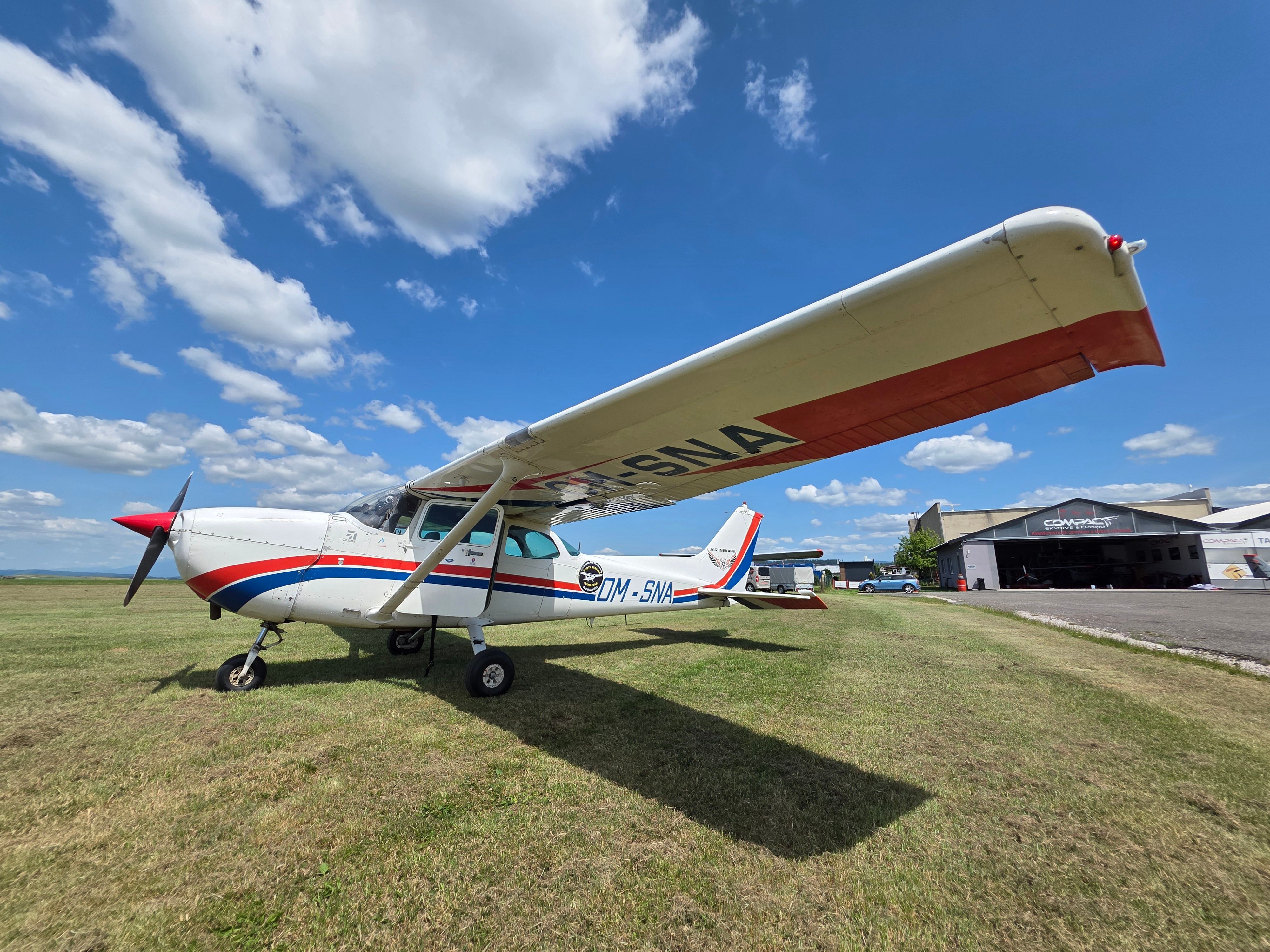
The Cessna 172 Skyhawk is the bigger sibling. It seats four people, has more room up front, and carries more weight. The same friendly high-wing layout is there, but everything is a size larger.
Engines have changed across the decades. Early models used a Continental engine of about 145 horsepower. Later versions moved to Lycoming engines, and modern Skyhawks make around 160 to 180 horsepower. That extra muscle gives the 172 stronger climbs and a faster cruise than the 152.
The 172 has been around since the 1950s, and it is still rolling out of the factory today. Few planes can say that.
Fun Fact: The Cessna 172 is widely considered the most-produced aircraft in history, with reportedly more than 44,000 built over the years. There is a very good chance the instructor teaching you learned in one too.
How the Two Planes Compare on Paper
Specs only tell part of the story, but they are a useful starting point. The table below shows the broad strokes. Keep in mind that exact numbers shift from model to model and from one airplane to the next, so treat these as general ballpark figures.
| Feature | Cessna 152 | Cessna 172 |
| Seats | 2 | 4 |
| Engine power | About 110 hp | Roughly 145 to 180 hp by model |
| Cruise speed | Around 105 to 110 knots | Around 120 to 124 knots |
| Useful load | Roughly 560 to 590 lb | Roughly 870 to 920 lb |
| Fuel burn | About 6 gallons per hour | About 8 to 10 gallons per hour |
| Standard fuel | Around 26 gallons | Around 42 to 56 gallons by model |
| Still in production? | No | Yes |
| Typical hourly cost | Lower | Higher |
The single biggest gap on this chart is useful load. That term means how much weight the plane can carry once you add fuel, people, and bags. The 152 simply carries less. The 172 carries a lot more, and that one difference drives many of the choices below.
Why It Matters: Useful load decides who can fly the plane and how far. In a 152, two larger adults plus full fuel can push close to the weight limit. In a 172, the same two people fit with room to spare, fuel to spare, and bags in the back.
This is the heart of the Cessna 152 vs 172 debate. One plane keeps things lean and cheap. The other trades some of that thrift for space and capability.
What Each One Feels Like in the Air
Numbers aside, the two planes have their own personalities. A student often notices the difference within the first lesson.
Handling and the "Good Stick" Idea
The 152 is light on the controls. It responds quickly to small inputs, and it lets you feel the air. Because it is so light, it also moves around more in gusty wind, which keeps a student pilot busy and alert.
Many examiners say this is a good thing. The common bit of wisdom goes like this: a pilot who can fly a 152 smoothly on a windy day will usually step into a bigger, heavier plane with ease. The little plane builds the hands and feet first.
The 172 feels heavier and more settled. It plows through small bumps with more calm, and it holds a heading and altitude with less fuss. That stability makes it a favorite for longer flights and for later instrument training, where steady control really pays off.
Heads Up: The 152's engine is known for picking up carburetor ice, even on warm days at low power. Instructors drill the habit of using carb heat during descents and idle. It is a small thing, but it becomes second nature, and it is a good habit to learn early.
Room, Comfort, and Tall Pilots
Here is where size shows up in a real way. The 152 cabin is cozy. For an average-sized pilot and instructor, it is perfectly fine. For two larger people, shoulders start to touch and elbows compete for space.
Taller pilots can run low on headroom. As a rough guide, folks over about six feet two inches often start to feel cramped, and those past six feet four inches may be plain uncomfortable. The 172 solves this with a wider cabin and more legroom.
Pro Tip: If you are tall or broad-shouldered, sit in a 152 on the ground before you sign up for a block of lessons in one. Five minutes in the seat will tell you more than any spec sheet. If it feels tight on the ramp, it will feel tighter after an hour in the air.
What It Costs to Fly Each Plane
For most students, money is a real part of the decision. Flying is a serious investment of time and cash, and small differences add up across dozens of hours.
The 152 almost always wins on price. It rents for less per hour, and it burns less fuel while it flies. Lower operating costs mean your training dollar stretches further, which can be the deciding factor for a budget-minded learner.
The 172 costs more on every front. The hourly rate is higher, the fuel burn is bigger, and insurance and upkeep tend to run more as well. You get more plane, but you pay for it by the hour.
There is a clever wrinkle here for anyone chasing flight hours. Because the 152 is slower, a cross-country trip takes a bit longer in it. For time building toward a certificate or rating, that slower pace can mean more logged hours for less money per mile.
Keep in Mind: Cheaper per hour does not always mean cheaper overall. If you outgrow the 152 and need to retrain in a 172 for trips and passengers, you may pay twice. Match the plane to your real goals from the start, and you often spend less in the long run.
Should You Learn to Fly in a Cessna 152 or 172? Seven Factors to Weigh
Here is the core of the decision. Run through these seven points honestly, and the right plane usually becomes clear. There is no wrong answer, only the best fit for your situation and your goals during primary flight training.
- Your size and comfort. If you are tall or carry some weight, the 172 will feel far better over a long lesson. A cramped pilot is a distracted pilot, and comfort helps learning.
- Your budget. If keeping cost low is the top priority, the 152 stretches your money the furthest. The hourly savings add up fast over a full course of training.
- What is actually available. Some schools only have 172s now, since the 152 has been out of production for decades and the fleet is aging. The best plane in the world does no good if you cannot book it.
- Your goals after the checkride. If you only want a license to fly solo for fun, the 152 is plenty. If you dream of flying your family on weekend trips, the 172 fits that life much better.
- The skills you want to build. A 152 forces crisp hands and feet, especially in wind. Some students value that challenge. Others prefer the calm of a more stable platform while they learn.
- Your local airport and weather. Hot, high airports sap a small engine's power. In thin mountain air, the 172's extra horsepower climbs more confidently than the lighter 152.
- Cross-country and passenger plans. The 172 shines for cross-country flying with people and bags aboard. The 152 can do trips too, but two seats and a small load cap put real limits on it.
Notice that several of these points pull in opposite directions. A tight budget says 152. A tall frame and family plans say 172. Your job is to weigh which factors matter most to you, not to find a plane that is perfect at everything.
If your school's planes are always booked solid, Flying411 lists flight schools and rental aircraft from certified operators across the country, making it easier to find a 152 or 172 with an open slot near you.
Which Plane Fits Which Student
Sometimes it helps to picture real people rather than spec charts. Here are a few common types of students and the plane that usually fits each best.
- The budget-focused beginner. You want a license for the joy of flying and you watch every dollar. The 152 is a natural home. Lower rates and low fuel burn keep the dream affordable.
- The tall or larger-framed student. Comfort is not a luxury here; it affects how well you learn. The 172 gives you room to breathe and focus on flying instead of your knees.
- The future family flyer. You picture day trips with a spouse and kids once you are licensed. Train in the plane you will actually use. The four-seat 172 sets you up without a second transition.
- The career-track time builder. Many professional tracks start in a 152 to learn cheaply, then move to a 172 for cross-country and instrument work. Doing both is common and often smart.
If you see yourself in more than one of these, you are normal. Most people do. Pick the description that fits your next year or two of flying, and let that guide the first choice.
Thinking About Buying Instead of Renting
Some students decide that renting forever does not make sense, especially if they plan to fly often. Buying a trainer can pay off, and the 172 is one of the most popular choices for first-time owners because parts and mechanics are everywhere. It is worth knowing what you are getting into before you sign anything.
What a Used 172 Really Costs to Own
The sticker price is only the beginning. New owners are often surprised by the bills that show up after the purchase. There is a helpful rundown of the costs first owners overlook that is worth reading before you commit, since insurance, hangar rent, and the annual inspection all add up.
On the brighter side, ownership can come with perks. Depending on how you use the plane, there may be tax benefits tied to ownership that soften the yearly cost. When repairs come up, you will also face a choice between used versus overhauled parts, and that single decision can swing a repair bill by a wide margin.
Checking the Bones Before You Buy
A 172 can fly for a very long time if it is cared for, but every airframe has a story. It helps to understand how many hours an airframe can safely fly so a high-time plane does not scare you off for the wrong reasons. Age in years matters too, and the difference between calendar time and flight time tells you a lot about how a plane was used.
Records are just as important as the metal. Missing pages cost real money, and learning what gaps in the logbooks do to value can save you from a bad deal. You should also know how to spot hidden corrosion on older airframes, since it can hide in places a quick walk-around will miss.
Two more bills catch buyers off guard. A faded cabin may need work, and the price of refreshing a worn interior is higher than most people guess. A crack in the glass is another one, so it pays to know what replacing a windshield runs before it happens. If you are eyeing a former trainer, there are special things to check when buying an ex-flight-school Skyhawk, since those planes live a hard life.
Ready to take the next step? Browse the listings on Flying411 to find a trainer, a flight school, or your very first airplane, all in one place.
Common Myths About the 152 and 172
A few stubborn ideas float around hangars and online forums. Clearing them up can make your choice easier.
- Myth: the 152 is too small to be safe. The 152 has a strong safety record and was built for training. Small does not mean unsafe. It means efficient and simple.
- Myth: you must train in the exact plane you will own. You do not. Moving between Cessna singles is a quick checkout, not a whole new license. Train in what fits today and adapt later.
- Myth: the 172 is too much plane for a raw beginner. Plenty of people learn from day one in a 172 with no trouble. Its stability is gentle and beginner-friendly.
Quick Tip: Switching from a 152 to a 172 usually takes just a short checkout flight or two with an instructor, not a fresh course of training. So your first-plane choice is not a lifelong commitment. It is simply the best starting point for you right now.
Bringing It In to Land
So, should I learn to fly in a Cessna 152 or 172? The plane that fits your body, your wallet, and your flying dreams is the right one. There is no trophy for picking the "harder" trainer and no shame in choosing the cheaper one. Both have launched countless pilots into the sky, and both will teach you to fly well.
Be honest about your size, your budget, and what you want to do once you have that certificate. Sit in each cockpit if you can. Talk to an instructor who flies both. Then pick the one that lets you show up to every lesson ready to learn instead of worrying about cost or comfort.
Wherever your first lesson takes off, Flying411 is here to help you find the plane, the school, and the people to get you airborne, because the only bad choice is never leaving the ground.
Frequently Asked Questions
How many flight hours does it take to earn a private pilot license?
Most students need somewhere around 50 to 70 hours of training, though the legal minimum is lower and the real number depends on how often you fly and how quickly skills click. Flying consistently each week tends to keep the total hours, and the cost, down.
Do I need to take another test to switch from a 152 to a 172?
No new checkride is required to move between these planes for most pilots. You simply complete a short checkout with an instructor so they can sign you off as familiar with the larger aircraft.
Is the Cessna 150 the same as the Cessna 152?
They are close cousins but not identical. The 152 is an updated version of the 150 with a slightly more powerful engine and a few refinements, while the two share the same compact two-seat design.
Can two adults and full fuel fit in a Cessna 152?
It depends on how much the two people weigh. Two average-sized adults usually fit with full fuel, but two larger adults may need to trade some fuel for weight to stay within limits.
Which plane is better if I want an instrument rating later?
The 172 is generally the friendlier platform for instrument work because it is more stable and has the room and avionics for it. Many pilots start in a 152 and move to a 172 once they begin instrument training.