Flying has a reputation for being expensive, and that reputation is mostly earned. Rental rates, instructor fees, fuel, books, exams, and a long list of small charges add up fast.
Still, plenty of people every year find a way to earn their wings without draining their savings, and the trick is almost always the same: pick the right path, train smart, and skip the parts that don't actually move you closer to a checkride.
So what's the cheapest way to learn how to fly without ending up with a half-finished logbook and an empty bank account? The honest answer involves a few smart choices most new students never hear about until it's too late.
The math of becoming a pilot rewards patience, planning, and a bit of stubborn frugality.
Key Takeaways
The cheapest way to learn how to fly is to earn a sport pilot certificate through a Part 61 flight school or flying club, train at least two to three times per week, and use a free or low-cost online ground school. Most students who follow this path can finish training for somewhere in the range of $5,000 to $9,000, well below the cost of a full private pilot license at a large academy.
| Cheapest Path Element | Why It Saves Money |
| Sport pilot certificate | Half the required flight hours of a private pilot license |
| Flying club membership | Lower hourly aircraft rates than retail flight schools |
| Part 61 flight training | No expensive structured program or stage check fees |
| Online ground school | Often free or under a few hundred dollars |
| Frequent, consistent lessons | Fewer total hours to reach checkride readiness |
| Scholarships and grants | Free money you do not pay back |
| Training in a low-cost region | Cheaper fuel, rentals, and instructor rates |
Flying411 has been a useful starting point for many new pilots who want to understand the real numbers behind training, aircraft ownership, and the marketplace before spending a single dollar.
Why Learning to Fly Costs What It Does
Before you can cut costs, it helps to know exactly where the money goes. Flight training is built from a few big-ticket items and a long tail of smaller fees. Understand each piece, and the cheapest path starts to look obvious.
Aircraft Rental and Fuel
The single biggest chunk of your training budget is the aircraft. Rental rates usually fall between $130 and $260 per hour depending on the plane and the part of the country. A worn-but-airworthy Cessna 152 in a rural area might rent for under $130 wet (fuel included). A newer Cessna 172 on the coast can easily run past $200. Fuel surcharges, club dues, and minimum monthly hour requirements can shift the real cost in either direction.
Good to Know: Many flight schools advertise a "dry" rental rate that does not include fuel. A wet rate includes fuel and is almost always easier to compare across schools. Always ask which one you are being quoted.
Instructor Time
Certified flight instructors (CFIs) typically charge between $40 and $80 per hour, sometimes more in major metros. You pay for time in the air and for time on the ground before and after each lesson. Pre-flight briefings, post-flight debriefs, and exam prep all add up, so do not assume instructor time only starts when the engine turns over.
Ground School, Tests, and Gear
The smaller items still matter. Expect to budget for the FAA knowledge test (around $175), the practical exam or "checkride" (usually $500 to $1,500 paid to a designated pilot examiner), a medical exam if needed, study books, a headset, a kneeboard, and a few other supplies. Beginners can get gear for $500 to $1,200 if they shop carefully and buy secondhand.
The Different Pilot Certificates and What Each One Costs
There is no single "pilot license." The FAA offers several different certificates, and the one you pick has a huge effect on what you spend. Picking the right level for your goals is the first real money decision you will make.
Sport Pilot Certificate
The sport pilot certificate is the entry point that most new pilots overlook. It requires a minimum of 20 flight hours, though most students finish closer to 25 to 35 hours. You can fly during the day in good weather, carry one passenger, and operate a light sport aircraft. You do not need a full FAA medical, just a valid driver's license and a self-declaration of fitness.
Typical total cost: $5,000 to $8,000, with some students finishing under $7,000 when they train consistently.
Pro Tip: All sport pilot hours count toward a private pilot certificate later. Many budget-conscious students earn the sport certificate first, fly for a year or two while saving, then add the private rating without losing any of their original training.
Recreational Pilot Certificate
The recreational certificate is the middle ground, requiring around 30 flight hours and an FAA medical. It allows more aircraft choices than sport but still keeps several restrictions, including limits on cross-country flight without extra training. It is not as popular as the other two options, partly because the cost is close to a private license while the privileges are much narrower.
Typical total cost: $7,000 to $11,000.
Private Pilot License (PPL)
The private pilot license is the most flexible certificate for non-commercial flying. It requires a minimum of 40 hours under Part 61 (or 35 under Part 141), though the national average to checkride is closer to 60 to 75 hours. You can fly at night, in controlled airspace, with multiple passengers, and across the country.
Typical total cost: $10,000 to $18,000, with high-cost metros pushing past $20,000.
Comparison Table
| Certificate | Minimum Hours | Typical Total Cost | Medical Required | Best For |
| Sport Pilot | 20 | $5,000 – $8,000 | No (driver's license) | Recreational flying, budget pilots |
| Recreational Pilot | 30 | $7,000 – $11,000 | Yes | Hobby pilots wanting more aircraft options |
| Private Pilot | 40 (Part 61) | $10,000 – $18,000 | Yes | Travel, night flying, future career path |
Heads Up: A 2024 FAA rule update known as MOSAIC has expanded what sport pilots can fly. The old weight limit of 1,320 pounds has been raised, which means a sport pilot can now operate more familiar trainers like the Cessna 150 and certain Cessna 172s. This makes the sport route far more practical than it used to be.
Part 61 vs Part 141: Which Path Saves More
Every flight school in the U.S. operates under one of two FAA rule sets: Part 61 or Part 141. The choice affects structure, flexibility, and final cost.
Part 61 schools are flexible. There is no rigid curriculum, you train at your own pace, and your instructor can adapt lessons to your strengths and weaknesses. Most small independent flight schools and individual CFIs work under Part 61. For someone training part-time on a budget, this is usually the cheaper path because there are no extra overhead fees, no mandatory stage checks, and you can shop around for the lowest rental and instructor rates.
Part 141 schools are structured. They follow an FAA-approved syllabus, conduct internal stage checks, and require fewer minimum flight hours (35 instead of 40 for a private pilot license). The catch is that most students still finish in 60 to 70 hours regardless of program, and Part 141 schools often have higher hourly rates and more administrative fees. Part 141 does have one advantage worth noting: it is the only path eligible for GI Bill funding and for F-1 student visas.
For the cheapest route, Part 61 wins almost every time, unless you are using GI Bill benefits.
9 Cheapest Ways to Learn How to Fly Without Cutting Corners
Now for the part you came for. These are the real strategies that move the needle. Pick a few of them, combine them, and the total cost of your training can drop by thousands of dollars. None of these involve skipping safety steps or rushing through material. They all come down to picking smarter paths to the same checkride.
1. Start With a Sport Pilot Certificate
The sport pilot route is the single biggest cost-cutter available. Half the required hours, no FAA medical, and far less ground material to memorize. If your main goal is to fly for fun on sunny weekends, the sport certificate may be all you ever need. If you want to upgrade later, every hour you logged counts. You finish the additional training, take the private pilot checkride, and you are done.
Fun Fact: Sport pilots have been said to log more "smiling per hour" than any other group in aviation, partly because the certificate exists almost entirely for recreational flying. There is no career path attached to it, so the people pursuing it are doing it purely because they love the idea of being in the air.
2. Join a Flying Club Instead of a Big Flight School
Flying clubs are member-owned or co-op groups that share one or several aircraft. Members pay a monthly fee (usually $50 to $150) plus a low hourly rental rate. A club Cessna 152 might rent for $90 to $120 per hour wet, compared to $150 to $190 at a retail flight school. Add an instructor and you can train at a rate that beats commercial schools by 25% to 40%.
The trade-off is availability. Popular club planes get booked early, and you may not have the same training pipeline a busy school offers. But for the budget-focused pilot, the savings are massive.
Useful reading on the marketplace side of aircraft access can be found in articles covering the costs of flying as a hobby and the question of flying as a realistic hobby.
3. Fly Often (Not Once a Month)
This is the single most common piece of advice from experienced CFIs, and it is true. Students who fly three or four times per week finish training in 45 to 60 hours. Students who fly once a week or less often need 70 to 100 hours because skill decay forces them to re-cover material each lesson.
At $200 to $280 per hour for plane and instructor, those extra 20 to 30 hours represent thousands of dollars in avoidable cost. If you can carve out two months of dedicated training time, that block alone can save you more than any other tactic on this list.
Why It Matters: Flying is a perishable skill. The longer you go between lessons, the more time you waste at the start of each session reviewing what you already paid to learn last time.
4. Use Free or Low-Cost Online Ground School
Old-school ground school in a classroom is a thing of the past for most students. Modern online courses cost between $100 and $400 (some are even free for participants in EAA Young Eagles), and they let you study at your own pace from home. Sporty's, Gleim, Pilot Institute, King Schools, and others all offer respected programs. Many include a written-exam pass guarantee.
The bigger savings are indirect. The more material you learn on the ground, the less time you spend covering it in the airplane at $200 per hour. Walk into every lesson knowing the maneuver and you can practice it instead of being lectured about it.
5. Apply for Scholarships
Flight training scholarships are wildly underused. There is real money available through organizations like AOPA, EAA (especially the Ray Aviation Scholarship, which can award up to $12,000), Women in Aviation International, OBAP, and many local EAA chapters. Some chapter scholarships have shockingly few applicants, which raises your odds significantly.
A handful of scholarships and grants commonly available to new pilots:
- EAA Ray Aviation Scholarship: Up to $12,000 for applicants ages 16–19
- AOPA Flight Training Scholarships: Typically $2,500 to $10,000
- Women in Aviation International: Over $800,000 awarded each year across many categories
- Local EAA chapter scholarships: Often $1,000 to $5,000 with low applicant volume
- High school and community foundation grants: Vary widely by region
Quick Tip: Apply broadly and apply often. Most scholarships require an essay, a few references, and proof of interest. Spending one weekend filling out ten applications can pay for half your training if even one comes through.
6. Train in a Lower-Cost Region
Geography matters more than most students realize. Aircraft rental rates in rural Oklahoma, Indiana, or Texas can be $5,000 to $8,000 cheaper across a full PPL than rentals in coastal California, New York, or Florida. If you have the flexibility to travel for a few weeks of intensive training, an accelerated program in a low-cost area can shave a huge chunk off your bill.
Even if you cannot leave home, look outside your immediate metro. A 45-minute drive to a quieter airport often gets you the same plane for 30% less.
7. Practice With a Home Simulator
Microsoft Flight Simulator or X-Plane with a basic yoke-and-pedal setup costs $300 to $800 total. This will not earn you logged hours toward your certificate (with rare exceptions for FAA-approved devices), but it builds procedural memory that pays off in the cockpit. Pattern work, radio calls, instrument scan, and emergency procedures can all be practiced for free at home.
A student who has rehearsed the traffic pattern fifty times in a simulator will fly real patterns far better than one who is seeing them for the first time at $200 an hour. For more on getting started cheaply, the article on budget-friendly first aircraft offers useful context on what you might eventually train or fly in.
8. Buy a Cheap Used Aircraft (When It Actually Makes Sense)
This one comes with a giant asterisk. Buying a plane to train in is rarely cheaper for someone flying 40 hours total. But if you plan to keep flying 100+ hours per year after your checkride, owning can become cheaper than long-term rental. A solid used Cessna 150 or Piper Cherokee 140 in flying condition can be found in the $30,000 to $55,000 range, and operating costs for low-hour pilots run roughly $4,000 to $6,000 per year in fixed costs.
Before going this route, it is worth reading carefully through what to know when buying a plane and the differences between new and used aircraft markets. The unexpected expenses can be brutal, and there is a useful breakdown of costs new Cessna 172 owners don't budget for that applies broadly to ownership in general.
9. Use Military, Veteran, or Cadet Programs
If you served in the military, the Post-9/11 GI Bill (Chapter 33) covers flight training for advanced ratings at VA-approved Part 141 schools, though you must hold a private pilot certificate before benefits apply. The Montgomery GI Bill covers up to 60% of advanced rating costs.
Airline cadet programs like United Aviate, Republic LIFT Academy, and others offer structured training paths with financial assistance, mentorship, and a conditional job offer in exchange for a career commitment. For aspiring airline pilots, this can dramatically reduce the personal cost of training.
For pilots who want a single hub to find aircraft, parts, and certified professionals along the way, Flying411 also lists flight schools, A&P mechanics, and overhauled engines, making it useful as you move from training into ownership.
Hidden Costs People Forget to Budget For
The headline numbers on flight training are almost always low because they leave out a handful of items that catch beginners off guard. Here are the easy-to-miss expenses to plan for.
- Medical certificate exam ($75 to $200, only required for recreational and private)
- Renter's insurance ($200 to $500 per year, often required by flight schools)
- Landing fees at busier airports
- Headset upgrade (a $40 starter headset will exhaust you on long flights, so plan to upgrade)
- Charts, sectionals, FAR/AIM book updates
- iPad with ForeFlight or similar app (often more than $400 in year one)
- Fuel surcharges if rental rates are "dry"
- Re-check costs if you fail a stage check or written exam
Keep in Mind: Most flight school cost estimates assume you finish at the FAA minimum hours. The national average is 60 to 75 hours for a private pilot. Plan for the average, not the minimum, and you will not be surprised.
Choosing the Right Plane to Train In
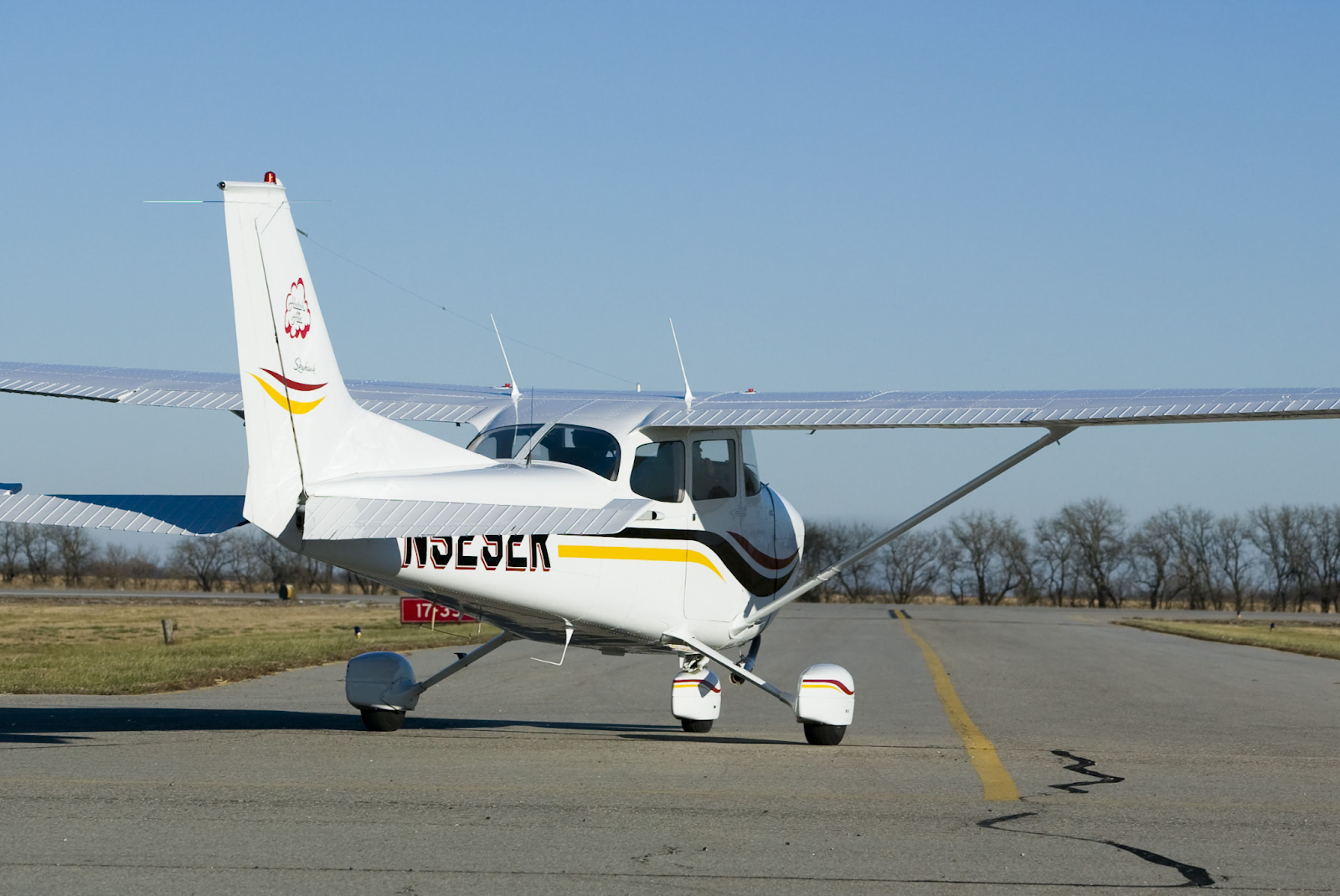
Aircraft choice has a direct effect on your bottom line. A Cessna 152 with steam gauges might rent for $110 per hour. A new Cessna 172 with a Garmin glass cockpit can rent for $230. Both will get you to a checkride. The cheaper plane will get you there for thousands less.
For most budget-minded students, the classic trainers remain the best value:
- Cessna 152: Two-seat, simple, cheap to rent, widely available
- Cessna 172: Slightly bigger, more comfortable, more expensive
- Piper Cherokee 140 or Warrior: Low-wing alternative with similar cost profile
- Light sport aircraft (LSA): For sport pilot students, often $90 to $140 per hour
Articles like best planes for beginner pilots, what makes a good first plane, and the head-to-head Cessna 172 vs Piper Cherokee comparison can help you pick the right trainer for your local area.
How Long Does the Cheapest Path Usually Take
The fastest path is not always the cheapest, but the two are closely related. Flying frequently keeps total hours down and saves money, but takes a real time commitment.
| Training Pace | Time to Finish | Approximate Total Hours |
| Full-time (4–5 days/week) | 6 to 12 weeks | 40 to 55 hours |
| Part-time (2–3 days/week) | 4 to 8 months | 50 to 70 hours |
| Casual (1 day/week or less) | 12 to 24 months | 70 to 100+ hours |
The best cost-per-hour comes from the part-time pace, where you fly often enough to keep skills sharp but not so intensively that you burn out. Most working adults land in the four-to-six-month range and come out around 55 to 65 total hours.
If you are weighing your options, browsing the Flying411 marketplace for trainer aircraft, used engines, or local flight services is a simple way to see what real prices look like before you commit to a path.
Common Mistakes That Make Flight Training More Expensive
A few habits quietly add thousands to a training bill. Avoid these and you keep more money in your pocket.
- Flying inconsistently. Spreading lessons too far apart forces re-learning and adds hours.
- Switching instructors mid-training. Each new instructor needs a few flights to assess where you are.
- Skipping ground study. Walking into a lesson unprepared wastes paid airtime.
- Picking a plane that is too expensive. A glass-cockpit trainer is fun, but a steam-gauge 152 will get you the same license for less.
- Buying too much gear too soon. A $1,200 headset is great for an experienced pilot. A $200 headset works fine for training.
- Failing the written exam. A few weeks of focused study saves a retake fee and weeks of delay.
- Skipping the discovery flight. Spending $100 on a discovery flight before committing to training can confirm that you actually enjoy flying.
Heads Up: A discovery flight is the cheapest way to find out if learning to fly is something you genuinely want to do. Many people spend $2,000 on lessons before realizing they get airsick or panic in turbulence. Spend $100 first.
For pilots curious about even cheaper experimental paths, articles like the cheapest ultralight helicopter, best helicopters for beginner pilots, and easiest helicopters to fly offer interesting alternatives to fixed-wing training.
Conclusion
The cheapest way to learn how to fly is not really about a single trick. It comes from stacking smart choices on top of each other: pick the certificate that matches your real goals, train at a small Part 61 school or flying club, fly often enough to stay sharp, study hard on the ground, and apply for every scholarship you qualify for. Do all of that and you can earn a sport pilot certificate for $5,000 to $8,000 or a private pilot license for around $10,000. Those are figures that put a real cockpit far closer to reality than the headline numbers suggest.
Flying is one of those rare hobbies that pays you back in stories, in views, and in skill. The money matters, but so does starting. Picking the right path is what turns "someday" into "this year."
Ready to take the next step? Browse aircraft, engines, parts, and trusted aviation professionals on Flying411, the marketplace built to help new pilots stop dreaming and start flying.
Frequently Asked Questions
Can I really learn to fly for under $10,000?
Yes, particularly if you go the sport pilot route at a flying club or small Part 61 school in a lower-cost region. Some students finish their sport certificate for $5,000 to $7,000. A private pilot license under $10,000 is possible but requires consistent training and strong ground prep.
Do I need a college degree to be a pilot?
No. The FAA does not require a college degree for any pilot certificate, including the airline transport pilot. Some major airlines prefer a degree but increasingly waive that requirement due to ongoing pilot demand.
How young can you start flight training?
You can begin lessons at any age, but you must be at least 16 to solo an airplane and 17 to earn a private pilot certificate. Many teenagers begin ground school and training flights years earlier, especially through programs like EAA Young Eagles.
Is it cheaper to learn in a helicopter or an airplane?
Almost always an airplane. Helicopter training typically runs $200 to $300+ per hour for the aircraft alone, and a private helicopter license usually costs $14,000 to $20,000+. Fixed-wing training is the more affordable starting point for most pilots.
What is the cheapest country to learn to fly?
The United States is widely considered one of the most affordable places to earn a pilot certificate, especially for international students. Lower fuel costs, abundant flight schools, and competitive instructor rates make U.S.-based training more affordable than equivalent programs in much of Europe, Australia, or Asia.