ewewewewBuying an airplane is a big step, and many people feel unsure about where to begin. Some look at a shiny new aircraft and imagine how simple it feels to start fresh. Others see a well-cared-for used aircraft and like the idea of saving money at the start. Both choices make sense for different reasons, and each one affects the way you fly, plan, and budget. You also face many small details like maintenance cost, operating costs, and the long-term market value of the airplane you choose. These pieces matter because buying a plane depends on real numbers, clear goals, and the way the aircraft market is moving right now.
As you move into the main ideas, you’ll see how these choices affect first-time buyers, what drives the gap between new and used options, and how smart planning helps you match the right airplane to your mission.
What This Topic Means for First-Time Aircraft Buyers
Buying your first aircraft can feel exciting, but it also brings a lot of questions. You might ask how a new airplane compares to a pre-owned aircraft, what you can afford, or how long you plan to keep your plane. First-time buyers also look at the acquisition cost, the initial purchase, and the long-term cost of ownership. When you understand these parts, it becomes easier to choose a new or used aircraft that fits your needs.
A first-time buyer often focuses on safe, dependable flying. Many buyers also think about how they will use the plane. For example, someone training at a flight school might look at a reliable piston aircraft. Someone who needs to move people quickly might look at a business jet, a jet, or even a turboprop aircraft. Your mission profile guides your options and helps you see how different aircraft models fit your daily flying.
New airplanes often come with new models of engines, better seats, upgraded cockpit layouts, and updated ads-b systems. They may also come with fewer maintenance expenses in the first few years. But a new plane also brings a higher price to buy, plus things like higher insurance. If you plan to buying new, the upside is that you get factory support from OEMs, modern tech, and a strong resale outlook. Some buyers also like that new airplanes may qualify for first-year bonus depreciation, tax incentives, or other tax benefits depending on the type of flying they do.
On the other side, many first-time buyers look at the pre-owned market because the acquisition cost starts lower. A well-maintained preowned aircraft can offer good value, especially when you find one with low-time parts, good logs, and a clean airframe. People often look at a pre-owned one because they can put more of their budget toward fuel, training, and upgrades. It can also help ease the decision-making process, especially for someone buying their first airplane.
Used airplanes may need more work in the future. For example, an engine overhaul, routine checks, or a major overhaul may appear sooner. But the lower price up front can make these repairs easier to plan for. Some buyers pick a used business aircraft or older us aircraft because they want a simple way to start. Others want the freedom to install expensive avionics later on, instead of paying for brand-new tech built on the assembly line.
A first-time buyer should also pay attention to aircraft financing, flying finance, and lease options. These choices help manage cash flow. You also need to think about storage, like space at your hangar, and support from a local FBO.
When you put it all together, first-time buyers learn that their best choice depends on their goals, their comfort level with repairs, and how soon they need the plane. What matters most is matching the airplane to your real needs, not someone else’s. The good news is that both options have strong pros and cons of buying, and you have tools to study each one.
Why Buyers Care About New Vs. Used Aircraft Markets
Buyers care about the split between new and used aircraft because it affects the way they budget, plan flights, and judge long-term ownership. The difference between a new plane and a buying a used option goes deeper than price. It reflects market conditions, inventory levels, and the overall global market. When buyers and sellers move in different directions, the gap between new and used values grows or shrinks. This drives the used aircraft market, the pre-owned aircraft market, and the price of each aircraft for sale.
Here’s a clear table showing what matters most to buyers:
WHY BUYERS CARE ABOUT NEW VS. USED AIRCRAFT MARKETS
| Factor | Why It Matters |
| Price and Availability | Buyers want to see how price and availability change between new and used options. Shifts in supply can change values fast. |
| Market Value | People watch the long-term market value to plan their budgets and future resale. |
| Increased Inventory | More increased inventory can drive the bottom of the market for older older planes. |
| Depreciation | New planes can face faster depreciation in the early years. |
| Importation and Tariff | Buyers track importation rules and tariff changes that shift airplane prices. |
| Used Aircraft Condition | The pre-owned aircraft world includes all kinds of airplanes, from older jets to well-cared-for models with upgrades. |
| Operating Costs | Buyers study long-term operating costs to plan ahead. |
When buyers step into the market, they often compare the pre-owned market and new options side by side. For example, a buyer wanting a new models aircraft may ask if they should buy a new one or wait for prices to settle. Someone watching the bottom of the market might look at older choices to save money. Others want a buying a new aircraft path because they like a clean slate.
A major part of this choice comes from market conditions. When the economy grows, demand for new planes rises. This can push people toward the pre-owned market because they want something available sooner. If increased inventory appears in the used market, buyers may see better deals. These cycles shift year over year, and they guide how people choose.
Aircraft brokers help buyers keep up with the global market and explain patterns like market conditions, inventory levels, and long-term value. Brokers also help track importation, tariff updates, or rules that affect prices on us aircraft.
Buyers also look at long-term parts. Things like airframe age, the chance of an engine overhaul, or the need for an upgrade help buyers plan ahead. Someone wanting to fly a simple route may value an older airplane with lower payments. Another buyer may want factory-warranty support from new models on the assembly line.
People also care about how values compare over time. A new airplane may give strong market value at resale. A pre-owned one may lose value more slowly. Some buyers like to track things like first-year bonus depreciation, tax benefits, and aviation business rules. These details help weigh the upsides of buying new or used.
The last big point ties back to the mission. A person flying short trips may choose something simple with lower fuel burn. Someone building an aviation company may choose a business jet because they need speed and comfort. Others want a low-risk start and choose a pre-owned one.
All these details guide the decision-making process and help buyers compare options. This is why understanding new vs. used markets helps people make smart, steady choices that match real flying goals.
HOW NEW AND USED MARKETS SHAPE REAL BUYER DECISIONS
Choosing between new and used airplanes can feel like a big puzzle at first. You look at the price. You think about long-term care. You check the age and the tech. These simple steps help buyers compare options and understand how the market works. It also shows why each person must decide whether to buy new or used based on what matters most to them.
The airplane world moves fast. New models enter the scene. Older ones shift in value. And the rules of aviation can change the way people buy. Let’s break the whole picture down in a way that’s clear, steady, and friendly, so you can see how things work without feeling overwhelmed.
WHY NEW AIRPLANES APPEAL TO MANY BUYERS
Many people like the idea of a new aircraft because it feels clean, simple, and ready to go. You can see the full service history from day one. You know how the airplane has been handled. You also get the latest design updates from aircraft manufacturing, which often means smoother systems and fewer early repairs.
Here are the biggest reasons people lean toward something factory-fresh:
- Latest tech: New airplanes often come with the most current avionics, screens, autopilots, and safety tools. This helps first-time owners feel confident during every flight.
- Lower early repairs: A new engine and airframe usually need less work for the first few years. You mostly follow the regular schedule and simple checks.
- Clear paperwork: All the logs begin with you. Nothing is missing, mixed, or confusing.
- Strong support: New planes usually come with fresh warranties, service plans, and factory help if something needs attention.
- Better long-term value: Some buyers like that a newer airplane can hold a stronger resale position once they decide to upgrade or sell.
But new airplanes do cost more. You pay the full amount up front, and the early years include the biggest hit of depreciation. Insurance can be higher. And some buyers need to wait for production slots, depending on how busy factories are.
WHY USED AIRPLANES ATTRACT SO MANY PEOPLE
Used airplanes continue to be extremely popular because they give people more flexibility with their budget. A pre-owned jet or piston airplane can offer great daily performance at a fraction of the price. You also get access to models that may no longer be in production but still fly well.
Here’s why so many people choose a used aircraft:
- Lower starting price: A used airplane usually costs far less than buying new. This frees up money for fuel, training, or upgrades.
- A wider selection: You can search across many years and models. You can also choose older designs you trust.
- Faster availability: You can purchase a used airplane and start flying sooner if the logs and inspections look good.
- Upgrade freedom: Some buyers enjoy customizing the airplane as they go. You can install new gear only when you want to.
- Better value over time: Used airplanes often lose value more slowly, which helps owners stay stable in the long run.
The main challenge is paying for maintenance along the way. Some older models need more hands-on care. But many owners say it’s worth it because the lower purchase price gives them breathing room for future work.
HOW BUYERS DECIDE WHICH PATH FITS THEIR GOALS
Every person arrives at a different answer when comparing new and used options. The best choice comes from understanding your mission and your comfort level with care, repairs, and upgrades.
Let’s break down the most common things people consider:
- Your mission: Short trips, long trips, business flights, or personal flying all point you toward specific types of airplanes. Someone who wants speed may look at a jet, while someone who enjoys simple weekend flights may pick a smaller piston model.
- Your comfort level: Some buyers love turning wrenches or planning upgrades. Others prefer something that needs very little attention.
- How long you’ll keep it: Buyers who plan to keep a plane for many years often compare long-term costs carefully. People who want to switch airplanes often look at resale trends.
- Budget flexibility: Lower monthly expenses matter to some buyers. Others care more about fuel efficiency or low downtime.
- Tech preferences: Some pilots enjoy touchscreen glass panels and fresh factory gear. Others love classic gauges and simple systems.
- Timeline: Someone who needs a plane right away will usually explore used options first. A buyer who is patient may order new and wait for delivery.
WHAT THE MARKET LOOKS LIKE FROM BOTH SIDES
The market for airplanes moves in cycles. When demand rises, prices rise. When supply opens up, buyers have more choices. Both sides matter because the market affects what you pay, how long you search, and how much value your airplane holds over time.
Here’s what shapes the two sides:
New Market Factors
- Busy factory schedules can make buyers wait longer.
- New models may introduce better fuel efficiency or safety systems.
- Price increases can happen each year as materials and labor rise.
- Delivery delays can push some buyers into pre-owned options.
Used Market Factors
- The number of airplanes for sale changes each season.
- Condition varies, so buyers need careful inspections.
- Some older models stay popular because they are reliable and simple.
- Prices respond quickly to shifts in demand, which helps buyers find deals.
HOW BUYERS COMPARE BOTH SIDES IN A SIMPLE, STEADY WAY
When people compare new and used airplanes, they often focus on these points:
- Safety: Is the airplane well-maintained and dependable?
- Cost: How much does the full ownership picture cost from year to year?
- Tech: Does the airplane have the gear you want?
- Timeline: How soon do you need to fly?
- Long-term plan: Do you plan to keep it or upgrade later?
Many buyers look at both options at the same time. They check listings. They talk to experts. They ask about parts, history, and long-term care. They also look at upgrades and wait times. By doing this, they get a better sense of what feels right.
A SIMPLE WAY TO LOOK AT BOTH OPTIONS
Here’s a friendly way to think about the comparison:
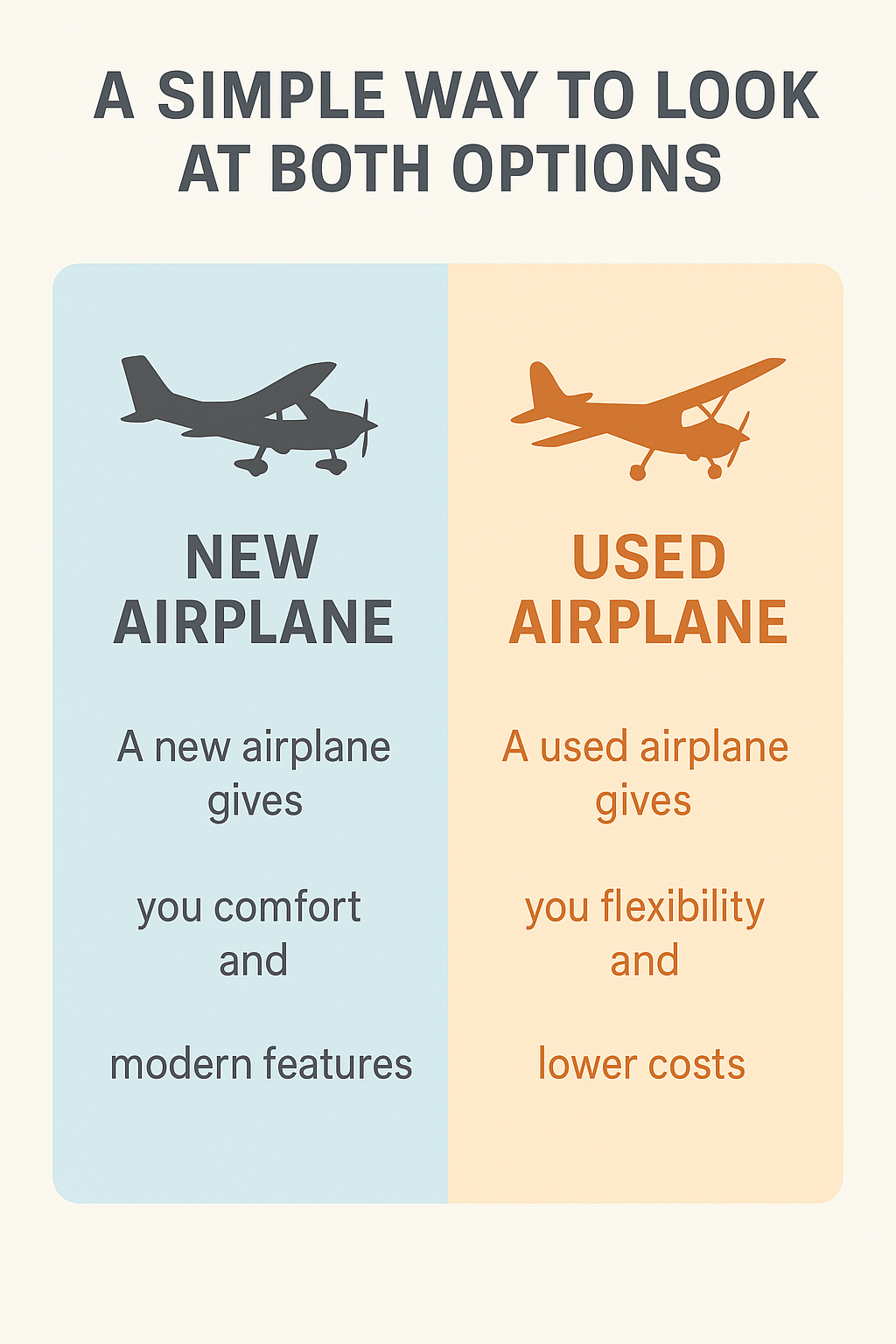
The best choice always connects to how you fly, how much you want to spend, and how you view upgrades and future value. Some people love the experience of ordering a new airplane. Others enjoy the challenge of bringing a used airplane up to their personal standards.
The good news is that both paths work. The airplane world has something for every kind of pilot, student, business owner, and family flyer. No choice is wrong. Each one simply fits a different type of owner. And once you make your pick, the real fun begins — flying, learning, and enjoying what your airplane can do for you!
CONCLUSION
Choosing between new and used options is a major choice, but it becomes clearer when you match your mission, budget, and long-term plans. You now know how prices shift, how value works, and how each market affects both costs and upgrades. No two buyers are the same, but the right path always comes from careful planning and simple, steady thinking. If you want help comparing options or searching for the right airplane, visit Flying411 to learn more about NEW VS. USED AIRCRAFT MARKETS: WHAT BUYERS NEED TO KNOW.
FAQs
1. WHAT MAKES A USED AIRPLANE HOLD ITS VALUE LONGER?
A used plane often loses value more slowly because earlier depreciation has already happened, and buyers can review its full maintenance history.
2. HOW LONG DOES AN AIRCRAFT PURCHASE USUALLY TAKE?
The process can take weeks or months based on inspections, paperwork, financing, and availability in the buyer’s chosen category.
3. DO NEW AIRCRAFT COME WITH BETTER SUPPORT OPTIONS?
Many new airplanes come with factory warranties, service plans, and stronger tech support, depending on the manufacturer.
4. WHAT SHOULD FIRST-TIME BUYERS CHECK BEFORE MAKING AN OFFER?
Buyers should review logs, damage history, engine times, avionics, and upcoming maintenance items before making a decision.
5. HOW DO MARKET SHIFTS AFFECT AIRPLANE PRICES?
When demand changes or inventory rises, airplane prices can move quickly, affecting both new and used market segments.