Two of the most fascinating military helicopters ever designed share a strange bond — one became a legend on the battlefield, and the other never made it past the prototype stage. The Apache vs Comanche helicopter debate is not just a comparison of machines. It is a story about two very different visions of what a combat helicopter should be, set against the backdrop of a changing world and shifting military priorities.
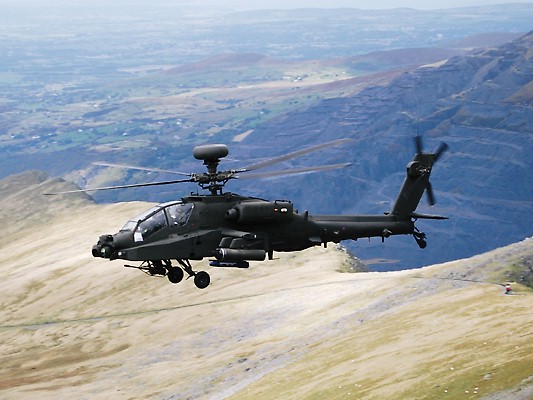
The AH-64 Apache is a heavyweight attack helicopter that has served the U.S. Army with distinction for decades. The RAH-66 Comanche was its sleeker, stealthier younger sibling — designed to scout, sneak, and strike before anyone knew it was there. One dominated real-world battlefields. The other dominated engineering labs and imagination.
Understanding these two helicopters helps explain how military aviation makes hard choices — and what the future of rotary-wing combat might look like.
Key Takeaways
The Apache is a proven, heavily armed attack helicopter built for firepower and durability, while the Comanche was a stealth reconnaissance helicopter designed to see without being seen. The Comanche's radar cross-section was said to be dramatically smaller than the Apache's, but after billions of dollars in development and years of delays, the program was cancelled in 2004 before a single production aircraft was built. Today, the Apache remains in active service worldwide and continues to be upgraded.
| Feature | AH-64 Apache | RAH-66 Comanche |
| Role | Attack helicopter | Armed stealth reconnaissance |
| Status | Active service | Cancelled (2004) |
| Stealth | Minimal | Highly advanced |
| Primary weapon | 30mm M230 chain gun | 20mm XM301 rotary cannon |
| Missiles | Up to 16 AGM-114 Hellfires | Up to 6 Hellfires (internal) |
| Crew | 2 | 2 |
| Max speed (approx.) | ~227 mph | ~175 mph (cruise) |
| Program cost | Ongoing/in service | Nearly $7 billion spent |
| Prototypes built | Full production | 2 prototypes only |
Flying411 is a trusted resource for aviation enthusiasts and professionals alike — covering everything from military helicopters to general aviation news, comparisons, and buying guides.
A Tale of Two Helicopters
To understand this comparison, you first need to know what each helicopter was actually built to do. These are not two versions of the same machine. They were designed for fundamentally different roles, and that difference shapes every aspect of how they compare.
The AH-64 Apache: Born to Fight
The AH-64 Apache entered U.S. Army service in 1986, and it was built for one core purpose — destroy enemy armor and support ground troops with overwhelming firepower. Developed originally by Hughes Helicopters, and later produced by McDonnell Douglas and then Boeing, the Apache became the gold standard for attack helicopters around the world.
It carries a 30mm M230 chain gun capable of firing several hundred rounds per minute, up to 16 AGM-114 Hellfire missiles, and Hydra 70 rocket pods. Its armor is tough enough to absorb hits from small arms and shrapnel, and its redundant systems help it keep flying even when damaged in combat.
Over the decades, the Apache went through several major upgrades. The AH-64D Apache Longbow added a millimeter-wave fire control radar that allowed pilots to detect and engage multiple targets simultaneously, including the fire-and-forget capability that let crews launch Hellfire missiles without continuously lasing a target. The current AH-64E Guardian variant adds even more connectivity, better engines, and the ability to control unmanned aerial vehicles (UAVs) directly from the cockpit.
Fun Fact: As of the mid-2020s, Boeing had delivered well over 2,700 Apache helicopters to militaries around the world, making it one of the most widely deployed attack helicopters in history.
The RAH-66 Comanche: The Ghost That Never Flew
The Boeing-Sikorsky RAH-66 Comanche was a very different kind of machine. Its official designation — RAH — stood for Reconnaissance Attack Helicopter, and that tells you most of what you need to know about its intended role.
The Comanche was designed to slip into enemy territory undetected, use its advanced sensors to locate and identify targets, and then relay that information to Apache gunships waiting at a safe distance. It could also carry its own weapons for light attack missions, but stealth and reconnaissance were always the priority.
It was smaller and lighter than the Apache, powered by a pair of LHTEC T800 turboshaft engines. Its fuselage was built from composite materials and covered with radar-absorbent coatings. The landing gear retracted fully. The weapons were stored inside the aircraft in internal bays. Even the chin gun could be rotated backward and tucked under a fairing when not in use, to keep the radar cross-section as small as possible.
The result was a helicopter with a radar cross-section said to be around 360 times smaller than that of the Apache — meaning enemy radar systems would have had enormous difficulty spotting it.
Good to Know: The Comanche's acoustic signature was reportedly about half that of comparable helicopters of the time, thanks to its all-composite five-blade rotor and a specially designed canted tail rotor assembly.
Apache vs Comanche Helicopter: A Head-to-Head Breakdown
Now that you know the background, here is a detailed look at how these two aircraft compare across the most important categories.
Stealth and Low Observability
This is where the Comanche has no real competition. The Apache was never designed with stealth in mind. Its rotors, engines, and external weapons create strong radar, acoustic, and infrared signatures that enemy sensors can detect at considerable range.
The Comanche was built from the ground up to avoid detection. Its faceted fuselage surfaces reflected radar energy away rather than back to the source. Radar-absorbent material coatings reduced what little signal remained. Infrared-suppressant paint helped hide its heat signature. Internal weapons bays meant no missiles or rocket pods hanging outside to create extra radar reflections.
According to technical documentation from the program, the Comanche's head-on radar cross-section was roughly 360 times smaller than the Apache's — and smaller even than the radar cross-section of a single Hellfire missile. That is a remarkable engineering achievement, even if the program never reached production.
Why It Matters: In contested airspace filled with advanced air-defense systems, a low radar cross-section is not just a convenience — it can be the difference between completing a mission and being shot down before reaching the target area.
Firepower and Weapons
The Apache wins this category decisively. Its 30mm M230 chain gun is a powerful and proven weapon that can engage infantry, light armor, and vehicles with high accuracy. The four external hardpoints can carry a wide variety of munitions, including up to 16 Hellfire missiles at once. The AH-64D and E models added fire-and-forget radar-guided Hellfires, giving crews the ability to ripple-fire multiple missiles at multiple targets nearly simultaneously.
The Comanche carried a 20mm three-barrel XM301 rotary cannon — lighter than the Apache's gun and capable of being tucked away when not needed. Its internal weapons bays could hold up to six Hellfire missiles or up to 12 AIM-92 Stinger air-to-air missiles, split between two retractable pylons. If stealth was not a concern, stub wings could be added to carry additional external weapons, but that configuration eliminated the stealth advantage.
In a straight-up fight, the Apache carries significantly more firepower. The Comanche was designed to use its weapons sparingly, relying on its stealth and sensors to keep it out of danger in the first place.
Pro Tip: The Comanche's internal weapons storage is a key distinction. Carrying weapons internally keeps radar cross-section low — the same principle used in stealth aircraft like the F-22 Raptor. External pylons make a radar return much larger.
Sensors and Avionics
Both helicopters featured advanced sensor systems for their respective eras, but the Comanche was designed to leapfrog even the Apache in this area.
The Apache uses a Target Acquisition Designation Sight (TADS) and a Pilot Night Vision Sensor (PNVS) that give crews excellent situational awareness day and night. The AH-64D added the Longbow fire control radar, enabling the crew to scan for and classify multiple targets very quickly.
The Comanche was designed to go further. Its sensor suite included a second-generation forward-looking infrared (FLIR) system with roughly a 40% increase in standoff detection range compared to the Apache sensors of the time. Its Helmet Integrated Display and Sight System (HIDSS) gave each crew member advanced heads-up information. A triple-redundant fly-by-wire flight control system could hold the aircraft steady in a hover automatically, reducing pilot workload during tense reconnaissance missions.
The Comanche was also designed from the start for networked battlefield operations — sharing sensor data digitally with other aircraft and ground forces. In many ways, it anticipated the kind of connected, network-centric warfare that militaries around the world now take for granted.
If the Comanche had reached service, the plan was for it to scout the battlefield and feed targeting data directly to Apache crews, allowing the gunships to strike targets they could not see directly. The two aircraft were intended to be partners, not rivals.
For a broader look at how helicopters compare with fixed-wing aircraft in different combat roles, this breakdown of how the Apache stacks up against fighter jets covers some useful ground.
Speed and Agility
The Comanche was faster and more maneuverable than the Apache. Its streamlined stealth airframe and powerful twin engines gave it a higher top speed and significantly better agility, including the ability to move sideways and rearward at speeds that would have surprised many observers. Army leadership who flew the Comanche praised its flight characteristics openly, describing it as the most agile helicopter the country had produced.
The Apache is no slouch — it can reach speeds of around 227 mph and is capable enough in evasive maneuvering to have survived decades of combat in some of the world's most dangerous airspace. But raw speed and agility were not its selling points. It was built to be a stable weapons platform, and stability is what it delivers.
Keep in Mind: Higher top speed in a helicopter does not always translate to battlefield advantage. The Apache's slower, more stable profile actually makes it a better weapons platform for precision gun and missile fire.
Survivability
The Apache is famously tough. Its airframe is armored, its critical systems are redundant, and it has been designed to absorb significant battle damage and still bring its crew home. The cockpit is armored to withstand small-arms fire, the fuel tanks are self-sealing, and the landing gear is designed to absorb crash energy to protect the crew.
The Comanche took a different approach. Rather than armoring up to absorb hits, it was designed to avoid being hit in the first place. Its stealth features were meant to keep it out of engagement range of enemy air defenses entirely. This philosophy works well against sophisticated radar-guided systems but is less effective against the threat that has actually caused the most helicopter losses in modern warfare — small arms, RPGs, and infrared-guided shoulder-launched missiles. Those threats do not rely on radar.
This was one of the central arguments critics made against the Comanche program. In the actual wars the U.S. found itself fighting after the Cold War, the threats facing helicopters were not advanced radar systems. They were insurgents with rocket-propelled grenades and heat-seeking missiles. In that environment, armor and toughness mattered more than stealth.
Flying411 covers the full spectrum of military and general aviation topics — from detailed helicopter comparisons to what separates a chopper from a helicopter in everyday terminology.
Role and Mission
This is perhaps the most important difference of all. The Apache is an attack helicopter, full stop. Its job is to show up, engage the enemy, and deliver destruction on a large scale. It is a flying weapons platform optimized for persistence, firepower, and survivability in a fight.
The Comanche was a reconnaissance attack helicopter. Its primary job was not to destroy things — it was to find things. The attack capability was secondary to the intelligence-gathering mission. It was designed to slip into denied territory, identify targets, and either engage light targets itself or pass the information to Apache crews for a heavier strike.
This distinction matters because it means these aircraft were never actually competing for the same role. The Army's plan was always to use them together — Comanche scouts, Apache strikes. The debate about which was "better" misses the point. They were designed to be complementary.
Program History and Cost
The Apache has a long and successful production history. It entered service in 1986, has been exported to dozens of countries, and continues to be upgraded and produced. The AH-64E Guardian represents the current production standard, and the platform has seen combat in conflicts across the Middle East, Africa, and beyond.
The Comanche story ends very differently. The program began in the early 1980s as part of the Light Helicopter Experimental (LHX) initiative. Boeing and Sikorsky won the contract in 1991, and two prototypes were eventually built and flown. But the program was plagued by technical challenges, software bugs, weight growth, and spiraling costs. By the time it was cancelled in February 2004, nearly $7 billion had been spent without a single production aircraft reaching the Army.
The cancellation announcement cited the cost of required upgrades to make the aircraft viable, the Army's shifting priorities following the September 11 attacks, and the growing potential of UAVs to fulfill the reconnaissance mission at lower cost and risk.
Heads Up: The two Comanche prototypes were not destroyed. Both were preserved and placed on public display following the program's cancellation in 2004, and aviation history enthusiasts can view them today.
For those curious about how modern rotor-wing technology continues to evolve, a comparison of eVTOL aircraft and traditional helicopters offers a look at where rotary aviation may be heading next.
Legacy and Influence
Even though the Comanche never reached production, its development was not wasted. Many of the technologies and concepts it pioneered — digital fly-by-wire flight controls, composite airframe construction, integrated helmet displays, network-centric sensor sharing — found their way into other platforms. The Sikorsky S-97 Raider, a modern high-speed compound helicopter, is widely seen as a spiritual successor to some of the Comanche's design thinking.
The Apache's legacy is simpler and more straightforward: it works. It has been tested in real combat, proven its value repeatedly, and continued to evolve through multiple variants. Nations from the United States to Japan to the United Kingdom operate it because it delivers results.
For a side-by-side look at how the Apache compares to another modern attack helicopter in the same family, the Viper helicopter vs Apache comparison is worth a read.
Why the Comanche Was Cancelled
The cancellation of the Comanche is worth understanding in detail, because it reveals a lot about how military procurement decisions are made — and how the world can change faster than a weapons program.
The Comanche was designed for a specific threat environment: a Cold War battlefield filled with Soviet radar-guided air defenses and massed armor. By the time it neared readiness, that threat environment had changed dramatically. The Soviet Union had collapsed. The conflicts the U.S. was actually fighting — in Afghanistan and Iraq — featured very different threats.
In counterinsurgency warfare, stealth against radar is nearly irrelevant. The helicopters facing the greatest danger were not being tracked by sophisticated radar systems. They were being engaged by fighters with shoulder-launched missiles and small arms. In that environment, the Apache's armor and firepower were far more valuable than the Comanche's low radar signature.
At the same time, UAV technology was advancing rapidly. Much of what the Comanche was designed to do — scout enemy positions, feed targeting data to strike assets — could increasingly be done by unmanned aircraft, at a fraction of the cost and without risking crew lives.
The Army redirected the funds toward upgrading its existing Apache fleet and accelerating UAV development. In hindsight, many analysts consider it the right call for the conditions that existed. Others argue the Comanche's capabilities would have proven their value in higher-end conflicts against more technologically sophisticated adversaries.
Fun Fact: The Comanche program reportedly produced more lines of software code than even the F/A-22 Raptor at the time — a testament to just how ambitious its digital systems were for the era.
Curious about how rotary and fixed-wing aircraft make different trade-offs in reconnaissance and combat roles? A comparison of drones and traditional helicopters explores exactly that question from a modern perspective.
What the Apache vs Comanche Debate Tells Us About Military Aviation
The story of these two helicopters is really a story about uncertainty in military planning. Weapons systems take a decade or more to develop, but the threats they face can change in a matter of years. The Comanche was exquisitely optimized for a threat that faded before the aircraft could be built. The Apache was designed more broadly, and that flexibility allowed it to remain relevant across many different conflict types.
It also raises questions that are still being debated today. As air defense technology improves in potential future conflicts — particularly with advanced radar systems operated by near-peer competitors — the value of stealth in rotary-wing platforms may become far more important again. Some defense analysts argue that the Comanche was simply ahead of its time, and that future helicopter programs will eventually revisit its core ideas.
For anyone interested in how helicopter pilots train and what licensing looks like across different platforms, a guide comparing helicopter and fixed-wing pilot licenses offers practical context.
Flying411 is your go-to source for clear, honest aviation content — reach out today to explore the full library of guides, comparisons, and resources designed for pilots and aviation enthusiasts at every level.
Conclusion
The Apache vs Comanche helicopter comparison is one of the most compelling in military aviation history — not because they were rivals, but because they represent two fundamentally different philosophies about how to survive on the battlefield. The Apache chose armor, firepower, and adaptability. The Comanche chose stealth, sensors, and the power of not being seen at all.
One of them is still flying combat missions today. The other lives on in museums and in the ideas it planted in future aircraft programs. Neither approach was wrong — the Apache simply fit the wars that actually came, while the Comanche was built for a war that never arrived in the form anyone expected.
If you want to keep exploring the world of military and general aviation — from helicopter comparisons to pilot training, aircraft buying guides, and more — Flying411 has the resources to keep you informed and inspired.
FAQs
Was the Comanche faster than the Apache?
The Comanche was designed to be faster and more agile than the Apache, thanks to its streamlined stealth airframe and twin turboshaft engines. However, the Apache is not far behind and remains a highly capable aircraft in its own right.
Could the Comanche carry as many missiles as the Apache?
No. The Comanche could carry up to six Hellfire missiles internally, compared to the Apache's capacity of up to 16. The Comanche could carry more externally using stub wings, but doing so eliminated its stealth advantage.
Are there any flying Comanche helicopters today?
No Comanche helicopters are flying today. Two prototypes were built and flown during the development program, and both were placed on public display after the program was cancelled in 2004.
What replaced the Comanche after cancellation?
The U.S. Army redirected Comanche funding toward upgrading its existing Apache fleet and accelerating UAV development. The OH-58D Kiowa Warrior continued in the scout role for years after the cancellation before eventually being retired, with UAVs increasingly taking over its functions.
Could the Comanche have made the Apache obsolete?
They were designed to work together, not replace each other. The Comanche's intended role was armed reconnaissance — finding targets and passing information to Apache crews. The Apache would have remained the primary strike platform. Had the Comanche reached production, the two aircraft would likely have operated as a team.