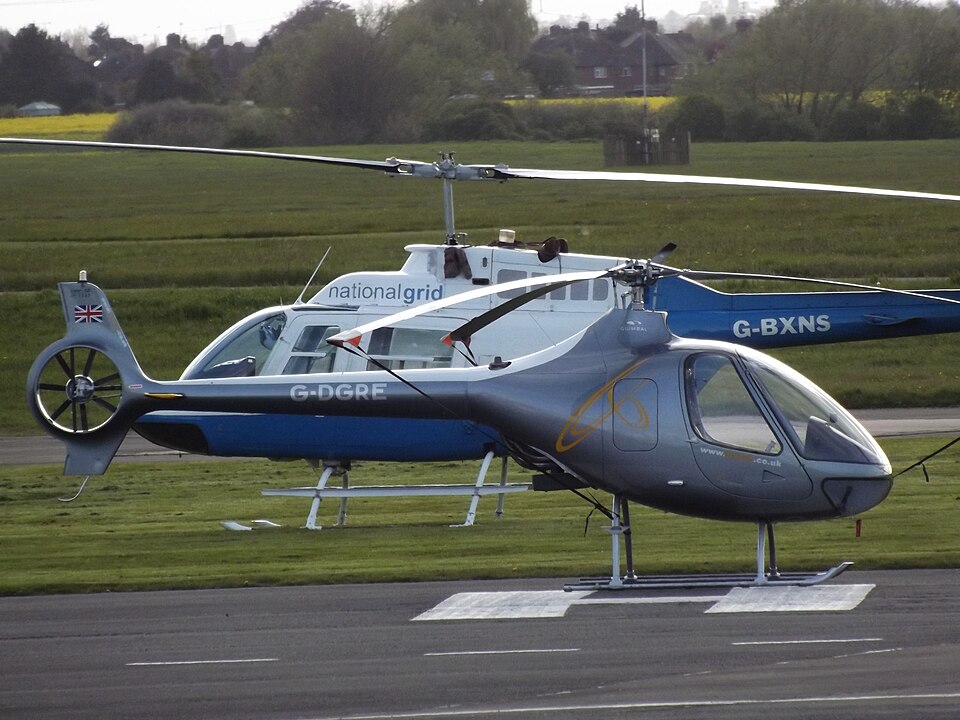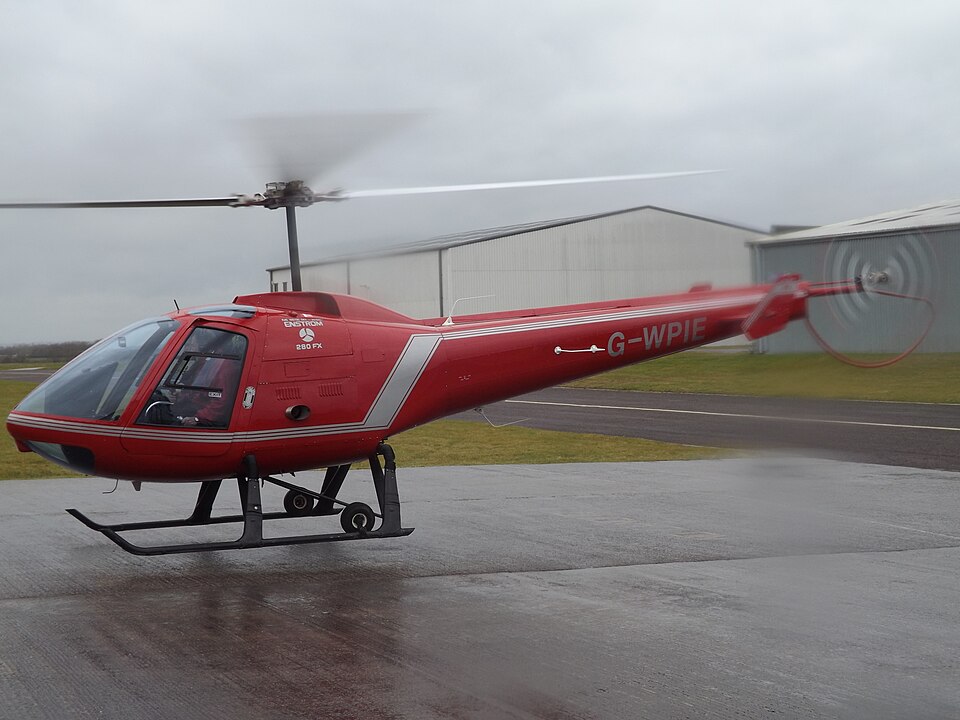
Two light piston helicopters. Two very different ways of getting into the air. On one side sits the Robinson R44 Raven, a four-seat workhorse you see almost everywhere. On the other sits the Enstrom 280, a three-seat machine with a smooth, articulated rotor and a loyal following.
Both are single-engine, both sip avgas, and both let a private pilot own a real helicopter without stepping up to a turbine.
The Robinson R44 Raven vs Enstrom 280 question comes down to what you value most once you strip away the shine. One of them is built around popularity and speed. The other is built around a rotor system that flies like it's on rails.
Key Takeaways
The Robinson R44 Raven carries four people, cruises a little faster, and has a huge support network, while the Enstrom 280 seats three, flies on a smoother three-blade articulated rotor, and often costs less to buy used. Your best pick depends on how many seats you need, how much you fly, and how easy you want parts and service to be.
| Feature | Robinson R44 Raven | Enstrom 280 |
| Seats | 4 (1 pilot + 3) | 3 (1 pilot + 2) |
| Main rotor | Two-blade teetering (semi-rigid) | Three-blade fully articulated |
| Engine | Lycoming O-540 / IO-540 piston | Turbocharged Lycoming HIO-360 piston |
| Cruise speed | Around 110 to 113 knots | Around 95 to 100 knots |
| Range | Roughly 300 nautical miles | Roughly 210 to 230 nautical miles |
| Best-known for | Popularity, speed, resale | Smooth ride, tough rotor, high-altitude power |
| Support network | Very large and global | Smaller and more specialized |
Flying411 is an online aviation marketplace where buyers and sellers connect over aircraft, engines, and parts, so comparisons like this one are a natural place to start your search.
Meet the Robinson R44 Raven
The Robinson R44 Raven is a four-seat, single-engine helicopter that has become one of the most common piston helicopters in the world. Robinson first delivered the R44 in the 1990s, and it quickly earned a reputation for doing a lot for the money. It gives you real four-seat capability at a price that put helicopter ownership within reach of far more people.
The Raven comes in two main flavors. The Raven I uses a carbureted Lycoming O-540 engine. The Raven II upgrades to a fuel-injected IO-540 that produces around 245 horsepower and holds power better in hot or high conditions. The two versions look nearly identical from the outside, and the differences between the Raven I and Raven II mostly show up in engine behavior, altitude performance, and payload. If you want to understand how those two stack up, the split between Raven I and Raven II is worth a closer look on its own.
A few things define the R44 experience:
- Hydraulically boosted controls that reduce the muscle needed on the cyclic and collective
- A two-blade teetering main rotor that keeps the design light and simple
- An open cabin with four seats and good outward visibility
- A large global network of dealers, mechanics, and flight schools
There is also a float-equipped cousin called the Clipper, and if water landings interest you, the Clipper compared to the Raven shows how that variant changes the mission. For most buyers, though, the standard Raven is the starting point.
Good to Know: The R44 is widely described as one of the best-selling civilian helicopters ever built. That popularity is a feature in itself, because it means parts, training, and resale buyers are almost always easy to find.
Meet the Enstrom 280
The Enstrom 280 is a three-seat, single-engine helicopter with a personality all its own. Enstrom has been building small piston helicopters in the United States since the 1960s, starting with the F-28. The 280 is the more aerodynamic, more streamlined member of that family, and the sleekest version, the 280FX, wears the nickname "Shark" for its pointed nose and clean lines.
Under the skin, the 280 does things differently from the Robinson. It uses a turbocharged Lycoming HIO-360 piston engine. The turbocharger helps the helicopter keep its power as the air gets thin, which is a real advantage in the mountains or on hot days. The 280 also rides on a three-blade, fully articulated rotor with high inertia, a design that feels smooth and planted in the air.
Enstrom leaned into comfort and control as selling points:
- NASA-inspired foam seats for a comfortable ride on longer flights
- A wide cockpit with overhead and chin windows for a broad field of view
- An unblocked tail rotor that gives strong yaw control even in gusty wind
- A rotor system with a reputation for toughness
Fun Fact: The Enstrom 280 line is said to have been praised by a major magazine as one of the best factory-made products in the country back in its heyday. Its shark-like shape has kept it recognizable on the ramp for decades.
The trade-off is size and reach. The 280 seats three instead of four, and Enstrom built far fewer aircraft than Robinson did. That smaller footprint shapes almost everything about ownership, from parts to resale, which we get into below.
Robinson R44 Raven vs Enstrom 280: The Core Differences
Here is where the two helicopters really separate. Both fly, both hover, and both can carry you and a friend somewhere fun. But the way they do it, and the way they fit into your budget and mission, is where the decision gets made. Below are nine differences that matter most when you put these two side by side. This is a light helicopter comparison built around real ownership questions, not just spec-sheet bragging rights.
1. Seats and Cabin Space
The most obvious difference is people. The R44 seats four, with two in front and two in back. The Enstrom 280 seats three, with one pilot up front and two passengers beside or behind, depending on the layout. If you regularly fly with a full family or a small group, that fourth seat in the Robinson is hard to give up. If you mostly fly solo or with one passenger, the Enstrom's three seats are plenty.
2. Rotor System
This is the heart of the matter. The R44 uses a two-blade teetering rotor, sometimes called semi-rigid. It is light, simple, and responsive. The Enstrom 280 uses a three-blade fully articulated rotor system with hinges that let each blade move on its own. Articulated rotors tend to feel smoother and more stable, especially in turbulence, while teetering rotors are simpler and cheaper to maintain. Neither is "right." They are two philosophies.
3. Engine and Power Delivery
The Robinson runs a normally aspirated O-540 or IO-540. It makes good power at low altitude and does the job well for most flying. The Enstrom runs a turbocharged piston helicopter engine, the HIO-360, which keeps its punch as you climb. On a hot day at a mountain airport, the turbocharged Enstrom holds performance that a normally aspirated engine would slowly lose. If you fly high and hot often, that matters a lot.
4. Speed and Range
The R44 is the quicker of the two. It cruises at roughly 110 to 113 knots and can stretch to around 300 nautical miles on a tank. The Enstrom 280 cruises closer to 95 to 100 knots with a range in the 210 to 230 nautical mile band and endurance of about three and a half hours. For point-to-point travel, the Robinson gets you there sooner and farther.
5. Ride Comfort and Noise
Three blades usually mean a smoother ride, and pilots often describe the Enstrom as gentle and planted. The foam seats add to that feel on longer flights. The R44 is comfortable too, but the two-blade rotor has a slightly different character in the seat. Comfort is personal, so a demo flight in each tells you more than any chart.
6. Low-G Handling and Safety Design
Two-blade teetering rotors carry a known caution called mast bumping, which can happen in low-G flight if the controls are handled abruptly. Robinson pilots train specifically to avoid low-G pushovers, and Robinson's own studies concluded the system is as safe as other teetering designs when flown correctly. Fully articulated rotors like the Enstrom's do not experience low-G mast bumping in the same way. Both aircraft have solid safety records when flown by trained pilots, so this is about design character, not a scoreboard.
7. Purchase Price
Used pricing tends to favor the Enstrom on the sticker. A used 280FX often trades in a lower band than a comparable used R44 Raven II. New Robinson pricing runs higher, reflecting its production scale and equipment. Sticker price is only the start, though, because what you spend after the sale often matters more.
8. Operating Cost and Parts
Both burn around 14 to 15 gallons an hour, so fuel is roughly similar. The bigger swing is parts and service. Robinson's scale means parts and mechanics are easy to find almost anywhere. Enstrom parts and specialists exist, but the network is smaller, which can mean longer waits or more searching. Reliable powerplants help either way, and if engine longevity is on your mind, a rundown of reliable helicopter engines puts the piston options in context.
9. Resale and Support Network
Popularity compounds. Because so many R44s exist, resale buyers are plentiful and values are well understood. The Enstrom's smaller fleet can mean a narrower buyer pool when you sell, though its fans are devoted. If easy exit and broad support rank high for you, the Robinson has the edge here.
Why It Matters: A cheaper purchase price can be erased by harder-to-find parts or a slower resale. Look at the full cost of ownership over the years you plan to fly, not just the number on the listing.
Here is a side-by-side snapshot of the specs that drive most of these differences:
| Spec | Robinson R44 Raven II | Enstrom 280FX |
| Seating | 4 | 3 |
| Engine | Lycoming IO-540, around 245 hp | Turbocharged Lycoming HIO-360 |
| Main rotor | 2-blade teetering | 3-blade fully articulated |
| Cruise speed | ~110 to 113 knots | ~95 to 100 knots |
| Range | ~300 nm | ~210 to 230 nm |
| Fuel burn | ~15 gph | ~14 to 15 gph |
| Service ceiling | ~14,000 ft | ~12,000 ft |
| Country of build | United States | United States |
How the Rotor Systems Change the Flying Experience
The rotor is where these two helicopters feel most different from the pilot's seat, so it deserves a closer look. A two-bladed teetering rotor works like a seesaw balanced on a central pivot. When one blade flaps up, the other flaps down. It is elegant, light, and cheap to build and maintain, which is a big reason the R44 can be priced the way it is. The trade-off is behavior in low-G flight, where the rotor is briefly unloaded and abrupt cyclic inputs can lead to trouble. Robinson trains hard against this, and the flying technique is simple once learned: avoid abrupt pushovers, use the collective to start descents, and slow down in turbulence.
A fully articulated rotor system works differently. Each blade sits on its own set of hinges and can flap, lead, and lag on its own. This gives the Enstrom its smooth, stable feel and removes the low-G mast bumping concern that comes with teetering designs. The high-inertia version on the Enstrom also keeps energy in the rotor, which pilots value during autorotation practice. The cost is complexity. More hinges mean more parts to inspect and maintain over time.
There is a practical middle ground here. Neither system makes a helicopter safe or unsafe on its own. Training, judgment, and maintenance do that. What the rotor choice really changes is the feel of the aircraft and the rhythm of its upkeep.
Heads Up: Any teetering-rotor helicopter, including the R44, calls for specific low-G training and disciplined technique. This is normal, well understood, and covered thoroughly in Robinson-specific instruction. It is a training point, not a reason for alarm.
Cost of Ownership: Price, Fuel, and Maintenance
Buying the helicopter is the easy part. Keeping it flying is where the real budget lives. Let's put the money side in plain terms.
Purchase price. Used Enstrom 280FX helicopters often list in a lower range than used R44 Raven II helicopters. New Robinson prices sit well above that, reflecting equipment and demand. So on day one, the Enstrom usually looks cheaper.
Fuel. Both helicopters burn roughly 14 to 15 gallons per hour, so at similar avgas prices, your fuel bill is close either way. Neither has a clear win here.
Maintenance and overhaul. This is the swing factor. Robinson runs on scheduled overhaul cycles, and because the fleet is so large, parts and labor are widely available. Enstrom maintenance is very doable, but the smaller network can mean fewer nearby specialists and occasionally longer part hunts. Over years of ownership, easy access can save real money and downtime.
Resale. The R44's popularity supports strong, predictable resale. The Enstrom holds a devoted niche, but the buyer pool is smaller, which can affect how quickly you sell and at what price.
A simple way to think about it:
- Lowest entry price: often the used Enstrom 280
- Easiest parts and service: the Robinson R44 Raven
- Most predictable resale: the Robinson R44 Raven
- Similar fuel burn: roughly a wash
Pro Tip: Before you buy or sell either helicopter, get a realistic market value first. You can value your aircraft to see where a specific airframe sits in today's market before you negotiate.
Flying411 lists new and used helicopters, engines, and certified parts, and also connects owners with A&P mechanics and MRO shops, which makes lining up service on either aircraft far simpler.
Which Helicopter Fits Your Mission?
The best pick depends entirely on what you plan to do. Both are excellent light helicopters. They just shine in different roles.
Choose the Robinson R44 Raven if you:
- Need four seats for family or small-group flying
- Want the fastest cruise and longest range of the two
- Value easy access to parts, mechanics, and training
- Care about strong, predictable resale down the road
The R44's four-seat layout makes it a natural family machine, and if that is your use case, a look at family helicopters and other four-seat options helps frame where it stands against similar aircraft.
Choose the Enstrom 280 if you:
- Mostly fly solo or with one passenger
- Want the smoothest ride and a rotor with no low-G mast bumping concern
- Fly at high altitude or in hot conditions where the turbocharger helps
- Like the idea of a lower entry price and a distinctive machine
For pilots who value the flying feel above all, the Enstrom's articulated rotor and turbocharged power make it a genuine pleasure in the mountains. It is a helicopter people tend to fall in love with rather than simply own.
Keep in Mind: Match the helicopter to your typical flight, not your dream flight. If ninety percent of your flying is one pilot and one passenger on short hops, the extra seat and speed of the R44 may sit unused while you pay for it.
If you are weighing this against turbine or larger options, it can help to zoom out. The best pick in the best light helicopter for private pilots conversation often depends on budget, mission, and how much upkeep you want to manage yourself.
Ready to compare real listings side by side? Browse current helicopters, engines, and parts on Flying411 and line up a mechanic or pre-buy inspection before you commit.
How They Compare to Other Light Helicopters
The R44 and the Enstrom 280 do not exist in a vacuum. Both compete with a range of other light piston and turbine machines, and seeing where they land against the field can sharpen your decision.
Robinson itself offers a turbine step-up, and buyers often weigh the piston R44 against it. The comparison between the R44 and the R66 shows what changes when you move from piston to turbine power. Another common face-off pits the R44 against a modern turbine single, and the R44 against the Bell 505 highlights how a piston four-seater stacks up against a pricier turbine option.
If your needs are smaller, the Enstrom's three-seat size lines up with a wider group of compact machines. A survey of small helicopters puts both of these aircraft in useful company and shows the trade-offs across the class.
A quick way to place them:
- Need four seats on a piston budget: the R44 Raven is a benchmark
- Want a smooth three-seat ride with altitude muscle: the Enstrom 280 stands out
- Thinking about turbine power later: compare the R66 and Bell 505 to set expectations
Quick Tip: Fly before you buy. A demo flight in each helicopter will teach you more about ride feel, visibility, and comfort than any spec sheet or comparison table ever could.
Conclusion
The Robinson R44 Raven vs Enstrom 280 decision is really a question about priorities. The R44 gives you four seats, more speed, longer range, and the comfort of a giant support network with predictable resale. The Enstrom 280 gives you a smoother three-blade articulated rotor, turbocharged power that loves altitude, a lower entry price, and a flying feel that owners rave about. Both are honest, capable light helicopters.
Neither is a mistake. The right one is simply the one that matches how you really fly and how you want to spend on upkeep.
Once you know which way you lean, the next step is finding the right airframe at the right price. Start your search, compare listings, and value your options on Flying411, where buyers, sellers, and aviation pros meet in one place.
Frequently Asked Questions
Is the Robinson R44 Raven safer than the Enstrom 280?
Both have solid safety records when flown by trained pilots. The main design difference is that the R44's teetering rotor calls for specific low-G training, while the Enstrom's articulated rotor avoids the low-G mast bumping concern by design.
How many people can each helicopter carry?
The Robinson R44 Raven seats four, including the pilot, while the Enstrom 280 seats three, including the pilot. That extra seat is one of the biggest reasons buyers choose the R44.
Why is the Enstrom 280 turbocharged and the R44 is not?
Enstrom designed the 280 with a turbocharged engine to hold power at higher altitudes and in hot conditions. The R44 uses a normally aspirated engine, which performs well at lower altitudes but loses some power as the air thins.
Which helicopter is cheaper to own long term?
Fuel burn is similar for both, so the real difference is parts and service. The R44's large support network usually makes parts, maintenance, and resale easier, which can lower long-term cost and downtime even if the Enstrom is cheaper to buy.
Is the Enstrom 280 a good first helicopter to own?
It can be a great choice for a solo or two-person pilot who values a smooth ride and altitude performance. The main trade-offs to plan for are the three-seat limit and a smaller parts and specialist network compared to the Robinson.