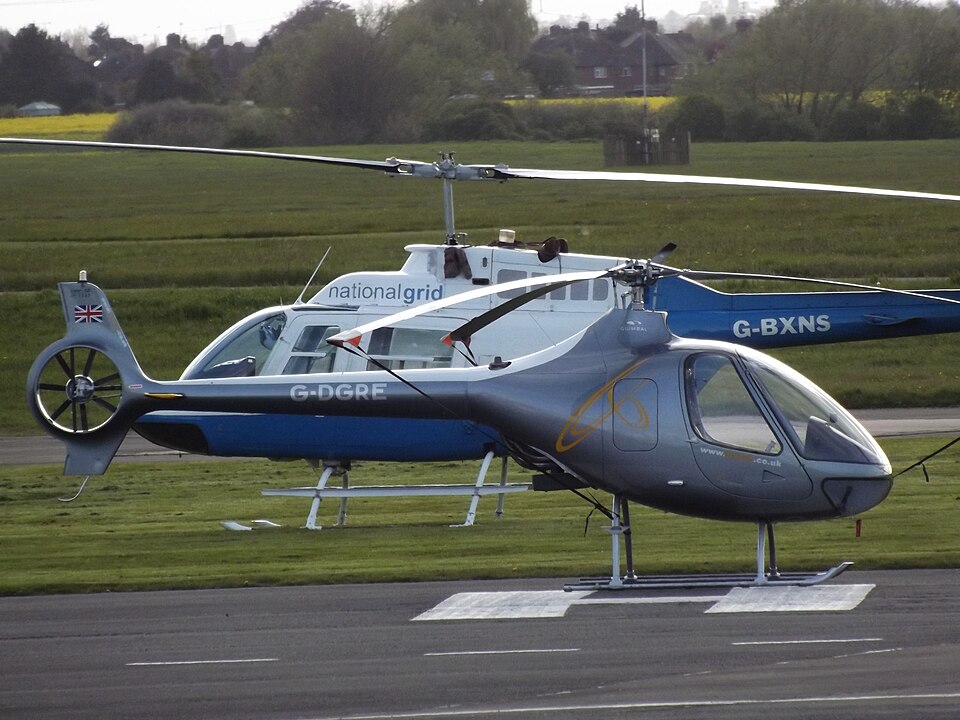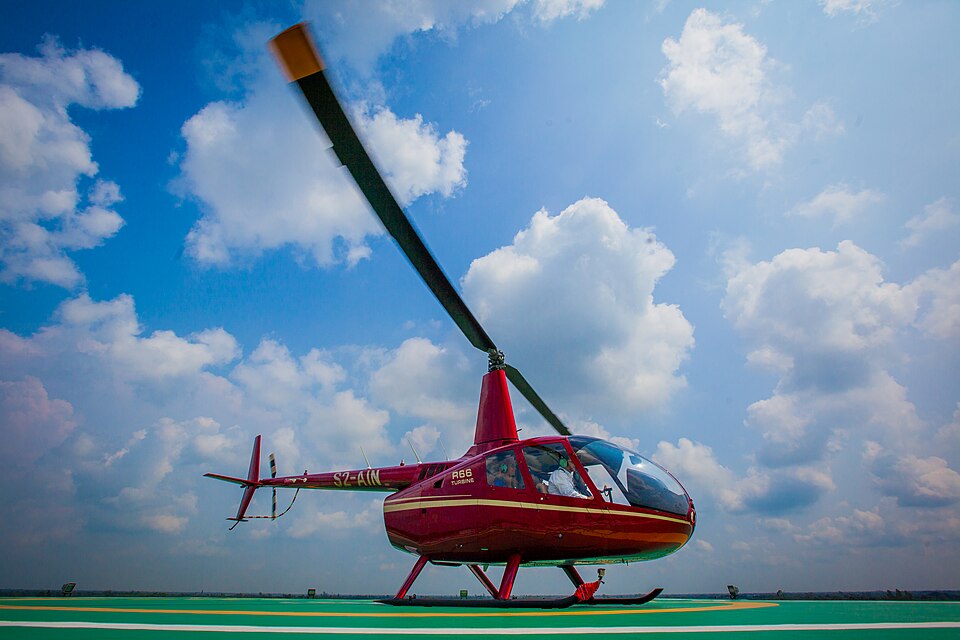
Two helicopters wear the Robinson badge and share the same rounded shape against the sky. One sips avgas and seats four. The other spins a turbine and seats five. The Robinson R44 vs R66 question comes up almost every time a pilot thinks about moving from training into ownership, or from piston flying into turbine life.
On paper, the two look like close cousins. In the air, and in your bank account, they behave like very different animals. The gap between them is smaller than the price tag suggests, and larger than the spec sheet lets on.
Key Takeaways
The short version is simple. The Robinson R44 is the budget-friendly piston helicopter, and the R66 is the turbine step-up with more room, more power, and a bigger price. The R44 fits training, personal flying, and tight budgets. The R66 wins when you need to carry five people, climb faster, handle heat and altitude, or enjoy the smoothness of a turbine. You pay roughly double for the R66, and it drinks more fuel each hour, but it hands you comfort and capability the R44 cannot reach.
| Feature | Robinson R44 (Raven II) | Robinson R66 |
| Engine | Piston (Lycoming IO-540) | Turbine (Rolls-Royce RR300) |
| Fuel | 100LL avgas | Jet A |
| Seats | 4 (1 pilot + 3) | 5 (1 pilot + 4) |
| Cruise speed | Around 110 to 117 knots | Around 110 to 120 knots |
| Baggage | Minimal, mostly under-seat | Dedicated hold, up to about 300 lb |
| Typical new price | Roughly half the R66 | Roughly double the R44 |
| Best fit | Training, personal, budget | Charter, utility, comfort |
If you are weighing these two Robinsons for a real purchase, Flying411 keeps live listings, specs, and seller details in one place, so the numbers stay easy to compare.
Meet the Two Robinsons
Robinson Helicopter Company has spent decades building simple, dependable rotorcraft that regular pilots can afford. The company grew from a small California hangar into one of the busiest helicopter makers in the world. Its light machines fill flight schools, tour operations, and private hangars across the globe.
The R44 and R66 sit right next to each other in the Robinson lineup. They look alike from a distance. Both use a two-bladed main rotor, a two-bladed tail rotor, and skid landing gear. Both use Robinson's clever T-bar cyclic, which frees up legroom and gives the pilot a wide range of control motion. Much of the R66's design grew straight out of the R44 that came before it. So the family resemblance is real. The differences hide under the skin.
Good to Know: The R66 shares its rotor diameter and much of its airframe layout with the R44. That shared DNA is part of why pilots can step from one to the other without relearning how to fly.
The R44 in Brief
The R44 is a four-seat piston helicopter that first flew in the early 1990s. The most common version today is the Raven II, which arrived in 2002 with a fuel-injected engine and wider rotor blades. It runs on 100LL aviation gasoline, the same fuel used by many small airplanes. It cruises comfortably, lands almost anywhere, and costs less to buy and run than most helicopters its size.
The R44 family has a few flavors. The Raven I uses a carbureted engine, while the Raven II uses a fuel-injected one. If you want the full breakdown of those two, the split between Raven I and Raven II is worth a look. There is also a float-equipped Clipper for water work and a stripped-down two-seat Cadet trainer built for flight schools.
The R66 in Brief
The R66 is a five-seat turbine helicopter that earned its FAA certification in 2010, with full production starting the following year. It was Robinson's first turbine model, built to reach markets where avgas is hard to find and jet fuel is everywhere. It carries a Rolls-Royce turbine, a wider cabin, a real baggage hold, and a fifth seat the R44 does not have.
The R66 gave Robinson a way to compete with bigger, pricier turbine singles while keeping the familiar Robinson feel. Pilots who fly the R44 find the R66 easy to move into, since the controls and layout carry over almost unchanged.
The Heart of the Difference: Piston vs Turbine
Everything else flows from one choice under the cowling. The R44 uses a Lycoming IO-540 piston engine, close in spirit to a big car engine. The R66 uses a Rolls-Royce RR300 turboshaft, a small jet-style turbine that spins the rotor.
That single swap changes the whole personality of the aircraft. A piston engine is cheaper to buy, cheaper per hour on fuel, and familiar to any pilot who trained on small planes. A turbine is smoother, more powerful for its weight, and far happier in thin, hot air. It also costs more up front and burns more fuel while running.
Think of it like the difference between a reliable four-cylinder truck and a smooth, strong turbo six. Both haul the load. One does it cheaply. The other does it with ease and extra muscle in reserve.
Fun Fact: Robinson is widely said to have built the turbine R66 partly because 100LL avgas is expensive and tricky to find in many countries. Jet A, which the R66 burns, is available almost everywhere airplanes fly.
Robinson R44 vs R66: 8 Differences That Decide the Choice
When buyers line up the Robinson R44 vs R66 side by side, the choice usually comes down to these eight points. Read them in order, and the right answer for your mission tends to reveal itself.
1. Engine Type: Piston vs Turbine
This is the big one. The R44's piston engine is simple, well understood, and cheap to feed. The R66's turbine is smoother, quieter in feel, and holds power better as you climb. Turbines also tend to run with fewer moving parts than pistons, and many operators like the peace of mind that comes with turbine reliability. If you want to understand what makes some powerplants stand out, this roundup of reliable helicopter engines adds useful context.
2. Fuel: Avgas vs Jet A
The R44 burns 100LL avgas at roughly 15 gallons per hour. The R66 burns Jet A at around 23 gallons per hour. So the R66 uses more fuel by volume. But Jet A often costs less per gallon than avgas and is easier to find outside North America and Europe. For pilots flying in remote regions or overseas, fuel access alone can tip the scale toward the R66.
3. Seating and Cabin Size
The R44 seats four, counting the pilot. The R66 seats five and gives everyone more elbow room. The R66 cabin is noticeably wider, and the pilot seat is roomier too. That extra width matters on long flights and with taller passengers. If cabin comfort ranks high for you, the R66 feels like a different class of machine. Buyers comparing cabins across the segment often line the R66 up against top passenger helicopters in its price range.
4. Speed and Range
Cruise speeds are close. The R44 settles around 110 to 117 knots. The R66 cruises around 110 to 120 knots. Range is fairly similar too, with both machines good for a few hundred nautical miles before a fuel stop. The R66 carries more fuel, near 74 gallons versus about 47 for the R44, so it can stretch its legs a bit further. Neither is a long-haul cruiser. Both shine on short and medium hops.
5. High and Hot Performance
Here the R66 pulls clearly ahead. Turbines love thin air, so the R66 climbs and hovers better on hot days and at high elevation. It can hover at high altitude and holds a strong rate of climb where a piston engine would gasp. If you fly in the mountains, in the desert, or anywhere hot and high, the R66 gives you a safety margin the R44 cannot.
Why It Matters: On a hot summer day at a mountain airport, thin air robs a piston helicopter of lift and power. The R66's turbine keeps much more of its punch, which can be the difference between a comfortable takeoff and a marginal one.
6. Baggage and Payload
The R44 has very little dedicated cargo room, mostly small spaces under the seats. The R66 was the first Robinson with a real cargo hold, able to carry up to about 300 pounds of luggage. That hold fits suitcases, gear, even golf clubs. The R66 also posts a higher useful load on paper. There is a catch, though, which brings us to the fuel trade-off below.
Heads Up: The R66 carries more fuel, and that fuel weighs a lot. Fill the tanks completely and much of the payload advantage shrinks. On longer legs with full fuel, both helicopters ask you to trade passengers or bags for range.
7. Purchase Price
Price is where the two split hardest. A new R44 Raven II typically lands somewhere in the high five-hundred-thousands once equipped. A new R66 usually starts near the million-dollar mark and climbs from there with options like glass avionics, air conditioning, and premium paint. On the used market, R44s often trade in the low-to-mid hundreds of thousands, while pre-owned R66s tend to sit in the high hundreds of thousands. As a rough rule, plan on roughly double the money for the R66.
8. Operating Cost and Maintenance
The R44 is cheaper to run per hour, mostly thanks to lower fuel burn and simpler engine work. The R66 costs more per hour because it burns more fuel and turbine service carries its own price. That said, turbine maintenance follows a predictable, scheduled rhythm, which some owners prefer over piston surprises. Both models are known for straightforward upkeep compared with heavier helicopters.
Pro Tip: When you compare the two, look past the fuel-burn number and add up total cost per hour, including reserves for overhaul. A turbine that burns more fuel can still pencil out well if you value the smoother ride, extra seat, and altitude performance.
Side-by-Side Spec Comparison
Numbers make the helicopter comparison easier to see at a glance. The figures below are approximate and shift with model year, options, and how each aircraft is loaded.
| Spec | Robinson R44 (Raven II) | Robinson R66 |
| Type | Piston single | Turbine single |
| Engine | Lycoming IO-540 | Rolls-Royce RR300 |
| Power (approx.) | Around 245 hp for takeoff | Around 270 shp for takeoff |
| Fuel | 100LL avgas | Jet A |
| Fuel burn (approx.) | About 15 gal/hr | About 23 gal/hr |
| Fuel capacity (approx.) | About 47 gal | About 74 gal |
| Seats | 4 | 5 |
| Cruise speed | Around 110 to 117 kt | Around 110 to 120 kt |
| Service ceiling | Around 14,000 ft | Around 14,000 ft |
| Gross weight | About 2,400 lb | About 2,700 lb |
| Dedicated baggage | Very limited | Up to about 300 lb |
| First certified | Early 1990s | 2010 |
Flying411's aircraft marketplace lets you filter R44 and R66 listings by year, hours, and price, so you can match a real airframe to the mission you have in mind.
Which One Fits Your Mission
The best choice depends entirely on what you plan to do. Neither helicopter is better in every way. Each is built for a slightly different job.
Best Picks for the R44
The R44 is the smart pick when budget and simplicity lead the list. It fits:
- Flight training and time-building, where low hourly cost matters most
- Personal and recreational flying for one to three passengers
- Short regional hops and quick errands by air
- First-time helicopter owners who want to keep costs down
- Aerial work like photography, patrol, and light survey close to home
If four seats and a modest budget cover your needs, the R44 delivers real value that is hard to beat in its class. Buyers weighing it against similar machines often review other four-seat options before deciding.
Best Picks for the R66
The R66 earns its higher price when you need more of everything. It fits:
- Carrying five people in real comfort
- Charter and light commercial work where passengers expect a smooth ride
- Hot and high operations in mountains, deserts, and warm climates
- Longer trips with luggage, thanks to the cargo hold
- Owners upgrading from piston to turbine who want familiar handling
If comfort, capability, and turbine smoothness top your wish list, the R66 is worth the stretch. Operators comparing it with other executive machines often line it up against business-class helicopters in the same bracket.
Keep in Mind: Buy the helicopter that matches your real mission, not the one that looks best on paper. A buyer flying short local hops rarely needs a turbine, while an operator carrying clients through summer heat rarely regrets one.
What They Cost to Own
Buying the aircraft is only the start. The bigger long-term number is what it costs to keep flying. Both Robinsons are on the affordable end of helicopter ownership, but they land in different spots.
For the R44, the main ongoing costs look like this:
- Fuel, at roughly 15 gallons per hour of avgas
- Routine maintenance and inspections on a piston engine and airframe
- Overhaul reserves, set aside for the scheduled major overhaul
- Insurance, hangar, and storage costs that apply to any helicopter
For the R66, the pattern is similar but shifts upward:
- Fuel, at around 23 gallons per hour of Jet A
- Turbine maintenance, on a scheduled and fairly predictable plan
- Overhaul reserves for the engine and airframe on their set intervals
- Insurance, hangar, and storage, often higher given the aircraft's value
The R44 usually wins on pure hourly cost. The R66 asks for more each hour but rewards you with capability. If you plan to sell or trade later, it helps to track the numbers early. You can even value your current aircraft to see where you stand before you upgrade.
Quick Tip: Ask any seller for the aircraft's logbooks and the hours remaining until the next major overhaul. Time left before overhaul has a big effect on both price and your near-term budget.
When you are ready to move from research to a real shortlist, start your search on Flying411 and reach out to sellers directly.
Common Myths and Misconceptions
A few ideas about these two Robinsons get repeated often and deserve a closer look.
"A turbine is always better." Not for every job. A turbine shines at altitude and in heat, and it feels smoother. But for short, low, local flying on a budget, the R44's piston engine does the job for far less money.
"The R66 carries a lot more people and gear." It carries one extra seat and a real baggage hold, which is a genuine step up. Yet fill the R66's larger tanks and the payload edge narrows, because fuel is heavy. Load planning matters on both.
"They fly completely differently." They do not. Robinson kept the controls and layout close, so pilots move between them with a short transition. The flying feel is familiar. The performance envelope is what changes.
"The R44 is only a trainer." It trains many pilots, true, but it also serves as a capable personal and light-work helicopter around the world. Calling it merely a trainer sells it short.
Conclusion
The Robinson R44 vs R66 choice really comes down to money against muscle. The R44 is the friendly, affordable light helicopter that gets pilots flying and keeps costs low. The R66 is the turbine upgrade that adds a seat, a cargo hold, and strong hot-and-high performance for buyers ready to spend more. Both share the same honest Robinson roots, so you cannot go wrong with either as long as it matches your mission.
Match the machine to the flying you plan to do, and the answer becomes clear.
Ready to see which Robinson fits your hangar and your budget? Browse current listings, compare real-world prices, and connect with sellers at Flying411.
Frequently Asked Questions
Can I fly an R66 with just my R44 experience?
The two handle very much alike, but the R66 is a turbine, so most pilots complete a turbine transition and any training their insurer requires before flying solo. The good news is that the familiar Robinson controls make that step shorter than moving to a completely different helicopter.
Does the R66 come with a glass cockpit option?
Yes, the R66 can be ordered with modern glass avionics, while older Robinsons relied on traditional electromechanical gauges. Exact avionics packages vary by model year and how the aircraft was configured at the factory.
How many passengers can each helicopter really carry with full fuel?
Both trade payload for fuel, so a full tank means fewer people or bags on board. With reduced fuel for shorter trips, the R44 comfortably takes three passengers and the R66 takes four, but longer legs with full tanks lower those numbers.
Is the R66 used for flight training like the R44?
The R44 and R22 are the more common training platforms because their piston engines cost less per hour. The R66 does appear in training and transition programs, though it is more often chosen for charter, personal travel, and utility work.
What is the overhaul interval for the R44 and R66?
Both follow scheduled overhaul programs measured in thousands of hours or a set number of years, whichever comes first. The exact interval depends on the specific model and any manufacturer service updates, so always confirm the current figures and the hours remaining on any aircraft you consider.