A passenger helicopter is part air taxi, part flying living room, and part rescue platform. The best passenger helicopters mix big cabins, smooth rides, twin-engine safety, and the kind of range that turns a long road trip into a one-hour hop.
Some are flying oil workers to platforms hours offshore. Others carry executives between rooftops or shuttle families to private islands. Together, these aircraft do a lot of heavy lifting in modern aviation.
But not every helicopter that carries people is built the same. Some are designed for short city hops with six passengers in plush leather seats. Others are sized to haul nearly 20 people across rough water in any weather.
A handful sit at the top of the industry, trusted by oil companies, governments, and even heads of state.
The line between a workhorse and a flagship is thinner than it looks at first glance.
Key Takeaways
The best passenger helicopters are twin-engine, medium to super-medium aircraft like the Sikorsky S-92, Leonardo AW139, Airbus H175, and Bell 525, each designed to carry between roughly 6 and 19 passengers in comfort and safety across long ranges. Pick one by matching seats, range, and cabin features to the trip type, then add operating cost and support network into the decision.
| Helicopter | Typical Passenger Capacity | Approx. Cruise Speed | Approx. Range | Common Use |
| Sikorsky S-92 | Up to 19 | ~151 kt | ~539 nm | Offshore, VIP, head-of-state |
| Leonardo AW139 | Up to 15 | ~165 kt | ~500+ nm | Offshore, EMS, VIP |
| Leonardo AW189 | Up to 19 | ~145 kt | Long-range | Offshore, SAR |
| Leonardo AW101 | Up to 30 | ~150 kt | Long-range | Government, SAR, military |
| Airbus H175 | Up to 18 | ~155 kt | ~590+ nm | Offshore, VIP |
| Airbus H160 | Up to 12 | ~160 kt | Medium-range | Corporate, EMS, offshore |
| Airbus H225 Super Puma | Up to 19+ | ~145 kt | Long-range | Offshore, SAR |
| Bell 525 Relentless | Up to 19 | ~160 kt | Long-range | Offshore, VIP, SAR |
| Bell 429 | Up to 7 | ~150 kt | Medium-range | Corporate, EMS, law enforcement |
Good to Know: Helicopter passenger capacity shifts based on configuration. A single airframe might seat 19 in a high-density offshore layout but only 8 in a VIP setup. Always read the spec sheet for the version you are pricing.
Flying411 keeps a steady pulse on the passenger helicopter market, with listings, parts, and service connections in one place for buyers and operators.
What Makes a Passenger Helicopter Stand Out
Helicopters built for moving people have to nail a short list of things at the same time. Speed alone is not the goal. A great passenger helicopter feels stable, hushed, and roomy while still earning its keep on cost per hour.
Here are the qualities that separate strong passenger machines from the rest:
- Twin-engine safety. Two engines mean the flight can continue safely if one fails. Most modern twin-engine helicopters in the passenger category are built around exactly this idea.
- Spacious, configurable cabins. Flat floors, sliding doors, and modular seats let one airframe serve VIP runs one day and offshore crews the next.
- Low cabin noise and vibration. Advanced rotors and vibration-damping systems make long flights feel less tiring.
- Modern avionics. Glass cockpits, autopilots, and synthetic vision lower pilot workload and improve safety.
- Strong range and endurance. A 500-plus nautical mile leg covers most offshore routes without a fuel stop.
- Reliable support networks. Parts and trained technicians matter as much as raw specs.
Why It Matters: A helicopter that ticks every spec box but lacks a strong service network can sit on the ground for weeks waiting on parts. Support is often the quiet decider in fleet choices.
How Passenger Helicopters Are Categorized
Manufacturers and operators usually group civilian helicopter models built for passengers by weight and capacity class. The class shapes the missions a helicopter is suited for and the cost of running it.
The main categories look like this:
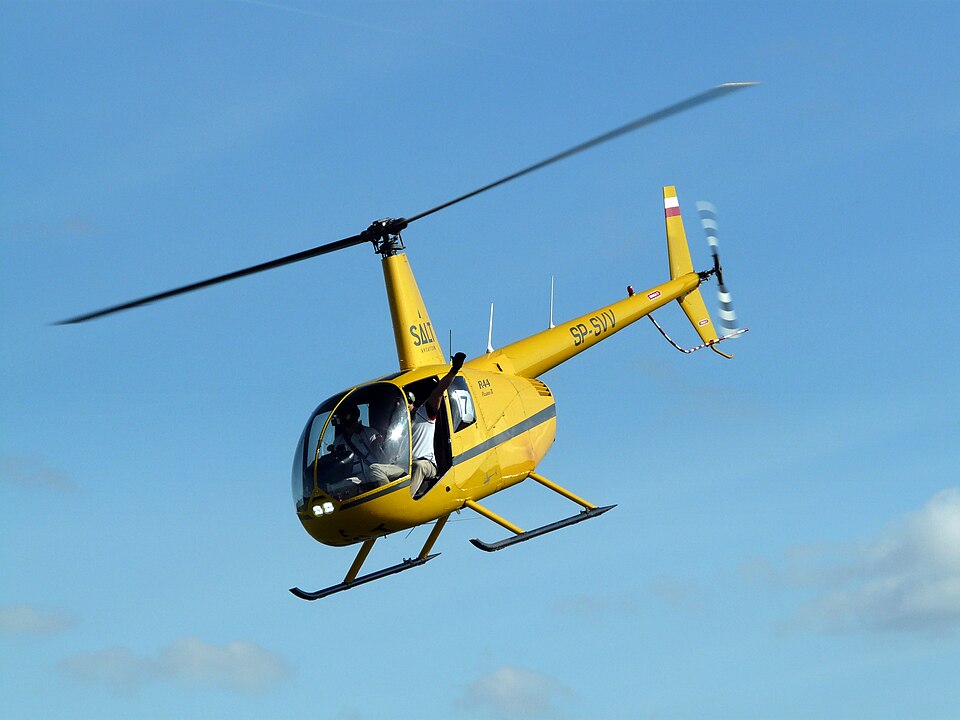
- Light single-engine. Small machines for short hops, training, or sightseeing. Limited passenger counts and shorter range.
- Light twin-engine. Aircraft like the Bell 429 or Airbus H145. Strong for corporate hops, EMS, and police work.
- Medium twin-engine. Workhorses like the AW139 or H160. Big enough for offshore and VIP, small enough to be efficient.
- Super-medium twin-engine. Long-legged platforms like the H175, AW189, and Bell 525, built mainly for offshore oil and gas.
- Heavy twin or three-engine. The S-92, H225, and AW101 sit here. Large cabins, long range, and the ability to fly through rough weather.
The bigger the aircraft, the more it can carry and the further it can fly. That comes with higher fuel burn, more crew, and steeper operating costs.
Quick Tip: Light twins win on price and flexibility for short trips. Super-mediums win on cabin comfort and range. Match the class to the typical mission, not the most extreme one.
9 Best Passenger Helicopters Worth Knowing
Here are nine models widely seen as leaders in passenger flying. They span medium, super-medium, and heavy classes, and each one earns its spot through a different mix of cabin size, range, comfort, and reputation.
1. Sikorsky S-92
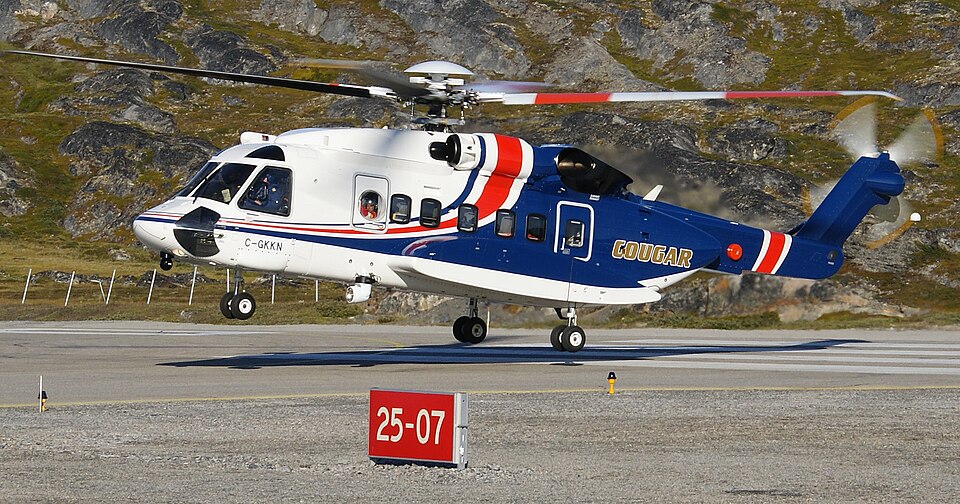
The S-92 is a heavy twin-engine helicopter built for long, demanding flights over water. It is one of the most recognized best business helicopter options for serious offshore and VIP transport helicopter missions.
- Typical seating: Up to 19 passengers in a stand-up cabin.
- Powerplant: Two General Electric CT7-8A turboshaft engines.
- Cruise speed: Around 151 knots, or roughly 173 mph.
- Range: Around 539 nautical miles.
- Common roles: Offshore oil and gas crew change, head-of-state transport, search and rescue.
The S-92 is widely associated with high-end government use. The Marine One fleet that flies the President of the United States is built on the same family of airframes. The cabin is tall enough to stand in, with a baggage area roughly 140 cubic feet large and crashworthy seats throughout.
Fun Fact: The Sikorsky S-92 is widely considered one of the workhorses of the offshore industry, with operators relying on it for long flights to oil platforms in some of the roughest seas on Earth.
2. Leonardo AW139
The AW139 is the intermediate-class champion. Since launching in the early 2000s, it has sold well over a thousand units and ended up in fleets across the offshore, EMS, VIP, and law enforcement worlds.
- Typical seating: Up to 15 passengers, with VIP variants set up for around 10.
- Powerplant: Two Pratt & Whitney Canada PT6C-67C turboshaft engines with FADEC.
- Cruise speed: About 165 knots.
- Range: Roughly 500-plus nautical miles, with longer figures using auxiliary fuel.
- Common roles: Offshore crew transport, EMS, VIP, parapublic.
The AW139 has the largest cabin in its class according to Leonardo, with a flat floor and big sliding doors on both sides. Many operators also choose it because the same airframe can be configured for VIP travel one week and oil-platform crews the next.
3. Leonardo AW189
Step up from the AW139 and you arrive at the AW189, Leonardo's super-medium offering. It is built for the kind of long offshore legs where every extra mile of range matters.
- Typical seating: Up to 14 passengers in many offshore layouts, with high-density versions seating more.
- Powerplant: Twin General Electric CT7-2E1 engines, or Safran Aneto-1K on the AW189K variant.
- Common roles: Offshore oil and gas, search and rescue, executive transport.
- Strengths: Spacious cabin, modern avionics suite, strong all-weather capability.
The AW189 is part of Leonardo's "AW Family" alongside the AW139 and the smaller AW169. That shared design philosophy means pilots and mechanics can move between the types more easily than across unrelated brands.
4. Leonardo AW101
The AW101 is one of the largest helicopters on this list. It serves both civilian and military operators and shows up in roles ranging from VIP government transport to large-scale search and rescue.
- Typical seating: Up to around 30 passengers in high-density configurations.
- Engines: Three turboshaft engines, which is unusual for civilian aircraft.
- Common roles: Government VIP, SAR, head-of-state, naval missions.
- Notable use: Variants serve as the CH-149 Cormorant SAR helicopter for the Royal Canadian Air Force and have been adopted by other national fleets.
A three-engine layout adds redundancy and lift, which is a big deal when flying long distances over open ocean or in mountainous terrain. The AW101 is not a typical corporate machine, but its passenger numbers and capability put it firmly in this list.
Heads Up: A three-engine helicopter is a rare bird in civilian aviation. The AW101 stands out for that alone, and it gives the aircraft the kind of redundancy normally seen only in large airliners.
5. Airbus H175
The H175 is Airbus' super-medium helicopter, sometimes badged as the ACH175 in luxury form. It launched commercial service in late 2014 and quickly carved out a place in offshore and VIP work.
- Typical seating: Up to 18 passengers in offshore layout. VIP versions seat 6 to 8 in plush configurations.
- Powerplant: Two Pratt & Whitney Canada PT6C-67E turboshaft engines.
- Cruise speed: Around 155 knots.
- Range: About 590 nautical miles in ferry configuration, with the ACH version pushing further with extra fuel.
- Common roles: Offshore transport, VIP, SAR.
According to Airbus, the H175 offers one of the largest cabin volumes in its class, with big windows that bring natural light into the cabin. Vibration levels are low and the cabin sound profile is quiet enough for normal conversation in flight.
6. Airbus H160
The H160 is a fresh-sheet design that targets medium-class missions. It is the first member of Airbus' new H generation and has some of the most distinctive aerodynamic features in the lineup.
- Typical seating: Up to 12 passengers in three rows of four.
- Powerplant: Two Safran Arrano turboshaft engines.
- Cruise speed: Around 160 knots.
- Common roles: Corporate and VIP transport, EMS, light offshore.
- Standout features: Blue Edge five-blade main rotor and a canted Fenestron tail rotor that helps cut external noise.
The H160 is widely promoted for quieter flight, which matters in city heliports and noise-sensitive neighborhoods. The Helionix avionics suite and electrical landing gear also push it forward as a modern medium helicopter.
Pro Tip: If trips often involve urban heliports or coastal communities, lower noise signature can actually open up routes that louder helicopters cannot fly during peak hours.
7. Airbus H225 Super Puma
The H225 is Airbus' heavy long-range helicopter, descended from the Super Puma family. It has been used heavily in offshore and SAR work, especially in challenging environments.
- Typical seating: Around 19 to 24 passengers depending on configuration.
- Engines: Two Turbomeca Makila turboshaft engines.
- Common roles: Offshore crew transport, search and rescue, military and parapublic missions.
- Strengths: Long range, large cabin, all-weather capability.
The H225 is built for missions where the helicopter might be over open ocean for hours at a time. As an offshore passenger helicopter, its size and range make it a natural choice for the toughest routes far from land.
8. Bell 525 Relentless
The Bell 525 is Bell's super-medium offering and a technological leader. It is widely promoted as the first commercial helicopter to use fly-by-wire flight controls.
- Typical seating: 16 passengers in the standard layout, with high-density configurations supporting up to about 20.
- Powerplant: Two General Electric CT7-2F1 engines, each rated at around 1,800 shaft horsepower.
- Cruise speed: Up to about 160 knots.
- Avionics: Garmin G5000H integrated touchscreen flight deck.
- Common roles: Offshore oil and gas, VIP, search and rescue.
The 525's cabin is famously flexible, with a flat floor and a "puck" system that lets seats be repositioned for different missions. Norwegian oil company Equinor placed an early order for ten 525s to operate in the North Sea, signaling strong industry interest.
9. Bell 429
The Bell 429 is the light twin in this list, and it earns its place by being one of the most popular smaller passenger and EMS helicopters in service.
- Typical seating: Up to seven passengers.
- Common roles: Corporate transport, EMS, law enforcement, SAR.
- Avionics: Bell BasiX-Pro integrated avionics system.
- Cabin: Flat floor with the widest cabin door opening in its class according to Bell.
The 429 is also the first helicopter designed using the Maintenance Steering Group 3 (MSG-3) process, a system originally used by commercial airlines. That focus on reliability and reduced downtime is a big part of why it is widely chosen for EMS work, where every hour out of service matters.
Keep in Mind: Smaller helicopters like the Bell 429 are not just downsized big helicopters. They are designed for different missions and trip lengths. Pairing the right size to the mission is half the battle in helicopter ownership.
For operators looking to expand or upgrade fleets, Flying411's marketplace lists new and pre-owned helicopters from Bell, Airbus, Leonardo, Sikorsky, Robinson, and more.
How These Helicopters Are Actually Used
A passenger helicopter rarely sits in just one role. Most of the airframes on this list move between mission profiles, sometimes within the same week.
The most common uses include:
- Offshore oil, gas, and wind crew transport. Long flights over rough water, often in poor visibility, require twin-engine safety and strong range.
- VIP and executive travel. Quiet cabins, leather seats, and rooftop-to-rooftop convenience save executives hours over driving.
- Search and rescue (SAR). Hoists, weather radar, FLIR cameras, and large cabins for rescue gear and stretchers turn passenger helicopters into life-saving platforms.
- Emergency medical services (EMS). A flat cabin floor and quick-change interior let the same airframe go from corporate flight to medevac in hours.
- Head-of-state transport. Heavy twins like the S-92 and AW101 carry presidents, prime ministers, and royal families.
- Disaster response and humanitarian missions. Big-cabin helicopters can move evacuees and supplies into places that fixed-wing aircraft cannot reach.
Helicopter operators care less about the badge and more about how cleanly the aircraft can fly the mission day after day. That is why the same model can show up in a sleek corporate livery one day and bright red rescue paint the next.
Fun Fact: The Leonardo AW139 family has been used by oil and gas firms, VIPs, EMS units, and even heads of state, all flying versions of essentially the same airframe.
Costs to Buy and Operate
Helicopters are expensive in every direction. Acquisition cost is just the start. Fuel, maintenance, crew, hangar space, and insurance all add up.
Here is a rough sketch of how costs break down for serious passenger helicopters:
- Acquisition price. Light twins might land in the low single-digit millions. Super-medium and heavy machines can run into the high teens or twenties of millions, with VIP interiors pushing the number higher.
- Hourly operating cost. Direct operating costs typically run from several hundred dollars per hour for smaller helicopters to a few thousand per hour for heavy twins, depending on fuel, maintenance reserves, and crew.
- Maintenance schedules. Time between overhaul (TBO) for engines and gearboxes drives a lot of long-term cost. Modern engines may offer thousands of hours between major shop visits.
- Crew costs. Many passenger helicopters require two qualified pilots, especially for IFR or offshore work.
- Resale value. Popular models with strong support networks hold value better than rare or unsupported types.
If you are coming from the fixed-wing side and want context on how helicopter ownership compares with airplane economics, the most expensive passenger plane discussion offers useful contrast on cost ceilings at the top of the market. And readers comparing rotor and fixed-wing for shorter passenger missions often look at top turboprop options, which tend to undercut helicopters on cost per seat.
Good to Know: Operating cost figures vary widely by region, fuel prices, and usage. The same helicopter type can cost very different amounts to run in different fleets.
If you are weighing your options between models, Flying411 helps connect buyers with sellers, brokers, and certified service providers across every major class of helicopter.
Safety Features Worth Knowing
Modern passenger helicopters are built around layered safety. The goal is to make sure that no single failure ends a flight badly.
The core safety features you will find on most leading models include:
- Twin or triple engines with one-engine-inoperative performance.
- Health and Usage Monitoring Systems (HUMS) that watch engines and rotor systems for signs of wear.
- Crashworthy seats and energy-absorbing landing gear.
- Emergency floatation systems for over-water flight.
- Advanced autopilots with four-axis control and auto-hover modes.
- Synthetic vision and enhanced ground proximity warning systems.
Pilots also train heavily for scenarios that nonpilot passengers rarely think about, including what happens if a plane loses power, and the rotorcraft version of that scenario, autorotation, where the helicopter glides to landing without engine thrust.
Passenger safety also depends on what people bring on board. Some items that are prohibited on a helicopter are restricted for fire, weight, or balance reasons, and how to safely approach a helicopter is genuinely a skill worth learning before stepping near a spinning rotor.
Heads Up: Helicopter safety has come a long way, but the basics on the ground still matter. Always wait for the pilot's signal, approach from the front in the pilot's line of sight, and stay clear of the tail rotor.
How to Pick the Right Passenger Helicopter
Picking a helicopter is more about questions than answers. The right machine depends on what you fly, who you fly with, and how often.
A short list of questions to walk through:
- How many passengers, typically? A 6-seat trip does not justify a 19-seat helicopter.
- How far are the typical legs? Short hops favor lighter twins. Long offshore legs need super-medium or heavy types.
- What weather and conditions matter? Coastal, mountain, hot-and-high, and icing conditions all push the spec sheet.
- What support network is close to home base? Parts and trained mechanics save real money over time.
- What is the resale outlook? Popular types with global fleets hold value far better than niche models.
- What is the total cost of ownership? Acquisition is one number. The bigger one is hourly cost across thousands of future flight hours.
- What mission flexibility matters? Some buyers want one airframe that can do VIP, EMS, and offshore. Others want a single-mission specialist.
It can also help to look at smaller fixed-wing options on the same mission profile, like six-passenger planes, since not every short trip needs a helicopter. The deciding factor is the need for vertical takeoff and landing.
Pro Tip: Talk with operators flying the model you are considering. Spec sheets sell the helicopter. Operators tell you what living with it is actually like.
Conclusion
The best passenger helicopters are not just fast machines with seats. They are carefully tuned platforms that balance cabin comfort, fuel efficiency, range, and safety so they can carry people through some of the hardest flying conditions in the world. From the Sikorsky S-92 lifting offshore crews into rough seas to the Bell 429 racing patients to a hospital roof, each model on this list earns its reputation by doing demanding work well.
If you are exploring helicopters for personal use, corporate transport, or a working fleet, the smartest first step is to know what each class offers before falling for any single model. Once the mission is clear, the right helicopter usually becomes obvious.
Ready to compare current passenger helicopter listings, engines, parts, and trusted service providers in one place? Visit Flying411 and start mapping out your next move with confidence.
Frequently Asked Questions
How many passengers can a typical passenger helicopter carry?
It varies widely by class. Light twins like the Bell 429 carry up to seven passengers, while heavy twins like the Sikorsky S-92 can seat up to 19, and the Leonardo AW101 can carry around 30 in high-density layouts.
Are passenger helicopters safer than smaller helicopters?
Passenger helicopters are usually twin-engine, IFR-certified, and built with redundant systems, which gives them strong safety margins. Smaller piston helicopters can be very safe too, but they do not have the same engine redundancy or all-weather capability.
How fast do passenger helicopters fly?
Most modern medium and super-medium passenger helicopters cruise at around 150 to 165 knots, which is roughly 170 to 190 miles per hour. They are slower than fixed-wing aircraft, but they do not need a runway, which often saves more time than raw speed.
What is the difference between a passenger helicopter and a cargo plane?
A passenger helicopter is built for moving people in comfort, while cargo aircraft prioritize volume, weight, and loading efficiency. For a deeper comparison on the fixed-wing side, see how a cargo plane and a passenger plane differ in layout and use. Helicopters can carry cargo too, but rarely at the same scale as a dedicated freighter.
Why do many passenger helicopters have twin engines?
Twin engines provide a safety backup. If one engine fails, the helicopter can continue safely with the remaining engine. That is why almost every commercial passenger helicopter on this list is twin-engine, with the AW101 even using three for added redundancy.