Some airplanes have big engines that spin propellers instead of using pure jet thrust. These are called turboprop passenger aircraft, and they play a major role in regional air travel across the world. You’ve probably seen them at smaller airports or taken one for a short trip. They may look different from the sleek jets, but they’re built for smart, efficient travel.
Turboprops are known for strong performance, great fuel savings, and reliable flight service, especially on short routes. They can fly to places where large jets cannot land, like small island runways or mountain towns.
In fact, modern turboprops can cut fuel burn by about 30% compared to regional jets, which is one big reason airlines continue to rely on them for short and medium trips.
Before we look at today’s top turboprop models, it helps to understand what makes these planes special, why airlines still use them, and how they’ve changed over time.
What Makes Turboprop Planes Different?
A turboprop uses a turbine engine that turns a propeller to move the aircraft forward. Think of it as a mix between a jet engine and a propeller system. Air goes into the turbine, mixes with fuel, and creates spinning power that drives the blades. The spinning propeller gives the plane its push through the air.
These airliners are best for shorter routes where speed and distance balance out. A turboprop may cruise at about 300 to 400 miles per hour, which is slower than a big jet, but it’s more efficient for flights under 500 miles. Because they use less fuel, they cost less to run, making tickets more affordable for passenger travel.
Key Differences:
- Engines: Turboprops use turbine power for spinning propellers. Jets use direct thrust.
- Cruise Speed: Turboprops go a little slower, but they take off faster from short runways.
- Airports: Turboprops can land at small or rough strips that jets avoid.
- Noise and Comfort: Modern designs, like the King Air and Cessna models, have quieter cabins thanks to better propeller technology and soundproofing.
In the cockpit, pilots manage engine speed differently than on a jet. They adjust propeller pitch and torque instead of pure throttle. That means smoother performance in takeoff and landing. For aviation fans, watching a turboprop’s propeller spin up is always exciting—it’s old-school mechanics powered by modern engineering.
Turboprops are great for connecting communities, business hubs, and regional centers. Their mix of comfort, control, and fuel savings keeps them a favorite choice for smaller airlines and private owners alike.
Why Airlines Still Use Turboprops
Even with fast jets everywhere, airlines still love turboprops because they are dependable and affordable. A turboprop airplane costs less to operate on short routes, especially where airports are smaller or farther apart. Their engine burns less fuel, which means fewer emissions and lower ticket prices.
Turboprops make sense for short flights, usually between 100 and 500 miles. They take off quickly, land easily, and use shorter runways than larger airliners. That makes them perfect for reaching smaller towns and remote areas where jets can’t fly.
Why Airlines Keep Them:
- Fuel Efficiency: They use about 30% less fuel than a small regional jet on short trips.
- Versatility: They can handle hot, cold, and high-altitude runways.
- Passenger Comfort: Newer models have wider seats and lower cabin noise.
- Cost Savings: Less maintenance and longer service life keep them in the air for decades.
Examples like the Cessna Caravan and King Air show how turboprops serve both small airlines and business travelers. They may carry 8 to 70 people, but all deliver smooth, safe travel. Inside, the cockpit has advanced digital displays, autopilot features, and better navigation tools—similar to those found in larger jets.
Turboprops also help keep regional aviation alive in places like Alaska, the Pacific Northwest, and rural America. Many small communities depend on these planes for mail, medicine, and people transport. Airlines love their reliability and simplicity. In short, they may be slower than a jet, but they always get the job done.
From Old to New – The Story of Turboprop Travel
The story of turboprop travel began in the early days of aviation, when engineers searched for ways to combine piston-engine reliability with turbine power. The result was a new type of engine that gave small planes more speed and range without needing long runways.
Early models, like the first Cessna and King Air turboprops, showed how much could be done with smart design. They had strong propellers, steady cruise speeds, and better control in rough weather. Over time, makers like ATR, De Havilland, and Saab built bigger versions for regular passenger service.
The Evolution:
- 1950s–1970s: Small regional airplanes carried about 15–30 passengers.
- 1980s–2000s: Modern designs added more seats, quieter cabins, and faster cruise speeds.
- Today: Advanced digital cockpits, lighter materials, and better fuel efficiency make them highly capable.
Many famous aircraft from the past still fly today. The King Air series remains popular in private and corporate aviation. The De Havilland Dash 8, Saab 340, and ATR 72 are everyday heroes for regional airlines. These planes prove that even older designs, when upgraded, can meet today’s needs for safety, comfort, and power.
Modern turboprops also use smarter materials and improved jet engine technology, blending the best of both worlds. They take off quietly, climb quickly, and handle short or uneven runways with ease. Each new version offers smoother rides and better noise control, showing how far turboprops have come.
From early mail carriers to sleek regional airliners, turboprops have shaped travel for over 70 years. Their steady flight performance, reliability, and value make them timeless in the world of short-distance travel.
11 Best Turboprop Passenger Aircraft
Turboprop planes are known for being smart, strong, and dependable. They fill the gap between small private aircraft and larger regional jets, offering smooth, fuel-efficient flights.
From business travel to regional airline service, these planes prove that turboprop engines still play a major role in modern aviation.
| Aircraft | Engine setup | Typical seats | Cruise speed (approx) | Range (approx) | Best for | Standout feature |
| Pilatus PC-12 NGX | Single turboprop | 6–9 | ~300–330 mph | ~1,500–1,800 mi | Business, charter, remote strips | Big door and cabin flexibility for people or cargo |
| Daher TBM 960 | Single turboprop | 4–6 | ~320–330 mph | ~1,200–1,700 mi | Fast personal/business trips | Very quick climb and modern avionics |
| Beechcraft King Air 350 | Twin turboprop | 8–11 | ~300–360 mph | ~1,500–2,000 mi | Corporate shuttle, air ambulance | Rugged airframe with comfortable cabin |
| Cessna Grand Caravan EX | Single turboprop | 9–14 | ~200–215 mph | ~700–1,000 mi | Regional commuter, cargo, bush flying | Workhorse reliability and short-field performance |
| Quest Kodiak 100 | Single turboprop | 8–10 | ~200–210 mph | ~800–1,000 mi | Backcountry, humanitarian, utility | Handles rough strips and heavy loads |
| Piaggio P.180 Avanti Evo | Twin turboprop | 6–9 | ~400–460 mph | ~1,300–1,700 mi | High-speed business travel | Jet-like speed with turboprop efficiency |
| Dornier 328-100 | Twin turboprop | 30–33 | ~330–395 mph | ~600–1,000 mi | Regional airline routes | Quiet, jet-style cabin feel |
| De Havilland Dash 8-400 (Q400) | Twin turboprop | 70–90 | ~360–410 mph | ~1,100–1,400 mi | High-capacity regional service | Fastest mainstream turboprop in service |
| ATR 72-600 | Twin turboprop | 68–78 | ~300–330 mph | ~900–1,100 mi | Short-haul airline routes | Very efficient on short sectors |
| Viking Twin Otter Series 400 | Twin turboprop | Up to 19 | ~180–210 mph | ~600–900 mi | STOL, island hops, remote ops | Extreme short takeoff and landing |
| ATR 42-600 | Twin turboprop | 30–50 | ~300–330 mph | ~700–1,000 mi | Thin routes, small runways | Excellent performance from short fields |
Below is a more detailed look at 11 of the best turboprop aircraft flying today. Each one stands out for its comfort, performance, and purpose—whether it’s moving people, cargo, or both.
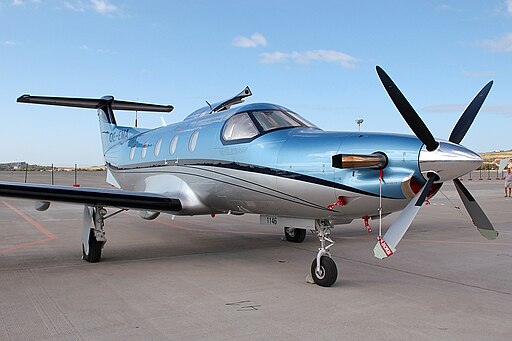
1. Pilatus PC-12
The Pilatus PC-12 is one of the most respected single-engine turboprop aircraft ever built. It’s popular among business travelers, air ambulances, and small charter operators. Its reputation comes from a mix of power, reliability, and space.
- Performance: The PC-12’s Pratt & Whitney PT6A engine powers it up to speeds of 328 mph with a range of about 1,800 miles.
- Design: It has a large door and strong landing gear, making it great for short or rough runways.
- Cabin: Passengers enjoy a luxurious interior with seating for up to 9 people and space for luggage or cargo.
- Use: The PC-12’s versatility has made it a favorite private plane for those who want jet-like comfort without the costly fuel burn of a private jet.
Fun fact: the PC-12 holds its FAA certification for both passenger and cargo aircraft use, showing how adaptable it really is.
2. Daher TBM 960
The TBM series, built in France, represents high performance in the single-engine category. The TBM 960 is fast, sleek, and efficient—ideal for private owners and small air service companies.
- Speed: It cruises at around 330 mph and climbs quickly to 31,000 feet of altitude.
- Comfort: Inside, it feels like a mini business jet, with quiet operation and fine materials.
- Technology: Its modern avionics help pilots fly with precision and safety.
Many pilots love the TBM because it blends capability and style. It’s proof that a single-engine turboprop can be powerful, efficient, and practical for long-distance trips.
3. Beechcraft King Air 350
The King Air 350 is a classic among twin-turboprop planes. Built by Beechcraft, it’s known for its strength and flexibility. It serves as a regional shuttle, air ambulance, and VIP private plane.
- Engines: Two PT6A engines deliver over 1,050 horsepower each.
- Performance: It cruises near 360 mph and reaches an altitude of 35,000 feet.
- Interior: With up to 11 seats, it offers roomy comfort and quiet travel.
- Use: Many commercial airlines use it for short-haul routes where jets would be less efficient.
The King Air 350 has proven its worth in thousands of hours of safe operation. It’s rugged enough for mountain terrain, yet refined enough for business travel.
4. Cessna Grand Caravan EX
The Grand Caravan EX is the workhorse of utility flying. This single-engine turboprop can handle almost anything—from passengers to heavy cargo.
- Performance: Its PT6A engine provides 867 horsepower, cruising at 214 mph with a range of about 900 miles.
- Design: A tall tail and wide wings help it manage rough strips and short runways.
- Use: Commonly used by commercial airlines in remote areas, air delivery services, and bush pilots.
Because it’s durable and easy to maintain, the Grand Caravan EX is often seen as the most trusted cargo plane and passenger hauler in its class.
5. Quest Kodiak 100
The Kodiak 100 is another strong performer in the utility category. It’s built for missions that need a reliable single-engine aircraft capable of lifting big loads.
- Power: Its turbo engine creates about 750 horsepower.
- Performance: It cruises around 210 mph and can land on very short dirt strips.
- Capacity: Up to 10 passengers or 3,000 pounds of cargo.
- Capability: Built to haul supplies into hard-to-reach areas with tough terrain.
The Kodiak is often used by humanitarian groups, outdoor explorers, and small airlines. It’s simple, safe, and strong—ideal for adventure flying.
6. Piaggio P.180 Avanti Evo
The Piaggio Avanti Evo is unlike any other turboprop. Built in Italy, it combines sleek design with jet-like speed.
- Speed: It reaches about 460 mph, making it one of the fastest twin-engine turboprops in the world.
- Engines: Two rear-mounted turboprop engines give it excellent balance and quiet flight.
- Cabin: Spacious and luxurious, with plenty of legroom and fine materials.
- Technology: The modern avionics system helps reduce workload for pilots.
Its style and efficiency make it stand out at any airport. It’s often compared to a light private jet, but it uses far less fuel for similar trips.
7. Dornier 328
The Dornier 328 is a regional twin-turboprop used by small commercial airlines and charter operators. Built in Germany, it’s valued for comfort and reliability.
- Performance: It flies at about 395 mph and has a range of around 1,000 miles.
- Capacity: It carries about 30–33 passengers.
- Cabin: Designed to feel like a small jet, with a quiet and smooth ride.
- Certification: The model’s strong history helped certify newer turboprop designs.
The Dornier 328 is often used in regions with smaller airports or mountain terrain, showing strong capability in all conditions.
8. De Havilland Dash 8-400 (Q400)
The Dash 8-400 is one of the most popular regional twin-engine turboprops in the world. It’s fast, roomy, and reliable.
- Speed: Reaches about 414 mph with up to 90 passengers.
- Engines: Powerful turboprop engines make it efficient for short operation cycles.
- Comfort: Advanced noise control gives passengers a quiet, relaxing ride.
- Use: Commonly seen in commercial airlines across North America.
The Q400 continues to prove that turboprops can handle big loads and busy routes with ease.
9. ATR 72-600
The ATR 72-600 is another top performer for regional service. It’s built for short routes and smaller airports while keeping a strong focus on comfort.
- Performance: Cruising speed around 317 mph and up to 78 passengers.
- Efficiency: Uses less fuel than many small jets.
- Avionics: Modern systems help pilots fly safely in changing weather.
- Cabin: Simple, bright, and efficient for quick turnaround times.
Its reputation for dependable operation has made it one of the most successful regional airliners in history.
10. Viking Twin Otter Series 400
The Twin Otter Series 400 is a legend in utility flying. It’s been used for decades across deserts, jungles, and Arctic regions.
- Performance: Cruises at about 208 mph and takes off from extremely short runways.
- Engines: Twin turboprop engines provide steady thrust.
- Use: Carries up to 19 passengers or 3,000 pounds of cargo.
- Certification: Approved under strict FAA certification standards for rugged flying.
Many call it the ultimate cargo aircraft because it can operate anywhere and keep flying through rough terrain conditions.
11. Pilatus PC12 NGX
The pc12 NGX is the newest generation of the famous PC-12 line. It continues Pilatus’s commitment to safety, comfort, and innovation.
- Engine: A strong Pratt & Whitney PT6E powers it with over 1,200 horsepower
- Speed: Cruises up to 330 mph with a range of 1,800 miles.
- Cabin: Quiet, luxurious, and spacious enough for business or leisure.
- Technology: Digital avionics make flying simple and efficient.
The PC12 NGX remains one of the world’s favorite single-engine turboprops for business or family travel. Its balance of capability, reliability, and cost keeps it at the top of the list for many pilots and owners.
Conclusion
Turboprops have proven that smart design, good fuel use, and dependable power can beat raw speed on the right route. The best turboprop passenger aircraft connect small towns to big cities while keeping travel affordable and comfortable.
From rugged workhorses like the Kodiak and Grand Caravan to elegant fliers like the Piaggio and TBM, these turboprops cover every need—speed, strength, and flexibility. Some serve remote villages; others fly executives in comfort. Each one proves that turboprop design remains a cornerstone of safe, smart air travel.
These 11 planes show what good engineering and practical design can achieve: dependable performance, comfort, and adaptability—without needing a private jet budget. Turboprops truly keep the skies within reach for travelers everywhere.
They may not be the fastest, but they always deliver steady, reliable flight for passengers around the world.
If you love learning about smart and efficient airplanes, check out more stories and guides at Flying411 for simple, clear insights into everything that keeps aviation moving forward.
Frequently Asked Questions
What is a turboprop plane used for?
Turboprops are used for short routes, often under 500 miles. They connect small towns, islands, and regional airports.
Are turboprops safe to fly?
Yes. They meet the same safety rules as jets and are very reliable for regional and commuter flights.
Do turboprops use less fuel than jets?
Yes. Turboprops are more fuel-efficient on short flights because their engines are optimized for slower speeds.
How many passengers can a turboprop carry?
Depending on the model, they can hold anywhere from 8 to around 80 passengers.
What’s the fastest turboprop plane?
The Saab 2000 is among the fastest turboprops, reaching about 370 knots during cruise.