For busy executives, time saved is often worth more than the price of the ride. A short helicopter hop can replace a long drive through traffic, a delayed commercial flight, or a frustrating layover. That is why corporate flight departments and private owners keep investing in rotorcraft built for business.
The best business helicopter for one company may be a nimble light twin, while another team needs a roomy super-medium with a stand-up cabin and full Wi-Fi.
The right pick depends on routes, group size, and how often the aircraft flies. Beyond the obvious speed boost, modern executive helicopters bring quiet cabins, plush seating, and access to rooftops and helipads that planes simply cannot reach.
The math behind a single rotor head can quietly reshape an entire week of meetings.
Key Takeaways
The best business helicopter is usually one of a small set of proven executive models, including the Airbus H145, Airbus H160, Bell 429, Bell 525 Relentless, Leonardo AW109 Grand, Leonardo AW139, Sikorsky S-76, Sikorsky S-92, and the Airbus ACH130. Each one matches a different mission, group size, and budget. The right choice comes down to range, cabin space, speed, and how often the aircraft will be used each year.
| Factor | What It Means for Business Use |
| Cruise Speed | Faster speeds shrink regional travel times and open up multi-stop days |
| Range | Longer range means fewer fuel stops on point-to-point trips |
| Cabin Size | More room supports meetings, laptops, and group travel in comfort |
| Twin vs Single Engine | Twins add redundancy and IFR capability for serious corporate use |
| Operating Cost | Light helicopters cost less per hour, while heavies offer more capability |
| Support Network | Strong factory support keeps the aircraft flying and on schedule |
Flying411 is an aviation marketplace and resource hub where buyers and sellers connect on aircraft, parts, and trusted services, making the search for the right rotorcraft a lot easier.
Why Companies Use Helicopters for Business Travel
Helicopters do something planes cannot. They land where the trip actually ends. That includes rooftop pads, corporate helipads, marinas, construction sites, and small heliports near city centers. For a meeting in midtown or a site visit in a remote area, that direct access saves hours.
A typical corporate helicopter trip looks something like this:
- Drive five minutes to a local helipad or FBO
- Board with little to no security wait
- Lift off within minutes
- Cruise at roughly 130 to 190 mph depending on the model
- Land near the final destination, often at a private pad
Compared with a long drive or a commercial flight that includes parking, security, boarding, and a rental car at the other end, the time saved adds up fast. Executives can attend morning meetings in one city and afternoon meetings in another without an overnight stay.
Why It Matters: Time is the one resource a CEO cannot buy back. A helicopter that compresses a five-hour door-to-door trip into one hour can free up an entire workday each week, which is a serious return on the cost of operation.
There are other reasons too. Helicopter travel offers privacy for sensitive conversations, flexibility for last-minute schedule changes, and a refined experience that helps with client hospitality. Many companies also use them as supplemental lift to extend the reach of a corporate jet, flying executives the final leg from an airport to a remote office or job site.
What Makes a Helicopter Right for Business Use
Not every helicopter belongs in a corporate hangar. The aircraft that work best for business have a clear blend of features that match how executives actually travel. Here is what separates a true business helicopter from a basic rotorcraft.
Cabin Comfort and Layout
The cabin is where the work happens. A good executive helicopter has a quiet, soundproofed interior, comfortable seating, and enough space to spread out a laptop or hold a small meeting. Many high-end models include leather seats, climate control, and noise-cancelling headsets so passengers can talk without shouting.
Twin-Engine Reliability
Most serious business helicopters are twin-engine. A second engine adds a major safety margin, especially when flying over water, mountains, or built-up urban areas. Twins also qualify for instrument flight rules, which means they can fly in weather conditions that would keep a single-engine helicopter on the ground.
Speed and Range
For business use, cruise speeds in the 130 to 190 mph range are common, and useful range usually falls between 300 and 500 nautical miles depending on the model. Faster cruise and longer legs mean more cities reached in a single day.
Connectivity
Wi-Fi, satellite phones, and modern cabin management systems are now standard on top-tier executive helicopters. Staying connected in flight turns travel time into productive time.
Good to Know: A super-medium twin like the Bell 525 or Sikorsky S-92 can offer a stand-up cabin, which is rare in rotorcraft and a major comfort upgrade for longer flights.
Avionics and Safety Systems
Modern glass cockpits, terrain awareness systems, autopilots, and crashworthy seats are standard on the leading executive models. These systems reduce pilot workload and improve safety margins, which is critical for an aircraft that flies in and out of busy urban areas.
The Best Business Helicopter Models for Executive Travel
There is no single answer to which model is the best business helicopter, because mission needs vary so much. That said, a clear group of models keeps showing up on the top of corporate shortlists. Here are the standouts, what they offer, and the kind of operator each one fits.
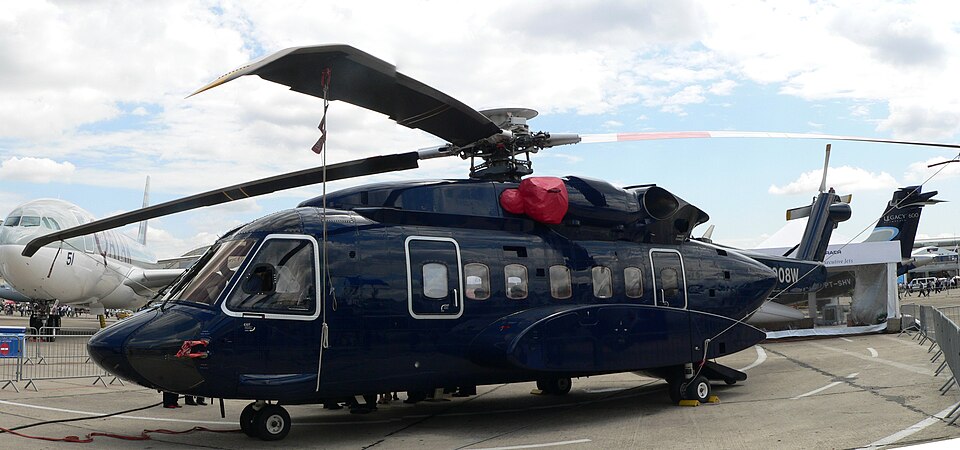
1. Sikorsky S-92
The Sikorsky S-92 sits at the top end of the executive helicopter world. This super-medium twin is widely used by heads of state, large corporations, and ultra-high-net-worth owners. It can carry around ten passengers in a roomy, fully soundproofed cabin with seating, lighting, and finishes that rival a corporate jet.
Notable features:
- Twin-engine reliability with strong safety systems
- Spacious, near stand-up cabin layout
- Long range suited for regional corporate missions
- Cruise speeds in the same range as light business jets
- Strong factory support network
It is a major investment and not a fit for every flight department. For organizations that fly a lot, carry larger groups, and need to project a presence, it remains a benchmark for VIP rotorcraft.
2. Bell 525 Relentless
The Bell 525 is one of the newest entries in the super-medium class. Bell built it from a clean sheet with corporate operators in mind, and the cabin shows it. The flat floor, large windows, and modular seating make it feel more like a flying lounge than a traditional helicopter.
Why corporate buyers like it:
- Modern fly-by-wire flight controls
- Flexible cabin that can seat large executive groups
- Quiet ride with low vibration
- Optional high-speed Wi-Fi and modern cabin management
For a board of executives traveling together, the cabin volume alone is a strong reason to put the 525 near the top of the list.
Pro Tip: When comparing super-medium helicopters, ask the manufacturer for real-world operating data from current corporate operators, not just brochure figures. Annual utilization rates have a big effect on cost per flight hour.
3. Airbus H160
The Airbus H160 is a sleek medium twin that brings several fresh design ideas to the corporate market. Its Blue Edge rotor blades are shaped to cut down noise, which matters for neighborhoods near heliports. The cabin offers large windows, modern lighting, and quiet operation.
Strong points include:
- Smooth, quiet ride for executive passengers
- Modern Helionix avionics with high automation
- Twin-engine performance with strong safety margins
- Refined cabin suitable for VIP layouts
The H160 is a strong choice for companies that want a new-generation platform and a balance of cabin size and operating economics.
4. Airbus H145
The Airbus H145 has become one of the most popular light twin helicopters in corporate fleets. It is roomy for its class, has a five-blade main rotor that smooths out the ride, and works well for both VIP transport and mixed-use missions like medical evacuation when not flying executives.
What it offers:
- Twin-engine safety in a compact, hangar-friendly size
- Quiet cabin with multiple seating configurations
- Good payload for its class
- Strong worldwide support network
For mid-size businesses that need reliability without the cost of a super-medium, the H145 hits a sweet spot.
5. Leonardo AW139
The Leonardo AW139 is a popular medium twin used by corporations, offshore operators, and VIP clients around the world. It has a strong reputation for ruggedness, performance in hot and high conditions, and a spacious cabin for the class.
Highlights include:
- Twin-engine performance with strong hot-and-high capability
- Large cabin with executive layout options
- Long-range fuel system available
- Wide range of seating configurations
The AW139 is a workhorse with executive polish, which is exactly why so many corporate flight departments have used it for years.
6. Leonardo AW109 Grand
For executives who care about speed and style, the Leonardo AW109 Grand is one of the better-known light twins on the market. Its sleek Italian design and fast cruise make it a favorite of charter operators and private owners alike.
Why it stands out:
- High cruise speed for a light twin
- Refined Italian cabin design
- Twin-engine performance
- Sized to fit smaller helipads
Special editions, including the AW109 Grand Versace, push the luxury angle even further with fully bespoke interiors. For a busy executive flying short city-to-city legs, this is a strong contender.
7. Airbus ACH130
The Airbus ACH130 is one of the most refined single-engine helicopters available. Airbus Corporate Helicopters builds it with executive interiors that match the look of a luxury car cabin, and the Aston Martin Edition takes that idea even further with custom leathers and trim.
Where it shines:
- Lower operating cost than most twins
- High-end cabin finishes and design partnerships
- Smooth ride and modern avionics
- Easy to land on smaller pads
The ACH130 is a strong pick for owners who fly mostly in good weather and over land, and who value style and lower hourly cost over twin-engine redundancy.
Heads Up: Single-engine helicopters are generally not approved for instrument flight in commercial corporate operations in many regions. If a flight department needs to fly in bad weather or at night on a regular basis, a twin is usually the right call.
8. Bell 429
The Bell 429 GlobalRanger is a modern light twin with a smooth ride, a clean cabin, and a track record in corporate, public safety, and emergency medical roles. It is often viewed as a more conservative pick than the AW109, with lower direct operating costs and friendly handling.
Reasons it appears on shortlists:
- Twin-engine safety with strong IFR capability
- Spacious cabin for a light twin
- Modern Garmin-style glass cockpit
- Solid resale value and support
For companies stepping up from a single-engine machine, the Bell 429 is often the next step.
9. Sikorsky S-76
The Sikorsky S-76 has been a corporate favorite for decades. The newer S-76D variant brought updated engines, an improved cockpit, and refined cabin options that keep it competitive even with newer designs.
Strengths include:
- Long track record of executive use
- Quiet cabin with VIP layouts available
- Twin-engine reliability
- Wide pool of trained pilots and mechanics
It is a familiar, proven option. Many corporate flight departments stick with the S-76 because the support and training ecosystem around it is so deep.
Fun Fact: The Sikorsky S-76 has long been a favorite for corporate VIP missions, and is widely known for being one of the most recognizable executive helicopters in service.
10. Airbus H175
The Airbus H175 is a super-medium twin that has gained ground in the executive and VIP segment. Its cabin is large enough for substantial group travel, and its range is among the longer options in the rotor world. For energy companies, offshore operators, and big corporations, it has become a popular pick.
What it brings to the table:
- Large, quiet cabin
- Strong range and payload
- Modern avionics
- Smooth ride at cruise
It is a serious investment but a strong long-range option for businesses with the right flight profile.
If you are weighing your options, the helicopter listings on Flying411 are a useful starting point to see what is on the market across light, medium, and super-medium classes.
Comparing Light, Medium, and Super-Medium Helicopters
Picking the right helicopter starts with understanding the three main classes used in business aviation. Each one trades off cost, capacity, and capability differently.
| Class | Typical Seating | Typical Cruise | Common Use |
| Light Twin | 4 to 7 passengers | Roughly 140 to 160 mph | Short city-to-city executive hops |
| Medium Twin | 7 to 12 passengers | Roughly 150 to 175 mph | Regional corporate travel and VIP charter |
| Super-Medium Twin | 10 to 16 passengers | Roughly 160 to 190 mph | Long-range corporate use and group travel |
Light twins are easier to base in urban areas, fit smaller pads, and burn less fuel. Medium and super-medium twins offer more cabin room, longer legs, and stand-up cabins on the larger models. Light singles like the ACH130 sit below this list and are a fit for owners who fly mostly over land and in good weather.
Owning vs Chartering a Business Helicopter
One of the biggest decisions a company can make is how to access the aircraft in the first place. The three main options are owning outright, joining a fractional program, or simply chartering as needed. Each approach has clear pros and cons.
Whole Ownership
Buying a helicopter outright gives full control. The aircraft is always available, the cabin can be configured exactly as needed, and the crew works for the owner.
Pros:
- Full control over scheduling and cabin layout
- Consistent crew, which improves service quality
- Tax and asset benefits in some cases
Cons:
- High upfront cost
- Ongoing fixed costs for crew, hangar, insurance, and maintenance
- Need for a flight department or trusted operator to manage the aircraft
This makes sense for companies that fly hundreds of hours a year.
Fractional Ownership
Fractional programs offer a share of an aircraft in exchange for guaranteed flight hours each year. They reduce the upfront cost while still giving good access.
Pros:
- Lower capital outlay than full ownership
- Predictable monthly costs
- Backup aircraft availability in many programs
Cons:
- Less cabin customization
- Shared scheduling with other owners
- Long-term commitment
This often works for companies that fly enough to want consistency but not enough to justify full ownership.
On-Demand Charter
Chartering pays per flight. There is no aircraft to own, no crew to manage, and no maintenance to worry about.
Pros:
- No capital investment
- Pay only for what is flown
- Wide variety of aircraft available
Cons:
- Higher hourly cost
- Less guaranteed availability during peak times
- Different crews and cabin layouts on each trip
For companies that fly only occasionally, charter is usually the right call.
Keep in Mind: Many corporations use a mix of all three options. They might own a primary aircraft, use a fractional program for backup, and charter larger helicopters when group travel demands it.
Typical Operating Costs and What Drives Them
Buying the helicopter is only part of the budget. Operating costs include fuel, maintenance, crew salaries, hangar fees, insurance, training, and overhauls. Hourly direct operating costs vary widely. Light singles can run a few hundred dollars per hour, while super-medium twins can cost thousands per hour to operate.
The main drivers are:
- Fuel burn, which scales with engine count and aircraft size
- Maintenance reserves, which fund engine and component overhauls
- Crew costs, including pilot training and currency
- Insurance, which depends on the model, hours flown, and operating profile
- Hangar and storage, which varies by region and airport
Buyers who plan to fly a lot generally find that medium and super-medium twins offer a better cost per seat-mile than smaller helicopters, because the extra fuel is offset by the higher passenger count.
How Helicopters Fit Alongside Private Jets
For many companies, helicopters and private jets work together. A jet covers long-range, cross-country, or international travel, while a helicopter handles the short hops at either end. There is good context on how private aviation moves through airports that helps explain why this combination works so well.
A typical mixed trip looks like this:
- Helicopter from a downtown helipad to the airport
- Private jet from the airport to a distant city
- Helicopter from the destination airport to the meeting site
This setup avoids ground traffic on both ends and turns long trips into something close to door-to-door. For executives who care about speed and predictability, the combination is hard to beat. Companies that also operate jets often look at the kinds of private jets used in business when planning a fleet, since each aircraft type fills a different role.
Flying411 connects buyers with both helicopters and fixed-wing aircraft, as well as the certified mechanics, avionics specialists, and MRO providers that keep them flying.
Buying Tips for Corporate Helicopter Shoppers
Buying an executive helicopter is a big decision, and the right approach can save a lot of money and frustration. A few things to keep in mind:
- Match the aircraft to the mission. A super-medium with stand-up cabin is overkill for short hops with two passengers, and a light single will frustrate a team that needs to fly in any weather.
- Get a pre-purchase inspection. Any used helicopter should be inspected by a qualified third party before money changes hands.
- Check the maintenance history. A clean, well-documented logbook is worth a lot. Surprises in records often turn into expensive surprises later.
- Plan for crew training. Type-specific training takes time and money, especially on newer or more complex aircraft.
- Think about resale. Some models hold value better than others. Popular, well-supported aircraft tend to be easier to sell down the road.
A look at the most popular private planes shows that the same principle applies across aviation: aircraft with strong support networks and active resale markets are usually the better long-term buy.
Final Thoughts on Choosing the Best Business Helicopter
Picking the best business helicopter comes down to matching the aircraft to the work. A small team flying short hops in good weather may be perfectly served by a refined single-engine like the ACH130. A large corporate flight department moving groups across a region will lean toward a super-medium twin like the Bell 525 or Sikorsky S-92. Most operators land somewhere in the middle, with a light or medium twin that balances cost, cabin space, and capability. The key is to think in terms of total mission profile, total cost of ownership, and how the aircraft will fit alongside any jets or charter relationships already in place. Done well, a corporate helicopter quietly pays for itself in time saved and meetings made.
Ready to find the right rotorcraft for your business? Browse new and used helicopter listings, connect with trusted aviation professionals, and start your search at Flying411.
Frequently Asked Questions
How Fast Can a Business Helicopter Travel
Most modern executive helicopters cruise somewhere between roughly 130 and 190 mph. Light twins like the AW109 Grand and Bell 429 sit on the faster end of the light class, while super-mediums like the Bell 525 and Sikorsky S-92 push toward the upper end. Helicopters are slower than private jets, but they make up for it by landing closer to where the trip actually ends.
How Many People Can Fit in a Corporate Helicopter
It depends on the class. Light twins typically seat four to seven passengers. Medium twins seat seven to twelve. Super-mediums can carry as many as sixteen passengers in some layouts. VIP interiors usually trade some seats for more legroom and meeting-style seating.
Quick Tip: Always think in terms of useful seats, not maximum seats. A helicopter rated for eight passengers may only carry six comfortably with a full fuel load and bags.
Are Helicopters Safer Than They Used to Be
Helicopter safety has improved significantly in recent decades. Modern executive models include glass cockpits, autopilots, terrain awareness, ground proximity warning systems, crashworthy seats, and rotor brakes. Twin-engine designs add redundancy, and improved training standards have lowered accident rates. As with any aircraft, the operator and pilot still matter most.
How Far Can a Business Helicopter Fly
Useful range usually falls between roughly 300 and 500 nautical miles, depending on the model and fuel load. Long-range fuel options on aircraft like the AW139 and S-92 can push that further. For most corporate missions, the helicopter is used for shorter legs and not long cross-country flights, where a private jet is usually a better fit.
Can a Business Helicopter Fly Across the Atlantic Ocean
No, helicopters do not have the range to cross the Atlantic Ocean in a normal corporate role. For international travel, companies usually rely on long-range business jets, and there is good background on private planes that can cross the Atlantic if that is part of the travel mix.
Do Business Helicopters Need a Special Pilot License
Yes. Helicopter pilots earn a separate rotorcraft pilot certificate, and corporate helicopter pilots usually hold a commercial license with an instrument rating and a type rating on the specific aircraft. Most corporate flight departments also require additional simulator training each year.
What Is the Average Hourly Cost to Operate an Executive Helicopter
Hourly costs vary widely by model and how the helicopter is operated. Light singles tend to cost the least per hour, while super-medium twins are at the upper end. Fuel, maintenance reserves, crew, and insurance are the biggest drivers, and total hourly cost depends heavily on annual flight hours.
Is It Worth Buying a Helicopter Instead of Chartering
That depends on flight hours, mission needs, and how important consistent crew and cabin configuration are. Companies flying a lot of hours per year often find ownership makes sense, while occasional fliers usually do better with charter. The same logic applies to fixed-wing aviation, and there is a useful overview on the value of renting a private jet that applies in spirit to rotorcraft too.
Can a Helicopter Land in Any City Center
Not quite. Helicopters can land at approved helipads, heliports, and some private pads, but city rules, noise restrictions, and airspace limits affect where landings are allowed. Many major cities have a small network of permitted helipads, and crews plan around those approved sites in advance.