Not all private jets are the same. Some are compact and nimble, built for quick city hops. Others are rolling sky palaces with full bedrooms, dining areas, and enough range to cross the Atlantic without stopping. The difference between one type and another is not just about price — it is about matching the right aircraft to the right mission.
If you have ever looked at a flight quote and wondered why some jets cost three times more than others, or why some can reach Tokyo nonstop while others top out at a two-hour regional run, the answer comes down to the category of aircraft. Understanding the types of private jets available today makes it a lot easier to charter smartly, compare options honestly, and know what you are actually paying for.
Each category of private jet is designed with a specific kind of traveler in mind — and once you know the landscape, picking the right one feels a lot less like guesswork.
Key Takeaways
The main types of private jets are Very Light Jets (VLJs), Light Jets, Midsize Jets, Super Midsize Jets, Heavy Jets, Ultra-Long-Range Jets, and VIP Airliners. Each step up in category adds more cabin space, greater range, and higher operating costs. Choosing the right type depends on how far you are flying, how many passengers you have, and how much comfort and amenity you need in the air.
| Jet Category | Typical Passengers | Approx. Range | Best For |
| Very Light Jet (VLJ) | 4–6 | Up to ~1,500 mi | Short regional hops |
| Light Jet | 6–8 | ~1,500–2,500 mi | Domestic short-to-mid routes |
| Midsize Jet | 8–10 | ~2,500–3,500 mi | Coast-to-coast domestic |
| Super Midsize Jet | 9–12 | ~3,500–4,500 mi | Longer domestic + near international |
| Heavy Jet | 10–16 | ~4,000–6,000 mi | Intercontinental routes |
| Ultra-Long-Range Jet | Up to 17 | ~6,000–8,000+ mi | Nonstop global travel |
| VIP Airliner | 20–50+ | Varies widely | Large groups, heads of state |
Whether you are charting a first private flight or comparing upgrade options, Flying411 is a great resource to help you navigate the world of private aviation with confidence.
Why Jet Categories Actually Matter
Think of private jet categories the way you think about cars. A compact sedan, an SUV, and a full-size truck all get you from A to B — but they are designed for very different missions. The same logic applies in aviation.
Every category of private jet represents a set of trade-offs between size, speed, range, comfort, and cost. A Very Light Jet is affordable and quick to book, but it will not get you across the country without stopping. An Ultra-Long-Range jet can fly you nonstop from New York to Dubai, but its operating costs reflect that capability.
Matching the right jet to the right trip is the key to getting the most value — and the best experience — out of private aviation.
Good to Know: The private business jet fleet worldwide is estimated at over 23,000 aircraft, with North America accounting for a large majority of that total. The U.S. remains the world's largest market for private aviation by a significant margin.
How Private Jets Are Categorized
There is no single universal system for categorizing private jets. Some operators use four main categories, others use five, and some break it into as many as nine. For practical purposes, most of the industry settles on these seven tiers: Very Light Jet, Light Jet, Midsize Jet, Super Midsize Jet, Heavy Jet, Ultra-Long-Range Jet, and VIP Airliner.
Each step up in category generally means a bigger cabin, longer range, more on-board amenities — and a higher price per flight hour. Understanding what changes between categories helps you make smarter decisions.
What Determines a Jet's Category?
The main factors that separate one class from another include:
- Cabin size — measured in usable height, width, and overall volume
- Passenger capacity — how many can sit comfortably for the duration of the flight
- Range — the maximum distance the aircraft can fly without refueling
- Cruise speed — how fast the jet travels at altitude
- Amenities — lavatories, galleys, entertainment systems, sleeping arrangements
- Operating costs — fuel burn, crew requirements, maintenance reserves
These factors work together. A jet with a larger cabin typically burns more fuel, which affects range and cost. Understanding this helps explain why different categories exist in the first place.
Pro Tip: Range figures in private aviation are typically listed in nautical miles (nm). One nautical mile equals about 1.15 standard miles. A jet with 3,000 nm range can cover roughly 3,450 standard miles — enough for a nonstop New York to Los Angeles flight with room to spare.
The 7 Main Types of Private Jets
Very Light Jets (VLJs)
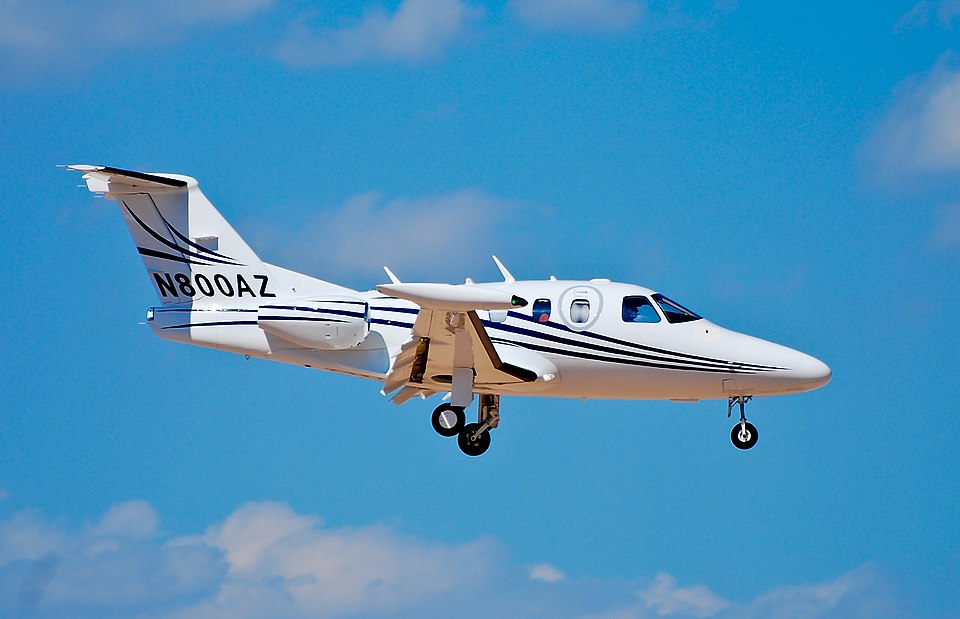
Very Light Jets are the entry point into the private jet world. They are small, efficient, and purpose-built for short-haul travel. Most VLJs seat four to six passengers in a compact but functional cabin.
Range and speed: VLJs typically cover around 1,000 to 1,500 miles before needing to refuel, cruising at speeds of roughly 400 to 460 miles per hour. That puts them in the range of a two-to-three-hour flight window.
Best use case: Quick city-to-city hops where the priority is speed and flexibility rather than in-flight space. Think Chicago to Cincinnati, or Dallas to Houston.
Popular models: Cessna Citation Mustang, Embraer Phenom 100, HondaJet HA-420, Eclipse 500.
What to expect onboard: Cabin height in a VLJ is generally limited — most passengers cannot fully stand up — and amenities are minimal. Many models offer basic seating, a compact lavatory (sometimes optional), and limited baggage space. The experience is closer to a premium commuter flight than a luxury lounge in the sky.
Cost to charter: Rough hourly charter rates for VLJs typically fall in the range of $1,800–$2,500, making them the most affordable jet charter option available.
Fun Fact: The HondaJet is the only private jet designed and manufactured by an automaker — Honda. It features a distinctive over-the-wing engine mount that is said to reduce cabin noise while improving aerodynamic efficiency.
Light Jets
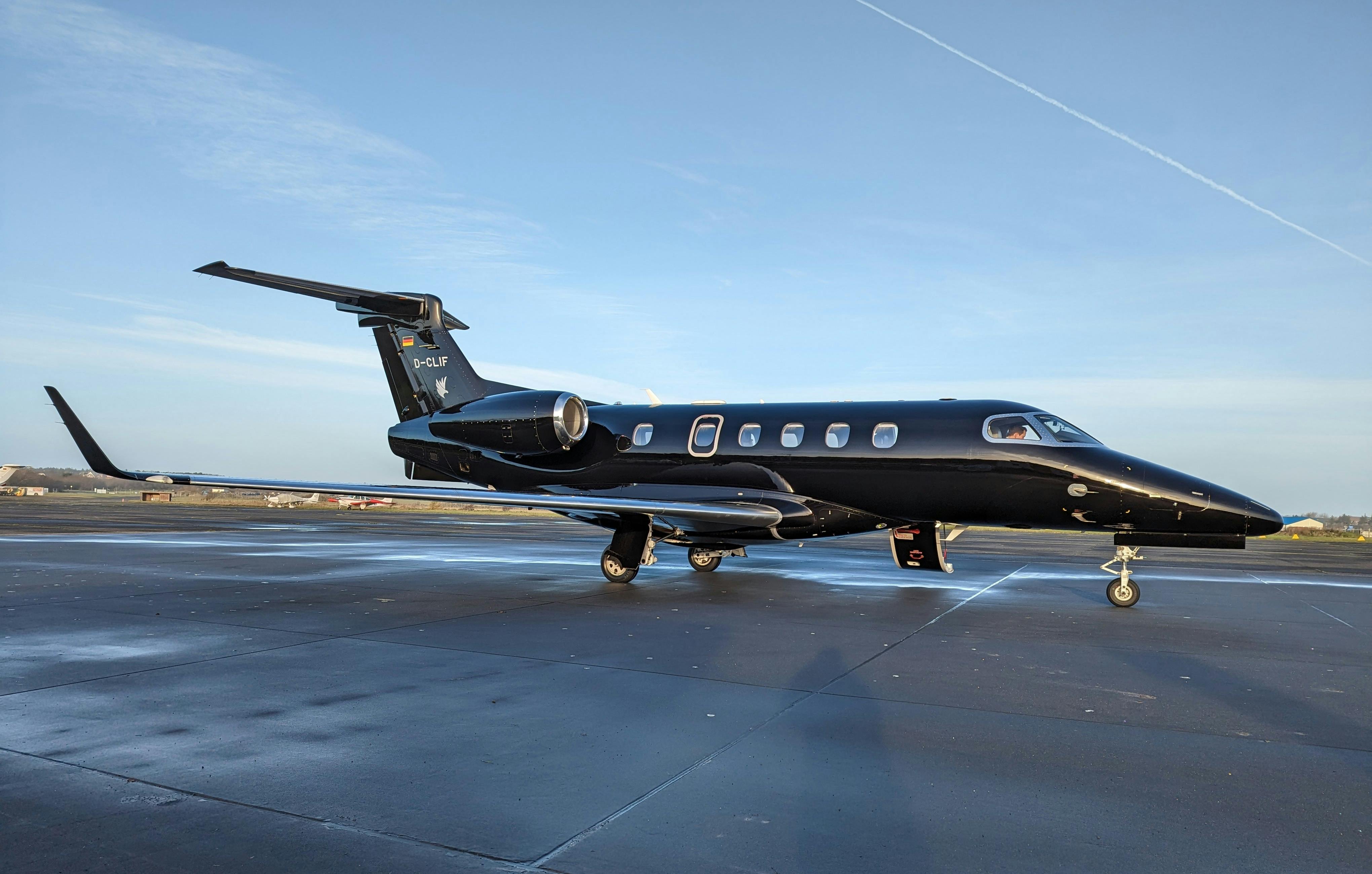
Light Jets are a noticeable step up from VLJs. They carry a few more passengers, offer more cabin volume, and handle longer routes without the same need for quick fuel stops.
Range and speed: Light Jets typically cover 1,400 to 2,500 miles, cruising at around 450 to 520 miles per hour. That extends the flight window to roughly three to four hours on a single tank.
Best use case: Domestic short-to-mid-range trips with a small group. Popular routes include New York to Miami, Atlanta to Denver, or Los Angeles to Seattle.
Popular models: Embraer Phenom 300 (which has been one of the best-selling light jets in the world for over a decade), Learjet 75, Hawker 400XP, Cessna Citation CJ3+.
What to expect onboard: Light Jets typically feature reclining leather seats, a private lavatory, a refreshment center, and enough baggage space for a few carry-on-sized bags. Cabin height improves over VLJs, but most passengers still cannot stand fully upright.
Cost to charter: Hourly charter rates for Light Jets typically range from around $2,800 to $4,200.
Keep in Mind: Light Jets can access many smaller regional airports that commercial carriers cannot serve. This is one of their biggest advantages — it cuts out the drive to a major hub and gets you closer to your actual destination.
Midsize Jets
Midsize Jets hit a sweet spot that many private flyers return to again and again. They balance comfort, range, and cost better than any other category, making them the go-to choice for frequent domestic travelers.
Range and speed: These jets typically cover 2,500 to 3,500 miles at cruising speeds of around 470 to 540 miles per hour. That is enough for coast-to-coast U.S. flights with appropriate wind conditions.
Best use case: Corporate travel, family trips, and any domestic route that would push a Light Jet's range or comfort limits.
Popular models: Cessna Citation XLS+, Hawker 800XP, Learjet 60, Cessna Citation Latitude.
What to expect onboard: Full stand-up or near-stand-up cabin height, a fully enclosed lavatory, a galley with hot food options, reclining seats, and significantly more legroom than smaller categories. Most Midsize Jets seat eight to ten passengers comfortably.
Cost to charter: Hourly charter rates typically fall in the $3,800–$5,500 range.
Why It Matters: Midsize Jets are often the smartest value in private aviation. You get the comfort and range needed for most domestic U.S. travel, without paying for the heavy-jet experience you may not actually need.
If you are still building your understanding of how different aircraft types work — from turboprops to jets — it helps to have context on how fixed-wing aircraft compare in the broader aviation world. The team at Flying411 has put together a helpful breakdown of fixed-wing versus rotary-wing aircraft that puts these categories into a wider perspective.
Super Midsize Jets
Super Midsize Jets are for travelers who need a bit more of everything — more range, more cabin space, and more on-board capability — without going all the way to a full heavy jet.
Range and speed: Super Midsize Jets typically cover 3,500 to 4,500 miles at cruising speeds of roughly 490 to 590 miles per hour. That opens up transatlantic routes and longer international segments.
Best use case: Long domestic routes, near-international travel (think U.S. to the Caribbean or U.S. to western Europe), and any trip where passenger count or luggage demands push beyond a Midsize Jet's comfort ceiling.
Popular models: Bombardier Challenger 350/3500, Gulfstream G280, Cessna Citation Sovereign+, Cessna Citation Latitude (upper trim).
What to expect onboard: Full stand-up cabins, fully enclosed lavatories, enhanced soundproofing, more legroom, and often divans or club seating configurations. Many Super Midsize jets can carry 10 to 12 passengers in genuine comfort.
Cost to charter: Hourly charter rates typically range from $5,000 to $7,000.
Speaking of aircraft that bridge categories — Flying411 covers the full spectrum of aircraft types and can help you match the right platform to your mission.
Pro Tip: The Bombardier Challenger 350 is frequently cited as one of the most popular jets in this category, known for one of the quietest cabins in its class and an exceptionally spacious interior for its size.
Heavy Jets
Heavy Jets represent a major shift in the private flying experience. These are the aircraft where the cabin stops feeling like a jet interior and starts feeling like a premium lounge.
Range and speed: Heavy Jets typically cover 4,000 to 6,000 miles at cruising speeds of around 530 to 600 miles per hour. That allows for transatlantic crossings and direct flights from the U.S. East Coast to Western Europe.
Best use case: Intercontinental travel, large group charters, and any trip where comfort for an extended duration is the top priority.
Popular models: Bombardier Global 5500, Gulfstream G500, Dassault Falcon 900LX, Boeing Business Jet (BBJ) entry configurations.
What to expect onboard: Wide full-stand-up cabins, full-service galleys, private lavatories (sometimes with showers on higher-end models), sleeping arrangements, and entertainment systems that rival business class on commercial carriers. In the U.S., heavy jets are typically required by regulations to carry a flight attendant — a notable service upgrade over smaller categories.
Cost to charter: Hourly charter rates for Heavy Jets typically start around $6,500 and can reach $9,500 or more.
Heads Up: Heavy Jets cannot access as many small regional airports as their lighter counterparts. Their size and runway requirements mean you will typically need a commercial-grade airport — something worth considering when planning your routing.
Ultra-Long-Range Jets
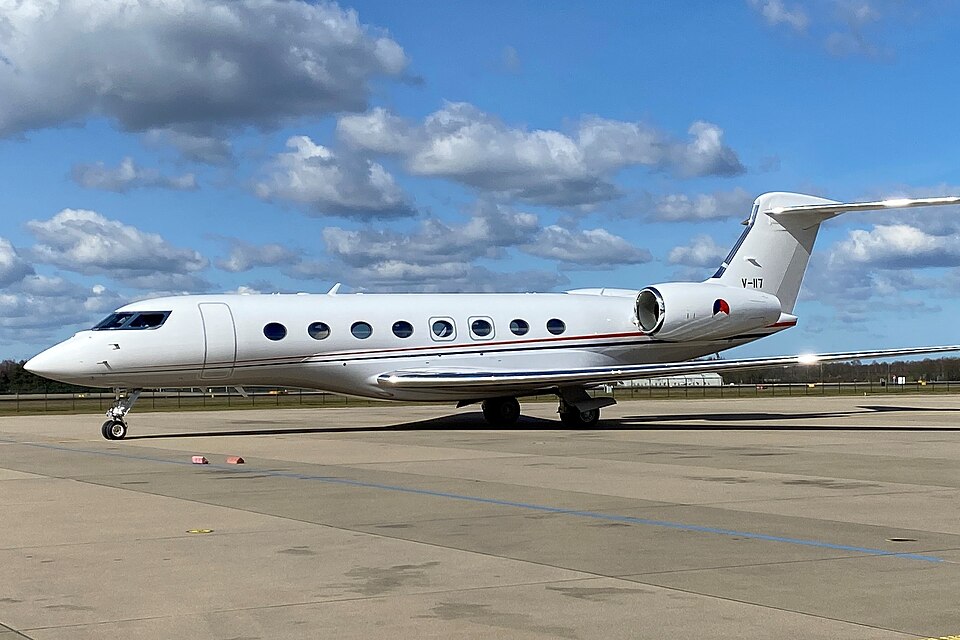
Ultra-Long-Range Jets are the top tier of purpose-built business aviation. These aircraft are designed from the ground up for one mission: getting you anywhere on earth, nonstop, in genuine comfort.
Range and speed: These jets typically cover 6,000 to over 8,000 miles, with some models capable of flights lasting more than 17 hours without refueling. Cruising speeds hover around 500 to 590 miles per hour.
Best use case: True intercontinental travel — New York to Tokyo, Los Angeles to Singapore, or any routing that would otherwise require a fuel stop and added travel time.
Popular models: Gulfstream G700, Gulfstream G650ER, Bombardier Global 7500, Dassault Falcon 10X (entering service), Bombardier Global 8000.
What to expect onboard: Separate cabin zones for dining, working, sleeping, and entertainment. Full bedrooms and private suites are standard on many models in this class. Up to 14 to 17 passengers can travel in layouts that resemble high-end hotel rooms more than traditional aircraft cabins.
Cost to charter: Hourly charter rates generally range from $8,500 to $12,500 or more, depending on the aircraft and routing.
Fun Fact: The Bombardier Global 7500 is said to be among the longest-range business jets currently in production, with a range that allows direct flights from New York to Singapore — a route that is not possible nonstop on most commercial carriers.
If you are exploring the full range of aircraft ownership options — from purchasing to chartering ultra-long-range platforms — Flying411 is here to help you make the right call for your needs.
VIP Airliners
VIP Airliners occupy a category all their own. These are converted commercial aircraft — Boeing and Airbus platforms modified with custom interiors — used to transport large groups of passengers in a private, often highly customized setting.
Range and speed: Varies widely by aircraft. Some VIP Airliners have ranges exceeding 10 hours of flight time, comparable to commercial long-haul operations.
Best use case: Large corporate delegations, government transport, sports teams, entertainment tours, or any situation where a full jet load of people needs to travel privately.
Popular platforms: Converted Boeing 737 (Boeing Business Jet), Airbus ACJ320, VIP-configured Boeing 747 and 777 variants.
What to expect onboard: These aircraft are essentially blank canvases for interior design teams. Some feature conference rooms, private suites, staterooms, and full galleys capable of gourmet meal service. Air Force One is perhaps the most recognizable example of this category.
Cost: Operating costs for VIP Airliners are among the highest in private aviation, reflecting both the size of the aircraft and the customization involved.
Good to Know: Most VIP Airliners are not available through standard charter brokers. They tend to be owned outright by corporations, governments, or ultra-high-net-worth individuals and are not typically accessible on the open charter market.
Turboprops: The Honorable Mention
Turboprops deserve a mention even though they are not technically jets. These aircraft use a propeller driven by a turbine engine, giving them many of the operational advantages of a jet — including the ability to use very short runways — while keeping costs low.
Popular turboprop models include the Pilatus PC-12 and the Beechcraft King Air 350. They are well-suited for short-range hops, access to remote airstrips, and budget-conscious travelers who want the flexibility of private aviation without jet-tier prices.
For a closer look at how different aircraft propulsion systems compare, Flying411 has a useful guide on rotary-wing aircraft versus helicopters — a good companion read for anyone building their aviation knowledge base.
Quick Tip: If your trip is under about 500 miles and requires access to a smaller airport, a turboprop can often be the smarter choice than a light jet. The cost savings can be significant, and the operational flexibility is hard to beat.
How to Choose the Right Type of Private Jet
Choosing the right jet comes down to four core questions:
1. How far are you flying? Range should be your first filter. There is no point booking a VLJ for a transatlantic trip, and no need to pay for an Ultra-Long-Range jet when you are hopping from Boston to D.C.
2. How many passengers are traveling? Passenger count determines the minimum cabin size you need. Keep in mind that comfort at cruise altitude matters — even if a jet technically seats the number you need, an undersized cabin for a five-hour flight will feel cramped.
3. What amenities matter on this trip? A quick one-hour flight to a business meeting does not require a full galley or a shower. A 14-hour nonstop across the Pacific almost certainly does. Match amenities to mission length.
4. What is the realistic budget? Charter costs scale steeply between categories. Knowing your budget ceiling early helps narrow the field quickly without wasting time comparing aircraft that are not aligned with what you can spend.
| Trip Type | Recommended Category |
| Under 2 hours, 1–4 passengers | VLJ or Light Jet |
| 2–4 hours, up to 8 passengers | Light or Midsize Jet |
| 4–6 hours, up to 10 passengers | Midsize or Super Midsize Jet |
| 6–9 hours, larger group | Heavy Jet |
| 9+ hours, nonstop intercontinental | Ultra-Long-Range Jet |
| Large group, any international route | Heavy Jet or VIP Airliner |
Why It Matters: Even one category step up or down can mean thousands of dollars per flight hour in cost difference. Getting the category right is one of the most impactful decisions in private aviation planning.
For those curious about the military side of aviation — and how institutional aircraft priorities differ from private ones — Flying411 also has an interesting look at U.S. Navy planes versus Air Force aircraft that offers broader context on how different missions drive aircraft design.
What Private Jet Ownership Looks Like Across Categories
Not everyone who flies private owns the aircraft they fly on. The private aviation market supports several different models of access:
- Full ownership — You buy the aircraft outright and operate it yourself or through a management company. Most common in the Heavy Jet and Ultra-Long-Range categories for corporations and high-net-worth individuals.
- Fractional ownership — You purchase a share of an aircraft and have guaranteed access to it (or an equivalent model) a certain number of hours per year. Popular across Midsize and Super Midsize categories.
- Jet cards — Prepaid block hours on a fleet of aircraft, typically within a specific category. Great for travelers who fly often but do not want the responsibility of ownership.
- On-demand charter — You book a specific flight on a specific aircraft as needed. Maximum flexibility with no long-term commitment. Available across all categories.
Each model has trade-offs in cost, flexibility, and aircraft availability. For most travelers who fly fewer than around 50 hours per year, on-demand charter tends to offer the best overall value.
Conclusion
The world of private aviation is broader and more nuanced than it might first appear. The types of private jets available today span everything from lean, efficient Very Light Jets to continent-crossing Ultra-Long-Range platforms — and every category in between serves a real and specific purpose.
The key is matching the aircraft to the mission. Know your range, know your headcount, and know how much in-flight comfort actually matters for the trip you are taking. When those three things align with the right jet category, private aviation delivers exactly what it promises: a faster, smarter, more comfortable way to travel.
When you are ready to explore your options, Flying411 is a trusted resource to help you find the right aircraft, understand your costs, and make confident decisions at every stage of your private aviation journey.
Frequently Asked Questions
What is the most popular type of private jet for business travel?
Midsize and Super Midsize Jets tend to be the most commonly chosen categories for business travelers, offering a practical balance of cabin comfort, range for domestic and near-international routes, and cost per flight hour. The Embraer Phenom 300 and Bombardier Challenger 350 are among the most frequently cited models in this space.
What is the cheapest type of private jet to charter?
Very Light Jets (VLJs) are typically the most affordable private jet charter option, with hourly rates that are generally lower than any other jet category. Turboprops can be even more cost-effective for very short trips that do not require jet speeds.
Can all types of private jets land at small airports?
Not all. VLJs, Light Jets, and Turboprops are well suited to small regional airports with shorter runways. Heavy Jets and Ultra-Long-Range aircraft generally require longer runways and better-equipped facilities, which limits their airport access compared to smaller categories.
How long can an Ultra-Long-Range jet fly without stopping?
Many Ultra-Long-Range jets are capable of flight times exceeding 14 to 17 hours without refueling, depending on the model, load, and wind conditions. Some configurations can fly routes like New York to Singapore or Los Angeles to Sydney nonstop or with only a single stop.
Do all private jets have a flight attendant?
Not necessarily. In the U.S., federal regulations generally require a flight attendant on board heavy jets, but smaller categories — including VLJs, Light Jets, and many Midsize Jets — typically operate with just a pilot and co-pilot. Super Midsize and Heavy Jets sometimes offer optional flight attendant service through the charter operator.