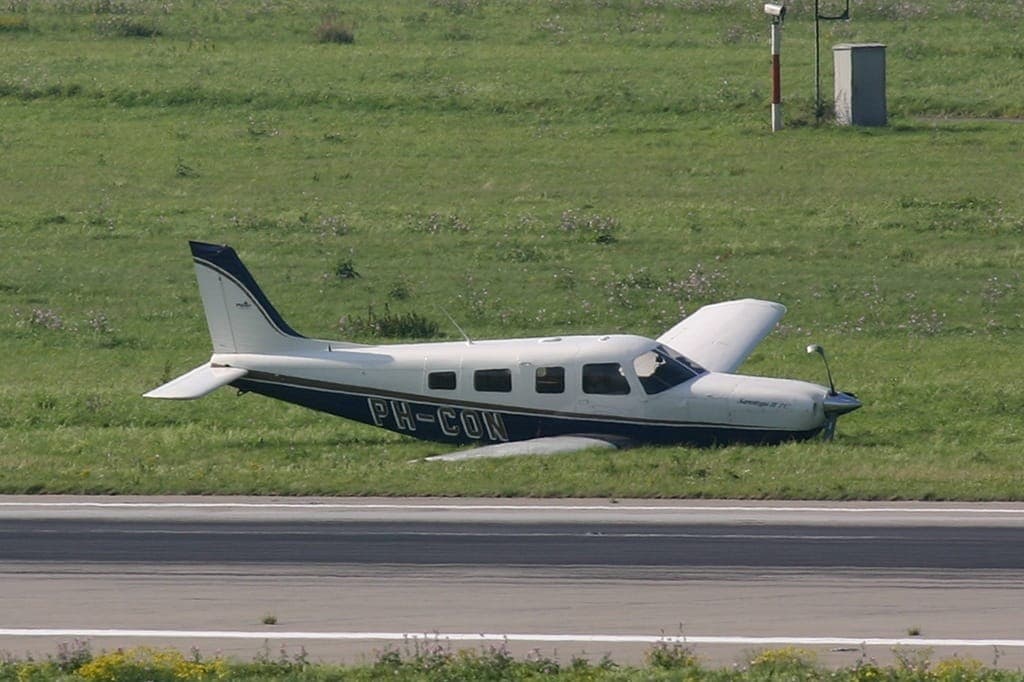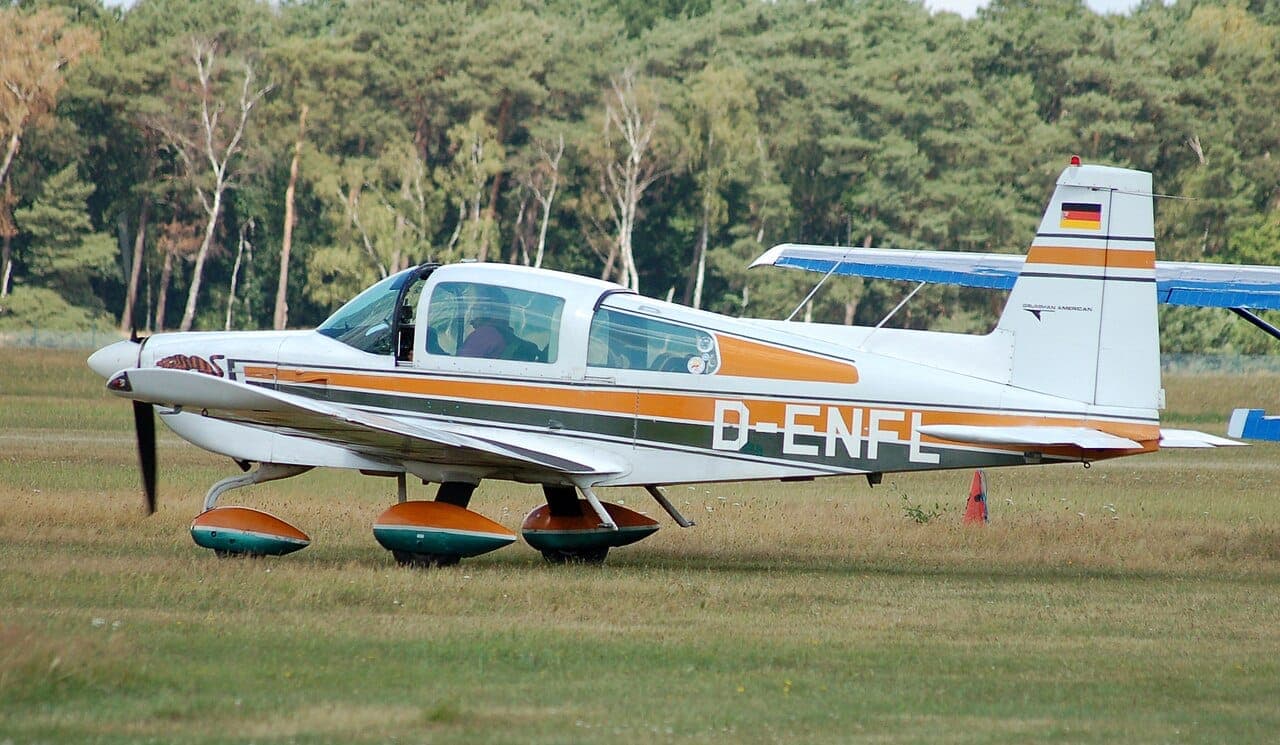
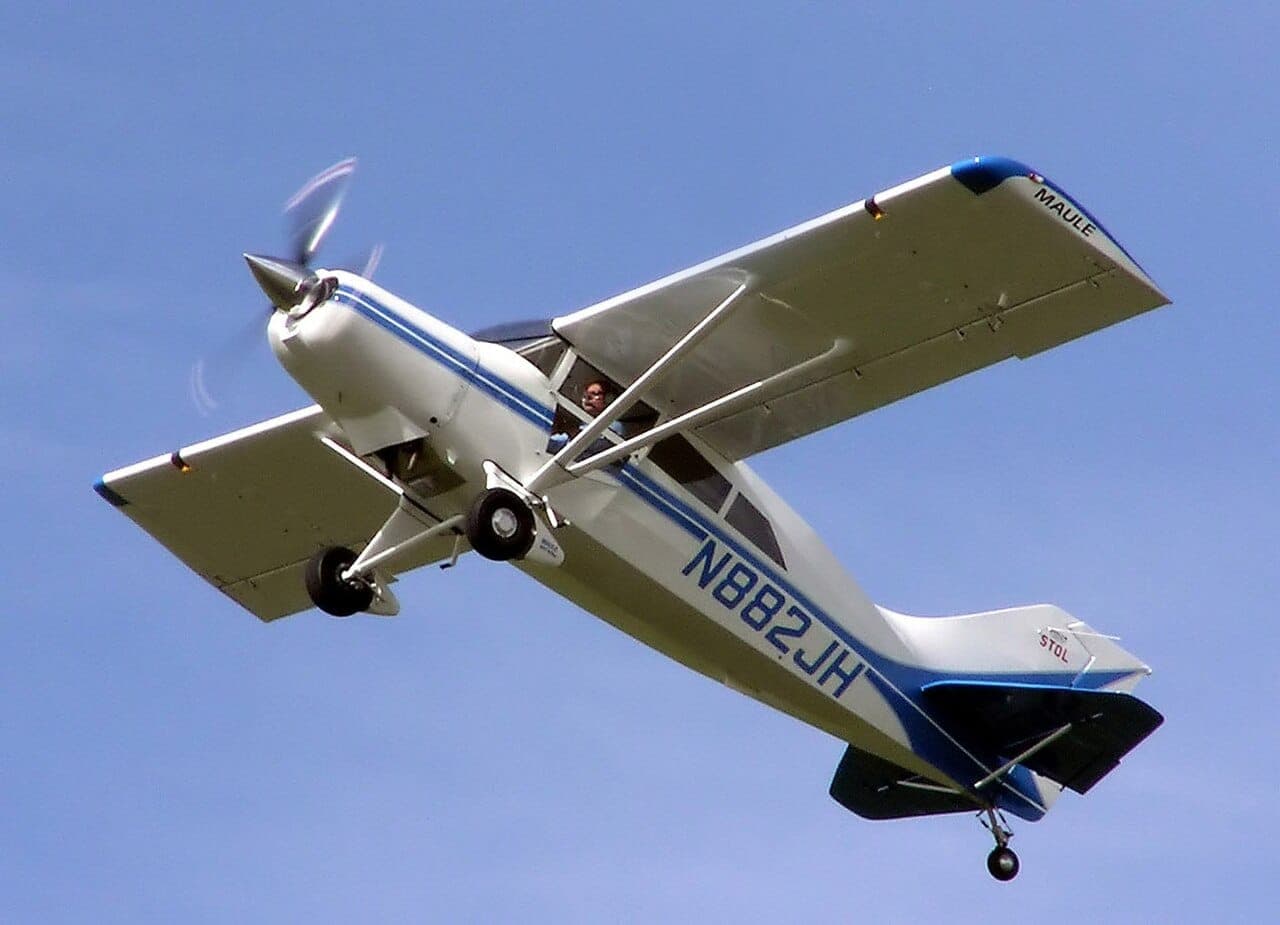
A Cessna A185F is certificated to 3,350 pounds. A Maule M-7-235 is certificated to 2,500. That is 850 pounds of difference, and the Cessna gets there on only 65 more horsepower. For a buyer trying to decide between these airplanes, that single gap explains most of what follows: what you can legally load, what floats you can hang underneath, what the insurance company charges, and what the overhaul bill looks like in ten years. The Maule M-7-235 vs Cessna 180/185 question is really a question about how much airplane you need to buy in order to do the flying you actually do.
All three are honest backcountry machines. None of them is cheap. But they are not expensive in the same places, and the cheapest one to buy is not the cheapest one to own if you plan to put it on water.
Key Takeaways
The Maule M-7-235 is the least airplane for the least money: lighter, smaller, shorter field numbers, and a Lycoming O-540 that runs 2,000 hours between overhauls. The Cessna 180 sits in the middle and is arguably the best-balanced of the three, carrying roughly 250 pounds more than the Maule on similar fuel burn. The Cessna 185 is the heavy hauler and the only one of the three that carries four adults, bags and useful fuel on floats, but it burns the most, overhauls the most expensively, and its 300-horsepower IO-520 has a published TBO of 1,700 hours rather than 2,000. Insurance tracks hull value and your tailwheel and float experience far more than it tracks the make, so the cheapest airplane to insure is usually the one with the lowest agreed value you can live with. On floats, the comparison stops being close.
| Maule M-7-235 | Cessna 180 (H/J/K) | Cessna A185F | |
| Engine | Lycoming O-540-J1A5D/J3A5/B4B5 or IO-540-W1A5/W1A5D, 235 hp, depending on variant | Continental O-470-R/S/U, 230 hp | Continental IO-520-D, 300 hp |
| Published TBO | 2,000 hours | 1,500 hr (O-470-R); 2,000 hr (O-470-U) | 1,700 hours |
| Max gross, landplane | 2,500 lb | 2,800 lb | 3,350 lb |
| Typical useful load | About 890 lb in current factory specifications; varies with equipment | About 1,200–1,300 lb | About 1,500–1,650 lb, depending on equipment |
| Usable fuel | 40 gal standard; about 70 gal with aux tanks | About 61 gal standard; 79 gal long range | About 61 gal standard; 79 gal long range |
| Planning cruise / burn | 125–130 kt on 12–13 gph | About 130 kt on 13 gph | 135–140 kt on 15–16 gph |
| Takeoff over 50 ft, gross, sea level | About 900–1,000 ft | About 1,200 ft | About 1,365 ft |
| Structure | Welded steel tube fuselage, fabric covered; aluminum wings | All metal | All metal |
| Production | M-7 series from 1984, still built to order in Moultrie, Georgia | 1953–1981, 6,193 built | 1961–1985, roughly 4,400 built |
| Common float fits | Aerocet 2200, Wipline 2100, Edo 2000 | Aerocet 2900/3400, Wipline 2350/3000 | Aerocet 3400, Wipline 3000/3730, Edo 2960 |
| Best at | Cheap short-field flying, two up | Balanced payload and economy | Hauling, and floats with a real load |
What You Are Actually Buying
The Maule M-7-235 Super Rocket is a high-wing, strut-braced four-seater built around a welded steel tube fuselage covered in fabric, with aluminum wings and very large flaps. Maule Air has been building airplanes in Moultrie, Georgia since 1957 and still takes orders, which matters more than it sounds like it should: the factory sells parts for airplanes it built forty years ago.
The Cessna 180 Skywagon ran from 1953 to 1981 with a Continental O-470 of 230 horsepower. The 185 Skywagon, built from 1961 to 1985, is the same basic airframe reinforced and given a bigger engine, climbing to the 300-horsepower IO-520-D in the A185E and later. Both are all-metal, both are out of production, and both have been appreciating for years. If you want the detailed split between those two, we cover it separately in Cessna 180 vs 185: Best Backcountry Taildragger.
Think of it like pickup trucks. The Maule is the half-ton with a short bed that fits in your garage and sips fuel. The 180 is the full-size with the standard engine. The 185 is the three-quarter-ton with the big motor and the tow package, and you pay for that capability whether you use it or not.
Good to Know: Maule built several engines into the same M-7 airframe. The M-7-235 has 235 hp, the M-7-260 and M-7-260C have 260 hp, and there were turbine versions. If a listing just says "M-7," confirm the model suffix and engine before you compare it to anything.
Cost to Buy: What Actually Moves the Price
Asking prices for all three move with the market, so rather than quote a number that is stale by spring, here is what drives the spread between two airplanes of the same model.
Engine time is the biggest single lever
An airplane at 200 hours since major overhaul and one at 1,600 hours are separated by the price of the overhaul, and that is real money. As of 2025, shops are quoting roughly $45,000 to $60,000 for a field overhaul on an O-470 or an O-540, and more for an IO-520, where $55,000 to $75,000 is a common range depending on cylinders, accessories and whether the case needs work. Those numbers include a propeller overhaul on most quotes you will receive, so read the quote line by line.
Fabric condition on the Maule
A Maule's fuselage and control surfaces are fabric covered. Good covering lasts a long time, but it does not last forever, and a professional recover and paint is a five-figure job, commonly $15,000 to $35,000 depending on how much corrosion the shop finds in the steel tube underneath once the fabric comes off. A Maule with tired fabric is not a bargain; it is a deposit on a shop slot.
Mods, floats and history
A 180 with a long-range tank, a gross weight increase STC, extended baggage, Alaska bushwheels and a fresh IFR panel is a different airplane from a stock one. Float kits and float-equipped sale prices distort everything, because the floats themselves can be worth as much as a mid-time engine. And on any of these three, damage history is common. Taildraggers that work for a living get bent. What matters is whether the repair was done properly and documented.
Heads Up: The 180/185 fleet is finite and shrinking, and the type has a loyal following that keeps the clean ones expensive. The Maule market is thinner in both directions: fewer buyers, fewer sellers, longer time on market. If you plan to resell in three years, the Cessna is the easier airplane to move.
Flying411 keeps Maule, Cessna 180 and Cessna 185 listings in one place, so you can compare engine time, float equipment and panel against asking price without hopping between brokers.
Insurance: Your Logbook Costs More Than the Make
Underwriters price these airplanes the way they price any high-performance taildragger: hull value first, then pilot experience, then what you intend to do with it. The airplane's badge is a smaller factor than most buyers assume.
As of 2025, brokers commonly quote annual hull rates in the range of 1.5 to 3 percent of agreed value for a four-seat taildragger on wheels, with a qualified, current pilot at the lower end and a low-time tailwheel pilot at the upper end or declined outright. On a $200,000 hull that is a spread of roughly $3,000 to $6,000 a year before liability. Put the same airplane on floats and expect the hull rate to climb, often by half again, because water operations generate more claims and salvage from a lake is expensive.
Three things move your quote more than anything else:
Tailwheel and make-and-model time. Most underwriters want meaningful tailwheel hours plus a specified number in type, often 10 to 25, before they will write you solo. If you do not have them, the policy will require dual with a named instructor. That is a real cost to budget in year one. If you are still building that time, our guide to the best tailwheel airplanes for your endorsement is a reasonable place to start planning.
Agreed hull value. Insuring a $120,000 Maule costs less than insuring a $280,000 Skywagon for the simple reason that the insurer is risking less. This is where the Maule genuinely wins on paper. It is also where buyers fool themselves: insuring a 185 for less than it is worth saves premium right up to the day you need the check.
Where it lives and what it does. Gravel bars, unimproved strips, glacier work and off-airport landings all get asked about. So does hangar versus tiedown.
Keep in Mind: Some underwriters treat the Maule's short-coupled landing gear as a higher ground-loop risk than the longer-legged Cessnas and respond with extra dual requirements rather than a higher rate. Ask your broker for the quote and the training requirement together, because the training is the part that costs you a week of your summer.
Cost to Keep Flying
Direct operating cost tracks fuel burn, and fuel burn tracks horsepower. At typical cruise settings, the Maule and the 180 both plan near 13 gallons per hour; the 185 plans 15 to 16. At $6.50 a gallon for 100LL, that is roughly $20 an hour more for the 185, or $2,000 over a hundred-hour year. Not catastrophic, but it compounds with everything else the bigger engine costs.
Reserves are where the real difference lives. Maule's Lycoming O-540 engines traditionally have a 2,000-hour recommended TBO, although Lycoming Service Instruction 1009BF, issued July 20, 2026, provides extended intervals for eligible factory-new and factory-rebuilt engines. The exact recommendation depends on the engine model and overhaul history. Continental's O-470-U in later Cessna 180s carries a published 2,000-hour recommendation, while the IO-520-D in the 185 is typically listed at 1,700 hours. Using conservative overhaul budgets, the 185's engine reserve can reach roughly $35 to $45 per hour, compared with approximately $25 to $30 for the smaller-engine airplanes. Add a separate propeller reserve.
Annual inspections and the items that bite
A routine owner-assisted annual on any of the three runs somewhere between $1,800 and $4,000 in most of the country as of 2025, before squawks. The squawks are where they differ.
On the Cessnas, inspect the landing gear box and the surrounding bulkhead structure carefully. Spring-gear Cessnas that have been worked hard can develop cracks there, and repairs are not trivial. Corrosion at the lower door posts, firewall, and belly is another concern, particularly on floatplanes and coastal aircraft. FAA AD 2011-10-09, which superseded AD 87-20-03, requires recurring inspections of the seat rails, locking mechanisms, and related hardware on affected Cessna 180 and 185 aircraft. Verify compliance during the prebuy.
On the Maule, the fabric and the steel tube under it are the headline. Owners and type club members also flag tailspring attachment and gear leg cracking after hard arrivals, and flap system rigging. None of it is exotic, but a Maule rewards a pre-buy by a shop that has actually opened one up.
Pro Tip: Ask any pre-buy shop to pull inspection panels in the tailcone and shine a light at the lower longerons on a Maule, and at the gear box and forward door posts on a 180 or 185. Those four areas account for most of the ugly surprises on all three types.
Flying411 gathers backcountry taildragger listings in one place, so you can compare engine time against airframe time and spot the airplanes that have been flown rather than parked.
On Floats: This Is Where It Stops Being Close
Floats are the part of this comparison that decides it for a lot of buyers, and the arithmetic is unforgiving.
Start with the Maule. Installing floats reduces useful load, but the exact penalty depends on the float model, removed landing gear, rigging, and approved aircraft configuration. A typical M-7-235 already has less than 900 pounds of useful load in Maule's current factory specifications, so payload on floats deserves careful attention. Straight floats generally preserve more useful load than amphibious floats, which add wheels and retracting-gear equipment. Before buying, use the aircraft's actual float-equipped weight-and-balance report to calculate how much fuel, passengers, and gear it can carry. The M-7-235 remains a capable floatplane, but the 260-horsepower variants offer additional power for demanding operations.
Now the 185. Its higher maximum gross weight gives it a substantial carrying-capacity advantage, but float-equipped payload must still be calculated using the approved installation. For example, Wipaire lists a net exchange weight of approximately 282 pounds for straight Wipline 3000 floats on a Cessna 185, compared with approximately 483 pounds for the amphibious version. Starting with an illustrative 1,550-pound landplane useful load, those installations would leave roughly 1,268 pounds and 1,067 pounds respectively before fuel. Actual figures depend on the aircraft's equipment and weight-and-balance records. The 185 remains the stronger choice for carrying passengers and cargo on water, especially compared with the smaller Maule.
The 180 sits in between and is a perfectly good float airplane, particularly for two people with gear. It is noticeably less eager than a 185 on a hot, calm lake at gross.
Why It Matters: Floats themselves are a major purchase. New amphibious floats for a Skywagon-class airplane are a six-figure line item installed as of 2025, and straight floats run roughly half that. If the airplane you are considering already wears good floats with a current inspection, that equipment is a large part of what you are paying for. Verify the float logbooks as carefully as the airframe logs.
Fun Fact: The 185's reputation on water is so entrenched that float-equipped examples routinely sell for more than comparable wheel airplanes with the same engine time. The floats are not just an accessory on a Skywagon; they are part of the identity.
Payload, Performance and the Mission You Actually Fly
Short-field numbers favor the Maule. Manufacturer figures put a loaded M-7-235 over a 50-foot obstacle in roughly 900 to 1,000 feet at sea level on a standard day, against about 1,200 feet for a 180 and about 1,365 feet for an A185F. Those are book numbers at maximum gross; in practice, a lightly loaded Maule with big flaps is stunning off a short strip and will out-perform either Cessna.
But compare them at the same load rather than at their own gross weights and the picture flattens. Put 600 pounds of people and gear in each airplane with four hours of fuel and the Cessnas are nowhere near their limits while the Maule is near its own. Light, the Maule is the best short-field airplane here. Loaded, it simply cannot be loaded.
Cruise splits the same way. The Maule and the 180 are both honest 125 to 130 knot airplanes; the 185 adds roughly 10 knots for roughly three more gallons an hour. Over a 500-mile leg that is about twenty minutes. If your flying is 45-minute hops to gravel bars, the speed difference is noise. If you cross a state to get to the gravel bar, it is not.
For a wider look at where these three sit among their peers, our roundup of the best bush planes for backcountry and remote flying puts them next to the Super Cub, the Husky and the rest of the field. And if you are coming from a nosewheel trainer, Cessna 185 vs 172 is a useful calibration on just how much more airplane a Skywagon is.
Parts, Support and What Happens When You Sell
Maule's advantage is that the company still exists and still builds the airplane. Factory parts for an M-7 are a phone call rather than a hunt, and the Moultrie factory has a long record of supporting older airframes. The disadvantage is a small fleet, few specialist shops outside the Southeast and Alaska, and mechanics who may never have worked on fabric.
The Cessnas are the opposite. Textron no longer builds them, but with 6,193 180s and roughly 4,400 185s produced, the aftermarket is enormous: PMA parts, salvage inventory, STC catalogs, and a mechanic in nearly every county who has done a Skywagon annual. Type club support is deep and active.
On resale, the Skywagons have the deeper buyer pool, the broader geographic demand and the stronger track record of holding value. A clean, straight 180 or 185 with good logs and no corrosion is one of the easier general aviation airplanes to sell. A Maule sells well to the person who wants a Maule, and that person takes longer to show up.
Quick Tip: Whichever you choose, join the type club before you buy, not after. The Maule and Skywagon communities both maintain running lists of known trouble spots, good shops and airplanes that have been shopped around. A $60 membership can save you a $60,000 mistake.
Flying411 keeps Skywagon and Maule listings side by side in one place, so you can see how float equipment, engine time and panel upgrades change what sellers are asking.
Which One Should You Buy?
Decide by mission, not by sticker. If you fly mostly alone or with one passenger, off short strips, on wheels, and you want the lowest acquisition price, the lowest hull value to insure and a 2,000-hour engine, the Maule M-7-235 is the sensible answer and it will out-STOL both Cessnas at light weights. If you want to carry real weight, operate on floats with more than two people aboard, and own something you can resell in a week, buy the 185 and accept the fuel burn, the 1,700-hour TBO and the bigger overhaul bill. If you are somewhere in between, which most buyers are, the Cessna 180 is the airplane that asks for the fewest compromises: about 250 more pounds of useful load than the Maule, all-metal construction, Skywagon parts support, and a fuel burn no worse.
The honest summary of Maule M-7-235 vs Cessna 180/185 is that the Maule is cheaper to buy and insure, roughly a wash to maintain once you fund the fabric, and the wrong airplane for a four-place float mission. The 185 costs the most in every category and is the only one that does everything asked of it. The 180 is the compromise that most owners end up happy with.
When you are ready to compare listings, visitFlying411and see what is on the market today.