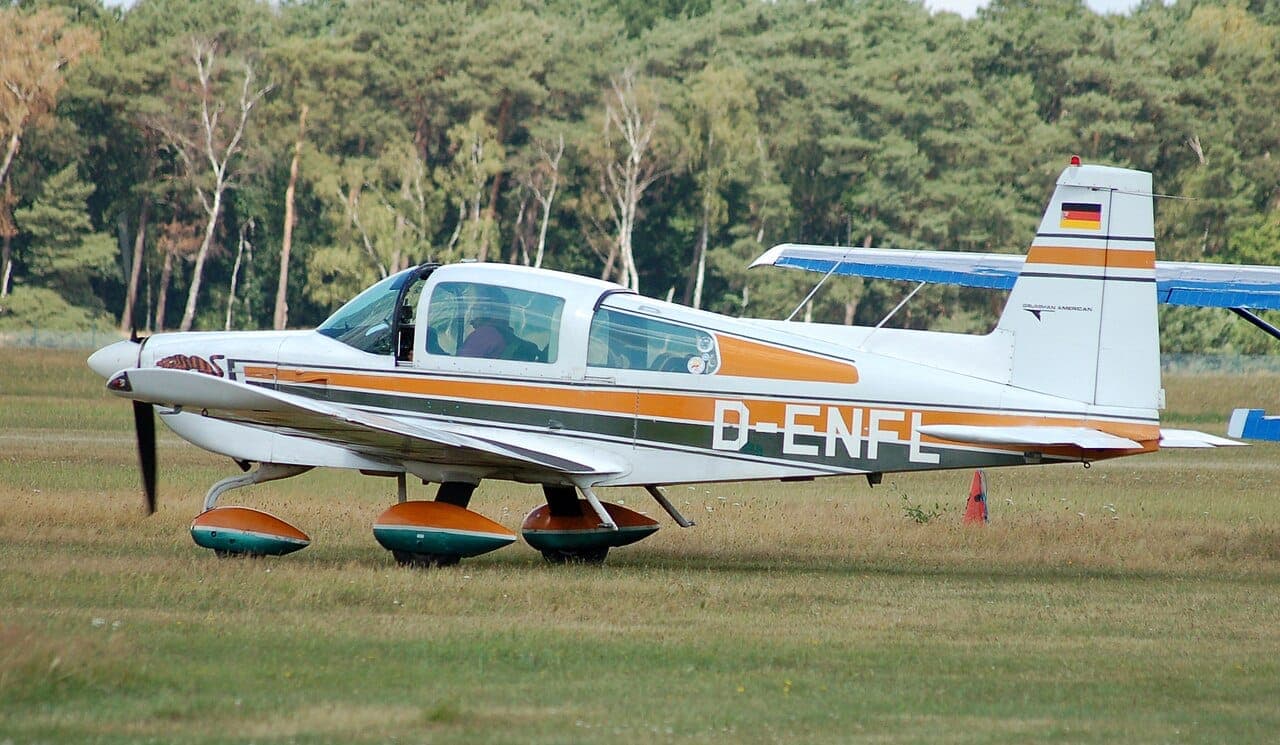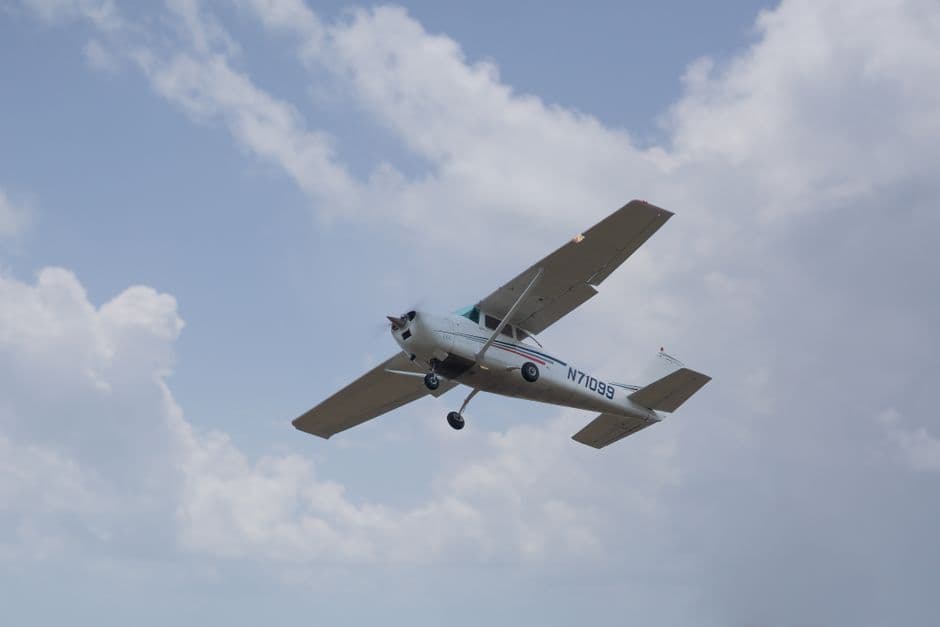
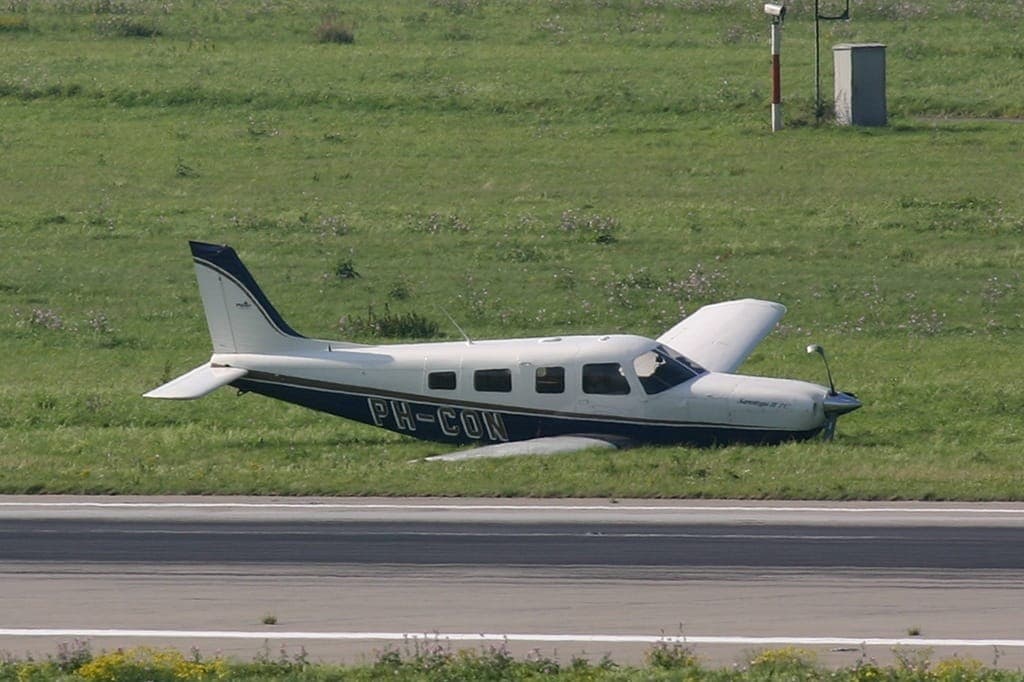
Most buyers assume a six-seat single carries six people. Neither of these does, at least not with the tanks full, and that one fact drives almost every other decision between them. The real question in a Cessna 206 vs Piper Saratoga shopping trip is not how many seats are bolted to the floor, it is how many pounds you can still put in those seats after you fuel for the trip you actually fly.
Both airplanes run a 300-horsepower six-cylinder engine. Both have a gross weight of 3,600 pounds. From there they split hard. The Cessna is a half-ton pickup with wings: fixed gear, big double doors on the right side, a flat floor, and a willingness to go to a 2,200-foot grass strip. The Piper is the three-row SUV: retractable gear on most versions, club seating, a smoother ride, and fifteen or twenty more knots on a long leg.
The Short Answer
Buy the Cessna 206 if what you load is awkward, heavy, or dirty, or if your destinations include short, soft, or wet runways. It carries roughly 100 to 250 more pounds of cabin load with full fuel than a comparable Saratoga, it swallows bulky freight through doors the Piper cannot match, and it is certified on floats. Buy the Piper Saratoga if you mostly move people and suitcases 400 to 700 miles at a time on paved runways. It is quieter and more comfortable in the back, it cruises faster on about the same fuel, and the fixed costs land close enough to the Cessna that speed becomes the tie-breaker. Per mile flown, the two are nearly a wash, which is why the mission, not the spreadsheet, should pick the airplane.
Cabin, Doors, and What Actually Fits
The 206's signature is the pair of cargo doors on the right side. They open the whole rear of the cabin. Pull the middle and aft seats, which takes a few minutes with simple hardware, and you have a flat-floored box you can slide a stretcher, a snowmobile engine, four rolls of carpet, or a week of groceries for a remote lodge straight into. Skydive operators, air ambulance outfits, and bush operators have been buying 206s for sixty years for exactly this reason, and they are not sentimental people.
The Saratoga loads through a front door on the right and a wide double door at the left rear, with a small nose baggage compartment up front. For passengers, this is the better arrangement. The rear door puts people into the cabin without climbing over a wing, and the club-seat airplanes face four passengers at each other with a table well between them. The Piper cabin is also a shade wider at the shoulders, and the whole airframe is noticeably quieter in cruise than a 206, which has a big slab of a cabin and a lot of flat glass.
Baggage tells the same story. The Saratoga gives you a 100-pound nose locker and a 100-pound aft compartment, 200 pounds total, in two tidy boxes. The 206 has a placarded aft baggage area of roughly 180 pounds, but the number misses the point: with the seats out, you load the cabin floor to the weight and balance limits and nothing else.
Why It Matters: Volume and weight are different problems. A Saratoga will often run out of places to put things long before it runs out of useful load. A 206 usually runs out of useful load first. If your cargo is light and bulky, the Cessna wins by more than the payload numbers suggest.
Edge: Cessna 206 for cargo and anything awkward, Piper Saratoga for carrying adults in comfort.
Flying411 keeps six-seat singles from both camps in one place, so you can compare useful load, panel upgrades and engine time side by side before you spend a dollar on a prebuy.
Payload and Range: the Numbers That Decide It
Here is where buyers get burned. A well-equipped U206G may show an empty weight near 2,100 pounds, leaving about 1,500 pounds of useful load against its 3,600-pound gross weight. The later 206H typically carries more equipment, with useful loads commonly around 1,350 to 1,450 pounds. Saratoga useful load varies substantially by generation: early retractable Saratoga SP models were published with roughly 1,600 pounds of useful load, while later, more heavily equipped Saratoga II HP models can be closer to 1,100 to 1,250 pounds. That means the 206's payload advantage is not universal. Compare the current weight-and-balance records of individual aircraft before deciding which carries more.
Now subtract fuel. The Saratoga holds about 102 usable gallons, which is 612 pounds. The 206 holds roughly 88 usable gallons in most long-range configurations, about 528 pounds. Full tanks in a 1,300-pound-useful-load Saratoga leave you right around 690 pounds for people and bags, which is four adults and very little else. The same exercise in a 1,500-pound 206 leaves close to 970 pounds, which is five adults and real luggage.
The honest caveat is that nobody has to fill the tanks. Both airplanes carry more fuel than most trips need. Fuel either one for four hours plus reserves and the payload gap narrows. But the gap never closes entirely, and the 206 is the airplane you can still fill to the tabs and load heavy.
Keep in Mind: Every one of these airplanes is forty to fifty years into its life, and useful load drifts with every avionics install, air conditioner, and paint job. Ask the seller for the current weight and balance page, not the brochure number. A 50-pound difference between two Saratogas on the same ramp is routine.
Edge: Cessna 206, clearly, on payload with full fuel.
| Specification | Cessna U206G / 206H Stationair | Piper PA-32R-301 Saratoga SP / II HP |
| Engine | Continental IO-520-F (U206G); Lycoming IO-540-AC1A5 (206H) | Lycoming IO-540-K1G5D (Saratoga SP); IO-540-K1G5 (Saratoga II HP) |
| Horsepower | 300 hp (310 hp in turbo T206H) | 300 hp |
| Published TBO | 1,700 hr (IO-520-F); 2,000 hr (IO-540-AC1A5) | 2,000 hr |
| Maximum takeoff weight | 3,600 lb | 3,600 lb |
| Typical equipped useful load | 1,350 to 1,550 lb | Highly configuration-dependent; early SP models can approach 1,600 lb, while later II HP models may be around 1,100–1,250 lb |
| Usable fuel | About 88 gal (long-range tanks) | 102 gal |
| Typical cabin load, full fuel | About 820 to 1,000 lb | About 640 to 790 lb |
| Book cruise, 75% power | About 140 to 148 kt; 164 kt max cruise for the turbocharged T206H | About 160 to 164 kt; near 190 kt at altitude for the turbocharged Saratoga II TC |
| Typical fuel burn in cruise | 15 to 17 gph | 16 to 17.5 gph |
| Baggage | Aft compartment placarded near 180 lb; seats remove for floor loading | 100 lb nose plus 100 lb aft |
| Landing gear | Fixed tricycle | Retractable (fixed-gear PA-32-301 Saratoga also built) |
| Cabin access | Pilot door plus wide double cargo doors, right side | Right front door plus wide rear double door, left side |
| Float approval | Yes, amphibious and straight floats available | No |
Speed and the Trip That Matters
A retractable Saratoga SP books around 160 to 164 knots true at 75 percent power in the mid-altitudes. A normally aspirated 206 books in the low to mid 140s. On a 600-nautical-mile leg, that is roughly 25 to 35 minutes of difference, which is one fuel stop you might skip or one hungry passenger you might avoid.
The turbo versions change the picture again. Piper advertised a maximum cruise near 190 knots for the Saratoga II TC at 20,000 feet, and Cessna lists 164 knots for the T206H. If you fly in the West, over weather, or out of high-density-altitude airports in summer, turbocharging is not a luxury on either airframe. It also adds cost, which we will get to.
Where the Cessna takes its speed back is at the other end of the flight. The 206 gets off short, lands short, and tolerates grass, gravel, and turf that would make a Saratoga owner wince. Approach speeds are lower, the gear is sturdier, and there is nothing to retract or forget. A trip that ends on a 2,000-foot private strip is a 206 trip, full stop, no matter what the cruise chart says.
Good to Know: The fixed-gear PA-32-301 Saratoga gives up roughly ten knots to the retractable SP but removes the gear system from your maintenance and insurance picture. If you liked the Piper cabin and disliked the retract, that airplane exists and is usually cheaper to insure.
Edge: Piper Saratoga on cruise speed, Cessna 206 on runway performance. Which one counts depends on where you land.
What It Costs Per Hour to Own
Direct costs are closer than the airplanes look. Here is a working example at 150 hours a year with 100LL at $6.50 a gallon, which is a fair self-serve assumption for late 2025 into 2026. Substitute your own fuel price and your own annual hours, because both move the answer a lot.
| Cost item (150 hr/year) | Cessna U206G | Piper Saratoga SP |
| Fuel | 16.0 gph at $6.50 = $104/hr | 16.5 gph at $6.50 = $107/hr |
| Engine overhaul reserve | $60,000 ÷ 1,700 hr = $35/hr | $66,000 ÷ 2,000 hr = $33/hr |
| Propeller reserve | About $5/hr | About $6/hr |
| Routine and unscheduled maintenance reserve | About $30/hr | About $38/hr (retractable gear, hydraulics and general airframe maintenance) |
| Direct cost subtotal | About $174/hr | About $184/hr |
| Insurance (annual) | $2,500 to $4,000 | $3,500 to $6,000 |
| Hangar (annual) | About $4,800 | About $4,800 |
| Annual inspection (annual) | $3,500 to $5,000 | $4,000 to $6,000 |
| Database and subscription fees (annual) | About $600 | About $600 |
| Fixed cost spread over 150 hr | About $80 to $96/hr | About $92 to $116/hr |
| All-in, rough | $255 to $270/hr | $275 to $300/hr |
| All-in per nautical mile | About $1.80 at 145 kt | About $1.75 at 160 kt |
Read that last row twice. The Saratoga costs ten to thirty dollars more an hour, and it also covers more ground in that hour. Per mile flown they are effectively tied. The Cessna wins if you fly short legs, carry heavy loads, and count hours. The Piper wins if you fly long legs and count trips.
Turbocharging adds to both columns. Turbochargers, wastegates, intercoolers, and exhaust systems are expensive and they do not last forever, and Continental publishes a shorter time between overhauls for the turbocharged TSIO-520 in the old TU206 than for the normally aspirated IO-520. Budget another 10 to 20 percent on the maintenance and engine reserve lines for any turbo variant, and more if you actually fly it hard in the teens.
Pro Tip: The overhaul reserve is the line owners most often skip, and it is the one that bites. A 300-horsepower six-cylinder field overhaul was running roughly $55,000 to $75,000 installed as of 2026, with factory rebuilt engines higher once you add accessories and labor. Our guides on how to calculate aircraft operating cost per hour and how much to set aside per flight hour walk through the arithmetic with your own numbers.
Edge: Cessna 206 on cost per hour, Piper Saratoga on cost per mile. Call it a draw and decide on mission.
Flying411 keeps the operating-cost guides and the live listings in one place, so you can run the hourly math on a specific airplane instead of a brochure average.
Maintenance, Airworthiness Directives, and Parts
Neither airplane is a mystery to a competent shop. Both are everywhere, both have strong parts support, and both have well-known trouble spots.
On the Piper side, wing spar condition and airworthiness directive compliance deserve careful attention during a prebuy. FAA AD 2020-26-16 was issued following a wing separation involving a high-time Piper Arrow, but it does not list the PA-32R-301 Saratoga SP or Saratoga II HP among its affected models. The directive covers specified PA-28 and earlier PA-32 variants, subject to additional applicability conditions involving service history and maintenance records. Buyers should verify the exact aircraft model, serial number and all applicable ADs rather than assuming every retractable Saratoga requires the same wing spar inspection.
Also on the Piper: retractable gear means gear swings, hydraulic pump service, door and rod-end wear, and a landing-gear system that goes out of rig if the airplane sits. None of it is exotic. All of it is money that a fixed-gear owner never spends.
On the Cessna side, the seat rail and seat lock AD that covers most of the single-engine line, AD 2011-10-09, reaches the 206 and requires recurring inspection unless improved parts are installed. Older 206s are also candidates for corrosion in the usual Cessna places, especially airplanes that flew near salt water or on floats, and the Cessna Supplemental Inspection Documents are worth reading during a prebuy even though they are not mandatory for most Part 91 operators in the United States. Exhaust systems on the Continental-powered airplanes deserve a careful look, because a crack there is both expensive and dangerous.
Engines themselves split along predictable lines. Under Lycoming Service Instruction 1009BF, issued July 20, 2026, eligible factory-new and factory-rebuilt IO-540 engines can qualify for recommended TBO intervals up to 2,600 hours, while previously overhauled engines generally retain shorter recommendations. The exact interval depends on the engine model and maintenance history. Continental's IO-520-F has traditionally carried a 1,700-hour recommended TBO, with intervals for turbocharged variants determined separately under Continental's current guidance. Older high-performance Continentals can also require cylinder work before reaching overhaul, making engine condition and maintenance records important budgeting considerations.
Heads Up: A logbook that says "fresh annual" tells you an inspection was signed, not that deferred items were fixed. On either of these airframes, pay for a prebuy by a shop that knows the type and ask specifically about spar compliance on the Piper and corrosion and seat rails on the Cessna.
Edge: Cessna 206, on simplicity. Fixed gear and fewer systems mean fewer surprises, year after year.
Which One Should You Buy?
If you run a working airplane. Lodge supply, aerial survey, skydive, air ambulance, a ranch with a dirt strip, or anything involving floats: the 206 is not just the better choice, it is the only one of the two that does the job. The Saratoga is not certified on floats, does not have cargo doors, and does not want gravel. This is not close.
If you move a family and their luggage on pavement. Four adults, two kids, bags, 500 miles at a time, paved runways at both ends. The Saratoga is the more pleasant airplane for everyone who is not the pilot. Club seating, the rear air-stair door, a quieter cabin, and fifteen to twenty extra knots add up to a better trip. If you have strong passenger opinions in your household, listen to them, because they are the ones in the back.
If you are stepping up from a 182 or a Cherokee Six. Count your hours honestly. If you fly 100 to 150 hours a year on legs under 300 miles, the extra speed of a retractable Saratoga will not repay the gear maintenance and insurance, and the 206's simplicity is worth real money. If you routinely fly 500-plus-mile legs several times a year, the Saratoga pays you back in time. Buyers in this spot often find our comparison of the Cessna 206 and the Cherokee Six 300 useful, since the Six is the Saratoga's fixed-gear ancestor and often the cheaper entry to the same cabin.
If speed is the whole point. Then neither of these may be your airplane. A Bonanza A36 or a Cessna 210 carries six seats and goes faster than either, with their own cost structures. Our write-ups on the Bonanza versus Saratoga and the Cessna 210 versus the A36 Bonanza cover that ground.
What the Market Is Asking, and the Call to Make
As of October 2026, Flying411 had 5 Piper Saratoga aircraft listed, with asking prices from $190,000 to $525,000 and a median of $332,000, model years spanning 1980 to 2005, and a median total time of 3,000 hours. Those are asking prices on current listings, not appraised values and not a guide to what any particular airplane is worth, but the spread tells you something real: the Saratoga family runs from early 1980s SPs to late glass-panel II HP and II TC airplanes, and the panel and engine time drive the number as much as the model year does.
The 206 market behaves differently. Demand from float operators, jump schools, and utility flyers never really goes away, and that demand keeps good Stationairs expensive relative to their speed. You buy a 206 for what it can carry and where it can land, not for what it costs to get there. You buy a Saratoga because it is the more civilized way to move five or six people over a long weekend, and because the hourly cost is only a little higher than the Cessna's for noticeably more airplane under your passengers.
Flown side by side, the Cessna 206 vs Piper Saratoga question answers itself the moment you write down your five most likely trips of the next year: the loads, the runway surfaces, the distances. One airplane will fit that list and the other will fight it.
Flying411 keeps Cessna and Piper six-seat singles listed together, so you can line up useful load, engine time and avionics across both types in one search.
When you are ready to compare listings, visitFlying411and see what is on the market today.