Most buyers assume the Cessna 206 is the only serious way to haul six people and their gear behind one piston engine, and that the Piper Cherokee Six is just a stretched trainer with two extra seats bolted in the back. Neither belief survives a weight-and-balance sheet. In a straight Cessna 206 vs Piper Cherokee Six 300 comparison, the two airplanes carry within about a hundred pounds of each other, the Piper is usually the faster and cheaper one to own, and the Cessna earns its premium on door geometry and runway surface rather than on raw lifting ability.
That distinction is worth real money. These two are often the same price bracket, they burn the same fuel, and they both need a high-performance endorsement under 14 CFR 61.31(f). Pick the wrong one and you will spend years working around a cabin door that does not fit your cargo, or paying for float-capable ruggedness you never take off pavement.
Key Takeaways
Both airplanes are fixed-gear, 300-horsepower, six-seat singles with useful loads in the 1,450 to 1,550 pound range, so neither one is dramatically the bigger hauler. The PA-32-300 typically carries 84 gallons usable in earlier examples, while 1979 airplanes increased to 94 gallons usable. U206G fuel capacity varies by serial number and configuration, with early airplanes carrying 59 gallons usable in the standard system or 76 gallons with long-range tanks, and later airplanes carrying as much as 88 gallons usable. The Cessna U206 answers with double cargo doors on the right side, shorter landing distances, float and amphibious approvals, and a parts and support network that never went quiet — but its Continental IO-520 is rated at 1,700 hours between overhauls, which is about 15 percent less engine life for a similar overhaul bill. If your loads are boxes, jumpers, or gravel strips, buy the Cessna. If your loads are people and suitcases going 400 nautical miles, the Cherokee Six is the better value and you should not feel bad about it.
What You Are Actually Buying
Cessna U206 Stationair
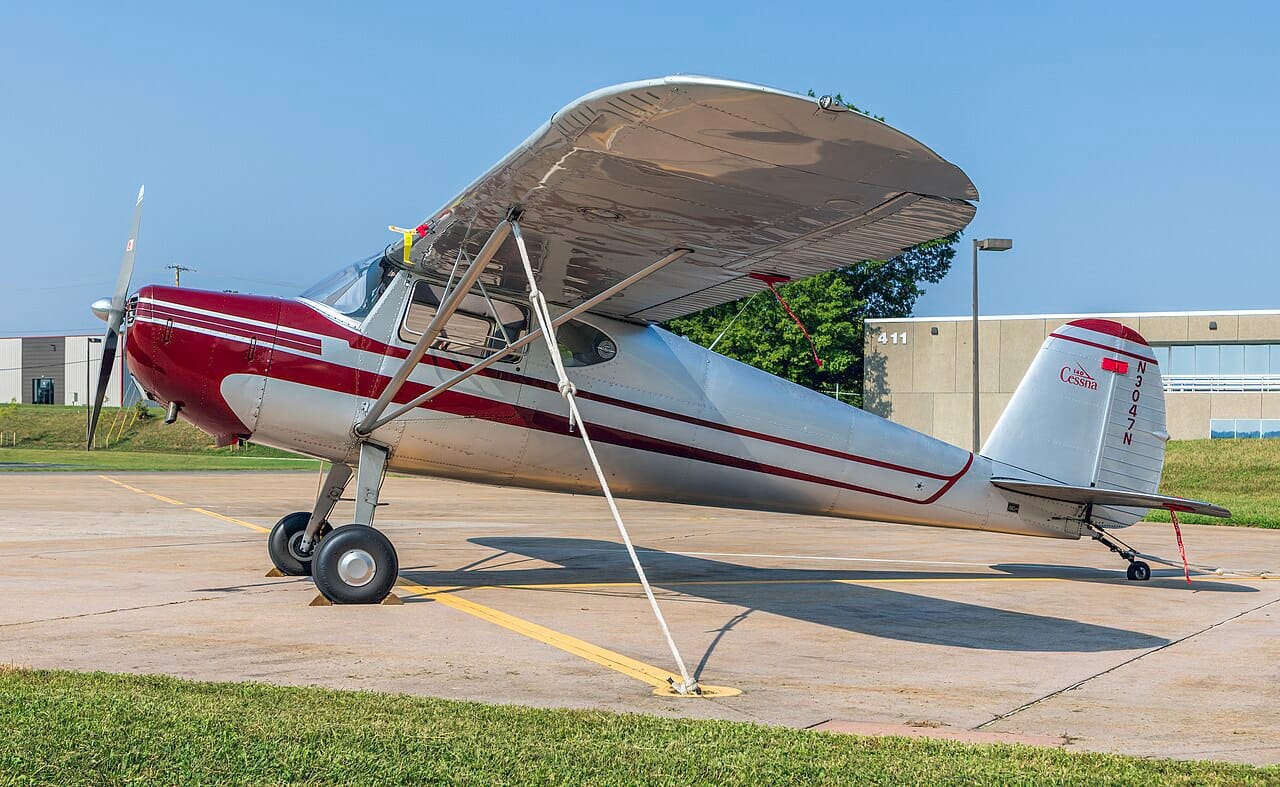
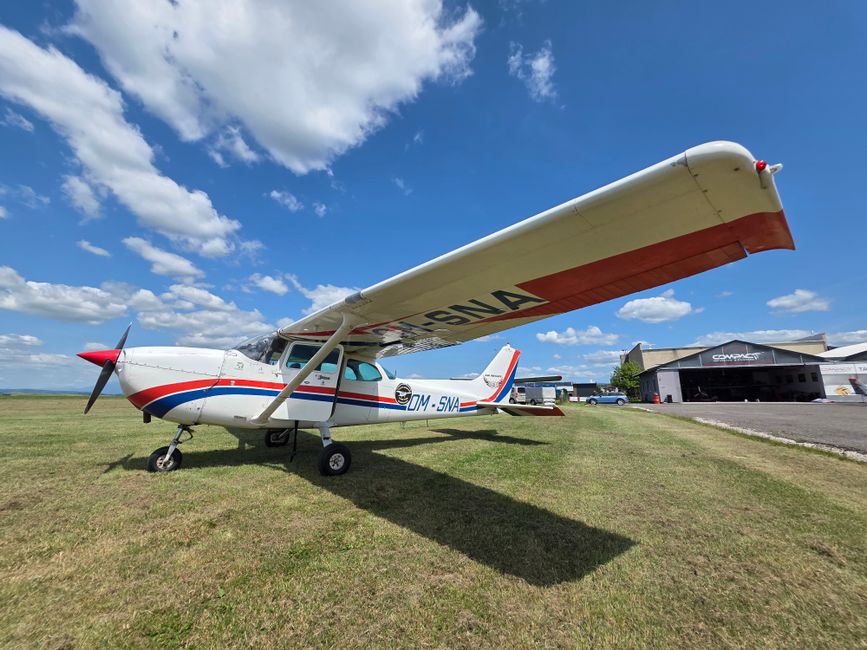
The Cessna 206 entered production in 1964 as a fixed-gear utility development of Cessna's 205/210 family, evolving into the six-seat Stationair line that followed. The version most buyers shop is the U206 in its later trim, the U206G Stationair built from 1977 to 1986, with a Continental IO-520-F rated at 300 horsepower and a 3,600-pound gross weight. Turbocharged TU206 models use a TSIO-520 and give up nothing at altitude. Production restarted in 1998 with the 206H and T206H, which switched to Lycoming power — a 300-horsepower IO-540 in the normally aspirated H — but those later airplanes sit in a much higher price bracket.
The defining feature is the right-side double cargo door. The U206 has a single crew door on the left and a wide two-panel opening on the right that swallows cargo, stretchers, camera mounts and skydivers. That is why the type still works for a living all over the world.
Piper PA-32-300 Cherokee Six
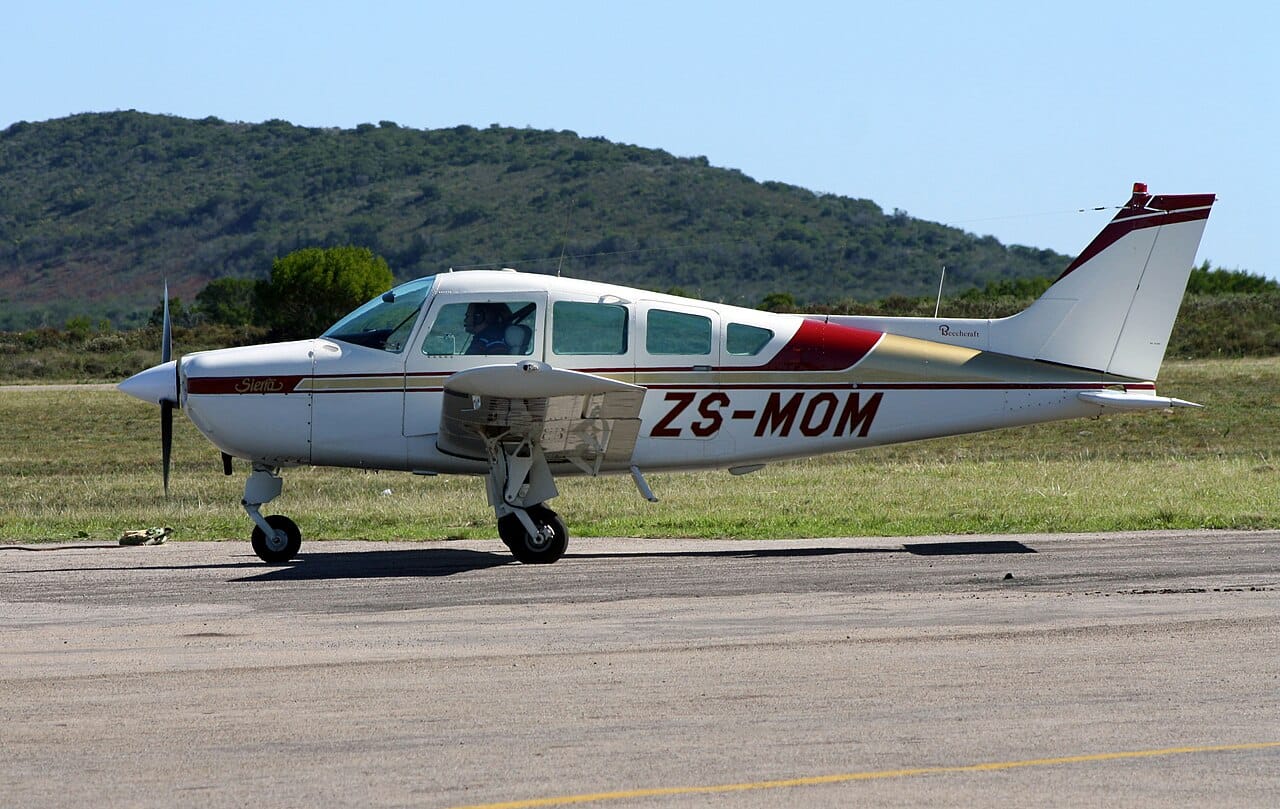
Piper built the Cherokee Six from 1965, and the PA-32-300 with the fuel-injected Lycoming IO-540 ran through 1979 before the design evolved into the Lance and then the Saratoga. Gross weight is 3,400 pounds. The cabin is long — long enough that Piper offered a seventh seat — and the airplane has two baggage areas: roughly 100 pounds allowed in the nose compartment ahead of the firewall and another 100 pounds behind the rear seats. There is a front right passenger door and a wide double door on the left rear for the cabin and cargo.
Keep in Mind: the nose locker is not a novelty. It is the reason a Cherokee Six can seat six adults and stay inside its center of gravity envelope, because weight in the nose offsets weight in the third row. Take that compartment away and the airplane becomes much harder to load legally.
If you want the broader family context, our look at the Bonanza and the Saratoga as six-seat singles covers where the retractable-gear descendants of this airframe land, and Cessna 172 vs 182 vs 206 explains how the Stationair fits above the 182 in Cessna's own lineup.
Cost to Buy
Asking prices for these two do not track their capability, they track demand from people who make money with airplanes. Working 206s get bid up by jump operations, float operators, Part 135 haulers and backcountry owners, and that pressure has kept clean Stationairs expensive for years. The Cherokee Six competes for a narrower pool of buyers — mostly families and small businesses who need six seats on pavement — so the same dollar generally buys more airplane, more panel, or fewer hours on the tach.
As of September 2026, Flying411 had six Piper Cherokee aircraft listed across all variants, with asking prices from $60,000 to $175,000 and a median of $75,000, model years from 1962 to 1976 and a median total time of 4,700 hours. Those are asking prices on current listings across the whole Cherokee family rather than PA-32-300s specifically, so treat them as a sense of where the Piper single market sits, not as a valuation of a Cherokee Six.
Heads Up: on any airplane at this price point, the engine's remaining life matters more than the airframe's condition. A runout 300-horsepower six can be a $50,000 swing on a $100,000 airplane, which is most of the purchase price shifting on one logbook entry. Price the airplane, then price the engine, then add them up.
Flying411 keeps six-seat piston singles from both camps in one place, so you can compare asking price against total time and engine time before you ever pick up the phone.
Useful Load and How Each One Loads
Here is where the myth falls apart. At typical equipped empty weights, a U206G comes out around 2,100 pounds against a 3,600-pound gross, for roughly 1,500 pounds of useful load. A PA-32-300 usually lands between 1,850 and 1,950 pounds empty against a 3,400-pound gross, which also gives roughly 1,450 to 1,550 pounds. Individual airplanes vary by hundreds of pounds depending on avionics, interior, air conditioning and paint, so weigh the actual airplane you are buying rather than trusting a brochure.
Fuel changes the picture, but the exact comparison depends on year and serial number. An earlier PA-32-300 with 84 usable gallons carries about 504 pounds of fuel. An early standard-tank U206G carries 59 usable gallons, or roughly 354 pounds, while the early long-range system provides 76 usable gallons. Later U206Gs can carry 88 usable gallons, and 1979 PA-32-300s increased to 94 usable gallons. Run the payload calculation using the actual airplane's POH and equipment rather than a family-wide fuel figure.
Shape Beats Weight
What the Cessna wins is the opening. The right-side double doors give a clear, tall, square hole into a flat cabin floor, so a bulky crate, a bicycle or a stack of survey gear goes in without gymnastics. The Cherokee Six's aft double door is wide and useful, but you are still lifting over a wing root and into a cabin with a lower ceiling. For freight and for anything that has to come out in a hurry, the 206 is not close to even — it simply wins.
The Cherokee Six wins the opposite case. Its cabin is about 49 inches wide against roughly 44 in the Cessna, the club seating option makes the middle and rear rows tolerable for adults on a long leg, and the split baggage areas let you balance the airplane instead of just filling it. For families, the Piper is the more comfortable room.
Both airplanes show up in our roundup of single-engine airplanes with the best useful loads, which is a good sanity check if you are still deciding how much airplane you actually need.
Performance and Fuel
Piper's book figures for the PA-32-300 give about 148 to 150 knots at 75 percent power, an initial climb of roughly 1,050 feet per minute, a service ceiling near 16,250 feet, and a takeoff over a 50-foot obstacle of about 1,360 feet. Cessna's numbers for the U206G show about 142 knots at 75 percent at 6,500 feet, roughly 920 feet per minute of climb, a 14,800-foot service ceiling, and a takeoff over 50 feet closer to 1,780 feet at gross.
So the Piper is about six to eight knots faster and climbs better, on essentially the same 16 to 17 gallons per hour in cruise. Over a 500-nautical-mile trip that is roughly 15 minutes. Not life-changing, but it is free, and the bigger tanks turn it into real range — comfortably 700 nautical miles with reserves against something closer to 600 for a standard-tank Stationair.
Rough-field utility is where the Cessna answers.. Its big flaps and high wing put the U206G's landing roll in the neighborhood of 735 feet, and it will do that repeatedly off dirt, grass and gravel with spring-steel main gear that shrugs off what oleo struts complain about. The 206 is also approved on floats and amphibious floats; the Cherokee Six is not. If lake flying or short unimproved strips are anywhere in your plan, that ends the discussion.
Why It Matters: the Cessna's advantage is not a dramatically shorter book landing roll; it is the combination of high-wing clearance, rugged fixed gear, cargo access and approved utility configurations that make it better suited to unimproved-field work.
Engines and Overhaul Math
The Cherokee Six 300 uses Lycoming IO-540 variants, while the U206G uses the Continental IO-520-F. Current overhaul guidance depends on the exact engine and its history. Lycoming SI 1009BF lists qualifying factory-new or factory-rebuilt IO-540 K-series engines at 2,600 hours, while overhauled engines generally start from a 2,000-hour interval with extensions available when specific conditions are met. Continental SIL98-9E lists the IO-520-F at 1,700 hours for earlier serial numbers and 1,900 hours for engines S/N 1006000 and later. Verify the installed engine's model, serial number and overhaul history before assigning an overhaul reserve.
As of 2026, shops commonly quote roughly $45,000 to $65,000 for an overhaul of either engine depending on cylinder condition, accessories, prop governor work and whether you take a field overhaul or a factory rebuilt unit. Do the division and the Lycoming's longer interval is worth a few dollars an hour. The reserve difference depends on the specific engine's applicable TBO. Using a single 2,000-versus-1,700-hour comparison can materially misstate the economics, especially under Lycoming's 2026 guidance and Continental's serial-number-dependent intervals.
The Continental's reputation for cylinder and case issues is mostly a story about the 1970s and about how the engine is operated. Owners who manage cylinder head temperatures, lean properly and fly regularly get full TBO out of IO-520s routinely. What matters more in a pre-buy is the individual engine: borescope every cylinder, get a differential compression check, pull the oil filter and send a sample for analysis, and read the logbooks for how often it flew rather than how long ago it was overhauled. A 1,100-hour engine that sat for four years is worse news than a 1,500-hour engine that flies weekly.
Good to Know: Continental offers 300-horsepower IO-550 upgrade paths for some 206 airframes under supplemental type certificate, and many Stationairs on the market have already been through one. That changes the overhaul cost, the parts list and sometimes the weight and balance, so read the STC paperwork and the Form 337 rather than assuming the airplane matches the type certificate data sheet.
Flying411 lists engine time and total time on each airplane, so you can compare a mid-time Stationair against a fresh-overhaul Cherokee Six without guessing.
Maintenance, ADs and the Inspection Traps
Neither type is a maintenance nightmare, but each has recurring items that a buyer should price before signing.
What to Check on the Piper
The FAA issued AD 2020-26-16 covering a range of Piper PA-28 and PA-32 models, requiring owners to calculate factored service hours and, at the threshold, perform an eddy current inspection of the main wing spar bolt holes. Applicability depends on model and serial number, and the factored calculation weights hours flown in 100-hour-inspection or training service more heavily. Verify by serial number whether the airplane you are buying is affected, whether the calculation has been done, and where it stands relative to the threshold — that is a specific logbook entry, not a verbal assurance.
The other Cherokee Six item is not an AD at all, it is the fuel system. Four tanks and a selector that must be managed in flight means fuel starvation with usable fuel aboard is a real accident category in this family. Any buyer transitioning from a two-tank airplane should treat tank management as a checklist item, not a habit.
What to Check on the Cessna
AD 87-20-03 and its follow-ons put a recurring inspection on the seat rails and seat lock pins in Cessna singles, including the 206. It is cheap when the parts are good and annoying when they are not. Cessna also publishes Supplemental Inspection Documents in the 206 maintenance manual, covering structural inspections for high-time airframes. They are not mandatory for Part 91 operators in the United States, but a 206 that has spent 8,000 hours hauling jumpers or flying floats has a fatigue history that deserves the attention regardless of what the rule requires.
Check the fuel bladders on bladder-equipped airplanes for wrinkles that trap water, look hard at the firewall and engine mount on any airplane with a hard-landing or float history, and inspect the cargo door frame and latches — that big opening lives a rough life.
Pro Tip: for either type, hire a shop that knows the model and give it a full day. On six-seat singles, the pre-buy items that cost real money are structural and corrosion-related, and they hide in places a two-hour look will not reach. Type clubs — the Cessna Pilots Association community and the Piper owner groups — will tell you exactly where to point the borescope.
Head-to-Head Scorecard
| Dimension | Cessna U206G Stationair | Piper PA-32-300 Cherokee Six |
| Engine | Continental IO-520-F, 300 hp | Lycoming IO-540, 300 hp |
| Recommended TBO | 1,700 hr on earlier IO-520-F serials; 1,900 hr on S/N 1006000 and later | IO-540 K-series: up to 2,600 hr for qualifying factory-new/rebuilt engines; overhauled-engine interval depends on SI 1009BF eligibility |
| Overhaul reserve per hour (at a $55,000 overhaul) | About $32 per hour | About $27.50 per hour |
| Gross weight | 3,600 lb | 3,400 lb |
| Typical useful load | About 1,500 lb | About 1,450 to 1,550 lb |
| Usable fuel | 59 gal standard / 76 gal long-range on early aircraft; later configurations up to 88 gal | 84 gal on many models; 94 gal on 1979 aircraft |
| Cruise, 75% power | About 142 kt | About 148 to 150 kt |
| Rate of climb, sea level | About 920 fpm | About 1,050 fpm |
| Takeoff over 50 ft | About 1,780 ft | About 1,360 ft |
| Landing ground roll | About 735 ft | About 630 ft |
| Cabin width | About 44 in | About 49 in |
| Cargo access | Right-side double doors, flat floor | Left aft double door plus 100-lb nose locker |
| Float approval | Yes, floats and amphibious floats | No |
| Production years (300-hp models) | 1964 to 1986, restarted 1998 as 206H with Lycoming | 1966 to 1979 |
Flying411 keeps Cessna and Piper six-seat singles side by side in one search, so you can compare year, engine time and equipment instead of trading rumors about which one hauls more.
Conclusion
The honest answer in the Cessna 206 vs Piper Cherokee Six 300 decision is that they are not really competitors for the same job, even though they compete for the same buyer. The Cherokee Six is the better family and business airplane: wider cabin, more fuel, more speed on the same burn, a longer TBO, a nose locker that makes six seats usable, and a softer purchase market. Why It Matters: the Cessna's advantage is not a dramatically shorter book landing roll; it is the combination of high-wing clearance, rugged fixed gear, cargo access and approved utility configurations that make it better suited to unimproved-field work, and demand strong enough that it holds value when you sell.
Decide by what goes in the back. Boxes, jumpers, dogs, gravel and lakes point at the Cessna, and paying its premium is rational. People, luggage and paved airports point at the Piper, and choosing it is not settling — it is spending your money where it actually does something for you. If neither quite fits, look at what the retractables offer in our Cessna 210 versus A36 Bonanza comparison before you widen the search further.
When you are ready to compare listings, visitFlying411and see what is on the market today.
Frequently Asked Questions
Can either airplane really carry six adults with full fuel?
No, and that is true of almost every six-seat piston single. With full fuel, both leave roughly 1,000 to 1,130 pounds for people and baggage, which is four adults and bags, or six adults with partial fuel. The Cherokee Six handles the six-adult case better because its nose locker lets you keep the center of gravity forward. Always run the actual numbers for the specific airframe, since equipped empty weights vary widely.
Do I need any special rating to fly one?
Both have engines over 200 horsepower, so 14 CFR 61.31(f) requires a one-time high-performance endorsement from an authorized instructor. Neither has retractable gear or a constant-pressure cabin, so no complex or pressurization training is required. Insurers will usually want a set number of dual hours in type before they cover a low-time owner, typically somewhere in the 5 to 15 hour range depending on your experience.
Which one is cheaper to run per hour?
They are close. Fuel burn is nearly identical at 16 to 17 gallons per hour in cruise, and both take standard annual inspections at similar shop rates. Engine-reserve cost depends on the installed engine's serial number and overhaul history. Current Lycoming and Continental guidance no longer supports a blanket 2,000-versus-1,700-hour comparison.
Is the turbocharged 206 worth the extra money?
Only if you regularly operate from high-elevation airports or cross real mountains with a full cabin. Turbocharging adds an intercooler and exhaust system to maintain, more heat, and typically higher overhaul costs. For low-altitude flying it buys you nothing you will use, and the normally aspirated IO-520 airplane is simpler and cheaper to keep.