At 176 knots on about 16.5 gallons an hour, a 300-horsepower Beechcraft A36 covers roughly 10.7 nautical miles per gallon. A Cessna 182 at 140 knots on 13 gallons covers about 10.8. The faster, heavier, six-seat airplane is not burning more fuel per mile — it is burning more of everything else. That single fact is why the Beechcraft Bonanza A36 vs Cessna 182 decision almost never comes down to the fuel bill.
The gap shows up in engine reserve, insurance, annual inspection labor and the landing gear system. Add it all up and the A36 runs roughly $85 more per hour than a 182 at 100 hours a year. Spread that over the extra speed and the two extra seats, and the picture changes again. Here is where every dollar of that difference actually goes.
Key Takeaways
Budgeting 100 hours a year and $6.50-per-gallon 100LL, a 1980s A36 lands near $340 per hour all-in and a comparable Cessna 182 near $255 — a difference of about $8,500 a year. Measured per nautical mile instead of per hour, that gap shrinks to roughly 7%, because the Bonanza converts the extra money into speed rather than wasting it. The A36 wins decisively if you regularly carry four or more adults, fly legs over 400 nautical miles, or value the club-seating cabin with double aft doors. The 182 wins if you fly fewer than 75 hours a year, operate off short or rough strips, or want the cheapest path to a 1,000-pound useful load. Insurance and the retractable gear are the two line items that catch first-time Bonanza buyers off guard.
What You Are Actually Buying: Six Seats and 36 Knots
The Model 36 exists because Beech stretched the Bonanza 33 fuselage by 10 inches and moved the wing forward, which opened up a genuine six-place cabin with a 400-pound aft baggage area and two large doors on the right side. That is the whole point of the airplane. You can load a cargo of golf clubs, dogs or a folded wheelchair through doors wide enough to walk a box through, and you can face two passengers backward in club seating so a four-hour leg feels social instead of claustrophobic.
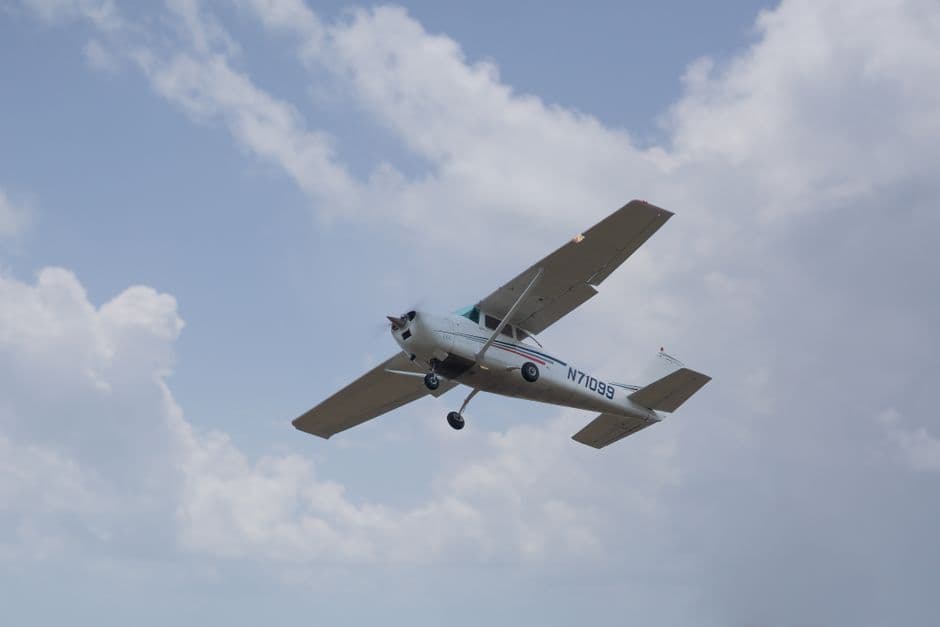
The Cessna 182 is a four-seat airplane with a 200-pound baggage compartment and one door per side. It is the half-ton pickup of general aviation: not elegant, endlessly useful, and almost impossible to wear out. The high wing shades the cabin, keeps rain off while you load, and gives you a clear look down at a field you are inspecting. The low-wing A36 gives you easier fueling, a lower center of gravity in gusty crosswinds, and a cabin that sits you in rather than on the airplane.
Speed is the other half. A 1984-or-later A36 with the Continental IO-550-B turns in about 176 knots true at 75% power. A Cessna 182 with the 230-horsepower Continental O-470 does roughly 140 knots; the later 182T with the Lycoming IO-540-AB1A5 manages about 145. On a 600-nautical-mile trip, cruising at 176 knots versus 140 knots, the Bonanza arrives approximately 53 minutes sooner, excluding climb, descent and wind. The actual difference will depend on flight conditions, power settings and whether either aircraft needs a fuel stop.
Why It Matters: Thirty-six knots does not sound like much until you price your own time. If a round trip saves two and a half hours and you fly it twenty times a year, the A36 hands back fifty hours — more than a full work week — for roughly the cost of a used car.
Purchase Price and What the Market Looks Like
Both airplanes were built in enormous numbers and both have active, well-informed owner communities, so neither is a hunt. The spread inside each type is what surprises people: a tired airframe with steam gauges and a runout engine and a fully refurbished example with a modern panel can sit two or three hundred thousand dollars apart under the same model designation.
As of October 2026, Flying411 had 5 Beechcraft Bonanza aircraft listed across all variants, asking $100,000 to $750,000 with a median of $335,000, model years 1960 to 1984 and a median total time of 4,500 hours. Over the same window Flying411 had 6 Cessna 182s listed, asking $125,000 to $415,000 with a median of $185,000, model years 1962 to 2008 and a median total time of 5,250 hours. Those are asking prices on live listings, not sale prices or valuations, and the Bonanza figure covers the 33, 35 and 36 series together rather than the A36 alone.
What the spread tells you is consistent with what owners report: the 182 market has a lower floor and a lower ceiling, and the Bonanza market rewards condition and panel far more aggressively. If your budget caps out near $200,000, you will see many more serviceable 182s than serviceable A36s.
Flying411 keeps Bonanza and Cessna 182 listings in one place, so you can compare asking prices, airframe hours and avionics side by side instead of chasing three sites at once.
Which years matter
For the A36, 1984 is the dividing line. That model year brought the 300-horsepower IO-550-B in place of the 285-horsepower IO-520-BB, a conventional throttle-propeller-mixture control layout in place of Beech's older arrangement, and a one-piece windshield. Pre-1984 airplanes are perfectly good, and many have been converted to the IO-550 under a supplemental type certificate, but the control layout is worth sitting in before you buy.
For the 182, important model changes include the 1981 introduction of the 182R, which increased maximum takeoff weight to 3,100 pounds, and the 1997 production restart with the Lycoming-powered 182S. Continental's published TBO guidance lists 2,000 hours for qualifying earlier O-470-U engines and 2,200 hours for eligible later engines. Earlier O-470-R engines have recommended intervals of 1,500 or 1,700 hours depending on serial number. Always verify the installed engine's specific eligibility. That 500-hour difference is worth about $7 an hour in reserve money, which is not nothing.
| Item | Beechcraft Bonanza A36 (1984+) | Cessna 182 (Q/R, O-470) |
| Engine | Continental IO-550-B, 300 hp | Continental O-470-U, 230 hp |
| Published TBO | 1,700 hours; 1,900 for eligible later IO-550-B engines | 2,000 hours; 2,200 for eligible later O-470-U engines (earlier O-470 variants vary) |
| Max cruise, 75% power | About 176 KTAS | About 140 KTAS |
| Fuel burn at 75% | 16 to 17 gph | 12.5 to 13.5 gph |
| Usable fuel, standard configuration | 74 gallons (80 gallons total) | 75 gallons on certain earlier 182Q configurations; 88 gallons on the 182R |
| Max gross weight | 3,650 lb | 2,950 lb (3,100 lb on 182R and later) |
| Typical useful load | 1,000 to 1,150 lb | 1,050 to 1,200 lb |
| Seats | 6, club seating optional | 4 |
| Baggage allowance | 400 lb aft compartment | 200 lb |
| Landing gear | Retractable | Fixed |
| Endorsements required | High performance and complex (14 CFR 61.31) | High performance only |
| Typical annual inspection | $3,500 to $6,000 | $2,500 to $4,000 |
| Typical engine overhaul, installed | $55,000 to $75,000 | $35,000 to $48,000 |
| Estimated variable cost per hour | About $188 | About $140 |
| Estimated total cost per hour at 100 hr/yr | About $340 | About $255 |
| Estimated cost per nautical mile | About $1.93 | About $1.82 |
| Flying411 asking prices, Oct 2026 | $100,000 to $750,000, median $335,000 (all Bonanza variants, 5 listings) | $125,000 to $415,000, median $185,000 (6 listings) |
Cost figures assume 100LL at $6.50 per gallon, hangar rent near $400 to $450 a month, and reserves funded rather than deferred. Your field, your insurer and your mechanic will move them.
Fuel, Engine Reserves, and the Real Hourly Number
Start with fuel, because it is the number everybody quotes and the one that matters least to the comparison. At 16.5 gallons an hour and $6.50 a gallon, the A36 burns $107 per hour. The 182 at 13 gallons burns $85. That is a $22 gap — about a quarter of the total difference between the two airplanes.
The engine reserve is where the gap widens. A factory rebuilt or well-done field overhaul on an IO-550-B, installed with accessories, hoses and the usual surprises, runs roughly $55,000 to $75,000 as shops are quoting in 2025 and 2026. Divide $65,000 by the 1,700-hour TBO and you are setting aside about $38 an hour. An O-470 overhaul lands nearer $35,000 to $48,000; call it $42,000 against a 2,000-hour TBO and you are at $21 an hour. Add about $3 to $4 an hour on each for propeller overhaul, which most shops recommend at six years or around 2,000 hours.
Keep in Mind: TBO is a manufacturer recommendation, not a legal limit, for Part 91 operations. That does not mean you can skip the reserve. Cylinders, a camshaft or a prop strike will take the money whether or not the logbook says you are due.
Unscheduled maintenance reserve is the line most owners underestimate. A realistic figure is $30 to $40 an hour for the A36 and $20 to $30 for the 182, driven mostly by the complexity difference: more systems, more actuators, more hydraulic and electrical bits on the Beech. Putting it together, the A36's variable cost lands near $188 an hour and the 182's near $140.
Fixed costs finish the job. Hangar, insurance, the annual inspection, database subscriptions and registration add up to roughly $15,000 a year for a typical A36 and about $11,500 for a 182. At 100 hours that is $152 and $115 of fixed cost per hour respectively. If you want to build your own numbers rather than borrow ours, our guide on how to calculate aircraft operating cost per hour walks through the same arithmetic line by line, and the companion piece on how much to set aside per flight hour covers reserve funding specifically.
Hours flown change everything
Fixed costs do not care how much you fly, so the hourly totals swing hard with utilization. At 50 hours a year the A36 is around $492 an hour and the 182 around $368. At 100 hours they are $340 and $255. At 200 hours they drop to roughly $264 and $197. The Bonanza penalty in absolute dollars per hour actually shrinks as you fly more, because the heavy fixed items get spread thinner — but the Bonanza's fixed costs are bigger to begin with, so a low-time owner feels them worse.
Heads Up: If you genuinely fly 50 hours a year, neither airplane is a good financial decision versus renting or joining a partnership. The A36 at 50 hours costs nearly $25,000 a year before you buy a single gallon of avgas beyond the first tankful.
Maintenance, Gear, and the Insurance Gap
The retractable landing gear is the single biggest structural difference in the maintenance budget. The Bonanza gear is electrically driven through a motor and gearbox, with rod ends, a retract transmission and a gear-down indication system that all require periodic rigging, lubrication and inspection. A thorough annual on an A36 includes a jacked gear swing, and shops bill for it. Owners report the inspection alone typically runs $1,000 to $1,500 more than the equivalent work on a fixed-gear single, before anything is found.
Then there is the gear-up landing. Insurers price that risk, which is why hull rates on a retractable single run meaningfully higher than on a 182 of similar value. A 300-hour private pilot with an instrument rating and some retractable time might see $3,500 to $6,000 a year on a $350,000 A36 hull, while the same pilot on a $200,000 182 might see $1,800 to $3,000. Low-time buyers should expect the underwriter to require a specified number of dual hours in type plus, often, an instrument rating before they will write the A36 at all.
Type-specific items matter too. Beech 36s use fuel bladders that stiffen and eventually leak; replacement is a four-figure job per side and is one of the first things an experienced pre-buy inspector will check for staining and seep. The American Bonanza Society's technical staff is the best resource in the world on these airplanes and worth the membership before you shop.
On the Cessna side, the big-ticket items are exhaust system cracks, seat rail wear and corrosion in airplanes that lived near salt water. Cessna's Supplemental Inspection Documents, published for the 100-series airframes, prescribe structural inspections that are not mandatory for Part 91 operators in the United States but are required by some foreign authorities and are increasingly asked about at resale. A 182 with SIDs complied with is worth a look.
Good to Know: Under 14 CFR 61.31, the A36 requires both a high-performance endorsement (over 200 horsepower) and a complex endorsement (retractable gear, flaps and a controllable-pitch propeller). The 182 needs only the high-performance endorsement, because it has fixed gear. If you are coming out of a 172, that is one fewer training hurdle and one fewer insurance condition.
Flying411 keeps maintenance-heavy details like engine time, prop time and avionics in the listing summary, so you can compare two A36s on something other than asking price.
Cost Per Nautical Mile: the Number That Settles It
Dividing the hourly cost by true airspeed is the only fair way to compare a fast airplane with a slow one. At 100 hours a year, the A36 at $340 and 176 knots works out to about $1.93 per nautical mile. The 182 at $255 and 140 knots works out to about $1.82. The Bonanza is roughly 6% more expensive per mile — and it carries two more people while doing it.
Put real trips against that. A 500-nautical-mile leg costs about $965 in the A36 and takes roughly 2.8 hours. The same leg costs about $910 in the 182 and takes 3.6 hours. You are paying $55 to save 48 minutes. For a lot of owners that is the easiest money they will ever spend. For an owner who mostly flies $100 hamburgers and 150-mile weekend hops, it buys almost nothing, and the extra $8,500 of annual fixed cost buys nothing at all.
Pro Tip: Before you commit either way, pull twelve months of your actual flying out of your logbook and sort the legs by distance. If more than two-thirds of them are under 250 nautical miles and you rarely fly with more than two people aboard, the 182 is almost certainly the right airplane and the cheaper one.
Payload tells a similar story. Full fuel in an A36 with a 1,050-pound useful load leaves about 605 pounds for people and bags. A 182R with an illustrative 1,150-pound useful load and 88 usable gallons of fuel would have approximately 622 pounds remaining for occupants and baggage, assuming six pounds per gallon. Actual capacity and payload must be verified against the aircraft's approved documents and current weight and balance. On paper the 182 wins, but it has only four seats and a 200-pound baggage box, so you cannot distribute that load the way you can in the Beech. The A36 is the airplane that lets you put two adults in club seats, a cooler through the double doors, and still close the weight and balance.
Which One Belongs in Your Hangar
Buy the Cessna 182 if you fly under 100 hours a year, operate off grass or short strips, mostly carry one or two passengers, want the simplest insurance conversation available in a high-performance single, or need the lowest purchase price that still gets you a real traveling airplane. It is also the easier airplane to sell, because the buyer pool is enormous.
Buy the Bonanza A36 if you fly 125 hours or more, routinely file legs of 400 nautical miles and up, need four to six seats with somewhere to put the luggage, and can absorb a $6,000 annual and a five-figure insurance-plus-hangar bill without flinching. The airplane is beautifully built, holds value well in good condition, and is the closest thing general aviation has to a comfortable highway sedan that happens to cruise at 176 knots.
If you are still torn, two neighbors in the same price band are worth a look: our comparison of the Cessna 210 and the A36 Bonanza covers the high-wing six-seat alternative, and the Bonanza versus Piper Saratoga piece looks at the other six-place low-wing single. If you have decided on Beech but not on which one, the F33A versus V35B comparison covers the four-seat Bonanzas, and for the Cessna side our 172 versus 182 versus 206 guide places the 182 in its own family. The Beechcraft Bonanza A36 vs Cessna 182 question has a clean answer once you know your own mission: speed and seats, or simplicity and a smaller check every month.
Flying411 keeps six-seat singles and fixed-gear travelers in one searchable place, so you can compare what an extra 36 knots actually costs on today's market.
When you are ready to compare listings, visitFlying411and see what is on the market today.
Frequently Asked Questions
How much more does an A36 cost to insure than a Cessna 182?
Expect roughly double, driven by the retractable gear and the higher hull value. A typical instrument-rated private pilot with a few hundred hours might see $1,800 to $3,000 a year on a $200,000 182 and $3,500 to $6,000 on a $350,000 A36. Low-time pilots should plan on an insurer-mandated dual requirement in type before coverage is bound.
Is the Bonanza A36 harder to fly than a 182?
It is not harder to fly, but it is less forgiving of inattention. The A36 is heavier, faster in the pattern and requires gear and propeller management the 182 does not. Most pilots transition comfortably in 10 to 15 hours of dual; the challenge is energy management on approach, not the airplane's handling, which owners consistently describe as excellent.
Does the A36 need more runway than a 182?
Yes, particularly on landing. The 182's big flaps and lighter wing loading make it the better short-field and grass airplane by a clear margin. The A36 is happy on 2,500 feet of pavement at sea level but is not the airplane for a 1,800-foot grass strip with trees.
Which one holds its value better?
Both hold value well for certified piston singles, but condition and panel matter more than model. Well-maintained A36s with modern avionics command a wide premium over tired examples, while the 182 market is deeper and steadier with a lower ceiling. As of October 2026, Flying411's listings showed Bonanza asking prices spanning $100,000 to $750,000 against $125,000 to $415,000 for the 182 — a reminder that the airplane you buy matters far more than the badge on it.