The rule that governs the tailwheel endorsement, 14 CFR 61.31(i), sets no minimum number of hours. None. It names four things you must be trained in and signed off for — normal and crosswind takeoffs and landings, wheel landings (unless the manufacturer recommends against them), and go-around procedures — and then leaves the time it takes entirely to your instructor's judgment. In practice most pilots need five to ten hours, and the airplane you pick changes that number more than your talent does. That is why choosing among the best tailwheel airplanes for your tailwheel endorsement is really a decision about how steep you want the learning curve to be, and what you want to do with the skill afterward.
This ranking is built on six criteria: how easy the type is to actually find with a willing instructor, how much it teaches you about rudder discipline, the real cost to rent or own, whether insurance will cover a low-time tailwheel pilot in it, what the airplane leads to next, and how well parts and support hold up. Airplanes that are wonderful to own but nearly impossible to get dual instruction in rank lower here, no matter how charming they are.
| Aircraft | One-line verdict |
| American Champion Citabria (7ECA / 7GCAA / 7GCBC) | The default answer: available, tough, forgiving enough to learn in and honest enough to teach you something. |
| Aeronca 7AC Champ | The cheapest honest classic; solo from the front, and it will not let sloppy feet slide. |
| Piper J-3 Cub | The best pure stick-and-rudder teacher, at a price that now has nothing to do with performance. |
| Cessna 120 / 140 | Lowest-cost path to owning a taildragger, with side-by-side seating and a gear leg that punishes carelessness. |
| Cessna 170B | Four seats, real baggage, and a genuine family airplane you can also earn the endorsement in. |
| Piper PA-18 Super Cub | Best if backcountry flying is the actual goal; a painful way to buy a first taildragger otherwise. |
| American Champion Super Decathlon (8KCAB) | Buy this if aerobatics and upset training come next, not if the endorsement is the finish line. |
| CubCrafters Sport Cub S2 / Carbon Cub | Modern, insurable, warranty-backed — and priced like a house in most of the country. |
Good to Know: If you logged pilot-in-command time in a tailwheel airplane before April 15, 1991, you are grandfathered and never need the endorsement at all. Your logbook is the proof. That cutoff catches a surprising number of pilots who assumed they needed a signoff.
1. American Champion Citabria — Best for Most Pilots Getting the Endorsement
The Citabria is the airplane most flight schools with a tailwheel program actually own, and availability is a real criterion, not a footnote. It is a fabric-covered, strut-braced tandem two-seater with a steel tube fuselage, descended from the Aeronca Champ but reworked by Champion and later American Champion into something rugged enough for rental duty. The name is "airbatic" backwards, which tells you the other half of its personality.
The 7ECA uses Lycoming O-235 variants, while 7GCAA and 7GCBC models use higher-powered Lycoming engines including O-320 and O-360 variants depending on model and year. Current Lycoming TBO guidance varies by exact engine model and eligibility, with some qualifying factory-new or rebuilt engines now carrying recommended intervals above the older 2,000-hour figures, so verify the specific engine against the latest Lycoming service instruction before valuing a mid-time airplane.
Who It's Best For
Pilots who want the endorsement in a rented airplane, done properly, and who might later add spin or basic aerobatic training in the same airframe. Also a sensible first taildragger purchase for a pilot who wants to fly it a lot rather than polish it.
What It Costs
Renting is the common path. Tailwheel rental with instruction typically ran $170 to $250 per hour wet for the airplane plus $60 to $90 per hour for the CFI through 2025, depending on region. Run the arithmetic on a realistic eight-hour course at $195 aircraft and $75 instructor: $270 per hour × 8 = $2,160, plus roughly two to three hours of ground at instructor rate, so call it $2,350 to $2,400 all in. Buying instead, 7ECA Citabrias commonly asked $45,000 to $85,000 during 2025, with 180-horsepower Explorers running higher.
Watch Out For
Fabric age is the whole ballgame. A full recover on a two-seat fabric airplane commonly runs $20,000 to $40,000 as of 2025, which can exceed a third of the airplane's value. Ask for the fabric test results and the date of the last recover in writing. Also check the wood wing spars on older Citabrias — American Champion's service literature on spar inspection and the aluminum spar conversion is required reading before you sign anything.
Flying411 keeps tailwheel trainers, backcountry singles and classic two-seaters in one place, so you can compare asking prices, engine time and fabric age across types before you commit to one.
2. Aeronca 7AC Champ — Best Value Classic
The Champ is the Cub's quieter, cheaper cousin, and in several ways the better trainer. You solo it from the front seat, which means you can see the runway on landing rollout instead of steering by peripheral vision and faith. Original 7ACs carry a 65 horsepower Continental A-65 with an 1,800-hour recommended TBO, a 1,220-pound gross weight, and a cruise around 85 mph — slow enough that a bad landing arrives gently.
A Champ also falls comfortably within the aircraft a sport pilot can operate under the FAA's post-MOSAIC sport-pilot rules, which broadens who can fly it and helps support resale interest.That matters more than people expect; a cheap airplane with a thin buyer pool is not actually cheap.
Who It's Best For
Budget-minded pilots who want to own the airplane they train in, fly locally, and care more about stick-and-rudder feel than covering ground. It is also a superb second airplane for someone who already owns something faster.
What It Costs
Typical asking prices for flying 7AC Champs sat around $30,000 to $55,000 through 2025, with the spread driven almost entirely by fabric condition and engine time rather than avionics. Direct operating cost is genuinely low: at roughly 4.5 gallons per hour and $6.50 a gallon for 100LL, fuel is about $29 an hour. Add oil, annual and reserves and many owners land near $65 to $85 an hour, all-in, on 100 hours a year.
Watch Out For
Many Champs have no engine-driven electrical system, meaning hand-propping and often no transponder or ADS-B Out unless equipment has been added. That restricts access to Class B and C airspace, although aircraft originally certificated without an engine-driven electrical system have specific transponder and ADS-B exceptions in some surrounding airspace.
Quick Tip: Before you shop, call an insurance broker and ask what dual-in-type requirement they would attach to each type on your shortlist. Underwriters commonly want 10 to 25 hours in make and model for a pilot with zero tailwheel time, and that requirement is far easier to satisfy in a type with instructors nearby.
3. Piper J-3 Cub — Best Pure Teacher
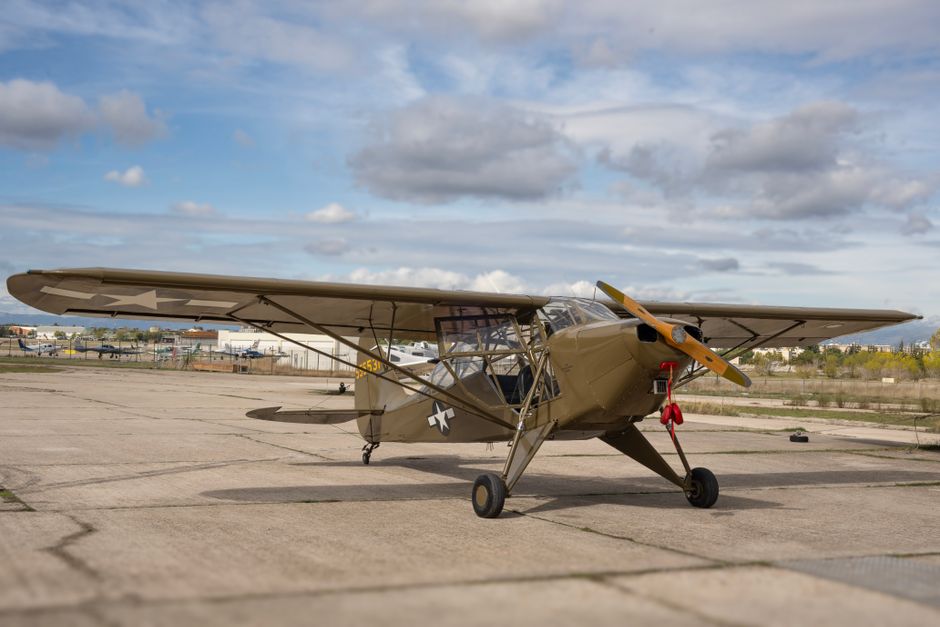
The Cub teaches rudder better than almost anything because it gives you no other option. Solo from the rear seat, forward visibility on the ground is essentially nil, so you learn to S-turn while taxiing and to judge the flare by the runway edges in your peripheral vision. No flaps. Usually no electrical system. A 65 horsepower Continental A-65 pulling a 1,220-pound airplane to a cruise near 75 mph.
Every habit you build in a Cub transfers upward. Pilots who learn in one tend to arrive at a Super Cub, a Cessna 180 or a Husky with their feet already educated. If you are curious how those bigger utility taildraggers differ, our comparison of the Cessna 180 and 185 as backcountry taildraggers covers the step up.
Who It's Best For
Pilots who want the endorsement to mean something, who fly from grass, and who accept slow as a feature. Also anyone drawn to the restoration side of the hobby — the Cub is on our list of the best vintage aircraft to restore for good reason.
What It Costs
This is the awkward part. J-3 prices have detached from performance. Flying J-3s commonly asked $60,000 to $120,000 during 2025, with restored, award-quality examples going well past that. You are paying for scarcity and nostalgia, not for a 75 mph cruise. The flip side is that Cubs have held value remarkably well — a pattern we dig into in how airplanes hold their value over time.
Watch Out For
Two things. First, wheel landings in a Cub are perfectly doable but the airplane's light wing loading makes them unforgiving of extra speed, so budget more dual than you would in a Citabria. Second, logbook continuity: many Cubs have been rebuilt two or three times over eighty years, and the paper trail is where value lives. A gap in the records on an eighty-year-old airframe is a price negotiation, not a deal-breaker, but only if you spot it.
4. Cessna 120 / 140 — Best Cheap Path to Ownership
If you want to buy rather than rent and you want side-by-side seating with your instructor, the 120 and 140 are the value play. Built from 1946 to 1951, they are all-metal fuselages with a 85 horsepower Continental C-85 (the 140A moved to a 90 horsepower C-90 and metal wings), a 1,450-pound gross weight and a cruise near 105 mph. The 140 has flaps and an electrical system; the 120 was the stripped model, often without either, though many have been upgraded.
Here is why it teaches well: the spring-steel main gear stores energy. Land flat and fast and the airplane will hop, and the narrow track means any swing develops quickly. That makes the 140 a demanding first taildragger — in the useful sense. Pilots who get comfortable in a 140 rarely find a 170 or 180 intimidating.
Who It's Best For
The owner-pilot on a real budget who wants a metal airplane (no recover bills), an instructor sitting beside rather than behind them, and something that will cruise at a useful speed afterward.
What It Costs
Flying 120s and 140s commonly asked roughly $28,000 to $55,000 through 2025. The C-85 and C-90 carry an 1,800-hour recommended TBO, and a field overhaul on these small Continentals has been quoted in the $22,000 to $30,000 range in recent years — which on a $35,000 airplane is the single biggest number in the deal. If the engine is near runout, read replace or overhaul your aircraft engine before you negotiate.
Watch Out For
Corrosion in the lower fuselage and around the gear box attach area, and fabric wings on early 140s (the 140A got metal). Also check for a history of gear-leg damage — repeated hard landings leave evidence, and a previous groundloop repair should be documented, not inferred.
Keep in Mind: A groundloop repair in the logs is not automatically a red flag. A properly documented, signed-off repair by a competent shop is better than an undocumented airframe. What should worry you is wrinkled skin near the tailcone with nothing in the records to explain it.
5. Cessna 170B — Best if You Need Four Seats
Most pilots chasing the endorsement eventually want an airplane that carries people and bags. The 170B does that while still being a legitimate tailwheel trainer. It runs a 145 horsepower Continental O-300 six-cylinder with an 1,800-hour recommended TBO, a 2,200-pound gross weight, big 40-degree Para-Lift flaps and a cruise around 120 mph.
Those flaps change the airplane's personality. You can fly a genuinely slow, steep approach, which makes short grass strips accessible and makes the flare easier to judge than in a flapless classic. The 170B is more airplane than a Champ, so it takes a bit more to get out of shape and a bit more to recover once it does.
Who It's Best For
Owners who want one airplane for family trips, backcountry weekends and the endorsement itself. It is also the honest budget alternative to a Cessna 180 for people who do not actually need 230 horsepower.
What It Costs
Clean 170Bs commonly asked around $55,000 to $110,000 during 2025, with the top of that range reserved for fresh engines, good paint and upgraded panels. Expect to burn about 8 gallons per hour: at $6.50 a gallon that is $52 an hour in fuel alone, roughly double a Champ.
Watch Out For
Spar corrosion and the condition of the wing attach fittings on any 1950s Cessna, and the O-300's cylinder and valve history — parts for the six-cylinder Continental are available but not cheap. Ask specifically about the gearbox area and the tailwheel spring attach. And check whether someone has hung a tundra-tire and big-engine conversion on it, which changes both insurance and the useful load math.
Flying411 keeps four-seat classics like the 170B alongside modern Cubs and utility singles in one place, so you can compare what your money buys in speed, seats and engine time side by side.
6. Piper PA-18 Super Cub — Best if Backcountry Is the Real Goal
The Super Cub is what a J-3 becomes when you give it a 150 horsepower Lycoming O-320, flaps, a 1,750-pound gross weight and real short-field ability. It is an outstanding airplane and a mediocre first purchase, purely on economics.
As a trainer it is excellent: heavy enough to be stable, powerful enough to make go-arounds trivial, and honest about wheel landings. Instructors love them. The problem is the price of admission and the insurance conversation that follows.
Who It's Best For
Pilots whose real objective is Idaho gravel bars, Alaskan river banks or hunting strips — not the signoff. If you are certain that is where you are headed, learning in the airplane you will keep is efficient and avoids paying twice.
What It Costs
Super Cubs are one of the strongest-holding values in general aviation. Through 2025, PA-18-150s commonly asked $150,000 to $300,000, with heavily modified backcountry examples above that. A bush-kitted airplane with big tires, a heavy-duty gear and a Borer prop sits at the upper end.
Watch Out For
Insurance. Underwriters treat high-value tailwheel airplanes flown by zero-tailwheel-time pilots cautiously, and a hull value near $250,000 concentrates the risk. Expect a dual-in-type requirement at the high end of the 10 to 25 hour range, and get a written quote before you make an offer. Also scrutinize prior damage history hard — these airplanes work for a living, and our guide to signs an aircraft is overpriced applies double in a hot segment.
7. American Champion Super Decathlon — Best if Aerobatics Come Next
The 8KCAB carries a 180 horsepower Lycoming AEIO-360 with inverted fuel and oil systems, and is certified to +6 and −5 g. It is a capable, symmetrical-airfoil aerobatic airplane that happens to be a taildragger, rather than a taildragger that happens to roll.
You can absolutely earn the endorsement in one, and if your plan is spin training, unusual-attitude recovery or competition aerobatics, doing it all in the same airframe saves transition time. The flip side is that a Decathlon is heavier on the controls in roll than a Citabria and costs meaningfully more per hour.
Who It's Best For
Pilots who want upset recovery skills, CFIs building spin-training currency, and anyone who has already decided aerobatics are part of their flying life.
What It Costs
Used Super Decathlons commonly asked roughly $90,000 to $180,000 through 2025 depending on year, fabric and whether the constant-speed prop and inverted systems are fresh. Rental with an aerobatic instructor typically ran well north of $300 an hour combined in 2025, which makes it an expensive way to learn plain wheel landings if that is all you need.
Watch Out For
Aerobatic airframes lead hard lives. Ask for the wing spar inspection history, look closely at the wood spars or confirm the metal spar modification, and find out whether the airplane has been used for instruction. A school Decathlon with 4,000 hours of spin training on it is a different asset from a privately owned one with 900 hours.
Heads Up: A tailwheel endorsement is not a spin endorsement and is not an aerobatic qualification. They are separate things. Only flight instructor applicants are required to hold a spin training endorsement, and nothing in 61.31(i) mentions spins at all.
8. CubCrafters Sport Cub S2 and Carbon Cub — Best Modern Option
If your objection to classics is that they are eighty years old, CubCrafters builds the answer. The Sport Cub S2 uses a 100 horsepower Continental O-200 in a Cub-shaped airframe with modern construction, and the Carbon Cub family steps up to CubCrafters' own 180 horsepower CC340 with dramatically better short-field numbers. Both are factory-new, warranty-backed, and supported by a manufacturer that answers the phone.
For training purposes they behave like very good Cubs with better brakes, better visibility and better systems. Insurance companies also tend to look kindly on a current-production type with a factory training pathway.
Who It's Best For
Buyers who want new rather than restored, who value parts availability and support over provenance, and who may be flying under sport pilot privileges in the S2.
What It Costs
This is where the ranking honesty matters: new factory-built CubCrafters airplanes have been priced above $300,000 as of 2025, and Carbon Cub variants run higher with options. Used Sport Cub S2s have traded well below new pricing but still sit in six figures. If you want the Cub experience for a quarter of the money, buy a Champ. If you want the support package, buy this. The company also offers an amateur-built kit path, which changes the economics entirely — see our walkthrough on building your own airplane kit.
Watch Out For
Dual instruction in an experimental amateur-built version can involve additional operating rules, but a LODA is not automatically required. Under §91.326, ordinary owner/operator training can qualify without one, while aircraft broadly offered for compensated flight training generally require FAA deviation authority.
Flying411 keeps new-production Cubs, used LSAs and seventy-year-old classics in one place, so you can see exactly what the premium for modern support actually costs you.
Choosing the One That Fits Your Next Five Years
The ranking above is honest about a tension: the airplanes that teach the most are rarely the ones you will keep, and the ones you will keep are rarely the cheapest place to learn. If the endorsement itself is the goal and you are not buying, rent a Citabria and be done for roughly $2,000 to $3,000. If you want to own, the Champ and the Cessna 140 are the two genuinely affordable entries, and they teach different lessons — the Champ teaches feel, the 140 teaches consequences.
One practical sequencing note: get the endorsement first, then buy. Pilots who buy a taildragger before they have any tailwheel time routinely discover that the insurance dual-in-type requirement costs more than the endorsement would have, and that they bought the wrong airplane for the flying they actually do. Ten hours of rental in something ordinary is cheap tuition for a six-figure decision. If you are earlier in the process than that, our step-by-step guide to becoming a pilot lays out the order of operations.
Pro Tip: When you shop for any of the best tailwheel airplanes for your tailwheel endorsement, ask the seller for the last three annual inspection entries, not just the most recent. Recurring squawks that keep reappearing and getting deferred tell you more about the airplane than a fresh annual ever will.
Whichever type you settle on, the endorsement does not expire and does not require a recurrence. Your proficiency does. Pilots who fly a taildragger twice a year are not tailwheel pilots; they are pilots with a signature in a logbook. Budget for the flying, not just the purchase.
When you are ready to compare listings, visitFlying411and see what is on the market today.