Have you ever watched a plane climb through the clouds and thought, "I want to be up there"? Many have felt this. Learning how to become a pilot is one of the most searched topics in aviation — and one of the most life-changing decisions a person can make. Whether you picture yourself flying a small Cessna on a quiet Sunday morning or sitting in the left seat of a regional jet, the path to the cockpit is more structured — and more reachable — than most people expect.
The U.S. is said to have more active certificated pilots than any other country in the world, with hundreds of thousands flying everything from ultralights to wide-body airliners. That number keeps growing, and it's not hard to see why.
The aviation industry is experiencing a well-documented shortage of qualified pilots, creating real career opportunities for anyone willing to put in the work. At the same time, flying for the pure joy of it — the freedom, the perspective, the challenge — remains one of the most powerful draws of all.
In this guide, we'll go through every step of the process, from understanding your license options to logging your first solo hours and passing your checkride.
Key Takeaways
To become a pilot in the United States, you need to meet basic age and health requirements set by the Federal Aviation Administration (FAA), pass a medical exam, complete flight training at an approved school, log the required number of flight hours, and pass both a written knowledge test and a hands-on practical exam called a checkride. The type of certificate you pursue — from a private pilot certificate all the way up to an airline transport pilot (ATP) certificate — determines how many hours you need, how long training takes, and how much it costs.
| Key Takeaway | Details |
| Minimum age to solo | 16 years old |
| Minimum age for private certificate | 17 years old |
| Medical certificate | Required before flying solo |
| Minimum flight hours (private) | 40 hours (most students take 60–70) |
| Minimum flight hours (ATP) | 1,500 hours (or less with R-ATP) |
| FAA knowledge test | Required for all certificate levels |
| Practical exam (checkride) | Required for all certificate levels |
| Estimated cost (private) | $10,000–$15,000 |
| Estimated cost (full ATP path) | $80,000–$120,000+ |
| Time to private certificate | 3–6 months average |
Flying411 is your trusted resource for aviation guides, aircraft information, and expert advice at every stage of your journey — from your first lesson to your career milestone.
Why So Many People Want to Become a Pilot Today
There has never been a stronger moment to pursue a pilot career. The aviation industry is experiencing one of the most significant shortages of qualified pilots in its modern history. Airlines, cargo carriers, charter companies, and private operators are all actively searching for trained, certified aviators. Boeing's pilot outlook has long projected a need for hundreds of thousands of new pilots over the coming decades — and that demand shows no signs of slowing down.
Why It Matters: A growing pilot shortage means more job openings, stronger hiring incentives, and better pay packages for new aviators entering the workforce. Getting your certificate now positions you ahead of the curve.
But not everyone who wants to fly is chasing an airline paycheck. Plenty of people pursue a pilot certificate purely for the joy of it. There's something uniquely freeing about climbing above the clouds on a Saturday morning, navigating by landmarks, and landing at a small airstrip an hour from home. Flying gives you access to places that take hours to reach by car — and it does it in a way that no other hobby can match.
The Top Reasons People Choose to Fly
Here's why so many people are deciding to become a pilot right now:
- Career opportunity: The pilot job market is strong, with regional airline first officers earning competitive starting salaries and major airline captains earning well into the six figures
- Personal freedom: Flying your own plane means traveling on your schedule, skipping long security lines, and reaching smaller destinations that commercial airlines don't serve
- Mental challenge: Aviation demands sharp thinking, focus, and real skill — deeply rewarding for people who enjoy learning and problem-solving
- Community: The aviation world is a tight-knit group of passionate people who love sharing their knowledge and enthusiasm
- Adventure: Whether it's a short hop to a nearby airpark or a cross-country trip to a fly-in breakfast, flying opens up a whole new way of experiencing the world
The rise of modern flight simulators, online ground school courses, and increasingly accessible training programs has also made getting started easier and more affordable than ever. You don't need to live near a major city. Many small regional airports offer quality instruction and reasonable hourly rates on training aircraft.
Fun Fact: The U.S. is said to have more certificated pilots per capita than almost any other nation in the world — and the general aviation community at smaller airports is often where the most passionate aviators are found.
What Kind of Pilot Can You Become?
Not all pilot certificates are the same. The type of certificate you earn determines what you can fly, when you can fly, and whether you can be paid for it. Here's a clear breakdown of your options.
Student Pilot Certificate
This is the first step for anyone just getting started. A student pilot certificate allows you to fly solo under the supervision of a flight instructor. There's no written exam required — you just need to meet age and medical requirements. Think of it as your learner's permit for the sky.
Private Pilot Certificate (PPL)
A private pilot certificate lets you fly for personal travel and recreation. You can carry passengers and fly to most U.S. airports. The one limitation is that you can't be paid to fly. This is the most popular starting point for new flyers. For many people, it also marks one of the greatest personal achievements of their lives.
Instrument Rating (IR)
This is an add-on to your private certificate that allows you to fly in clouds and low visibility using only your cockpit instruments. It's a major confidence builder and opens up far more flying days throughout the year — especially in areas with unpredictable weather.
Commercial Pilot Certificate (CPL)
A commercial certificate lets you get paid to fly. Charter flights, aerial photography, banner towing, and cargo operations all require this level. You'll need more flight hours and a higher degree of technical precision.
Airline Transport Pilot Certificate (ATP)
The ATP certificate is the highest level of pilot certification in the U.S. It's required to serve as captain of an airliner and demands at least 1,500 hours of flight time, a demanding knowledge exam, and strict physical standards. This is the pinnacle of the professional pilot path.
Certified Flight Instructor (CFI)
A flight instructor certificate allows you to teach other pilots. Many commercial-track pilots earn their CFI rating to build flight hours while earning income. It's also one of the most rewarding roles in aviation — passing the passion for flying on to the next generation.
Good to Know: You can also earn a Sport Pilot Certificate, which allows you to fly lighter-weight aircraft with fewer requirements. The FAA's newer MOSAIC rule has expanded what sport pilots can fly — worth reading if you're considering the lighter-aircraft route.
Who Can Become a Pilot? The Basic Requirements
The eligibility requirements to become a pilot are straightforward. The FAA has clear rules about age, health, and language ability.
Age Requirements
| Certificate Level | Minimum Age |
| Solo flight | 16 years old |
| Private Pilot Certificate | 17 years old |
| Commercial Pilot Certificate | 18 years old |
| ATP Certificate | 23 years old (21 with R-ATP) |
Medical Certificate Requirements
You'll need to pass a medical exam from an FAA-approved Aviation Medical Examiner (AME). The level of medical certificate required depends on your flying goals:
- Third class medical certificate: Required for student and private pilots
- Second class medical certificate: Required for commercial flying privileges
- First class medical certificate: Required for airline transport pilot privileges
Common concerns include certain heart conditions, vision problems that can't be corrected, and specific medications. But many conditions that people assume are automatic disqualifiers are actually manageable. It's always worth speaking with an AME before assuming you're out.
Heads Up: Mental health has become a more openly discussed topic in aviation. The FAA has worked to update some of its policies to make it easier for pilots to seek help without fear of losing their medical certificate. If this is a concern for you, reading up on mental health in aviation can help you understand your options before you visit an AME.
Other Basic Requirements
- You must be able to read, speak, write, and understand English
- You must be a U.S. citizen or meet TSA clearance requirements if training at a U.S. flight school
- You must hold a valid government-issued ID
The path to becoming a pilot is open to a wide range of people. Age, background, and even many medical histories don't automatically close the door. Millions of people have walked through it — and you can too.
How to Become a Pilot: Your Step-by-Step Path to the Cockpit
Here's your full roadmap, from the first decision all the way to holding your certificate.
Step 1 — Choose What Type of Pilot You Want to Become
Start with one simple question: Why do you want to fly? Your answer shapes everything — how long training takes, how much it costs, and which certificate you're working toward.
If you want to fly for fun and personal travel, a private pilot certificate is your first goal. If you're aiming for an airline career, you're looking at a longer path that includes a commercial certificate and eventually an ATP. Knowing your destination before you start keeps training focused and efficient.
- Recreational flying: Private Pilot Certificate — great for weekend trips and personal travel
- Professional flying: Commercial Pilot Certificate — required to get paid to fly
- Airline career: ATP Certificate — the top of the licensing ladder
- Teaching others: CFI Certificate — a common way to build hours while earning income
If an airline career is your goal, look into structured programs designed to move students efficiently toward their professional flying goals. Some schools offer direct pathways with airline partners.
Step 2 — Meet the Basic Requirements Before You Start
Before you invest time and money in training, confirm you meet the eligibility requirements. Review the age minimums for your target certificate. If you're a foreign national, you'll need TSA approval before training at a U.S. flight school — this takes time, so plan ahead.
This step is also a good moment for an honest health check. You don't need to be an athlete, but you do need to pass an FAA medical exam. If you have any existing health conditions, speak with an AME before investing in training.
Eligibility checklist:
- ✅ Meet minimum age for your target certificate
- ✅ Read, speak, write, and understand English
- ✅ U.S. citizen or proper TSA clearance secured
- ✅ No disqualifying medical conditions (verify with an AME)
- ✅ Valid government-issued ID
Step 3 — Get Your Medical Certificate Early
Getting your medical certificate before you start training is one of the smartest moves you can make. An FAA medical exam is performed by an AME and results are often available the same day. The exam covers vision, hearing, blood pressure, and general health.
Here's why doing this early matters: if a health issue surfaces, you'll want to know before spending thousands of dollars on flight training. If your ultimate goal is an airline career, getting the first class exam done right away tells you whether there are any medical hurdles to address — giving you time to work through them.
Pro Tip: If you're pursuing a first class medical certificate, go ahead and schedule that exam first rather than starting with a third class. The first class has the strictest standards, and passing it automatically qualifies you for second and third class privileges as well.
Step 4 — Find the Right Flight School
Choosing the right school is one of the most important decisions in your aviation journey. There are two main types of FAA-approved programs:
Part 61 schools offer flexible scheduling and a customized pace. These are ideal for people with busy lives who can't commit to a fixed schedule. You progress at your own speed with a flight instructor.
Part 141 schools follow a structured, FAA-approved curriculum. These tend to move faster and may allow students to meet minimum hour requirements with less total time. They're ideal for career-track students who want a clear timeline.
| Feature | Part 61 | Part 141 |
| Scheduling | Flexible | Structured |
| Curriculum | Instructor-guided | FAA-approved syllabus |
| Minimum hours (PPL) | 40 hours | 35 hours |
| Best for | Hobby pilots, busy adults | Career-track students |
| Cost | Varies widely | Often more predictable |
What to look for in a school:
- FAA certification (Part 61 or Part 141)
- Quality of the training aircraft fleet and maintenance standards
- Instructor experience and student-to-instructor ratios
- Access to simulators and ground school resources
- Overall program cost and transparency on hourly rates
- Checkride pass rates — a strong record indicates thorough preparation
Good to Know: Some schools partner directly with airlines and offer cadet programs, structured pathways, and even scholarship opportunities for qualifying students. If a specific airline is your goal, it's worth researching whether they have preferred school partnerships.
Step 5 — Log Your Flight Hours as a Student Pilot
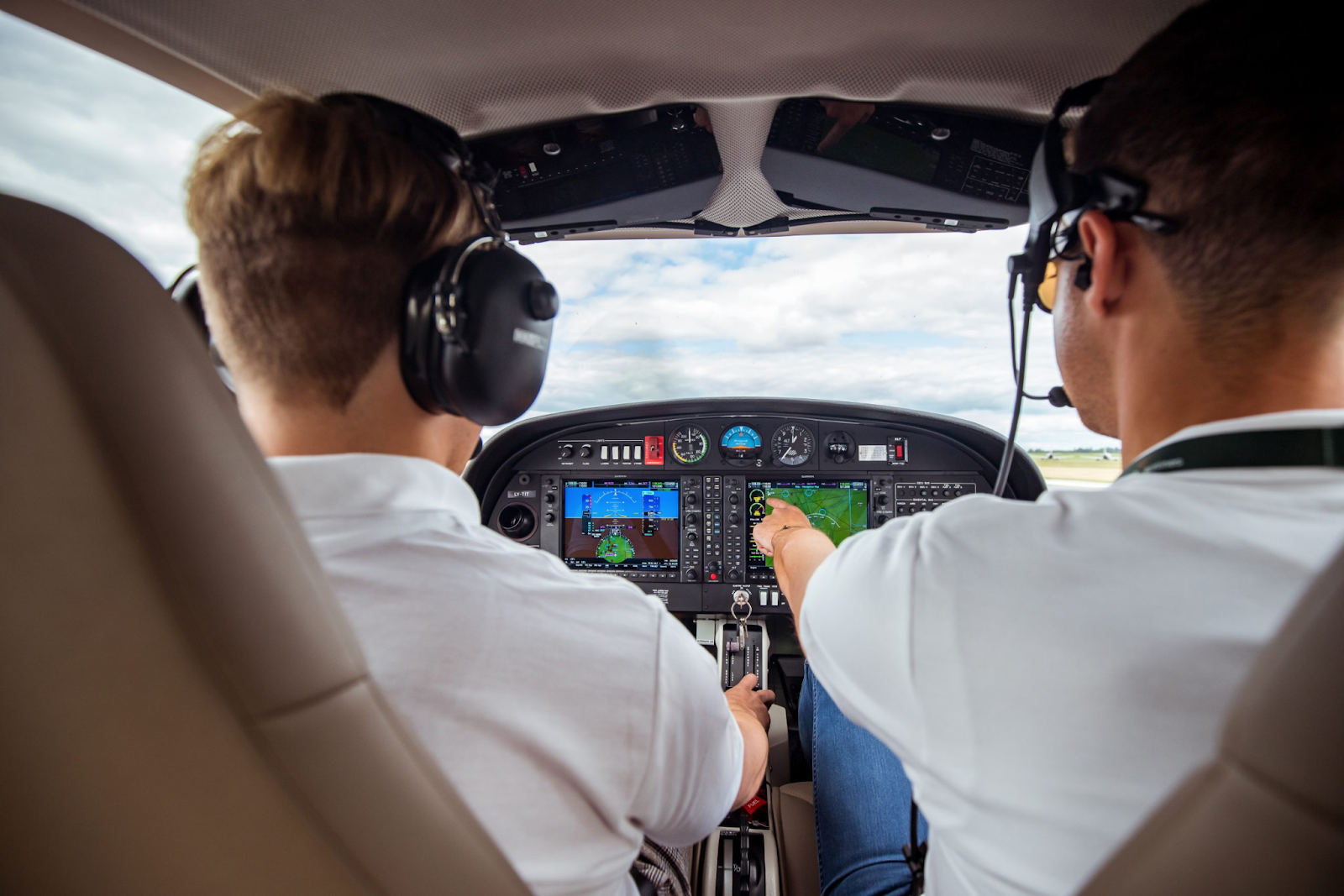
Once you're enrolled, your job is to accumulate flight time in a structured, focused way. You'll fly with a certified flight instructor (CFI) who signs off on each lesson. Over time, you'll build skills in takeoffs, landings, cross-country navigation, radio communication, and emergency procedures.
FAA minimum flight hour requirements:
| Certificate | Minimum Hours |
| Private Pilot Certificate | 40 hours total (20 dual, 10 solo) |
| Instrument Rating | 50 hours cross-country as pilot in command |
| Commercial Pilot Certificate | 250 hours total |
| ATP Certificate | 1,500 hours (or 1,000–1,250 with R-ATP) |
In practice, most students log more than the minimum. The average student pilot earns a private certificate in around 60–70 hours. The more consistently you fly, the faster your skills develop. Flying several times a week keeps progress sharp. Flying once every few weeks slows things down noticeably.
Every flight goes into your pilot logbook — recorded with date, aircraft type, conditions, and duration. This logbook follows you throughout your entire career and is reviewed at every certificate upgrade.
Fun Fact: Your logbook is essentially your aviation résumé. Major airlines review total hours, aircraft types flown, and instrument time when evaluating pilot candidates. Keep it neat, detailed, and accurate from day one.
As you build experience, you'll also work toward additional ratings — like your instrument rating (IR) and multi-engine rating — if you plan to fly larger or more complex aircraft.
Building flight hours can also connect you to a broader community. Organizations like the Organization of Black Aerospace Professionals (OBAP) support underrepresented pilots through mentorship, scholarships, and networking throughout the aviation world.
Step 6 — Pass Your FAA Knowledge Test and Checkride
Every FAA certificate requires two tests: a written knowledge test and a practical exam known as the checkride.
The FAA Knowledge Test
This is a multiple-choice exam taken at an approved testing center. It covers weather, regulations, navigation, flight operations, and aircraft systems. Most students study through ground school — either in a classroom or via online programs.
| Certificate | Questions | Passing Score |
| Private Pilot | 60 questions | 70% |
| Commercial Pilot | 100 questions | 70% |
| ATP | 125 questions | 70% |
The Practical Test (Checkride)
The checkride is administered by an FAA-designated pilot examiner (DPE). It has two parts:
- Oral exam — the examiner asks questions about regulations, weather, aircraft systems, and flight planning. This tests your judgment and aeronautical knowledge.
- Flight portion — you demonstrate maneuvers, emergency procedures, takeoffs, landings, and navigation skills in an actual aircraft.
Your CFI will work with you to prepare for both parts and will let you know when you're genuinely ready. Most reputable schools won't send you to the examiner until they're confident you'll succeed.
Keep in Mind: The checkride is pass/fail, but you can retake failed sections. Going in underprepared wastes time and money. Trust your instructor's assessment of your readiness — it's in everyone's interest to send well-prepared students.
Step 7 — Earn Your Certificate and Keep Building
After passing your checkride, the examiner issues a temporary certificate on the spot. Your permanent plastic certificate arrives in the mail shortly after. You're now a certificated pilot.
From here, the path continues based on your goals. Career-track pilots keep building hours — often by working as a CFI, flying cargo, or picking up charter work. The goal is reaching the ATP minimums, typically by flying as a first officer at a regional airline or instructing full time.
For pilots aiming for major airlines, the typical journey looks something like this:
- Earn private certificate → 3–6 months
- Add instrument rating → 2–4 more months
- Earn commercial certificate → 1–2 years total from zero
- Earn CFI and build hours → 1–2 more years
- Regional airline first officer → ATP path begins
- Major airline captain → 5–15 years into career, depending on seniority
How Much Does It Cost to Become a Pilot?
Costs vary depending on the type of training, your location, and how consistently you fly. Here's a general breakdown:
| Certificate | Estimated Cost |
| Private Pilot Certificate | $10,000 – $15,000 |
| Instrument Rating | $8,000 – $12,000 |
| Commercial Pilot Certificate | $20,000 – $30,000 |
| CFI / CFII Certificates | $5,000 – $10,000 |
| ATP (full path from zero) | $80,000 – $120,000+ |
Ways to Reduce Your Training Costs
- Fly consistently — gaps in training slow progress and lead to relearning skills you've already paid for
- Use FAA-approved simulators for a portion of your hours
- Apply for scholarships through aviation organizations like AOPA, EAA, or Women in Aviation International
- Consider Part 141 programs, which may require fewer minimum hours
- Explore airline-sponsored cadet programs that offer tuition assistance or forgivable loans
Pro Tip: Consistency is the biggest cost-saver in flight training. A student who flies three times a week will almost always spend less total money than one who flies three times a month — even at the same hourly rate.
How Long Does It Take to Become a Pilot?
Timeline depends on your goals and training pace:
| Milestone | Typical Timeframe |
| Private Pilot Certificate | 3–6 months (flying regularly) |
| Instrument Rating | 2–4 additional months |
| Commercial Pilot Certificate | 1–2 years from scratch |
| CFI Certificate | Add 2–4 months |
| ATP Certificate (full path) | 3–5 years from private certificate |
Accelerated programs can compress this significantly. Some full-time students go from no experience to a commercial certificate in under two years through intensive training tracks. The key is consistency — fly often, study hard, and stay focused on your next milestone.
Quick Tip: Schedule a discovery flight before committing to full training. It's typically a 30–60 minute introductory lesson with an instructor where you actually handle the controls. Most flight schools offer them for a modest fee, and it's the single best way to find out if flying is the right fit for you before investing in a full program.
Special Considerations for Aspiring Pilots
Flying With a Medical Condition
Many people assume that having a health condition automatically disqualifies them from flying. That's often not the case. The FAA has several medical certificate pathways, and many conditions can be accommodated with documentation and proper management. Always consult with an AME rather than self-disqualifying based on assumptions.
Flying After 40 or 50
There is no upper age limit for earning a private, commercial, or flight instructor certificate. The mandatory retirement age for airline captains is 65 in the U.S., so starting in your 40s does narrow the window for a full airline career — but it leaves plenty of time for meaningful professional or recreational flying. Many pilots start later in life and go on to log thousands of hours.
International Students Training in the U.S.
Foreign nationals are welcome to train at U.S. flight schools, but TSA clearance is required before flight training begins. This process takes time and involves background checks, so start that application early. The FAA certificates earned in the U.S. are also recognized or convertible in many countries, making American flight training a popular choice for international students.
No-Fly Zones and Airspace Rules
Understanding where you can and can't fly is a fundamental part of pilot training. Airspace restrictions, temporary flight restrictions, and no-fly zones are all part of what you'll study during ground school. Knowing the rules keeps you legal — and safe.
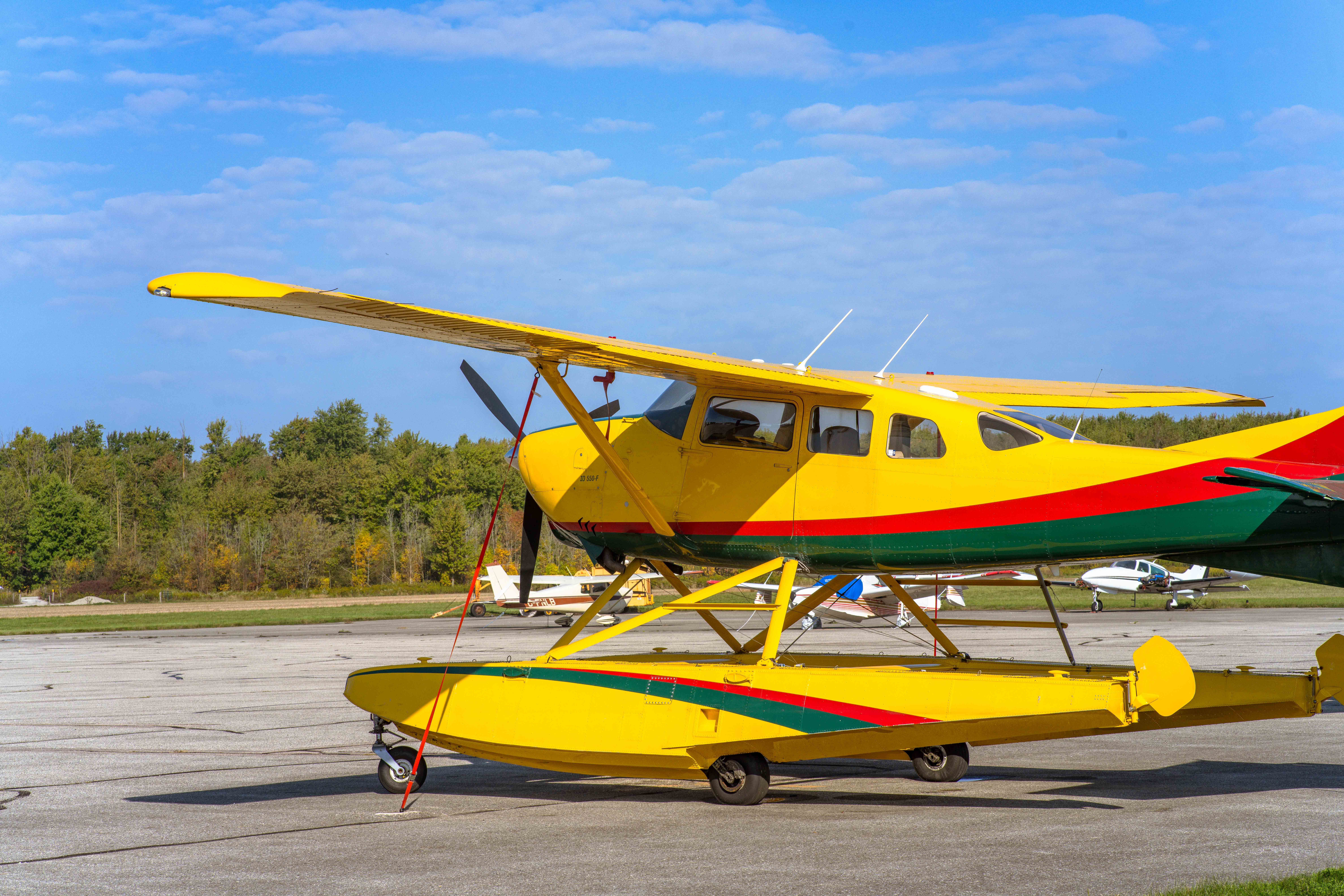
Good to Know: Aviation offers paths beyond just traditional aircraft. From seaplanes and float planes to amphibious aircraft, there are fascinating ratings and endorsements that let you expand your skills and the types of aircraft you're qualified to fly.
Conclusion
Becoming a pilot is one of the most rewarding things a person can do. It takes time, money, and real dedication — but every step of the process teaches you something that stays with you for life. From your first discovery flight to the moment you hold your certificate, the journey of learning how to become a pilot is filled with skills, confidence, and opportunity that reach far beyond the cockpit.
The sky isn't the limit. It's the beginning.
Start with one small step today: research a local flight school, schedule a discovery flight, or dig into more expert guides at Flying411. Whatever your aviation goals are, the right information makes all the difference.
Frequently Asked Questions
Can you become a pilot if you wear glasses?
Yes. The FAA allows corrective lenses as long as your vision meets the required standards when corrected. For a third class medical certificate, you generally need at least 20/40 corrected vision in each eye. First class requirements are slightly stricter, but wearing glasses alone is not a disqualifying factor. Bring your glasses or contacts to your medical exam.
Do you need a college degree to become a pilot?
No, a college degree is not required to earn any level of FAA pilot certificate, including the ATP. However, holding a four-year degree can reduce your ATP minimum flight hour requirement from 1,500 to 1,000 hours under the Restricted ATP (R-ATP) pathway. Many airlines also prefer or encourage degree holders, particularly for competitive hiring positions at major carriers.
Can you become a pilot after age 40 or 50?
Absolutely. There is no upper age limit to earn a private, commercial, or flight instructor certificate in the U.S. The FAA's mandatory retirement age for airline captains is 65, so starting in your 40s may limit the length of an airline career — but it leaves significant time for meaningful flying, whether professionally or recreationally. Many pilots start later in life and go on to fly happily for decades.
What is a discovery flight and should I take one?
A discovery flight is a short introductory lesson — typically 30 to 60 minutes — where you go up with a certified flight instructor and actually get to handle the controls. Most flight schools offer them for a modest fee. It's widely considered the single best first step a future pilot can take, because it tells you quickly and clearly whether flying is something you want to pursue before committing to a full training program.
Is it hard to pass the FAA checkride?
The checkride is challenging but very passable with solid preparation. Most students who work closely with a flight instructor and complete all required hours and ground school study pass on their first attempt. The oral and flight portions test real knowledge and genuine skill — not trick questions. A good CFI will tell you honestly when you're ready, and reputable schools won't send you to the examiner until they're confident you'll succeed.
What is the difference between Part 61 and Part 141 flight schools?
Part 61 schools offer flexible, instructor-guided training with no strict curriculum requirements. They're great for students with unpredictable schedules or those flying recreationally. Part 141 schools follow an FAA-approved structured curriculum and may allow students to meet certain certificate requirements with fewer minimum flight hours. Career-track students often prefer Part 141 for its defined pace and timeline.
How do I find a good flight school near me?
Start by searching the FAA's database of certificated flight schools, then visit a few in person. Ask about their checkride pass rates, instructor experience, aircraft fleet condition, and total program costs. A discovery flight at a prospective school also gives you a feel for their teaching style and culture before you commit to anything.
Can mental health history affect my pilot medical certificate?
Certain mental health diagnoses and medications can affect FAA medical certification, but many conditions are manageable or approvable with proper documentation. The FAA has worked in recent years to reduce the stigma around mental health in aviation and to create clearer pathways for pilots dealing with common issues like anxiety or depression. Speaking with a qualified AME — ideally one with experience in aviation medicine — is always the best first step rather than assuming disqualification.