There's a sweet spot in the helicopter world. Big enough to carry a small group with their bags, light enough to land in a tight clearing, and affordable enough that you don't need an oil empire to fly one. That sweet spot has a name: the 4 seater. These aircraft are the workhorses of personal aviation, flight training, charter, ranching, news gathering, police work, and weekend escapes to the coast. They're also the helicopters most likely to land on a private pad in the backyard.
The best 4 seater helicopter for one person may be very different from the best one for someone else. A flight school instructor cares about training hours and parts availability. A rancher cares about hot-and-high performance. A weekend pilot cares about cabin comfort and cruise speed.
The good news is that there are excellent options in every direction, from rugged piston aircraft to sleek turbines that wouldn't look out of place at a luxury resort.
Settle in. The rotors are about to spin up.
Key Takeaways
The Robinson R44 Raven II is widely considered the most popular 4 seater helicopter in the world thanks to its low operating cost, simple design, and strong parts support, with turbine alternatives like the Robinson R66 and Bell 505 offering more power for buyers who want extra performance.
| Helicopter | Engine Type | Approx. Cruise Speed | Best For |
| Robinson R44 Raven II | Piston | ~109–117 kts | Private use, training, photography |
| Robinson R66 Turbine | Turbine | ~110–120 kts | Step-up turbine, utility, charter |
| Bell 505 Jet Ranger X | Turbine | ~125 kts | Training, corporate, police |
| Bell 206 JetRanger | Turbine | ~113 kts | Charter, utility, legacy operations |
| Airbus H120 Colibri | Turbine | ~120 kts | VIP, training, law enforcement |
| MD 500E | Turbine | ~134 kts | Utility, police, agile missions |
| Enstrom 480B | Turbine | ~115 kts | Training, executive, patrol |
| Schweizer S333 | Turbine | ~95 kts | Training, observation, light utility |
| Hill HX50 | Turbine | ~140 kts (target) | Private luxury ownership (upcoming) |
Flying411 is an online marketplace where buyers and sellers connect on aircraft like these, from helicopters and engines to parts and avionics, all in one place.
What Counts as a 4 Seater Helicopter?
The phrase "4 seater" sounds simple, but the helicopter world uses it a little loosely. Some aircraft seat four total, including the pilot. Others seat one pilot plus four passengers, for a total of five seats. Both styles are commonly grouped together when people search for a 4 seater helicopter, because the practical idea is the same: a pilot plus a small group of passengers.
For this list, that broader definition applies. The focus is on light helicopters built around small group transport, where the cabin is designed for a pilot and three or four passengers, depending on the model.
Good to Know: Seat count is not the same as useful load. A helicopter might have four seats, but with full fuel and four adults, it may exceed its weight limit. Always check payload numbers, not just seat numbers.
Why Light Helicopters Are So Popular
Light helicopters took off as a category in the 1960s, when designs like the Bell 206 JetRanger introduced reliable, small-cabin rotorcraft to the civilian market. Since then, the 4 seater class has become the sweet spot for most personal and business missions. They're cheaper to buy, cheaper to operate, and easier to base out of small airfields or private pads than larger machines.
They also do a surprising amount of real work. Pipeline patrols, aerial filming, traffic reporting, agricultural surveys, search and rescue, charter sightseeing, and flight training all lean heavily on this class. A solid 4 seater is a true multitool with a rotor on top.
Things to Look at Before Choosing a 4 Seater
Picking a helicopter is not like picking a car. The right machine depends heavily on how you intend to use it, where you'll fly it, and what your maintenance setup looks like. A few factors carry more weight than others.
- Engine type: Piston engines cost less to buy and run, but turbines deliver more power, better hot-and-high performance, and longer service life between overhauls.
- Useful load: Some helicopters look great on paper but lose payload quickly once fuel is added.
- Operating cost: Direct operating cost per hour, including fuel, oil, reserves for overhaul, and inspections, can vary widely between models.
- Mission profile: Training, charter, utility, and private use each have different priorities.
- Parts and service support: A helicopter is only as easy to own as its parts pipeline. Older models with strong support networks can sometimes be better choices than newer designs with limited service infrastructure.
Pro Tip: When comparing helicopters, always look at the "seats-full" range, not the maximum range. Maximum range usually assumes only the pilot is on board. With four people and luggage, real-world range can drop quite a bit.
Piston vs Turbine: The Big Decision
Before going model by model, it helps to settle the piston versus turbine question. This decision shapes almost everything else: cost, performance, maintenance schedule, even insurance.
Piston helicopters use a reciprocating engine, similar in concept to a car engine, running on aviation gasoline. They're simpler, cheaper to buy, and cheaper per hour to fly. They're also lighter and tend to perform best at lower altitudes.
Turbine helicopters use a jet-style turboshaft engine, burning jet fuel. They produce more power for their weight, perform better at altitude and in hot weather, and last longer between overhauls. They cost significantly more to buy, and fuel burn is usually higher in raw gallons per hour. The trade-off is more confidence in demanding conditions, faster cruise speeds, and a smoother ride.
| Factor | Piston | Turbine |
| Purchase Price | Lower | Higher |
| Fuel Type | Aviation gasoline | Jet fuel |
| Performance at Altitude | Reduced | Strong |
| Maintenance Complexity | Simpler | More involved |
| Common Use Cases | Training, private | Charter, utility, executive |
A first-time helicopter buyer flying mostly at low altitude near sea level might be perfectly happy with a piston. A buyer in a mountain state or someone planning to fly heavy loads will likely lean turbine. Many active pilots running business travel missions gravitate toward turbines for exactly these reasons.
9 Best 4 Seater Helicopters Worth Flying
These nine models cover a wide range of budgets, mission profiles, and ownership styles. Some are entry-level workhorses. Some are luxury machines designed for private owners. Some are decades-old classics still flying every day around the world. All of them earn their place in the conversation.
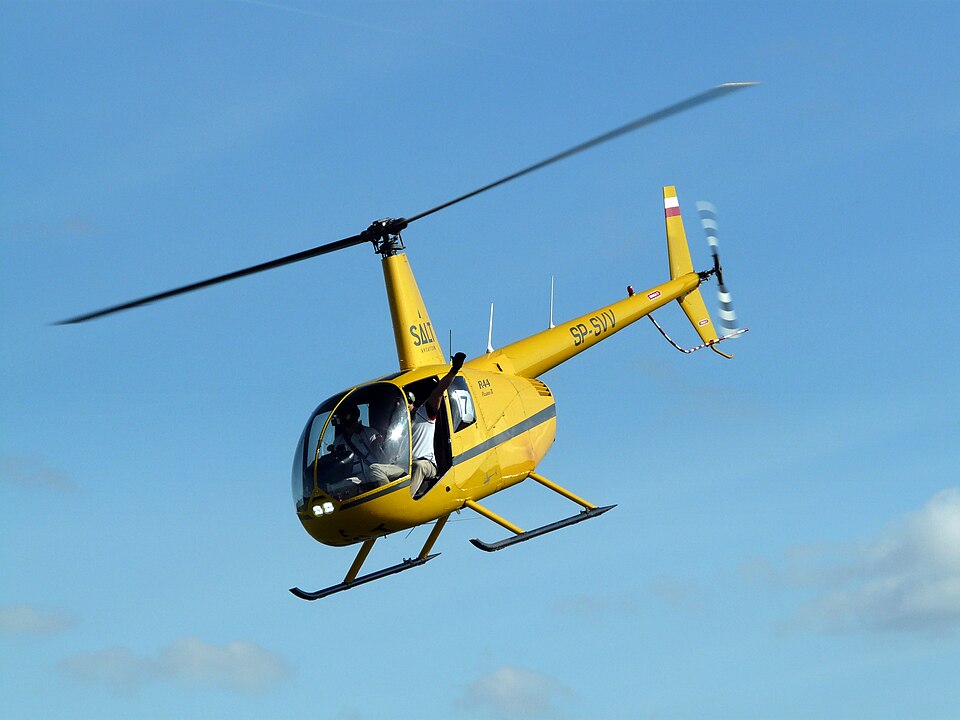
1. Robinson R44 Raven II
If there is a default answer to "what 4 seater helicopter should I buy," it is usually the Robinson R44 Raven II. Built by Robinson Helicopter Company in Torrance, California, the R44 is widely considered the world's best-selling civil helicopter, with thousands of units produced since the 1990s.
The Raven II is powered by a fuel-injected Lycoming IO-540 piston engine. It cruises around 109 to 117 knots depending on conditions, with a maximum range of roughly 300 nautical miles and a service ceiling of about 14,000 feet. Its four-seat cabin is comfortable for shorter flights, and the bladder fuel tank design adds an extra safety layer.
What makes the R44 special isn't any single number on the spec sheet. It's the combination of low purchase price compared to turbines, manageable operating costs, broad parts availability, and a global community of pilots and mechanics who already know the machine inside and out. That ecosystem matters enormously when something needs fixing or you want to sell down the road.
- Engine: Lycoming IO-540, piston
- Cruise speed: Roughly 109 to 117 knots
- Range: Around 300 nautical miles
- Best for: Private flying, flight training, aerial photography, ranch work
Why It Matters: The R44 has become a kind of universal language in the light helicopter world. Almost every flight school knows it, almost every helicopter mechanic has worked on one, and used examples are widely available.
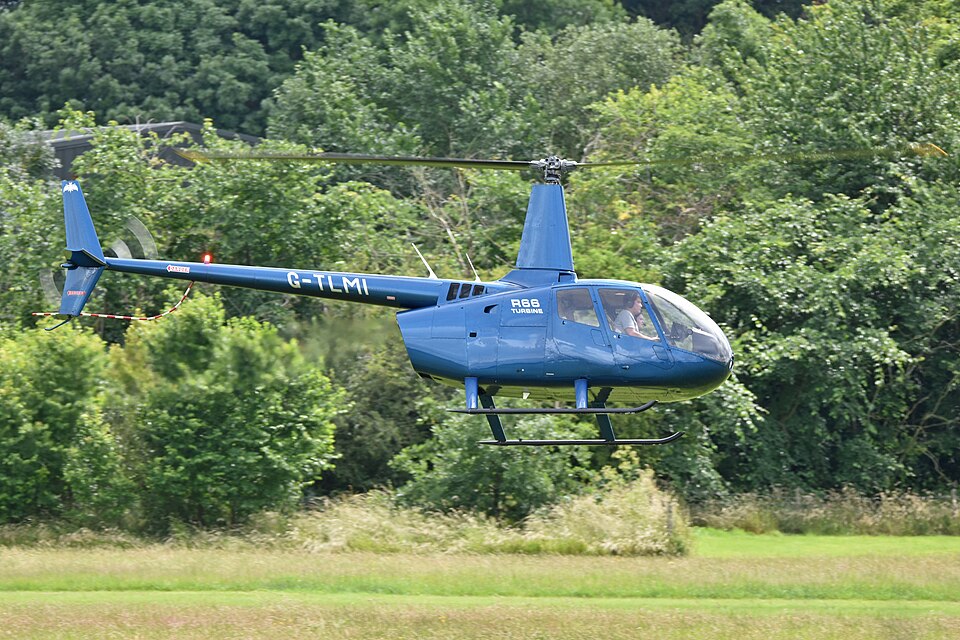
2. Robinson R66 Turbine
When R44 owners want to step up, the Robinson R66 is often the next stop. Robinson's first turbine helicopter, the R66 was certified by the FAA in 2010 and built on the same general design philosophy as the R44, with a more powerful Rolls-Royce RR300 turboshaft engine.
The R66 typically seats five, with one pilot and four passengers, in a 2+3 configuration with a side-by-side cockpit and a rear bench. Cruise speeds usually fall in the 110 to 120 knot range, with a maximum near 130 knots. Service ceiling is around 14,000 feet, and the R66 hovers well at high altitudes, making it a strong option for mountain work.
A key upgrade over the R44 is the dedicated baggage compartment on the side of the aircraft. That sounds small, but it changes how the helicopter feels for passenger missions, since coats, camera gear, or weekend bags no longer have to share the cabin with everyone's knees.
- Engine: Rolls-Royce RR300 turbine
- Cruise speed: Around 110 to 120 knots
- Range: Roughly 260 to 350 nautical miles depending on load
- Best for: Step-up turbine buyers, utility work, light charter, police
Whether you're upgrading from a piston aircraft or buying your first turbine, Flying411 lists turbine helicopters from major manufacturers along with overhauled engines and certified parts to keep them flying.
3. Bell 505 Jet Ranger X
The Bell 505 Jet Ranger X is the modern face of the legendary Bell JetRanger family. Introduced in the mid-2010s, it carries a pilot and up to four passengers, powered by a dual-channel FADEC Safran Arrius 2R turboshaft engine.
Performance is one of its strong points. The Bell 505 cruises around 125 knots at maximum gross weight, with a no-reserve range of roughly 306 nautical miles at sea level and around 333 nautical miles at 4,000 feet. The cabin is wide, the doors are large, and the Garmin G1000H glass cockpit gives pilots a fully integrated flight deck more often associated with executive jets.
The 505 has found a home with flight schools, police departments, corporate operators, and private owners. It's a single-engine turbine that combines power, modern avionics, and a respected support network from one of the biggest names in rotorcraft.
- Engine: Safran Arrius 2R turbine
- Cruise speed: Roughly 125 knots
- Range: Around 306 nautical miles at sea level
- Best for: Training, corporate transport, law enforcement
Heads Up: Glass cockpits like the G1000H change the workload for pilots. Transitioning from older steam-gauge helicopters takes some training, but most pilots find it well worth the effort once they're comfortable with the system.
4. Bell 206 JetRanger
Few helicopters have earned the kind of reputation the Bell 206 JetRanger holds. Originally derived from Bell's entry in the US Army's Light Observation Helicopter competition, the 206 entered civilian service in the late 1960s and went on to become one of the most produced light turbine helicopters in history.
The 206 typically seats five, including the pilot, with a cruising speed around 113 knots and a maximum range near 374 nautical miles. It uses a two-bladed semi-rigid teetering main rotor, a configuration that gives it a familiar feel for thousands of pilots worldwide. The cabin is comfortable for a pilot and three passengers, with optional configurations for four passengers depending on equipment.
Bell ended production of the 206B JetRanger in 2010, but used examples remain widely available and are popular for charter, training, aerial filming, news work, and tour operations. Among popular passenger-friendly helicopters for sightseeing missions, the 206 still earns a regular spot on the list.
- Engine: Rolls-Royce 250-C20 series turbine
- Cruise speed: Around 113 knots
- Range: Up to roughly 374 nautical miles
- Best for: Charter, utility, tour operations, training
Fun Fact: The Bell 206 family has been operated in nearly every aviation role imaginable, from offshore oil rig service to traffic reporting to executive transport, with over 7,000 produced across all variants.
5. Airbus H120 Colibri
The Airbus H120 Colibri, originally known as the Eurocopter EC120, is a light single-engine helicopter developed through a joint partnership between Aérospatiale (later Eurocopter), CATIC of China, and Singapore Technologies Aerospace. It first flew in 1995 and remained in production into the late 2010s.
The Colibri carries a pilot and up to four passengers in a comfortable, modern cabin. It's powered by a Safran Arrius 2F turbine driving a three-bladed main rotor and a Fenestron shrouded tail rotor. Cruise speed sits around 120 knots, with a range near 380 nautical miles. The Fenestron is one of the Colibri's signature features, offering quieter operation and added safety on the ground compared to a traditional exposed tail rotor.
Although Airbus ended H120 production, the type remains widely operated in police, training, VIP transport, and tourism roles. Buyers shopping the used market often find well-equipped Colibris with modern avionics and low time remaining on key components.
- Engine: Safran Arrius 2F turbine
- Cruise speed: Around 120 knots
- Range: Roughly 380 nautical miles
- Best for: VIP transport, training, law enforcement, tourism
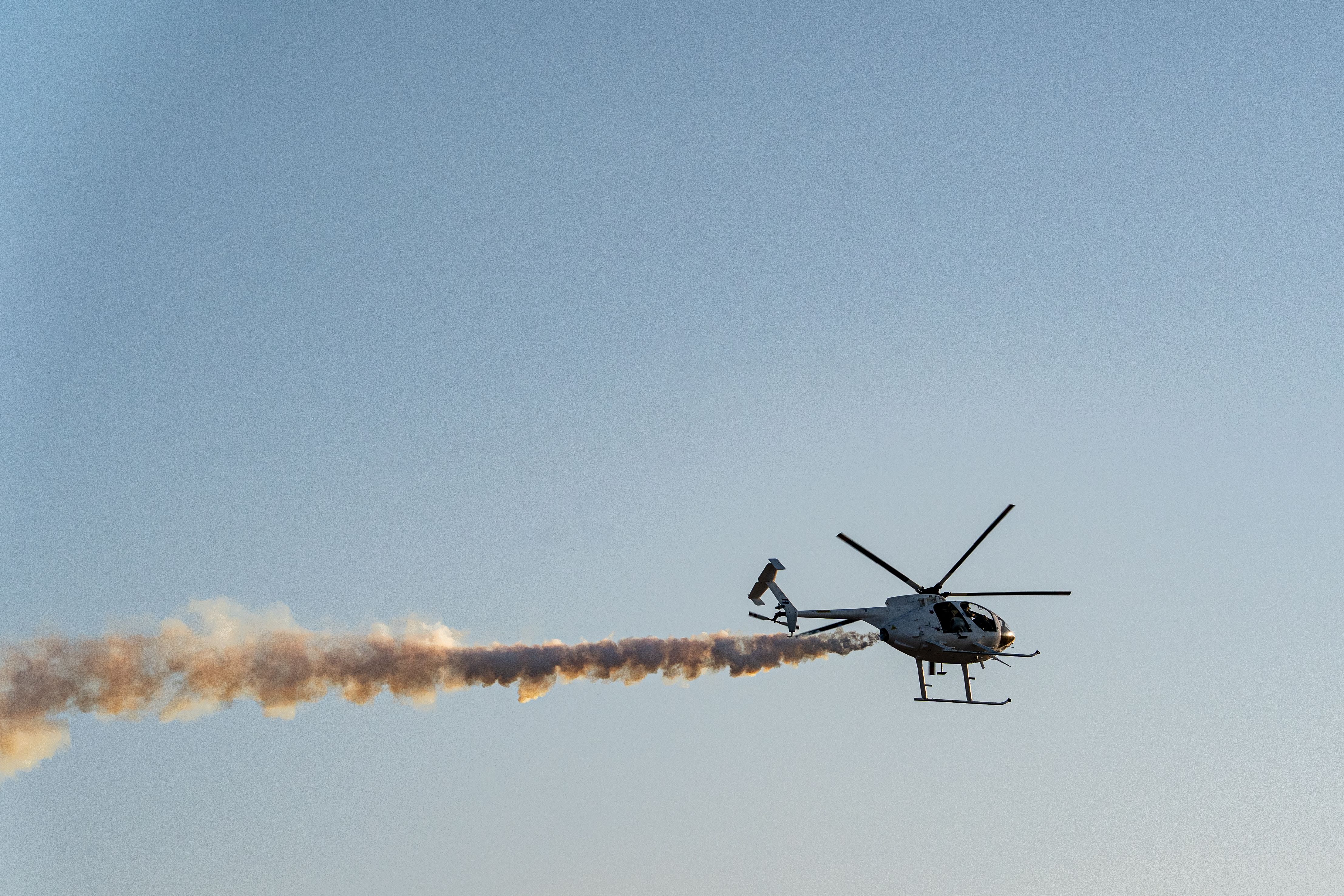
6. MD 500E
The MD 500E is part of a family with deep military roots. The series traces back to the Hughes OH-6 Cayuse, a Light Observation Helicopter developed for the US Army in the 1960s. The civilian Hughes 500 evolved through McDonnell Douglas into today's MD Helicopters lineup.
The MD 500E is compact, agile, and known for excellent power-to-weight performance. It carries a pilot and up to four passengers (or more in utility configurations), with cruise speeds in the 130 to 135 knot range. Power comes from a Rolls-Royce 250 series turbine driving a five-bladed main rotor and a two-bladed tail rotor. The result is a helicopter with quick handling and strong hover performance, particularly in high or hot conditions.
Police departments, utility operators, and pilots looking for a small, capable turbine often gravitate to the 500 family. The teardrop fuselage is instantly recognizable on any ramp. Performance-minded pilots sometimes look to see how the world's quickest rotorcraft compares to lighter, more agile machines like the MD 500E.
- Engine: Rolls-Royce 250 series turbine
- Cruise speed: Around 130 to 135 knots
- Range: Roughly 230 to 260 nautical miles depending on configuration
- Best for: Police, utility, agile mission profiles
Quick Tip: The 500-series cabin is more compact than the Robinson and Bell options on this list. It's a strong utility helicopter, but tall passengers may want to test-sit before committing.
7. Enstrom 480B
The Enstrom 480B is a single-engine turbine helicopter built in Menominee, Michigan. Its origins trace to an Enstrom proposal for a US Army training helicopter in the late 1980s. The Army contract went elsewhere, but Enstrom continued the project and brought the 480 to the civilian market in the 1990s.
The 480B can be configured to carry up to five occupants, including the pilot. It's powered by a Rolls-Royce 250 series turbine and uses a three-bladed main rotor. Cruise speed sits around 115 knots, with a useful load that supports a mix of passengers and baggage on shorter to medium-length flights.
What distinguishes the Enstrom is its mechanical control system. The 480B does not use hydraulically boosted flight controls, which means pilots fly the helicopter with direct mechanical input. Many instructors view this as a benefit for training, because it builds a stronger feel for what the rotor system is actually doing.
- Engine: Rolls-Royce 250 series turbine
- Cruise speed: Around 115 knots
- Range: Roughly 230 to 290 nautical miles
- Best for: Training, executive transport, light patrol
8. Schweizer S333
The Schweizer S333 (now Sikorsky S-333 in some configurations) is a four-seat light turbine helicopter with a long lineage. It descends from the Schweizer 300 piston helicopter family, with the turbine variants developed through the late 1980s and early 1990s.
The S333 cruises slower than most of the other turbines on this list, with typical cruise speeds in the 90 to 100 knot range. Where it shines is in low-cost turbine operations: training, observation, aerial survey, and light utility work. Its open structure and exposed cabin give pilots and observers excellent visibility, which is why it has been popular with law enforcement and aerial reconnaissance operators.
It's not the helicopter for cross-country trips with luggage. It is the helicopter for organizations that want turbine reliability in a small, relatively affordable airframe with low life-cycle costs. For pilots wondering about ultralight rotorcraft options, it's worth noting that any certified turbine like the S333 requires full FAA pilot certification and ratings.
- Engine: Rolls-Royce 250 series turbine
- Cruise speed: Around 90 to 100 knots
- Range: Roughly 230 to 290 nautical miles
- Best for: Training, observation, low-cost turbine operations
Keep in Mind: Many older Schweizer 300-series airframes can be upgraded with newer dynamic components. Used buyers should always confirm what variant they're looking at and which components have been brought up to current standards.
9. Hill HX50
The Hill HX50 is the newest name on this list and the most ambitious. Designed by British engineer Dr. Jason Hill and built by Hill Helicopters in the UK, the HX50 is a five-seat turbine helicopter marketed specifically at private owners rather than commercial fleet operators.
Performance targets include a cruise speed near 140 knots, a range of roughly 700 nautical miles, and a useful load designed to carry four passengers, full bags, and three hours of fuel. The HX50 features a carbon-fiber monocoque structure, a fully glass cockpit, a four-axis autopilot, panoramic windows, and luxury cabin appointments including leather seating and climate control. Power comes from Hill's own GT50 turboshaft engine.
The HX50 is being delivered under an amateur-built/experimental category through a buyer-assembly program, with a certified commercial variant called the HC50 planned. Reports indicate the program has experienced timeline shifts, with first flights and customer deliveries pushed into 2026 and beyond. Even so, demand has been strong, and the HX50 sits in good company among premium rotorcraft choices shaping the future of private aviation.
- Engine: Hill GT50 turbine
- Cruise speed (target): Around 140 knots
- Range (target): Roughly 700 nautical miles
- Best for: Private luxury ownership, long-range personal flying
Heads Up: Aircraft built under amateur-built/experimental rules have different operating and maintenance requirements than fully type-certified aircraft. Buyers should understand those differences before committing to a deposit.
How Much Does a 4 Seater Helicopter Cost?
Helicopter prices vary widely by model, age, equipment, and condition. A general range for the 4 seater class looks something like this:
- Used piston helicopters (R44 and similar): Often in the mid-six-figure range
- New piston helicopters: Higher six figures, sometimes approaching seven
- Used light turbines (older 206, 500-series): Roughly $700,000 to $1.5 million depending on time and equipment
- New light turbines (R66, Bell 505, Enstrom 480B): Typically over $1 million, often well above
- Premium/luxury private helicopters (Hill HX50): Listed starting prices have varied between roughly $650,000 and the high six figures, with final delivered prices depending heavily on options
Beyond purchase price, ownership costs include fuel, oil, scheduled inspections, component reserves for overhaul, insurance, hangar fees, and pilot currency requirements. A common rule of thumb is that ongoing direct operating costs alone can run several hundred dollars per flight hour for a piston and well over that for a turbine.
Pro Tip: Always budget for unscheduled maintenance. Even well-maintained helicopters can develop issues that require AOG (aircraft on ground) attention. A reserve fund of 10 to 15 percent of the purchase price is a sensible starting point.
Looking for current listings of these aircraft, engines, or replacement parts? Flying411 brings buyers and sellers together so you can compare your options in one place.
Common Uses for 4 Seater Helicopters
These aircraft are not just for joyrides over the coastline. They handle real work across many industries:
- Flight training for private and commercial pilot ratings
- Charter and tourism, especially for short scenic flights
- Law enforcement patrol and search operations
- Aerial filming and news gathering
- Pipeline and powerline inspection
- Agricultural support and ranch operations
- Executive and corporate transport
- Emergency medical transport in specialized configurations
- Personal travel for owner-pilots
Each role pulls different specs to the front of the conversation. Tourism leans on cabin comfort and visibility. Police work leans on speed, hover performance, and the ability to carry mission equipment. Personal travel leans on range, comfort, and ease of use. The right helicopter shifts with the job.
How a 4 Seater Compares to Larger Helicopters
The 4 seater class sits between two-seat trainers like the Robinson R22 and Cabri G2 on the small end, and six-to-eight seat machines like the Bell 407 or Airbus H125 on the larger end. The choice usually comes down to mission demands.
A two-seat trainer is excellent for solo or instructor-and-student flying but limits passenger missions. A 4 seater handles small group transport at a much lower cost than a six-seat helicopter. A larger six- or seven-seat machine moves more people and gear at once but jumps the price and operating cost significantly.
For most private owners, light charter operators, ranchers, and flight schools, the 4 seater is the natural fit. It's the segment that makes helicopter ownership realistic without crossing into airline-style operating budgets. Families considering ownership often compare options against family-oriented models before settling on a model.
Fun Fact: Helicopters didn't really become practical for everyday civilian use until the 1950s and 60s, when designs became more reliable and small enough for routine private and business use. The early days of rotorcraft are worth exploring for anyone newly fascinated by the field.
What to Look for in a Used 4 Seater Helicopter
Most light helicopters change hands on the used market. A used purchase can be a smart move, but it requires careful evaluation. A few items deserve special attention.
- Time on the airframe and engine: Lower time isn't automatically better if the helicopter has been sitting unused for years.
- Time since overhaul: Major components like the engine, main rotor blades, and transmission have life limits or overhaul intervals. Time remaining affects value significantly.
- Damage history: Hard landings, rotor strikes, and accident history matter, even after repairs.
- Logbooks: Complete, well-organized logbooks are a strong sign of careful ownership.
- Pre-purchase inspection: Always commission an independent pre-purchase inspection by a qualified mechanic with experience on the specific model.
The pre-purchase inspection is non-negotiable. It is the single best tool a buyer has to avoid surprises. A few thousand dollars spent on an inspection can save tens of thousands later.
Training Requirements for 4 Seater Helicopters
Flying any certified 4 seater helicopter requires a valid pilot certificate with rotorcraft-helicopter category and class ratings, plus type-specific training where applicable. For Robinson helicopters specifically, the FAA requires additional training under Special Federal Aviation Regulation (SFAR) 73, which sets minimum hours and instruction requirements for the R22 and R44.
Most owner-pilots start with a Private Pilot Certificate (Rotorcraft-Helicopter), then add a turbine endorsement if they move to a model like the R66 or Bell 505. Commercial operations require a Commercial Pilot Certificate and may require additional checkrides. Flight schools across the country offer training programs in many of these aircraft. Looking into reputable training programs is a sensible first step for anyone considering ownership.
Ready to take the next step? Browse current helicopter listings, find certified mechanics and avionics specialists, and connect with aviation services through Flying411's marketplace.
How to Choose the Right 4 Seater for You
Choosing among nine excellent options can feel overwhelming. A simple decision tree helps narrow the field quickly.
- Set your budget, including both purchase and three years of expected operating costs.
- Define your typical mission. How many passengers, how much luggage, how far, and over what kind of terrain?
- Decide piston or turbine based on altitude, climate, mission demands, and budget.
- Pick two or three models that fit those constraints.
- Talk to current owners and operators of those models. Pilots love to share opinions.
- Demo flight at least one or two of the finalists if possible.
- Get a pre-purchase inspection before committing.
There's no single "best" helicopter, just the one that's best for a specific buyer. For some, that's a clean, well-supported R44. For others, it's a turbine like the R66 or Bell 505. For a smaller group of buyers, it's a luxury machine like the HX50. The right answer depends entirely on the mission and the budget.
Conclusion
The best 4 seater helicopter is the one that matches the way you actually want to fly. For most pilots, the Robinson R44 remains the gateway machine, with its low operating cost and global support network.
For buyers ready for a turbine, the R66 and Bell 505 lead the conversation, while classics like the Bell 206, Airbus H120, and MD 500 still earn their place on busy ramps every day. Models like the Enstrom 480B and Schweizer S333 offer niche strengths in training and observation.
And new entries like the Hill HX50 are reshaping what private owners expect from the segment. Whichever direction you lean, the right machine is out there waiting to fly.
Ready to find your next helicopter? Browse listings, parts, and services at Flying411 and connect with the aviation network that's helping pilots take to the skies every day.
FAQs
How much fuel does a 4 seater helicopter use per hour?
Fuel burn varies by model, but a piston 4 seater like the Robinson R44 typically uses around 14 to 16 gallons of aviation gasoline per hour, while light turbines can burn 20 to 30 gallons of jet fuel per hour or more.
Can a 4 seater helicopter fly cross-country?
Yes, most 4 seater helicopters have a practical range of around 200 to 400 nautical miles depending on load, weather, and reserves. Longer trips usually involve fuel stops, but cross-country flying is common in this class.
Are 4 seater helicopters safe?
Modern light helicopters are designed to strict certification standards and include features like crashworthy fuel systems, energy-absorbing seats, and reliable engines. As with any aircraft, safety depends heavily on pilot training, maintenance, and decision-making in the air.
Can you land a 4 seater helicopter in your backyard?
In many cases yes, provided local zoning laws allow it and there's enough open space free of obstacles, slopes, and wires. Always check city, county, and state regulations before establishing a private landing area, and follow FAA recommendations for off-airport operations.
Is it cheaper to own a piston or a turbine 4 seater?
Piston 4 seaters are almost always cheaper to buy and run on a per-hour basis. Turbines cost more up front and burn more fuel, but they offer better performance, longer component life, and often higher resale value, which can offset some of the difference over time.