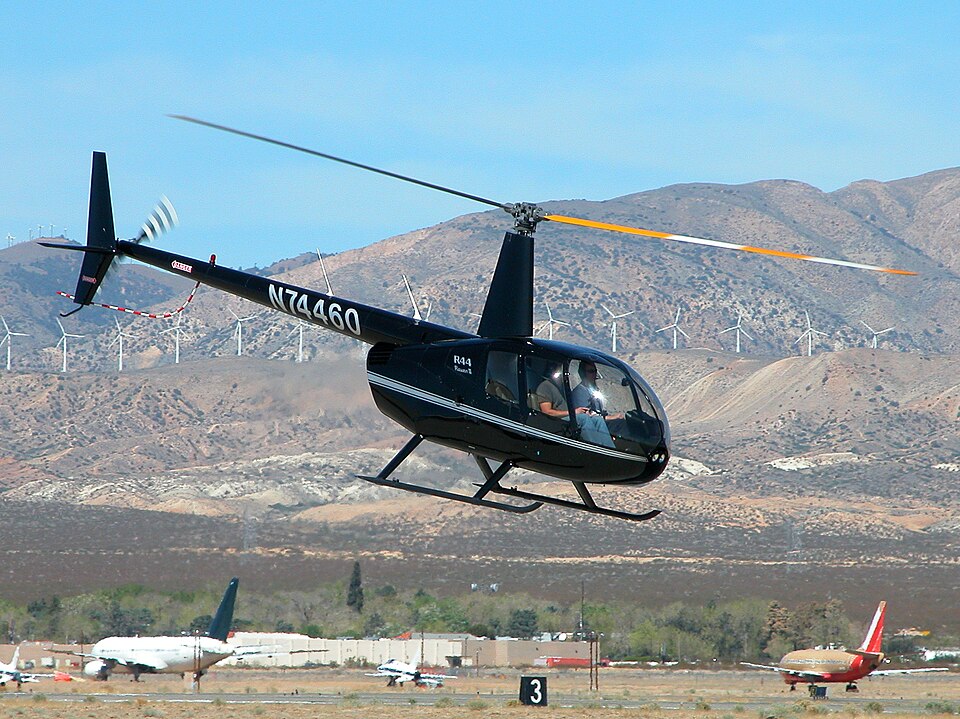
Park a Raven I and a Raven II side by side, and most people could not tell them apart. Same four seats. Same bubble canopy. Same skinny tail boom. The Robinson R44 Raven I vs Raven II comparison seems like it should have a simple answer, and in some ways it does. Both are light, four-seat piston helicopters built by the same company, and both have earned a loyal following among owners, flight schools, and charter operators.
The difference sits under the cowling, and it is bigger than a single part swap. One helicopter breathes through a carburetor. The other uses fuel injection. That one choice ripples outward into weight, power, altitude, cost, and even how you fly on a hot summer afternoon.
The two look almost identical on the ramp, but the engine hiding under that cowling changes nearly everything about how they climb, load, and hold their value.
Key Takeaways
The main difference between the Robinson R44 Raven I and Raven II is the engine. The Raven I uses a carbureted Lycoming engine, while the Raven II uses a fuel-injected engine that makes a little more power. That extra power gives the Raven II a higher gross weight and better performance when the air is hot or thin. The Raven I usually costs less to buy and is a popular choice for flight training. Both share the same airframe, so they look and feel very similar to fly.
| Question | Short Answer |
| What is the biggest difference? | The engine: Raven I is carbureted, Raven II is fuel-injected |
| Which is more powerful? | The Raven II, with a higher gross weight |
| Which handles hot and high air better? | The Raven II |
| Which is usually cheaper to buy? | The Raven I |
| Which is a common trainer? | The Raven I |
| Do they share the same airframe? | Yes, the airframe and rotor system are nearly identical |
Flying411 is an online aviation marketplace where buyers and sellers connect over aircraft, engines, and parts, so comparing two models like these is right in our wheelhouse.
A Quick Look at the Robinson R44 Family
Before we line the two up, it helps to know where they come from. The R44 grew out of Robinson's smaller two-seat R22, which had already become a favorite for training. The R44 kept the same simple, honest design but added two more seats and a bigger engine. That made it useful for families, small businesses, tours, and light work like surveying.
Robinson rolled the R44 out in stages over the years:
- R44 Astro: The first version, introduced in the early 1990s.
- R44 Raven I: Introduced in January 2000, it added factory hydraulics and adjustable pedals.
- R44 Raven II: Introduced in July 2002, it brought the fuel-injected engine and a higher gross weight.
- R44 Cadet: A later two-seat trainer version based on the Raven I.
So the Raven II did not replace the Raven I. Robinson kept building both, and buyers still choose between them today.
Good to Know: The R44 has long been regarded as one of the top-selling civil helicopters in the world, and Robinson is widely praised for its parts support and its network of hundreds of approved service centers.
If you are still deciding between a two-seat trainer and a four-seat machine, it is worth seeing how the R44 stacks up against other four-seat helicopters on the market.
What the Raven I and Raven II Have in Common
It is easy to focus on the differences, but the two share a lot. In fact, they share most of the helicopter. Understanding what stays the same makes the real differences stand out.
Both the Raven I and Raven II have:
- A two-bladed main rotor and a two-bladed tail rotor.
- Hydraulically boosted flight controls for light, smooth handling.
- A powder-coated steel-tube and aluminum airframe.
- Skid landing gear and a wide bubble canopy for great views.
- Seating for one pilot and three passengers.
- A crashworthy bladder-type fuel system.
- An engine and airframe time between overhaul, often listed as 2,200 hours or 12 years.
Because the airframes are so close, the two feel very similar in the cockpit. A pilot who trained in one can move to the other with little trouble. The controls sit in the same place, the cabin is the same size, and the view out the front is just as good. For families and light passenger work, both make comfortable, easy-to-fly family-friendly helicopters.
7 Key Differences Between the R44 Raven I and Raven II
Here is the heart of the matter. When people compare these two, a handful of details do most of the work. Below are the differences that shape how each helicopter flies, what it can carry, and what it costs to own.
1. The engine: carburetor versus fuel injection
This is the headline difference. The Raven I runs a carbureted Lycoming O-540 engine. The Raven II runs a fuel-injected Lycoming IO-540 engine. Fuel injection sprays fuel straight into the cylinders instead of mixing it in a carburetor first. The result is a bit more power and smoother running, especially up high.
2. Carburetor icing is off the table for the Raven II
A carburetor can form ice inside it under certain cool, damp conditions, which can choke the engine. The Raven I deals with this using a carb heat assist system that adds heat as needed. The Raven II avoids the problem completely, because a fuel-injected engine has no carburetor to freeze. That means no carburetor icing to watch for and one less thing on the pilot's mind.
3. Electrical system voltage
The Raven I typically uses a 14-volt electrical system, while the Raven II uses a 28-volt system. The higher voltage on the Raven II makes it a friendlier home for extra equipment like air conditioning and heavier avionics.
4. Gross weight and useful load
The Raven II carries a slightly higher maximum gross weight, commonly listed at around 2,500 pounds versus about 2,400 pounds for the Raven I. That extra 100 pounds of allowance can add to your useful load, though many owners spend some of it on options like air conditioning or floats.
5. Rotor blades and altitude performance
The Raven II uses wider main rotor blades to go with its stronger engine. Together, the bigger engine and wider blades give it better high density altitude performance. When the air is hot, thin, or both, the Raven II holds its power better and climbs with more confidence.
6. Air conditioning
Factory air conditioning is available on the Raven II and is rare or impractical on the Raven I. In hot climates, that alone can decide the matter for some buyers. The Raven II's higher-voltage electrical system and extra power make cabin cooling far easier to add.
7. Fuel burn and running cost
The Raven II's larger, more powerful engine tends to sip a touch more fuel, often cited at roughly 15 gallons per hour in cruise versus around 14 for the Raven I. It is a small gap, but over hundreds of flight hours it adds up. The Raven II also usually costs more to buy, both new and used.
Here is a side-by-side view to make the picture clear:
| Feature | Raven I | Raven II |
| Engine | Carbureted Lycoming O-540 | Fuel-injected Lycoming IO-540 |
| Carb heat needed | Yes (carb heat assist) | No |
| Electrical system | 14-volt (typical) | 28-volt (typical) |
| Max gross weight | About 2,400 lb | About 2,500 lb |
| Main rotor blades | Standard chord | Wider chord |
| Hot and high performance | Good | Better |
| Factory air conditioning | Rarely fitted | Available |
| Typical cruise fuel burn | Around 14 gal/hr | Around 15 gal/hr |
Why It Matters: The move from a carburetor to fuel injection is not only about power. It removes a whole category of pilot workload and a real cold-weather hazard, which is a big reason many operators lean toward the Raven II.
Both engines are built on the well-proven Lycoming 540 family, which is one reason the R44 has a reputation for dependable running. If engine dependability is high on your list, it is worth reading up on the most reliable helicopter engines and where the R44's powerplants fit in.
How the Two Fly in the Real World
Numbers on a spec sheet only tell part of the story. So how do these differences feel from the pilot's seat?
At low altitude on a mild day, honestly, the two feel a lot alike. Both cruise at a similar speed, often around 110 knots, and both handle with the same light, hydraulically boosted controls. A casual passenger would never guess which one they were riding in.
The gap opens up as conditions get tougher. Take a summer day at a mountain airport, where the air is thin and warm. The Raven I's carbureted engine loses power as the air thins, and the pilot has to plan carefully. The Raven II, with its stronger engine and wider blades, has more margin to work with. It can carry more, climb better, and give the pilot more room for error.
Practice autorotations, a normal part of helicopter training, are one spot where the carbureted Raven I is often praised. Its engine idles smoothly and predictably during these maneuvers. Some early fuel-injected Raven II engines had a reputation for being fussier during a fast throttle reduction, though Robinson addressed this over the years.
Heads Up: A normally aspirated piston engine, in either Raven, loses power as air gets thinner. Many R44 accidents have happened during high density altitude operations. Do not push either helicopter near its performance limits when the air is hot and high.
For aerial work like surveying or photography, both can do the job, but the Raven II's extra margin is handy when you need to hover with a full cabin and gear. Pilots weighing camera missions often compare the R44 against other top picks for aerial photography helicopters.
Pro Tip: If most of your flying is low, cool, and near sea level, the Raven I gives you nearly all the mission capability for less money. Save the Raven II premium for when you truly need the hot and high performance.
Running Costs and Long-Term Ownership
The purchase price is only the start. What you spend after you sign the paperwork often matters more, and this is another spot where the two Ravens differ in small but steady ways.
Fuel is the most visible cost. The Raven II burns a touch more per hour, so heavy users will notice the gap over a full year. On top of fuel, you have insurance, hangar space, routine maintenance, and the big one, the reserve you set aside for the eventual overhaul.
Here is where the two tend to land:
- Fuel: Slightly higher for the Raven II because of its stronger engine.
- Insurance: Often a bit higher for the Raven II, since it usually costs more to replace.
- Maintenance: Broadly similar, because they share so much of the airframe.
- Overhaul reserve: Comparable, since both use the same 2,200-hour time between overhaul.
The good news is that parts and service are easy to find for both models. The R44 is one of the most common light helicopters flying, so mechanics who know it are not hard to track down, and parts move quickly through the supply chain.
Fun Fact: The R44 is so widely used for training and touring that it has long been considered one of the most-produced civil helicopters in the world, which is a big reason its parts and support network stay so strong.
A steady maintenance history and a healthy overhaul reserve protect your investment more than any single spec. Budget for the long run, and either Raven can be an affordable way to own a helicopter.
Which One Should You Choose?
There is no single right answer. The best pick depends on where you fly, what you carry, and what you plan to spend. Let us break the choice down by the kind of owner you are.
For Flight Schools and Student Pilots
The Raven I has long been a favorite for training. It costs less to buy, which can mean lower insurance and lower rental rates for students. Its carbureted engine also behaves nicely during practice autorotations. For a school building hours in mild conditions, the Raven I is often the smart, budget-friendly choice. Many training fleets pair R44 Ravens with smaller two-seat trainers, and it helps to know how the best two-seat helicopters compare when planning a fleet.
For Hot, High, or Heavy Missions
If you fly in the mountains, in the desert, or often near max gross weight, the Raven II earns its keep. The extra power and higher gross weight give you real breathing room. This is the version to pick when performance margin matters more than the purchase price.
For Private Owners and Business Use
For an owner who flies for personal travel or light business, the Raven II's comforts stand out. Factory air conditioning, a stronger electrical system for modern avionics, and a touch more payload make it a nicer long-term ride. Buyers who plan to use the aircraft for client trips often weigh it against other business helicopter options in the same class, along with dedicated passenger helicopters built for comfort.
Flying411 lists both new and used R44 helicopters from trusted sellers, so you can filter by year, hours, and equipment to match the exact Raven that fits your mission.
Quick Tip: Make a short list of your three most demanding flights of the year, hottest day, highest airport, heaviest load. Pick the Raven that handles those three with margin to spare. Everyday flying will take care of itself.
Buying a Used R44 Raven I or Raven II
Most buyers shop the used market, where prices swing a lot based on year, total time, engine time, and equipment. As a rough guide, a well-kept Raven II often carries a higher price tag than a comparable Raven I, both because of its capability and because it is newer on average.
Because the R44 has a set time between overhaul, a helicopter's remaining engine and airframe hours have a huge effect on price. A machine close to its overhaul point can look cheap up front but cost a lot to bring back to zero time. Always factor that future cost into any deal.
Here are smart things to check on any used R44:
- Engine and airframe time remaining before the next overhaul.
- Complete, clean logbooks with no gaps.
- Corrosion on the airframe and rotor components.
- Damage history and any past repairs.
- Equipment like air conditioning, floats, and updated avionics.
- Recent inspections and any open service items.
Keep in Mind: A pre-purchase inspection by a Robinson-experienced mechanic is not the place to save money. A few hours of expert eyes can spare you from a very expensive surprise after the sale.
Small, capable, and easy to hangar, the R44 sits among the more practical small helicopters for private owners, which helps explain why the used market for both Ravens stays active.
If you already own an R44 and want to understand where it sits in today's market, it is worth taking a moment to value your aircraft before you list or trade.
Ready to compare real listings side by side? Browse current R44 Raven I and Raven II helicopters on Flying411 and reach out to sellers directly to find the one that fits your mission and budget.
Conclusion
At the end of the day, the Robinson R44 Raven I vs Raven II choice comes down to what you fly, where you fly it, and how much you want to spend. The Raven I is the lighter-cost, training-friendly workhorse that shines in mild conditions.
The Raven II trades a higher price for fuel injection, more power, better hot and high performance, and modern comforts like air conditioning. Both are proven, well-supported, and genuinely enjoyable to fly, so there really are no wrong answers here, only the right one for you.
Whichever Raven wins you over, Flying411 is where the search gets easy, connecting you with listings, sellers, and aviation pros so you spend less time hunting and more time flying.
FAQs
Is the Robinson R44 Raven II worth the extra cost over the Raven I?
It depends on your flying. If you regularly operate in hot, high, or heavy conditions, or want factory air conditioning, the Raven II's premium often pays off. For casual, low-altitude flying, the Raven I delivers most of the capability for less.
Can a pilot trained on a Raven I fly a Raven II easily?
Yes. The two share almost the same airframe, controls, and handling, so moving between them takes only a short checkout to learn the fuel-injected engine's start and operating differences.
Which Robinson R44 has better resale value?
Raven II models generally hold a higher price on the used market because they are newer on average and more capable, though condition, hours, and equipment matter more than the model name alone.
Do both R44 Ravens have the same time between overhaul?
Yes. Both are commonly listed with an engine and airframe time between overhaul of 2,200 hours or 12 years, whichever comes first, so remaining time strongly affects a used helicopter's price.
Why does carburetor icing matter when comparing the two?
The Raven I's carbureted engine can form ice under certain cool, moist conditions and relies on a carb heat system to prevent it. The Raven II's fuel-injected engine has no carburetor, so this specific hazard does not apply to it.