Small helicopters punch way above their weight. They take off from tight spaces, sip far less fuel than their bigger cousins, and put rotary flight within reach for private owners, flight schools, and working operators who do not need a hulking twin-engine machine.
The best small helicopter for one pilot might be a totally different aircraft for another, which is why this list covers a broad range of options.
Some are built for training, some for personal travel, and a few are luxury machines that just happen to be small.
Picking the right one comes down to mission, budget, and a little bit of personality, and the lineup below has something for every flavor of pilot.
Key Takeaways
The best small helicopters cover everything from two-seat trainers that cost under a million to luxury private singles that look ready for a movie set. Most light helicopters carry two to five people, use a single engine, and are far cheaper to operate than medium or heavy helicopters. The right pick depends on what you plan to do, how many seats you need, and how much you can spend up front and per hour.
| Category | Top Pick Example | Typical Seats | Engine Type |
| Best Two-Seat Trainer | Robinson R22 | 2 | Piston |
| Best Four-Seat Piston | Robinson R44 Raven II | 4 | Piston |
| Best Light Turbine | Robinson R66 | 5 | Turbine |
| Best Modern Trainer | Guimbal Cabri G2 | 2 | Piston |
| Best Workhorse | Airbus H125 | 6 | Turbine |
| Best Private Luxury | Hill HX50 | 5 | Turbine |
| Best Ultralight | Mosquito XE | 1 | Piston |
Flying411 keeps small helicopter listings, parts, and certified services all in one place, so finding your next light helicopter does not have to feel like a needle in a haystack.
What Counts as a Small Helicopter
Small helicopters, also called light helicopters, are usually defined by their maximum takeoff weight, which generally sits under about 7,000 pounds. Most carry between one and seven people, including the pilot, and use a single engine. They tend to be easier to fly, cheaper to buy, and far less expensive to maintain than their medium and heavy cousins.
The category is wide. On one end, you have single-seat ultralight kit helicopters that fit in a garage. On the other, you have luxury five-seat turbines with leather interiors and glass cockpits. What ties them together is size, weight, and the kind of missions they tackle.
A few traits show up across almost every light helicopter:
- Single engine. Most run on one piston or one turbine engine. Twin-engine machines almost always belong to the medium category.
- Skid landing gear. Skids are simpler and lighter than wheels, and they work well for short hops and confined landings.
- Compact rotor systems. Smaller rotor diameters mean these helicopters can land in tighter spots and hangar in smaller buildings.
- Fewer crew needs. Many can be flown by a single pilot under visual flight rules, no co-pilot required.
Good to Know: The line between light and medium helicopters is not always crisp. The Bell 407, for example, sits right at the upper edge of the light category, and some operators classify it as light-intermediate.
Why Small Helicopters Are So Popular
There are real reasons light helicopters dominate civilian fleets. They cost less, they can land almost anywhere, and they cover a huge variety of missions. From flight schools and news crews to ranchers and private owners, the appeal is hard to beat.
Operating costs are a big part of the story. A small piston helicopter might burn 10 to 16 gallons of fuel per hour. A medium twin-engine machine can burn three or four times that. Insurance, hangar fees, parts, and labor all scale with size and complexity. A small helicopter keeps every line on that bill smaller.
Then there is the access angle. Light helicopters can land at private pads, ranches, hospital rooftops, oil rigs, and remote backcountry strips that bigger machines either cannot reach or are not legally allowed to use. That kind of flexibility is the entire point for many owners.
Why It Matters: A small helicopter is often the difference between flying yourself somewhere and not flying yourself at all. Light helicopters open up rotary aviation to private pilots, small businesses, and remote operators who would otherwise be priced out completely.
The 13 Best Small Helicopters Worth Knowing
This is the heart of the list. The lineup below covers the most respected light helicopters in service today, plus a few newer arrivals that are reshaping the category. Each one earns its spot for a different reason. Some are training legends. Some are luxury icons. Some are workhorses that have been flying tough missions for decades. Together, they give a clear picture of what the small helicopter world looks like right now.
1. Robinson R22
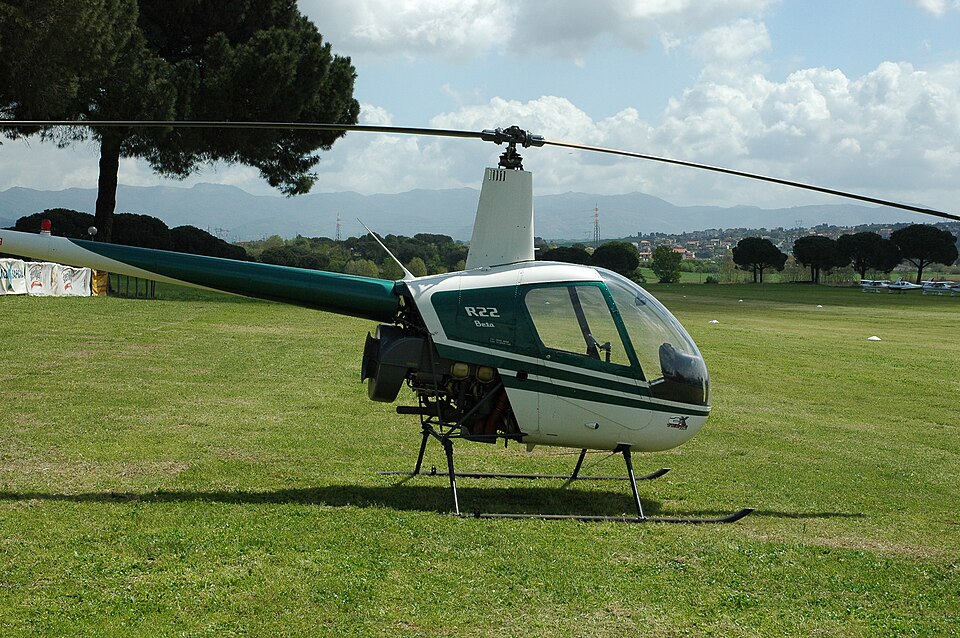
The Robinson R22 is one of the most widely used training helicopters on the planet. It has been in production since 1979 and helped build an entire generation of helicopter pilots. The two-seat design uses a Lycoming O-360 piston engine derated to around 131 horsepower, and the price tag is among the friendliest in the light helicopter market.
What makes the R22 special is also what makes it demanding. The flight controls are very sensitive and require a light touch, which is partly why pilots who train on the R22 tend to transition smoothly to heavier helicopters. Flight schools love it because it gets students sharp quickly while keeping operating costs low.
Best for: Flight training and budget-conscious private ownership Seats: 2 Engine: Piston
If you are weighing flight schools, a quick look at top US helicopter training programs will show you just how dominant the R22 is in the training world.
2. Robinson R44 Raven II
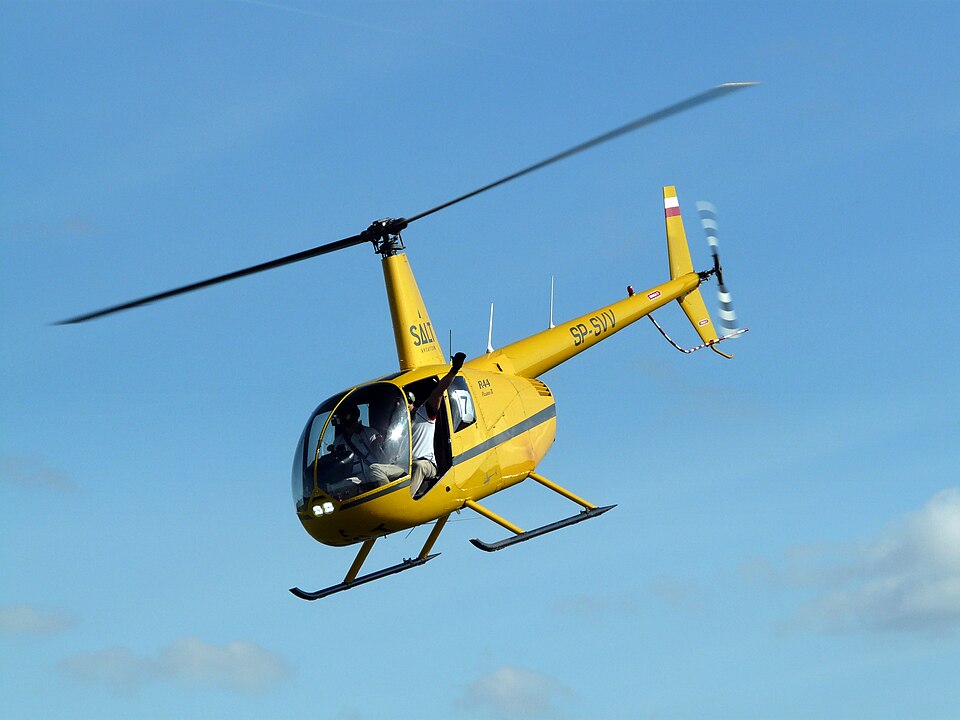
The R44 took the R22 formula and stretched it into a four-seat layout that works for personal travel, sightseeing, charter, and training. It is the larger and more comfortable sibling, and it has long been one of the most popular civilian helicopters in production. The Raven II variant adds a fuel-injected Lycoming IO-540 engine, wider rotor blades, and a higher gross weight than earlier R44 versions.
The R44 cruises around 130 mph and has a flight time of roughly two hours with reserves on a full tank. Hydraulically assisted controls make it easier to fly than the R22, and the cabin has actual room for four adults plus light luggage.
Best for: Personal travel, light charter, and tour operations Seats: 4 Engine: Piston
Fun Fact: The R44 is widely considered one of the most-produced civil helicopters of its era, with thousands of airframes flying for private owners, tour operators, and police agencies across more than a hundred countries.
3. Robinson R66 Turbine
The R66 was Robinson's first turbine helicopter and built on the R44 platform with a five-seat layout and a Rolls-Royce RR300 turboshaft engine. Compared to the piston R44, the R66 is smoother, slightly faster, and has a separate luggage compartment that can hold up to 300 pounds. The cruise speed sits around 125 to 130 mph, and the cabin is roomier than the R44.
The R66 is a favorite for private owners who want the simplicity of a Robinson with the smoother feel of turbine power. It also sees use in law enforcement, electronic news gathering, and utility roles. A recent NxG refresh added updated avionics, a two-axis autopilot, and an impact-resistant windshield as standard.
Best for: Private owners stepping up from piston to turbine Seats: 5 Engine: Turbine
4. Bell 505 Jet Ranger X
The Bell 505 is the modern light single from Bell, designed as a clean-sheet helicopter that borrows certain rotor system components from the venerable Bell 206L-4. It seats five total, including the pilot, and uses a Safran Arrius 2R turboshaft engine paired with a dual-channel FADEC for engine control. Cruise speed reaches roughly 125 knots, and the cabin features a fully integrated Garmin G1000H NXi glass cockpit.
What sells the 505 is the combination of modern avionics, a flat floor cabin, and a relatively affordable price for a light turbine. Operators use it for training, corporate transport, law enforcement, and utility work. Several militaries have also adopted it as a basic training platform.
Best for: Modern light turbine missions across training, utility, and corporate roles Seats: 5 Engine: Turbine
5. Bell 206 JetRanger
The Bell 206 is one of the defining helicopters of the past several decades. It first flew in the 1960s and grew into a family of civil and military versions that have served around the globe. Production wrapped in 2017, but thousands of 206s are still in active service. The JetRanger seats up to five with a single pilot and four passengers, and it uses a Rolls-Royce 250 series turbine engine.
The 206 is famous for its smooth ride, two-bladed rotor system, and rugged reliability. It has been a fixture in electronic news gathering, corporate transport, law enforcement, training, and tour operations. Used examples are widely available on the secondary market, which keeps the 206 relevant even after the production line closed.
Best for: Proven turbine performance with strong support and used market availability Seats: 5 Engine: Turbine
6. Bell 407
The Bell 407 sits at the larger end of the light category and is sometimes grouped as a light-intermediate helicopter. It evolved from the Bell 206L-3 LongRanger and uses a four-blade composite main rotor that delivers a smoother ride and better climb performance than the older two-bladed designs. The 407 seats up to seven, including the pilot, and is widely used in corporate transport, air ambulance work, and offshore support.
The four-blade rotor and roomier cabin make it a step up from the 206 in payload and comfort, and the helicopter has earned a reputation for being one of the most adaptable light turbines in service. Used 407s remain in steady demand for executive and corporate roles, which speaks to how well the platform has aged.
Best for: Corporate transport, EMS, and utility missions that need extra capacity Seats: 7 (with pilot) Engine: Turbine
7. Airbus H125
The Airbus H125, formerly the Eurocopter AS350 Écureuil, is one of the toughest and most respected single-engine helicopters in the world. It uses a Safran Arriel 2D turboshaft and is widely known for its high-altitude performance, which is why it has been used for extreme missions including Mount Everest operations. The cabin can carry up to six passengers, and the helicopter can lift sling loads of up to 3,086 pounds.
The H125 is everywhere. Tour operators, firefighting crews, utility companies, law enforcement, and emergency medical services all rely on it for tough conditions. Its cruise speed sits around 137 knots, and range stretches to roughly 340 nautical miles. The H125 family has racked up tens of millions of flight hours over the years.
Best for: Hot-and-high missions, firefighting, utility lift, and tough environments Seats: 6 (plus pilot) Engine: Turbine
Pro Tip: When evaluating a light turbine like the H125 for utility work, pay close attention to the sling load rating at your specific altitude, not just the sea-level maximum. Performance at altitude is often the real deciding factor.
8. Airbus H130
The Airbus H130 is the more refined sibling of the H125, with a larger cabin, a Fenestron shrouded tail rotor, and a quieter ride. It was designed with passenger comfort in mind, which is why it shows up frequently in premium sightseeing operations and tour fleets. The H130 can carry one pilot and up to seven passengers in a single-class layout.
Features like Active Vibration Control, energy-absorbing seats, and a crash-resistant fuel system give the H130 a strong safety profile. Operators of the H130 highlight its lower noise footprint, which matters in tour environments like the Grand Canyon and other noise-sensitive areas. Air medical operators use it as well, with stretcher and crew configurations.
Best for: Premium tour operations, EMS, and corporate passenger transport Seats: 7 (plus pilot) Engine: Turbine
9. Guimbal Cabri G2
The Cabri G2 is a French-designed two-seat piston helicopter that has steadily grown into one of the most respected modern trainers on the market. It features a three-bladed fully articulated main rotor and a Fenestron tail rotor, which is unusual for a helicopter in its weight class. The composite rotor blades are damage-tolerant and built for a long service life.
Pilots and instructors praise the Cabri G2 for its forgiving handling, modern construction, and improved safety margins compared to older two-seat trainers. The fully articulated rotor handles low-G maneuvers more gracefully than teetering rotor systems, which is a meaningful safety point in primary training. Operating costs are competitive, and the Fenestron tail rotor adds protection during ground operations.
Best for: Modern primary helicopter flight training Seats: 2 Engine: Piston
Heads Up: The Cabri G2 is gaining ground at flight schools across Europe and the US, but availability and parts support can vary by region. Confirm local maintenance options before committing.
10. Schweizer S300CBi
The Schweizer S300 series traces its roots to the Hughes 269, which first flew in 1956. The current S300CBi is a two-seat piston trainer built around a fuel-injected Lycoming engine, and the S300C is a three-seat version with more useful load. The fully articulated three-blade rotor system is forgiving in autorotation practice and handles low-G situations well, which is a long-standing selling point for primary training.
Schweizer helicopters are widely regarded as some of the safest piston-powered light helicopters certified by the FAA. The S300 series is back in active production under Schweizer RSG, which has helped resolve earlier parts and supply chain concerns. Beyond training, the S300C handles agricultural spraying, utility patrol, and cattle work.
Best for: Flight training and light utility work where safety record matters Seats: 2 or 3 Engine: Piston
11. MD 500 Series and MD 530F
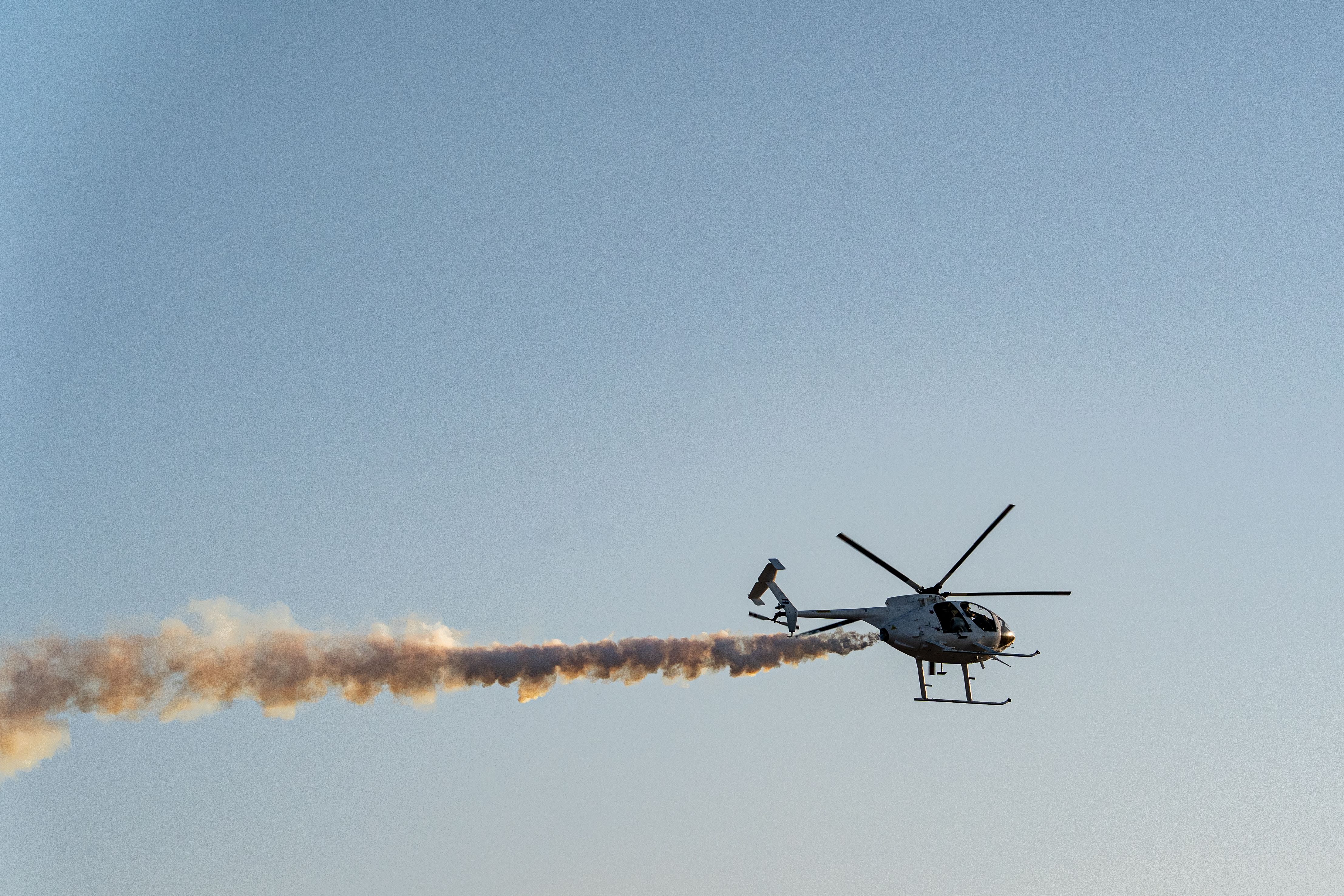
The MD 500 series began life as the Hughes 369, originally built to meet a US Army light observation helicopter requirement. It is famous for its egg-shaped cabin, agile handling, and five-bladed main rotor on later variants. The MD 530F is the hot-and-high version, powered by a Rolls-Royce 250-C30 turboshaft producing up to 650 shaft horsepower. Top cruise speed sits around 130 knots, and the helicopter excels in mountainous terrain and high temperatures.
The MD 500 family is small, fast, and surprisingly capable. It has been used by militaries, law enforcement, and commercial operators all over the world. The compact size and excellent maneuverability make it especially valuable in confined area operations, including news gathering, aerial cinematography, and short-haul utility work.
Best for: High-altitude utility, law enforcement, and missions that need a nimble light turbine Seats: 5 Engine: Turbine
12. Enstrom 280FX Shark
The Enstrom 280FX, often called the Shark, is a three-seat light piston helicopter with a turbocharged Lycoming HIO-360 engine producing 225 shaft horsepower. The turbocharged powerplant gives it strong high-altitude performance for a piston helicopter, and the fully articulated three-blade rotor system delivers a smooth ride. Maximum cruise speed sits around 100 to 102 knots.
The 280FX is built for training, light commercial work, and private flying. The composite airframe and high-inertia rotor system have helped Enstrom build a long-running reputation for safety. Pakistan and Venezuela are among the air forces that have used the 280FX as a basic trainer, which speaks to the platform's durability.
Best for: Three-seat training and personal flying with high-altitude capability Seats: 3 Engine: Piston
13. Hill HX50
The Hill HX50 is one of the newest names in the small helicopter world. Designed and built by UK-based Hill Helicopters, the HX50 is a five-seat light single aimed squarely at private owner-pilots. It uses an in-house GT50 turboshaft engine, a sleek composite airframe, a three-blade main rotor, a Fenestron tail rotor, and retractable landing gear. Cruise speed reaches roughly 140 knots, with a long range that suits cross-country flying.
What makes the HX50 stand out is the design philosophy. It targets recreational and private use rather than commercial fleets, with a luxury cabin, panoramic windows, plush leather seating, and a simple digital cockpit aimed at low-hour pilots. Pricing starts in the high six figures and climbs depending on configuration. As deliveries ramp up, the HX50 is being closely watched to see how it redefines luxury private rotorcraft for the next generation.
Best for: Private owner-pilots who want a brand-new, custom-built luxury light helicopter Seats: 5 Engine: Turbine
Keep in Mind: Newer designs like the HX50 often have long order books and delivery times that stretch out a year or more. If you are planning a purchase, factor in lead times along with the base price.
Honorable Mention: Mosquito XE Ultralight
The Mosquito XE is a single-seat ultralight kit helicopter built by Composite-FX in Florida. It uses a Compact Radial Engines MZ202 two-stroke twin-cylinder engine, an all-fiberglass unibody airframe, and a kit price starting around $53,000 with factory-finished models running higher. It is one of the few legitimate ultralight rotorcraft options for buyers who want personal vertical flight on a smaller budget.
The Mosquito XE is not certified, so it falls under different rules than the helicopters listed above. Still, for solo pilots who want the feel of helicopter flight without the price tag of a Robinson, it is worth knowing about. There is also a category of helicopters that can be flown without a traditional pilot license under the right rules, and ultralights like the Mosquito are often part of that conversation.
Looking for a verified small helicopter listing or trying to compare a Robinson R44 to a Cabri G2 side by side? Flying411 brings light helicopter listings, parts, and certified services together in a single place.
How to Pick the Right Small Helicopter for You
Choosing a light helicopter is a balance of mission, budget, and pilot skill. The right pick for a working ranch is not the right pick for a luxury private flyer, and a trainer is built around different goals than a corporate transport. Walking through your own situation first makes everything else simpler.
Start with the mission. Are you flying yourself to a vacation home a few times a year? Training students every day? Spraying crops or doing utility patrol? Each mission rewards different traits. Training schools want low operating costs and forgiving handling. Working operators want payload and reliability. Private owners want comfort and range.
Then look at the operating environment. High altitude and hot weather punish underpowered piston helicopters but reward turbines like the H125 or MD 530F. Cold climates can affect piston engines, while turbines tend to start more reliably. Coastal operations call for corrosion-resistant components and possibly float gear.
Finally, think about lifecycle costs. Direct operating costs include fuel, scheduled maintenance, and component overhauls. A turbine helicopter typically has a higher initial cost than a piston model, but it can have longer time between overhauls and a smoother ride. A piston helicopter is usually cheaper to buy and run hourly, but maintenance events come sooner.
Quick Tip: When comparing two helicopters, look at the hourly direct operating cost, not just the purchase price. A more expensive turbine can sometimes work out cheaper over a few thousand hours than a budget piston that needs constant attention.
Browse current small helicopter listings on Flying411 to compare real-world prices, hours, and configurations from sellers around the country.
Piston vs Turbine in the Light Helicopter World
One of the biggest decisions in the small helicopter world is piston versus turbine power. Both have their place, and both come with trade-offs that matter for the pilot signing the checks.
Piston helicopters like the Robinson R22, R44, Cabri G2, Enstrom 280FX, and Schweizer S300 are cheaper to buy and cheaper to operate per hour. They burn AVGAS, which is widely available, and they are simpler to maintain. They also tend to feel a little buzzier and slower than turbines.
Turbine helicopters like the Robinson R66, Bell 505, Bell 407, Airbus H125, Airbus H130, MD 530F, and Hill HX50 burn jet fuel, run smoother, and usually carry more payload at altitude. They typically cost more up front, but their components can last longer between overhauls. Turbines also start more reliably in cold conditions.
| Trait | Piston | Turbine |
| Purchase price | Lower | Higher |
| Hourly fuel burn cost | Lower | Higher |
| Maintenance schedule | More frequent intervals | Longer intervals |
| Smoothness | Decent | Smoother |
| Cold-start reliability | Good with care | Generally better |
| Best fit | Training, light personal | Charter, corporate, utility |
Typical Costs to Buy and Operate a Small Helicopter
Pricing a light helicopter is not always straightforward, and exact figures shift year to year. Still, broad ranges help set expectations. Used piston helicopters can start in the low hundreds of thousands, while new factory-fresh turbines often run well into seven figures. Used examples of older turbines like the Bell 206 can be far more affordable than new equivalents.
Operating costs also vary by helicopter and mission. As a rough guide, light piston helicopters often run somewhere in the low to mid hundreds of dollars per hour all-in, while light turbines can run several times that. The numbers depend on fuel prices, maintenance reserves, insurance, hangar fees, and how hard the helicopter is flown. Tour operators flying long hours often achieve lower per-hour costs than weekend private owners because fixed expenses spread across more flight time.
A few line items that catch new buyers off guard:
- Engine and rotor overhauls. Major overhauls can run from tens of thousands to several hundreds of thousands of dollars depending on the model.
- Insurance. Premiums depend heavily on pilot experience, mission, and hull value.
- Hangar and tie-down. Hangaring a helicopter is often pricier than tying it down outside, but it protects the airframe and components.
- Training and currency. Type-specific training and recurrent currency requirements are part of the real cost of ownership.
Fun Fact: The first turbine-powered light helicopter, the original Bell 206 JetRanger that traces back to a 1960s US Army competition, set the template for nearly every modern light turbine that followed. Some of that early DNA is still visible in the Bell 505 today.
Common Missions Light Helicopters Handle
Light helicopters are the workhorses of civilian aviation. Their flexibility is one of the main reasons the category is so deep. A single airframe like the Bell 407 or Airbus H125 can serve in many different roles depending on how it is configured.
Typical missions include:
- Flight training. R22, R44, Cabri G2, Schweizer S300, and Enstrom 280FX all serve here.
- Private transport. R44, R66, Bell 505, and Hill HX50 fit this lane.
- Sightseeing and tours. R44, R66, H130, and Bell 407 are popular choices.
- Air ambulance and EMS. Bell 407, H125, and H130 frequently fly EMS configurations.
- Law enforcement. Bell 206, Bell 505, MD 500 series, and H125 are common.
- Utility and firefighting. H125 is a clear leader, with MD 530F and Bell 407 also in the mix.
- Aerial filming and cinematography. MD 500 and AStar/H125 platforms see heavy use.
- Cattle mustering and agricultural work. R22, R44, and Schweizer S300C handle this well.
How Small Helicopters Compare to Larger Models
Comparing a light helicopter to a medium or heavy helicopter is a bit like comparing a sport sedan to a heavy-duty pickup truck. Each is great at what it does, but the missions are different. Medium helicopters like the Bell 412, Airbus H145, or Leonardo AW139 carry more people, fly farther, and have twin engines for redundancy. Heavy helicopters like the Sikorsky S-92 or Mil Mi-26 handle offshore oil work, heavy cargo lift, and demanding military missions.
Small helicopters keep things simple. One engine, fewer crew, lower costs, and more flexibility for tight landing zones. The trade-off is reduced payload, shorter range, and less weather capability. Most light helicopters operate strictly under visual flight rules, while many medium helicopters can be flown in instrument conditions with full IFR equipment.
Speed is another point of comparison. Light helicopters typically cruise between 110 and 140 knots. The fastest helicopters in the world tend to be larger machines with multiple engines and advanced rotor systems. If raw speed is your goal, light helicopters are probably not the right category.
Safety Considerations for Small Helicopters
Safety in light helicopters comes down to design, training, and pilot judgment. Modern designs include features like crash-resistant fuel systems, energy-absorbing landing gear, impact-resistant windshields, and bladder fuel tanks. Helicopters like the Cabri G2 and Schweizer S300 are widely praised for their forgiving rotor systems, especially during low-G situations.
Training matters as much as the helicopter itself. The Robinson R22 and R44 require a special endorsement in the US under SFAR 73, which covers energy management, mast bumping, low rotor RPM, and other type-specific risks. Building experience with a qualified instructor is the single most important safety investment a new helicopter pilot can make.
Maintenance discipline rounds out the safety picture. Light helicopters demand strict adherence to scheduled inspections, time-between-overhaul limits, and component life limits. Cutting corners here is how problems start.
Heads Up: Some older small helicopters can be deceptively inexpensive on the used market because they are near overhaul or have time-limited components running out. Always commission a thorough pre-purchase inspection from a qualified mechanic before signing anything.
Trends Shaping the Small Helicopter Market
The light helicopter world is shifting in interesting ways. New designs like the Hill HX50 are challenging the idea that personal helicopters have to be either decades-old technology or seven-figure corporate machines. At the same time, established players like Robinson have unveiled refreshed models, including the R66 NxG and the new R88 turbine, which moves the company into a larger ten-seat category for the first time.
Electric helicopters are also starting to show up on the horizon. Several manufacturers are working on electric rotorcraft concepts aimed at urban air mobility and short-range flights. Battery weight remains a major hurdle, and certification timelines are long, but progress is happening.
Autonomous and remotely piloted helicopters are another front. Companies are testing optionally-piloted versions of existing airframes for agricultural spraying, cargo delivery, and firefighting. The technology is real, even if widespread civilian use is still years away.
Finally, modern avionics are reshaping the light helicopter cockpit. Glass panels, dual-channel FADEC engine control, two-axis autopilots, and advanced terrain awareness systems are showing up in helicopters that would have had basic round dials a decade ago. The result is a lower workload for the pilot and better safety margins.
Conclusion
The best small helicopter is the one that fits your mission, your budget, and your skill level. The lineup above covers the most respected light helicopters in production and in active service, from the bulletproof Robinson R22 to the brand-new Hill HX50. Each has its strengths, its quirks, and its loyal community of pilots and operators. Take time to fly several, talk to current owners, and run the numbers on real-world operating costs before committing to one.
Ready to find your next light helicopter? Browse listings, parts, and certified aviation services on Flying411 and put the right small helicopter within reach.
Frequently Asked Questions
What is the cheapest small helicopter to own?
Used Robinson R22s and Schweizer S300s tend to be among the most affordable certified helicopters to own and operate. For uncertified ultralights, kit-built options like the Mosquito XE start at significantly lower price points but come with different rules and limitations.
How long does it take to learn to fly a small helicopter?
A private helicopter pilot certificate in the US typically requires a minimum of around 40 flight hours, though most students log 50 to 70 hours before checkride readiness. The exact timeline depends on training frequency, weather, and how naturally helicopter controls click for the student.
Can a small helicopter fly in bad weather?
Most light helicopters are limited to visual flight rules and are not approved for flight into known icing or heavy instrument conditions. Some operators do equip light helicopters for instrument flight, but it is far less common than in medium or twin-engine helicopters.
How far can a small helicopter fly on one tank of fuel?
Range varies by model, but most light helicopters cruise between roughly 250 and 400 nautical miles on a full tank with reserves. Long-range tanks and reduced payload can stretch that figure, while heavy loads or high-altitude flying shorten it.
What is the difference between a small helicopter and a gyroplane?
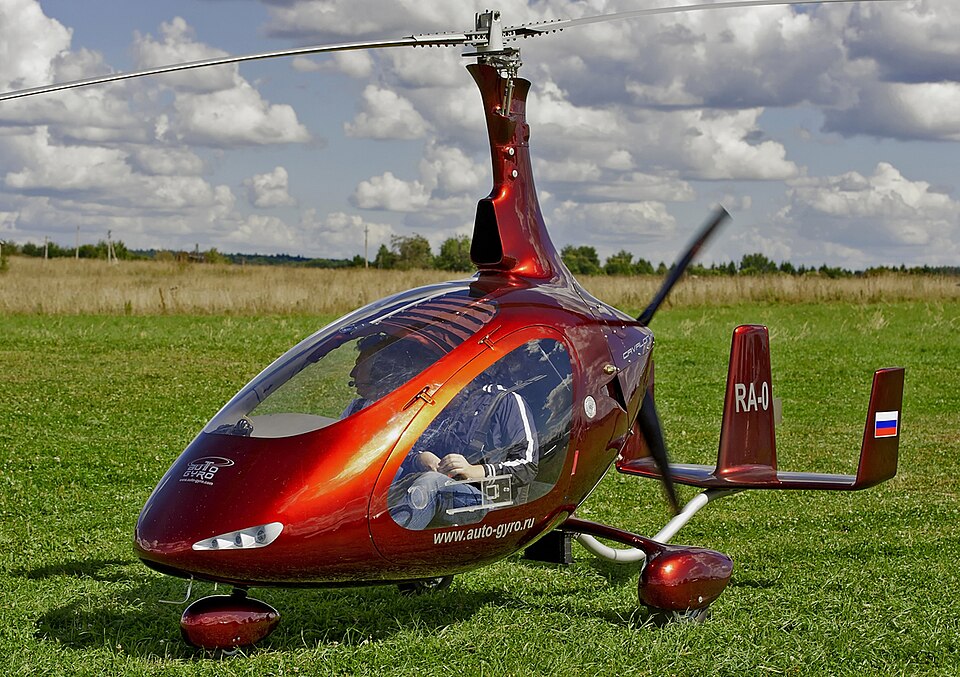
A small helicopter uses an engine-driven main rotor that produces both lift and thrust, allowing it to hover. A gyroplane uses an unpowered rotor that spins from airflow and a separate engine-driven propeller for forward thrust, which means it cannot hover. Both are rotorcraft, but they fly very differently.