A helicopter can have a sleek body, a roomy cabin, and the newest screens in the cockpit. None of that matters much if the engine quits. The engine is the heart of the machine.
When it comes to the most reliable helicopter engines, a small group of names shows up again and again. These are the engines pilots trust, mechanics know inside and out, and operators keep flying for decades.
Some are tiny turbines that sip fuel and spin at incredible speeds. Others are simple piston engines that have logged millions of hours without much drama.
A few are battle-tested military designs built to keep running when everything around them is falling apart.
What ties them together is a long record of starting up, doing the job, and bringing everyone home safely. The best engines almost become invisible. You stop thinking about them because they simply work.
The real test of an engine is not how it sounds on day one. It is how it sounds ten thousand hours later.
Key Takeaways
The most reliable helicopter engines are turbine designs like the Rolls-Royce M250, the Pratt & Whitney Canada PT6T Twin-Pac, the Safran Arriel, and the GE T700, along with piston engines like the Lycoming O-360 and O-540 used in Robinson helicopters. These engines earned their trust through decades of service, long stretches between overhauls, and large fleets that have logged many millions of flight hours. The best engine for you depends on the size of the helicopter, the kind of flying you do, and your budget.
| Engine | Type | Often Found In | Known For |
| Rolls-Royce M250 (Allison 250) | Turboshaft | Bell 206, MD 500 | Light turbine staple, huge fleet |
| Pratt & Whitney PT6 / PT6T | Turboshaft | Bell 212, Bell 412 | Airline-style dependability |
| Safran Arriel | Turboshaft | Airbus H125, H130 | Best-selling in its class |
| GE T700 / CT7 | Turboshaft | Black Hawk, Apache | Combat-proven toughness |
| Lycoming O-360 / O-540 | Piston | Robinson R22, R44 | Simple, affordable, long TBO |
| Honeywell T53 / LTS101 / CTS800 | Turboshaft | Huey, light twins | Rugged military heritage |
| Klimov TV2-117 / TV3-117 | Turboshaft | Mil Mi-8, Mi-17 | Tough in harsh climates |
| Pratt & Whitney PW200 | Turboshaft | AW109, EC135 | Light-twin favorite |
At Flying411, we spend our days around the engines and aircraft that keep this industry moving, so we understand how much a dependable powerplant really matters.
What Makes a Helicopter Engine Reliable
Reliability is not just a feeling. It comes from real numbers and a long paper trail. Before we look at the engines themselves, it helps to understand what separates a trusted engine from a risky one. A few clear signs tell the story.
Time Between Overhaul (TBO)
The biggest clue is the time between overhaul, often shortened to TBO. This is the number of flight hours an engine can run before the maker says it needs a full teardown and rebuild. A longer TBO usually means the engine runs cooler, wears slower, and has proven itself over many fleets.
A turbine engine might run several thousand hours between overhauls. Some modern designs reach 5,000 hours. A well-treated piston engine in a trainer often runs around 2,200 hours. The longer the safe interval, the more the maker trusts the design.
Good to Know: TBO is not a hard stop where the engine suddenly fails. It is a planned checkpoint. Operators often watch oil, temperatures, and trends so they can catch small problems long before they ever become big ones.
Power-to-Weight and Design Margin
A reliable engine almost never works at its absolute limit. Many helicopter engines are "derated," which means the maker holds them back from full power. This gives the engine and the gearbox a built-in safety cushion.
The power-to-weight ratio also matters. An engine that makes strong power for its weight can carry a load without straining. When an engine rarely has to push hard, it tends to last longer and break down less.
Why It Matters: An engine that loafs along at 80 percent of its rated power day after day will almost always outlive one that runs flat out. Margin is the quiet secret behind a long, boring, trouble-free service life.
Maintenance Support and Track Record
An engine is only as good as the support behind it. The most trusted names have parts on the shelf, trained mechanics in every region, and clear service paperwork. A huge fleet also means problems get spotted early and fixed across the board.
Helicopters have a long and colorful past, and the engines that survived did so by being easy to fix in the field. You can see this pattern across the helicopter's long history, where the simplest, best-supported designs kept flying while flashier ideas faded away.
Turboshaft vs Piston: Two Roads to Reliability
Helicopter engines come in two main families. Both can be very reliable. They just get there in different ways. Knowing the difference helps you read the rest of this list.
A piston engine works a lot like a car engine. It burns fuel inside cylinders, pushes pistons up and down, and spins a shaft. These engines are cheaper to buy and fix. You find them in small, light helicopters and training machines.
Turboshaft engines are jet-style turbines tuned to spin a shaft instead of pushing air out the back. Many use a free turbine, where the section that drives the rotor spins on its own shaft, separate from the gas generator. Turbines are lighter for their power, smoother, and burn fuel at a steady rate. They cost more, but they shine in medium and large helicopters.
Here is a simple side-by-side look:
| Feature | Piston Engine | Turboshaft Engine |
| Cost to buy | Lower | Higher |
| Cost to maintain | Lower | Higher |
| Power for the weight | Modest | Strong |
| Best fit | Light, training, private | Medium to heavy, commercial |
| Typical TBO | Around 2,000 hours | Several thousand hours |
| Vibration | More | Less |
Keep in Mind: A turbine is not automatically better than a piston. For a small private helicopter or a flight school, a simple piston engine can be the smarter and far cheaper choice. The "right" engine is the one that matches the job.
The Most Reliable Helicopter Engines, One by One
Now for the heart of the matter. These engines have earned their spots through decades of hard, real-world flying. They power everything from two-seat trainers to heavy military lifters. Each one is widely respected for showing up and doing the job, year after year. Here are eight that keep proving themselves.
1. Rolls-Royce M250 (Allison 250)
The Rolls-Royce M250, first known as the Allison 250, is one of the great light turbine success stories. It started life in the early 1960s as a small engine for a U.S. Army light observation helicopter. From that single design grew an entire family of engines.
More than 30,000 of these engines have been built over the years, and many thousands are still flying today. The M250 powers the Bell 206 JetRanger, the MD 500 series, and a long list of other light helicopters. It is a free-turbine, modular design, which means mechanics can work on it in sections without tearing apart the whole engine.
For many pilots, an M250-powered JetRanger is the first turbine they ever fly. The engine is famous for its smooth manners and forgiving nature. You will find M250-powered helicopters doing news flying, police work, and plenty of sightseeing and tour flights around the world. Their stability and clear view out the front also make them favorites for light aerial photography work.
2. Pratt & Whitney Canada PT6 and PT6T Twin-Pac
The Pratt & Whitney Canada PT6 family is the stuff of legend. The helicopter version that earns the most respect is the PT6T Twin-Pac. This clever design joins two power sections to a single combining gearbox. If one section ever quits, the other can keep the helicopter flying. That feature alone is a big reason crews trust it.
The PT6T entered service back in the 1970s and powers medium helicopters like the Bell 212 and Bell 412. Pratt & Whitney often points out that the first PT6T power section was built to the same standard as one of its airline turboprop engines. In plain terms, it brought airline-style dependability to the helicopter world.
These engines often run several thousand hours between overhauls, with many reaching up to 5,000 hours depending on the model and conditions. That long, steady service life is a huge part of their reputation.
Fun Fact: The PT6 family as a whole has logged hundreds of millions of flight hours across planes and helicopters. Few engine designs anywhere can claim that kind of mileage.
3. Safran Arriel
The Safran Arriel, born under the Turbomeca name in France, is widely called the best-selling helicopter engine in its power class. Tens of thousands of Arriel engines have been built, and together they have logged many millions of flight hours. That is a staggering amount of real-world proof.
The Arriel powers some of the most popular helicopters in the sky, including the Airbus H125 and H130 and the earlier AS350 family. It comes in two main lines, the Arriel 1 and the Arriel 2, covering a wide spread of power. Newer versions use a digital control system that reduces pilot workload and helps protect the engine. Safran has also stretched the overhaul interval on some models out to 5,000 hours, which keeps operating costs down.
Pro Tip: When you shop for a used turbine helicopter, ask how many hours remain before the next overhaul. An engine close to its TBO can mean a large bill is just around the corner, and that should shape the price you pay.
The Arriel shows up in everything from rescue ships to high-end machines. Plenty of high-end luxury helicopters lean on Arriel power for the same reason commercial operators do. It is smooth, strong, and well supported.
4. GE T700 and CT7
If you want an engine proven in the worst conditions on Earth, look at the GE T700. The U.S. Army asked for an engine with more power and easier field repair, and the T700 delivered. It powers the Sikorsky Black Hawk, the Boeing Apache, and the Navy Seahawk family.
More than 100 million flight hours have been logged by the T700 and its civilian cousin, the CT7. Tens of thousands of these engines have been built and trusted by dozens of countries. The design is fully modular and built to keep running in dust, sand, heat, and cold. Crews can swap parts quickly, which matters a great deal far from a clean hangar.
The military side of the story is full of famous matchups, like the Apache and Comanche programs and the long-running comparison between the Black Hawk and Chinook. T700 power even shows up in firefighting and rescue roles, where a version of the Black Hawk takes on tough search and rescue work. For a sense of how these machines stack up against ground forces, the comparison of helicopters against armor is a fun look at the same engines doing serious work.
Heads Up: Combat-grade engines are built for punishment, but that toughness comes at a price. Parts, overhauls, and specialized labor for military-style turbines can be far more costly than for a small piston engine, so factor that in before falling in love with the spec sheet.
5. Lycoming O-360 and O-540
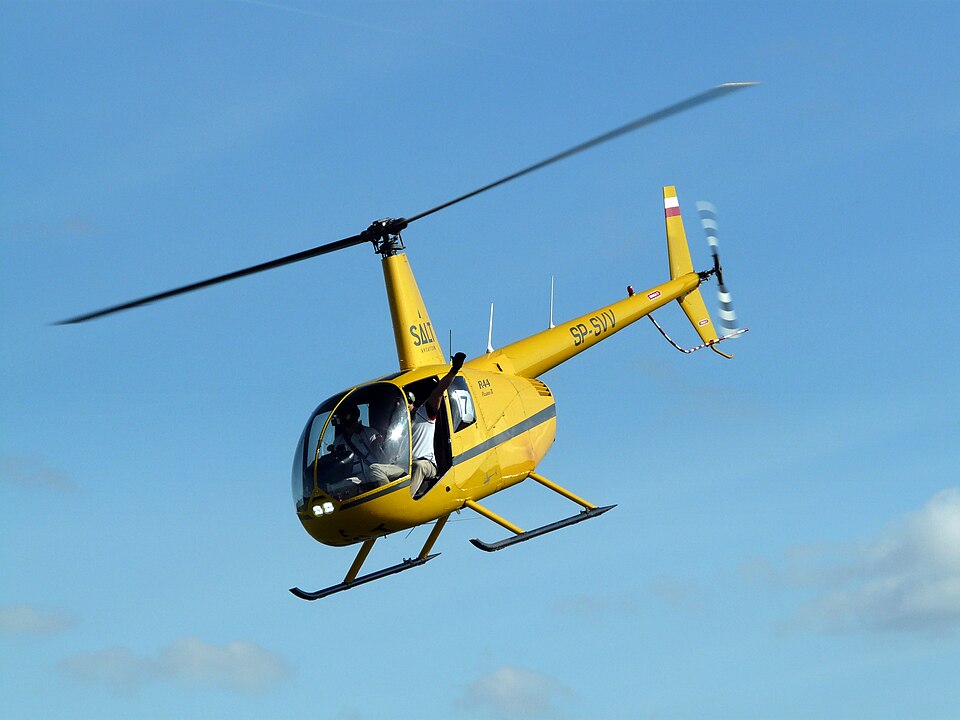
Not every reliable engine is a turbine. The Lycoming O-360 and O-540 piston engines are the quiet backbone of light helicopter flying. They power the Robinson R22 and R44, two of the most common training and personal helicopters in the world.
Lycoming and Robinson "derate" these engines, holding them well below their full output. This gentle treatment pays off. The factory raised the overhaul interval to around 2,200 hours, which is a strong number for a piston engine in a helicopter. That long life helped make these aircraft affordable to own and fly.
These engines are a big part of why so many pilots earn their wings on light Robinsons. If you are looking at popular two-seat helicopters or picking a school, the odds are good you will train behind a Lycoming. Most helicopter flight schools in the U.S. rely on this kind of simple, proven piston power. Even some of the lighter helicopters you can fly under special rules lean on small, dependable piston engines for the same reasons.
6. Honeywell T53, LTS101, and CTS800
Honeywell's family of turboshaft engines carries deep military roots. The T53 powered the famous Huey, the Cobra, and other classic helicopters through decades of demanding service. Its bigger sibling, the T55, has kept the heavy Chinook flying for a very long time.
The smaller LTS101 found a home in many light twins, while the newer CTS800 brings a high power-to-weight design and digital controls to modern military machines. The CTS800 came from a joint effort between Rolls-Royce and Honeywell and was first built for an advanced scout helicopter program.
The Huey story is one of the most recognized in aviation, and the way it stacks up against newer ships shows in the classic look at how the Huey compares to modern utility helicopters. These engines earned their place by hauling troops and cargo in conditions that would stop lesser designs.
7. Klimov TV2-117 and TV3-117
No honest list of trusted helicopter engines can skip the Russian Klimov line. The TV2-117 and its successor, the TV3-117, power the Mil Mi-8 and Mi-17, which rank among the most-produced helicopters ever made.
These engines are built to be tough and simple. They start in brutal cold, run on rough fuel, and keep going from dusty deserts to frozen tundra. The Klimov family is said to have logged well over 100 million flight hours across a worldwide fleet. They may not be the most refined engines around, but they are famously hard to kill, and that is a kind of reliability all its own.
Quick Tip: Reliability is partly about the engine and partly about how it is flown and serviced. Even the toughest design will let you down if it is run hard, fed bad fuel, and skips inspections. Good habits matter as much as good hardware.
8. Pratt & Whitney Canada PW200
The Pratt & Whitney Canada PW200 family rounds out the list as the favorite of the light-twin world. It powers helicopters like the AgustaWestland AW109 and certain versions of the EC135. Pratt & Whitney designed it to be the steady, economical benchmark in its size, and it has captured a big share of that market.
Light twins are popular for medical flights, corporate travel, and police work, where two engines add peace of mind. The PW200's calm, predictable nature is exactly what those missions call for. It is a clear example of an engine doing one job very well for a very long time.
Looking for a helicopter built around one of these proven engines? Flying411's aircraft marketplace lets you filter listings by make and model so you can match the airframe to a powerplant you trust.
How These Engines Earn Their Reputation
It is worth asking why these particular names keep coming up. The answer is rarely one magic feature. Reliability is the sum of many small, smart choices made over decades.
First, the makers tend to improve their engines slowly and carefully. They add new materials and better controls without throwing out what already works. The M250 and the PT6 both grew through steady upgrades, not risky reinventions.
Second, big fleets create a powerful feedback loop. When tens of thousands of engines are flying, any weak spot shows up fast. The maker fixes it, and the whole fleet gets better. Small fleets never get that benefit.
Third, strong support keeps these engines healthy. Trained mechanics, easy parts supply, and clear service rules mean problems get caught early. An engine with great paperwork and a network of experts behind it will always be safer than a rare design with neither.
Finally, these engines are flown within sensible limits. Derating, careful warm-ups, and trend monitoring all add up. The result is helicopter engine reliability that owners can count on for thousands of hours.
Choosing the Right Engine for Your Mission
So which of these belongs in your helicopter? The honest answer is that it depends on what you plan to do. There is no single best engine for everyone. There is only the best engine for your mission and your wallet.
If you are training or flying for fun on a tight budget, a piston-powered light helicopter makes a lot of sense. The Lycoming-powered Robinsons are simple, affordable, and easy to support.
If you want turbine smoothness in a small package, an M250-powered JetRanger or an Arriel-powered single is hard to beat. Both have huge fleets and deep support.
If you carry heavier loads or fly demanding commercial missions, a medium twin with a PT6T or a PW200 brings extra power and the comfort of two engines. And if your work pushes into the harshest conditions, the T700 family has already proven it can take a beating.
Speed seekers have their own favorites too. Many of the fastest helicopters flying today pair powerful turbines with sleek airframes. A reliable engine is what turns that speed into something you can use day after day, unlike the experimental flapping-wing flying machines that never quite made it past the drawing board.
Ready to start your search? Browse aircraft, engines, and certified parts on Flying411 and connect directly with sellers and aviation pros who know these powerplants inside and out.
Conclusion
The most reliable helicopter engines all share one simple trait. They show up, do the job, and keep doing it for thousands of hours without fuss. From the tiny Rolls-Royce M250 to the battle-hardened GE T700, these designs earned their fame the slow way, one trouble-free flight at a time. Whichever one fits your mission, you are choosing decades of proven trust.
The right engine turns a helicopter from a hopeful idea into a machine you can count on. That is the whole point of reliability. It lets you stop worrying about the heart of the aircraft and focus on the flying.
Ready to find the aircraft, engine, or parts that fit your mission? Start your search today at Flying411 and connect with trusted sellers and aviation experts who speak your language.
Frequently Asked Questions
What is the most reliable type of helicopter engine, turbine or piston?
Both can be very reliable, but turbine (turboshaft) engines are generally smoother and longer-lasting in medium and large helicopters, while piston engines offer excellent reliability at a much lower cost in small, light aircraft. The best choice depends on the size of the helicopter and the mission.
How long do helicopter engines last before they need an overhaul?
It varies by design, but many turbine engines run several thousand hours between overhauls, with some modern models reaching 5,000 hours, while a well-maintained piston engine in a light helicopter often runs around 2,200 hours. Operating conditions and care can shift these numbers up or down.
Why are helicopter engines often derated below their full power?
Makers limit the available power to give the engine and gearbox a safety cushion, which reduces wear and helps the engine last longer. An engine that rarely runs flat out tends to be far more reliable over its service life.
Are military helicopter engines more reliable than civilian ones?
Military engines like the GE T700 are built to survive extreme conditions and rough field service, which makes them very tough, but they can be more expensive to maintain. Civilian engines are often optimized for lower operating costs and long, steady service rather than combat punishment.
Does the engine affect the resale value of a helicopter?
Yes, the engine is a major factor in a used helicopter's value, and the hours remaining before the next overhaul can have a big effect on price. A fresh or low-time engine is usually worth significantly more than one approaching its overhaul limit.