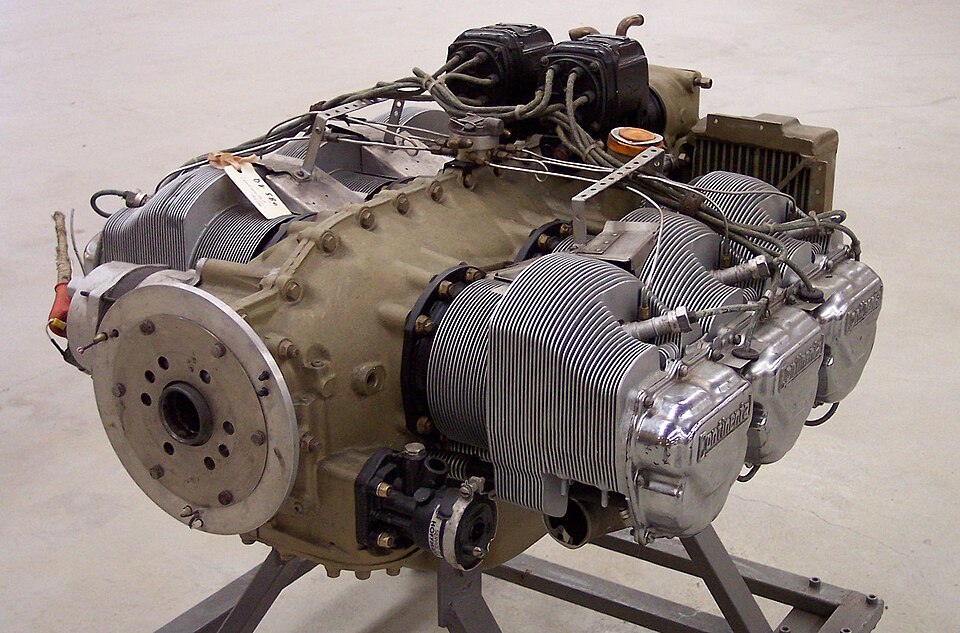
Old aircraft rules can feel like dusty paperwork. But some of them still matter every single time an airplane goes through an annual inspection, a pre-buy check, or a sale. The Continental IO-520 Crankshaft AD is one of those rules. If you own, fly, or plan to buy an airplane with this engine, this airworthiness directive still deserves a careful look, mostly because of what your logbooks can prove.
The Continental IO-520 has powered many trusted general aviation aircraft across the United States. It has a strong name, a long service history, and a loyal following among owners and mechanics. But a classic engine still needs clear records. That is especially true when an old rule involves the crankshaft, one of the most important parts inside the engine.
The rule was tied to a serious safety concern. According to the FAA, airworthiness directive (AD) 99-19-01 is said to have addressed possible crankshaft cheek cracks on certain Teledyne Continental Motors engines, including IO-520 series engines listed in the rule. Owners can look up the official FAA record for AD 99-19-01 in the FAA's airworthiness directive database.
For many owners today, the big issue is not a new inspection. The engine may already be clear. The real question is proof. The logbooks need to show that the right engine, the right crankshaft, and the right work were checked. So before anyone shrugs and says, "That was years ago," it helps to slow down and check the paper trail. In aircraft ownership, old records can still carry fresh weight.
Key Takeaways
The Continental IO-520 Crankshaft AD still matters because owners must prove that affected engines and crankshafts were checked or cleared. The rule did not apply to every IO-520, but it did apply to certain engines and crankshafts tied to specific records. Today, the smartest move is to review your logbooks, serial numbers, overhaul records, and AD compliance entries so the aircraft stays legal and safe to fly. In short, the engine might be perfectly fine, but you still need the paperwork to say so.
| Key Point | What It Means for Owners |
| The AD was not for every IO-520 | Check the exact engine model and matching records |
| Serial numbers matter | The engine and crankshaft history must line up with the AD limits |
| Records carry real weight | Missing proof can cause trouble during inspections or sales |
| Affected parts needed inspection | Some crankshafts required visual and ultrasonic checks |
| Compliance follows the part | A changed crankshaft can change the AD status |
| Pre-buy checks catch gaps | Buyers often ask for proof before closing a deal |
Flying411 makes it easier to research aircraft, parts, and ownership questions like this one, so you can keep your records clean and your decisions confident.
Why the Continental IO-520 Still Commands Owner Attention
The Continental IO-520 sits in a special place in general aviation. It is not a small training engine. It is a strong six-cylinder powerplant used in many capable airplanes. These aircraft often carry families, business owners, flight crews, and cargo across long distances. That kind of work gives the engine a serious reputation.
Owners like the power. Pilots like the steady performance. Mechanics like engines with known habits and a long service record. The IO-520 has all of that. But age brings one big issue, and that issue is history.
A lot can happen to an aircraft engine over many years. It may be removed, repaired, overhauled, reinstalled, or sold with the aircraft. A part may be replaced. A crankshaft may have its own separate history. Paperwork may move from one owner to another. Sometimes the records are clean. Sometimes they look like they survived a garage drawer, a coffee spill, and three owners with very different filing styles.
That is why old ADs can still matter. The engine may sound healthy. It may start easily. It may make good power. But aircraft maintenance is not based on sound alone. Records help prove what was done and what still needs attention. This is also where a trained eye helps, since the way a professional reviews parts and paperwork is different from a quick glance. Understanding how A&P technicians evaluate part condition shows why a complete history matters as much as a clean engine.
Why It Matters: An old AD does not mean your engine is bad. It means you need to know your engine's past well enough to prove it is good.
How an Old Airworthiness Directive Still Affects Your Aircraft
An airworthiness directive is not casual advice. It is a legal safety rule. When the FAA issues one, owners and operators must follow it if it applies to their aircraft, engine, propeller, or part. The date on the rule may be old, but the need for proof does not expire.
This can surprise some owners. They may think, "The airplane has flown for years, so it must be fine." That may well be true. But during an inspection or a pre-buy review, the question is not only, "Does it run?" The question is also, "Can we prove it meets the rules?"
For the IO-520 crankshaft AD, this matters because the issue involved engine and crankshaft records. A crankshaft can be changed during an overhaul. An engine can be rebuilt. A part can be swapped out before a new owner ever sees the airplane. So the aircraft's current status can depend on work done many years ago.
Keeping records clean is a theme across all of aviation, and the FAA has published its own guidance on aircraft maintenance records for exactly this reason. The simple lesson is this: old ADs can still carry fresh meaning when parts move, engines age, and logbooks change hands.
Good to Know: Compliance follows the product, not the calendar. If the AD applied to your engine or crankshaft, the records should show how it was handled, no matter how long ago.
Safe Engine, or Missing Paperwork?
For many IO-520 owners, the biggest question is simple. Is there an actual problem with the engine, or is the problem only missing paperwork? That question matters more than it sounds.
An engine can be in great shape and still have weak records. It can also have neat records that quietly reveal a needed inspection was skipped. The owner needs to know which situation they are facing. The original concern behind the crankshaft AD involved an unsafe condition that could lead to serious engine trouble. That is why the rule was taken seriously, and it focused on an affected group of crankshafts, not every IO-520 ever built.
A good mechanic or inspector usually starts with the records. They look for the AD number, the engine model, and the crankshaft details. If the records show the correct work was done, the issue can often be closed quickly. If the records are unclear, the next step takes more effort. The owner may need to trace overhaul documents, part tags, or shop records.
A focused records review usually includes:
- Looking for the engine serial number
- Checking crankshaft part records
- Reading overhaul entries
- Finding AD compliance notes
- Confirming the inspection method that was used
- Checking the listed compliance time
This is also where small labeling errors create big headaches. A part tag that says the wrong thing, or a condition label that does not match the actual work, can throw a whole review off course. Knowing the most common part condition labeling mistakes helps owners spot trouble before an inspector does. Aviation does not reward guessing. It politely hands you a clipboard and asks for proof.
What the Continental IO-520 Crankshaft AD Requires Owners to Check
This is the heart of the matter. The Continental IO-520 Crankshaft AD did not tell every owner to replace parts right away. It first required owners and mechanics to confirm whether the aircraft had an affected engine or crankshaft. That made the records the main event. Here is a practical, step-by-step checklist of what a thorough owner or mechanic should confirm.
- Find the exact AD number. Confirm you are working with AD 99-19-01 and not a different Continental crankshaft action. The exact number drives everything else.
- Match the engine model. Verify the engine is an IO-520 series model actually listed in the rule. The aircraft type alone is not enough.
- Check the engine serial number. Mechanics use serial numbers to confirm whether a part falls inside the affected group. Think of it as the part's name tag.
- Trace the crankshaft history. The crankshaft may be original, replaced, or inspected. A past overhaul may have changed the part inside the engine.
- Confirm the inspection method. For affected units, the rule is said to have called for a visual inspection and an ultrasonic inspection of the crankshaft.
- Review the action that was taken. If a crack was found, the crankshaft had to be replaced before further flight. The records should show what was done.
- Verify the compliance time. Some affected engines had inspection windows, so the timing of the work matters.
- Check the sign-off. A qualified mechanic or repair station should have signed the entry, with a date and a clear description of the work.
That last point ties the whole story together. A complete, signed entry turns a confusing AD into a closed item. A missing one turns a healthy engine into an open question.
How the Crankshaft Inspection Works
A visual inspection lets a mechanic look for damage that can be seen with the eye. An ultrasonic inspection uses special equipment to find hidden cracks deep inside the metal. It is like giving the part a deeper checkup, without anyone needing a tiny flashlight and a long crawl into the engine. Thankfully, mechanics have far better tools than that.
This kind of crack-focused inspection shows up across the industry, not just on Continental engines. For example, a recent Lycoming connecting rod failure AD reminds owners that internal engine parts are checked carefully because a small flaw can grow into a big problem.
Compliance Timing and Sign-Offs
Timing is not a small detail. When an AD lists a compliance time, that window is part of the rule. The FAA sets these windows so a safety check happens before more hours build up on a possible problem part. If an affected engine flew past its window without the required check, that is a record the owner needs to understand clearly.
Pro Tip: Keep the AD number, the engine serial number, and the crankshaft serial number cross-referenced in one place. When all three line up in the logbooks, your AD story tells itself.
Which IO-520 Engines Were Actually Affected
The IO-520 family is large, so owners should not assume their aircraft is affected just because it has this type of engine. The AD applied to specific engines and crankshafts tied to the listed records. This is exactly why a careful logbook review matters so much.
The key item is the serial number. Without it, the review gets slower and harder. The AD also mattered for some field-overhauled engines, which is an easy detail to miss. An aircraft may have been built years before the affected crankshafts were made. But if the engine later received an affected crankshaft during an overhaul, the AD could still apply.
Owners should check:
- Engine model and serial number
- Crankshaft serial number
- Factory rebuilt engine records
- Field overhaul records
- Parts tags and shop documents
- Prior AD compliance entries
If a crankshaft does need replacing, sourcing the right part is its own task, and parts availability across the industry can shift over time. The wider aviation world has seen this play out in stories like the Airbus A320neo supply chain crisis, a reminder that the right part is not always sitting on a shelf when you need it.
Heads Up: A logbook line that simply says "engine overhauled" does not always tell the full parts story. The crankshaft might be original, replaced, or inspected. The records need to spell it out.
Why a Cracked Crankshaft Is So Serious
A crankshaft problem gets serious fast because the crankshaft is central to how the engine works. The pistons move back and forth. The crankshaft turns that motion into rotating power, and that power then turns the propeller. When the part is healthy, the whole system runs as designed.
When a crack forms in the wrong area, the part can lose strength. If the crack grows, the engine can suffer major damage, and in the worst case it can lose power. The FAA described this kind of concern as an unsafe condition. That phrase sounds plain, but it carries real weight. It means the problem could affect safe flight if it is not corrected.
For pilots and owners, the concern is not only repair cost. It is flight safety. Cracks are a recurring theme in airworthiness directives across many aircraft, from engines to airframes. A structural example is the Cessna CJ525B structural cracks AD, which shows how the FAA treats crack-related findings with the same care, whatever the part.
Keep in Mind: A strong engine with complete records is a far better situation than a strong engine with mystery paperwork. The goal is not fear. The goal is proof.
What to Check in the Engine Logbooks
The logbooks should tell a clear story. Start with the AD number and its compliance entry. A good entry shows what was checked, when it was checked, and who signed it off. You may also see a mention of a mandatory service bulletin, which can help confirm the inspection followed the correct manufacturer instructions.
A useful logbook review should include:
- The AD compliance sheet
- The engine logbook entry
- The crankshaft record
- The overhaul invoice
- The parts tag
- The shop work order
- The mechanic or repair station sign-off
Common Record Gaps to Watch
The trickiest part is matching the records to each other. One note in one place may not be enough if the other records do not support it. For example, if the engine was overhauled after the AD was first completed, you should check whether the crankshaft changed during that later overhaul. A change can reset the question.
Structural and engine ADs alike depend on this kind of paper trail. A case like the Piper PA-28 wing spar AD shows how a single part history can shape an aircraft's status for years, which is exactly why clean, matching entries are worth the effort. When something looks unclear, this is a great time to ask an Airframe and Powerplant (A&P) mechanic or an Inspection Authorization (IA) holder to review the records with you.
Fun Fact: The IO-520 has long been considered one of the more capable six-cylinder engines in piston general aviation, which is part of why so many of these engines are still flying and still being passed from owner to owner today.
Why AD Records Matter Most During a Pre-Buy Inspection
A pre-buy inspection is the moment when old paperwork suddenly gets new attention. The buyer wants to know what they are really buying. The seller wants the aircraft to move smoothly through the sale. Clear AD records help both sides at once.
If the logbooks show the right work, the buyer feels more confident. If the records are missing or unclear, the buyer may ask for more review, and that can delay the deal. It can also lead to price talks, extra inspections, or a request for the seller to fix the record problem first. The table below shows how the same engine can land very differently depending on the paperwork.
| Factor | Clean AD Records | Incomplete AD Records |
| Buyer confidence | High, the story is clear | Lower, questions pile up |
| Deal speed | Faster, fewer holdups | Slower, more back-and-forth |
| Price impact | Protects the asking price | Can pull the price down |
| Inspection workload | Lighter, easy to confirm | Heavier, more digging needed |
| Risk of falling through | Low | Higher |
The lesson is to not wait until the aircraft is listed for sale. AD records are far easier to clean up before a buyer is sitting across the table asking pointed questions. This is true even on newer, more complex aircraft, where directives like a Boeing 787 transponder failure AD become standard pre-buy talking points. Every aircraft, old or new, carries a compliance story.
Quick Tip: Build a simple pre-buy file ahead of time. Include a current AD compliance report, the engine and propeller logbooks, major repair and overhaul records, crankshaft parts records, and clear mechanic sign-offs.
Don't Mix This Up With Newer Continental Crankshaft ADs
There have been other Continental crankshaft-related actions over the years, and that can get confusing. One AD may involve crankshaft cheek cracks. Another may involve counterweight parts. Another may apply to a different engine group entirely. The safe move is simple. Check the exact AD number and the exact part records. Do not rely on memory, and do not rely on "I think that one was done."
Owners and mechanics should confirm the AD number, the engine model, the crankshaft serial number, the affected part list, the required action, and the compliance record. This careful matching keeps you from mixing up one AD with another. It also keeps the aircraft record clean for future inspections, maintenance, and resale. The same caution applies across engine makers, which is why a separate action like a Pratt & Whitney GTF engine directive is treated as its own distinct item, never assumed to overlap with another.
Putting the IO-520 AD in the Bigger Compliance Picture
It helps to remember that airworthiness directives are a normal part of owning and operating aircraft. They are not a sign that an engine or airframe is uniquely troubled. They are how the system catches and fixes safety issues across the entire fleet, from small piston singles to wide-body jets.
Directives Touch Every Kind of Aircraft
ADs are not just for older engines. Some of the most talked-about directives in recent years have involved brand-new airliners. The set of Boeing 737 MAX airworthiness directives is a clear example, showing that even the newest, most advanced aircraft live by the same compliance rules your IO-520 does.
FAA Guidance Reaches Beyond Engines
The FAA also issues advisory material that goes well past engines and airframes. It covers operations, procedures, and emerging technology. Guidance such as the advisory circular on drone operations in controlled airspace shows how broad the rulebook really is, which is a useful reminder that staying informed is part of responsible aircraft ownership.
A Busy Regulatory Calendar
New rules and updates arrive regularly, and they shape how owners and operators plan their year. Changes like the FAA pilot fatigue rule updates may not touch your crankshaft, but they reflect a steady flow of regulation that smart owners keep an eye on, the same way they watch for engine ADs.
How Modern Trends Touch Classic Engine Ownership
A classic engine does not live in a frozen world. The tools, the technology, and the wider industry around it keep moving, and some of those changes can quietly make ownership easier.
Smarter Maintenance Tools
Shops and operators increasingly use data to catch problems early. The rise of AI-powered predictive maintenance points to a future where small warning signs are spotted sooner, which is good news for owners who care about catching crankshaft and engine issues before they grow.
New Aircraft, New Certification Paths
The engine world is also expanding in new directions. Watching the electric aircraft certification progress shows how the FAA adapts its safety process for fresh technology, even as classic piston engines like the IO-520 keep flying alongside them.
A Wider Industry on the Move
Big operators are growing and modernizing their fleets, and those moves shape parts demand and service capacity. Coverage of the Philippine Airlines fleet expansion is one example of how the broader industry stays in motion, which can ripple down to parts, shops, and maintenance timelines for everyone.
Cleaner, Quieter Skies Ahead
Environmental rules are also reshaping aviation's future. The push behind the ICAO carbon emissions standards is one more reminder that the regulatory landscape keeps evolving, even as the core habit of keeping clean, accurate records stays exactly the same.
Conclusion
The Continental IO-520 Crankshaft AD is a good reminder that aircraft ownership rests on two things at once: solid maintenance and solid proof. The engine may be strong, smooth, and well cared for, but the records still need to show that the right AD steps were handled. That is the difference between a quick sign-off and a long, stressful search through old paperwork.
For owners, the best move is simple. Check the logbooks. Confirm the serial numbers. Review the overhaul history. Ask a qualified mechanic or inspector whenever something looks unclear. A little record work now can prevent a lot of stress later, whether you are flying, buying, or selling. The IO-520 remains a respected classic in general aviation, and even a classic engine must follow the rules that apply to it. That is not a weakness. It is part of keeping aircraft safe, legal, and ready for the next flight.
If you are buying, selling, or listing aircraft parts, Flying411 can help connect your listing with the right aviation audience. You can also create a free listing for aircraft or parts, which helps owners and vendors get useful items in front of people who are already looking.
Frequently Asked Questions
Can an IO-520 pass an annual inspection with missing AD records?
It depends on what is missing. If the AD may apply to the engine, the mechanic must confirm compliance before signing off the aircraft as airworthy. Missing records do not automatically fail the aircraft, but they do mean more research before any sign-off.
Should owners check AD compliance before selling an aircraft?
Yes. Clean AD compliance records can make the sale smoother and help you avoid last-minute questions from buyers or inspectors. It is much easier to sort out paperwork before a buyer is asking than during a deal.
Can a crankshaft replacement change the AD status?
Yes. A replaced crankshaft may have its own serial number and history, so the records should be checked again. Compliance follows the part, so a new crankshaft can change the picture entirely.
Who should confirm whether the AD applies?
A qualified Airframe and Powerplant (A&P) mechanic, an Inspection Authorization (IA) holder, or a maintenance shop should review the engine records and the AD details. They can match serial numbers to the rule and explain anything that looks unclear.
Is an old AD still important after an engine overhaul?
Yes. An overhaul can add new parts or new records, so the AD status should be checked again after major engine work. The crankshaft is the key item to confirm during that review.
What is AD 99-19-01 about?
According to the FAA, the rule is said to have addressed possible crankshaft cheek cracks on certain Teledyne Continental Motors engines, including listed IO-520 series engines. The exact applicability depends on the engine and crankshaft listed in the AD, so always confirm against your own records.
How can I find out if my IO-520 is affected?
Start with the engine model and serial number, then trace the crankshaft serial number and any overhaul records. A mechanic can compare those details against the affected group named in the AD. The serial numbers are the deciding factor.
What is the difference between a visual and an ultrasonic crankshaft inspection?
A visual inspection looks for damage that can be seen with the eye. An ultrasonic inspection uses special equipment to detect hidden cracks inside the metal. The AD is said to have called for both on affected crankshafts, since some cracks are not visible from the outside.
Does the crankshaft AD apply to field-overhauled engines?
It can. Even if an aircraft was built before the affected crankshafts were made, the engine may have received an affected crankshaft during a later field overhaul. That is why field overhaul records deserve a close look.
Where can I find the official FAA record for the AD?
The full text and applicability details for AD 99-19-01 are available in the FAA's airworthiness directive database. Reading the official record is the safest way to confirm exactly which engines and crankshafts the rule covers.