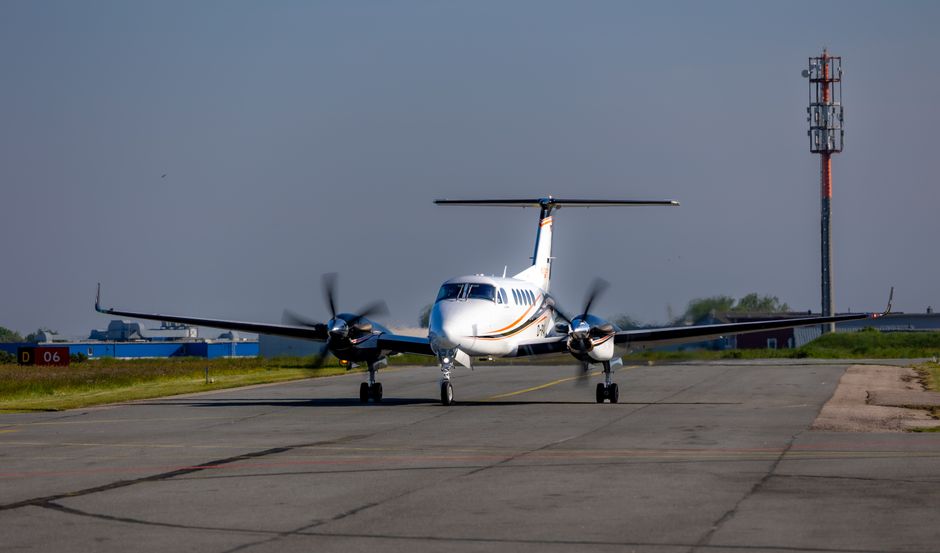
Two small jets. Two very different personalities. When buyers line up the Beechcraft Premier 1 vs Cessna Citation CJ1, they are looking at a pair of light jets that arrived around the same time, chased the same customers, and took almost opposite paths to get the job done.
One leans on raw speed and a wide, roomy cabin. The other leans on low running costs and a support network that has held up for decades. Both carry a handful of passengers, both can be flown by a single pilot, and both ride on engines from the same famous family.
Picking between them sounds simple until you look under the skin. The faster jet is not always the smarter buy, and the lower sticker price does not always mean the cheaper airplane. The gap between these two shows up most in the places owners feel on every single trip.
Key Takeaways
The Beechcraft Premier 1 is the faster jet with the bigger cabin, while the Cessna Citation CJ1 is the more economical airplane with stronger factory support and easier parts. The right pick depends on what matters most to you: speed and space, or lower costs and long-term peace of mind. Both are light jets you can fly with one pilot, and both use engines from the Williams FJ44 family, so the real decision comes down to mission, budget, and how you feel about running an orphaned platform.
| Feature | Beechcraft Premier 1 | Cessna Citation CJ1 |
| Top cruise speed | Around 450 knots (about 519 mph) | Around 380 knots (about 437 mph) |
| Cabin volume | Roughly 315 cubic feet | Roughly 198 cubic feet |
| Typical range | About 1,200 to 1,400 nm | About 1,200 to 1,300 nm |
| Engines | Two Williams FJ44-2A | Two Williams FJ44-1A |
| Passengers | Up to 6 | Up to 5 or 6 |
| Best known for | Speed and cabin size | Low costs and support |
Flying411 keeps a close eye on the light jet market, tracking listings and values across models like these so buyers can compare with real numbers in hand.
A Quick Look at Two Light Jets From the Same Era
Both of these airplanes landed in the market right around the turn of the millennium, and both aimed at the same buyer: a small business or an owner-pilot who wanted a real jet without stepping up to a midsize cabin and a two-crew cockpit. They sit in the same class of light business jets, and on paper they look like close cousins.
Look closer and the family resemblance fades fast. The Premier 1 came from Raytheon, the company that owned Beechcraft at the time, and it was built to feel bigger and go faster than anything else in its size range. The Citation CJ1 came from Cessna, and it was built to be simple, cheap to run, and easy to own.
One more thing they share is the cockpit workload. Both earned single-pilot certification, which means one qualified pilot can fly them legally without a second crew member. That single fact is a big part of why owner-pilots love this whole category. It keeps costs down and puts the owner in the left seat.
Good to Know: Single-pilot certification does not mean you should fly a jet with zero help while you learn. Many owners bring a mentor pilot along for their first hundred hours, and insurers often ask for it.
The Beechcraft Premier 1 in Brief
The Premier 1 was a bold airplane for its time. It first flew in the late 1990s and started reaching customers in 2001. Its headline trick was the fuselage. Instead of the usual aluminum tube, Beechcraft wrapped the cabin in carbon-fiber composite, which let the walls be thinner and the inside wider without adding weight.
That choice paid off in the cabin. The Premier 1 offers one of the roomier interiors in the light jet class, with a flat floor and stand-up-ish height that makes short hops feel less cramped. Power comes from two Williams FJ44-2A engines, and the jet cruises fast, up near 450 knots when you push it. The numbers behind the Premier 1's performance back up its reputation as a quick airplane.
Beechcraft had played with composites before, in unusual designs like the Starship and the Avanti, so the Premier 1 was a natural next step for the brand. An improved version, the Premier 1A, arrived in 2006 with better brakes, upgraded avionics, and a nicer cabin, and it stayed in production until the early 2010s.
Why It Matters: The composite fuselage is the reason the Premier 1 feels so much bigger inside than its outside size suggests. It is the airplane's biggest selling point and the root of much of its speed advantage.
The Cessna Citation CJ1 in Brief
The Citation CJ1 came from a very different place. Cessna already ran the most successful light jet line in the world, and the CJ1 was a careful, steady improvement on the original CitationJet rather than a clean-sheet gamble. It reached buyers in 2000 with updated avionics and a small bump in takeoff weight over the airplane it replaced.
Everything about the CJ1 was tuned for easy, cheap ownership. The straight, laminar-flow wing keeps things simple and stable. The two Williams FJ44-1A engines sip fuel by jet standards. The cabin is smaller and lower than the Premier's, but it is comfortable enough for the short one-hour and two-hour trips these jets fly most.
The CJ1 also carries a huge advantage that has nothing to do with speed or space. It is part of the sprawling Citation family, a line that Cessna, now Textron Aviation, still builds and supports today. That means parts, service centers, trained mechanics, and a deep pool of pilots who know the type.
Keep in Mind: The CJ1 is one link in a long chain that runs from the original CitationJet up through the CJ1+, CJ2, CJ3, and CJ4. Buying into that family means buying into a support system that is very much alive.
Beechcraft Premier 1 vs Cessna Citation CJ1: 10 Differences That Matter
Here is where the two airplanes pull apart. Each point below covers one part of the ownership picture, and no single item decides the whole thing. Read them together and a clear pattern shows up: the Premier wins the spec sheet, and the CJ1 wins the long haul of ownership.
1. Cruise Speed
This is the Premier's biggest bragging right. Its top cruise speed sits around 450 knots, while the CJ1 tops out closer to 380 knots. On a longer leg, that gap can shave real time off the trip.
The speed comes from the swept wing and the extra thrust. If getting there quickly is your top goal, the Premier makes a strong case. On the short hops these jets fly most often, the time saved is smaller than the number suggests, but it is still there.
2. Cabin Size and Comfort
The Premier 1 also wins on space. Its composite fuselage gives it roughly 315 cubic feet of cabin volume, a good deal more than the CJ1's roughly 198 cubic feet. The Premier is taller and wider inside, which matters a lot when you are sitting in it for two hours.
The CJ1 answers with a clever dropped aisle that makes the cabin feel roomier than the raw numbers show. Still, on cabin comfort and sheer elbow room, the Premier is the clear step up. Four passengers in a Premier will feel less boxed in than four in a CJ1.
3. Range and Real-World Legs
On paper, both jets land in a similar range band, somewhere around 1,200 to 1,400 nautical miles in ideal conditions. In the real world, the numbers get closer and both drop once you fill the seats.
Neither jet is a long-haul machine. Load up passengers, bags, and full fuel, and the honest range on both falls well below the brochure figure. For the regional trips these airplanes were built for, either one covers the mission.
Fun Fact: The Williams FJ44 engine family under both jets traces its roots to small turbofans first developed for cruise missiles. The same basic engine idea that once powered a Tomahawk now hauls executives to their meetings.
4. Engines and Power
Both airplanes are powered by Williams FJ44 engines, which is a big reason they feel like cousins. The Premier uses the FJ44-2A, rated around 2,300 pounds of thrust each. The CJ1 uses the earlier FJ44-1A, rated around 1,900 pounds of thrust each.
That extra muscle is a large part of why the Premier is faster. It also means the Premier burns more fuel to make that speed. The CJ1's smaller engines trade top-end performance for lower fuel bills, which is a trade many owners are happy to make.
5. Runway and Field Performance
The CJ1 shines at small airports. Its light weight and simple wing let it get in and out of shorter runways with ease. The Premier is heavier and faster, so it wants more pavement, especially on a hot day or at a high-elevation field.
The Premier's early braking and stopping story is worth knowing before you buy. Neither jet has traditional thrust reversers, but the CJ series uses a thrust attenuator system on the ground that helps it slow down. The original Premier 1 leaned on brakes and lift-dump flaps, and its stopping performance was one reason the improved Premier 1A got upgraded brakes.
Heads Up: If you plan to fly into short or high-altitude strips, run the real runway numbers for each airplane at your typical airports before you decide. The gap between them grows on hot days and at elevation.
6. Avionics and Cockpit
Here the two jets are close. Later CJ1s and the Premier both run the Rockwell Collins Pro Line 21 avionics suite, a well-liked glass cockpit that most pilots find easy to work with. Both give you modern displays, solid navigation, and weather tools.
Neither cockpit will feel dated to a pilot moving up from a nice piston or turboprop. If avionics are your deciding factor, this round is close to a tie, and much depends on how each individual airplane was equipped and updated over the years.
7. Build: Composite vs Aluminum
The Premier's carbon-fiber fuselage is widely credited as one of the first all-composite jet bodies to earn full certification. It is light, strong, and the reason for that big cabin. It is also part of what makes the Premier a specialized airplane to maintain.
The CJ1 sticks with proven aluminum. That is not exciting, but it is easy to inspect, easy to repair, and familiar to almost any jet mechanic. In a head-to-head of new-tech versus known-tech, your comfort with each approach may decide the whole thing.
8. Operating Costs and Fuel Burn
This is the CJ1's home turf. Its lower fuel burn, roughly 135 gallons per hour by many estimates, undercuts the Premier's thirstier engines. Add in easier maintenance and a huge parts pool, and the CJ1 tends to win on operating costs over a full year of flying.
The Premier can still be run sensibly, but it asks more of its owner. Faster and bigger usually means more expensive to feed and fix, and the Premier follows that rule. For a budget-focused owner flying a few hundred hours a year, the CJ1 is the calmer choice on the checkbook.
Quick Tip: When you compare two used jets, look past the hourly fuel number. Reserves for engine overhauls, inspections, and unscheduled fixes often move the total cost more than fuel does.
9. Parts, Support, and Reliability
This may be the single most important line in the whole comparison. Cessna, now part of Textron Aviation, still builds and supports the Citation line, so the CJ1 enjoys strong parts availability and a wide service network.
The Premier's maker, Hawker Beechcraft, went through bankruptcy in 2012, and the Premier program did not survive it. Parts and support still exist through Textron Aviation, but the Premier is an orphaned platform, and owners sometimes report longer waits and higher costs for certain parts. More than one buyer has traded a troublesome Premier for a CJ1 precisely for the peace of mind.
10. Resale Value and Fleet Size
Because the Citation family is so large and so well supported, CJ1s tend to sell more easily on the pre-owned light jet market. There are more of them flying, more buyers who know them, and more shops that can service them. That liquidity is a real ownership benefit.
The Premier 1 has a smaller fleet, a shorter production run, and a more limited buyer pool. Prices for both can land in the low millions on the used market, but the Premier can take longer to sell when the day comes to move on.
Thinking about a Premier or a CJ1 of your own? Flying411's aircraft marketplace lists used light jets, engines, and certified parts from trusted sellers in one place.
Comparing Within the Beechcraft Family
Beechcraft owners have never shied away from a good head-to-head, and that habit gives useful context for how the Premier fits the brand. Piston shoppers still debate the Bonanza and the Cherokee or size up the Bonanza against the Saratoga, while others weigh the subtle gaps between the Debonair and the Bonanza.
Move up to twins and the questions shift toward cabin and power, as with the Duke and the Baron or the Duchess next to the Baron. Even trainers get the treatment, from the Skipper and the Piper Tomahawk on up.
The Premier 1 sits at the top of that comparison culture. The choice stops being about weekend flying and starts being about payroll, mission, and the cost of every hour in the air.
How to Choose Between Them
There is no single winner here, only the right airplane for a given owner. The best way to decide is to be honest about how you will use the jet and what you care about most. A few clear questions cut through the noise fast.
Ask yourself these:
- Do you value speed and cabin space above all? The Premier 1 leans your way.
- Do you want the lowest running costs and easiest support? The CJ1 leans your way.
- Do you fly into short or high fields often? The CJ1's field performance helps.
- Are you comfortable owning an orphaned platform? If not, the CJ1 is the safer bet.
- Do you plan to sell within a few years? The CJ1's larger fleet makes resale simpler.
For many owner-pilots, the CJ1 ends up being the practical answer, chosen for its proven design, easy parts, and lower stress. For buyers who put a premium on getting there fast in a bigger cabin, and who go in with eyes open about support, the Premier 1 delivers a lot of airplane for the money.
Pro Tip: No matter which jet you favor, pay for a thorough pre-buy inspection by a shop that knows the type. On the Premier especially, confirm parts availability and check the brake and composite service history before you sign anything.
Alternatives Worth a Look
These two are not the only players in this space, and smart buyers keep an eye on the neighbors. Shoppers often cross-shop the Premier against newer rivals, and a look at the Premier against the Phenom 300 shows how the class kept moving after these jets debuted.
Some buyers step sideways into a turboprop instead, trading a little speed for range and simplicity, and weigh options like the Denali against the PC-12. Others move up a size into a CJ2 or a larger cabin. The point is to size the airplane to the mission, not to a spec sheet.
If you already own a plane and are thinking about a trade, it helps to know what your current plane is worth before you shop. A clear starting number keeps the whole process grounded.
Ready to move on a light jet? Browse current listings on Flying411 and connect with sellers, mechanics, and financing partners in a few clicks.
What the Two Jets Say About Their Makers
There is a bigger story hiding inside this comparison. The Premier 1 was a swing for the fences, a brand-new airplane using brand-new materials to leapfrog the competition on speed and space. It succeeded on both counts, and it is still admired for it.
The CJ1 was the opposite bet. It refined a proven design, kept things simple, and counted on a support machine that would still be standing years later. That machine is still standing, and it is the biggest reason the CJ1 remains such an easy airplane to own.
Neither approach is wrong. One prioritized performance and paid for it in complexity. The other prioritized durability and paid for it in speed. Knowing which trade-off suits you is most of the battle.
Conclusion
The Beechcraft Premier 1 vs Cessna Citation CJ1 question does not have one clean answer, and that is the honest truth of it. The Premier hands you speed and a big, bright cabin. The CJ1 hands you low costs, easy parts, and a support network that will not vanish. Both are capable light jets that a single pilot can fly, and both have earned their fans.
Match the airplane to your mission and your tolerance for risk, and the choice tends to make itself. Speed seekers with a plan for support will love the Premier. Owners who want a calm, dependable jet will keep coming back to the CJ1.
When you are ready to turn all this comparison into a real purchase, Flying411 puts the listings, the experts, and the paperwork help on one runway, so your next jet is a smoother takeoff than the last.
Frequently Asked Questions
Which jet is easier to insure for a new owner-pilot?
Insurers usually look at total time, jet experience, and training before setting a rate, so both jets can be tougher to insure for a first-time jet owner. Many underwriters ask for formal type training and a mentor pilot for the first stretch of hours on either airplane.
Do the Premier 1 and CJ1 have thrust reversers?
Neither jet uses traditional thrust reversers to slow down after landing. The CJ series uses a thrust attenuator system on the ground, while the Premier relies on its brakes, speed brakes, and lift-dump flaps.
How much training does it take to fly these jets?
Both require a jet type rating plus recurrent training, which usually means a structured course at a training provider rather than a quick checkout. Plan for simulator time and study, since insurers and the airplanes both demand it.
Is the Premier 1A a big upgrade over the original Premier 1?
The Premier 1A shares the same basic airframe and performance but adds improved brakes, upgraded avionics, and a refreshed cabin. It is best thought of as a polished version of the same airplane rather than a whole new jet.
Can these light jets fly coast to coast across the US nonstop?
In most real-world loadings, no, a full US coast-to-coast trip is beyond the comfortable nonstop range of either jet. Both are built for regional legs, so a long transcontinental trip usually means one fuel stop.