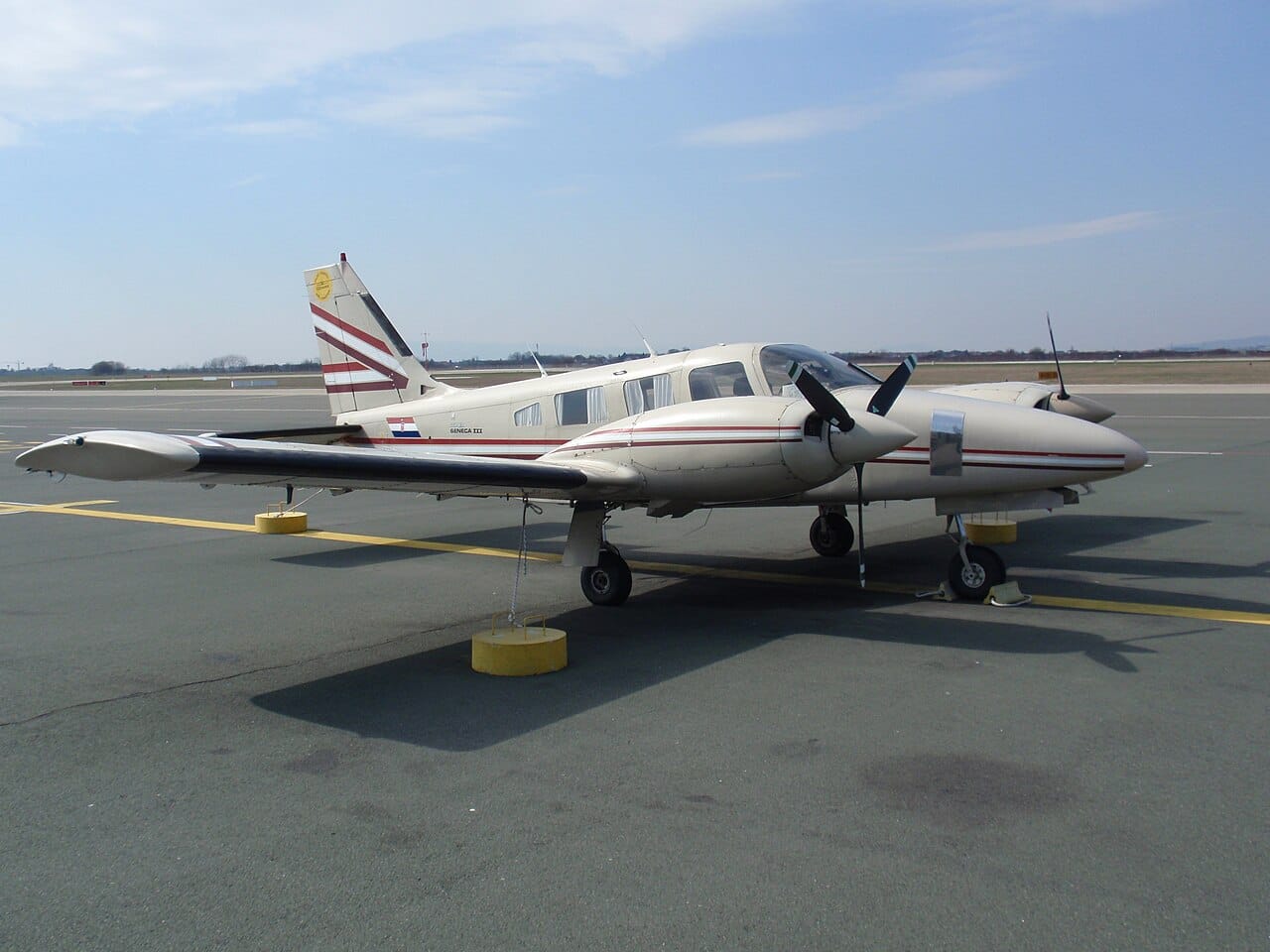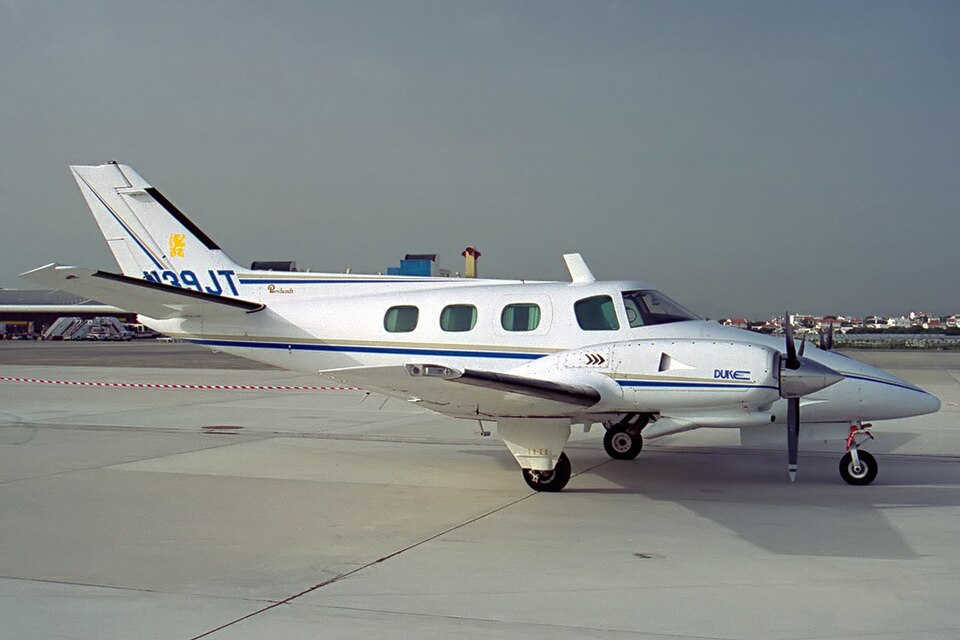
Two of the most loved twins to ever wear the Beechcraft badge sit just one tier apart in the lineup, but they fly, feel, and cost like cousins from very different worlds. The Beechcraft Duke vs Baron debate has been going strong since the late 1960s, and it still pulls owners, pilots, and dreamers into long hangar conversations.
One is the practical, fast, well-loved twin that has been in production for decades. The other is the dramatic, pressurized, head-turning machine that looks like it was sketched on the back of a sports-car magazine.
The numbers tell part of the story. The cabin tells another. And the maintenance shop tells the rest.
Key Takeaways
The Beechcraft Baron is the lighter, more economical, unpressurized twin built for owner-pilots who want speed, simplicity, and reasonable upkeep, while the Beechcraft Duke is a heavier, pressurized, turbocharged twin built for higher altitudes, rougher weather, and pilots who do not mind paying more to fly above it all.
| Feature | Beechcraft Baron (58) | Beechcraft Duke (B60) |
| Engines | Continental IO-520 / IO-550, around 285–300 hp | Turbocharged Lycoming TIO-541, around 380 hp |
| Pressurization | No (except 58P variant) | Yes |
| Typical cruise | Around 195–200 KTAS | Around 215–230 KTAS at altitude |
| Service ceiling | Around 20,000 ft | About 30,000 ft |
| Fuel burn | Around 25–32 GPH | Around 40–50 GPH |
| Best altitude | Low and mid teens | Upper teens and flight levels |
| Cabin feel | Light twin with club seats | Cabin-class with airstair door |
| Reputation | Practical, refined, long-running | Dramatic, demanding, beautiful |
| Production | 1961 to current orders | 1968 to 1982 |
Flying411 keeps a running pulse on the Beechcraft twin market, with listings, pricing trends, and ownership insights for both the Baron and the Duke in one place.
A Quick Look at Both Beechcraft Twins
Before getting into the head-to-head, it helps to know where each airplane came from. Both share Beech DNA, but they were built to solve different problems.
Where the Baron Came From
The Beechcraft Baron grew out of the Beechcraft 95 Travel Air and was introduced in 1961. The first model, the 55, was powered by two six-cylinder IO-470-L engines producing 260 hp at 2,625 rpm each. It quickly became the answer to other light twins of the era and went on to outlast most of them.
Over the decades the Baron family grew into three basic groups: the short-body 55 and 56, and the long-body 58. The 58 became the practical favorite for serious traveling pilots, with its longer fuselage, club seating, and double aft baggage doors. In November 2025, Textron Aviation announced that production of the Baron and the related Beechcraft Bonanza will end once current orders are fulfilled. Textron plans to provide parts and support for the Baron indefinitely.
That long production run is a big part of the story. The Baron is one of the longest-running piston twins in general aviation history, and that means parts, mechanics, and training are widely available.
Where the Duke Came From
The Duke was Beechcraft's answer to a very different question: how do you give an owner-pilot something that feels like a small King Air without actually selling them a turboprop?
Development of the Beechcraft 60 began in early 1965, which was designed to fill the gap between the Beechcraft Baron and the Beechcraft Queen Air. On December 29, 1966, the prototype made its first flight. On February 1, 1968, the FAA issued the type certificate. Distribution to customers began in July 1968.
The Duke was meant to combine speed, cabin comfort, and an airframe that looked like nothing else on a ramp. It came with a pressurized cabin, turbocharged Lycoming engines, an airstair door at the rear, and lines that still look modern today. The B60 became the definitive version, and production wrapped up in 1982 after a little over 500 airplanes were built.
Fun Fact The Duke is widely said to have been built to King Air quality standards. Some pilots have even joked that Beech may have intentionally held it back a few knots so it would not embarrass the much pricier King Air sitting next to it on the showroom floor.
Beechcraft Baron at a Glance
The Baron is often called the practical pilot's twin. It is fast for a piston, easy to load, and has a long history of safe operation in private and corporate hands.
Key traits worth knowing:
- Twin Continental engines, naturally aspirated in most common variants, with 285 to 300 horsepower per side
- Long-body 58 model offers club seating and double aft baggage doors
- Strong cruise speed for a normally aspirated piston twin
- Wide network of mechanics and parts
- No pressurization on most models, so it lives best in the lower flight levels
Pilots who step up from a Bonanza usually find the Baron familiar. Same family feel, same Beech handling, just with two engines and a heavier feel in the controls.
Good to Know The Baron 58 has long been considered one of the most refined light piston twins ever produced. Owners often praise its handling, ramp presence, and ability to carry four adults plus bags without feeling cramped.
Beechcraft Duke at a Glance
The Duke is the airplane people walk past three times at an airshow. It looks fast standing still. It also flies above most of the weather a Baron has to plow through.
Key traits worth knowing:
- Twin turbocharged Lycoming TIO-541 engines, around 380 hp each
- Pressurized cabin with bleed air from the turbochargers
- Airstair entry door at the rear of the fuselage, like a small cabin-class twin
- Service ceiling around 30,000 feet
- Cabin feel closer to a small turboprop than a typical light twin
The Duke was designed for the owner-pilot who wants to fly higher, faster, and in worse weather than a Baron is built for. In reviewing the aircraft in 2008, Rick Durden of AVweb stated, Built to the quality standards of a King Air, the six-place Duke sported 380 hp Lycoming TIO-541 engines, and that quality is part of what owners pay for both up front and at every annual inspection.
Beechcraft Duke vs Baron Specs Side by Side
Numbers for the Beechcraft B60 Duke and the long-body Baron 58 give a fair head-to-head comparison, since both seat similar numbers of people and target the same kind of mission.
| Spec | Baron 58 (Naturally Aspirated) | Duke B60 |
| Engines | 2 × Continental IO-520 or IO-550 | 2 × Lycoming TIO-541, turbocharged |
| Horsepower (each) | About 285–300 hp | About 380 hp |
| Pressurization | No | Yes |
| Typical cruise | Around 195–200 KTAS | Around 215–230 KTAS at altitude |
| Service ceiling | Around 20,000 ft | About 30,000 ft |
| Typical fuel burn | Around 25–32 GPH | Around 40–50 GPH |
| Range | Generally around 900–1,000 NM | Generally around 1,000+ NM |
| Cabin layout | 4 to 6 seats, club optional | 4 to 6 seats, club standard |
| Entry door | Standard cabin door, double aft baggage | Airstair door at rear |
| Production years | 1961 to current orders | 1968 to 1982 |
A few things stand out from the chart:
- The Duke has more power on each side, but it also weighs more and pushes through more drag.
- The Baron drinks notably less fuel.
- The Duke has a real altitude advantage. It lives well above weather a Baron has to fly around.
- The Baron beats the Duke on simplicity, but the Duke beats the Baron on cabin comfort.
Quick Tip Cruise speeds on the Duke depend heavily on altitude. Down low, it does not pull away from a Baron. Up in the high teens and low flight levels, the gap opens up fast.
How They Fly: Real-World Pilot Impressions
Both airplanes share Beech DNA, which means handling that pilots tend to love. But the way they actually feel in your hands is different.
Flying the Baron
The Baron flies light and balanced. Roll inputs are quick. Pitch is honest. Most pilots transitioning from a Bonanza pick it up quickly because everything feels familiar, just heavier and a bit more deliberate.
In cruise, you sit in a comfortable cabin, listen to the steady hum of two normally aspirated engines, and watch the ground go by at a pace most singles can not match. Single-engine performance is solid for the class, and the airplane does not punish a pilot who flies it well.
The Baron is happiest in the lower flight levels. Without pressurization, you and your passengers will be on oxygen above the low teens, and you will fly under most weather rather than over it.
Flying the Duke
The Duke is a different airplane the moment you open the throttles. The engines come alive with that turbocharged feel, and once it is up at altitude, it settles into a fast, smooth cruise that feels closer to a small turboprop than a typical piston twin.
But the Duke also makes the pilot work. It carries more weight, has more drag, and demands smooth, careful handling on the engines. Treat engines with respect and they generally will go to full TBO (1600 hrs). Abuse them by rapid movement of throttles in applying or reducing power and you have 800 hour engines. Pilots who treat throttles like switches will pay for it twice, once in maintenance and once in resale.
Single-engine performance is one of the Duke's quirks. Should pilots have the joy of single-engine operation, they will be up against the highest rudder-force of any piston twin – 150 pounds-force at Vmc – which happens to be the maximum the FAA allows. Translation: if one quits, you will know it through your right leg.
Heads Up Engine handling makes or breaks Duke ownership. Rapid throttle changes, sharp power reductions, and steep cooling descents are the fast lane to early overhauls. Smooth pilots get long engine lives. Aggressive pilots get big bills.
Cabin, Comfort, and Passenger Experience
This is where the Duke pulls ahead in a way that no spec sheet really captures.
Inside the Baron
The Baron 58 cabin is good. Club seating, large windows, decent baggage capacity, and a layout that handles four adults well. It is comfortable, and many owners fly it for years without complaint. But it is still a light twin cabin. You feel the engines. You feel the bumps. You feel the altitude.
Inside the Duke
The Beechcraft Duke interior is on another level for a piston twin. Beechcraft then built the Model B60, which was the most widely produced Duke sub-model until 1982. With the Model B60, Duke gained a wider and longer interior, as well as redesigned seats for increased comfort. The cabin is pressurized, which means you can fly above the weather and your passengers can breathe normally without oxygen masks. The airstair door makes boarding feel more like stepping into a corporate aircraft than climbing into a light twin.
You also get:
- A higher cabin floor and quieter interior at cruise
- Cabin-class club seating with real corporate-style finishes
- Air conditioning options
- Larger windows and a wider aisle than the Baron
For passengers, the Duke is a noticeably nicer ride, especially on longer trips or in weather. For pilots, the Duke gives you the option to climb up and over rather than punch through.
Why It Matters If you regularly fly with non-pilot family or clients, cabin comfort is not a luxury. It is the difference between people happily climbing in for the next trip and quietly asking to drive instead.
Ownership Costs: The Honest Comparison
This is where the Duke vs Baron debate usually gets serious.
Baron Ownership
The Baron is not a cheap airplane to own, but it is reasonable for what it delivers. Parts are easy to find. A&P mechanics across the country know it. Engine overhauls on the Continental IO-520 or IO-550 are relatively common work, and shop time is widely available.
Annual inspections are predictable. Most Barons in good shape can be flown 150 to 200 hours a year without surprise repair bills swallowing the budget. Insurance is also generally manageable for qualified pilots, especially compared to pressurized cabin twins.
Duke Ownership
The Duke is a different beast. Other systems, parts, and FAA-certified technicians are increasingly difficult to locate, and the airplane's complexity adds up at every visit to the shop. The Lycoming TIO-541 engines are not common, parts can be scarce, and overhaul costs are notably higher than on the Baron's engines. Owners report buying a Duke partially because of its looks, but selling it because of the cost of keeping it running. They describe King Air maintenance costs in a piston-twin airframe and recognize that the value of the airplane is entirely dependent on the engines.
Add pressurization, air conditioning, turbochargers, and an airstair door, and you have an airplane that simply has more systems to maintain.
| Cost Area | Baron 58 | Duke B60 |
| Fuel burn | Lower | Higher |
| Engine overhaul | More common, more options | Specialized, fewer shops |
| Parts availability | Strong | Tighter, harder to find some items |
| Insurance | Generally easier | Generally higher and stricter |
| Annual inspection | Predictable | More variable |
| Hangar requirements | Standard | Larger footprint |
Keep in Mind Buying a Duke at a low price is rarely the bargain it looks like. The cheapest Dukes on the market are often the most expensive to bring up to safe, well-maintained shape. A higher-priced Duke with documented care can be the smarter buy.
Mission Fit: Who Should Pick Which
This is the question that should drive the decision long before the spec sheet does.
A Baron makes sense if:
- You fly mostly in the lower flight levels
- Your typical trips are 300 to 800 nautical miles
- You want lower fuel burn and easier maintenance
- You do not need pressurization for your usual passengers
- You value a wide network of mechanics, parts, and training
- You like the idea of owning an airplane still in active production support
A Duke makes sense if:
- You fly long cross-countries that benefit from higher altitudes
- You often deal with weather that is easier to top than to dodge
- You want a cabin-class feel without stepping up to a King Air
- You and your passengers value pressurization and quieter cruise
- You can budget for higher operating and maintenance costs
- You appreciate distinctive ramp presence and unique character
Pro Tip Honest mission planning is the smartest pre-buy step you can take. Map out your last 24 months of flying. If most trips are under 600 nautical miles in clear weather, the Duke is paying you to do nothing. If half your trips are long-range, weather-heavy, or pressurization-friendly, the Baron is leaving comfort on the ground.
The Beechcraft Duke vs Baron Decision: 7 Differences That Matter Most
Here is the heart of the comparison. These are the seven differences that drive most owner decisions in the Duke and Baron debate.
1. Pressurization
The Duke has it. The Baron generally does not (the rarer 58P excepted). For some pilots, pressurization changes how they fly. They go higher, fly above weather, and arrive less fatigued. For others, it is a system they will not use enough to justify the cost. This is the single biggest mission-related difference between the two.
2. Engines and Power
The Baron uses Continental IO-520 or IO-550 engines, around 285 to 300 hp each. The Duke uses turbocharged Lycoming TIO-541s at 380 hp each. The Duke has more raw power, but it also carries more weight and drag, so the gap in real-world cruise is smaller than the horsepower numbers suggest. The bigger story is cost. Duke engines are more specialized and significantly more expensive to overhaul.
3. Speed at Altitude
Down low, a Baron 58 and a B60 Duke are not far apart. Up high, the Duke pulls ahead. The Duke is not a low altitude airplane. At 9000' it will not be any faster than a 58 Baron. Needs to be flown 17,000' and above to realize its potential. If you mostly fly in the low teens, the Duke's speed advantage shrinks. If you are flight-planning at FL230 or higher, the Duke shines.
4. Fuel Burn and Range
The Baron is more efficient. Expect to burn 43 - 45 gph (65%) on a long trip, 48 - 50 gph on a short one in a Duke. A Baron 58 typically burns far less, often in the 25 to 32 GPH range depending on the model. Per nautical mile, the Baron is the more economical airplane in most missions.
5. Cabin Experience
A Duke cabin feels closer to a small cabin-class twin or a King Air. A Baron cabin feels like a refined light twin. Both are comfortable. The Duke is just on another tier when it comes to noise, ride quality at altitude, and that overall feeling of stepping into a serious airplane.
6. Maintenance and Parts
The Baron wins on parts availability, mechanic familiarity, and overall predictability of ownership costs. The Duke is more demanding. Owners who join groups like the Duke Flyers Association often find the experience essential, since shared knowledge makes a real difference in keeping the airplane affordable.
7. Long-Term Value and Support
The Baron has been in production for decades, which means strong support and a deep used market. The Duke has not been built since 1982, which means a smaller fleet, fewer specialists, and a future that depends heavily on owner groups, dedicated shops, and the continued availability of TIO-541 parts.
Looking through real listings is one of the fastest ways to make this comparison click. Flying411 features a steady mix of Beechcraft Barons and Beechcraft Dukes for sale, including pricing, hours, and modifications, so you can see how the market actually values each airplane today.
Common Variants and Modifications
Both airplanes have meaningful variants that change the shopping picture.
Baron Variants
- Baron 55, A55, B55, C55, D55, E55 – short-body models, four to five seats, lighter and slightly faster handling
- Baron 58 – long-body model, club seating, double aft baggage doors, the most popular family member
- Baron 58TC – turbocharged 58 for higher altitudes
- Baron 58P – pressurized 58, closest the Baron family gets to Duke territory
- Baron G58 – modern glass-cockpit version with Garmin G1000 NXi avionics
Duke Variants
- Model 60 – original Duke, 1968 onward
- Model A60 – improved turbochargers and pressurization, 1970 onward
- Model B60 – the definitive Duke, wider and longer cabin, improved systems, 1974 to 1982
- Royal Turbine Duke – Rocket Engineering's PT6A turboprop conversion, a different airplane entirely
The Royal Turbine Duke changes the math in a big way. The take-off length required is shortened by over 1,500 ft to only 1,000 ft and the landing distance is reduced by over 2,000 ft to only 900 ft. The maximum rate of climb is increased from 1,600 to 4,000 ft/min, reducing the time to climb to 25,000 ft from 25 to 9 minutes. The cruise speed is increased to 290 knots at 29,000 ft. It is also significantly more expensive to buy.
Fun Fact The turbine Duke is widely considered one of the most dramatic piston-to-turbine conversions ever certified. It turns an already striking airplane into something that climbs like a rocket and cruises like a small business jet.
Resale and Market Demand
Both airplanes have loyal followings, but the markets behave differently.
The Baron has a deep, active used market. There are plenty to choose from, prices are reasonably stable, and well-kept examples tend to sell quickly. Buyers often skip lower-priced airplanes in favor of well-equipped, well-maintained ones because the value gap is usually smaller than it looks.
The Duke has a smaller, more specialized market. Prices vary widely based on engine times, modifications, and overall condition. A Duke with fresh engines, good avionics, and documented care can hold value well. A neglected one can sit on the market for a long time and still scare buyers off because of the cost to bring it back.
If you are watching the market for either airplane, browse current listings on Flying411 and connect with experienced brokers, A&P mechanics, and aviation specialists who can guide your purchase from first look to first flight home.
Conclusion
The Beechcraft Duke vs Baron comparison is not really about which airplane is better. It is about which one fits the way you actually fly. The Baron is the easier airplane to own, fuel, maintain, and insure, and it earns its long production run honestly. The Duke is the more dramatic airplane, with pressurization, real altitude capability, and a cabin that punches well above its piston-twin weight, but it asks more of every owner who flies it.
Pick the Baron if you want efficiency, simplicity, and a strong support network. Pick the Duke if you want altitude, comfort, and presence, and you have planned for the costs that come with all three.
Whichever side of the Duke vs Baron debate you land on, Flying411 puts the listings, services, and aviation experts you need in one place, so the only thing left for you to do is fly.
FAQs
Is the Beechcraft Duke faster than the Baron?
At higher altitudes the Duke is faster, often by 20 to 30 knots, but down low the gap closes considerably and a Baron 58 can keep pace. The Duke needs altitude to show its real speed advantage.
Why was Beechcraft Duke production stopped?
Production ended in 1982 after about 500 airplanes were built, largely because of high manufacturing costs, complex systems, and modest sales compared to other Beech models. Maintenance costs and a tough piston-twin market also played a role.
Is the Baron a good first twin for a step-up pilot?
The Baron is widely considered one of the friendlier first twins for a Bonanza or high-performance single pilot, thanks to its handling, predictable systems, and broad parts and training network. Insurance is also typically easier than for a pressurized twin.
Can a Beechcraft Duke be flown by an owner-pilot, or does it need a crew?
The Duke is certified for single-pilot operation and was designed for the owner-pilot market, but it demands proper training, careful engine handling, and recurrent instruction. It is more airplane than most light twins, even though it does not require a co-pilot.
Are parts for the Beechcraft Duke still available?
Many parts remain available through specialty shops, owner groups, and the used market, though some items take time to source. Joining communities like the Duke Flyers Association is widely seen as essential for finding parts, mechanics, and maintenance knowledge.