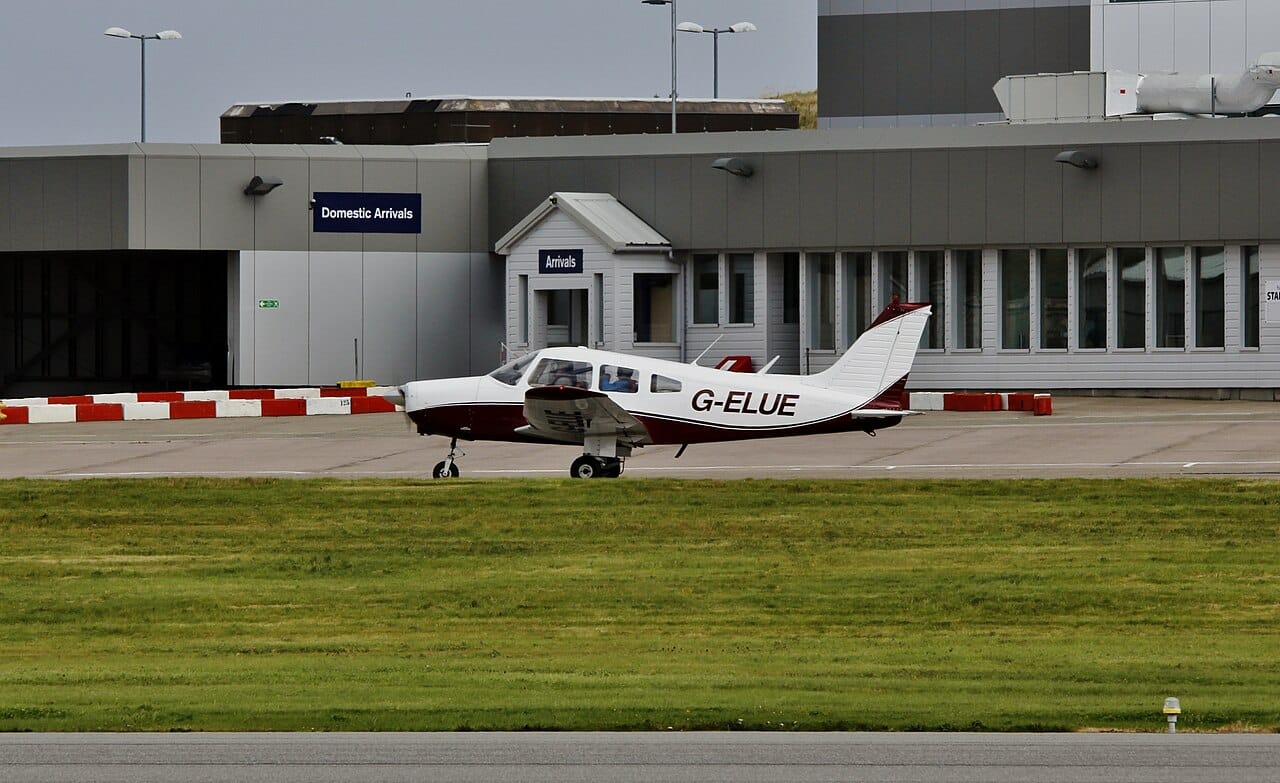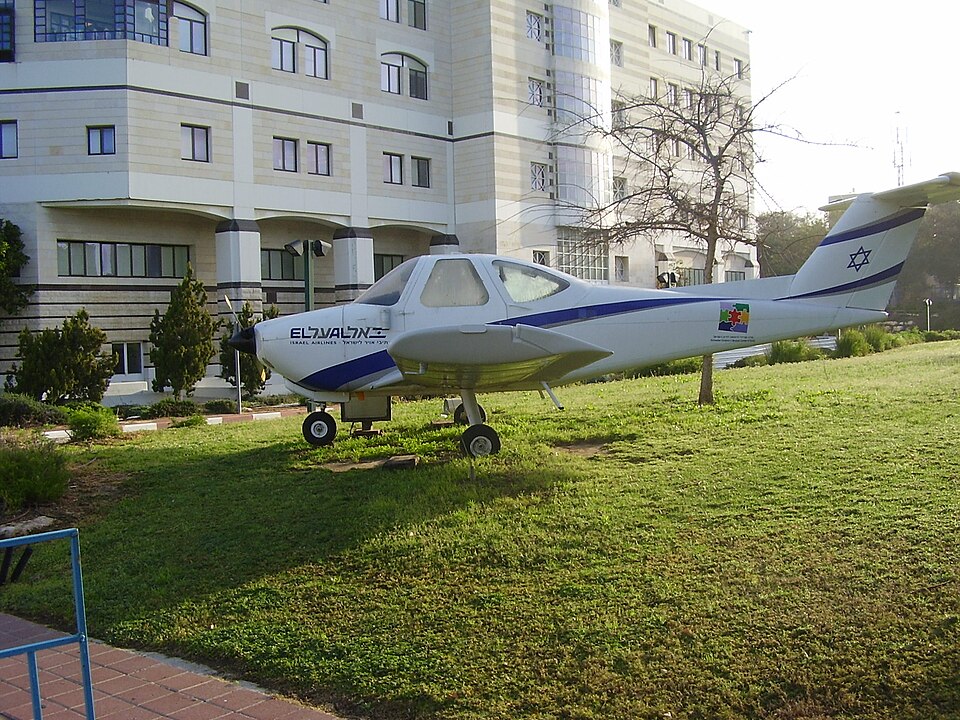
They look like twins parked on the ramp. Both have T-tails, low wings, side-by-side seating, and the same Lycoming engine humming under the cowl. Stand the Beechcraft Skipper next to the Piper Tomahawk from a distance, and most people could not tell you which is which. But spend a few hours with each airplane, dig into the history books, and talk to the people who flew them, and a very different picture starts to emerge. These two aircraft came from rival manufacturers, carried very different reputations, and ended up having completely separate legacies in the world of general aviation training.
One had a rocky start and earned a controversial reputation that followed it for decades. The other was quieter, better-built, and far rarer. Both were products of the same market pressure, the same economic moment, and very nearly the same drawing board.
Choosing between them today is not simply a question of specs. It is a question of what kind of pilot you are, what you plan to do with the airplane, and how much risk you are comfortable taking on.
Key Takeaways
The Beechcraft Skipper and Piper Tomahawk are closely matched two-seat trainers from the late 1970s and early 1980s that share the same engine, airfoil, and general layout. The Skipper is rarer, better-finished, and widely considered to have more predictable handling, while the Tomahawk was produced in far greater numbers, carries more available parts, and costs less to buy. Both have largely faded from active training fleets, but each holds strong appeal for private owners, budget-minded pilots, and aviation enthusiasts.
| Feature | Beechcraft Skipper | Piper Tomahawk |
| Manufacturer | Beechcraft (Raytheon) | Piper Aircraft |
| Model Designation | Model 77 | PA-38-112 |
| Production Years | 1979–1981 | 1978–1982 |
| Total Built | ~312 | ~2,484 |
| Engine | Lycoming O-235-L2C, 112 hp | Lycoming O-235-L2C, 112 hp |
| Max Cruise Speed | ~90 kts | ~100 kts |
| Useful Load | ~580 lbs | ~540–560 lbs |
| Tail Configuration | T-tail | T-tail |
| Airfoil | NASA GA(W)-1 | NASA GA(W)-1 |
| Stall Characteristics | More predictable | More variable, controversial |
| Parts Availability | Limited | More readily available |
| Typical Used Price | Higher (rarer) | More accessible |
Whether you're shopping for a two-seat trainer or just curious about GA history, Flying411 is a great place to start browsing used aircraft listings from private sellers and dealers across the country.
A Tale of Two Trainers: How They Both Ended Up in the Same Place
To understand the Beechcraft Skipper vs Piper Tomahawk debate, you have to go back to the mid-1970s and understand what was happening in the general aviation world at the time.
The Cessna 150 and its successor the 152 had been dominating the trainer market for years. Flight schools loved them because they were cheap to operate, forgiving to fly, and easy to maintain. But pilots and instructors were also starting to complain. The Cessna was cramped. Visibility was limited. And for instructors who wanted to teach spin recovery properly, the 150/152's tendency to fly itself out of a spin made the job harder.
Piper saw an opening. So did Beechcraft. Both manufacturers surveyed flight instructors and set out to build something better. Both arrived at nearly the same solution at nearly the same time.
What followed was one of the most interesting parallel development stories in light aircraft history. Two competing companies, working independently, used the same NASA-developed GA(W)-1 airfoil, the same engine, the same general layout, and ended up with aircraft that looked almost identical on the ramp. The difference was in the details.
Design Origins: Same Airfoil, Very Different Companies
The NASA GA(W)-1 airfoil, also called the Whitcomb airfoil, was a product of 1970s aeronautical research designed for low-speed efficiency. It promised better lift at slow speeds, lower drag, and improved fuel economy. Both Piper and Beechcraft chose it as the foundation for their new trainers.
Beechcraft began design work on its trainer as early as 1974 under the internal designation PD 285. The prototype made its first flight in February 1975 with a conventional tail. By the time it entered production in 1979, the design had been updated to include a T-tail configuration, which gave the Skipper its signature look and brought it visually very close to Piper's offering.
Piper surveyed more than 10,000 flight instructors as part of its design research. The feedback was consistent. Instructors wanted a trainer with realistic spin characteristics, meaning a plane that required active pilot input to recover from spins rather than recovering on its own. The result was the PA-38 Tomahawk, introduced in 1977 as a 1978 model.
Both aircraft shared the same basic philosophy: low wing, side-by-side seating, wide cabin, good visibility, and a modest 112-horsepower engine that kept operating costs close to what schools were already paying for Cessnas. The shared lineage is so apparent that it has led to persistent rumors that the same designer had a hand in both projects. Whether that is true or not, the resemblance is striking.
Fun Fact: The Beechcraft Skipper and Piper Tomahawk share not just the same engine and airfoil, but also the same general cabin width philosophy, both designed specifically to offer noticeably more shoulder room than the Cessna 150 series.
Production Numbers: A Massive Gap Between the Two
One of the most important differences between these two aircraft has nothing to do with how they fly. It is simply how many were built.
Piper produced approximately 2,484 Tomahawks during its production run from 1978 to 1982. The aircraft was a commercial success early on, with strong first-year sales driven by interest from flight schools. Production eventually slowed as the general aviation slump of the early 1980s hit the industry hard, and Piper discontinued the line in 1982.
Beechcraft's production run was far shorter and far smaller. Only about 312 Skippers were built, across three model years: 1979, 1980, and 1981. The Skipper had the misfortune of arriving at the beginning of one of the worst downturns in general aviation history, and despite being initially delivered primarily to Beechcraft's own Aero Center flight school network, it never reached the kind of volume needed to sustain the line.
This difference in production numbers has had lasting consequences. Tomahawk parts are relatively easy to find. Tomahawk mechanics are familiar with the type. Tomahawk documentation is well-supported. The Skipper, by contrast, has a much smaller pool of active airframes, harder-to-source parts, and a smaller community of owners and mechanics who know the aircraft well.
For anyone considering ownership today, this is one of the most practical considerations in the entire comparison.
Performance Specs: How Do They Stack Up?
On paper, the Beechcraft Skipper and Piper Tomahawk are extremely close in performance. Both run the same 112-horsepower Lycoming O-235-L2C engine. Both carry two people. Both offer a useful load in the neighborhood of 540 to 580 pounds. Neither is going to win any races.
But there are some meaningful differences worth noting.
Cruise Speed
The Tomahawk has a slight edge in cruise performance. Pilots who have flown both aircraft consistently report that the Tomahawk is a bit faster in cruise, typically running around 95 to 108 knots depending on altitude and power setting. The Skipper tends to cruise a little slower, generally in the 85 to 95 knot range. It is not a dramatic difference, but over a longer cross-country, it adds up.
Useful Load and Cabin
The Skipper's cabin is widely praised as feeling roomier and more comfortable. Beechcraft paid close attention to ergonomics, and the result is a cockpit that feels well-organized and spacious for a small airplane. Both aircraft have noticeably more shoulder room than the Cessna 150/152, which was one of the design goals from the start.
Climb Performance
Both aircraft climb at modest rates appropriate for their power-to-weight ratio. The Tomahawk is generally reported to climb at around 700 to 718 feet per minute at sea level under standard conditions. The Skipper's climb performance is similar, though some pilots report it feeling slightly more sluggish on hot days or at higher density altitudes.
Range
Both aircraft offer practical ranges in the 400 to 480 nautical mile neighborhood, though real-world range depends heavily on fuel management, altitude, and power settings. Neither was designed for long legs. Both were built as trainers meant to operate in the local area.
Good to Know: Both the Skipper and the Tomahawk burn roughly 6 to 7 gallons of fuel per hour at cruise, making them among the more economical piston aircraft to operate.
Beechcraft Skipper vs Piper Tomahawk: 8 Key Differences That Actually Matter
Here is where the comparison gets real. When you break down these two aircraft across the factors that matter most to pilots and buyers, some clear patterns emerge.
1. Stall and Spin Behavior
This is the most talked-about difference between the two aircraft, and it is not a small one.
The Tomahawk was specifically designed to have realistic spin characteristics. Instructors wanted an aircraft where students had to actively recover from spins rather than just letting go of the controls. Piper delivered on that goal, but the execution had complications. Reports emerged of inconsistent stall behavior between individual aircraft, and an NTSB investigation following a fatal accident revealed that the Tomahawk's wing had been modified after certification testing without being retested. The changes reduced the number of full wing ribs and added lightening holes to the main spar, resulting in a more flexible wing structure. Engineers noted that the GA(W)-1 airfoil was particularly sensitive to airfoil shape, and that a flexible surface could make stall and spin behavior unpredictable. The FAA eventually mandated additional stall strips be added to early Tomahawks.
The Skipper, by contrast, has a reputation for more predictable stall behavior. Pilots who have flown both tend to describe the Skipper's stall as more honest and easier to manage. It drops a wing cleanly and recovers predictably, which is exactly what a trainer should do.
2. Build Quality and Fit and Finish
Beechcraft has always had a reputation for building aircraft to a higher standard of fit and finish, and the Skipper is no exception. Pilots who have flown both aircraft consistently note that the Skipper feels more solidly built, with better panel organization, tighter tolerances, and a more refined interior. The Tomahawk, being a working trainer with a much larger production run and a heavy focus on cost reduction, tends to feel more utilitarian.
3. Parts Availability
The Tomahawk wins this category clearly. With far more airframes in the fleet and a longer production run, parts for the Tomahawk are much easier to source. Multiple suppliers specialize in Tomahawk parts. Used components are available through the normal channels. The Skipper, with only about 312 ever built and a dwindling active fleet, is a different story. Prospective Skipper owners need to be proactive about finding parts, engage with the small but dedicated owner community, and be prepared for some items to require fabrication or adaptation.
4. Community and Support Network
Related to parts availability, the Tomahawk has a larger and more active owner community. Forums, type clubs, and experienced A&P mechanics familiar with the PA-38 are relatively easy to find. The Skipper community is smaller but often described as enthusiastic and helpful. Online resources exist, but they are more limited.
5. Purchase Price
The Tomahawk is generally the more affordable option, largely because there are more of them available. Used Tomahawks can be found across a range of prices depending on condition, total time, and avionics. Skippers, being rarer, tend to carry a price premium on a per-airframe basis, even though the overall dollar figures for both types remain modest compared to newer aircraft.
6. T-Tail Handling Characteristics
Both aircraft share a T-tail configuration, which gives them a distinctive look but also comes with some handling quirks. T-tails can be susceptible to deep stall in certain conditions, where the horizontal stabilizer becomes blanketed by the stalled wing and loses effectiveness. Both aircraft were designed with this in mind, and both carry operating limitations. Pilots transitioning from conventional-tail aircraft need to be aware of these differences.
Heads Up: Both the Skipper and the Tomahawk have T-tail configurations that require pilots to observe proper approach and stall procedures. Review the aircraft's POH carefully before flying either type for the first time.
7. Cockpit Layout and Ergonomics
Beechcraft's cockpit philosophy shines in the Skipper. The panel is logically organized, the doors are easy to operate, and the overall ergonomics are polished. The Tomahawk's cockpit is functional but more basic. One frequently cited difference is that the Skipper features twin doors, making entry and exit easier than some competing designs. Both offer good forward and lateral visibility thanks to the low-wing layout and large windows.
8. Airworthiness Directives
The Tomahawk carries a significant AD history. During its production years and in the period immediately following, the FAA issued numerous airworthiness directives addressing everything from stall characteristics to structural concerns. Later model Tomahawks and the Tomahawk II, introduced for the 1981 and 1982 model years, incorporated factory fixes for many of these issues. If buying an early Tomahawk, verifying full AD compliance is essential. The Skipper has a cleaner AD history, which is one of the practical advantages of its more conservative design approach.
Pro Tip: When evaluating any used Tomahawk, pay close attention to the model year. The 1981 and 1982 Tomahawk II variants came from the factory with all known AD issues already resolved, making them the preferred choice for buyers.
The Tomahawk II: Did Piper Fix the Problems?
By 1981, Piper had accumulated significant feedback from operators, incorporated FAA-mandated fixes, and set out to address many of the Tomahawk's early shortcomings in a revised version called the Tomahawk II.
The Tomahawk II brought improved cabin heating, better windshield defosting, an updated elevator trim system, and a 100 percent zinc-chromate anti-corrosion treatment on the airframe. Larger wheels and tires were added, improving ground clearance for the propeller and making the aircraft more capable on unimproved surfaces. Soundproofing was also improved, making the cabin quieter.
Critically, the Tomahawk II came from the factory with all airworthiness directives already resolved. This is a meaningful advantage when comparing early Tomahawks to the later variant. Fewer than 500 Tomahawk IIs were produced, making them harder to find but generally more desirable as used aircraft.
Whether the Tomahawk II fully restored confidence in the type depends on who you ask. The aircraft's stall and spin reputation remained a topic of debate in aviation circles long after production ended. But many pilots who regularly flew Tomahawks considered the concerns overstated, pointing to a respectable safety record outside of the specific spin-related incidents that drew attention.
Who Is Each Aircraft Best For?
The Skipper and the Tomahawk appeal to different kinds of buyers, even though they occupy the same general category.
The Skipper is the right choice for someone who values build quality, wants a more predictable and honest flying experience, and is prepared to invest some extra effort into parts sourcing and maintenance planning. It is a good fit for private owners who want a personal touring airplane, pilots who enjoy the novelty of a rare type, and anyone who appreciates the Beechcraft standard of construction. Beechcraft enthusiasts looking at the broader family of aircraft, including the twin-engine Beech Duchess or the iconic Beechcraft Bonanza line, will find the Skipper fits naturally into that progression.
The Tomahawk is the better option for someone focused on affordability, parts availability, and community support. It is still found in some active training environments, and its larger fleet means more options when shopping, more mechanics familiar with the type, and easier access to replacement parts. Pilots who want to step into Piper's broader lineup will find the Tomahawk a natural starting point before moving up to more capable singles and eventually multi-engine aircraft.
Why It Matters: The aircraft you train in and own early in your flying life can influence the entire trajectory of your aviation path. Choosing a manufacturer with a wide lineup gives you natural stepping stones as your ratings and ambitions grow.
Speaking of stepping up, Flying411 connects pilots with a wide range of aircraft across all categories, from two-seat trainers to turboprops. If you're thinking about what comes after your trainer, it's worth browsing the listings.
Ownership Costs: What Does It Actually Cost to Keep One Flying?
Neither the Skipper nor the Tomahawk is an expensive aircraft to own in absolute terms. Both run the same economical Lycoming O-235 engine, which is well-supported, relatively inexpensive to overhaul, and widely understood by mechanics across the country. Operating costs are modest.
Annual inspections for both types tend to be affordable compared to more complex aircraft. Fuel burns are low. Insurance costs are reasonable for the type, especially for pilots with solid experience and a clean record.
The main ownership cost variable between the two is parts sourcing. For the Tomahawk, this is straightforward. For the Skipper, it requires more planning. Some parts may need to be fabricated, sourced from the small pool of parted-out airframes, or found through type-specific owner communities. This is not a dealbreaker, but it adds a layer of complexity that potential Skipper owners should factor into their planning.
Overhaul costs for the O-235 engine are generally in line with similar-displacement Lycomings. Both aircraft have fixed-pitch propellers, which simplifies maintenance and avoids the cost of a constant-speed prop overhaul.
Keep in Mind: Because the Skipper was originally distributed primarily through Beechcraft's own flight school network, many surviving examples have high airframe times from years of training use. Thoroughly review logbooks and inspection records before committing to any purchase.
What Happened to Both Aircraft Lines?
Neither the Skipper nor the Tomahawk survived the general aviation slump of the early 1980s. The combination of rising liability costs, high interest rates, and declining pilot starts hit the industry hard. Most manufacturers either drastically cut production or exited certain market segments entirely.
Beechcraft ended Skipper production in 1981 after just three model years and approximately 312 total aircraft. Piper discontinued the Tomahawk in 1982. Both aircraft had done what they were designed to do during their production runs, but neither accumulated the kind of numbers that would have justified continued development or updated variants.
Today, both aircraft occupy an interesting niche in the used aircraft market. They are cheap enough to attract budget-minded pilots, distinctive enough to attract enthusiasts, and rare enough to feel like something special on a crowded ramp. A handful of Skippers remain in active use as personal touring aircraft. Some Tomahawks still operate in flight training roles. Both have dedicated communities of owners who take pride in keeping these aircraft flying.
For pilots curious about where Beechcraft went from these simpler designs, the contrast between the Skipper and later Beechcraft engineering achievements is striking. Looking at something like the Beechcraft Starship vs Piaggio Avanti shows just how far the manufacturer's ambitions extended beyond the trainer market, or even the comparison between the Beechcraft Denali and Pilatus PC-12 illustrates Beechcraft's later single-engine turboprop vision.
Fun Fact: The Beechcraft Skipper was initially distributed almost exclusively through Beechcraft's own flight school network, the Beech Aero Centers, rather than through independent dealers, which contributed to its limited public visibility compared to the Tomahawk.
Side-by-Side Specs: Quick Reference
| Specification | Beechcraft Skipper | Piper Tomahawk |
| Engine | Lycoming O-235-L2C | Lycoming O-235-L2C |
| Horsepower | 112 hp | 112 hp |
| Max Takeoff Weight | ~1,675 lbs | ~1,670 lbs |
| Wingspan | ~30 ft | ~34 ft |
| Cruise Speed | ~85–95 kts | ~95–108 kts |
| Rate of Climb | ~700 fpm | ~700–718 fpm |
| Fuel Capacity | ~29 gallons | ~30 gallons |
| Seating | 2 (side-by-side) | 2 (side-by-side) |
| Landing Gear | Fixed tricycle | Fixed tricycle |
| Production Total | ~312 | ~2,484 |
Flying Them: What Pilots Actually Say
Talk to pilots who have time in both aircraft, and you will hear consistent themes emerge.
The Tomahawk is frequently described as requiring more active rudder work than many similar aircraft. This was intentional. Piper designed it to make students develop good stick-and-rudder habits rather than being able to get away with sloppy footwork. Many pilots look back on their Tomahawk time as some of the most formative flying they did, even if the aircraft had its critics.
The Skipper tends to draw comments about its solid, honest feel. It is not exciting. It is not fast. It does not do anything dramatic. But it does everything correctly, which is exactly what a well-designed trainer should do. Pilots who have flown both often describe a preference for the Skipper's stall behavior, which gives clear warning and responds predictably.
Both aircraft reward pilots who respect their operating limitations. Both can be flown safely and enjoyably within those limits. The reputation problems that attached to the Tomahawk over the years stemmed largely from operations outside of normal parameters, combined with the structural design questions that were uncovered post-certification.
Quick Tip: If you can find a flight school or owner willing to let you fly both aircraft before making a purchase decision, take that opportunity. The difference in feel between the two is real, and how a plane fits your hands and your instincts matters as much as what the spec sheet says.
Ready to start your search? Flying411 has listings for used trainers, light singles, and everything in between, making it easier to find the right aircraft at the right price without spending hours combing through scattered listings.
Conclusion
The Beechcraft Skipper and Piper Tomahawk will always be linked by their shared airfoil, shared engine, and nearly identical silhouette. But they are different airplanes with different histories and different ownership realities. The Skipper is the quieter, better-built, rarer option. The Tomahawk is the more accessible, better-supported, and more affordable path into this era of general aviation.
For pilots shopping the used market today, the right answer depends on your priorities. If you value build quality, predictable handling, and a touch of rarity, the Beechcraft Skipper vs Piper Tomahawk question resolves in favor of the Skipper. If you prioritize parts availability, community support, and a lower entry price, the Tomahawk makes a compelling case. Either way, both aircraft offer a genuine connection to an important chapter in GA training history.
The best way to settle the debate for yourself is to fly both. And to find either one, Flying411.com is a good place to start your search, with listings across all aircraft types from sellers who know aviation.
FAQs
Are the Beechcraft Skipper and Piper Tomahawk the same aircraft?
No, though they share the same engine, airfoil, and general layout. They were independently designed by competing manufacturers and have meaningful differences in build quality, handling, and production history.
Which aircraft is safer to fly, the Skipper or the Tomahawk?
Both aircraft are considered safe when flown within their published limitations. The Tomahawk attracted more safety scrutiny due to stall and spin incidents, while the Skipper is generally regarded as having more predictable stall characteristics.
How many Beechcraft Skippers are still flying today?
Active Skipper numbers are quite small. Reports suggest that well under 150 airworthy examples remain, making it one of the rarer two-seat light aircraft still in civilian use.
Can I use a Tomahawk or Skipper for primary flight training today?
Yes, both aircraft can legally be used for primary training and are still appearing occasionally in training environments. The Tomahawk is more commonly found in active training use due to its greater numbers and parts availability.
What engine overhaul interval applies to both aircraft?
Both aircraft use the Lycoming O-235 series engine, which carries a manufacturer's recommended TBO (time between overhauls) of 2,400 hours. Actual overhaul timing depends on engine condition, usage history, and the guidance of an experienced A&P mechanic.