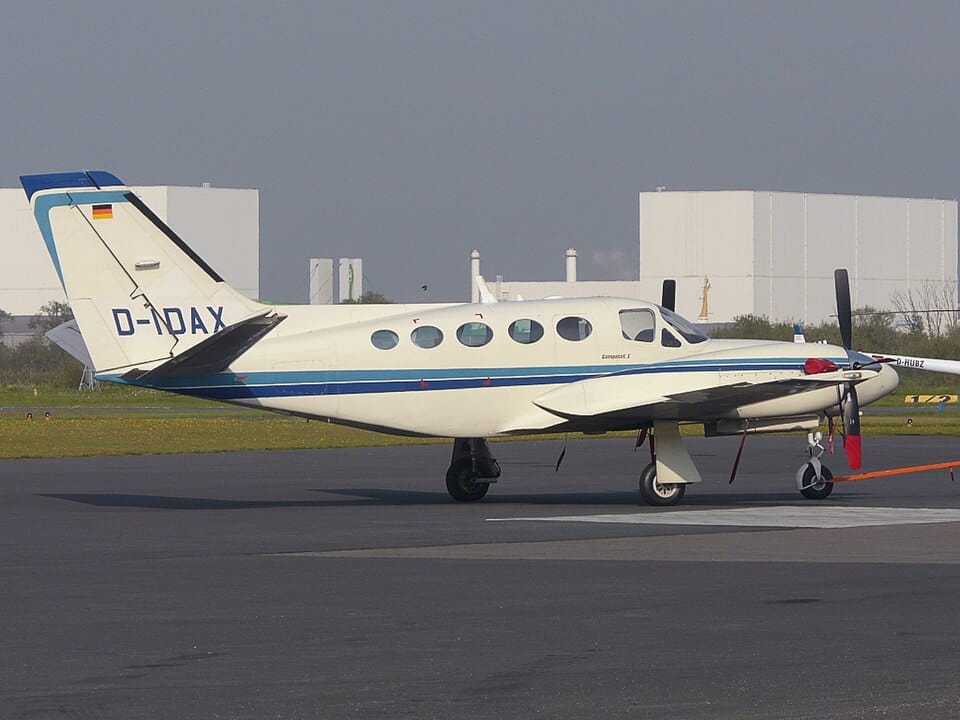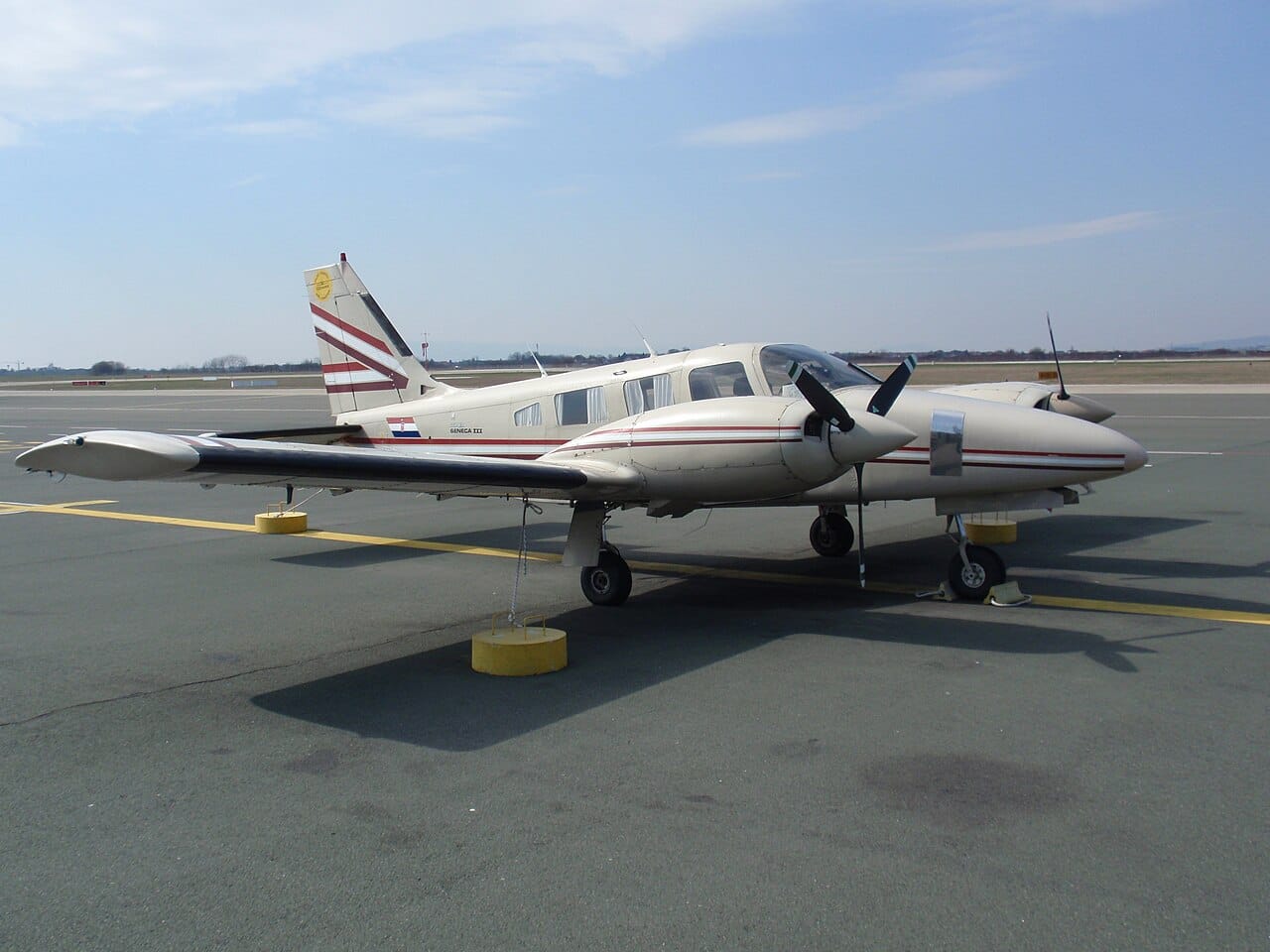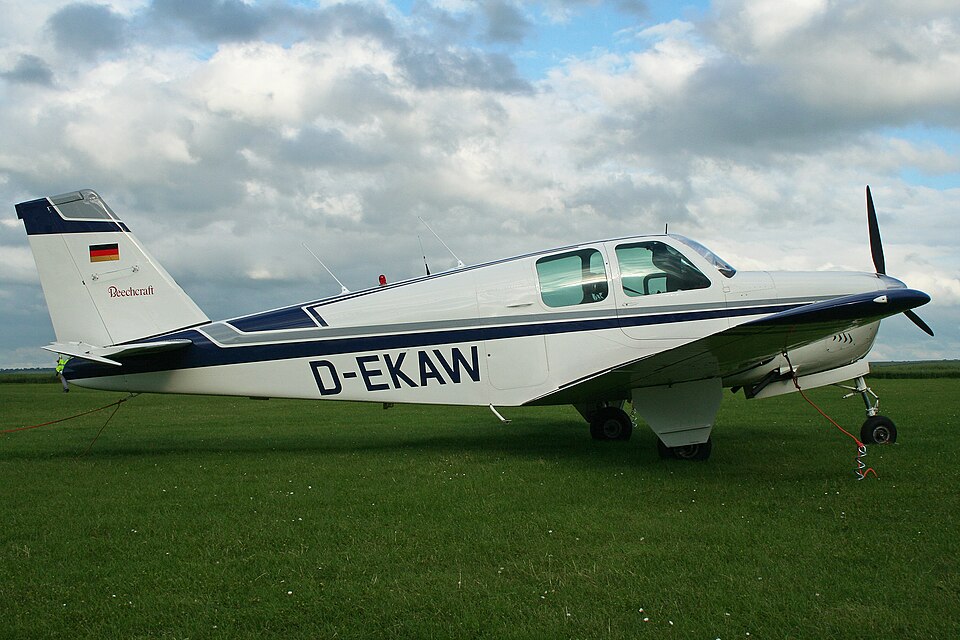
Few names in general aviation carry the same weight as the Beechcraft Bonanza. It has been around since 1947, and for many pilots it sits at the top of the single-engine wish list. Then there is the Debonair, a quieter sibling that often gets called the "poor man's Bonanza," even though most owners will tell you that nickname misses the mark.
The two airplanes share a factory, a fuselage, and most of their DNA. Pilots looking at the Beechcraft Debonair vs Bonanza matchup are usually trying to figure out one thing: are they really that different, or is the V-tail just a fancier hat on the same airplane? The answer turns out to be a little of both, and a lot more interesting than the price tags suggest.
There is a reason these two airplanes share a hangar in pilot conversations and very different price stickers in the classifieds.
Key Takeaways
The Beechcraft Debonair and Bonanza are essentially the same airplane built side by side in Wichita, with the Debonair using a conventional straight tail and the Bonanza famous for its V-tail design. Early Debonairs had less power and simpler interiors to keep the price down, but later models were upgraded so much that the Debonair name was dropped in 1968 and the straight-tail version became known as the Model 33 Bonanza. Both share the same wing, fuselage, and overall feel in the air, with the V-tail typically priced higher in the classic market and the straight-tail valued for its more conventional handling and lower insurance costs.
| Topic | Debonair (Model 33) | Bonanza (Model 35 / V-tail) |
| Tail design | Conventional straight tail | V-tail with ruddervators |
| First produced | 1960 | 1947 |
| Original engine | 225 hp Continental IO-470 | Up to 285 hp Continental IO-520 |
| Original positioning | Lower-cost option | Premium flagship |
| Production ended | Renamed to Model 33 Bonanza in 1968, ended 1995 | V-tail ended in 1982 |
| Common cruise speed | Around 150 to 170 knots | Around 165 to 175 knots |
| Typical buyer today | Pilot wanting Beech quality at lower entry cost | Pilot wanting the iconic V-tail look |
| Insurance complexity | Generally lower | Slightly higher due to tail history |
Looking through Beechcraft listings is a lot easier when you can compare side by side, which is exactly what Flying411 was built for.
The Story Behind Both Aircraft
To understand the beechcraft debonair vs bonanza debate, you have to go back to the late 1940s. The Bonanza was already a household name in aviation circles by the time the Debonair was even sketched on a drawing board. Knowing how each airplane came to be makes it much easier to see why they look so similar today.
A Postwar Aviation Hit
After World War II, Beechcraft wanted to build a fast, sleek civilian aircraft that felt nothing like the tube-and-fabric trainers most pilots knew. The Model 35 Bonanza arrived in 1947 with retractable gear, an all-metal body, and that unmistakable V-tail. It looked like the future. For pilots used to slow taildraggers, the Bonanza felt like jumping from a sedan into a sports car.
For more than a decade, the Bonanza had almost no real competition in its class. Cessna was still building piston singles like the 170, and Piper was producing fabric-covered Cubs and Pacers. The Bonanza stood alone at the premium end of the market.
Why Beechcraft Built the Debonair
By the late 1950s, things changed. Piper introduced the Comanche 250, which offered similar performance to the Bonanza for roughly two-thirds the price. Beechcraft needed an answer, but they did not want to cheapen the Bonanza brand.
The fix was the Model 33 Debonair, introduced in 1960. It used the Bonanza fuselage and wing but swapped the V-tail for a conventional one. It came with a smaller 225 hp engine, a simpler interior, and fewer extras as standard equipment. The goal was to give Comanche shoppers a reason to walk into a Beech dealership instead of a Piper one.
Fun Fact: The name "Debonair" actually comes from an old French falconry term meaning "of good air," used to describe an especially fine falcon. Beechcraft picked the name to suggest elegance and lightness.
How the Two Lines Merged
Here is where the story gets interesting. Debonair buyers loved the Beech feel so much that most of them ordered the optional upgrades that made their airplane look and behave more like a Bonanza. Year after year, the Debonair gained more power, better interiors, and more standard equipment. By 1968, Beechcraft realized they were essentially selling two versions of the same plane. They dropped the Debonair name, and the straight-tail Model 33 simply became part of the Bonanza family.
The straight-tail Bonanza outlived its V-tail parent by more than a decade. V-tail production ended in 1982, while the Model 33 line continued through 1995.
What Is the Beechcraft Bonanza
The Beechcraft Bonanza is a four-to-six seat, single-engine piston aircraft with retractable landing gear. Its claim to fame is being one of the longest continuously produced airplanes in aviation history, with production running for almost eight decades.
The V-Tail Bonanza in Plain Terms
When most pilots say "bonanza" out loud, they usually mean the V-tail. That is the version with the two angled tail surfaces that work as both elevators and rudders. Beechcraft called these surfaces "ruddervators," which is one of those words that sounds made up but actually means exactly what you think it does. The design was unusual for its time and made the airplane instantly recognizable from the ground.
The original Model 35 cruised at around 175 mph and had a range close to 750 miles, which was impressive for a postwar piston single. As the years went on, Beechcraft kept refining the design. By the time the v tail bonanza had matured into the V35B in the 1970s, it carried a 285 hp Continental IO-520 engine and could cruise at well over 170 knots.
The Bonanza Family Tree
The Bonanza name covers a surprising number of variants:
- Model 35 series: The original V-tail line, running from the 1947 Model 35 through the V35B in 1982.
- Model 33 series: Started life as the Debonair in 1960, became part of the Bonanza family in 1968.
- Model 36 series: A stretched, six-seat, straight-tail version introduced in 1968 and still in production as the bonanza a36 and G36.
The a36 bonanza in particular has carved out its own following thanks to its longer cabin, club seating, and rear cargo doors. It is the version most pilots picture today when they imagine a modern Beechcraft single.
Why It Matters: When someone says they fly a Bonanza, the next question is almost always "which one?" The differences between a 1955 E35, a 1980 V35B, and a 2010 G36 are huge in terms of performance, panel, and price.
The B35 and the Early Years
The b35 is one of the most recognizable early variants. Built in 1950, it introduced tip tanks as factory options and brought small but useful refinements over the original Model 35 and A35. Pilots searching for a classic V-tail often start with the bonanza plane lineup from this era because they tend to be more affordable than later versions, even if they are slower and carry less.
What Is the Beechcraft Debonair
The Beechcraft Debonair is the Model 33, the conventional-tail version of the Bonanza built between 1960 and 1967. It seats four, has retractable gear, and uses the same wing and fuselage as the V-tail Bonanza of the same era.
Design and Original Purpose
The Debonair was never meant to be a budget airplane in the cheap sense. It was meant to be a more affordable Beech, which is a different thing entirely. Beechcraft kept the Bonanza's clean lines and quality build but stripped out some of the luxury touches and used a smaller 225 hp Continental IO-470 engine instead of the larger options offered on the V-tail.
Early Debonairs came with simpler interiors, fewer windows, and more austere paint schemes. They had bench rear seats instead of individual ones in some early variants, and the standard panel was plainer. The whole idea was to undercut the V-tail Bonanza on price while still feeling like a Beechcraft.
Debonair Production Variants
The Debonair line went through several updates during its short run as its own model:
| Variant | Years | Notable Changes |
| Model 33 | 1960 | Original Debonair, 225 hp Continental IO-470-J |
| A33 | 1961 | Extra windows, hat shelf, higher gross weight |
| B33 | 1962 to 1964 | New panel, IO-470-K engine variant |
| C33 | 1965 | Higher gross weight, minor refinements |
| C33A | 1966 to 1967 | 285 hp Continental IO-520 engine, basically a straight-tail Bonanza |
The C33A is the one that signaled the end of the line for the Debonair name. With the 285 hp engine, the airplane was virtually identical to the V-tail Bonanza in performance. After 1967, Beechcraft simply dropped the Debonair name and renamed the model the E33.
Good to Know: Roughly 1,300 airplanes were built under the Debonair name during its short run as a separate model. After 1968, the same airframe continued under the Bonanza name as the E33, F33, F33A, and G33, with the F33A becoming the longest-running version.
Beechcraft Debonair vs Bonanza: 9 Key Differences That Set Them Apart
When pilots dig into the beechcraft bonanza vs debonair comparison, they usually want a clear list of what actually changes between the two. The short answer is that the differences are smaller than the price gap suggests, but they are real. Here are the nine that matter most when you are shopping or comparing.
1. The Tail Design
This is the most obvious difference. The Bonanza Model 35 series uses a V-tail with two angled surfaces. The Debonair, and later the Model 33 Bonanza, uses a conventional straight tail with a separate vertical fin and horizontal stabilizer.
The V-tail is lighter and creates a unique look that some pilots love and others find busy in the air. The straight tail is heavier, simpler, and behaves more like every other airplane on the ramp. From a maintenance and inspection standpoint, the straight tail has fewer historical concerns and is generally easier to work on.
2. Original Engine and Power Output
Early Debonairs came with a 225 hp Continental IO-470. Bonanzas of the same era could be ordered with engines up to 285 hp on the V35 and later models. The horsepower gap closed by 1966 when the C33A got the same 285 hp Continental IO-520 as the V35.
If you are comparing a 1962 B33 to a 1962 N35 Bonanza, the Bonanza is clearly the more powerful airplane. If you are comparing a 1972 F33A to a 1972 V35B, they are almost identical underneath the cowl.
3. Interior Trim and Standard Equipment
Original Debonairs had simpler upholstery, fewer windows on early variants, and basic panels compared to their V-tail siblings. The Bonanza came standard with nicer interiors, more elaborate trim, and more standard avionics.
This gap shrank fast. By the mid-1960s, most Debonair buyers were ticking the option boxes that brought the interior up to Bonanza standards. Today, a well-equipped Debonair can be just as nice inside as many V-tails.
4. Production Years and History
The Bonanza Model 35 ran from 1947 to 1982, an unbroken 35-year production run. The Debonair name only existed from 1960 to 1967. After that, the straight-tail line continued as the Model 33 Bonanza through 1995. The Model 36 Bonanza, introduced in 1968, is still produced today as the G36.
5. Performance in the Air
Performance is closer than many pilots expect. A typical V35B will cruise around 170 to 175 knots on roughly 14 to 16 gallons per hour. An F33A from the same era will do almost the same on the same fuel burn. Earlier Debonairs with the 225 hp engine cruise closer to 150 to 160 knots and burn around 12 to 13 gallons per hour, which is a respectable trade for the lower fuel costs.
6. Handling Characteristics
Both airplanes are praised for clean, responsive handling. The V-tail has a slight wagging tendency in turbulence sometimes called the "Bonanza wag," which some pilots love and others find annoying. The straight tail tracks more like a conventional airplane and is generally considered more stable in rough air.
For pilots transitioning from a Cherokee or 182, the straight tail tends to feel more familiar on the first few flights.
7. Resale Value and Insurance
There used to be a clear premium for V-tails over straight tails. That has flipped over the years. Today, many comparable straight-tail Model 33s sell for similar or slightly higher prices than their V-tail equivalents from the same year. Insurance for V-tails can also be a touch higher because of the airplane's accident history and its reputation for unforgiving behavior in poor weather.
8. Reputation and Perception
The V-tail Bonanza picked up a tough nickname during the 1970s and early 1980s after several high-profile in-flight breakup accidents. An airworthiness directive in the early 1980s addressed the issue with a tail strengthening kit, and the data has been clean since. The straight-tail Model 33 never carried that same baggage.
This perception alone keeps some buyers focused on the Debonair and Model 33 line, even when V-tail prices are similar or lower.
Heads Up: Old reputations stick around in aviation. The V-tail's tail strengthening AD has been complied with on virtually every flying example for decades, and the airplane is no more or less safe than the straight tail in modern data. Buying decisions should be based on the actual airplane, not the rumor mill.
9. Today's Market Availability
The Bonanza family produced more than 18,000 single-engine airplanes across all variants. Debonairs only account for around 1,300 of those, and Model 33 Bonanzas built after 1967 add a few thousand more. V-tail Bonanzas are far more common on the used market, which means more inventory, more choices, but also a wider range of condition.
If you are searching for a clean, well-cared-for beech bonanza of any flavor, you will probably find more V-tails listed than straight tails on any given day.
Sorting through every Bonanza variant is the kind of work an aviation marketplace should do for you. Flying411 lets buyers filter by Beechcraft model, year, engine, and avionics so the comparison stops eating up your evenings.
Performance and Specs Side by Side
Numbers help cut through the marketing fog. Here is a clean side-by-side using widely cited typical figures for representative model years. Actual figures vary by year, modifications, and individual airframe condition.
| Spec | Debonair (1962 B33) | Bonanza (1962 N35) | Bonanza (1972 V35B) | Bonanza (1972 F33A) |
| Engine | 225 hp Continental IO-470-K | 260 hp Continental IO-470-N | 285 hp Continental IO-520-B | 285 hp Continental IO-520-B |
| Cruise speed | ~155 KTAS | ~165 KTAS | ~172 KTAS | ~172 KTAS |
| Fuel burn at 75% | ~12 GPH | ~13 GPH | ~14 GPH | ~14 GPH |
| Range | ~600 nm | ~700 nm | ~700 to 720 nm | ~700 to 720 nm |
| Useful load | ~1,000 lbs | ~1,100 lbs | ~1,200 lbs | ~1,200 lbs |
| Seats | 4 | 4 to 5 | 4 to 5 | 4 to 5 |
The key takeaway here is that once you reach the 1968 and later Model 33 Bonanza line, the only real difference between the straight-tail and the V-tail is what you see when you walk up to the airplane.
Quick Tip: When comparing listings, always look at the engine model and total time, not just the year on the airframe. A 1965 Debonair with a recently overhauled IO-520 conversion can outperform a stock 1972 V35B on a tired engine.
Pros and Cons of Each
Every airplane is a set of trade-offs. Here is how the two stack up in plain language.
Beechcraft Bonanza Pros
- Iconic V-tail looks and ramp presence that no other airplane offers.
- Strong owner community through the American Bonanza Society, with deep technical support.
- Wide selection on the used market across many decades and variants.
- High-quality build, clean handling, and refined feel in the cockpit.
- Long history means most quirks are well documented and well solved.
Beechcraft Bonanza Cons
- V-tail's earlier reputation can affect insurance rates and resale to skittish buyers.
- Maintenance can be costly without a Beech-experienced mechanic.
- Older airframes can hide expensive surprises if pre-buys are skipped.
- The "Bonanza wag" in turbulence is a love-it-or-hate-it feel.
Beechcraft Debonair Pros
- Generally lower acquisition cost compared to similar-year V-tail Bonanzas.
- Same Beechcraft build quality, same wing, same fuselage.
- Conventional tail handling that feels familiar to most pilots.
- Fewer perception issues with insurance underwriters.
- Most Bonanza modifications and upgrades also apply to Debonairs.
Beechcraft Debonair Cons
- Earlier 225 hp variants are slower than later 285 hp versions.
- Smaller production numbers mean fewer choices on the market.
- Some early models have smaller wheels and brakes than later Bonanzas.
- "Poor man's Bonanza" stigma still floats around in some circles.
Pro Tip: Whichever side of the bonanza vs debonair debate you land on, hire a Beech-experienced mechanic for the pre-buy. A regular shop annual is not the same as a true pre-purchase inspection, and Beechcrafts have enough specific quirks that experience matters.
Which One Should You Buy
Choosing between the Debonair and the Bonanza comes down to budget, mission, and personal taste. There is no wrong answer, only the right answer for your situation.
Buy a Debonair or Model 33 Bonanza If
You want classic Beech quality without paying a V-tail premium. You prefer conventional handling and a more familiar tail layout. You want lower insurance and a reputation that travels well with both pilots and underwriters. You value the same wing and fuselage as the Bonanza without the V-tail's history.
Buy a V-Tail Bonanza If
You want the iconic look. You like the idea of owning a piece of aviation history that has been on magazine covers for decades. You enjoy the slight tail-wagging feel that Bonanza pilots talk about. You like having a wide selection of airplanes available on the market and a strong owner community to support you.
Buy an A36 or G36 Bonanza If
You need six seats, club seating, or the option to carry more cargo. You fly long cross-country trips with families. You want a more modern cabin and panel option without leaving the Beech family. The A36 sits in a different category from the four-seat Debonair and Model 35, and some pilots even compare its travel comfort favorably against light twins like the older "b36 bus time" charter setups, though those references usually point to scheduled or charter operations rather than a specific aircraft variant.
Mission and Budget Match
Here is a simple way to think about it:
- Cross-country with a partner and bags? Any 285 hp Bonanza or Model 33 will handle it well.
- Family of four with full fuel? Watch the weight and balance closely. Many Bonanzas and Debonairs become three-passenger airplanes when full of fuel.
- Tight budget for entry? A clean B33 or C33 Debonair with the 225 hp engine is one of the most affordable ways into the Beech family.
- Want the iconic V-tail look? Focus on the V35, V35A, or V35B from the late 1960s and 1970s.
Ready to start shopping? Flying411 lists Beechcraft Bonanzas, Debonairs, and certified parts in one place, so you can browse airframes, compare specs, and connect with sellers in a few clicks.
Conclusion
The beechcraft debonair vs bonanza comparison is really a story about how a single airplane evolved through two parallel lines for almost a decade. They share a wing, a fuselage, and most of their soul. The biggest physical difference is the tail, and even that has become more of a style choice than a performance one over the years.
Both airplanes hold up beautifully in the modern used market. The V-tail offers iconic looks and a deep community. The straight-tail offers familiar handling and a quieter resale story. Neither one is a downgrade. Whichever way you go, you are buying a Beechcraft single that has earned its place in aviation history.
If your hangar is calling for a V-tail classic or a clean straight-tail Model 33, Flying411 makes it easier to find, compare, and close on the right airplane without the runaround.
Frequently Asked Questions
Is a Debonair the same as a Bonanza?
The Debonair is essentially a straight-tail Bonanza with a different name. Beechcraft built it from 1960 to 1967 as a lower-priced alternative to the V-tail, then folded it into the Bonanza family in 1968 as the Model 33.
Why did Beechcraft stop making the V-tail Bonanza?
Production of the V-tail ended in 1982. By that point, demand had shifted toward the straight-tail Model 33 and the six-seat Model 36, both of which avoided the V-tail's earlier reputation issues and were easier to market.
Is the V-tail Bonanza safe to fly today?
Yes. An airworthiness directive in the early 1980s addressed the in-flight breakup concerns through a tail strengthening kit, and modern accident data shows the V-tail performs about the same as its straight-tail siblings when flown within limits.
Are Debonair parts hard to find?
Most Debonair parts are interchangeable with the Model 33 and many Bonanza components, so availability is generally good. The American Bonanza Society and several specialty shops support the entire Beech single line with parts and modifications.
What is the cheapest way to get into a Beechcraft single?
An older B33 or C33 Debonair with the 225 hp engine is usually one of the lowest-cost entry points into the Beechcraft family. Just be prepared for higher maintenance costs than a comparable Cherokee or 172, and budget for a thorough pre-buy by a Beech-experienced mechanic.