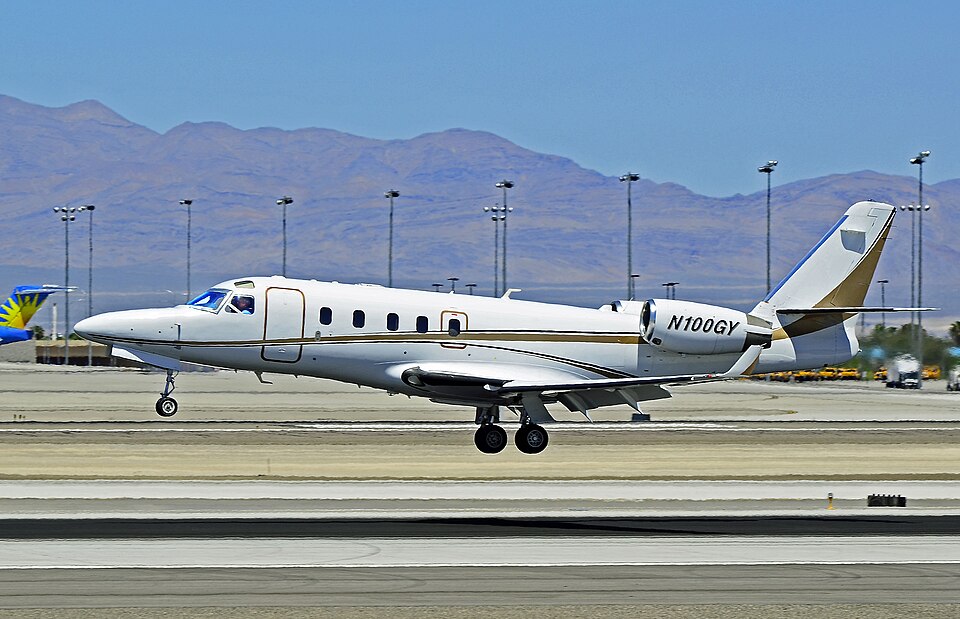
The Beechcraft Premier 1 is one of those airplanes that surprises people the moment they step inside. From the outside, it looks like a compact, quick little jet. Step through the door and the cabin feels a size or two larger than it has any right to be.
That trick is built right into the airframe, and it shapes almost everything worth knowing about the Beechcraft Premier 1 specifications and performance.
This is a light business jet that aimed to give owners big-cabin comfort without a big-jet price. It flies fast, lands at smaller airports, and can be flown by a single pilot. It also carries a few quirks that any smart buyer should understand before signing anything.
For a jet its size, the real surprise is how much room hides behind that smooth composite skin.
Key Takeaways
The Beechcraft Premier 1 is a light business jet that carries about six people at close to Mach 0.80, climbs to around 41,000 feet, and covers roughly 1,300 to 1,500 nautical miles between fuel stops. It runs on two Williams turbofan engines, uses a carbon-fiber fuselage to open up cabin space, and is certified to fly with just one pilot. That mix of speed, room, and simple operation is what made it stand out in its class.
| Feature | Detail (Approximate) |
| Aircraft type | Light business jet |
| First deliveries | Around 2001 |
| Engines | Two Williams FJ44-2A turbofans |
| Thrust | About 2,300 lbs each |
| Maximum cruise speed | Near 450 knots (close to Mach 0.80) |
| Range | Roughly 1,300 to 1,500 nautical miles |
| Service ceiling | About 41,000 feet |
| Passengers | Up to six |
| Maximum takeoff weight | 12,500 lbs |
| Crew | Single-pilot certified |
Flying411 keeps a running feed of light jets like the Premier 1, so you can see how these numbers turn into real, priced listings.
What Is the Beechcraft Premier 1?
The Premier 1 is a small, fast business jet built to compete with light jets like the Cessna Citation CJ series and the Learjet 40 and 45. It seats up to six passengers, cruises near the speed of larger jets, and slips into smaller airports that bigger aircraft cannot use. Its calling card is the cabin, which feels roomy for the class.
The aircraft came from Raytheon Aircraft Company, the maker later known as Hawker Beechcraft and now folded into Textron Aviation. The goal was simple to state and hard to build: give a light jet the widest, most comfortable cabin possible without adding weight. The answer was carbon fiber.
Instead of a traditional aluminum tube, the Premier 1 uses a all-composite fuselage made from carbon fiber and epoxy over a honeycomb core. That construction is thinner and stronger than aluminum for the same job, so the walls can be pushed outward. The result is a wider cabin without a wider, heavier airplane wrapped around it.
Good to Know: The Premier 1 is widely recognized as one of the first business jets certified with a fully composite fuselage. Beechcraft experimented with the idea earlier, and comparisons of other composite Beechcraft designs like the Starship show how long the company chased lighter, roomier airframes.
A Quick Look at Its Origins
Design work on the Premier 1 started in the mid-1990s. The first flight came in 1998, and full certification, including single-pilot approval, arrived around 2001. Deliveries began that same year.
A few years later, the improved Premier 1A took over the production line. It kept the same shape and mission but added refinements to the avionics, brakes, and cabin. Between the two versions, close to 300 airframes were built before production wound down in the early 2010s. That means a healthy number of them still fly today on charter fleets and in private hands.
Beechcraft Premier 1 Specifications and Performance at a Glance
If you want the core numbers in one place, here is the short version of the beechcraft premier 1 specifications and performance story. These figures are approximate, since exact values shift with model year, options, and how each source measures them.
- Engines: Two Williams FJ44-2A turbofans, each producing about 2,300 pounds of thrust
- Maximum cruise speed: Around 450 knots, close to Mach 0.80
- Range: Roughly 1,300 to 1,500 nautical miles, depending on load
- Service ceiling: About 41,000 feet
- Maximum takeoff weight: 12,500 pounds
- Cabin: Seats up to six, with a flat floor and about 315 cubic feet of volume
- Baggage: Around 77 cubic feet total, split between internal and external space
- Crew: Single-pilot certified
- Avionics: Rockwell Collins Pro Line 21 suite
Here is how the exterior and cabin measurements line up:
| Dimension | Approximate Measurement |
| Length | About 46 feet |
| Wingspan | About 44 feet 6 inches |
| Height | About 15 feet |
| Cabin length | Around 13 feet 6 inches |
| Cabin width | Around 5 feet 5 inches |
| Cabin height | Around 5 feet 4 inches |
Those numbers tell a clear story. The Premier 1 is short and light on the outside, yet the cabin measures wide and tall for a jet in this weight class. That balance is the whole point of the design.
What Powers the Premier 1
Two Williams FJ44-2A engines hang on the rear of the fuselage and do all the heavy lifting. Each one puts out roughly 2,300 pounds of thrust. The FJ44 family has a strong track record across many light jets, which is good news for owners who care about parts, support, and shop familiarity.
These engines give the Premier 1 brisk acceleration and a quick climb for its size. They also keep fuel burn reasonable for a jet, which matters on every trip. Rear-mounted engines carry a nice side benefit too. They move the noise behind the cabin, so passengers up front ride in relative quiet.
Fuel planning tends to be straightforward for typical light-jet missions. Hourly fuel use sits in a range that owners find manageable for short and medium hops, though the exact figure moves with altitude, weight, and cruise setting.
How Fast and Far the Premier 1 Flies
Speed is where the Premier 1 earned early respect. Its maximum cruise speed sits near 450 knots, which puts it close to Mach 0.80. In plain terms, that is right up near the pace of much larger and pricier jets. On a short city-to-city hop, the difference in wall-clock time is real.
Range is more modest, and this is the honest trade in the design. The Premier 1 covers roughly 1,300 to 1,500 nautical miles on a good day with a light load. That handles most regional business travel with ease. Think trips like New York to Miami or Chicago to Dallas. Push toward full seats and full range at the same time, and the numbers get tighter.
The service ceiling of about 41,000 feet lets the jet climb above a lot of weather and slower traffic. It also gets up there quickly. Loaded near its limit, the Premier 1 can reach the mid-30,000-foot range in well under half an hour, which keeps time in the bumpy lower altitudes short.
Keep in Mind: Range and payload pull against each other on every light jet. Filling all the seats usually means giving up some distance, and topping the tanks usually means leaving weight behind. Plan real trips around a realistic mix of both.
Curious how the platform stacks up against newer rivals? Buyers often line up the 1A against the Phenom 300 when shopping this part of the market, since the two cover similar missions with different strengths.
Inside the Cabin
The cabin is the reason many people fall for this jet. It runs about 315 cubic feet, with a flat floor and stand-up-ish room for the class. Most layouts seat six, with four club seats facing each other in the middle and two more toward the rear.
That club arrangement makes short meetings easy. Fold-out tables give passengers a place to work, eat, or set a laptop. Large windows keep the space feeling open, and the composite walls help hush engine and wind noise.
Baggage room is a practical strength. The Premier 1 offers around 77 cubic feet of storage split between internal and external compartments, and the external area can be heated. That is enough for a small group's bags, golf clubs, or gear without a fight over space.
Cabin Comfort and Layout
Comfort features tend to include an enclosed lavatory in the rear and a refreshment area for drinks and snacks. On longer legs, those touches matter more than people expect. The two-zone climate system uses engine bleed air to keep temperatures steady front to back.
Why It Matters: The composite fuselage is not a marketing line. By making the walls thinner and stronger than aluminum, the design frees up inches of cabin width. Those inches turn into elbow room, shoulder room, and a cabin that feels a class above the airplane's footprint.
The Flight Deck and Avionics
Up front, the Premier 1 uses the Collins Pro Line 21 avionics suite. This is a modern, integrated glass cockpit with large color displays for flight, navigation, and engine data. It pulls a lot of information into a clean layout, which cuts pilot workload and sharpens situational awareness.
The suite typically pairs with a flight management system, weather radar, and traffic and terrain warning tools. Later 1A aircraft often carry updated software and capabilities. For a light jet, the office up front feels current and capable, and it is a big reason owner-pilots warm to the airplane.
Fun Fact: The Premier 1 is single-pilot certified, and the improved 1A has often been described as one of the largest single-pilot business jets of its era. That means one qualified pilot can legally fly a jet with a cabin this size, which trims crew cost on many trips.
Runway Performance and Handling
The Premier 1 is designed to use smaller airports, which widens where owners can go. At maximum weight, it needs a takeoff run in the neighborhood of 3,800 feet. Landing distances are shorter, often in the range of about 2,700 to 2,800 feet under good conditions. Real numbers change with weight, altitude, temperature, and runway surface.
Pilots tend to praise the handling. It flies with the tidy, honest feel people expect from a Beechcraft. The Pro Line 21 panel backs that up with clear guidance during busy phases like approach and landing.
The airplane did have a rocky start in a few areas, and it is worth knowing the history. Early aircraft drew comments about braking and wet-runway performance, along with some cabin noise. The manufacturer responded with fixes, and later aircraft, especially the 1A, addressed much of it. Still, runway performance on wet or contaminated surfaces is a factor to weigh, particularly against turboprop competitors.
Heads Up: On short, wet, or high-elevation runways, run the real performance numbers for the exact tail and conditions before you commit to a field. The Premier 1 is capable, but it rewards careful planning more than some rivals do.
Premier 1 vs Premier 1A
Shoppers almost always run into both names, so the difference is worth a clear rundown. The two share the same airframe, engines, and basic performance. The 1A is the refined follow-on, not a redesign.
| Area | Premier 1 | Premier 1A |
| Production era | Roughly 2001 to 2005 | Roughly 2006 to 2013 |
| Engines | Williams FJ44-2A | Williams FJ44-2A |
| Avionics | Collins Pro Line 21 | Updated Pro Line 21 |
| Brakes | Original system | Improved system |
| Cabin | Standard | Upgraded materials and quieting |
| Core performance | Nearly identical | Nearly identical |
In short, the 1A polishes the rough edges of the original. If two aircraft are close in price and hours, many buyers lean toward the 1A for the brake and cabin refinements. Even so, a well-kept Premier 1 can be a strong value.
What It Costs to Own
Pricing on the pre-owned market moves with age, total hours, engine time, avionics, and interior condition. As a general guide, Premier 1 and 1A airframes have often been listed somewhere in the low-to-mid seven figures, roughly around $1 million to $2.5 million. Treat any single number as a starting point, not a rule, since condition drives the final figure.
Running costs deserve equal attention. Fuel, insurance, hangar, scheduled maintenance, and engine reserves all add up. Engine overhauls in particular are a meaningful budget line, so a buyer should always check where each engine sits against its recommended interval. A jet with fresh engines and a clean logbook can be worth far more than a cheaper one facing big shop bills soon.
Pro Tip: Before you make an offer, get an independent pre-purchase inspection and confirm the aircraft's RVSM status and records. A thorough look now can save a small fortune later, and it gives you real leverage on price.
Doing your homework on value pays off. It helps to value your aircraft against current listings so you know if an asking price is fair before you ever talk numbers.
Flying411's marketplace lists Premier 1 and 1A airframes alongside overhauled engines and certified parts, so you can size up a purchase and its likely upkeep in one place.
Strengths and Trade-Offs
No airplane is perfect, and the Premier 1 wears its pros and cons on its sleeve. Knowing both sides helps you decide if it fits your mission or fights it.
Where It Shines
- Big cabin for the class, thanks to the composite fuselage
- Strong cruise speed near Mach 0.80
- Single-pilot certification that can trim crew cost
- Modern Pro Line 21 avionics that pilots enjoy
- Access to smaller airports for more direct trips
- Solid baggage volume for a light jet
What to Watch For
- Modest range compared with some rivals when fully loaded
- Wet and short-runway performance that calls for careful planning
- Early production quirks on the oldest airframes
- Brand history, since Hawker Beechcraft's business jet line was later discontinued
- Engine overhaul timing, which can swing ownership cost sharply
Plenty of owners work their way up through the Beechcraft family before they ever reach a jet like this. Piston pilots weigh the Bonanza versus a Cherokee, or line up a Bonanza next to a Saratoga, while step-up shoppers compare the Debonair and the Bonanza. Move into twins and the questions shift to the Duke and Baron pairing or the Duchess against the Baron, and new pilots often start with trainers like the Skipper and Tomahawk.
Who the Premier 1 Is Best For
The Premier 1 fits a clear kind of owner. Someone who flies regional trips, values speed and cabin comfort, and wants the option to fly single-pilot will find a lot to like. Owner-pilots, small businesses, and charter operators have long made up its core audience.
It is a poor fit for anyone who needs long transcontinental legs with a full cabin, or who wants the last word in wet-runway margins. In those cases, a different airplane may serve better. If range and runway flexibility rank higher than jet speed, turboprops such as the Denali and the Pilatus PC-12 deserve a serious look.
Quick Tip: Match the airplane to your two or three most common trips, not your rare dream trip. A jet that nails your weekly routes will make you happier than one bought for a route you fly once a year.
Ready to see what is on the market right now? Browse current Premier 1 listings on Flying411 and reach out the moment one lines up with your mission.
Conclusion
The Beechcraft Premier 1 specifications and performance add up to a smart, characterful light jet. It gives you near-Mach-0.80 speed, a cabin that feels a size larger than the airframe suggests, single-pilot simplicity, and access to smaller airports. The trades are honest ones, mainly range under a full load and careful runway planning, and both are easy to manage once you know they exist.
For the right owner flying the right routes, it remains a lot of jet for the money. The composite design that once felt bold now reads as forward-thinking, and the flying qualities still win people over on the first flight.
When you are ready to match the numbers to a real tail number, Flying411 is where the Premier 1 search stops feeling like homework and starts feeling like shopping.
FAQs
How many passengers does the Beechcraft Premier 1 seat?
Most Premier 1 layouts seat up to six passengers, with four club seats in the middle and two seats toward the rear. Some configurations can fit a seventh depending on crew and cabin setup.
Is the Beechcraft Premier 1 hard to insure or maintain?
It is a mainstream light jet with well-known Williams engines, so parts and shop support are broadly available. Insurance and maintenance costs are normal for the class, though engine overhaul timing can swing yearly budgets a good deal.
Can one pilot legally fly the Premier 1?
Yes. The Premier 1 is single-pilot certified, which lets one qualified pilot fly it without a required second crew member and can lower crew costs on many trips.
What is the difference between the Premier 1 and the Premier 1A?
The 1A is the improved version of the same airplane, with updated avionics, better brakes, and a refined cabin. Core speed, range, and dimensions stay nearly the same between the two.
Does the Premier 1 need long runways?
It is designed for smaller airports and handles many general-aviation fields, needing roughly 3,800 feet for takeoff at maximum weight. Wet, short, or high-elevation runways call for careful performance planning before departure.