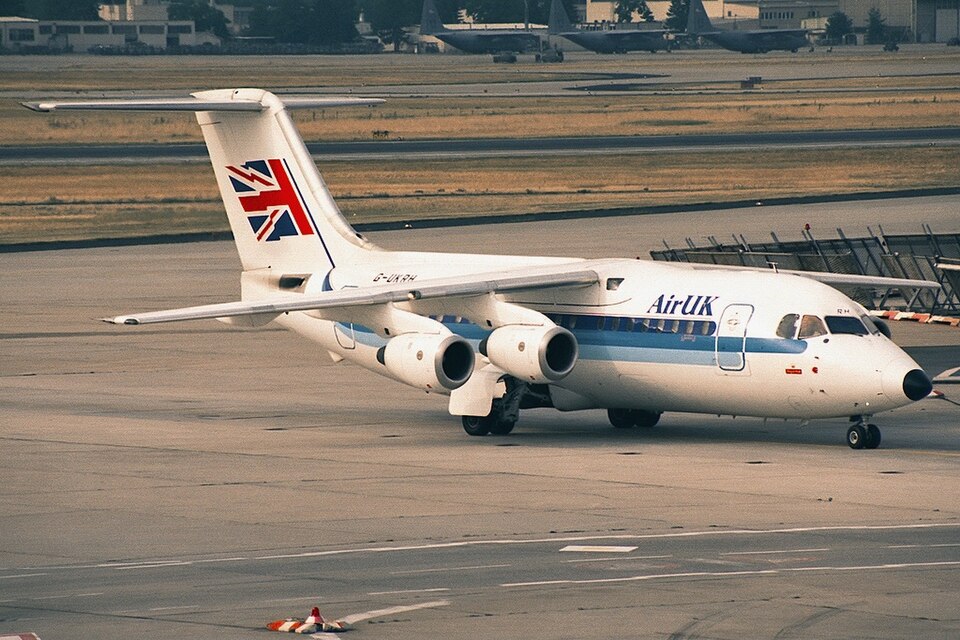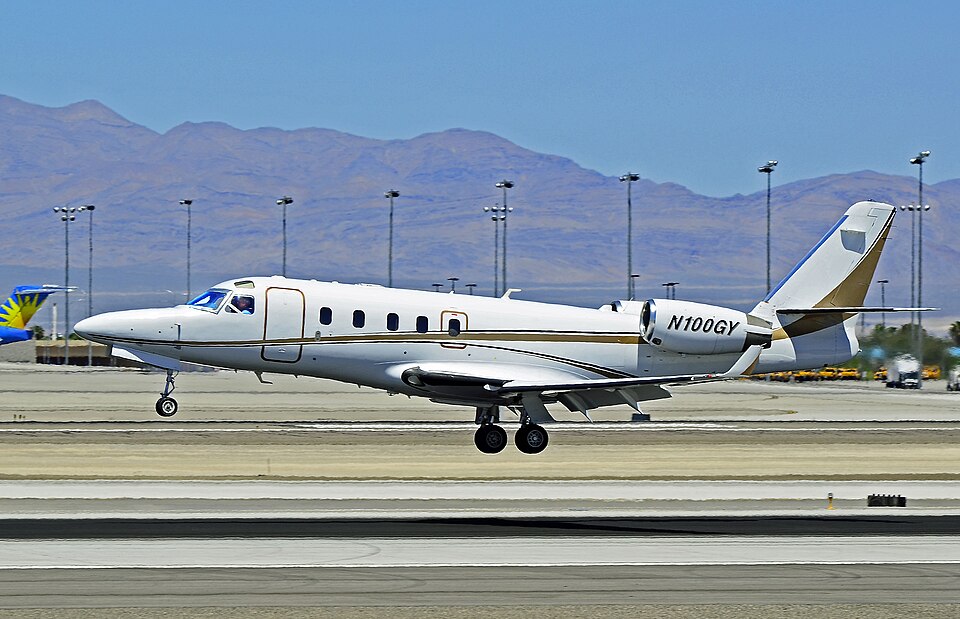
Some business jets are born famous. Others earn their reputation quietly, one flight at a time, until people finally look up and ask where they came from. The IAI 1125 Westwind Astra belongs firmly in that second group.
It began life as an American design, changed hands across an ocean, grew into a symbol of Israeli engineering, and ended up wearing one of the most respected badges in private aviation.
For a plane that many travelers have never heard of, the Astra has an outsized story. It sits at the center of a family tree that stretches from a small 1960s executive jet all the way to modern Gulfstreams still flying today.
Along the way it changed names, swapped engines, grew a new wing, and even put on a military uniform.
One jet, fingerprints from three different countries, and a lineage that ends with a Gulfstream logo. The whole thing starts with a plane nobody was allowed to keep.
Key Takeaways
The IAI 1125 Astra is a midsize business jet built by Israel Aerospace Industries that grew out of the older IAI Westwind and later became the Gulfstream G100. It first flew in the mid-1980s, carried up to nine passengers, and used a pair of fuel-efficient turbofan engines to cross long distances at high speed. Today it is best known as a fast, roomy, and affordable used jet with a rich history behind it.
| Feature | Quick Summary |
| Type | Midsize twin-engine business jet |
| Maker | Israel Aerospace Industries (IAI) |
| First flew | Prototype in 1984, production model in 1985 |
| Came from | The IAI 1124 Westwind |
| Grew into | The Gulfstream G100 (and later the G150) |
| Engines | Two Garrett (later Honeywell) TFE731 turbofans |
| Passengers | Around six or seven typical, up to nine certified |
| Best known for | High speed, long range, and a low used-market price |
At Flying411, we spend a lot of time around aircraft like this one, following the planes that shaped business aviation and the people who still fly them every day.
What Is the IAI 1125 Astra?
The IAI 1125 Astra is a midsize business jet designed and built by Israel Aerospace Industries, one of Israel's largest aviation companies. It was made to carry a small group of passengers over long distances at high speed, the kind of trip a company executive or charter customer takes when time matters more than money.
At first glance, the Astra looks like a typical business jet of its era. It has a smooth, narrow body, two engines mounted at the back near the tail, and swept-back wings that sit low on the fuselage. But that clean design hides a long and interesting backstory that reaches back decades before the Astra name ever appeared.
The plane sits in the "midsize" class, which means it is bigger than a light jet but smaller than a large-cabin jet. That size gives it a helpful balance. It can fly far, carry a useful load, and still land at smaller airports that bigger jets cannot use. For many operators, that middle ground is exactly the sweet spot.
Good to Know: The word "Astra" is Latin for "stars." It is a fitting name for a jet that spends much of its life cruising high above the weather.
From Jet Commander to Westwind: The Backstory
You cannot understand the Astra without understanding what came before it. The story starts in the United States, not Israel, and it begins with a plane that its own maker was forced to give away.
The Aero Commander 1121 Jet Commander
Back in the early 1960s, an American company called Aero Commander built a small twin-engine executive jet named the 1121 Jet Commander. It first took to the air on January 27, 1963. The design was clean and modern for its time, with two engines mounted at the rear and wings placed halfway up the body.
The Jet Commander showed real promise. Then a business merger changed everything. Aero Commander was bought by North American Rockwell, a company that already built its own executive jet called the Sabreliner. Owning two competing jets at once created an antitrust problem, and the rules of the day did not allow it.
The solution was simple but dramatic. Rockwell had to sell off the Jet Commander line entirely. In 1968, the design and production rights were purchased by Israel Aircraft Industries, and the jet packed its bags for a new home across the ocean.
Fun Fact: The Jet Commander shared its early engines with the original Learjet, which makes these two very different-looking jets distant cousins under the skin.
IAI Takes Over: The 1123 and 1124 Westwind
Once IAI had the design, the Israeli engineers went to work. They stretched the fuselage to fit more people and reworked the aircraft into a new model called the 1123 Westwind. This gave the plane more room and turned it into a proper small-cabin jet.
The bigger leap came next. IAI swapped out the original turbojet engines for a pair of Garrett TFE731 turbofans, which were quieter and far more fuel-efficient. This upgraded version became the 1124 Westwind, and it turned into a genuine success.
Later still came the 1124A Westwind II, delivered from the early 1980s. It added winglets on the wingtip fuel tanks, a flat cabin floor, and better performance in hot weather and at high-altitude airports. By the time production ended in 1987, more than 400 Jet Commanders and Westwinds had been built. That was a huge achievement for a young aviation industry, and it set the stage for something even better.
Why People Call It the "Westwind Astra"
Here is where names get a little confusing, so let us clear it up.
The Astra and the Westwind are two different aircraft. The Astra was not simply a renamed Westwind. It was a heavily redesigned jet that used the Westwind as its starting point. Many people call it the "Westwind Astra" because the Astra grew directly out of the Westwind family and kept a few of its parts.
To be specific, the Astra held onto the Westwind's tail section and the engine housings at the back. Almost everything else was new. The fuselage was reshaped, and the plane got a completely new high-speed swept wing.
That name overlap is why searches for the IAI Astra business jet and the Westwind often lead to the same place. In everyday conversation, pilots and owners sometimes blur the two together. Knowing the difference helps you read old listings and articles correctly.
Why It Matters: The Astra's new wing was moved from the middle of the body down to the bottom. That single change freed up cabin space and added several inches of headroom, which made the interior feel roomier without making the plane any bigger.
The IAI 1125 Astra Explained: 7 Features Worth Knowing
So what makes this jet stand out? The IAI 1125 Astra explained in plain terms comes down to a handful of clear strengths. Here are seven features that define the aircraft and help you understand why it earned a loyal following.
- A brand-new high-speed wing. The Astra's swept wing was designed for speed and efficiency. Placing it low on the fuselage kept it out of the cabin, which is why passengers get more usable space than the older Westwind offered.
- Twin rear-mounted turbofans. The Astra uses two Honeywell TFE731 engines (built by Garrett before Honeywell took over the line). These engines are known for good fuel economy and solid reliability, and they remain in service on many aircraft around the world.
- Impressive range for its size. Depending on the variant and how many people are on board, the Astra can fly roughly 2,900 to 3,100 nautical miles without stopping. That is enough to cross the United States coast to coast on many routes.
- High cruising speed. The Astra was built to move. Its cruise speeds sit around 465 knots and higher in the faster versions, which puts it near the top of its class for the era.
- A comfortable, usable cabin. Most Astras are set up for about six or seven passengers in a club-style layout, and the cabin is certified to carry as many as nine. A forward galley and a rear lavatory round out a practical interior.
- A tall service ceiling. The jet can climb into the low-to-mid 40,000-foot range, which lets it fly above much of the rough weather and slower traffic below.
- A retractable tricycle landing gear and tough airframe. The Astra was built to hold up over decades of service, and many examples are still flying today after long careers.
Quick Tip: When you read Astra specs online, always check which variant the numbers describe. An early 1125 and a later SPX can differ quite a bit in speed, range, and ceiling.
Here is a quick reference for the kind of numbers you will see across the family. Treat these as approximate figures, since exact performance depends on weight, weather, and configuration.
| Spec | Approximate Figure |
| Passengers | 6 to 7 typical, up to 9 certified |
| Cruise speed | Around 465 knots or more |
| Range | Roughly 2,900 to 3,100 nautical miles |
| Service ceiling | Low-to-mid 40,000-foot range |
| Engines | Two Garrett/Honeywell TFE731 turbofans |
| Landing gear | Retractable tricycle type |
The Astra Family: 1125, SP, and SPX
The Astra did not stay the same over its life. It grew through three main versions, each one sharper than the last. Understanding these three variants makes it much easier to shop for one or read about its history.
The Original Astra 1125
This was the model that started it all. The first prototype flew in March 1984, the first production aircraft flew in March 1985, and it earned FAA certification later that same year. Customer deliveries began in 1986. The original 1125 set the template: a fast, efficient midsize jet with a fresh wing and a comfortable cabin.
The Astra SP
Announced toward the end of the 1980s, the Astra SP was a polished update. It brought a revised cabin interior, upgraded avionics, and a modern glass cockpit using an Electronic Flight Instrument System. It also added small aerodynamic refinements. Around three dozen SP models were built before the next version arrived. The Astra SP is often seen as the sweet spot for buyers who want more modern systems without paying for the newest model.
The Astra SPX
The SPX first flew in 1994 and represented the biggest jump of all. It received more powerful TFE731 engines with full-authority digital engine control, added winglets for better efficiency, and gained an updated Collins Pro Line 4 avionics suite. The Astra SPX could climb higher and fly with more polish than earlier versions, and it became the basis for the aircraft's next chapter under a new name.
| Variant | Key Upgrades |
| Astra 1125 | Original model, new wing, first deliveries 1986 |
| Astra SP | Updated cabin, EFIS glass cockpit, refined systems |
| Astra SPX | Stronger engines, winglets, digital engine control |
Keep in Mind: As you move from the 1125 to the SP to the SPX, both the performance and the price usually climb. Match the variant to your mission and your budget rather than chasing the newest one by default.
How the Astra Became the Gulfstream G100
This is where the Astra's story takes its most famous turn.
In the early 2000s, Gulfstream Aerospace acquired the company that held the Astra's certifications. From September 2002 onward, the Astra SPX was renamed the Gulfstream G100. The jet itself did not change overnight. It simply gained one of the most prestigious names in the business.
Under this arrangement, IAI continued to build the aircraft in Israel. The bare "green" airframes were then flown to the United States, where they received their interior fittings and final touches. It was a true cross-continent partnership.
A later derivative, the G150, was launched in 2002 as well. It offered a wider cabin and further refinements, and it carried the family forward until the last of the line was delivered around 2017. Across the Astra, G100, and G150 models combined, roughly 265 aircraft were built.
The family tree branched in another direction too. Engineers took the Astra's wing, paired it with an all-new fuselage, and created the Galaxy. That jet later became the Gulfstream G200, a bigger and even more capable aircraft. So the humble Astra did not just become one Gulfstream. It helped seed a whole line of them.
Fun Fact: The next time you see a Gulfstream G100 on a ramp, you are looking at an aircraft whose roots trace all the way back to that 1960s Jet Commander that its American maker was forced to sell.
The C-38A: The Astra in Military Colors
The Astra did not spend its whole life ferrying business travelers. It also served in uniform.
A pair of Astra SPX jets were delivered to the United States military as the C-38A Courier. Operated in connection with the Air National Guard, these aircraft handled transport duties and medical evacuation missions. The United States Navy has also used the type in support roles.
For a jet designed as an executive shuttle, taking on military tasks says a lot about its reliability and flexibility. A plane that can serve both a corporate flight department and an armed force is a plane built on solid foundations. Aircraft with unusual service records like this often become collector favorites, and the Astra sits comfortably among the rarer planes still flying in mixed civilian and military roles.
Astra vs the Westwind and Modern Midsize Jets
How does the Astra stack up against the plane it replaced and against the jets flying today? A few honest comparisons help set expectations.
Compared to the IAI Westwind, the Astra is faster, roomier inside, and generally more comfortable. The new low wing and reshaped fuselage gave passengers more headroom and a smoother ride. The Westwind still has its fans, especially as an affordable entry point and a capable freight hauler, but the Astra was a clear step up in refinement.
Compared to modern midsize jets, the picture is more mixed:
- Speed: The Astra still holds its own. Its cruise numbers remain respectable even next to newer designs.
- Range: It can cross long distances, though some newer jets stretch a bit farther on a single tank.
- Cabin comfort: Newer jets often offer quieter cabins, better soundproofing, and more modern touches.
- Operating costs: Older engines and aging systems can mean higher upkeep than a brand-new aircraft.
- Purchase price: This is where the Astra shines. It offers a lot of jet for a fraction of the cost of something new.
For a buyer who wants genuine midsize capability without a genuine midsize price tag, the Astra remains a compelling option. It trades a little modern polish for a lot of value.
Heads Up: Older jets can carry higher maintenance bills, especially around the engines. A strong engine program and clean records matter far more on an aging aircraft than on a new one.
If you own an Astra or a jet like it, Flying411 makes it simple to list your aircraft, engines, or parts in front of buyers who know exactly what they are looking at.
What an IAI Astra Costs Today
One of the biggest reasons the Astra keeps drawing interest is its price. As a midsize business jet with a long history, it now sits at the affordable end of the used market.
Exact prices swing widely based on age, variant, engine status, avionics, and overall condition. Older examples can trade in the mid-six-figure range, which is remarkably low for a jet that can carry a small group across the country. That low entry price is a big part of the appeal, though it comes with a catch worth understanding.
The purchase price is only the beginning. The real cost of ownership shows up over time in fuel, maintenance, engine reserves, insurance, and hangar space. On an older jet, the condition of the engines and the quality of the maintenance records can make or break the deal. A cheap airframe with tired engines can end up far more expensive than a pricier one that has been cared for.
Because of that, doing your homework before buying is essential. It helps to see where an airframe sits in today's market before you make any offer, so you know if a listing is fair or too good to be true.
Pro Tip: Before buying any older jet, budget for a full pre-purchase inspection and check the engine program status closely. What looks like a bargain on paper can hide costly surprises inside the cowlings.
A handful of retired Astras have slipped quietly out of active service and into the world of abandoned and forgotten jets, parked on remote ramps and rarely flown. That is a normal fate for aging aircraft, and it is one more reason to buy an example with a clear, active history.
Ready to buy or sell a midsize jet? Browse listings and connect with certified aviation professionals on Flying411 today.
Who Flies the Astra Today?
The Astra found a home with a wide mix of operators, and many still fly it. Charter companies like it for its speed and low acquisition cost. Small corporate flight departments use it to move executives efficiently. Individual owners enjoy having real jet capability without a jaw-dropping purchase price.
Its balance of range, speed, and value keeps it relevant even decades after the first one rolled out. For many buyers stepping up from a light jet or a turboprop, the Astra is the first taste of true coast-to-coast reach in a private aircraft.
That staying power is a quiet testament to the original design. A plane does not stay useful for this long by accident. It earns that place through solid engineering and dependable service, year after year.
The Bottom Line
The IAI 1125 Westwind Astra is far more interesting than its low profile suggests. It carries the DNA of an American executive jet, the craftsmanship of Israeli engineers, and the badge of one of aviation's most respected names. Along the way it grew a new wing, gained a glass cockpit, served in the military, and helped launch an entire family of Gulfstreams.
For today's buyer, it offers a rare combination of speed, range, and affordability wrapped in a genuinely fascinating history. It is proof that a plane does not need to be famous to be worth knowing. It just needs to keep doing its job well, decade after decade.
Whenever you are ready to find your next aircraft or move the one you already have, Flying411 keeps the whole aviation marketplace in one easy, trustworthy place.
Frequently Asked Questions
Is the IAI Astra the same as the Gulfstream G100?
The Astra SPX was renamed the Gulfstream G100 in 2002 after Gulfstream took over the program, so they are essentially the same aircraft. The main differences come down to the badge and small updates rather than a completely new design.
How many passengers can an IAI 1125 Astra carry?
Most Astras are set up for about six or seven passengers in a comfortable club layout. The cabin is certified to carry as many as nine people when configured for a higher-density seating plan.
Is the IAI Astra a good value on the used market?
For many buyers it is, since the purchase price is low compared to newer midsize jets with similar speed and range. The key is watching ongoing costs like engine maintenance and fuel, which weigh more heavily on the total price of ownership than the sticker figure.
What engines does the IAI 1125 Astra use?
The Astra is powered by two rear-mounted Garrett TFE731 turbofans, a line that Honeywell later took over. Newer variants like the SPX use a more powerful version of the same engine family with digital engine control.
What is the difference between the Astra 1125, SP, and SPX?
The original 1125 was the first model, the SP added a modern glass cockpit and cabin updates, and the SPX brought stronger engines, winglets, and advanced avionics. Each version improved on the one before it in performance and equipment.