Most planes you see at a small airport have one engine. Some have two. Four engines usually means something big, like a jumbo jet hauling hundreds of people across an ocean. So the idea of small 4 engine planes sounds almost like a contradiction. Why would a little aircraft need four engines when two would do the job?
It turns out a handful of designers asked that same question and came up with surprising answers. Some wanted extra safety. Some wanted to fly out of tiny runways. One company even built a four-engine business plane the year before the jet age made it old news.
These aircraft are rare, a little odd, and full of clever engineering. A few became legends. Others barely made it off the drawing board. Each one tells you something about what four engines can do when you bolt them onto a smaller frame.
The reasons four engines ended up on a plane the size of a delivery van are stranger than you might guess.
Key Takeaways
Small four-engine planes do exist, but they are rare, and most of them are business jets, regional jets, or short-runway turboprops rather than tiny private aircraft. Four engines on a small frame usually buys extra safety, a stronger climb, or the ability to use short and quiet airports. The best-known examples include the Lockheed JetStar, the BAe 146, and the de Havilland Canada Dash 7. Many of these aircraft are now retired or flown mostly by collectors and freight operators.
| Aircraft | Type | Engines | Typical Seats |
| Lockheed JetStar | Business jet | 4 turbojets/turbofans | 8 to 10 |
| BAe 146 / Avro RJ | Regional jet | 4 turbofans | 70 to 112 |
| de Havilland Canada Dash 7 | STOL turboprop | 4 turboprops | About 50 |
| Cessna 620 | Piston prototype | 4 piston engines | 8 to 10 |
| de Havilland DH.86 Express | Vintage biplane | 4 piston engines | 10 to 12 |
| Lockheed L-188 Electra | Turboprop airliner | 4 turboprops | 66 to 98 |
| Vickers Viscount | Turboprop airliner | 4 turboprops | 44 to 75 |
Flying411 is an online aviation marketplace where pilots, buyers, and curious fans gather around aircraft of every shape and size. It is a friendly spot to learn about unusual planes like these and see what is currently for sale.
Why Four Engines on a Small Plane Is So Unusual
Most small aircraft are built around one or two engines. A single engine keeps things cheap and simple. Two engines add a backup in case one quits. For the vast majority of pilots, that covers everything they need. It helps to see how common those layouts are, from popular twin-engine designs to reliable single-engine planes.
So why add two more? Each extra engine means more fuel burned, more parts to inspect, and more money spent on upkeep. Engineers do not add engines for fun. They add them to solve a specific problem.
Back in the early days of flying, engines were not very reliable. Splitting the power across four smaller engines meant that losing one was not a disaster. The plane could keep flying on the other three. That logic drove a lot of early four-engine aircraft, from airliners to flying boats.
Later, four engines stuck around for other reasons. Four smaller engines can spin four smaller, slower propellers, and slow propellers are quiet. Four engines also give a strong, steady push on takeoff, which helps a plane leap off a short runway. These are the traits that kept the layout alive on a few special small planes long after most builders moved on.
Where four engines actually earn their keep
The four-engine layout never made sense everywhere. It paid off in a few clear situations:
- Short and rough runways. Extra thrust and big flaps let a plane take off and land in a very small space.
- Quiet operations. Slower-turning props or geared fans cut the noise for airports near homes.
- Redundancy. Losing one of four engines leaves more power to spare than losing one of two.
- Heavy lifting for the size. Four engines can move a surprisingly large cabin on a compact airframe.
Good to Know: Adding engines does not automatically make a plane safer. More engines also means more parts that can fail and more for the crew to manage. The safety benefit comes from smart design, not just a high engine count.
What Counts as a "Small" Four-Engine Plane
"Small" is a sliding scale. Compared to a four-engine jumbo jet, almost anything looks small. For this list, small means a compact airframe in one of three groups: a business jet built for a handful of passengers, a short-hop regional jet, or a regional four-engine turboprop that seats around 50. A couple of vintage piston planes round things out.
Some of these planes carry as few as eight people. Others carry close to a hundred. What they share is a four-engine layout on a frame far smaller than the big intercontinental jets. If you want a sense of the other end of the scale, the largest airliners make for a fun comparison.
Quick Tip: When you hear "four engines," picture the role first, not the size. A four-engine business jet and a four-engine regional turboprop look nothing alike, yet both fit the small four-engine club.
The Best Small Four-Engine Planes Worth Knowing
Here are seven standout small four-engine planes, from a sleek business jet to a record-setting turboprop. Each one earned its spot for a different reason. Read them in order or jump straight to the one that catches your eye.
Lockheed JetStar
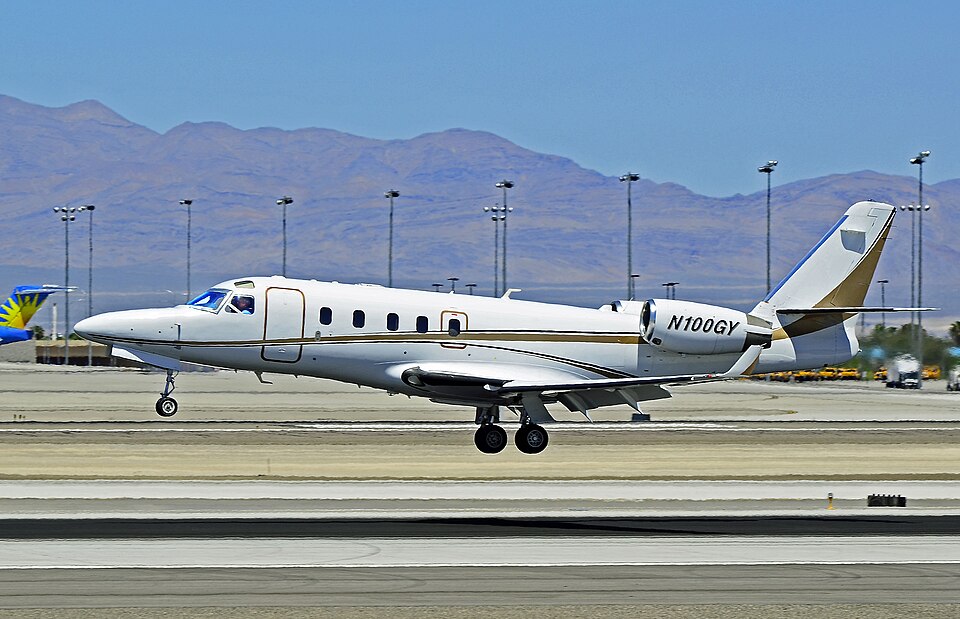
The Lockheed JetStar is the plane most people picture when they think of small four-engine jets. It first flew in 1957 and became the first purpose-built business jet to enter service. You can spot it by its four engines clustered at the back of the fuselage and the long "slipper" fuel tanks tucked against the wings.
The JetStar carried about eight to ten passengers plus two crew. It cruised near Mach 0.8 and could cross much of the United States with a single stop. Early models used four Pratt & Whitney turbojets. Later versions, called the 731 and the JetStar II, swapped in quieter Garrett turbofans to meet new noise rules. Around 200 were built before production ended in the late 1970s.
Its four-engine layout made it stand out in a world that soon shifted to twins. It also gave it a touch of fame. A JetStar appeared as a villain's private jet in a James Bond film, and Elvis Presley owned more than one over the years.
Fun Fact: Aviator Jacqueline Cochran flew a JetStar across the Atlantic in 1961 and is widely credited as the first woman to pilot a jet over that ocean, setting a string of speed records along the way.
BAe 146 and Avro RJ
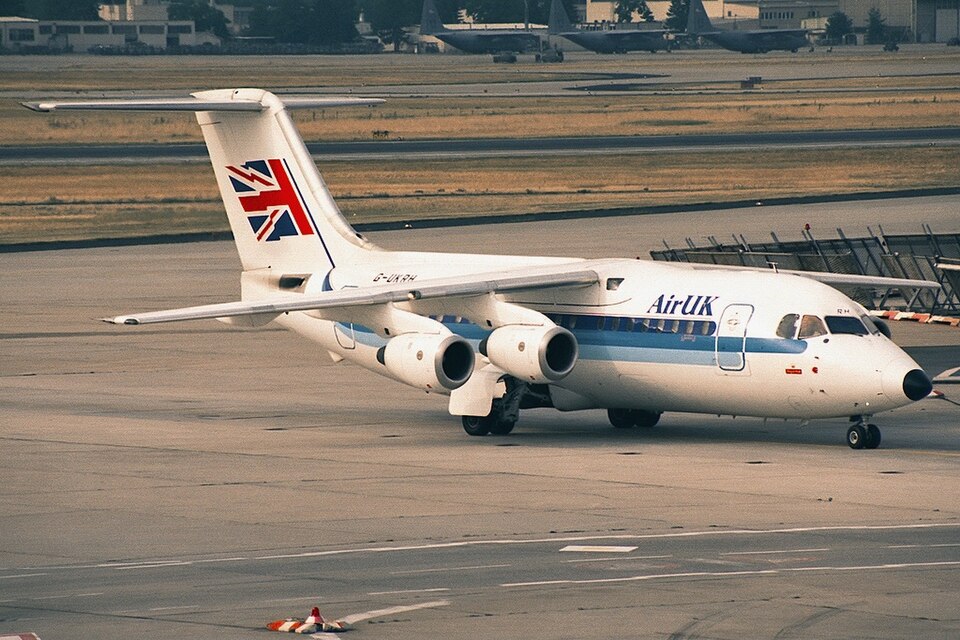
If you want the smallest mainstream regional jet with four engines, the British Aerospace 146 is it. This high-wing jet first flew in 1981 and earned the nickname "Whisperjet" because it ran so quietly.
Four small turbofans sit under its high wing. The engines were so hushed that passengers could hold a normal conversation during takeoff. That made the 146 a favorite at city-center airports with strict noise limits, like London City Airport, which has a famously steep approach and a short runway.
The 146 came in three sizes, and an upgraded version called the Avro RJ followed with better engines. Together they seated anywhere from about 70 to 112 passengers. With 387 built across both families, it became the most successful British jet airliner program. Most have retired from major airlines, though some still fly as freight haulers and even aerial water bombers.
Why It Matters: The 146's four quiet engines let airlines serve airports tucked right inside busy cities. That kind of access is hard to match, which is a big reason the design stayed in service for decades.
de Havilland Canada Dash 7
The de Havilland Canada Dash 7, also called the DHC-7, is a four-engine STOL aircraft built for short and rough runways. STOL stands for short takeoff and landing, and this one takes that idea seriously.
It uses four Pratt & Whitney Canada PT6A turboprops spinning big propellers around 11 feet across. The props turn slowly on purpose, which keeps the plane quiet. Paired with huge wing flaps, that setup lets the Dash 7 lift off in well under 2,300 feet and slip into airports that other regional planes cannot touch. It carries around 50 passengers.
Airlines used it on tough routes, including mountain strips and Arctic fields. One well-known service ran straight into a small ski-resort airport near Vail, Colorado. The catch was cost. Four turboprops need roughly twice the maintenance of two, so the Dash 7 lost ground to cheaper twins like its own cousin, the Dash 8. Around 111 were built, and a few still fly in specialized roles today. If turboprops interest you, there are plenty of other turboprop options worth a look.
Keep in Mind: The Dash 7's short-field magic came at a price. Running four engines instead of two raised fuel and upkeep costs, which is the main reason it never sold in huge numbers.
Cessna 620
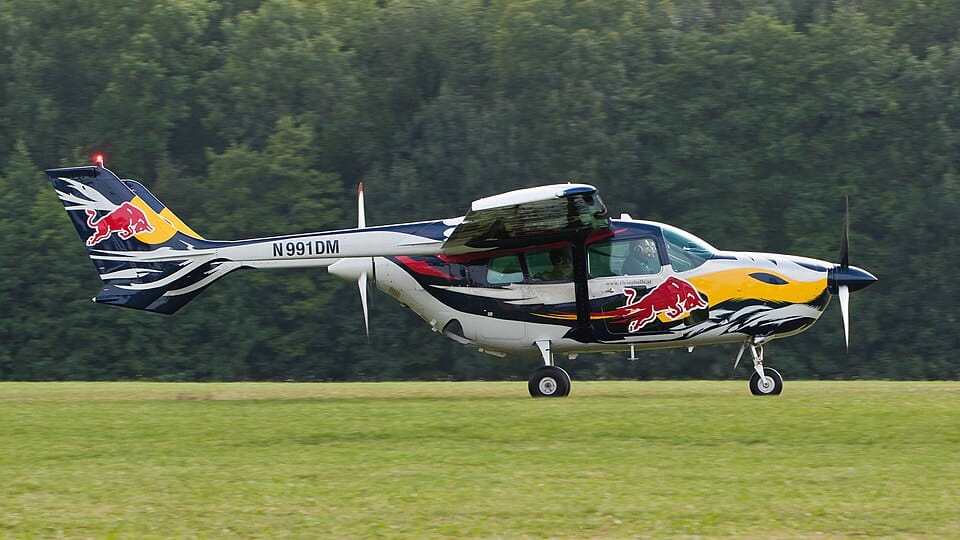
The Cessna 620 is the great "what if" of small four-engine planes. In the mid-1950s, Cessna built a four-engine, pressurized business plane meant to carry eight to ten people in comfort. The name was an inside joke. It packed twice the engines of the twin-engine Cessna 310, so the team doubled the number to 620.
It used four piston engines rather than turbines, which Cessna hoped would keep the price down and make repairs easier at out-of-the-way airfields. The single prototype flew in August 1956, and test pilots liked it. The tall, roomy cabin let people stand up and walk around inside.
Then timing killed it. The jet age was arriving fast. Cessna's leaders worried the 620 would be outclassed by coming business jets and undercut by a flood of cheap used airliners. They canceled the program in 1957 and scrapped the only prototype. Cessna later poured that energy into its hugely successful Citation jets. To see how a modern lineup fits the market, the world of private planes worth owning is a good starting point.
Heads Up: Because the lone Cessna 620 was destroyed, you will never find one for sale. It survives only in photos, archives, and the memories of the people who worked on it.
de Havilland DH.86 Express
For a look at how old the small four-engine idea really is, meet the de Havilland DH.86 Express. This four-engine biplane airliner first flew in 1934. It was designed to carry mail and passengers on long routes across the British Empire, including legs between Australia and Singapore.
It seated around ten to twelve passengers and used four small Gipsy Six engines. Four engines made sense back then because each one was modest in power, and spreading the load improved reliability over long water crossings. When it entered service, it was among the fastest British passenger planes of its day.
The DH.86 had some early stability troubles that led to design fixes, including extra tail fins on later models known as the DH.86B. About 62 were built, and a handful served into the 1950s. It is a clear reminder that four engines on a small plane is an old idea, not a new one.
Pro Tip: When researching vintage types like the DH.86, lean on museum archives and aviation heritage sites. Original records often reveal design changes and service history that general sources miss.
Lockheed L-188 Electra
The Lockheed L-188 Electra sits at the larger end of this list, yet it is still a compact four-engine turboprop next to the jets that replaced it. It first flew in 1957 and was the first large turboprop airliner built in the United States.
Four Allison turboprops gave it strong short-field performance, and it could carry roughly 66 to 98 passengers depending on the layout. Its big propellers and short wings meant most of the wing sat in the propeller wash, which boosted lift on takeoff and helped it use shorter runways than many early jets.
The Electra had a rough start. Two crashes traced to a wing vibration problem hurt its reputation, and Lockheed spent heavily to strengthen every aircraft. Jets soon took over, and many Electras became freighters. Still, 170 were built, and the basic design lived on as the famous P-3 Orion patrol plane.
Vickers Viscount
The Vickers Viscount holds a special place in history as the first turboprop airliner to enter service. It first flew in 1948 and started carrying passengers in 1953. Four Rolls-Royce Dart turboprops gave it smooth, quiet power that travelers loved.
Early versions were small, seating around two dozen people. Later, stretched models carried up to about 75. Passengers praised its big oval windows and its calm, gentle ride. A test pilot once said a coin could balance on its edge on a cabin table while the engines ran.
The Viscount became one of the most successful early postwar airliners, with 445 built and sold around the world. It proved that turboprop power could be both smooth and profitable, paving the way for the four-engine turboprops that followed.
How These Four-Engine Designs Compare
A quick side-by-side shows just how different these planes are, even though they all share four engines.
| Aircraft | First Flight | Power | Best Known For |
| Lockheed JetStar | 1957 | Jet | First business jet in service |
| BAe 146 / Avro RJ | 1981 | Jet | Quiet city-airport regional jet |
| de Havilland Canada Dash 7 | 1975 | Turboprop | Short-runway STOL flying |
| Cessna 620 | 1956 | Piston | Canceled four-engine prototype |
| de Havilland DH.86 Express | 1934 | Piston | Early Empire-route airliner |
| Lockheed L-188 Electra | 1957 | Turboprop | First U.S. large turboprop |
| Vickers Viscount | 1948 | Turboprop | First turboprop airliner |
The spread covers nearly 50 years and three kinds of power. A 1930s biplane and an 1980s jet look like they came from different planets, but both leaned on four engines to do their job. For broader context on how these fit the wider field, browsing the types of small planes helps connect the dots.
If you are weighing a four-engine classic against a simpler twin, Flying411 connects buyers with certified A&P mechanics and inspectors who can check an airframe before you commit.
What It Costs to Own or Fly One
Owning a small four-engine plane is a niche pursuit, and the costs reflect that. Most of these types are out of production. Some, like the Cessna 620, do not exist at all anymore. The ones you might find for sale are usually older jets and turboprops aimed at collectors, charter outfits, or freight haulers.
The big expense with any four-engine plane is upkeep. Four engines means four sets of inspections, overhauls, and parts. That is roughly double the engine workload of a twin. Fuel burn is higher too. For most owners, this trade-off is exactly what makes four-engine designs hard to justify next to modern twins.
Parts can be another hurdle. When a type goes out of production, spares get harder to find and more costly. Older jets may also need updates to meet current noise and avionics rules. None of this makes ownership impossible. It simply means the smart buyer plans for higher running costs and budgets with care. For a general sense of the numbers involved, see what small planes cost.
Heads Up: A low purchase price on an old four-engine plane can be a trap. The real cost shows up later in maintenance, fuel, and hard-to-find parts, so factor those in before you fall in love with a bargain.
Pros and Cons of Four Engines on a Small Airframe
Four engines bring real strengths and real headaches. Weighing them side by side makes the picture clear.
The upside:
- Spare power. Lose one engine and three keep working, which is reassuring over water or rough terrain.
- Short-field and climb performance. More thrust helps a plane jump off short runways and climb steeply.
- Lower noise. Four small powerplants can be tuned to run quietly, which opens up noise-sensitive airports.
The downside:
- Higher cost. Four engines double much of the maintenance and raise fuel burn.
- More complexity. More moving parts means more that can need attention.
- Fewer support options. As these types age, mechanics and parts who know them grow scarce.
For most pilots, those downsides explain why singles and twins rule the small-plane world. The four-engine layout only wins when its strengths solve a problem nothing else can.
Are Four-Engine Small Planes Still Being Built?
The short answer is no, not really. The aviation world has moved firmly toward twins. Modern engines are far more reliable than the ones that made four-engine designs popular long ago. Two strong, dependable engines now do what four used to.
You can see this shift in the planes that replaced our list. The twin-engine Dash 8 took over from the Dash 7. Twin-engine business jets pushed aside the JetStar. Even large airliners have largely dropped four engines in favor of efficient twins.
So small four-engine planes are mostly a chapter of history now. They live on in museums, in collector hangars, and in a few working fleets that still value their quirks. For buyers today, the practical small-plane market is built around singles and twins, and there is plenty to weigh there, from small twin-engine props to questions about small plane safety.
Ready to see what is out there right now? Browse current aircraft, engine, and parts listings on Flying411 to compare your options side by side.
Fun Fact: The four-engine Lockheed Electra never became a sales hit as an airliner, but its airframe lived on as the P-3 Orion, a patrol plane that has served for well over half a century.
Conclusion
Small 4 engine planes are a rare and fascinating corner of aviation. They were never the obvious choice. Builders reached for four engines only when they needed extra safety, short-runway muscle, or whisper-quiet operations. From the sleek Lockheed JetStar to the rugged Dash 7 and the record-setting Viscount, each one solved a real problem in its own clever way.
Most of these planes have flown into history, replaced by simpler and cheaper twins. Yet they remain a joy to study and, for a lucky few, a joy to own. Their odd engine count is exactly what makes them memorable.
Whatever kind of aircraft sparks your curiosity, Flying411 is the place to find it, learn about it, and connect with the people who keep it flying.
FAQs
Do any small planes have four engines today?
Very few. Almost all small aircraft built now use one or two engines, and the four-engine small planes still flying are older types kept by collectors, charter operators, and freight companies.
Why don't most small planes use four engines?
Four engines cost far more to buy, fuel, and maintain than one or two, and modern engines are reliable enough that two can handle the job. The extra weight and complexity rarely pay off on a small airframe.
What is the smallest four-engine jet ever made?
The Lockheed JetStar is often pointed to as one of the smallest true four-engine jets, seating only about eight to ten passengers with its four rear-mounted engines.
Are four-engine planes safer than two-engine planes?
Not automatically. More engines add backup power but also add parts that can fail and more for the crew to manage, so overall safety depends far more on design, maintenance, and training than on engine count.
Can you still buy a Cessna 620?
No. Cessna built only one prototype and destroyed it after canceling the program in 1957, so the aircraft exists today only in historical records and photographs.