Not every airline flight happens on a giant jet. A lot of the trips that connect small cities to big hubs happen on smaller aircraft built for shorter hops. These small commercial planes carry anywhere from a handful of passengers to around a hundred, and they keep entire regions linked to the rest of the air travel network.
You have probably flown on one without thinking much about it. The plane with two propellers out on the wings. The little jet with seats only two across. The puddle-jumper that lands on a short runway near the coast. Each of these has a job, a personality, and a reason it exists.
Some of these planes spin propellers. Others have jet engines tucked under the wing or near the tail. A few can land on gravel, water, or grass. The differences are bigger than they look from your window seat.
Key Takeaways
The best small commercial planes are mostly regional jets and turboprops that seat roughly 9 to 100 passengers and fly short trips between smaller airports and major hubs. The most common ones you will see are the Embraer E175, the ATR 72, the Bombardier CRJ900, and the De Havilland Canada Dash 8-400. Smaller commuter planes like the Cessna Grand Caravan and the Twin Otter handle the tiniest routes, including remote and island destinations.
| Plane | Type | Rough seat count | Best known for |
| Embraer E175 | Regional jet | About 76 to 88 | Most common US regional jet |
| ATR 72 | Turboprop | About 70 to 78 | Fuel-friendly short hops |
| ATR 42 | Turboprop | About 40 to 50 | Thin, low-demand routes |
| Bombardier CRJ900 | Regional jet | About 76 to 90 | Jet speed on regional runs |
| Dash 8-400 (Q400) | Turboprop | About 70 to 90 | The fast turboprop |
| Embraer ERJ-145 | Regional jet | About 37 to 50 | Small jet for thin routes |
| Embraer E190/E195-E2 | Regional jet | About 96 to 146 | Larger end of regional flying |
| Cessna Grand Caravan | Single turboprop | About 9 to 14 | Remote and short strips |
| Beechcraft 1900D | Turboprop | About 19 | Classic commuter workhorse |
| Twin Otter | Turboprop | About 18 to 20 | Island, bush, and water routes |
Flying411 brings together aircraft listings, parts, and aviation services in one place, so curious readers and serious buyers can look at the same planes the pros fly.
What Counts as a Small Commercial Plane
A small commercial plane is an aircraft used by airlines or charter operators that carries fewer passengers than a full-size jet like a Boeing 737 or Airbus A320. There is no single official line, but most people in aviation use the term for planes that seat from about 9 to around 100 people.
These planes fill a real gap. Big jets need lots of passengers to make money on each flight. Many cities and towns simply do not have enough travelers to fill a 180-seat jet several times a day. A smaller plane lets an airline run that route at a price that still works.
Most small commercial planes fall into three loose groups:
- Commuter aircraft: The smallest of the bunch, often seating 9 to 19 people. Many have a single propeller or two small ones. Examples include the Cessna Grand Caravan and the Twin Otter.
- Regional turboprops: Mid-size planes with two propeller engines, seating roughly 40 to 90. The ATR 72 and Dash 8-400 live here.
- Regional jets: Small jet-powered planes seating about 37 to 100, used to feed traffic into big hubs. The Embraer E175 and Bombardier CRJ900 are the stars.
If you want a wider view of the field, the many types of small planes stretch well beyond airline service into private and training roles too.
Good to Know: The word "regional" gets used a lot here. It simply means the plane is built for shorter trips that connect a region to a hub, not long flights across oceans. Most regional flights last under two hours.
Regional Jets vs Turboprops: How They Differ
This is the big split in the small commercial world. Both types do similar jobs, but they get there in different ways. Understanding the difference makes the whole list easier to follow.
A turboprop aircraft uses a jet-style engine to spin a propeller. The propeller does the work of pushing the plane forward. Turboprops are very fuel-efficient on short trips and can use shorter runways. They fly a little slower and a little lower than jets.
A jet uses its engines to push air straight out the back. Jets fly faster and higher, which feels smoother to many passengers. They tend to cost more to run on very short hops, but they shine on slightly longer regional routes.
Here is a simple side-by-side look:
| Feature | Turboprops | Regional jets |
| Power | Propellers spun by turbine engines | Jet thrust |
| Typical speed | Slower | Faster |
| Best trip length | Very short hops | Short to medium hops |
| Fuel use on short trips | Lower | Higher |
| Runway needs | Often shorter | Usually longer |
| Passenger feel | More engine noise and vibration | Smoother and quieter |
Neither one is better in every case. Airlines pick based on the route, the airport, and the number of seats they need to fill. A foggy coastal town with a short runway might call for a turboprop. A busy business route to a hub might call for a jet. For a deeper look at how the two engine styles stack up across the market, the comparison of small jet planes and propeller designs is a handy reference.
Why It Matters: The choice between a propeller and a jet changes your ticket price, your travel time, and even which airports the plane can reach. That single decision shapes how a whole region gets connected to the world.
The Best Small Commercial Planes Flying Routes Right Now
Here are ten of the most respected small commercial planes in airline service today. The list mixes turboprops, regional jets, and tiny commuter aircraft, because each one earns its spot in a different way. Seat counts are rough and change with how each airline sets up the cabin.
1. Embraer E175
The Embraer E175 is the plane most American travelers meet when they fly regional. It is a small jet with seats two across on each side, which means no dreaded middle seat. In the United States, airlines usually fit it with about 76 seats to follow labor rules, though it can hold a few more.
You see the E175 flying under brand names like American Eagle, United Express, Delta Connection, and Alaska. Major regional carriers such as Republic Airways, Mesa Airways, SkyWest Airlines, and Envoy Air fly large fleets of them. Embraer has kept building the E175 because demand has stayed strong, and the type has earned a solid reputation for comfort and reliability on short trips.
What makes it special is the cabin. The windows are large, the ceiling feels tall for a small jet, and the ride is quiet. For many flyers, the E175 feels like a full-size jet shrunk down. If you want to see how the small jet field looks overall, the roundup of the best small passenger planes puts it in good company.
2. ATR 72
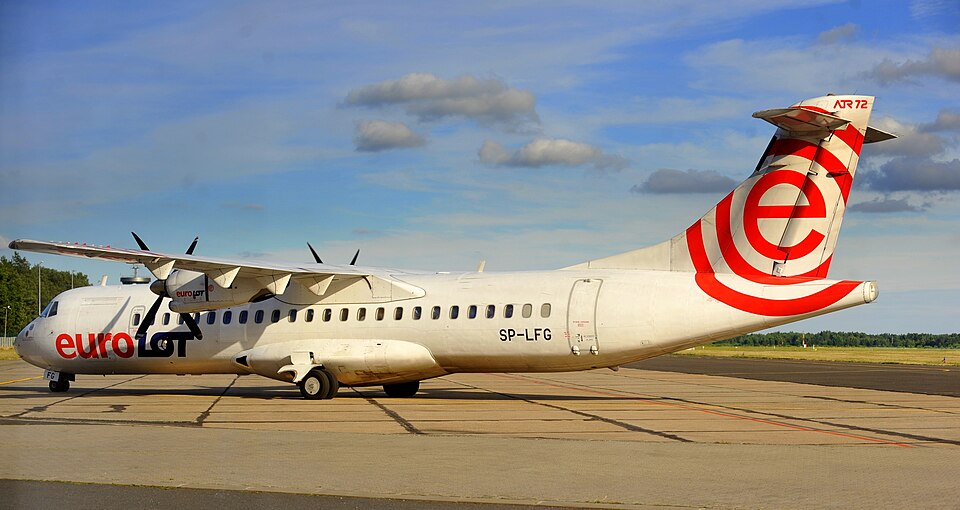
The ATR 72 is a high-wing turboprop aircraft built by ATR, a company jointly owned by Airbus and Italy's Leonardo. The name comes from its usual seat count of around 72, though cabins range from the high 60s to the high 70s. As of November 2025, around 775 ATR 72s were in airline service, which shows how trusted it is.
This plane is a champion of low cost. On short hops, its two propellers sip fuel compared to a jet. That makes it a favorite for island chains, smaller European routes, and places where every gallon counts. It is built at a final assembly line in Toulouse, France.
The ATR 72 also handles short runways well, so it reaches airports that jets cannot. Its calm, steady performance on quick flights has made it one of the most popular small turboprops in the world.
3. ATR 42
The ATR 42 is the smaller sibling of the ATR 72. It seats roughly 40 to 50 people and shares most of its parts and design with the bigger model. The two planes are even built on the same line, which helps keep both in production.
For years, the ATR 42 has been one of the only brand-new 50-seat turboprops you can still order. That gives it a special role. When a route is too thin for a 70-seat plane but still needs an airliner, the ATR 42 fits perfectly.
It is a common sight on remote routes, in mountainous regions, and at airports with rough or short runways. Operators value it because it can fly into places that bigger aircraft simply cannot reach.
Fun Fact: ATR turboprops are widely known for serving destinations with very basic airfields. They can often operate without much ground support equipment, which makes them a lifeline for isolated communities.
4. Bombardier CRJ900
The Bombardier CRJ900 is a slim regional jet that seats roughly 76 to 90 passengers. It belongs to the wider CRJ family, which has been a backbone of regional flying for decades. The CRJ900 is the stretched, larger member that many US carriers still fly every day.
Production of new CRJ jets has wrapped up. The final Bombardier CRJ to be produced, a CRJ900, finished production and was delivered to SkyWest Airlines on 28 February 2021. The CRJ program is now supported by Japan's Mitsubishi Heavy Industries. Even so, large fleets keep flying under brands like Delta Connection and American Eagle.
The CRJ900 is known for its jet speed and its low-slung, sleek shape. The cabin is narrower than the Embraer's, with the seats arranged two on one side and two on the other. It is a true workhorse that has carried millions of regional flyers.
5. De Havilland Canada Dash 8-400
The Dash 8-400, often called the Q400, is the fast one among turboprops. It seats roughly 70 to 90 passengers and cruises noticeably quicker than most propeller planes, which lets it keep pace with some jets on short routes. That speed is its signature trait.
It came from Bombardier and is now owned by De Havilland Canada. The "Q" in its old name stood for "quiet," because the plane uses a special system to cut cabin noise and vibration. The result is a smoother, calmer ride than older turboprops offered.
You will spot the Dash 8-400 around the world, from Canada and Europe to Australia and the Pacific islands. New production has been paused while the maker works through its plans, but the existing fleet remains busy. Its mix of speed, capacity, and short-field skill keeps it in demand.
6. Embraer ERJ-145
The Embraer ERJ-145 is a small, tube-shaped regional jet with two engines mounted at the rear. It seats around 37 to 50 people in a single row of seats on one side and a double row on the other. That layout makes it instantly recognizable.
This little jet helped open up thin routes that could not support bigger planes. For years it was a common feeder aircraft in the United States and beyond, linking small cities to major hubs. While newer types have taken over many of its routes, plenty of ERJ-145s still fly commercial and special-mission jobs.
The ERJ-145 matters because it proved that a 50-seat jet could make money on routes once served only by propellers. It pushed the whole regional jet idea forward. To see where these smaller jets sit within the bigger picture, the guide to popular small planes offers useful context.
Pro Tip: When you book a regional flight, check the aircraft type in your itinerary. If you prefer a quiet, jet-smooth ride, look for an Embraer. If you do not mind some propeller hum and want a window that lines up nicely, a turboprop seat can be a great pick.
7. Embraer E190 and E195-E2
The Embraer E190 and the newer E195-E2 sit at the larger end of the small commercial world. They seat roughly 96 to 146 people depending on the model and layout. These are still narrow-body planes, but they push right up against the size of a small mainline jet.
The E2 versions use modern, fuel-saving geared engines and updated wings. They are popular with airlines that want a plane bigger than a regional jet but smaller than a full Airbus or Boeing. On 8 September 2025, Embraer delivered the 1,900th E-Jet, an E190-E2 to Virgin Australia Regional Airlines.
These jets give airlines a smart middle option. They can serve routes that are too big for a 76-seat regional jet but too small for a 180-seat narrow-body. That flexibility makes them a rising star in modern fleets.
8. Cessna 208 Grand Caravan
The Cessna 208 Grand Caravan is a single-engine turboprop that usually carries about 9 to 14 passengers. It is a high-wing plane with fixed landing gear and a strong, simple build. That simplicity is the whole point.
The Grand Caravan thrives where runways are short, rough, or even made of water with float gear attached. It serves island hops, bush routes, scenic flights, and small-town commuter runs all over the world. Caravans have been used for flight training, commuter airlines, VIP transport, air cargo, skydiving and humanitarian missions.
Because it is so versatile and easy to maintain, the Caravan is one of the best-selling turboprops ever made. The same plane that flies passengers in the morning can haul boxes in the afternoon. It also shows up often among the best small turboprop planes used in commercial work.
9. Beechcraft 1900D
The Beechcraft 1900D is a 19-seat twin-turboprop that became a classic commuter airliner. It has a pressurized cabin, which is rare at this small size, and a tall interior that lets passengers stand upright while boarding. Two small winglets and engine pods give it a tidy, businesslike look.
Production ended back in the early 2000s, with a total of 695 Beechcraft 1900 aircraft of all variants built across its run. Yet many are still flying today with commuter and cargo operators. The plane found a sweet spot for routes with steady but modest demand.
The 1900D earned its place by being dependable and easy to operate. For small airlines linking quiet towns to bigger airports, it has long been a trusted choice. It remains a familiar face among classic single-engine designs and small twins alike.
10. De Havilland Canada DHC-6 Twin Otter
The Twin Otter is one of the most beloved small planes in aviation. This twin-turboprop seats about 18 to 20 passengers and can take off and land in remarkably short distances. It can be fitted with regular wheels, floats for water, or skis for snow. That makes it a true go-anywhere machine.
It first flew in the 1960s and is still being built today. The newest version, the Twin Otter Classic 300-G, came with modern Garmin avionics and a refreshed cabin. The aircraft's fixed tricycle undercarriage, STOL capabilities, twin turboprop engines and high rate of climb have made it a successful commuter airliner, typically seating 18–20 passengers.
The Twin Otter shines in places few other planes can reach. Think Arctic outposts, tropical island chains, and tiny mountain strips. It connects remote communities that would otherwise have no air service at all.
Looking for one of these aircraft yourself? Flying411 lists new and used turboprops, jets, and commuter planes from makers like Cessna, Beechcraft, and more, with engines and certified parts available too.
What Makes a Small Commercial Plane Great
Not every small plane becomes an airline favorite. The ones that do tend to share a handful of traits. When an airline shops for a regional aircraft, these are the things that matter most.
- Right-sized cabin: The plane must match the route. Too many empty seats burns money. Too few seats leaves money on the table.
- Low operating cost: Fuel, maintenance, and crew add up. Efficient planes win the long game.
- Short-field skill: Many small airports have short runways. A plane that needs less pavement reaches more places.
- Reliability: A plane that rarely breaks keeps schedules tight and passengers happy.
- Comfort: Big windows, quiet cabins, and decent legroom keep travelers coming back.
- Easy maintenance: Simple, well-supported planes spend more time flying and less time in the shop.
- Strong support network: Parts and trained mechanics need to be available worldwide.
These factors explain why the same names keep showing up across airline fleets. A plane that nails most of these traits becomes a long-term success, even decades after it first flew.
Keep in Mind: A plane that looks great on paper can still struggle if parts are hard to find. Support and spares matter as much as speed and seats. That is one reason older, well-supported designs stay in service for so long.
How Much Do Small Commercial Planes Cost
Costs vary a lot, and that is the honest answer. A used single-engine commuter turboprop sits in a very different price range than a brand-new regional jet. The market shifts with age, condition, hours flown, and how the cabin is set up.
Roughly speaking, the smallest commuter planes like a used Grand Caravan tend to land in the low millions. Mid-size turboprops cost more. New regional jets run into the tens of millions at list price. Operating costs follow a similar pattern, since bigger and faster planes burn more fuel and need more upkeep.
A few cost factors to keep in mind:
- Purchase price: New planes cost far more than older used ones.
- Fuel burn: Turboprops usually beat jets on short trips.
- Maintenance: Older planes may need more frequent checks.
- Crew and training: Some planes share pilot type ratings, which cuts training costs.
- Resale value: Popular, well-supported types tend to hold value better.
For a fuller breakdown of pricing across the category, the rundown of what small planes cost walks through the numbers in plain terms. Charter and ticket prices, of course, reflect all of these costs in the end.
Browse current listings and connect with certified sellers on Flying411 to see real-world prices on the small commercial planes that fit your mission.
Are Small Commercial Planes Safe
This is one of the most common questions travelers ask, and it is a fair one. The short answer is that small commercial planes flown by licensed airlines follow strict rules, regular inspections, and trained-crew requirements, just like big jets do.
Modern regional aircraft are built and maintained to high standards. Many of the planes on this list have flown millions of hours across the globe. Like any aircraft, they have had incidents over the years, but the overall record for professionally flown regional planes is strong.
A few points worth understanding:
- Same oversight: Airline-operated small planes follow the same safety authorities as large jets.
- Trained crews: Regional pilots go through formal training and checks.
- Weather sense: Smaller planes fly lower, so weather can feel bumpier, but pilots plan around it.
- Modern systems: Newer models carry advanced avionics that boost safety.
If the topic interests you, the deeper question of how small planes compare on safety is worth a read, along with the look at the safest small planes in service. The takeaway is simple. Flying on a small commercial plane with a real airline is a normal, well-regulated part of air travel.
Heads Up: A bumpier ride is not the same as a less safe ride. Small planes fly lower, where you feel more of the weather, but that motion is usually just the air, not a sign of trouble. Pilots train hard for exactly these conditions.
What Comes Next for Small Commercial Planes
The small plane world keeps moving. Makers are working on cleaner engines, quieter cabins, and even electric power for the shortest routes. The goal is to keep regional flying affordable while cutting emissions and noise.
New turboprop designs are on the drawing board, aimed at being even more fuel-friendly than today's models. At the same time, several companies are testing small electric planes built for very short hops. These could one day handle island and short-city routes with little to no fuel.
Newer commuter planes are arriving too. The Cessna SkyCourier, a 19-seat twin turboprop, recently joined the field, giving operators a fresh option for cargo and passenger work. The mix of proven veterans and fresh designs keeps the category healthy.
For now, the trusted names on this list still rule the skies. They have earned their place through years of steady, dependable service. The next generation will have big shoes to fill.
Quick Tip: If you love watching regional planes, plan a visit to a smaller airport rather than a giant hub. You will often see turboprops and regional airliners up close, loading and taxiing just steps away from the terminal windows.
Conclusion
The best small commercial planes prove that you do not need a giant jet to do important work. From the comfy Embraer E175 to the rugged Twin Otter, these aircraft keep small towns, islands, and remote regions connected to the wider world. Each one is built around a clear mission, a specific passenger capacity, and the kinds of short-haul routes it serves best.
Turboprops handle the shortest, most demanding hops with low costs and short-field skill. Regional jets bring speed and smooth comfort to slightly longer runs. Tiny commuter planes reach the places nothing else can. Together they form the quiet backbone of everyday air travel.
Curious flyers, future buyers, and lifelong aviation fans all have good reason to know these planes by name. The next time you board a smaller aircraft, you will understand exactly what you are stepping onto and why it is there.
Ready to look at these aircraft for real? Head over to Flying411 to browse small commercial planes, engines, and parts, and connect with the aviation pros who keep them flying.
FAQs
What is the smallest plane an airline can fly commercially?
Some scheduled commuter airlines fly aircraft seating as few as nine passengers, such as the Cessna Grand Caravan. These are still flown by licensed operators under airline rules, just with very small cabins.
Why do some airlines still use propeller planes instead of jets?
Turboprops burn less fuel on very short flights and can use shorter runways, which makes them cheaper and more practical for many regional routes. On the shortest hops, a propeller plane often beats a jet on cost.
What is the difference between a regional jet and a mainline jet?
A regional jet is smaller, usually seating around 50 to 100 people, and flies short feeder routes into hubs. A mainline jet like a Boeing 737 is larger and flies busier, longer routes with many more seats.
Which small commercial plane is the most common in the United States?
The Embraer E175 is among the most widely flown regional jets in the United States, operating under brands like American Eagle, United Express, and Delta Connection. Its no-middle-seat layout makes it a passenger favorite.
Can small commercial planes fly long distances?
Most are built for short hops under a couple of hours, not long-haul travel. Their strength is connecting nearby cities and remote areas efficiently rather than crossing oceans.