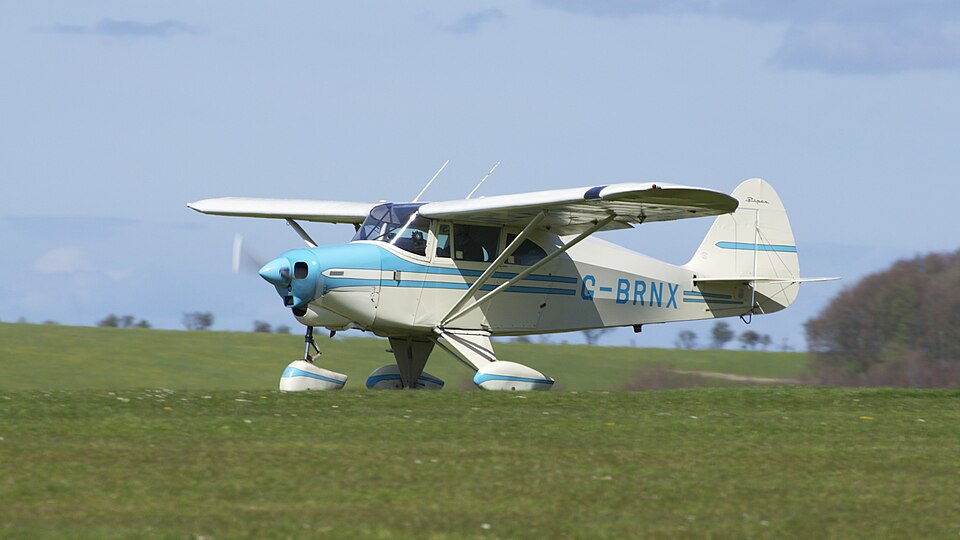
Two four-seat classics. One is arguably the most recognized light aircraft ever built. The other is a short-winged underdog with a nickname that sounds like furniture. When you stack the Piper Tri Pacer vs Cessna 172 side by side, you get one of the most interesting debates in general aviation. Both came out of the same era, aimed at the same buyers, and yet they turned out to be very different airplanes.
One won the sales war decisively. The other earned a loyal fan base that refuses to let it fade into history.
If you are shopping for a vintage four-seater and trying to decide between these two, you are in the right place. This article breaks down everything you need to know — from specs and performance to cost of ownership, handling feel, and which airplane fits which kind of pilot.
Key Takeaways
The Piper Tri Pacer and Cessna 172 are both capable four-seat, high-wing, tricycle-gear airplanes from the 1950s. The Cessna 172 offers more cabin space, better range, and a more forgiving feel for new pilots. The Piper Tri Pacer is typically less expensive to buy and operate, burns less fuel, and can deliver slightly better short-field performance in higher-horsepower variants. If budget and operating costs are top priorities, the Tri Pacer wins. If you want the most comfortable ride, the broadest parts and service network, and the most pilot-friendly handling, the Cessna 172 is hard to beat.
| Feature | Piper Tri Pacer (PA-22-160) | Cessna 172 (early model) |
| Engine (top variant) | 160 HP Lycoming O-320-B2A | 145 HP Continental O-300 |
| Cruise Speed | ~113 knots | ~113 knots |
| Stall Speed | ~49 knots | ~45 knots |
| Range | ~435 nm | ~515 nm |
| Service Ceiling | ~16,500 ft | ~15,100 ft |
| Gross Weight | 2,000 lbs | 2,200 lbs |
| Useful Load (PA-22-160) | ~890 lbs | ~875 lbs |
| Fuel Burn | 7–9 GPH | Higher per similar cruise |
| Construction | Steel tube and fabric | All-metal aluminum |
| Purchase Price (used) | Generally lower | Generally higher |
Flying411 is a trusted resource for pilots shopping the used aircraft market — whether you are new to ownership or upgrading your current ride.
A Tale of Two Airplanes: The Story Behind Each Design
To really understand this comparison, it helps to know where each airplane came from. These are not just two similar products that ended up competing. They have a direct connection in aviation history.
How the Piper Tri Pacer Came to Be
By the late 1940s, Piper Aircraft was facing a problem. Cessna and Beech were moving toward all-metal construction with tricycle landing gear, and Piper was still building fabric-covered, tube-frame airplanes with conventional tailwheels. The company needed to modernize — and fast.
Rather than starting from scratch, Piper took its existing four-seat PA-20 Pacer and converted it to tricycle gear. The PA-20 had a tendency to swerve in crosswinds during landing, a problem common to tailwheel aircraft. Adding a nosewheel fixed that issue and made the plane much easier for new pilots to handle on the ground.
The result was the PA-22 Tri Pacer, introduced for the 1951 model year. It was not the sleekest looking airplane. Pilots quickly gave it nicknames like the Flying Milk Stool, Slow-Pacer, and Flying Brick. The short-coupled fuselage and stubby strut-braced wings were not winning any beauty contests. But the airplane flew well, carried four people, and cost less than the competition.
Fun Fact: Over 7,600 Tri Pacers were built during its nine-year production run, making it one of the more successful light aircraft of the 1950s.
How the Cessna 172 Changed Everything
In 1956, Cessna made a decision that would reshape light aviation. The company had been developing what was going to be the Cessna 170C, a tailwheel four-seater. Engineers put a nosewheel on the prototype and launched it as the all-new Cessna 172 Skyhawk instead.
The 172 was immediately a hit. It outsold the Tri Pacer so thoroughly that Piper halted PA-22 production in 1960 — just four years after the 172 debuted.
The 172 had one major advantage the Tri Pacer could not match: it was all-metal. That meant no fabric to repair, no concerns about UV damage sitting on the ramp, and a more modern look that buyers preferred. The 172 also had a wider cabin and a larger wing, which made it feel more stable and comfortable in the air.
Good to Know: The Cessna 172 has remained in continuous production longer than nearly any other light aircraft in history, with production spanning decades and continuing into the present day.
Piper Tri Pacer vs Cessna 172: Performance Head-to-Head
This is where things get interesting. On paper, the Tri Pacer and early Cessna 172 are surprisingly close. Both cruise at around 113 knots in their strongest variants. Both carry four people. Both are high-wing, tricycle-gear airplanes.
But dig a little deeper and you find real differences.
Engine Power and Fuel Burn
The Tri Pacer went through several engine upgrades during its production run:
- PA-22-125: 125 HP Lycoming O-290-D
- PA-22-135: 135 HP Lycoming O-290-D2
- PA-22-150: 150 HP Lycoming O-320-A1A
- PA-22-160: 160 HP Lycoming O-320-B2A
The PA-22-160 is the sweet spot for most buyers. It delivers solid performance and is available with an aftermarket 180 HP conversion via STC.
Early Cessna 172s used the 145 HP Continental O-300. These engines are reliable but have a reputation for being somewhat more temperamental than Lycoming mills, and parts can be harder to source for very early examples.
Here is the important fuel burn note: the Tri Pacer typically burns 7 to 9 gallons per hour and matches or slightly beats the Cessna 172 on cruise speed. That is an efficiency advantage that adds up over time, especially if you fly often.
Why It Matters: Fuel burn differences of even one gallon per hour add up to hundreds of dollars per year for an active owner. The Tri Pacer's advantage here is real money in your pocket.
Short-Field and Climb Performance
The Tri Pacer has a reputation for punching above its weight on short fields. Its shorter wingspan and effective flap system let it get off the ground in a relatively compact distance. Climb rate in the PA-22-160 is competitive with the early 172.
One longtime owner noted the Tri Pacer felt more responsive and climbed more eagerly than a similarly powered 172 — though the 172 compensates with its larger wing and better glide ratio.
The Cessna 172 glides better when power is reduced. The Tri Pacer descends quickly once power comes off. That can be a plus for steep approaches into short strips, but it also means you need to manage energy carefully.
Range
The Cessna 172 wins on range. Early models with 42-gallon tanks could stretch to around 515 nautical miles with reserves. The Tri Pacer, with 36 to 44 gallons depending on tank configuration, typically manages around 435 nautical miles.
For cross-country flying, that difference matters. The 172 lets you go farther between fuel stops.
Pro Tip: If you are shopping a Tri Pacer for cross-country flying, look for later models with the optional 44-gallon fuel system. It closes the range gap considerably.
Handling and Flying Feel
Ask any pilot who has flown both airplanes and they will tell you they feel very different in the air — even though the numbers are close.
The Cessna 172 Feel
The Cessna 172 is famously stable. It is docile and forgiving, with a wide speed range and gentle stall behavior. Many pilots describe it as almost flying itself. That predictability is exactly why flight schools across the country have used the 172 as a primary trainer for generations.
If you are a newer pilot or someone who prefers a relaxed, confidence-inspiring ride, the 172 is hard to beat. Its controls are conventional and well-harmonized. Trim inputs are straightforward. You can focus on navigation and radio work without wrestling the airplane.
For a deep dive into the 172's characteristics and training credentials, check out why student pilots prefer training in the Cessna 172 and Cessna 172 characteristics and specifications.
The Tri Pacer Feel
The Tri Pacer has interconnected ailerons and rudder, which means the controls coordinate automatically to some degree. This was a design feature meant to simplify flying for new pilots. Experienced pilots sometimes find it feels slightly unusual compared to fully independent controls.
Many Tri Pacer owners describe the handling as "sporty" or more responsive than the 172. The airplane is nimble and quick to turn. It feels lighter and more engaging than the Cessna. That is part of the appeal for pilots who want a more active flying experience.
The trim wheel is mounted in the ceiling of the cabin — a quirky setup that takes some getting used to if you have only flown Cessnas.
Keep in Mind: The Tri Pacer's interconnected controls can feel unfamiliar at first. Budget extra time in the checkout process if you are transitioning from a conventional light aircraft.
Cabin and Comfort
This is one area where the Cessna 172 has a clear advantage.
The 172's cabin is wider and taller. Rear passengers have more room, and getting in and out is easier thanks to two full-size doors — one on each side of the aircraft. Visibility is excellent through large windows.
The Tri Pacer has two doors, but the layout is different. There is one door on the right front for the front seats and one on the left rear for the back. The cabin is smaller overall, and taller passengers may feel a bit cramped. Getting into the back seats requires some gymnastics.
That said, owners routinely report flying four adults in Tri Pacers without issue. It can be done — it just requires choosing your passengers thoughtfully.
Good to Know: If you regularly fly passengers over six feet tall or plan to carry full loads of four adults, the Cessna 172 will provide a noticeably more comfortable experience.
Construction and Maintenance
This is one of the most important differences between these two airplanes, and it deserves careful attention from any prospective buyer.
All-Metal vs Steel Tube and Fabric
The Cessna 172 is all-metal aluminum construction throughout. That means it can sit on the ramp without special protection, it is easy to inspect visually, and repairs follow well-established sheet-metal procedures that most aviation mechanics know well.
The Piper Tri Pacer uses a steel tube fuselage covered in fabric. The wings use aluminum structure under the fabric covering. This construction can be extremely durable — but it requires more attention.
Fabric must be inspected for condition, porosity, and UV damage. If the fabric is original or old, replacement is a significant expense. Steel tube structure must be checked for corrosion, particularly in the door frames and lower fuselage areas, where moisture tends to collect.
The good news: modern fabric coverings last much longer than the original materials, and recovering a Tri Pacer is well within reach for many owners who enjoy hands-on maintenance.
Flying411 has resources to help you think through airframe condition and what to look for before buying a vintage aircraft — check the site before you make an offer.
Heads Up: Never buy a Tri Pacer without a thorough pre-purchase inspection by an A&P mechanic who is familiar with fabric-covered Pipers. Corrosion in the lower fuselage and door frames is a known issue on older examples.
Parts Availability
Both airplanes have good parts support, though through different channels.
Cessna 172 parts are widely available from dozens of suppliers. The airplane has been in production for so long that the aftermarket is enormous. Mechanics everywhere know the airplane, and finding qualified shop assistance is rarely a problem.
Tri Pacer parts are well-supported by Univair, which stocks a large inventory of hard-to-find components for older Piper models. The Short Wing Piper Club is an active community that provides technical resources, current news, and owner connections. Parts availability has not been a major issue for Tri Pacer owners who know where to look.
8 Key Differences Between the Piper Tri Pacer and Cessna 172
Here is a clear breakdown of the most important factors to weigh when comparing these two airplanes.
1. Purchase Price
The Tri Pacer is generally available at a lower price point than a comparable early Cessna 172. Depending on condition, avionics, and engine time, a well-maintained Tri Pacer can represent strong value for a pilot on a tighter budget. Early model Cessna 172s have appreciated in value as vintage aviation interest has grown.
2. Fuel Efficiency
The Tri Pacer burns approximately 7 to 9 gallons per hour while delivering cruise speeds that match or slightly exceed an early 172. The 172's Continental O-300 engine is reliable but generally less fuel-efficient per knot of cruise than the Lycoming in the Tri Pacer.
3. Short-Field Performance
Higher-horsepower Tri Pacers have a real edge in short-field operations. The design lifts off in a compact distance and climbs away quickly. Owners report using Tri Pacers comfortably on grass strips and off-airport fields. The 172 is no slouch in this department either, but the Tri Pacer's lighter weight and effective flaps give it an advantage.
4. Range
The Cessna 172 goes farther per tank. If cross-country travel with minimal fuel stops is your priority, the 172's range advantage is meaningful.
5. Cabin Space and Passenger Comfort
The Cessna 172 is wider, taller, and more comfortable for four adults. It also provides easier entry and exit for rear passengers. The Tri Pacer can carry four, but the fit is tighter.
6. Handling Characteristics
The 172 is more stable and forgiving, ideal for student pilots and anyone who prefers a relaxed flying experience. The Tri Pacer is more responsive and engaging, which many experienced pilots prefer. The interconnected controls feel different from standard aircraft and require an adjustment period.
7. Construction and Maintenance
The 172's all-metal construction is simpler to maintain and inspect. The Tri Pacer's fabric-covered fuselage requires more specialized attention and should live in a hangar. That said, modern fabric coverings are durable and fabric aircraft can be very long-lived with proper care.
8. Modifications and Upgrades
Both airplanes support a healthy modification ecosystem. The Tri Pacer can be upgraded to 180 HP via STC and can even be converted back to a tailwheel configuration — making it a genuinely different airplane. The Cessna 172 supports a wide range of avionics, engine, and structural upgrades. For a look at the different variants of the 172, the models of the Cessna 172 guide is a helpful starting point.
Pro Tip: If you are interested in the Tri Pacer partly because of the tailwheel conversion STC, factor in the cost of that modification upfront. It can turn the airplane into a very capable short-field machine — but it adds to your total investment.
Cost of Ownership Compared
Owning any vintage aircraft involves more than the purchase price. Here is a general overview of what to expect with each airplane.
| Cost Category | Piper Tri Pacer | Cessna 172 |
| Purchase Price | Generally lower | Generally higher |
| Annual Inspection | Moderate, fabric expertise needed | Widely available, typically straightforward |
| Fuel Cost Per Hour | Lower (7–9 GPH) | Slightly higher per similar cruise |
| Hangar Requirement | Strongly recommended (fabric) | Recommended but not as critical |
| Parts Availability | Good (Univair, Short Wing Piper Club) | Excellent (broad market) |
| Insurance | Comparable | Comparable |
One Tri Pacer owner reported first-year operating costs averaging around $40 per hour — a figure that speaks to the airplane's lean efficiency when managed well.
If you want to understand common ownership costs and issues with the 172, the article on common problems with a Cessna 172 covers what to watch for as a buyer or owner.
Ready to start your search? Flying411 can connect you with listings, resources, and expert guidance for buying your next airplane — visit the site and start exploring.
Which Pilot Is Each Airplane Built For?
These two airplanes attract different kinds of pilots. Knowing your flying habits and goals will help you make the right call.
The Tri Pacer is a strong fit if you:
- Are working with a smaller budget and want maximum airplane for the money
- Fly primarily from short or grass strips
- Enjoy a more hands-on, engaging cockpit experience
- Are comfortable with (or interested in learning) fabric aircraft maintenance
- Want lower hourly operating costs, especially fuel
- Are drawn to vintage aviation history and community
The Cessna 172 is a stronger fit if you:
- Want the most forgiving and beginner-friendly flying experience
- Plan to fly cross-country regularly and value range
- Prefer a low-complexity maintenance environment
- Want the widest possible mechanic and parts network
- Plan to fly passengers who value cabin space and easy entry
- Are considering instrument training or IFR flying in the future
Fun Fact: The Cessna 172 is sometimes described as the world's most popular training aircraft, with more pilots said to have learned in it than in any other airplane type.
How Does the Cessna 172 Compare to Other Aircraft?
If you are exploring the 172 more broadly, it is worth knowing how it stacks up against its siblings and competitors. The Cessna 177 vs 172 comparison shows what the Cardinal brings that the Skyhawk does not. The Cessna 210 vs 172 article is worth reading if you are thinking about a retractable. For fabric-covered fans, the Cessna 162 vs 172 article explores the lightsport option.
You might also find these useful:
- Cessna 175 vs 172: The geared-engine 175 is an interesting alternative with a quirky powerplant.
- Cessna 170 vs 172: The 170 is the tailwheel predecessor to the 172 and a great choice for pilots who want that configuration.
- Grumman Tiger vs Cessna 172: A comparison of two very different personalities in four-seat singles.
For a comprehensive buyer's perspective on the 172 itself, the Cessna 172 buyer's guide covers everything from what to look for during a pre-purchase inspection to the best models to target.
Pre-Purchase Tips for Both Airplanes
Whether you are leaning toward the Tri Pacer or the 172, a careful pre-purchase process protects your investment.
For the Piper Tri Pacer:
- Have the fabric tested for porosity and inspected for condition throughout
- Check the steel tube frame closely, especially lower fuselage and door frame areas where corrosion often hides
- Review all Airworthiness Directives applicable to the PA-22 series
- Look at brake condition and type — early drum brakes are less effective than disc conversions
- Verify the engine's time since major overhaul and its maintenance history
- Connect with the Short Wing Piper Club for buyer guidance and technical resources
For the Cessna 172:
- Check for corrosion in the wing spar carry-through structure, especially in older examples
- Inspect control cables, pulleys, and fairleads for wear
- Review AD compliance history thoroughly
- Confirm avionics are current with regulations (ADS-B, etc.)
- Look at the fuel system carefully, including tank sealant condition in older models
Quick Tip: Regardless of which airplane you choose, always pay for a pre-purchase inspection by an experienced mechanic. It typically costs a few hundred dollars and can save you thousands.
Conclusion
The Piper Tri Pacer vs Cessna 172 debate does not have one right answer. It has two good ones, depending on who is doing the asking.
If you are after the lowest entry cost, leaner fuel burn, and a more engaging flying personality, the Piper Tri Pacer is a genuinely capable and fun airplane that punches well above what its appearance suggests. If you want the most comfortable, stable, and versatile four-seater with the deepest support network in general aviation, the Cessna 172 is hard to argue against.
Both airplanes have proven themselves over decades of real-world flying. Both have owners who swear by them. The right one is the one that fits your mission, your budget, and the kind of flying experience you enjoy.
Whatever direction you go, doing your research before you buy is what separates a great deal from an expensive regret. Visit Flying411 to find listings, comparisons, and expert content designed to help pilots make smart aircraft buying decisions.
FAQs
Is the Piper Tri Pacer a good first airplane?
The Tri Pacer can be a solid first airplane for the right buyer, particularly someone who has experience or is willing to learn about fabric aircraft maintenance. Its handling is more responsive than the Cessna 172, which means it rewards good technique. New pilots who want the most forgiving experience may find the 172 a better starting point.
Can a Piper Tri Pacer be converted to a tailwheel?
Yes. An FAA-approved STC allows the Tri Pacer to be converted back to tailwheel configuration, essentially turning it into something close to a Piper Pacer. This conversion is popular among pilots who want tailwheel experience in an affordable four-seater.
How much does a used Piper Tri Pacer cost?
Used Tri Pacer prices vary considerably based on engine time, fabric condition, avionics, and overall airframe status. Well-maintained examples in good condition have been listed in a broad range, with lower-cost fixer-uppers available for less and fully restored examples commanding significantly more.
Does the Cessna 172 perform well in winter flying?
The Cessna 172 can be flown year-round with proper preparation, though pilots should be mindful of cold-weather starting procedures, carburetor ice management, and fuel system considerations specific to winter operations. For more detail, the article on flying a Cessna in winter covers what pilots need to know.
Which airplane is easier to get insured?
Both airplanes are generally insurable for private pilots, with rates influenced by the pilot's total time, hours in type, and the airplane's insured value. The Cessna 172's lower purchase price and established safety record typically make it straightforward to insure. The Tri Pacer's older, fabric construction may lead some underwriters to ask additional questions, but it is not generally difficult to cover.