If you have ever stood on a flight line looking at two high-wing Cessnas and asked yourself, "What is actually the difference between these two?" you are in good company. The Cessna 162 Skycatcher and the Cessna 172 Skyhawk might look like close cousins at a glance, but they were built for very different purposes. One is a nimble, lightweight sport flyer that barely tips the scales. The other is one of the most trusted four-seat trainers in aviation history.
Choosing between them matters, especially if you are a student pilot, a first-time buyer, or someone eyeing a budget-friendly entry into personal aviation. A clear, side-by-side look at the Cessna 162 vs 172 will help you cut through the noise and make a smart decision. From engine power and useful load to pilot certificates and long-term ownership costs, there is a lot to unpack here — and that is exactly what this guide does.
Key Takeaways
The Cessna 172 is the better all-around choice for most pilots. It carries four seats, more useful load, and is backed by one of the largest support networks in general aviation. The Cessna 162 is a two-seat Light Sport Aircraft that costs less to operate but comes with meaningful limitations, including a sport pilot certificate requirement for solo flight, a limited used-parts supply, and a production run that ended in 2013. If your goal is a private pilot certificate, cross-country travel, or a plane you can grow with, the 172 wins. If budget is your top concern and sport flying is your only goal, the 162 is worth a look.
| Feature | Cessna 162 Skycatcher | Cessna 172 Skyhawk |
| Seats | 2 | 4 |
| Engine | 100 hp Continental O-200D | 160–180 hp Lycoming |
| Cruise Speed | ~116 knots | ~124 knots |
| Range | ~350 nm | ~640 nm |
| Useful Load | ~430 lb | ~800–917 lb |
| Max Takeoff Weight | 1,320 lb | 2,550 lb |
| Certificate Required | Sport Pilot or higher | Private Pilot or higher |
| Still in Production | No (ended 2013) | Yes |
| Fuel Burn | ~6 GPH | ~8–10 GPH |
| Used Market Price (approx.) | $40,000–$70,000 | $40,000–$300,000+ |
Flying411 helps pilots across the U.S. buy and sell general aviation aircraft with confidence. Whether you are eyeing a sporty two-seater or a well-equipped four-seat trainer, Flying411 is a great place to start your search.
A Quick Look at Both Aircraft
Before diving into the detailed comparison, it helps to understand what each aircraft was designed to do from the start. These two planes are not really competitors in the traditional sense. They were built to fill completely different roles. Once you understand that, the right choice for your situation becomes much easier to see.
The Cessna 172 Skyhawk: The World's Most Popular Aircraft
The Cessna 172 Skyhawk is arguably the most famous small airplane ever built. First flown in 1955 and delivered to customers starting in 1956, the 172 has gone on to become the single most-produced aircraft in history, with well over 44,000 units built across dozens of variants and model years.
It was designed as a four-seat, single-engine, high-wing trainer and personal aircraft. It has been the go-to training platform at flight schools across the United States for decades. The 172's broad support network, long parts chain, and deep pool of certified flight instructors familiar with the type make it one of the most accessible aircraft for new pilots.
For a deep dive into buying one, the Cessna 172 buyer's guide at Flying411 covers everything you need to know about the purchasing process.
Fun Fact: The Cessna 172 is said to have logged more flight hours than any other aircraft type in history, with well over 60 million hours attributed to the fleet over the decades.
The Cessna 162 Skycatcher: A Short-Lived But Interesting Chapter
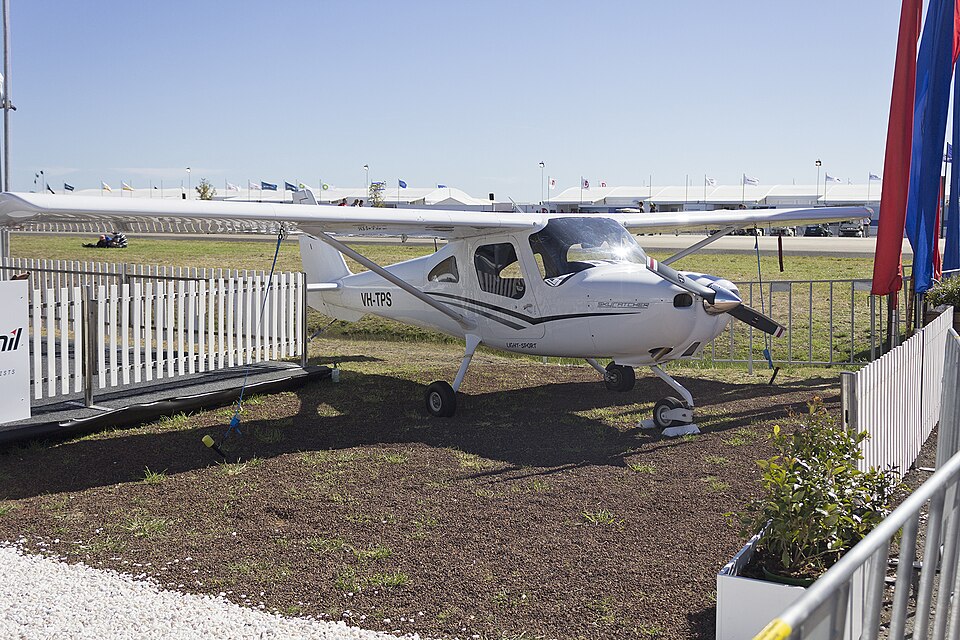
The Cessna 162 Skycatcher has a much shorter and more complicated story. Introduced in 2007 and certified as a Light Sport Aircraft (LSA), the 162 was designed to be an affordable, modern two-seat trainer that could take advantage of the FAA's then-new sport pilot certificate. Cessna hoped it would attract new pilots and replace the aging Cessna 152 in flight school fleets.
The Skycatcher used a 100 hp Continental O-200D engine, featured a modern Garmin G300 glass cockpit, and was built to meet the LSA maximum gross weight limit of 1,320 pounds. Initial enthusiasm was strong, with reportedly over 1,000 orders placed. But production challenges, price increases, and payload limitations led to widespread cancellations. Production ended in 2013, with only a few hundred aircraft completed.
Cessna 162 vs 172: The Full Comparison
Here is where we get into the details that actually matter when making a decision. Each category below highlights a key difference between these two aircraft.
Category and Certification Requirements
This is perhaps the most important distinction between the two planes. The Cessna 162 is an FAA-certified Light Sport Aircraft. That means pilots can fly it under a sport pilot certificate, which requires fewer training hours and a simpler medical standard (a valid driver's license can substitute for a third-class medical in many cases).
The Cessna 172, by contrast, requires at least a private pilot certificate. That involves more training hours, a written exam, a practical exam, and a third-class FAA medical certificate.
What does this mean in practice? If your only goal is to fly recreationally and locally, the sport pilot route is cheaper and faster to achieve. But if you ever want to fly at night, use instruments, carry passengers in weather, or build toward a commercial or instrument rating, you need a private pilot certificate — and the 172 is the aircraft that will take you there.
Keep in Mind: Hours logged in the Cessna 162 under a sport pilot certificate do not automatically count toward a private pilot certificate if flight conditions or night currency are not maintained. Always check with your CFI about how your training hours transfer.
Engine Power and Performance
The Cessna 162 runs on a 100 hp Continental O-200D engine with a fixed-pitch propeller. The Cessna 172 uses a Lycoming engine in the 150 to 180 hp range depending on the model year, most commonly the 160 hp O-320 or the 180 hp IO-360.
More horsepower translates to:
- A higher cruise speed (around 124 knots for the 172 vs. around 116 knots for the 162)
- Better climb performance in hot or high-altitude conditions
- More useful load capacity
- Greater ability to handle crosswinds and gusty conditions
The 162 is lighter and more nimble, which makes it feel responsive and fun in calm conditions. But it can struggle in turbulence, strong crosswinds, or at high-density altitude airports. The 172 handles those conditions with considerably more authority.
For a detailed look at how the 172 performs across conditions and model variants, check out Cessna 172 characteristics and specifications.
Pro Tip: If you are training at a high-elevation airport in the western U.S., the extra power of the 172 is not just a nice feature — it can be a safety consideration. The 162's 100 hp engine loses power with altitude, which can affect climb and go-around performance significantly.
Seating Capacity and Useful Load
This is one of the most practical differences between the two aircraft. The Cessna 162 seats two people side by side and has a useful load of around 430 pounds. Once you account for two average-sized adults and full fuel, there is little room left for baggage.
The Cessna 172 seats four people and carries a useful load of roughly 800 to 917 pounds depending on the model. With full fuel and two adults, it still has meaningful room for bags and cargo. With lighter loads, it can carry a full family on a short trip.
For student pilots training with an instructor, the Cessna 162's two-seat layout is perfectly functional. But the moment you want to fly with a friend, a spouse, or a child, the 172 is the only option that makes sense.
Good to Know: Useful load is calculated as the maximum takeoff weight minus the empty weight of the aircraft. A heavier empty weight eats into what you can actually carry. The 162 was criticized for having an empty weight that left precious little payload margin for a plane in its weight class.
Avionics and Cockpit Layout
Here is an area where the Cessna 162 actually has an edge over many older 172 models. The Skycatcher was built with a Garmin G300 glass cockpit as standard equipment. This primary flight display and multifunction display combination puts modern situational awareness tools in front of the student from day one.
Many older Cessna 172 models still fly with analog "steam gauge" instrument panels, though modern 172S variants come equipped with the Garmin G1000 glass cockpit suite. If you are training in an older 172, you may be learning on round-dial instruments — which many instructors actually prefer, since it builds a stronger foundational understanding of flight.
The 162 also uses a center-mounted control stick instead of a traditional yoke. Pilots transitioning from the 162 to the 172 need to relearn yoke handling, which is a small but real adjustment.
Students who train in the 162's G300 environment often find the transition to the G1000 in modern 172s or other aircraft to be smooth. If you want to understand more about why student pilots gravitate toward the 172 regardless, this piece on why student pilots prefer training in the Cessna 172 lays it out clearly.
Fuel Burn and Operating Costs
The 162 burns around 6 gallons per hour. The 172 burns roughly 8 to 10 gallons per hour depending on the model and power setting. At current avgas prices, that gap adds up over a full year of flying.
Here is a rough estimate of hourly fuel costs:
| Aircraft | Fuel Burn | Approx. Fuel Cost per Hour (at $6/gal) |
| Cessna 162 | 6 GPH | ~$36/hr |
| Cessna 172 (R/S model) | 8–10 GPH | ~$48–$60/hr |
The 162's lower fuel burn was one of its main selling points when new. However, operating costs go beyond fuel. Maintenance, parts availability, insurance, and annual inspections all factor in. The 172 benefits enormously from its massive installed base. Parts are plentiful, mechanics know it well, and insurance tends to be straightforward.
The 162, with its limited production run and discontinued parts supply chain from Cessna, can be more expensive to maintain than you might expect. Some replacement parts are hard to source, and ADS-B upgrades on older 162s are reportedly costly.
Flying411 connects buyers and sellers of used general aviation aircraft across the country. If you are comparing costs and want to see what Cessna 162s and 172s are actually selling for right now, Flying411's listings are a great starting point.
Used Market Availability and Pricing
The Cessna 172 market is enormous. Models from the 1960s all the way through current-production aircraft are available across a huge price range. Older 172s in flying condition can be found for under $40,000, while late-model 172S aircraft with glass panels command $200,000 to $300,000 or more. This range makes the 172 accessible at almost any budget. For an overview of the many models and what separates them, see the different models of the Cessna 172.
The Cessna 162 market is much smaller. With only a few hundred aircraft ever produced, inventory is limited. Most examples were built between 2009 and 2013. Asking prices have generally ranged from around $40,000 to $70,000 depending on condition, hours, and whether an ADS-B upgrade has been installed. The limited supply means fewer options and less price competition among sellers.
Heads Up: When shopping for a Cessna 162, confirm whether the aircraft has an approved ADS-B Out solution installed. The FAA's ADS-B mandate has been in effect since January 2020. Flying in most controlled airspace without it is not legal. ADS-B upgrades on the 162 can reportedly run several thousand dollars if not already completed.
Weather and Operational Flexibility
The Cessna 172 is certified under Part 23 of the FAA's airworthiness regulations, which means it has been tested and certified to a more rigorous structural and performance standard than LSA aircraft. It can be equipped for instrument flight rules (IFR) operations, allowing pilots with the appropriate rating to fly in clouds and low visibility conditions.
The Cessna 162, as an LSA, is limited to day VFR operations unless specific conditions are met. It is also more susceptible to being pushed around by wind and turbulence due to its lighter weight and lower wing loading. Crosswind handling is generally considered more limited compared to the 172.
For pilots who want to fly in a wider range of conditions, the 172 is the clear answer. You can even learn about how the 172 handles colder months in this guide to flying a Cessna in winter.
Long-Term Growth and Resale Value
The Cessna 172 is a platform pilots can grow with. Start with your private pilot certificate, add an instrument rating, build cross-country time, and eventually work toward a commercial certificate — all in the same aircraft. The 172 scales with your ambitions.
The Cessna 162, by contrast, has a ceiling. It is an LSA, which means it was designed with recreational flying in mind. As your goals expand, the 162 will fall short. And because parts availability continues to be a concern with discontinued Cessna support, resale value for 162s may be harder to predict than for the well-established 172.
Which Cessna Is Best for a Private Pilot?
If you are pursuing a private pilot certificate, the Cessna 172 is almost universally the better choice. It is the aircraft your practical exam examiner is most likely familiar with, it is the plane most flight schools use, and it gives you the full suite of maneuvers and cross-country experience you need.
For a broader look at how the 172 fits into the Cessna lineup for private pilot candidates, check out this guide on what is the best Cessna for a private pilot.
The Cessna 162 can technically be used for some stages of private pilot training, but you cannot use LSA-only flight time for all requirements. It also cannot be used for the instrument portions of a private pilot curriculum unless it meets specific equipment requirements.
Why It Matters: Training in the right aircraft for your goals saves money in the long run. Pilots who train in a 162 and then transition to a 172 to finish their private pilot certificate often find themselves spending extra time and money to adapt. Choosing the 172 from the start keeps the path cleaner and more efficient.
Common Ownership Challenges for Each Aircraft
Cessna 162 Ownership Concerns
- Parts availability is a real concern since Cessna no longer supports the type
- ADS-B compliance adds cost if not already completed on the airframe
- Limited crosswind and turbulence handling compared to heavier trainers
- Small used market means fewer choices and fewer mechanics with direct experience
- Useful load margin is tight, making weight planning important every flight
Cessna 172 Ownership Concerns
If you are considering a 172 purchase, it is also worth understanding the most common issues that owners encounter. The common problems with a Cessna 172 article at Flying411 gives a thorough breakdown of what to watch for during a pre-buy inspection.
Higher fuel burn and operating costs compared to the 162 are the most cited drawbacks. Older models may also need avionics upgrades, and annual inspections can vary in cost depending on the condition of the specific airframe.
Quick Tip: Regardless of which aircraft you choose, always commission a thorough pre-purchase inspection by an independent A&P mechanic or IA before signing anything. This single step can save you from expensive surprises after the sale.
How the 172 Compares to Other Aircraft in Its Class
Once you decide the Cessna 172 is the direction you want to go, you may find yourself wondering how it stacks up against other popular aircraft. The 172 is not the only option in its segment, and comparing it to similar planes can help confirm you are making the right call.
For example, the Cessna 172 vs 182 vs 206 comparison shows how the 172 fits into the broader Cessna single-engine family. If you are considering alternatives within the Cessna lineup, the Cessna 175 vs 172 and Cessna 170 vs 172 articles give helpful historical context.
If you are weighing options outside the Cessna brand entirely, the Grumman Tiger vs Cessna 172 comparison is a useful read. And for pilots with a larger budget eyeing higher-performance alternatives, the Cessna 182 vs Cirrus SR22 breakdown shows what a step up looks like.
Side-by-Side Specs Summary
| Specification | Cessna 162 Skycatcher | Cessna 172S Skyhawk |
| First Flight | 2006 | 1955 |
| Production Ended | 2013 | Still in production |
| Seats | 2 | 4 |
| Engine | Continental O-200D | Lycoming IO-360-L2A |
| Horsepower | 100 hp | 180 hp |
| Max Takeoff Weight | 1,320 lb | 2,550 lb |
| Useful Load (approx.) | ~430 lb | ~917 lb |
| Cruise Speed | ~116 knots | ~124 knots |
| Range | ~350 nm | ~640 nm |
| Climb Rate | ~880 fpm | ~730 fpm |
| Fuel Burn | ~6 GPH | ~8–10 GPH |
| Service Ceiling | ~14,000 ft | ~14,000 ft |
| Avionics (standard) | Garmin G300 | Garmin G1000 (172S) |
| Controls | Center stick | Yoke |
| IFR Capable | Limited | Yes (when equipped) |
| FAA Category | Light Sport Aircraft | Part 23 Certified |
| Certificate Required | Sport Pilot or higher | Private Pilot or higher |
Ready to find your next aircraft? Flying411 has an active marketplace of certified aircraft listings and expert resources to help you buy with confidence. Explore the listings and find the plane that fits your goals.
Making the Final Decision
So, how do you decide? Here is a simple framework:
Choose the Cessna 162 if:
- Budget is your primary concern and operating costs matter most
- You are pursuing a sport pilot certificate and have no plans to go further
- You want a modern, light, fun aircraft for local VFR flying
- You are comfortable with the limited used-parts market and have done your research
Choose the Cessna 172 if:
- You are pursuing a private pilot certificate or higher
- You plan to carry passengers, fly cross-country, or build toward instrument flying
- You want an aircraft with strong resale value and broad parts availability
- You want a plane that grows with you over your entire flying career
The 162 is not a bad aircraft. It was a well-engineered LSA with modern avionics and good handling for its category. But the combination of a discontinued production run, limited parts support, and certification constraints makes it a challenging ownership proposition for most pilots.
The 172, by contrast, has been proving itself for nearly 70 years. It is everywhere, it is trusted, and it has a community of owners, mechanics, and instructors that is virtually unmatched in general aviation.
Conclusion
The Cessna 162 vs 172 debate comes down to one core question: how far do you want to fly? Not just in miles, but in your aviation journey as a whole. The 162 is a capable, modern aircraft built for a specific purpose. The 172 is a proven, versatile platform built to take you wherever you want to go.
If you are at the start of that journey and want to make sure you choose the right aircraft for your goals, the team at Flying411 can help you find the right fit, whether that is a sporty two-seater or a four-seat Skyhawk with a long career ahead of it.
FAQs
Can you earn a private pilot certificate in a Cessna 162?
You can complete some training in a Cessna 162, but it is complicated. The 162 is an LSA, and some of the requirements for a private pilot certificate need to be completed in a Part 23 certified aircraft. It is generally more efficient to train in a Cessna 172 from the start if a private pilot certificate is your goal.
Is the Cessna 162 still being manufactured?
No. Cessna ended production of the 162 Skycatcher in 2013 after producing only a few hundred aircraft. No new 162s are being built, which means the used market is the only source for purchasing one today.
How does the Cessna 162's useful load compare to the 172?
The 162 has a useful load of roughly 430 pounds, while the 172S Skyhawk has a useful load of around 917 pounds. This is one of the most significant practical differences between the two aircraft. The 162 can feel quite weight-limited once two adults and fuel are on board.
What kind of medical certificate do you need to fly a Cessna 162?
For sport pilot operations in a Cessna 162, a third-class medical certificate is not required. A valid U.S. driver's license may serve as proof of medical fitness under the sport pilot rules. If you choose to hold a private pilot certificate and fly the 162, you would still need a third-class medical.
Which aircraft holds its value better on the used market?
The Cessna 172 generally holds its value more predictably due to its enormous installed base, continued production, and strong demand from flight schools and private owners. The Cessna 162's value on the used market is harder to predict given its limited production numbers, discontinued support from Cessna, and ongoing parts availability concerns.