Just think of two pilots standing on a flight line. One is eyeing a sleek, low-wing composite aircraft packed with glass avionics and a whole-airframe parachute. The other is smiling at a familiar high-wing trainer that has introduced more pilots to the sky than any other aircraft in history. Both pilots are in love with their choice. And honestly? Both of them might be right.
The cirrus sr22 vs cessna 172 debate is one of the most common conversations in general aviation. These two aircraft could not be more different in philosophy, price, or performance. But understanding those differences is exactly how you find the plane that fits your life. Let's dig into what actually separates these two aircraft and figure out which one belongs in your hangar.
Key Takeaways
The Cessna 172 is the better choice for student pilots, budget-conscious flyers, and anyone who values low operating costs and easy handling. The Cirrus SR22 is built for cross-country travel, offering significantly more speed, modern safety systems, and a luxury cabin experience at a much higher price point. Both aircraft are four-seat, fixed-gear singles, but they serve very different missions and pilot profiles.
| Factor | Cessna 172 (Skyhawk) | Cirrus SR22 |
| Engine Power | ~180 hp | ~310 hp |
| Cruise Speed | ~122 knots | ~183 knots |
| Range | ~640 nautical miles | ~1,200+ nautical miles |
| Fuel Burn | ~8–10 GPH | ~17 GPH |
| New Price (approx.) | ~$450,000–$500,000 | ~$1,250,000+ |
| Used Entry Price | Under $100,000 | ~$150,000–$250,000+ |
| Operating Cost (est.) | ~$180/hour | ~$641/hour |
| Best For | Training, local flying | Cross-country travel |
| Parachute System | No | Yes (CAPS) |
| High-Performance Endorsement | Not required | Required |
Note: Prices and costs are estimates and change over time. Always verify current market values with a qualified aviation broker.
Flying411 is a trusted resource for pilots at every stage of their journey. Whether you are shopping for your first aircraft or upgrading to something faster, Flying411 helps you make smarter decisions.
A Tale of Two Airplanes: Origins and Philosophy
The Cessna 172 Skyhawk first flew in 1955. It was built to be simple, forgiving, and affordable. That mission has never changed. Over the decades, Cessna has built more than 44,000 of them, making the 172 the most produced aircraft in history by a wide margin. More than half of the world's pilots are said to have taken their first flights in a Skyhawk. That is a staggering legacy.
The Cirrus SR22 came from a completely different place. Brothers Dale and Alan Klapmeier set out in the 1990s to reimagine what a personal aircraft could be. The SR22 was certified in 2000 and quickly became the best-selling high-performance single-engine piston aircraft in general aviation. By the mid-2000s, it had actually outsold the 172 in annual deliveries. That was a historic shift.
Fun Fact: The Cirrus SR22 features a whole-airframe parachute system called CAPS (Cirrus Airframe Parachute System). According to Cirrus, this system has been credited with saving more than 200 lives since the aircraft entered service.
These two aircraft represent two very different beliefs about what a personal airplane should do. The 172 says flying should be accessible and simple. The SR22 says flying should be fast, modern, and mission-capable. Neither philosophy is wrong.
How They Are Built: Metal vs. Composite
One of the first things a pilot notices about these two aircraft is what they are made of.
The Cessna 172 uses a traditional aluminum airframe. This design has been refined over decades and is well understood by mechanics across the country. Parts are widely available and relatively affordable. When something needs fixing, it is usually not hard to find someone who knows how.
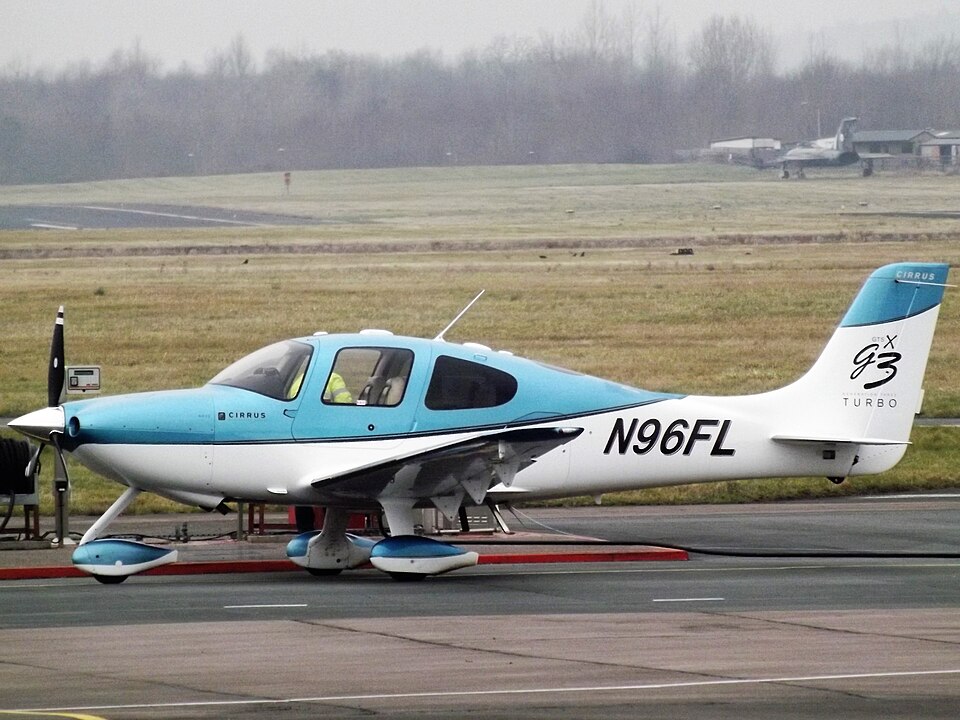
The Cirrus SR22 uses a composite airframe made primarily from fiberglass. This construction style resists corrosion better than aluminum, but it requires specialized repair techniques and tools. Not every shop in the country is equipped to work on it. That matters when you are trying to schedule maintenance.
Good to Know: The Cirrus SR22's composite construction helps reduce weight and improve aerodynamic efficiency. However, composite repairs after even minor damage can be more expensive than equivalent aluminum repairs.
The 172 is a high-wing design, which gives excellent visibility below and to the sides. It also makes loading passengers easier since the wing does not get in the way. The SR22 is a low-wing aircraft, which keeps the center of gravity lower and gives a different cockpit view, especially during turns. Each layout has its fans.
Cockpit and Avionics: Glass Panels Across the Board
Modern versions of both aircraft come equipped with Garmin glass cockpit systems, but the level of integration is quite different.
The current Cessna 172S comes standard with the Garmin G1000 NXi, a proven and widely understood system used in thousands of aircraft and simulators. It is clean, reliable, and familiar to most instrument-rated pilots. Older used 172s can often be retrofitted with glass avionics for a reasonable cost.
The Cirrus SR22 uses the Garmin Perspective+ suite, a customized and deeply integrated version of the G1000 NXi. Newer G7 models feature the Perspective Touch+ system with large touchscreen displays and enhanced connectivity. The SR22's avionics are more sophisticated out of the box, and they tie directly into the aircraft's safety systems.
Pro Tip: If you are transitioning from a 172 to an SR22, plan for formal transition training. The cockpit workflows, systems depth, and emergency procedures are meaningfully different, even if both planes use Garmin glass.
The SR22 also features the Cirrus Airframe Parachute System, which is controlled from the cockpit. That adds a layer of decision-making and emergency training that has no equivalent in the 172.
The 172's cockpit is comparatively simple. That simplicity is intentional and valuable. Less to manage means more attention available for flying, which is a big reason why flight schools love it.
Cirrus SR22 vs Cessna 172: Head-to-Head Performance Comparison
This is where the two aircraft most clearly go their separate ways. Performance numbers tell a straightforward story here.
Speed and Cruise
The Cessna 172S cruises at around 122 knots (roughly 140 mph). That is perfectly comfortable for local flying, training flights, and weekend trips to nearby airports. It is not fast by any measure, but it gets the job done.
The Cirrus SR22 cruises at approximately 183 knots (around 210 mph) in the normally aspirated version. The turbocharged SR22T can push past 200 knots at higher altitudes. On a 500-nautical-mile trip, that speed difference saves roughly 1.5 hours in the air. For frequent travelers, that adds up fast.
Engine Power
The 172S runs on a Lycoming IO-360-L2A producing 180 horsepower. It is a proven, air-cooled engine with a strong maintenance track record and a large pool of experienced mechanics.
The SR22 uses a Continental IO-550-N making 310 horsepower. That is nearly double the power, which explains the significant speed and climb performance difference. The SR22 requires a high-performance endorsement from the FAA because its engine exceeds 200 horsepower.
Why It Matters: The high-performance endorsement required for the SR22 adds training time and cost. Budget for at least a few hours of dual instruction with a qualified instructor before flying one as pilot in command.
Range and Fuel Burn
The 172 has a typical range of around 640 nautical miles with standard tanks, burning approximately 8 to 10 gallons per hour. The SR22 stretches past 1,200 nautical miles with its larger fuel capacity but burns roughly 17 gallons per hour doing it.
Fill both aircraft with fuel for a long cross-country trip, and the SR22 will cost more than twice as much in fuel alone.
Climb Performance
The 172 climbs at around 730 feet per minute. The SR22 climbs at over 1,000 feet per minute. When you need to get above weather or terrain quickly, that difference is noticeable.
Service Ceiling
The 172 tops out around 14,000 feet. The normally aspirated SR22 reaches similar altitudes comfortably, while the turbocharged SR22T can cruise well above 20,000 feet, opening up true IFR capability in a way the 172 simply cannot match.
Cost of Ownership: The Real Numbers
Speed and safety features are easy to get excited about. Cost of ownership brings things back to earth.
Purchase Price
Used Cessna 172s are among the most accessible aircraft on the market. Older models from the 1970s and 1980s can be found for under $50,000, while well-equipped late-model 172S aircraft with glass panels typically sell in the range of $200,000 to $350,000 or more. A brand-new 172S from Textron Aviation runs approximately $450,000 to $500,000 as of recent years, though pricing changes regularly.
The Cirrus SR22 sits in a completely different bracket. Pre-owned SR22s from the early 2010s can be found starting around $150,000 to $250,000, while more recent G5 and G6 models often run $400,000 to $900,000 depending on year and options. A new 2026 SR22 is priced well above $1,200,000.
Flying411 connects buyers with quality used aircraft at all price points. If you are researching your next purchase, Flying411 is a great place to start your search and get expert guidance.
Operating Costs
Operating cost estimates vary, but the gap between these two aircraft is significant.
- Cessna 172: estimated $150 to $200 per hour including fuel, maintenance, insurance, and reserves
- Cirrus SR22: estimated $600 or more per hour factoring in higher fuel burn, insurance premiums, CAPS repack costs, and maintenance
The CAPS system requires periodic repacking at scheduled intervals, which adds a recurring cost unique to Cirrus aircraft. Insurance for the SR22 also reflects its higher value and performance requirements, meaning premiums are substantially higher than for a 172.
Keep in Mind: Annual inspection costs and unexpected maintenance expenses can vary widely. Always budget for reserves beyond your estimated hourly costs, especially with high-performance aircraft.
Maintenance Accessibility
The Cessna 172 wins this category without much competition. With tens of thousands of aircraft flying globally, A&P mechanics familiar with the 172 are easy to find at almost any airport. Parts are plentiful and generally affordable.
The SR22 requires mechanics comfortable with composite airframes, Cirrus-specific electrical systems, and the CAPS parachute. That pool of qualified shops is growing but remains more limited than the 172 network.
Safety Features: A Different Kind of Comparison
Both aircraft have strong safety records, but they achieve safety in different ways.
The Cessna 172 is safe because it is forgiving. Its high wing provides inherent stability. Its slow stall speed gives pilots more room for error. Its simple systems reduce the chance of confusion. Decades of flight training experience have shaped how the 172 handles edge cases.
The Cirrus SR22 adds active safety technology to the equation. The CAPS whole-airframe parachute is the most obvious example. When deployed correctly, it can bring the entire aircraft to the ground under canopy, giving occupants a survivable outcome in situations where a traditional aircraft might not offer one. Cirrus says the system has been activated successfully in real emergencies hundreds of times.
Fun Fact: The Cirrus SR22 is sometimes called "the parachute plane" because of CAPS. It is the only FAA-certified production aircraft in its class to include a whole-airframe parachute as standard equipment.
Newer SR22 models also offer features like Safe Return, an emergency autoland system that can guide the aircraft to a safe landing with minimal pilot input. These capabilities go well beyond anything available in a standard 172.
That said, the SR22's higher performance also introduces higher stakes. It lands faster, requires more runway, and demands greater pilot proficiency. Transition training is not optional; it is essential.
Who Should Fly Each Aircraft?
These two planes serve genuinely different pilots. Here is a practical breakdown.
The Cessna 172 is a great fit if you:
- Are learning to fly or building your first hours
- Want the lowest possible operating costs
- Fly locally or on shorter trips under a few hundred miles
- Want the widest network of mechanics and rental options
- Prefer simpler systems and forgiving handling
- Are shopping for a first aircraft on a realistic budget
If you are curious about getting the most from the Skyhawk, the Cessna 172 buyer's guide on Flying411 is a helpful resource for understanding what to look for when shopping.
The Cirrus SR22 is a great fit if you:
- Regularly fly cross-country trips of 300 miles or more
- Want to fly IFR in a capable, modern aircraft
- Value cutting-edge safety technology including CAPS
- Have the budget for higher acquisition and operating costs
- Already hold a private pilot certificate with meaningful hours logged
- Want the best-equipped cabin in the single-engine piston market
Heads Up: The SR22's sidestick controller feels different from a traditional yoke. Most pilots adapt within a few hours of dual instruction, but it takes intentional adjustment if you have trained exclusively in Cessna-style aircraft.
Training Considerations: Starting Out vs. Moving Up
The Cessna 172 is the world's most popular flight trainer for a reason. Its forgiving handling, simple systems, and low operating costs make it ideal for student pilots. Most flight schools build their primary training fleets around the 172 or similar aircraft. You can read more about why student pilots prefer training in the Cessna 172 and what makes it so well-suited to the learning environment.
The SR22 is a step-up aircraft. Most pilots who transition to it come from the 172 or a similar trainer. Cirrus recommends formal transition training through a Cirrus-approved instructor or training center. Initial training is often three to five days, covering the aircraft's electrical systems, CAPS operation, and the handling differences that come with a faster, more powerful aircraft.
The FAA requires a high-performance endorsement for any aircraft with an engine exceeding 200 horsepower. The SR22 qualifies, which means you cannot legally fly it as pilot in command without that endorsement documented in your logbook.
How the 172 Stacks Up Against Other Alternatives
If you are weighing the 172 but are not quite ready for an SR22, the Cessna lineup offers several other options worth exploring. Pilots often compare models within the same family before making a decision.
- The Cessna 177 vs 172 comparison covers the Cardinal, which offers a more modern cabin with different handling qualities.
- The Cessna 182 vs 172 comparison explains how the Skylane adds useful load and range at a higher cost.
- Pilots interested in a lighter option often look at the Cessna 162 vs 172 matchup, which breaks down the SkyCatcher's light-sport category limitations.
- For those looking at older Cessna options, the Cessna 175 vs 172 and Cessna 170 vs 172 comparisons cover the taildragger predecessor and the geared-engine variant.
- If you are considering a non-Cessna alternative, the Grumman Tiger vs Cessna 172 article looks at how the American-built Tiger compares on performance and value.
Understanding the broader market helps you avoid buying the wrong aircraft for your mission.
Quick Tip: If you are unsure which Cessna is right for your private pilot goals specifically, Flying411's guide on what is the best Cessna for a private pilot walks through your options in plain language.
Common Ownership Concerns
Both aircraft have known quirks that buyers should research before purchasing.
The 172 has a well-documented set of common issues that experienced owners have learned to manage. If you want to know what to watch for, common problems with a Cessna 172 covers the most frequent maintenance and airworthiness concerns. One practical question for owners in northern climates is whether you can fly a Cessna in winter, which addresses cold-weather operations and precautions.
The SR22 has its own list of ownership considerations. The CAPS repack cost is a recurring expense unique to Cirrus. The composite airframe, while corrosion-resistant, requires careful inspection for impact damage that might not be visible to the untrained eye. Avionics systems in earlier models may be outdated and expensive to upgrade. Fuel costs at 17 gallons per hour add up quickly on long missions.
If you are seriously considering either aircraft, Flying411 offers expert guidance to help you evaluate used aircraft and avoid costly surprises.
Conclusion
The cirrus sr22 vs cessna 172 comparison ultimately comes down to one question: what do you need your airplane to do? If the answer involves building hours, keeping costs manageable, and enjoying the freedom of local flying, the Cessna 172 Skyhawk is as good as it gets. If the answer involves fast cross-country trips, IFR capability, and the most advanced safety technology in single-engine piston aviation, the Cirrus SR22 earns its price premium.
Neither aircraft is objectively better. They are built for different pilots with different goals. The best aircraft is the one that matches your mission, your budget, and your current skill level.
Figuring all of that out is a lot easier with the right information on your side. Flying411 is here to help you research, compare, and find the aircraft that fits your flying life perfectly.
Frequently Asked Questions
Is the Cirrus SR22 harder to fly than the Cessna 172?
Yes, the SR22 demands more proficiency than the 172. Its higher speed, more powerful engine, and complex systems require formal transition training. The 172 is widely considered one of the most forgiving aircraft for new pilots.
Can a student pilot fly a Cirrus SR22?
A student pilot cannot fly the SR22 as pilot in command. It requires a private pilot certificate and a high-performance endorsement at minimum, plus transition training from a qualified instructor.
What are the different models of the Cessna 172?
The 172 has been produced in many variants over the decades, from early models like the 172A through the current 172S. You can explore the different models of the Cessna 172 to understand the differences in equipment, engine, and performance across the generations.
How often does the Cirrus CAPS parachute need to be repacked?
The CAPS system requires periodic repacking according to Cirrus's maintenance schedule. This service must be performed by a certified technician and adds a recurring cost to SR22 ownership that does not apply to most other piston aircraft.
What are the Cessna 172 characteristics worth knowing before buying?
The 172 is known for its stable handling, high-wing layout, forgiving stall behavior, and wide parts availability. A deeper look at Cessna 172 characteristics and specifications can help prospective buyers understand exactly what they are getting.