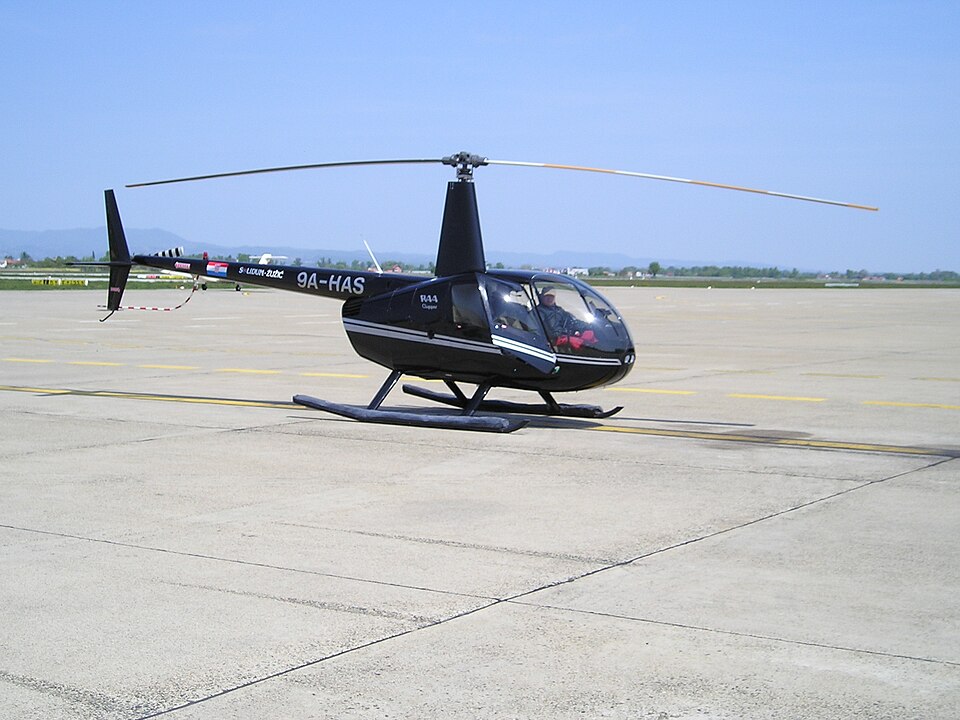
The Robinson R44 has been one of the most familiar four-seat piston helicopters in the sky for decades. It shows up at flight schools, on ranches, over city skylines, and in the hangars of private owners who wanted a simple, capable machine without a huge price tag.
If you have started shopping for one, you have almost certainly run into the same fork in the road: the older Robinson R44 Astro versus the newer Raven models. They look nearly identical from across the ramp, yet they fly and cost quite differently once you get to know them.
The two seats up front are the same. The story underneath the skin is where things get interesting.
Key Takeaways
The biggest difference between the R44 Astro and the Raven is that the Astro has manual flight controls and a carbureted engine, while the Raven adds hydraulically assisted controls (Raven I) and later a fuel-injected engine with more power and higher gross weight (Raven II). In plain terms, the Raven is easier to fly, performs better in heat and altitude, and holds value better, while the Astro is cheaper up front but demands more muscle and carries an extra maintenance catch.
| Feature | R44 Astro | R44 Raven I | R44 Raven II |
| Roughly introduced | Early 1990s | Around 2000 | Around 2002 |
| Flight controls | Manual (no hydraulics) | Hydraulically assisted | Hydraulically assisted |
| Engine | Carbureted Lycoming O-540 | Carbureted Lycoming O-540 | Fuel-injected Lycoming IO-540 |
| Carb heat management | Required | Required | Not needed |
| Approx. gross weight | About 2,400 lbs | About 2,400 lbs | About 2,500 lbs |
| Air conditioning option | No | No | Yes |
| Pilot workload | Higher | Lower | Lower |
| Typical price | Lowest | Middle | Highest |
Flying411 keeps hundreds of helicopter listings, specs, and buyer guides in one place, so lining up an Astro against a Raven takes minutes instead of weeks.
Meet the Robinson R44 Family
Before pitting one against the other, it helps to know how they all relate. The R44 grew directly out of the smaller two-seat R22, which had already earned a strong following among flight schools and budget-minded pilots. Frank Robinson and his team wanted the same low operating costs in a bigger cabin that could carry four people. The result first flew in 1990 and reached buyers in the early 1990s.
That first production version was the Astro. Every Raven that followed is a refinement of the same basic airframe, rotor system, and design philosophy. So when people compare the models, they are usually comparing upgrades layered onto one proven design, not three totally separate helicopters.
Here is the simple family tree in order of arrival:
- Astro: the original four-seater with manual controls and a carbureted engine
- Raven I: the Astro with factory hydraulics and a few refinements
- Raven II: the Raven I with a fuel-injected, higher-power engine and more gross weight
There are also the float-equipped Clipper and the two-seat cargo Cadet, which share the same DNA. If your search has wandered toward water operations or training-focused variants, the differences between the float-ready Clipper and the standard Raven, and between the two-seat Cadet and the Raven, are worth a look on their own.
Good to Know: The word "Raven" covers two distinct models. When a seller says "Raven," always ask if they mean Raven I or Raven II, because the engine and performance gap between those two is real.
The R44 Astro: The Original Four-Seater
The Astro is where the R44 story begins. It carries a carbureted Lycoming O-540 six-cylinder engine, which is a carbureted engine that mixes fuel and air the old-fashioned way. The engine is rated higher on paper but is derated for continuous operation to protect the transmission and stretch the time between overhauls. That derating is part of what keeps R44 running costs reasonable in the first place.
The defining trait of the Astro is what it does not have: hydraulics. Its flight controls connect to the rotor system through direct mechanical linkages, pulleys, and push-pull rods, much like the little R22. That direct connection has a personality all its own.
What the Astro Feels Like to Fly
Because the controls are manual, the pilot feels every load coming back from the rotor. On a calm day at sea level, that is manageable. On a windy day, during slope landings, or with all four seats full, the cyclic and collective can take real muscle to move smoothly. Many pilots who fly all three versions describe the Astro as the most tiring of the bunch.
There is also carburetor heat to think about. In the right mix of temperature and moisture, a carbureted engine can ice up in the carburetor, so the pilot has to manage carb heat by hand during different phases of flight. It becomes second nature with practice, yet it is one more task the Raven II owner never has to think about.
Fun Fact: An R44 Astro is widely credited with an early round-the-world record flight in the late 1990s, which helped cement the little four-seater's reputation for going the distance.
None of this makes the Astro a bad helicopter. Plenty of pilots love how connected it feels, and for missions like game spotting or low-altitude survey work at a friendly price, it earns its keep. It simply asks more of the person flying it.
The R44 Raven: The Upgraded Successor
The Raven line is the answer to the Astro's rougher edges. Robinson rolled out the upgrades in two steps, and knowing which step you are buying matters a lot.
Raven I: Hydraulics Change the Game
The first big leap came with the R44 Raven I around the year 2000. Its headline feature is hydraulic flight controls. A hydraulic system sits between the pilot and the rotor and quietly absorbs the feedback that used to travel straight to the pilot's hands. The cyclic gets light and smooth, slope landings get far less dramatic, and long flights stop being an arm workout.
The Raven I brought a few other quiet improvements along with the hydraulics:
- Upgraded elastomeric tail rotor bearings
- Adjustable pedals to fit different pilot heights
- A longer time between engine overhauls
Under the cowling, though, the Raven I still uses the same carbureted O-540 as the Astro. So it flies easier, but it does not gain much raw performance, and it still needs carb heat management. If you want the finer points of how the two Raven generations stack up, the Raven I and Raven II comparison digs into the details.
Why It Matters: Hydraulics are the single feature most pilots point to when they explain why they prefer any Raven over an Astro. Lower workload means more attention left over for navigation, passengers, and safety.
Raven II: More Power and Fewer Chores
The second leap arrived with the R44 Raven II around 2002. This version swaps the carburetor for a fuel-injected engine, a Lycoming IO-540 rated at 245 horsepower. Fuel injection meters fuel more precisely and, best of all, removes the carb icing worry entirely. That alone makes the Raven II simpler to operate.
More power also translates into better performance where it counts most. The Raven II climbs and hovers better in hot weather and at higher elevations, situations where the earlier models start to run out of breath. Robinson also bumped the gross weight up to around 2,500 pounds and offered factory air conditioning as an option, which the earlier models could not have. If reliable engines are high on your list, browsing the most reliable piston engines puts the IO-540 in context with its peers.
Keep in Mind: The Raven II's extra gross weight gives it more useful load, but useful load still shrinks as you climb higher and the air thins out. Always run the weight and balance for your real mission, not the brochure number.
Robinson R44 Astro vs Raven: 8 Key Differences
Here is the head-to-head, boiled down to the eight differences that most affect how these helicopters fly, cost, and hold up over time. This is the heart of the Robinson R44 Astro vs Raven question.
- Flight controls. The Astro is fully manual. Both Ravens have hydraulic assist. This is the most noticeable difference from the pilot's seat and the reason the Astro feels heavier to fly.
- Engine type. Astro and Raven I share a carbureted O-540. The Raven II uses a fuel-injected IO-540. Fuel injection means smoother running and no carb ice management.
- Power and altitude performance. The Raven II makes the most power and handles heat and high elevations best. The Astro and Raven I start to struggle when it is hot, high, and heavy.
- Gross weight and useful load. The Astro and Raven I sit around 2,400 pounds gross. The Raven II moves up to roughly 2,500 pounds, giving it a bit more carrying muscle.
- Pilot workload. The Astro asks for the most muscle and the most task management. The Ravens ease both, and the Raven II eases the most.
- Air conditioning. Only the Raven II can be fitted with factory air conditioning. In warm climates, that is a genuine comfort and resale advantage.
- Maintenance obligations. The Astro carries an extra catch tied to a main rotor blade rule, covered in the next section. The Ravens are simpler to keep compliant.
- Price and resale. The Astro is the cheapest to buy. The Raven II is the priciest and holds value best. The Raven I sits in the middle on both counts.
Pro Tip: When you compare listings, do not stop at the model name. Ask for the total time on the airframe, time since overhaul, and the calendar age, since the R44 has both an hour-based and a 12-year overhaul limit that can force a big bill sooner than a low-hour machine suggests.
Specs Side by Side
Numbers vary a little by year, options, and how a given helicopter is loaded, so treat these as ballpark figures rather than gospel. Still, seeing them together makes the pattern clear.
| Spec | R44 Astro / Raven I | R44 Raven II |
| Engine | Carbureted Lycoming O-540 | Fuel-injected Lycoming IO-540 |
| Rated power (takeoff) | Around 225 hp class | About 245 hp |
| Cruise speed | Roughly 110 knots | Roughly 110 to 113 knots |
| Approx. gross weight | About 2,400 lbs | About 2,500 lbs |
| Service ceiling | Around 14,000 ft | Around 14,000 ft |
| Hot and high performance | Modest | Better |
| Carb heat management | Yes | No |
The cruise speeds land close together at low altitude. The Raven II pulls ahead most clearly when the air gets thin or hot, which is the situation the extra power and fuel injection were built for. For a light piston helicopter, all three make a fine cross-country machine on a normal day.
How the Main Rotor Blade Rule Changed the Astro's Story
There is one more piece of the puzzle that shapes the Astro buying decision, and it is easy to miss if you only read the spec sheet. Older R44 main rotor blades became subject to a main rotor blade airworthiness directive, a safety rule from the FAA that eventually required replacing certain older blades with a newer design.
Here is the catch for Astro owners. The newer replacement blade has a wider chord and produces higher flight loads. Those loads are more than the Astro's manual control system was designed to handle. In practice, that means an Astro often has to be converted to hydraulic controls before the new blades can go on.
That conversion is not cheap, and for a while it can only be done through the factory. For a low-value Astro, the cost of the blade replacement plus a hydraulic conversion can approach or exceed what the helicopter is worth. That is why the Astro fleet shrank and why some sellers price their Astros so aggressively.
Heads Up: If you are looking at an R44 Astro, confirm exactly which main rotor blades are installed and find out if the blade rule has already been addressed. A "cheap" Astro can turn expensive fast if it still needs new blades and a hydraulic conversion.
None of this makes the Astro unsafe to fly. It simply adds a layer of homework and a possible future bill that Raven buyers do not face in the same way. A careful buyer treats it as a negotiation point, not a deal-breaker.
Not sure what a specific Astro or Raven is really worth once you factor in blades, overhaul timing, and options? Flying411 lets you get a sense of its value before you make an offer.
Which One Should You Buy?
The right choice comes down to your budget, your mission, and how much you value comfort and simplicity. There is no single winner here, only the best fit for you. As a versatile four-seat helicopter, any R44 covers a lot of ground, so the decision is about matching the model to the way you really fly.
Choose the Astro If
- You want the lowest possible entry price and can accept a heavier feel in the controls.
- Your flying is mostly low-altitude, in cooler conditions, and not too demanding on weight.
- You have already confirmed the blade situation and priced in any needed work.
- You like the direct, connected feel of manual controls and do not mind the workload.
Choose the Raven I If
- You want hydraulics and an easier flying experience without paying Raven II money.
- You mostly operate near sea level where the carbureted engine performs fine.
- You want a middle-ground price and are comfortable managing carb heat.
Choose the Raven II If
- You fly in heat, at altitude, or often near max weight and need the extra power.
- You want the simplest operation with no carb heat and the option of air conditioning.
- You care about the strongest resale value and the broadest buyer pool later.
- You want the most capable version of the R44 and are willing to pay for it.
For buyers thinking about passengers and comfort on longer trips, it is worth seeing how the R44 stacks up among family-friendly helicopters and other smaller piston helicopters in its class before you commit.
Quick Tip: Whichever model you pick, budget for transition training that includes flying with the hydraulics switched off. Every R44 pilot needs to handle a hydraulic failure, and practicing it also gives you real respect for how much the system does for you.
Operating Costs and Ownership Considerations
Purchase price is only the opening chapter. What you spend to keep an R44 flying often matters more over the years you own it. The good news is that all three share the same cost-friendly design roots that made the R44 popular in the first place.
Fuel burn is similar across the models at sea level, since they sip roughly the same amount per hour under normal loads. The Raven II can burn a bit more when you use its extra power, which is a fair trade for the performance. Hourly operating costs for a well-run R44 are often cited in the ballpark of a few hundred dollars, though the real number depends on how hard you fly, local labor rates, and how you handle the big overhaul reserve.
That overhaul is the number to plan around. The R44 has a time between overhauls measured in both flight hours and calendar years, and reaching either limit triggers a major event covering the engine and key rotor components. Buyers who ignore how close a helicopter sits to that limit can be caught off guard by a large bill soon after purchase.
A few ownership habits pay off no matter which model you choose:
- Get a thorough pre-purchase inspection from a shop that knows Robinsons well.
- Read the logbooks closely for overhaul timing, blade compliance, and any past damage.
- Factor the 12-year calendar overhaul into your cost math, not only the hours.
- Keep the helicopter flying regularly, since idle time can be as hard on it as heavy use.
Ready to start comparing real listings side by side? Browse current R44 Astro and Raven helicopters, engines, and parts on Flying411 and line up your shortlist today.
Conclusion
The Robinson R44 Astro vs Raven question really comes down to how much comfort, power, and simplicity you are willing to pay for. The Astro is the budget door into R44 ownership, with manual controls, a carbureted engine, and a blade rule worth checking before you sign.
The Raven I adds hydraulics that lighten the load, and the Raven II layers on fuel injection, more power, higher gross weight, and the option of air conditioning. Each is a capable four-seater built on the same trusted bones, so the best pick is the one that matches your budget and your flying.
Once you know which model fits, the next step is finding the right one at the right price. Start your search on Flying411, where aircraft listings, specs, valuations, and expert buyer guides live under one roof to help you land the perfect R44.
Frequently Asked Questions
What is the main difference between the R44 Astro and the Raven?
The Astro has manual flight controls and a carbureted engine, while the Raven adds hydraulically assisted controls and, in the Raven II, a fuel-injected engine with more power. That makes the Raven easier to fly and better performing, especially in heat and at altitude.
Is the R44 Astro still worth buying today?
An Astro can be a good value for the right buyer, but only after confirming which main rotor blades are installed and finding out if the blade rule and any hydraulic conversion have been handled. Skipping that check can turn a cheap Astro into an expensive surprise.
Does the R44 Raven I have a fuel-injected engine?
No. The Raven I keeps the same carbureted Lycoming O-540 engine as the Astro and still requires carb heat management. Fuel injection did not arrive until the Raven II with its Lycoming IO-540 engine.
Which R44 model performs best at high altitude?
The Raven II performs best in hot and high conditions thanks to its more powerful, fuel-injected engine and higher gross weight. The Astro and Raven I start to lose climb and hover margin sooner as temperature and elevation rise.
Can you convert an R44 Astro to have hydraulics?
Yes, an Astro can be converted to hydraulic controls, and in some cases that conversion is required before newer main rotor blades can be installed. The work is typically done through the factory and can be costly, so it should be priced into any Astro purchase.