If your Rotax 912 shakes at idle, buzzes at low power, or feels rough as you ease back the throttle, there is a good chance the two carburetors are pulling against each other.
Learning how to balance carbs on a Rotax 912 is one of the most useful skills a 912 owner can pick up, because it fixes a surprising number of "my engine feels off" complaints.
The job is part mechanical, part pneumatic, and once you have done it a couple of times, it becomes a quick stop on your maintenance checklist.
Two carburetors, one crankshaft, and a few brass screws stand between a buttery idle and a teeth-rattling shake.
Key Takeaways
Balancing the carbs on a Rotax 912 means getting both carburetors to pull the same amount of air and fuel so the engine runs smooth and even. The 912 has two carburetors, and each one feeds two cylinders. When they are out of sync, the two sides make uneven power, and that shows up as vibration, a rough idle, and extra wear on the gearbox. The fix has two parts: a mechanical sync (setting the throttle linkage) and a pneumatic sync (matching the suction on each side while the engine runs). With the right tool, it is a job many owners can learn to do well.
| Topic | Quick Answer |
| What it is | Making both Bing carburetors pull equal air and fuel so the engine runs smooth |
| Why it matters | Out-of-sync carbs cause vibration, rough idle, and added gearbox wear |
| Engine setup | Two carburetors, each feeding two cylinders, like two twins sharing one crankshaft |
| The two steps | Mechanical sync first, then pneumatic sync while running |
| Main tool | A carb sync tool: dual vacuum gauges or an electronic differential gauge |
| Idle target | Commonly around 1,700 to 1,800 rpm, and not below about 1,400 rpm |
| How often | Often at every 100-hour and annual inspection, or any time it runs rough |
Flying411 is an aviation marketplace and resource hub where owners come for the parts, engines, and know-how that keep aircraft like the Rotax 912 running their best.
What Balancing the Carbs Really Means
People say "balance," "sync," and "synchronize" when they talk about this job, and they all point to the same idea. You are making the two carburetors behave as one. On a Rotax 912, carburetor synchronization is the process of matching how much air and fuel each carb delivers across the full throttle range, from idle all the way up.
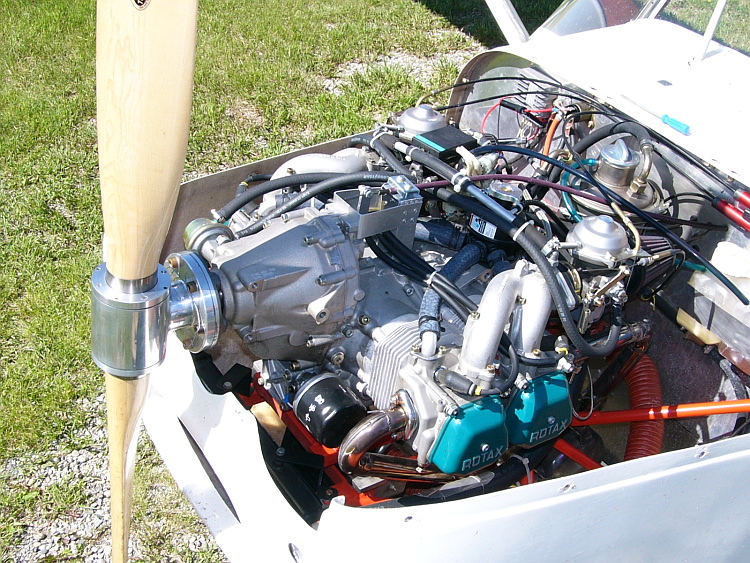
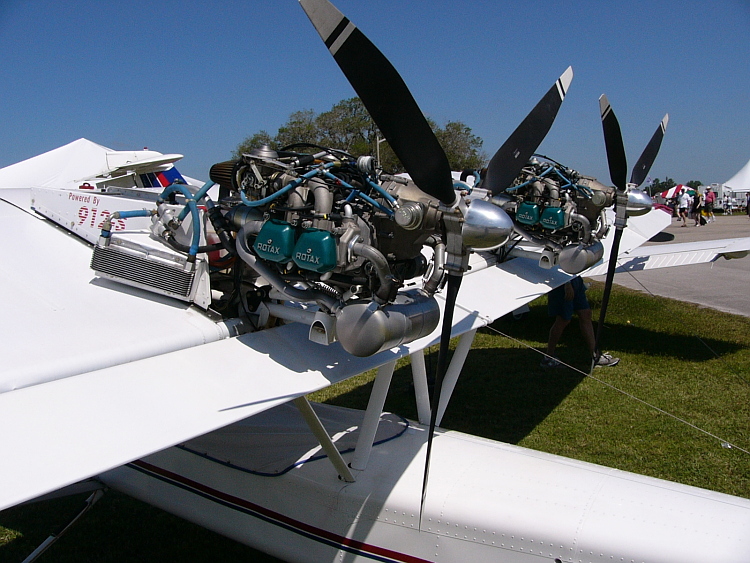
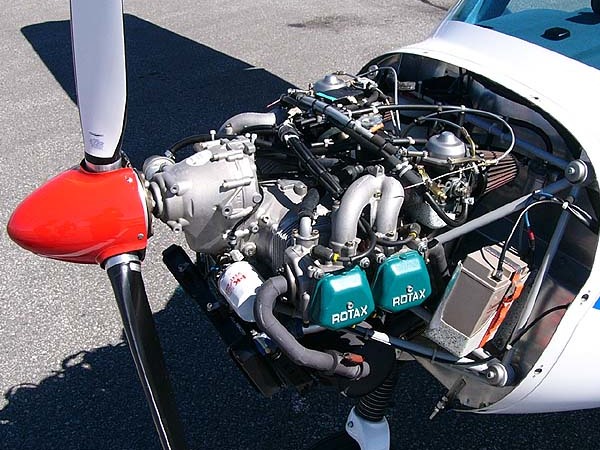
Here is the mental picture that helps the most. Think of the 912 as two small twin-cylinder engines bolted together, sharing a single crankshaft and gearbox. One carburetor feeds the left pair of cylinders. The other feeds the right pair. If one side breathes a little harder than the other, the two halves make uneven power pulses. The crankshaft speeds up and slows down in tiny bursts, and you feel that as a shake.
The Two Bing Carburetors
The 912 series uses two Bing carburetors, specifically the constant-velocity Bing 64 type. They are altitude-compensating, which means they adjust the fuel mixture as you climb so you do not have to lean by hand. These carbs have a strong reputation for being reliable when they are set up and maintained well. The catch is that two separate carburetors will always drift apart over time, so they need to be matched now and then.
Fun Fact: The Bing carbs on a 912 are often described as altitude-compensating, which is part of why Rotax-powered aircraft are known for being easy to fly at different elevations without constant mixture fiddling.
Balancing Is Not the Same as Tuning the Mixture
It helps to know what balancing does not cover. Balancing the carbs lines up the two sides with each other. It does not rebuild a worn carb, replace a cracked diaphragm, or fix a clogged jet. If one carb is damaged or badly out of spec, no amount of syncing will make the engine smooth. Balancing assumes both carburetors are healthy to begin with. If yours have high hours and have never been opened up and inspected, that work usually comes first.
Why Carb Balance Matters on a Rotax 912
A balanced pair of carbs is about more than comfort. When the two sides make uneven power, the crankshaft experiences torsional vibration, which is a rapid speeding up and slowing down of the rotation. That kind of vibration is hard on the gearbox, adds to general engine wear, and can even make the engine harder to start.
Why It Matters: Uneven power pulses from out-of-sync carbs create torsional vibration. Over time, that vibration adds wear to the gearbox and shakes the whole airframe. Keeping the carbs balanced is one of the cheapest ways to protect an expensive engine.
Signs Your Carbs Are Out of Balance
You do not need gauges hooked up to suspect a sync problem. The engine usually tells you. Common signs include:
- Rough or shaky idle, especially as you pull the throttle back to taxi
- Noticeable vibration at low to mid rpm that smooths out near full power
- A buzzy or busy feeling in the airframe during a slow descent
- An idle that feels uneven, hunting up and down rather than holding steady
- Harder starts or an engine that seems to stumble at low rpm
Interestingly, many owners report the engine feels fine at full throttle even when the carbs are out of sync. That is because at wide-open throttle, both throttle plates are pinned against their stops, so the two sides line up on their own. The trouble lives in the lower and middle rpm range, where small differences in throttle position make a big difference in airflow.
How the Rotax 912 Compares to Other Engines
Carb balancing is specific to the carbureted 912, so it helps to know where this engine sits in the wider light-aircraft world. Owners often weigh the 912 against other popular powerplants before they buy or rebuild, and those comparisons shape how much maintenance they expect.
The four-stroke 912 is frequently lined up against the UL Power 350i and the Jabiru 3300, since all three show up in the same light-sport and homebuilt circles. It is also worth seeing how the four-stroke 912 stacks up against the two-stroke 582, which is a very different engine to live with day to day.
Move up the family tree and the conversation shifts to bigger, turbocharged options. The 916 is often measured next to a Lycoming IO-360 and versus the Titan 340, while the step from the 914 to the 915 shows how Rotax has pushed power up over the years. If you want the high end of the range, the most powerful Rotax engines tell that story well. On the traditional side, the classic Continental O-200 and the Lycoming O-235 remain common points of comparison for anyone choosing between old-school and modern designs.
Good to Know: Not every 912 has carbs to balance. The fuel-injected versions, like the 912 iS, along with the 915 iS and 916 iS, manage fuel electronically. This carb-balancing job applies to the carbureted models such as the 912 UL and 912 ULS, plus the turbocharged 914.
Tools You Need to Balance Rotax 912 Carbs
You do not need a huge kit, but you do need the right gauges. The heart of the job is a carb sync tool that lets you compare the suction, or vacuum, on each side of the engine while it runs. There are two main styles.
Dual vacuum gauges. This is a set of two matched gauges, often sold as a Rotax-specific kit. You watch both needles and adjust until they read the same. The classic complaint is that the needles can bounce from intake pulses, and that two gauges may not be perfectly calibrated to each other.
Electronic differential tools. Tools like the CarbMate and the TwinMax read the difference in pressure between the two sides on a single display. Many owners find these faster and more precise once they learn to read them, since you are matching to a single center point instead of two separate needles.
Beyond the sync tool, a typical setup includes:
- Two small open-end wrenches (often 9 mm) to adjust the lock nuts on the throttle cable adjusters
- A screwdriver for the idle speed screws
- A feeler gauge, used during the mechanical setup
- An accurate tachometer, which most aircraft already have
- Hearing protection and basic safety gear, since the engine will be running
Quick Tip: Skip the old mercury manometer idea you may have read about for motorcycles. Mercury can be pulled into the engine, and it is messy and toxic. A purpose-made electronic differential gauge is forgiving and easy to read for first-timers.
Need a hand finding a qualified set of eyes? Flying411 connects owners with certified A&P mechanics and Rotax-experienced shops who can sync your carbs or check your work.
How to Balance Carbs on a Rotax 912 Step by Step
Here is the heart of it. The full process has two halves: a mechanical synchronization, where you set the throttle linkage with the engine off, and a pneumatic synchronization, where you fine-tune by suction with the engine running.
Always follow your Rotax Line Maintenance Manual for the exact figures and torque values for your specific engine, and remember that some aircraft categories require a qualified or Rotax-trained mechanic to sign off the work. Use these steps as a plain-language map of the process.
Heads Up: This job runs the engine with the cowling off and a turning propeller close to your hands. Use chocks or a tie-down, keep good brakes, never do it alone, and have someone in the cockpit. Treat the prop as if it can move at any time, because it can.
Step 1: Warm the engine to operating temperature. A cold engine gives false readings. Run it until the coolant is up in its normal operating range. This makes the idle and the suction readings steady and honest.
Step 2: Check the throttle cables for free play. Before you touch anything, make sure both throttle cables move freely with no stickiness and a small amount of free play. The cables must not be tugged or shifted by engine movement. If a cable binds or drags, fix that first, because it will throw off every reading you take.
Step 3: Do the mechanical sync first. With the engine off, set the throttle linkage so both throttle plates open and close together, from fully closed to fully open. This rough setup gets the two throttles into roughly the same position before the engine ever starts. During this step you back the idle speed screws off until each throttle can close against its stop with the small gap your manual specifies, checked with a feeler gauge under light pressure. The goal is simple: both sides start and finish their travel at the same time.
Step 4: Disconnect the balance tube and connect the sync tool. The 912 has a small rubber crossover line, often called the balance tube or compensator tube, that links the two intake manifolds and helps smooth things at low rpm. For an accurate reading, you disconnect that crossover and plug or pinch it off, then attach your gauge hoses to the manifold ports on each side. With the crossover open, the two sides "share" pressure and hide the real imbalance.
Step 5: Start the engine and read the suction. Fire it back up and let it settle. Each gauge now shows the manifold vacuum on its side. The basic rule for reading them is easy to remember: the side showing lower vacuum is getting more air and fuel, and the side showing higher vacuum is getting less. Your job is to make the two match.
Step 6: Sync at higher rpm with the cable adjusters. Bring the throttle up to a higher cruise-type setting, commonly somewhere around 3,000 to 3,500 rpm, and adjust the throttle cable adjusters (the Bowden cable adjusters) until both gauges read the same. This is where the cable length, not the idle screw, does the work. Move the throttle up and down a couple of times and confirm the two sides stay matched.
Pro Tip: Many experienced Rotax techs set the higher-rpm balance first and the idle second. If you set idle first and then adjust the cables for the higher rpm, you move the linkage and knock your idle setting back out. Doing the order this way saves you a lap.
Step 7: Sync at idle with the idle speed screws. Pull the throttle back to idle and check the gauges again. Here you use the idle speed screw on each carburetor, not the cables, to even out the two sides and land on your target idle. A common idle range for the 912 ULS is roughly 1,700 to 1,800 rpm, partly because its higher compression makes it shake more at very low rpm. Keep the idle from dropping below about 1,400 rpm, since that is hard on the gearbox.
Step 8: Recheck across the whole rpm range. Run the throttle from idle up to your higher setting and back down a few times, watching the gauges the whole way. The two sides should track each other closely across the range. Small touch-ups on the cables or idle screws may be needed. The idle and higher-rpm settings interact a little, so expect to go back and forth once or twice.
Step 9: Reconnect the balance tube and do a final check. Once both sides match, remove the gauges and reconnect the crossover balance tube. Run the engine one more time. It should feel smooth and steady, and the idle is often a touch happier with the tube back in place.
Keep in Mind: Reconnecting the balance tube tends to nudge the idle up slightly. A common trick is to set your idle about 50 rpm lower than your real target while the tube is disconnected, so it lands right where you want once everything is back together.
Common Mistakes to Avoid
A few errors trip up almost everyone the first time. Watch out for these:
- Skipping the warm-up. Cold readings lie. Get the engine up to temperature first.
- Leaving the balance tube connected during the pneumatic sync. The crossover masks the imbalance, so you end up chasing a moving target.
- Adjusting only one carb at idle. To change idle balance, raise one side and lower the other. Cranking one carb alone tends to send your idle rpm way off.
- Using the cables to fix idle balance. Cables handle the higher rpm sync. The idle speed screws handle idle. Mixing those up is a fast way to get frustrated.
- Ignoring sticky cables. A cable that drags will never give a stable result. Free, smooth cables come first.
- Forgetting the prop. It is easy to get absorbed in the gauges and step toward a spinning propeller. Stay aware the entire time.
How Often Should You Balance Rotax 912 Carbs
Carbs do not stay synced forever. Cables stretch a little, pulleys and linkages wear, and parts settle into slightly new positions over time. Because of that, many owners and Rotax-trained mechanics check the balance at every 100-hour inspection and at the annual condition inspection. It is also smart to re-sync any time the carbs or throttle cables have been removed, adjusted, or replaced, and any time the engine starts running rough for no obvious reason.
The good news is that the first sync is the slow one. Once you have done it and you know what the gauges are telling you, future checks often take only a few minutes. A quick balance check becomes a small, satisfying part of routine care rather than a dreaded chore.
Ready to keep your 912 running smooth? Browse Flying411 for the engines, parts, and aviation pros you need to maintain it with confidence.
Conclusion
Knowing how to balance carbs on a Rotax 912 turns a mysterious vibration into a simple, fixable thing. The engine is really two twin-cylinder halves sharing one crankshaft, and your whole job is to make those halves breathe in step.
Do the mechanical sync first, then match the suction on each side at higher rpm and at idle, remember the balance tube, and recheck across the range. The payoff is a smoother idle, less vibration, and a gearbox that thanks you with a longer life.
If you take your time, use a good gauge, and respect that spinning prop, this is a job you can grow comfortable with.
And when you need parts, a replacement engine, or a trusted mechanic to back you up, Flying411 keeps the marketplace and the expertise in one place, so your 912 spends more time flying smooth and less time shaking on the ramp.
Frequently Asked Questions
How long does it take to balance the carbs on a Rotax 912?
The first time can take an hour or more as you learn to read the gauges, but once you know the process, a routine check often takes only a handful of minutes.
Can I balance my Rotax 912 carbs myself?
Many owners learn to do it with the right tool and a careful approach, but some aircraft categories require a qualified or Rotax-trained mechanic to perform or sign off the work, so check the rules for your specific aircraft.
What happens if I fly with unbalanced carbs?
The engine will usually run rougher at idle and low power, vibrate more, and put extra stress on the gearbox over time, though it often still feels normal at full throttle.
Do I need to remove the carburetors to balance them?
No. Balancing is done with the carbs installed and the engine running, using the throttle cable adjusters and idle speed screws while you watch the suction on each side.
Why does my idle change after I reconnect the balance tube?
The crossover balance tube shares pressure between the two intakes, which tends to smooth the idle and nudge the rpm up slightly, so many people set the idle a little low while the tube is disconnected.