If you are building or upgrading a light sport aircraft, you have probably hit the big engine debate. Should you stick with the tried-and-true Rotax 914 UL, or invest in the newer Rotax 915 iS? Comparing the Rotax 914 vs 915 is not just about picking the engine with more horsepower. It is about matching the right powerplant to how you fly, where you fly, and what you can afford.
Here is a number that puts things in perspective. The Rotax 915 iS can hold its full 141 horsepower all the way up to 15,000 feet. If you fly over mountain ranges like the Rockies or the Sierra Nevada, that kind of sustained power is a genuine safety advantage. The 914 is no slouch — it has been a workhorse in experimental and light sport aviation for years — but it simply was not designed for the same mission.
This guide breaks down every critical difference between the two engines. We will go well beyond the brochure specs and walk through fuel systems, real-world climb rates, installation headaches, cost of ownership, and the decision framework that helps you pick the right one.
Key Takeaways
The Rotax 914 vs 915 decision comes down to your mission, your airframe, and your budget. The 915 iS delivers more power (141 HP vs 115 HP), uses modern fuel injection instead of carburetors, and holds full power at much higher altitudes. However, it costs $10,000–$15,000 more upfront, weighs about 14.5 pounds more, requires airframe modifications, and currently has a shorter TBO (1,200 hours vs 2,000 hours). For pilots who fly locally at lower altitudes in lighter airframes, the 914 UL is still an excellent, proven choice. For cross-country touring, high-altitude operations, and modern glass-cockpit builds, the 915 iS is hard to beat.
| Feature | Rotax 914 UL | Rotax 915 iS |
| Max Power | 115 HP | 141 HP |
| Fuel System | Carburetors | Electronic Fuel Injection (EFI) |
| Induction | Turbocharged | Intercooled Turbocharged |
| Dry Weight | ~172 lbs (78 kg) | ~186.5 lbs (84.6 kg) |
| Full-Power Altitude | Lower critical altitude | Up to 15,000 ft |
| TBO | 2,000 hours | 1,200 hours (expected to increase) |
| Engine Price (est.) | $35,000–$40,000 | $45,000–$50,000 |
| Operation | Multi-lever (throttle, choke, prop) | Single-lever in most installs |
| Carb Ice Risk | Yes | None |
| Best For | Light kitplanes, local flying, tighter budgets | High-performance touring, high altitude, modern builds |
A Brief History of Rotax in Light Aviation
Before we dig into specs, a little context helps. Rotax, an Austrian engine manufacturer owned by BRP (Bombardier Recreational Products), has been building aircraft engines since the 1970s. Their four-stroke 912 series became the backbone of the light sport and experimental aviation world. The turbocharged 914 UL arrived in the late 1990s and quickly became the go-to option for pilots who needed more power than the naturally aspirated 912 could deliver.
The 915 iS launched in 2017 and represented a generational leap. Rotax designed it from the ground up with electronic fuel injection, an intercooler, and a higher power rating. It was not a simple upgrade to the 914 — it was a new platform built for a different class of aircraft.
Understanding that history matters because it explains why the 915 iS costs more and requires more installation work. It is genuinely newer technology, not just a rebadged version of an older engine.
Carburetor vs. Fuel Injection: How the Fuel Systems Compare
One of the biggest differences in the Rotax 914 vs 915 comparison is how each engine gets its fuel.
Rotax 914 UL — Carburetors
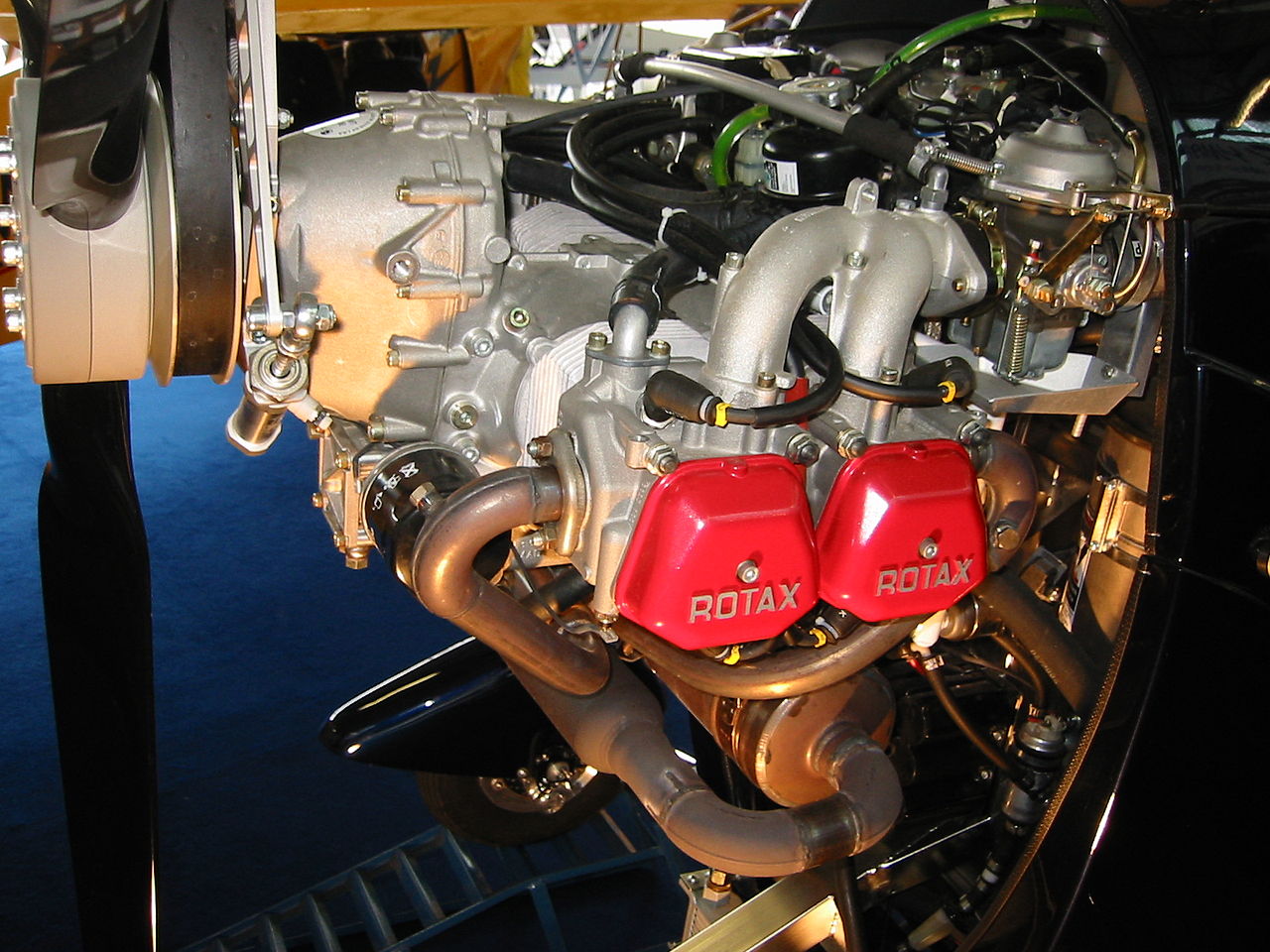
The 914 UL uses a pair of carburetors to mix fuel and air before it enters the engine. This is a proven system that mechanics all over the world know how to service. But carburetors come with trade-offs.
You have to watch for carburetor icing, especially in humid conditions or during descents when the throttle is partly closed. Ice forms inside the carburetor throat and restricts airflow, which can cause a loss of power or even engine stoppage if you do not catch it in time. Most 914 installations include a carb heat system, but it adds one more thing to monitor.
In some setups, you also manage the fuel mixture or choke manually. That means more levers in the cockpit and more things to think about during critical phases of flight like takeoff and landing.
Rotax 915 iS — Electronic Fuel Injection
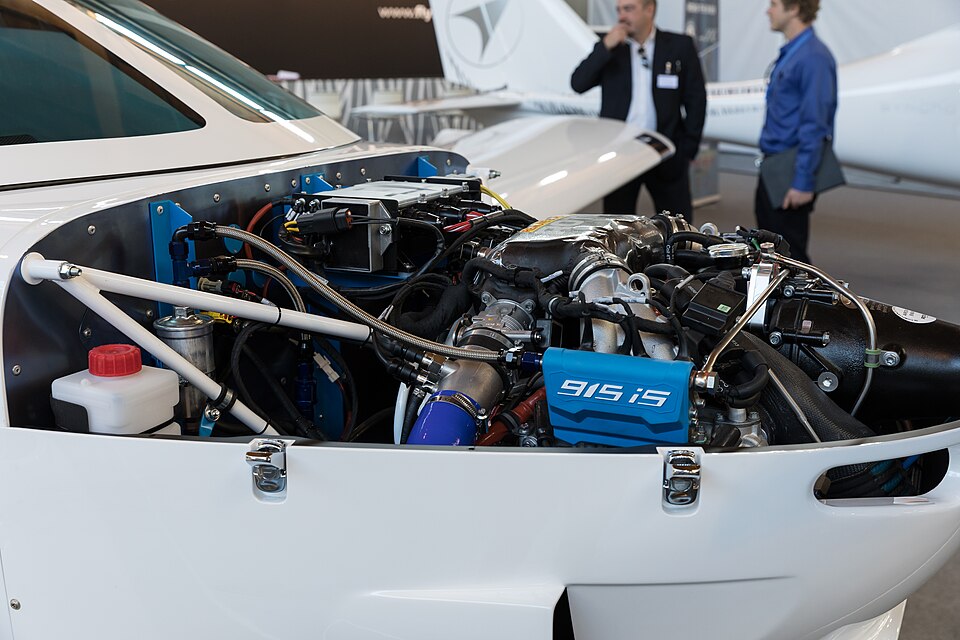
The 915 iS replaces carburetors entirely with a redundant electronic fuel injection (EFI) system. A computer — actually two computers for redundancy — reads atmospheric conditions (temperature, pressure, altitude) and injects exactly the right amount of fuel at exactly the right time.
Here is what that means in practical terms:
- No carb ice risk. The fuel is injected directly, so there is no venturi effect to cause icing. One less thing to worry about.
- Automatic mixture management. The computer adjusts the fuel-air ratio continuously. You do not have to lean the engine manually at altitude.
- Single-lever operation. In many modern installations, the 915 iS runs on a single power lever. The computer manages throttle position, fuel flow, and in some setups even propeller pitch. It feels more like driving a car than flying a traditional airplane.
- Redundancy. The dual-ECU (Electronic Control Unit) design means if one computer fails, the other takes over seamlessly. That is a meaningful safety feature.
Pilot Tip: If you are transitioning from a carbureted engine to fuel injection, you will notice the biggest difference during cold starts and high-altitude cruise. The 915 iS starts reliably in cold weather without the fiddling that carbureted engines sometimes require, and it maintains smooth power delivery at altitude without any manual leaning.
Performance: Power, Torque, and Altitude
When you are choosing between the Rotax 914 vs 915 for a high-performance build like a Sling TSi, Kitfox S7, or VL3, the performance numbers are where the 915 iS really separates itself.
Raw Power Numbers
| Spec | Rotax 914 UL | Rotax 915 iS |
| Max Power | 115 HP @ 5,800 RPM | 141 HP @ 5,800 RPM |
| Max Continuous Power | 100 HP | 135 HP |
| Torque | ~97 Nm | ~128 Nm |
| Compression Ratio | 9.0:1 | 8.4:1 |
The 915 iS puts out roughly 22% more maximum power and about 32% more torque than the 914 UL. In a light aircraft, that difference is enormous. It translates directly into faster climb rates, higher cruise speeds, and better performance on hot days or at high-density altitude airports.
Why Altitude Performance Matters
This is the part that often gets overlooked in spec-sheet comparisons.
As you climb, the air gets thinner. Thinner air means less oxygen for the engine to burn, which means less power. Every piston engine loses power with altitude — it is basic physics. A turbocharged engine fights this by compressing incoming air back to sea-level density (or close to it), but every turbo system has a limit. That limit is called the critical altitude — the highest altitude at which the turbocharger can maintain full rated power.
The Rotax 915 iS, with its intercooled turbocharger, maintains full takeoff power (141 HP) up to 15,000 feet. The 914 UL's critical altitude is lower, and it begins losing manifold pressure sooner as you climb.
Example: Imagine you are departing Leadville, Colorado — the highest airport in North America at 9,934 feet elevation. On a hot summer day, the density altitude could easily reach 12,000–13,000 feet. With the 914 UL, you would already be operating with noticeably reduced power. With the 915 iS, you still have access to full rated power. That difference can mean shorter takeoff rolls, better climb gradients to clear terrain, and a wider safety margin.
What About a Math Example?
Here is a simplified way to think about power loss at altitude. A naturally aspirated engine loses roughly 3% of its power for every 1,000 feet of altitude gain. A turbocharged engine compensates for this — but only up to its critical altitude.
- 914 UL at 10,000 ft: Still turbocharged, but losing some boost. Realistically producing around 100–105 HP depending on conditions.
- 915 iS at 10,000 ft: Still producing full 141 HP, well within its critical altitude envelope.
That 35–40 HP gap at altitude is the equivalent of jumping from a Rotax 912 to a 914 in terms of available power. It is a massive difference when you need it most.
Installation and Weight: What It Really Takes to Swap
Do not make the mistake of thinking the Rotax 915 iS is a simple drop-in replacement for the 914. It is not. The physical differences between these two engines mean you will need to modify your airframe if you are upgrading.
Physical Dimensions
The 915 iS is longer than the 914 UL. It also needs dedicated airflow for its intercooler. Most cowlings designed for the 914 will not fit the 915 without modification. In many cases, you will need to either do extensive fiberglass work or purchase an entirely new cowling with a larger air intake scoop.
Weight and Balance
The 915 iS adds approximately 14.5 pounds to the nose of your aircraft compared to the 914 UL. In a light sport or experimental airplane, that is not a trivial amount. It shifts your Center of Gravity (CG) forward, which can push you outside the approved CG envelope.
To compensate, you may need to relocate your battery or avionics farther aft. Some builders move the battery behind the baggage compartment or add ballast in the tail. Either way, it is an engineering problem that needs to be solved before you fly.
Engine Mounts
The higher torque output of the 915 iS means you often need a beefed-up engine mount. This is not optional.
Warning: Never install a Rotax 915 iS on a standard 914 engine mount without explicit approval from both the airframe manufacturer and Rotax. The increased torque loads can cause fatigue cracking in mounts that were not designed for them.
Installation Summary Table
| Consideration | Rotax 914 UL | Rotax 915 iS |
| Cowling Fit | Standard for most kitplanes | Requires modified or new cowling |
| Weight Added (vs 914) | Baseline | +14.5 lbs forward |
| CG Impact | Baseline | Shifts CG forward — may need rebalancing |
| Engine Mount | Standard | Upgraded mount recommended or required |
| Intercooler Airflow | Not applicable | Requires dedicated cooling duct |
| Fuel System Plumbing | Standard low-pressure | High-pressure pumps + return line |
Cost Analysis: Upfront Price, Hidden Costs, and Long-Term Operating Expenses
Cost is often the deciding factor when pilots compare the Rotax 914 vs 915. To make a smart decision, you need to look at three layers: the engine price, the hidden upgrade costs, and the long-term operating expenses.
Upfront Engine Price
| Engine | Estimated Price Range |
| Rotax 914 UL | $35,000–$40,000 |
| Rotax 915 iS | $45,000–$50,000 |
That puts the 915 iS at roughly $10,000–$15,000 more than the 914 UL right out of the gate.
The Hidden Upgrade Costs
The engine price is only part of the picture. When you upgrade to a 915 iS, several supporting systems need to change too:
- Fuel system infrastructure. The fuel-injected 915 iS requires high-pressure fuel pumps and a dedicated fuel return line. Your existing low-pressure system from the 914 will not work.
- Propeller. A standard fixed-pitch propeller may not handle the 141 HP efficiently. Most builders pair the 915 iS with a constant-speed propeller, which adds $8,000–$12,000 to the project.
- Cowling. A new or modified cowling can cost $2,000–$5,000 depending on your airframe.
- Avionics integration. The 915 iS outputs digital engine data. You may need a specialized interface module or a compatible engine monitoring system to display this data on your glass cockpit.
- Engine mount. An upgraded mount designed for the 915's torque can add $1,000–$3,000.
Ballpark Total Upgrade Cost: When you add the engine, propeller, cowling, fuel system, and avionics work together, a full 915 iS upgrade can run $60,000–$75,000 or more depending on your airframe and installation complexity. Budget carefully.
Operational Cost Comparison
Here is where the 915 iS starts to claw back some of that upfront premium.
| Operating Factor | Rotax 914 UL | Rotax 915 iS |
| Fuel Burn (Cruise) | Higher | 5–8% lower (thanks to EFI) |
| Fuel Type | MOGAS (RON 95) or 100LL | MOGAS (RON 95) or 100LL |
| TBO | 2,000 hours | 1,200 hours (expected to increase) |
| Overhaul Cost (est.) | $15,000–$20,000 | $18,000–$25,000 (estimated) |
| Cost per Hour (engine reserve) | ~$7.50–$10/hr | ~$15–$21/hr (at current TBO) |
The 915 iS burns less fuel during cruise because the electronic engine management optimizes the mixture automatically. Over hundreds of hours, that 5–8% fuel savings adds up — but it does not come close to offsetting the higher overhaul reserve cost at the current 1,200-hour TBO.
The big question mark is whether Rotax will extend the 915 iS TBO. Rotax has a history of increasing TBO limits as engines accumulate field hours and reliability data. If the 915 iS TBO eventually reaches 2,000 hours (matching the 914), the per-hour engine reserve cost drops significantly and the long-term economics shift in its favor.
Who Should Choose the Rotax 914 UL?
The Rotax 914 UL is not the "lesser" engine. It is a proven, reliable powerplant that has logged millions of flight hours worldwide. Here is when it makes the most sense:
- You fly a weight-sensitive kitplane. Aircraft like a basic Kitfox or similar ultralight-category builds benefit from the 914's lighter weight and smaller footprint.
- Most of your flying is local and below 10,000 feet. If you are doing weekend fun flights, pattern work, or short cross-countries at lower altitudes, the 915's altitude advantage is not a big factor.
- Your budget is tight. Saving $15,000+ on the engine alone — and potentially $25,000+ when you factor in the supporting upgrades — is a significant amount of money that could go toward avionics, interior, or simply more flying.
- You prefer mechanical simplicity. The 914 is well-understood by A&P mechanics and Rotax-certified shops everywhere. Parts are widely available, and the knowledge base is deep.
Who Should Choose the Rotax 915 iS?
The 915 iS shines when your mission demands more from your engine:
- You fly a high-performance airframe. Aircraft like the Sling TSi, VL3, or Bristell B23 are designed to take advantage of the 915's extra power and modern systems.
- You regularly operate at high-altitude airports. If your home field is above 5,000 feet, or you frequently cross mountain ranges, the 915's ability to hold full power to 15,000 feet is a genuine safety and performance advantage.
- You want a modern cockpit experience. Single-lever operation, digital engine data integration, and no carb heat management make the 915 iS feel like a next-generation airplane.
- You plan long cross-country flights. The fuel efficiency at cruise, combined with consistent high-altitude performance, makes the 915 iS a better touring engine.
Decision Checklist
Still not sure? Run through this quick checklist. If you answer yes to three or more, the Rotax 915 iS is likely the better fit:
- [ ] Do you regularly fly from airports above 5,000 feet elevation?
- [ ] Is your airframe rated to handle 141 HP?
- [ ] Are you installing a glass cockpit with digital engine monitoring?
- [ ] Do you plan to use a constant-speed propeller?
- [ ] Is your budget flexible enough for the $15,000+ engine premium plus supporting upgrades?
- [ ] Do you fly cross-country routes over mountainous terrain?
If most of your answers are no, the Rotax 914 UL is probably the smarter, more cost-effective choice — and there is absolutely nothing wrong with that.
Real-World Data: What Pilots Are Actually Seeing
Spec sheets are helpful, but real-world results tell the full story.
Sling Aircraft Flight Test Data
According to flight testing conducted by Sling Aircraft during their development of the Sling TSi, swapping from a 914 to a 915 iS produced dramatic results:
- Climb rate increased by 30–40%. That is the difference between a comfortable 700 fpm climb and a muscular 1,000+ fpm climb — a big deal when departing from short strips or climbing out of mountain valleys.
- Cruise speed increased by 15–20 knots at 12,000 feet. The 915 iS holds more power at altitude, which directly translates into faster true airspeeds.
Pilot Community Feedback
On forums and owner groups, pilots who have made the switch commonly report:
- Smoother engine operation across all power settings.
- Noticeably easier cold-weather starts (thanks to EFI).
- Reduced pilot workload in the cockpit, especially during climb and descent.
- Higher fuel efficiency during long cruise legs.
The most common complaint? The shorter TBO and higher upfront cost. Pilots love the performance but wish the economics were more favorable — at least until Rotax extends the TBO.
Fuel Requirements: What Each Engine Burns
Both the Rotax 914 UL and 915 iS can run on premium unleaded auto fuel (MOGAS) with a minimum octane rating of RON 95, or AVGAS 100LL.
MOGAS is generally the preferred fuel for several reasons:
- It costs less per gallon than 100LL at most airports.
- It produces fewer lead deposits inside the engine, keeping valves and spark plugs cleaner over time.
- It is better for the environment.
However, 100LL is more widely available at airports, especially in remote areas. Both engines handle either fuel without modification, so you have flexibility depending on what is available at your destination.
Tip: If you primarily use 100LL, consider more frequent oil changes and spark plug inspections to manage lead buildup. This applies to both the 914 and 915.
Maintenance and Support: What to Expect
Parts Availability
The Rotax 914 UL has been in production for over two decades. Parts are abundant, and nearly every Rotax service center in the world stocks common 914 components. The 915 iS is newer, so while parts availability is good and improving, it does not yet match the 914's deep supply chain.
Mechanic Familiarity
Most Rotax-certified mechanics are very comfortable with the 914 UL. The 915 iS requires additional training, particularly around the EFI system, ECU diagnostics, and intercooler maintenance. The pool of 915-trained mechanics is growing but is still smaller than the 914 network.
Service Intervals
Both engines follow Rotax's recommended maintenance schedule, which includes regular oil changes, spark plug inspections, and periodic rubber part replacements. The 915 iS adds ECU software checks and intercooler inspections to the list.
Conclusion
The Rotax 914 vs 915 decision is really about defining your mission. If you fly a lighter airframe, stick to lower altitudes, and want a proven engine with a deep support network and lower cost, the Rotax 914 UL is still an excellent choice. If you are building or upgrading a high-performance airframe for cross-country touring, high-altitude operations, or a modern glass-cockpit experience, the Rotax 915 iS delivers a step change in power, efficiency, and pilot comfort that is hard to ignore.
Neither engine is the "wrong" choice. The right one is the one that matches your airplane, your flying, and your budget.
At Flying411, we help aircraft owners and builders navigate exactly these kinds of decisions. Whether you are sourcing parts for your Rotax 914, pricing out a complete 915 iS installation, or just want to connect with other pilots who have been through the process, browse our listings and join the Flying411 community today.
Frequently Asked Questions
Can I replace a Rotax 914 with a 915 directly?
No, it is not a direct swap. The Rotax 915 iS is physically larger and about 14.5 pounds heavier than the 914 UL. You will need a different cowling, new or upgraded engine mounts, a high-pressure fuel system with a return line, and potentially a new propeller. Always check with your airframe manufacturer before starting an upgrade.
Does the Rotax 915 use more fuel than the 914?
At full power, yes — 141 HP burns more fuel than 115 HP. But at cruise settings, the 915 iS is actually 5–8% more fuel-efficient than the 914 UL because the electronic fuel injection optimizes the air-fuel mixture continuously. Over time, those savings add up.
What is the TBO of the Rotax 915 iS?
The current Time Between Overhaul (TBO) is 1,200 hours. Rotax has a track record of increasing TBO limits as engines accumulate real-world flight hours and reliability data. Many in the industry expect the 915 iS TBO to eventually reach 2,000 hours, matching the 914 UL.
Does the Rotax 915 require a constant-speed propeller?
It is not technically mandatory, but it is highly recommended. The 915 iS produces significantly more torque than the 914. A fixed-pitch propeller may over-rev during cruise or fail to use the engine's full power efficiently during climb. A constant-speed prop lets you optimize performance across all phases of flight.
What fuel does the Rotax 915 iS use?
It runs on premium unleaded auto fuel (MOGAS) with a minimum rating of RON 95, or AVGAS 100LL. MOGAS is generally preferred because it is cheaper and reduces lead deposits inside the engine.
Is the Rotax 915 iS reliable?
Yes. The 915 iS uses a redundant dual-ECU fuel injection system, meaning there are two independent computers managing the engine. If one fails, the other takes over automatically. Early reliability reports from the field have been positive, and the engine is now in service with multiple airframe manufacturers worldwide.
How much does a full Rotax 915 iS upgrade cost?
Including the engine, a constant-speed propeller, cowling modifications, fuel system upgrades, engine mount, and avionics integration, a complete 915 iS upgrade typically costs between $60,000 and $75,000 depending on the airframe and installation complexity.
Can I use the Rotax 915 iS in a certified aircraft?
The 915 iS holds both EASA and FAA type certificates. It is approved for use in both certified and experimental aircraft, though the specific installation must be approved for your airframe. Check with your aircraft manufacturer and local aviation authority for the latest approved installations.